Electronics 245 - Week 1 - Lecture 2
 Call Kai
 Learn
Learn Practice Test
 Spaced Repetition
 Match
Match Flashcards
 Knowt Play
1/21

There's no tags or description
Looks like no tags are added yet.
Name | Mastery | Learn | Test | Matching | Spaced | Call with Kai | Chat |
|---|
No analytics yet
Send a link to your students to track their progress
22 Terms
Define an insulator
Materials in which electricity does not flow
glass, wood, plastic
Define a conductor
Material in which electricity flows due to low resistiance
aluminium, copper, etc
Define a semiconductor
Materials with a electrical conductivity between conductors and insulators
Define the conduction band
energy levels where an electron is allowed to freely move through a material
Define the valence band
The energy levels that electrons possess when in the outer shell of atoms of a material
Define band gap
The difference in energy between the conduction band and the valence band
Represents the amount of energy required to break covalent bonds
Describe Valency
Uses the Bohr atomic model
valence electrons are in the outer shell of an atom
valence electrons are responsible for chemical reactivity
Define an element
substances made up of one type of atom
Define a compound
substances made of more than type of atom/element
State the 2 most common pure elemental semiconductors
Silicon
Germanium
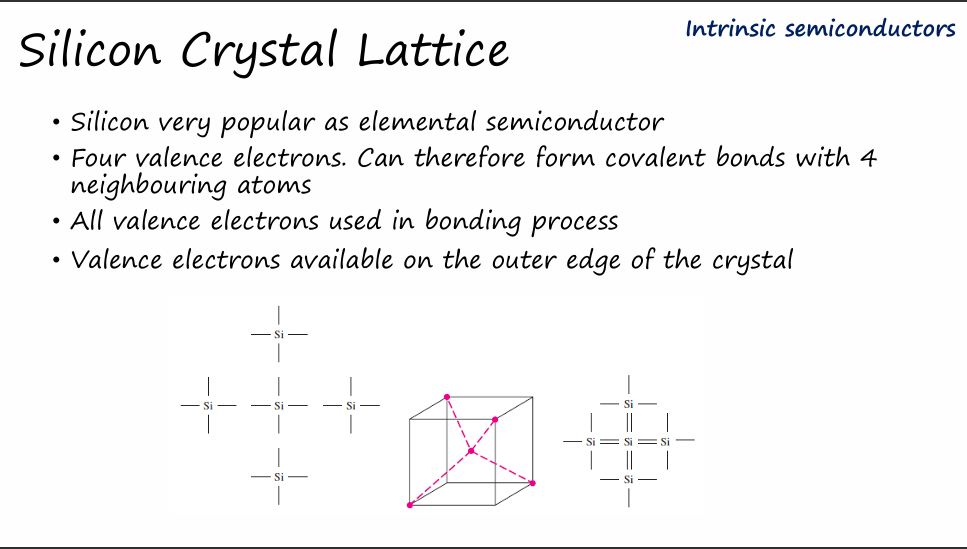
Describe the silicon crystal lattice
4 valence electrons
can form covalent bonds with 4 other silicon atoms
all used in bonding
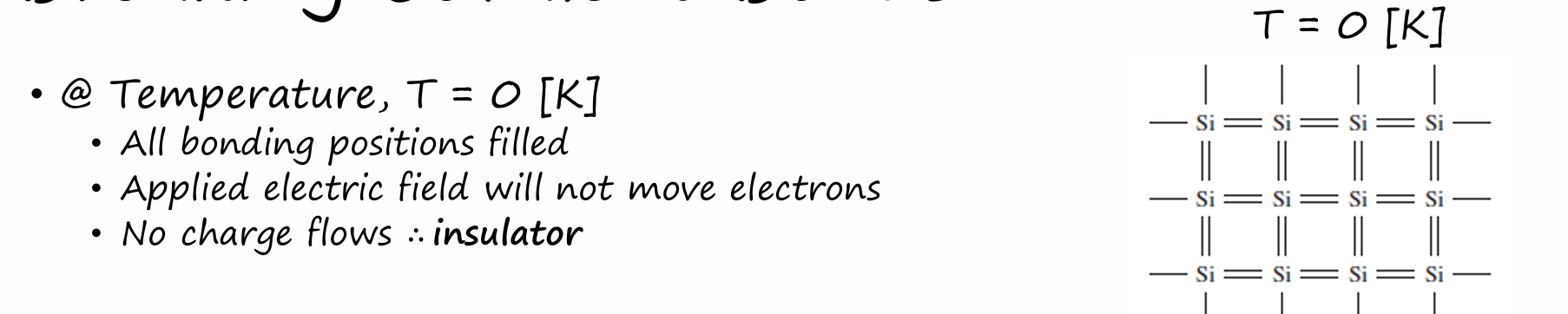
Describe the breaking of the covalent bonds of a silicon crystal lattice at T = 0 K
absolute zero
electrons dont have enough energy to break covalent bonds
acts as insulator
Describe the breaking of the covalent bonds of a silicon crystal lattice at T > 0 K
Electrons can obtain enough energy to break its covalent bond
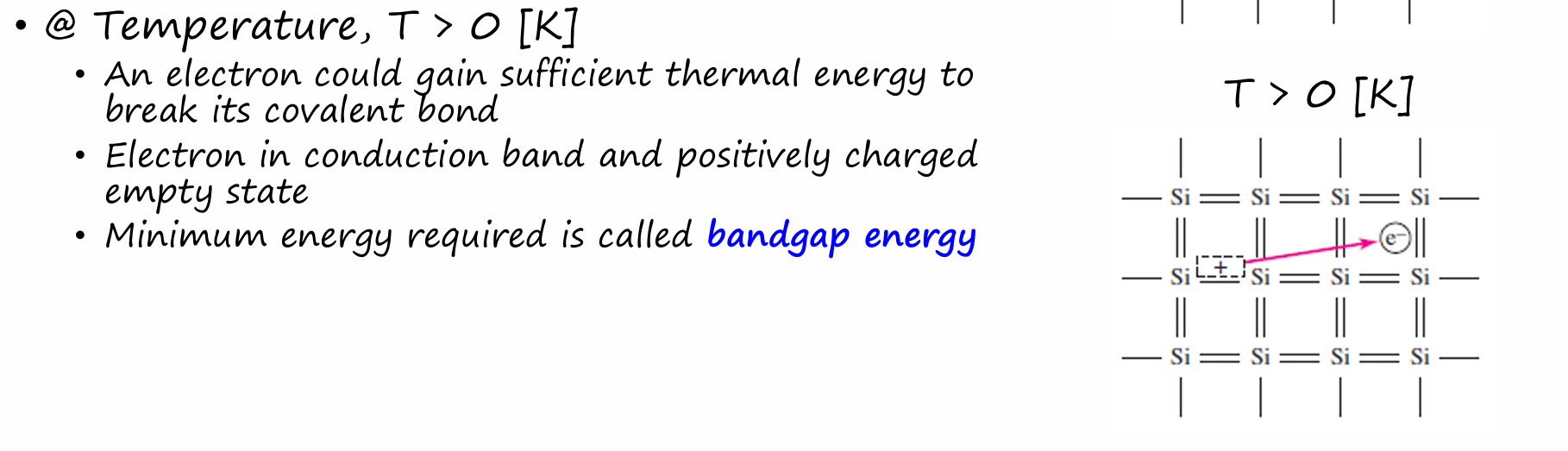
Define bandgap energy
minimum energy required to break a covalent bond
Define Ev and Ec
Ev = max energy of valence energy band
Ec = min energy of conduction band
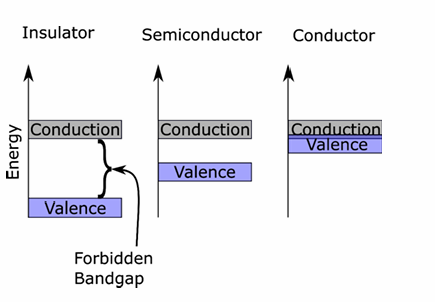
Describe the conduction, valence and forbidden bandgaps of:
Insulators
Semiconductors
Conductors
Insulators have a very large forbidden band gap
meaning electrons wont move to the conductive band without a significant amount of energy
Semiconductors have a relatively small forbidden gap
therefore, some energy supplied can induce conductivity
no energy means no conductivity
Conductor’s valence gap and conduction gap overlap
no energy is required for the material to be conductive
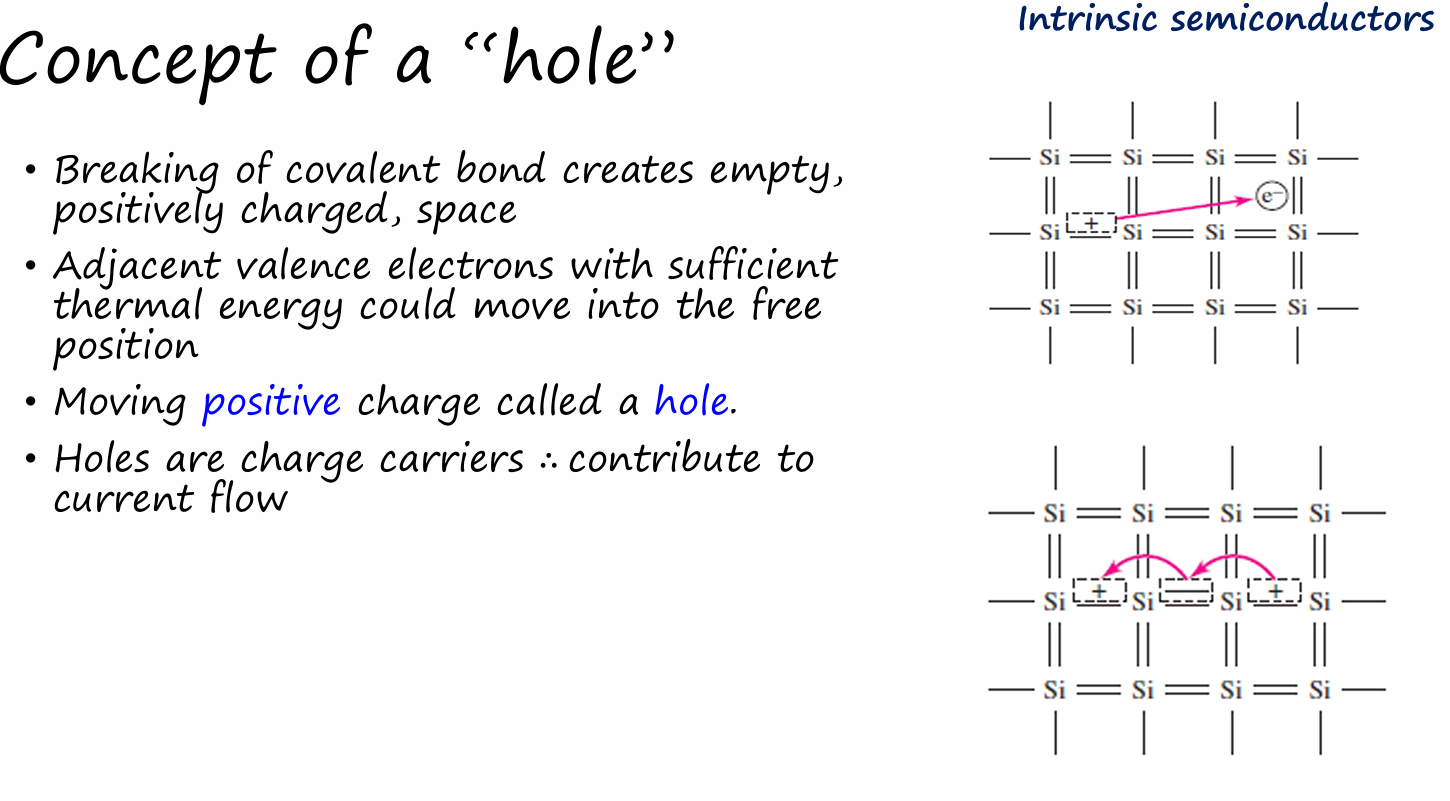
Describe the concept of a “hole”
when a covalent bond breaks, an empty positive space remains
adjacent electrons can occupy that “hole” and create a “hole” where they previously were
thus there is a positive moving charge
holes are charge carriers
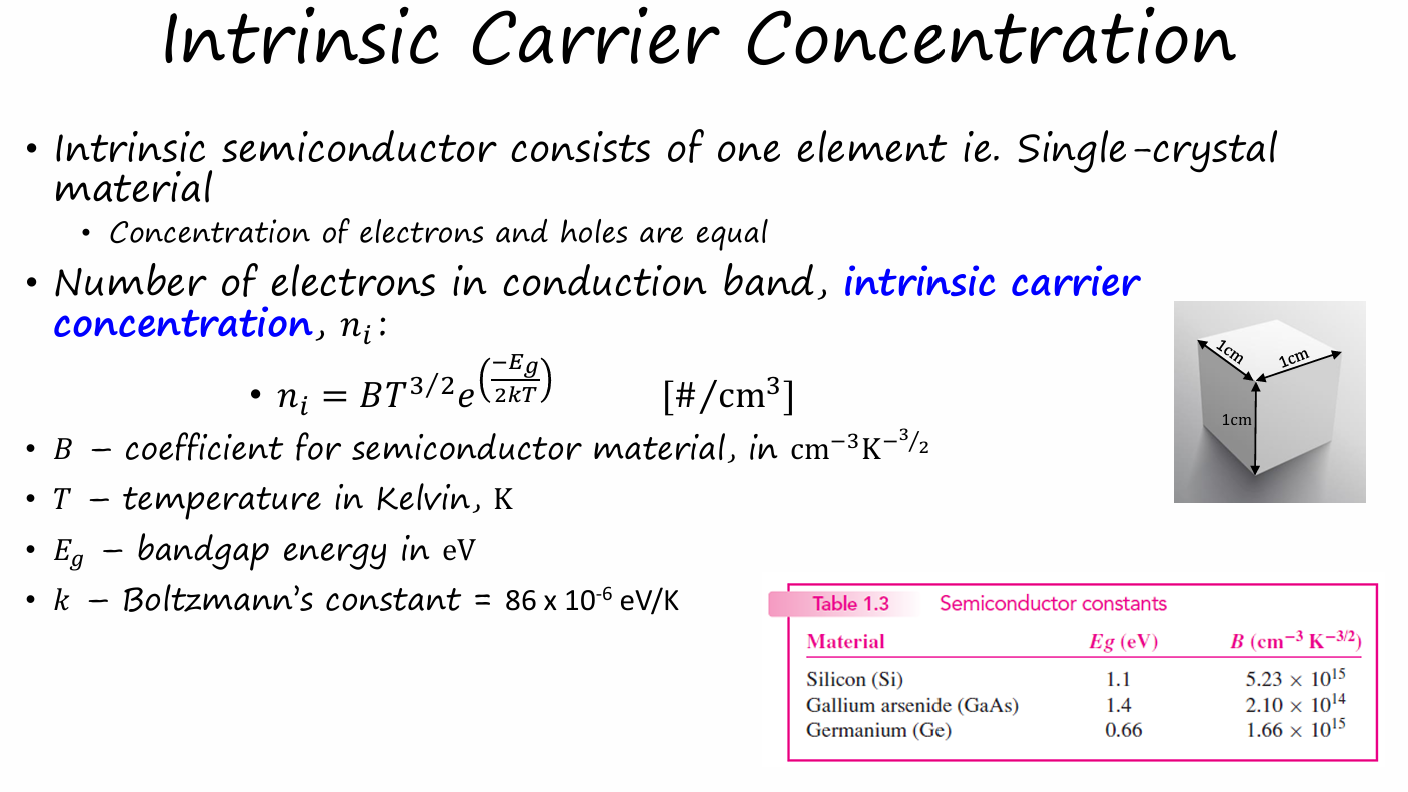
Describe an intrinsic semiconductor
semiconductor that is made of one element
concentration of electrons and holes are equal
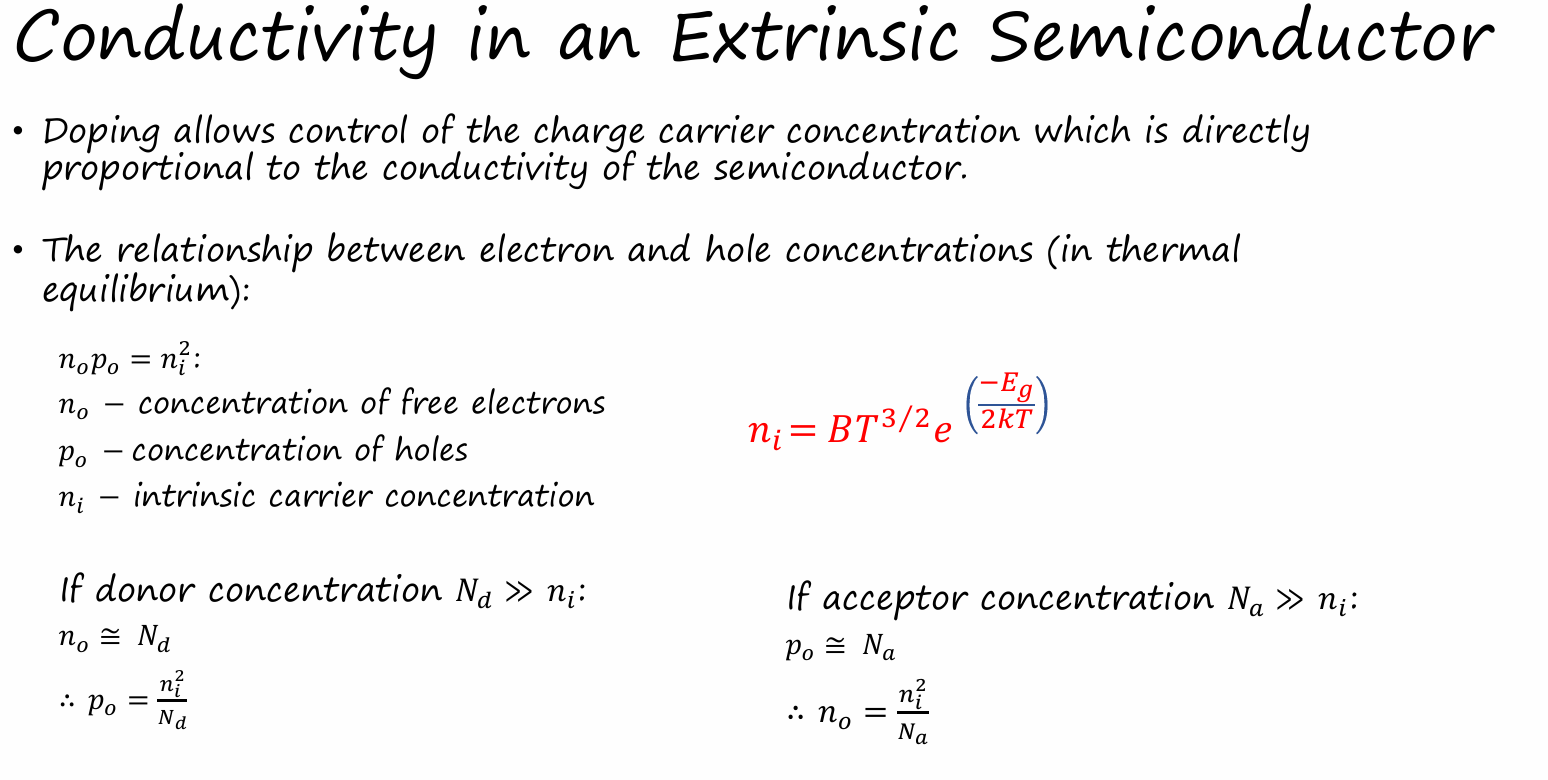
State the formula for the number of electrons in the conduction band in an intrinsic semiconductor, ni
ni = BT ^ (3/2) * e ^ (-Eg / 2kT)
𝐵– coefficient for semiconductor material, in cm^(−3) K^(− 3/2)
𝑇– temperature in Kelvin, K
𝐸𝑔– bandgap energy in eV
𝑘– Boltzmann’s constant = 86 x 10-6eV/K
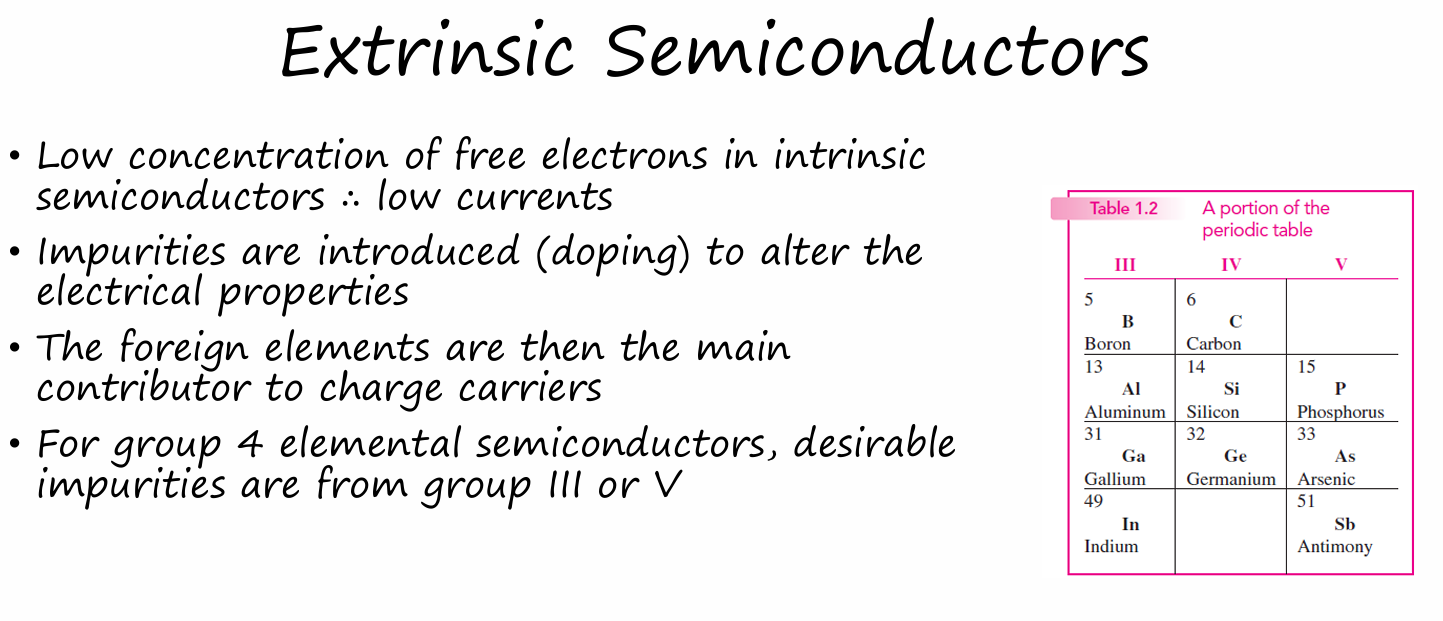
Describe extrinsic semiconductors
Made of more than one type of element
when low concentration of free electrons in instrinsic:
low currents
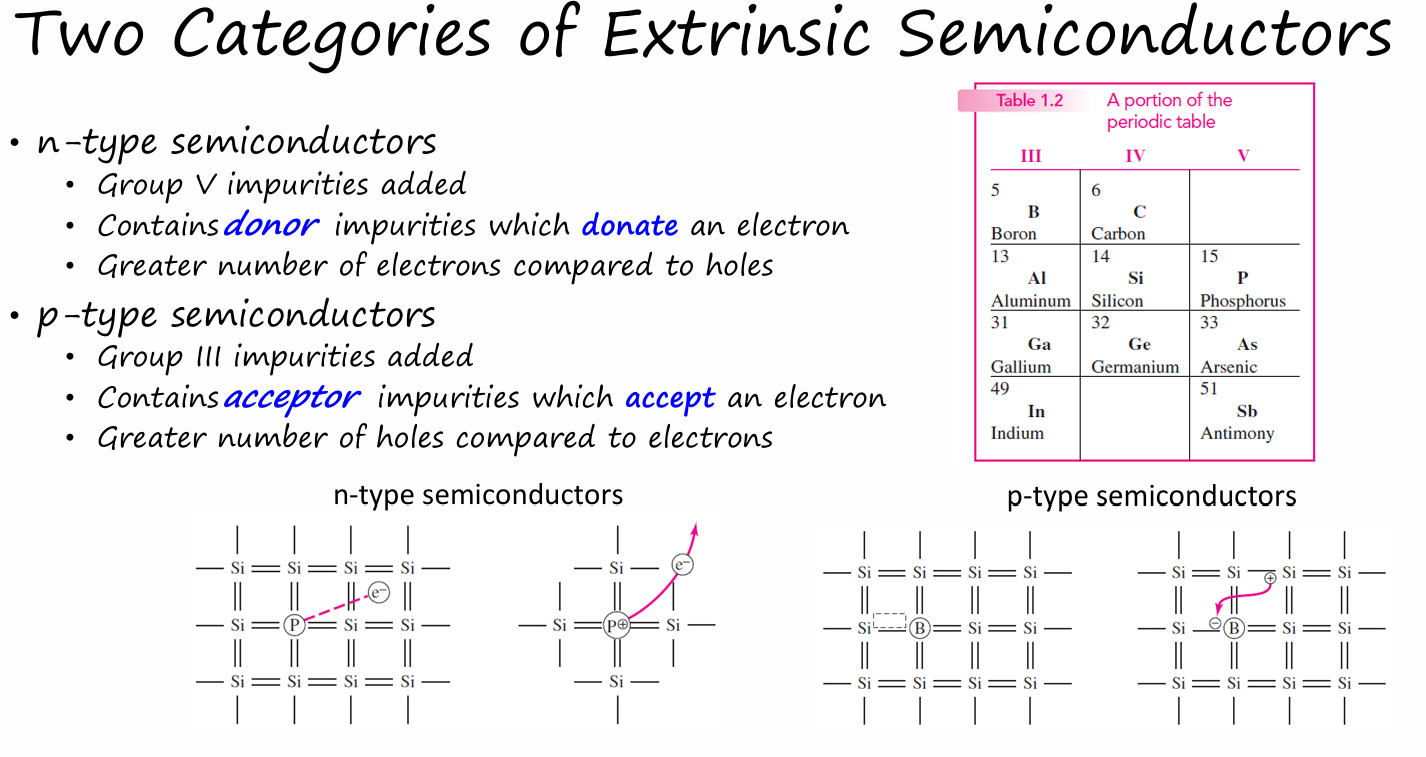
Describe the 2 types of extrinsic semiconductors
n-type
group V impurities are added
donor impurities are present, which donates an electron
number of electrons > number of holes
p-type
group III impurities are added
acceptor impurities are present, which accept an electron
number of holes > number of electrons
Describe the conductivity in an Extrinsic Semiconductor
no po = ni²
no = conc of free electrons
po = conc of holes
ni = conc of intrinsic carrier
if donor conc, Nd > ni
no = Nd
po = ni² / Nd
if acceptor conc, Na > ni
po = Na
no = ni² / Na