14 chapter: Psychosocial Development in Emerging and Young Adulthood
 Call Kai
 Learn
Learn Practice Test
 Spaced Repetition
 Match
Match Flashcards
 Knowt Play
1/55

There's no tags or description
Looks like no tags are added yet.
Name | Mastery | Learn | Test | Matching | Spaced | Call with Kai | Chat |
|---|
No analytics yet
Send a link to your students to track their progress
56 Terms
intimacy versus isolation
Erikson's sixth stage of psychosocial
development, in which young adults
either form strong, long-lasting bonds
with friends and romantic partners or
face a possible sense of isolation and
self-absorption.

Normative-stage models
Timing-of-events model
Trait models
Typological models
(4) Four Views of Personality Development
normative-stage models
- Theoretical models that describe psychosocial development in terms of a definite sequence of age-related changes.
- Everyone goes through the exact same stages of personality change at specific ages.
Example: A typical Filipino in their 20s focuses heavily on finding a job/partner, while in their 50s, their personality shifts toward preparing for retirement and guiding grandkids
Timing-of-events model
- Theoretical model of personality development that describes adult
psychosocial development as a
response to the expected or
unexpected occurrence and timing
of important life events.
- Personality changes based on when major life events happen compared to society's "social clock."
- Development is influenced by whether life events occur at expected or
unexpected times.
Example: If a Filipino gets married at age 25 (customary time), it feels normal. But if they become a first-time parent at age 16 or start college at age 40, the off-time event causes major stress and completely alters their personality development.
Trait models
- Personality inventories, questionnaires, factor analysis
- Personality changes substantially until age 30, more slowly thereafter.
Typological models
- Interviews, clinical judgments, Q-sorts, behavior ratings, self-reports
- Personality types tend to show continuity from childhood through adulthood, but certain events can change the life course.
- theoretical approach that identifies broad personality types or styles.
normative life events
In the timing-of-events model,
commonly expected life experiences
that occur at customary times.
social clock
- A set of cultural norms or expectations
for the times of life when certain important events, such as marriage, parenthood, entry into work, and retirement, should occur.

trait models
- Theoretical models of personality
development that focus on mental,
emotional, temperamental, and
behavioral traits, or attributes.
- personality traits show both stability and gradual change across adulthood.
five-factor model
Theoretical model of personality,
developed and tested by Costa and
McCrae, based on the "Big Five"
factors underlying clusters of related
personality traits: neuroticism,
extraversion, openness to experience,
conscientiousness, and agreeableness.

Openness
• Imaginative or practical
• Interested in variety or routine
• Independent or conforming

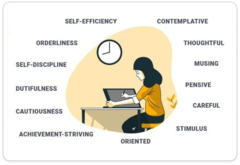
Conscientiousness
• Organized or disorganized
• Careful or careless
• Disciplined or impulsive
Extraversion
• Sociable or retiring
• Fun-loving or somber
• Affectionate or reserved

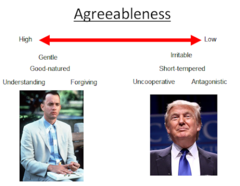
Agreeableness
• Softhearted or ruthless
• Trusting or suspicious
• Helpful or uncooperative
Neuroticism (emotional stability)
• Calm or anxious
• Secure or insecure
• Self-satisfied or self-pitying

openness, conscientiousness, extraversion, agreeableness, neuroticism
The Big (5) Five Factors of Personality
ego resiliency or ego resilient
- well adjusted, self confident, independent, articulate, attentive, helpful, cooperative, and task-focused
(1) Dynamic capacity to modify one's
level of ego-control in response to
environmental and contextual
influences.
(2) The ability to adapt
flexibly and resourcefully to potential
sources of stress.
EXAMPLE:
The Situation: A family loses their home and small sari-sari store during a severe typhoon flash flood.
The Resilient Fix: Instead of freezing up or giving in to despair, they quickly pivot. They laugh off the bad luck with their neighbors, adapt to sleeping in an evacuation center, and immediately set up a temporary makeshift stall to sell coffee to relief workers.
ego control
Self-control and the self-regulation of
impulses.

fictive kin
Friends who are considered and behave like family members.
triangular theory of love
Sternberg's theory that patterns of love
hinge on the balance among three
elements: intimacy, passion, and
commitment.
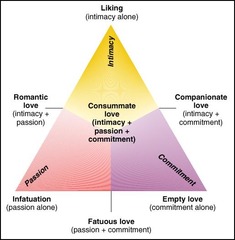
nonlove
liking
infatuation
empty love
romantic love
companionate love
fatuous love
consummate love
(8) Patterns of Loving
Nonlove
- All three components of love—intimacy, passion, and commitment—are absent.
- This describes most interpersonal relationships, which are simply casual interactions.
Example: Your daily interaction with the kuya driver of your tricycle or the cashier at the local 7-Eleven. It is purely polite, casual, and transactional.
Liking
- Intimacy is the only component present.
- There is closeness, understanding, emotional support, affection, bondedness, and warmth.
- Neither passion nor commitment is present.
Example: Your bond with your high school barkada (best friend). You share secrets, give emotional support, and trust them completely, but there is zero romantic attraction or marital commitment.
Infatuation
- Passion is the only component present.
- This is "love at first sight," a strong physical attraction and sexual arousal, without intimacy or commitment.
Example: Your massive crush on a gorgeous K-pop idol or someone you locked eyes with at a bar in BGC. It is immediate "love at first sight" and pure physical attraction, with no deep talking or long-term plans.
Empty love
- Commitment is the only component present.
- Empty love is often found in long-term relationships that have lost both intimacy and passion or in arranged marriages.
Example: An older couple who has been married for 40 years. They no longer hold hands or talk deeply, but they strictly choose to stay together in the same house for the sake of the children and grandchildren (para sa pamilya).
Romantic love
- Intimacy and passion are both present.
- Romantic lovers are drawn to each other physically and bonded emotionally.
- They are not, however, committed to each other.
Example: A fresh, exciting summer fling (MU or Mutual Understanding). You are deeply attracted to each other and stay up all night texting your deepest feelings, but you both agree to keep it "no strings attached" with no labels.
Companionate love
- Intimacy and commitment are both present. - This is a long-term, committed friendship, often occurring in marriages in which physical attraction has died down but in which the partners feel close to each other and have made the decision to stay together.
Example: A long-married provincial couple whose physical spark (dating landi) has died down. However, they are still absolute best friends who completely trust each other and remain fully dedicated to their life partnership.
Fatuous love
- Passion and commitment are present without intimacy.
- This often leads to a whirlwind courtship in
which a couple make a commitment without allowing themselves the time to develop intimacy.
- This kind of love usually does not last.
Example: A whirlwind courtship. A couple meets at a party, falls into a crazy physical romance, and decides to elope (magtanan) to Vegas or get married after only two weeks of knowing each other without actually building a deep friendship first.
Consummate love
- All three components are present in this "complete" love. It is easier to achieve than to hold onto.
Example: The "relationship goals" marriage. They have a blazing physical spark, share a profound, best-friend emotional connection, and are 100% committed to weathering financial and family storms together.
Adult milestones
are increasingly diverse and less synchronized than in earlier generations.
Isolation
occurs when a person has difficulty forming or maintaining meaningful connections with others.
Overcontrolled
- people are shy, quiet, anxious, and dependable.
- They tend to keep their thoughts to
themselves and to withdraw from conflict and they are the most subject to depression.
Undercontrolled
- people are active, energetic, impulsive, stubborn, and easily distracted.
Ego resilient
Overcontrolled
Undercontrolled
(3) Typological Models
Romantic relationships
can provide intimacy, companionship, support, and opportunities for personal
growth.

Partners
negotiate expectations about commitment, communication, finances, boundaries, and future goals.

Healthy relationships
involve mutual respect, consent, communication, and the ability to manage
conflict.
Intimacy
- doesn't only mean romantic or sexual relationships.
- Close friendships and other meaningful relationships can also provide intimacy.
- Feeling close and connected to someone
- I feel close to you.
EXAMPLE:You trust your partner, share your feelings, and feel understood.

Passion
- Physical attraction and excitement
- I am attracted to you.
EXAMPLE: You feel strong romantic or physical attraction toward someone.

Commitment
- Deciding to stay with and support someone
- I choose you.
EXAMPLE: You choose to maintain the relationship and work through difficulties together.

Single life
may be chosen, circumstantial, or transitional—and can involve meaningful social networks.

Cohabitation
involves sharing a household without marriage; motivations and outcomes vary across contexts.

Marriage
- is a major relationship transition, but its meaning and timing differ across cultures.
- can involve periods of adjustment as partners encounter work, finances, family, and parenting demands.

Nonheterosexual relationships
may face both ordinary relationship dynamics and additional social/contextual pressures.
Parenthood
- can change routines, roles, finances, relationships, and priorities.
- involves developmental tasks for both the child and the adult.

Adjustment
depends on preparation, resources, social support, relationship quality, and cultural
expectations.
Relationship quality
is influenced by communication, expectations, conflict management, resources, and shared goals.
Divorce
may involve emotional, financial, social, and parenting-related changes.

Remarriage and stepparenthood
In Relationship Dynamics & When Marriage Ends, create new relationship systems and adjustment tasks.
Culture
influences expectations about independence, family obligation, marriage, gender roles,
and parenthood.
Economic conditions
can affect education, housing, employment, and the timing of adult transitions.
Human development
is best understood by considering the interaction of individual characteristics and social context.
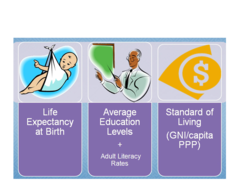
PHYSICAL HEALTH = COGNITION
sleep, health, and stress can affect concentration and decision-making.

COGNITION = PSYCHOSOCIAL DEVELOPMENT
new ways of thinking can support identity
exploration and relationship decisions.

PSYCHOSOCIAL = HEALTH
social support and relationship quality can influence well-being and health behaviors.

EDUCATION/WORK = IDENTITY
career and educational experiences can shape identity, independence, and future goals.
