Unit 1 Essentials
 Call Kai
 Learn
Learn Practice Test
 Spaced Repetition
 Match
Match Flashcards
 Knowt Play
1/78

Earn XP
Description and Tags
things from essentials page plus learning issues
Name | Mastery | Learn | Test | Matching | Spaced | Call with Kai | Chat |
|---|
No analytics yet
Send a link to your students to track their progress
79 Terms
conjunctivitis
AKA pink eye - inflammation of bulbar and palpebrae conjunctiva
watery or mucopurulent discharge, erythema of sclera, slightly reduced visual acuity
VIRAL: adenovirus. usually bilateral. Tx: artificial tears, cold compresses
BACTERIAL: Staph, Strep. usually unilateral, commonly seen in children. Tx: polymyxin w/ trimethoprim drops 1 drop q6h x 7 days OR azithromycin 1% 1 drop q12h × 2 days, then once daily x 5 days
ALLERGIC: will be itchy, bilateral. Tx: olopatadine 0.2-0.7% 1 drop daily (antihistamine), artificial tears, cold compresses
cataracts
progressive opacification of the lens
oxidative damage to the lens cuases proteins to become insoluble → loss of transparency
painless, progressive blurring, glares/haloes especially at night, dimming of colors, monocular diplopia
diagnosis: slit-lamp, fundus exam, Snellen acuity
Tx:surgery incision with foldable intraocular lens implantation
corneal ulcer
epithelial defect with underlying and surrounding stromal inflammation
bacterial (pseudomonas, Staph), fungal, viral (HSV, VZV), parasitic, chemical burns
eye pain, red eye, photophobia, purulent discharge with visible white/gray corneal infiltrate on penlight exam (hypopyon)
risk: contact wearers
Tx: bacterial (moxifloxacin 0.5%), fungal (topical natamycin), viral (oral acyclovir)
infectious keratitis cornea
microbial invasion of cornea that is sight-threatening
bacterial (pseudomonas, Strep, Staph), fungal (molds), viral (HSV), parasitic
risk: contact wearers
rapid-onset eye pain, red eye, photophobia, purulent discharge, visible white/grey corneal infiltrate
MEDICAL EMERGENCY
Tx: bacterial (moxifloxacin 0.5%), fungal (topical natamycin), viral (oral acyclovir), fungal (tpical natamycin)
pterygium
benign, wing-shaped fibrovascular growth of degenerative conjunctival tissue that extends across the limbus onto the cornea
associated with chronic UV radiation exposure
eye irritation, foreign-body sensation, redness, dryness of eye
Tx: surgical excision
iritis
inflammation of the iris and often ciliary body too
eye pain, aching, redness, consensual photophobia, blurred vision, typically unilateral, keratic precipitates on iris
Tx: prednisolone actetate 1% (topical corticosteroid), atropine (topical cycloplegic agent)
scleritis
uveitis
dacryoadenitis
infection of the lacrimal gland
superolateral errythema
dacryocystitis
infection of the lacrimal sac (presents near medial canthus of the eye)
errythema
dacryostenosis
keratonconjuncivitis
AKA dry eye - eyes either do not produce enough tears OR tears dry up too quickly
caused by: screen time, dry environments, meibomian dysfunction, contacts, antihistamines, blepharitis
scratchy, gritty sensation, blurred vision, burning, light sensitivity, eye discharge, watery eyes
more common in children
Schirmer test → measures tear production AND tear break-up time → measures how quickly tear film breaks after blinking
treatment: cold compresses, use of humidifier, dual action topical antihistamine/mast cell stabilizer drops, Dexamethasine 0.1% if viral
blepharitis
chalazion
a granuloma (cluster of white blood cells)
inflammation of the tarsal (meibomian) glands due to blockage and build-up of oil
firm and red, but not painful, usually eyelid central

Tx: hot compresses, lid massage. recurrent - 2-3 intralesional triamcinolone acetonide injections or I&D last resort
ectropion
OUTWARD turning of the eyelid, might be due to scarring of the outer skin or sagging of the eyelids
entropion
eyelid INVERSION due to scarring (cicatrization) in the conjunctiva
causes trichiasis (eyelashes brushing against the cornea that will cause blindness)
hordeolom
AKA stye
purulent infection of eyelid glands by Staph
internal: infxn of tarsal glands
external: infxn of ciliary glands (Zeiss - sebaceous oily, or Moll - eccrine watery or aprocine milky)
NO pain with eye movement
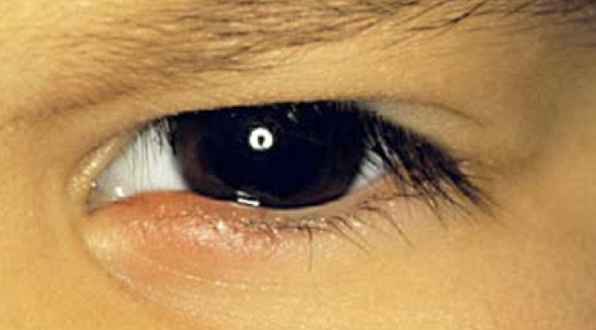
Tx: warm compresses, lid scrubs. recurrent - erythromycin ointment, I&D last resort
nystagmus
rapid, uncontrolled movement of eye (up, down, side-to-side, or circular)
cause: congenital, inner ear disorders, neurological complications, medication side affects (like anti-seizures, sedatives, alcohol)
Tx: acquired side-to-side - gabapentin (anti-seizure), up and down - aminopydridines, alternating - baclofen (muscle relaxer)
optic neuritis
papilledema
optic nerve swelling at the optic disc
cup:disc ratio on fundescopic view is hard to see
ICP causes this b/c of blockage of axoplasmic flow and by causing ischemia thru the central retinal artery
must evaluate for this before doing a spinal tap (b/c high ICP can cause the brain to herniate)
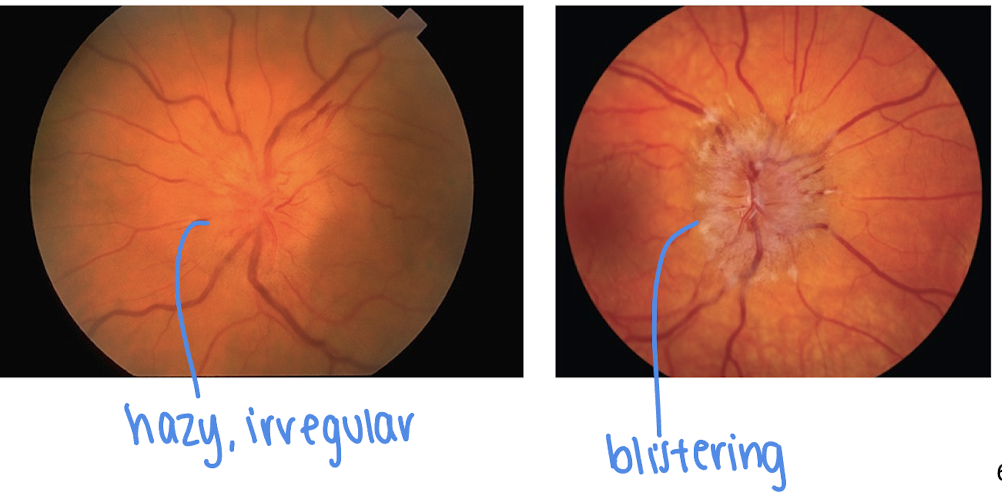
MEDICAL EMERGENCY
Tx: weight loss/bariatric surgery, Acetazolamide 1-4g/day in divided doses
orbital cellulitis
post septal bacterial infection of the contents of the eye
Staph (MRSA), Strep, anaerobes
erythema, edema, purulent drainage, painful, mild entrapment (eyes not quite oriented identically), opthalmoplegia (limited EOM movement)
90% of the time evolves from ethmoid sinusitis
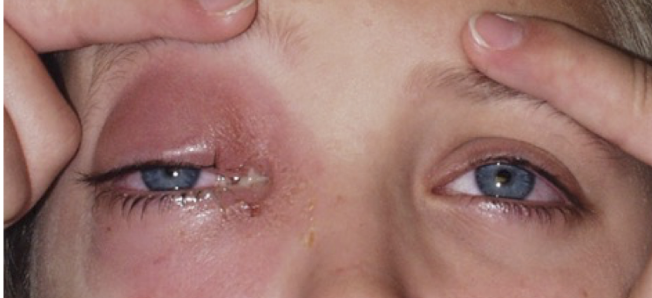
MEDICAL EMERGENCY - can cause blindness
Tx: vancomycin + ceftraioxone + Metronidazole IV, surgical decompression if needed
periorbital cellulitis
macular degeneration
most common cause of vision loss among the elderly
DRY: (drusen) cholesterol droplets + proteins + calcium phosphate. material extravasates and collects in the retina therefore block highest acuity vision
WET: endothelial injury → hemorrhaging + scarring. treated with laser therapy to intentionally scar the retina to stop bleeding

Dry Tx: AREDS2 formulation supplements
Wet Tx: lazer therapy to intentionally scar retine to stop bleeding, anti-VEGF injections, Aflibercept
retinal detachment
(diabetic) retinopathy
associated with uncontrolled glycation of important biomolecules, therefore making delicate blood vessels even more fragile
hard exudates (small, sharp, yellow), cotton wool spots (less defined, yellow-orange) and hemorrhages (dark) will be present in fundescopic view
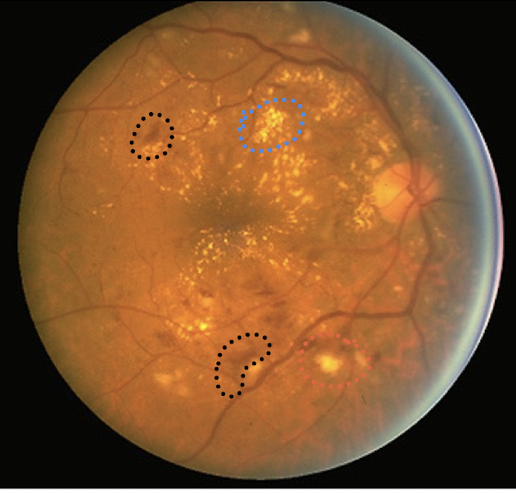
PROLIFERATIVE: excessive young blood vessels stemming from the optic disc (response to retinal ischemia and upregulation of VEGF) and can cause loss of peripheral vision
Tx: Anti-VEGF injections, BG management
blowout fracture
AKA inferior orbit wall fracture
tender and edema to the surrounding eye, periocular ecchymosis, decreases sensation to the affect side cheek, orbital emphysema
severe = entrapment of inferior rectus (diplopia and decreased downward gaze)
could cause increase in intraorbital pressure = exophthalmos (protrusion of eye)
CT scan shows teardrop sign, teardrop sign + hemorrhage into maxillary sinus
Tx: surgery if true muscle strangulation, most just heal on own
corneal abrasion
globe rupture
hyphema
central retinal vein occlusion
“blood and thunder” thrombotic (of fibrin and platelets) event + cotton wool spots
retina suffers from a sudden imbalance of blood flow in and out
monocular loss of vision, painless*
predisposing conditions include: leukemia, diabetes, hyperlipidemia, glaucoma, atherosclerotic disease
Tx: anti-VEGF
amaurosis
amblyopia
closed angle glaucoma
when the trabecular meshwork is pinched too closely to the cornea so fluid cannot exit through it - instead fluid builds up behind the iris
MEDICAL EMERGENCY as it causes rapid spike in intraocular pressure which could transmit to the optic nerve and risk blindness within hours
“injected” red eye, very painful eye, distorted hazy vision, haloes around lights, hazy cornea, n&v
Tx: B-blocker, A-agonist, acetazloamide → laser peripheral iridotomy and lens extraction by ophthalmologist same day
presbyopia
strabismus
cerumen impaction
otitis externa
infection of moist macerated skin of external ear canal
common in children (Pseudomonas a.)
ear pain, itching, redness to ear canal, purulent discharge
diagnostics: otoscopy, pinna traction test (pain when pinna is pulled), tragus test 9pain when tragus is pushed)
Tx. topical corticosteroid - hydrocortisone-polymyxin drops 2-3 drops x 7-10 days
acoustic neuroma
dysfunction of eustachian tube
mucosal lining of the eustachian tube becomes swollen and does not open or close properly
viral, bacterial, allergic, GERD, altitude chanegs
feeling of ear fullness, hearing loss, localized pain or discomfort, tinnitis
eardrums is dull and full, nasal passage is swollen
Patulous (stuck open), obstructive (stuck closed), baro-challenge induced (trouble with pressure changes)
Tx: NSAIDs, decongestants, saline sprays, serious = myringotomy, ear tubes
labyrinthitis
inflammation of the labyrinth (inner ear)
swelling of both branches of the vestibulocochlear nerve
balance issues, blurred vision, dizziness, hearing loss, n&v, nystagmus, tinnitis, vertigo
viral or bacterial
Tx: dimenhydrinate… corticosteriods, antibiotics, antivirals
vertigo
cholesteatoma
otitis media
bacterial infection that stems from viral upper respiratory infection (Strep pn.)
*bulging TM
caused by: synctial virus, rhinovirus, enteriovirus, covid, flu, adenovirus…
Tx: amoxicillin 90 mg/kg/day, amoxicillin/clavulanate (cefdinir if allergic to penicillins), recurrent → tympanostomy tubes
otosclerosis
tympanic membrane perforation
conductive hearing impairment
sound transmission is blocked b/w the opening of the external ear and cochlear hair cells
ex. fluid in the middle ear
fluid, foreign objects, allergies, ruptured eardrum, impacted earwax, infections, genetic disorders, head trauma
*most common cause is from otitis media in childhood cases
Tx: irrigation, foreign body removal, treat underlying infection
sensorineural hearing impairment
arises from a defect in the neural transmission of sound; a defect in the cochlear hair cells (won’t regenerate) of the auditory nerve
aging, noise damage, drug side effects, auditory tumors, blast/explosions
*most commonly congenital sensory defect
Tx: prednisone 1 mg/kg/day, intratympanic steroids (dexamethasone 10 mg/mL)
mastoiditis
Meniere disease
exact etiology unknown, but associated with excess endolymph (membranous labyrinth) in the inner ear
episodic tinnitus, intermittent vertigo, nausea, hearing loss
treat with low sodium diet and caffeine and alcohol limitations, anti-vertigo meds, intratympanic steroid injections
Tx: acute attack: antihistamines (dimenhydrinate 25 mg q6h), benzodiazapines (diazepam 5 mg q8h). low sodium diet, diuretics
tinnitus
involuntary ringing, buzzing, hissing, etc. in the ears
to distinct etiology as it usually coexists with something else like reoccurring infections, otosclerosis, cochlear damage, loud music, or lesions in auditory path
barotrauma of the ear
orbital rim fracture
fracture of the bones forming the outer rim of the bony orbit
occurs mostly b/w maxilla and zygomatic or maxilla and frontal
corneal abrasion
globe rupture
hyphema
benign neoplasm
malignant neoplasm
epistaxis
sinusitis
rhinitis
nasal polyps
oropharyngeal angioedema
aphthous ulcers
candidiasis
deep neck infections
dental abscess
dental caries
epiglottitis
gingivitis
herpes simplex (oropharyngeal)
laryngtiis
peritonsillar abscess
pharyngitis
sialadenitis
parotitis
leukoplakia
open angle glaucoma
when something is wrong with the trabecular network (like a clog) and circulation of fluids get disrupted
some pts are naturally predisposed b/c their anterior chamber is too narrow (older population)
asymptomatic, loss of peripheral visual fields, can progress to blindness over time
Tx: reduce IOP - beta blocker (timolol, betaxolol), trabeculectomy
horner’s syndrome
*a sign, not a disease
disruption of the sympathetic chain (effects pupil size and superior tarsal muscle and skin dryness)
miosis (anisecoria), ptosis, anhydrosis
can be caused by: stroke, carotid dissection, Pancoast tumor as apex of lung)
hypertensive retinopathy
signifies significantly high BP (like 210/140)
Av nicking due to atherosclerosis in an artery that is sufficiently hard as to occlude which veins it overlies
arterioles narrow → AV nicking/ copper wiring → hemorrhages + hard exudates —> papilledema
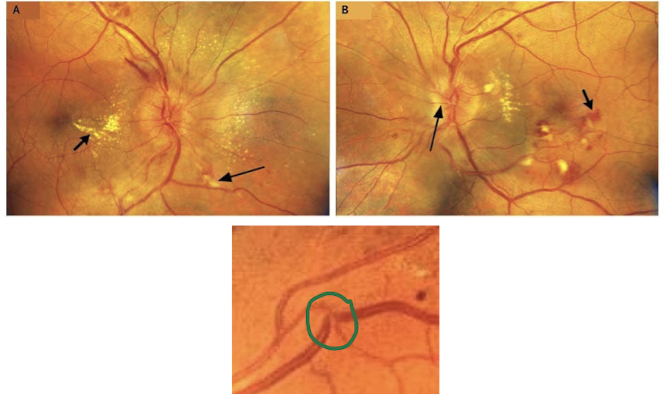
Tx: treat HTN - low sodium diet, low saturated fats, physical activity, thiazide diuretics, ACE inhibitor (lisinopril), ARBs (losartan)