AP Bio ch 5 mm test
 Call Kai
 Learn
Learn Practice Test
 Spaced Repetition
 Match
Match Flashcards
 Knowt Play
1/79

There's no tags or description
Looks like no tags are added yet.
Name | Mastery | Learn | Test | Matching | Spaced | Call with Kai | Chat |
|---|
No analytics yet
Send a link to your students to track their progress
80 Terms
what are the macromolecules?
Carbohydrates, Lipids,Proteins, Nucleic acids
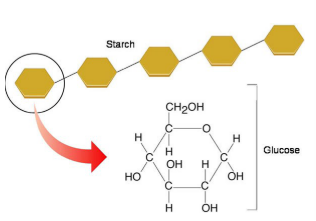
Carbohydrates
Can be mono, di, or polysaccharides
They are used for energy, cellular or molecular structure
Glucose C6H12O6 is the most common
They are classified by location of carbonyl group
Aldose or ketose
Number of carbons in the carbon skeleton
Ring structure
Helix, globical, nucleic acids
You can tell them apart bc they have diff structures - structural isomers
Ex: glycogen, each one is a glucose molecule - cell respiration to produce cellular gasoline (ATP)
Fuels your function
are organic compounds made of carbon, hydrogen, and oxygen, typically in a ratio of 1:2:1. They serve as a primary energy source and play key roles in structural functions within cells.

Lipids
Do not form polymers
They are hydrophobic
Consist mostly of hydrocarbons, form nonpolar covalent bonds
Important lipids: fats, phospholipids, steroids
Cell membrane

Proteins
Structural support ex: keratin
Storage
Transport -> hemoglobin, oxygen
Cellular communications -> receptors
Movement -> muscles
Defense against foreign substances -> antibodies & immune response
Used in moment -> energy
Greatest functional diversity
Most function in our bodies in a day
DNA-> RNA-> protein-> traits
Central dogma biology
Functional ____ consists of one or more polypeptides twisted, folded, or coiled into a unique shape
Sequence of amino acids determines a protein’s 3d structure

protein structure
Ribbon like - more delicate
Globular - dense, thicker, don’t want to be like ribbon

protein
keratin

Nucleic acids
Store + transmit hereditary info
Ex: DNA & RNA
DNA:
Determines amino acid sequence
Directions for its own replication
Central dogma bio: DNA-> RNA-> protein synthesis (occurs in ribosome)

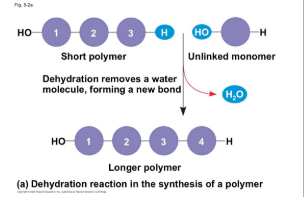
Condensation rxn
two monomers bond together to form a polymer and a water molecule is lost
Enzymes (proteins) are required to speed up the reaction, aka catalysts

hydrolysis
polymers are broken down to monomers
Take monomers to build up, polymers break down
monosaccharides
Single sugar monomers
Molecular formula ratio 1:2:1
Glucose is most common
Classified by carbonyl group
Aldose or ketose - ose is sugar
# carbons in carbon skeleton
3 to 7
Sugars form rings - aqueous solutions
Helix, globical, nucleic acids - long branching chains
Glucose, fructose, galactose, have C6H12O6
Have diff structures that allow you to tell them apart - structural isomers
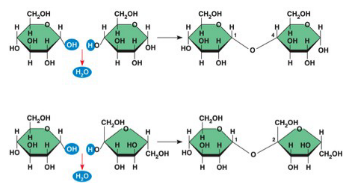
Disaccharides
Double sugars (ex: sucrose)
Condensation reactions to build up
1 to 4 glycosidic linkage - like a clock so carbon 1 joins to C#4

Polysaccharides
Multiple sugars link together to form a polymer
Used for energy role, cellular or molecular structure
Polymer sugars
Storage + structural roles
Function based on:
Sugar monomers and position glycosidic linkages
Polysaccharides ex: storage
starch, glycogen

storage Polysaccharide starch
Found in plant (ex: potato)
Photosynthesis -> survives by using starch for cell respiration
Glucose monomers
Extra starch stored - granules in chloroplasts


storage Polysaccharide Glycogen
Animal
Glucose monomers
Stored in liver & muscle cells

Polysaccharide Ex: structural
cellulose
monosacchardie ex
glucose
disaccharide ex
sucrose

structural polysaccharide Cellulose
Plants (important component of cell wall)
Polymer glucose
Glycosidic linkages
Diff from scratch, based 2 ring forms for glucose (alpha + beta)
Most common
Helps maintain a boxy and rigid shape
If not there, shape difficult to maintain, wall compromised, tissue compromised, etc, etc -> death
Structure determines function

Polymers with alpha glucose (spiral staircase)
helical
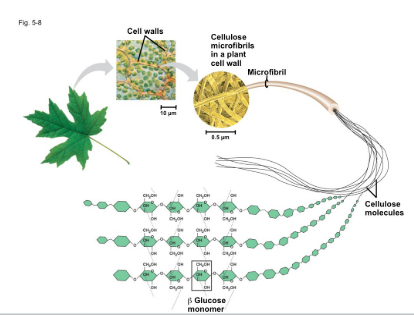
Polymers w beta glucose
straight
H atoms -> one strand can bond w OH groups on other strands
Parallel cellulose molecules are grouped into micro fibrils, which form strong building materials for plants


chitin (polysaccharide)
Exoskeleton of arthropods
Provides structural support for cell walls of fungi
Structural polysaccharides found in cells of fungi, arthropods
Ex: crab
Anti fungal capabilities

Glycosidic linkage
A covalent bond that joins two monosaccharides by a dehydration reaction

Fats
Made from glycerol + fatty acids
Glycerol is a 3 carbon alcohol with a hydroxyl group attached to each carbon
Fatty acids is carboxyl group attached to a long carbon skeleton
In a fat, 3 fatty acids are joined to glycerol by an ester linkage -> triacylglycerol or triglyceride
Fatty acids vary in length (# of carbons) & # and locations of double bonds


Saturated fatty acids
have a max # of H atoms possible (no double bonds), don’t solidify
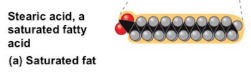
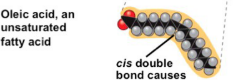
Unsaturated fatty acids
have one or more double bonds
Fish oil breaks this


Saturated fats
solid at room temp., animals fats, can cause cardiovascular disease/ plaque deposits

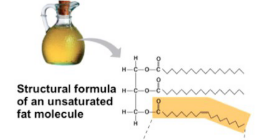
Unsaturated fats
Oils (liquid at room temp), usually plant & fish fats, “healthier”
Considered healthier but actually not as healthy

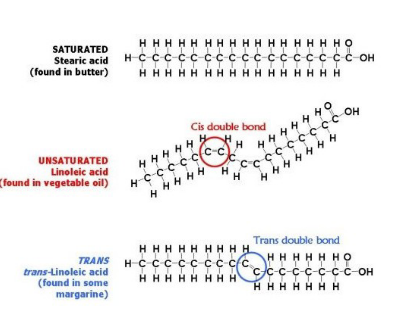
Hydrogenation
Converting unsaturated fats to saturated fat by adding hydrogen
Creates unsaturated fats with trans double bonds (may contribute more to cardiovascular disease)

example of Hydrogenation
margarine
Worse than normal butter

Function of adipose tissue
energy storage
Humans and other mammals store their fat in adipose cells
Adipose tissues also cushions vital organs + insulates body
Same amt even if gain or loose weight
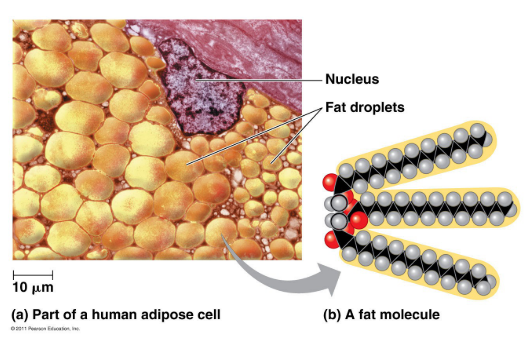

phospholipid bilayer
2 fatty acids (hydrophobic tails) + phosphate group attached to glycerol (hydrophilic heads )
Structure results in biliary arrangement found in cell membranes
Appearance is like hairpins/ bobbypins
Ex: bricks on a wall
Main structure, support, chains around them that allow movement

Cell membrane and phospholipid bilayer
Structure results in biliary arrangement found in cell membranes
Cholesterol example
steroids
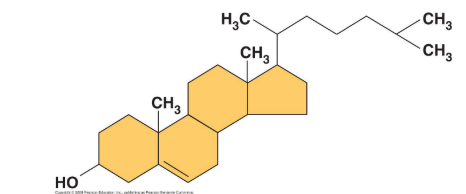
steroids - cholesterol
C skeleton consists of 4 fused rings
Cholesterol component in animal cell membranes
Very important to human body - precursor to hormones
Although cholesterol is essential in animals, high levels in blood can contribute to cardiovascular diseases
Every cell has this, if there was none: cells would be so packed together nothing would get through
Zero = not functioning
Really high amt can block artery

Proteins have the greatest…?
Functional diversity
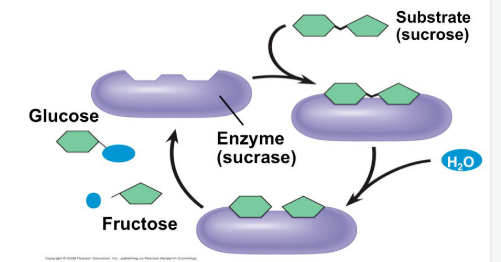
Enzymes and their general functions
Proteins
Act as catalysts to speed up chemical rxns
Reusable, glucose & fructose break down into energy
Active site
Specific enzyme acts on a specific substrate
All enzymes catalysts, not all catalysts enzymes
Ends in -ase = enzyme
Induced fit hypothesis
Ex: baseball glove - wraps around it

polypeptide chains
Protein structure
Polypeptides - polymers, built from amino acids (20)
Can have 4, 5000, etc monomers
Order determines what protein you end up with when it's all done
Peptide bonds
Unique linear sequence
Protein consists of one or more polypeptide
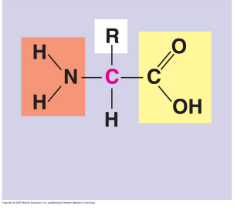
Amino acids
Carb vs protein vs acid vs lipid
R groups for protein
20 diff R groups, each responds to diff
Monomer
Organic molecules w carboxyl & amino groups
Differ in properties bc diff side chains, R groups


Primary protein structure
Unique sequence amino acids (order letters in long word)
Determined by inherited genetic info


secondary protein structure
In most proteins
Starts to coil - alpha helices
Folds - beta pleated sheets
Result from H-bonds
Diff shapes - > more functional than before


tertiary protein structure
Protein becomes 3d
Functional - all stages
Peak function
Useful in bodies
Coiling intensifies, folds, bends
Determined by R groups on same polypeptide
Lots H bonds being formed
Iconic bonds, hydrophobic interactions, van de waals
Stuff combines and gets held on to
covalent bonds - strong , disulfide bridges reinforce proteins structure

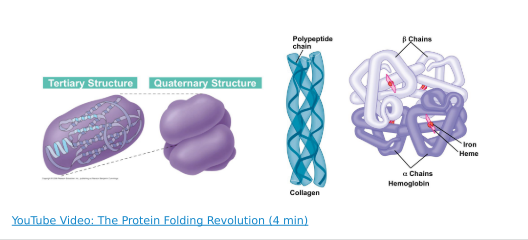
quaternary protein structure
Done fully worked on -> does whatever jobs in body
Multiple tertiary combined, form kind of a superprotein
Multiple polypeptide chains form one macromolecule
Collagen - coil like, fiber, anchor cells in place, wrinkles, fibrous proteins 3 polypeptides
Hemoglobin - globular protein, 4 polypeptide, 2 alpha, 2 beta chains
More folded -> more functional

Secondary protein structure example
orb weaver
Beta pleated sheets
Secondary level onward
Allows this structure
Elasticity, flexibility
Functional & tough enough to catch insect

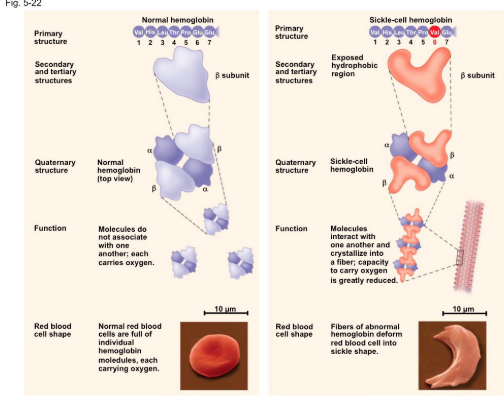
Sickle cell
Effects protein structure
Cell diseases
Diff blood cell than normal
Slight change in primary structure affect protein structure and ability to function
Tropical regions of world
Inherited blood disorder, result: single amino acid substitution in protein hemoglobin
Pre medicine: 30-40yr olds died from it
Counter to malaria
Be sick, allows sickle cell to survive malaria but will die at abt 30-40yrs of age
One single shape change
Impacts shape and function, impacts primary to functionality

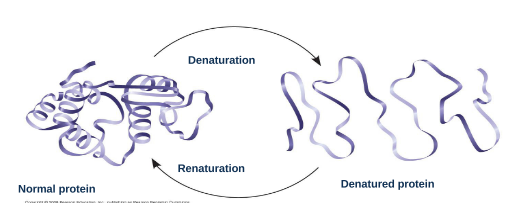
Denaturing proteins
Alterations pH, salt concentration, temp., other environmental factors
Cause a protein to unravel + become inactive
Ex: egg goes from goopy white to solid white, neutering proteins
Ex: ceviche -> raw fish w veggies w lemon or lime (acid component)
Lower pH can denature proteins
“Cook” raw fish
Ex: tangled ribbon, or folded up -> not tangled or folded up -> renaturation refolds & rectangles
Ex: fevers, viruses, bacteria, pathogens -> exponential growth -> body heats up to break down pathogen

Chaperonin
Protein folding
Protein molecules that assist folding process
Ex: washing machine
How we fold proteins

DNA
DNA molecule has 2 strands that spiral like a staircase, shape double helix
Like the road
2 stands run in opposite 5_ -> 3_ directions (look at slide 46 for prime symbols)
Antiparallel
2 strands held together by h-bonds - weak bonds want weak bond for replication (like zipper for RNA) ( if had covalent bonds it means more energy, and less time for the larger organism, more food consumption)
A-> T
C->G
RNA
xT
A-> U

DNA vs RNA
formation of new DNA

Nucleotides
Polymer
Polynucleotide
Nucleic acids
Monomer
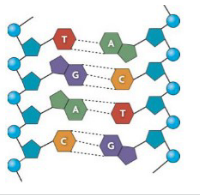
Nucleotide (phosphate, pentose sugar (5 side) & nitrogenous base)
Ex: blue sphere, pentagon, the T (nitrogenous base)
One of 4 ways: uracil (RNA only) (A,T,G,C)
Sugar and phosphate - backbone (alternating sugars and phosphate)
Bases are the steps (nitrogenous base)
Hydrogen bonds are the lines
Purines & pyrimidines
2 ring, 1 ring structure

General structure of a nucleic acid
Long polymer chains built from repeating units called nucleotides

Pyrimidine
Cytosine, thymine, uracil
Single six-membered ring


purine
Adenine, guanine
Have six-membered ring fused to a five-membering ring

Pyrimidine vs purine
2 types nitrogenous bases

What carbohydrate is this?
glucose
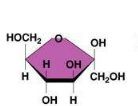
What carbohydrate is this?
fructose

What carbohydrate is this?
galactose

What monosaccharide is formed?
sucrose (glucose + fructose)

what disaccharide is formed?
lactose (galactose + glucose)
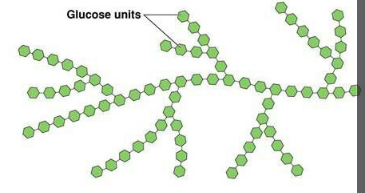
what polysaccharide is this?
glycogen
ketose
monosaccharide that contains a ketone group (-C=O bonded to two other carbon atoms).
located on secondary carbon atom
ex: ribulose, fructose, and dihydroxyacetone
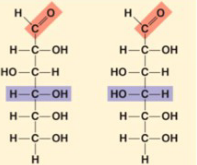
aldose
monosaccharide that contains an aldehyde group (-CHO).
located at end of carbon chain
ex: ribose, glucose, galactose, glyceraldehyde
triose, pentose, hexose in monosaccharides
# of carbons

triose for aldose(C3H6O3)
glyceraldehyde


triose for ketose(C3H6O3)
dihydroxyacetone

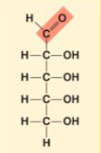
pentose for aldose (C5H10O5)
ribose
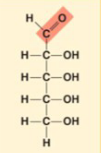

pentose for ketose(C5H10O5)
reibulose
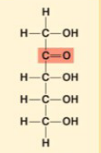

hexose for aldose(C6H12O6)
glucose + galactose

hexose for ketose (C6H12O6)
fructose

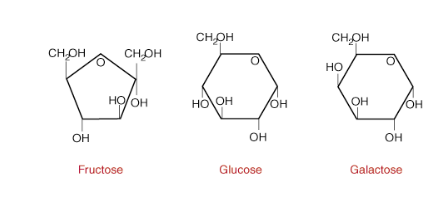
If the molecular formula of glucose, fructose,
and galactose is C6H12O6, what are these molecules
called? How do we tell them apart?
they are structural isomers

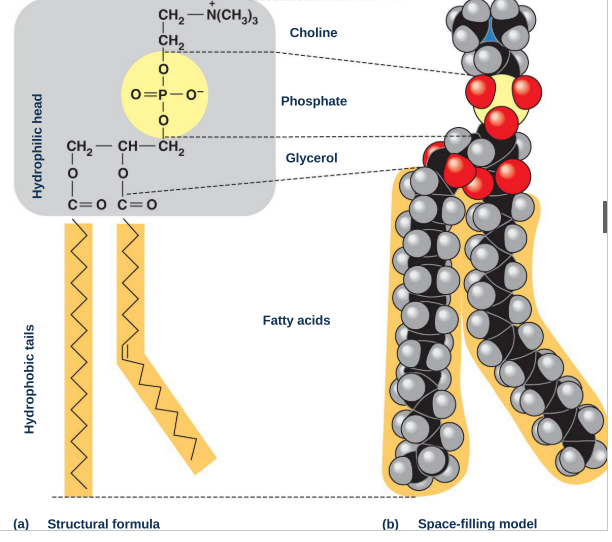
what is this a model of?
Hydrogenation
enzymatic proteins
function: selective acceleration of chemical rxns
ex: digestive enzymes
structural proteins
function: support
ex: silk fibers; collagen and elastin in animal connective tissues; kerative in hair, horns, feathers, and other skin appendages
storage proteins
storage of Amino acids
ovalbumin in egg white; casein, the protein of milk; storage proteins in seeds
transport proteins
transport of other substances
hemoglobin, transport proteins
hormonal proteins
coordination of organism’s actives
insulin, a hormone secreted by the pancreas
receptor proteins
response of cell to chemical stimuli
receptors in nerve cell membranes
contractile and motor proteins
movement
acting and myosin in muscles, proteins cilia and flagella
defensive proteins
protection against disease
antibodies combat bacteria and viruses