Ch2 collective
 Call Kai
 Learn
Learn Practice Test
 Spaced Repetition
 Match
Match Flashcards
 Knowt Play
1/21

There's no tags or description
Looks like no tags are added yet.
Name | Mastery | Learn | Test | Matching | Spaced | Call with Kai | Chat |
|---|
No analytics yet
Send a link to your students to track their progress
22 Terms
John Dalton atomic theory
law of constant composition- there are always the same atoms in the same element, compounds have more that one element, the element in different compounds are different
Law of conservation of mass
Rutherford atomic theory
Gold foil = nucleus & protons
Democritus & Dalton
matter is made of small invisible particles
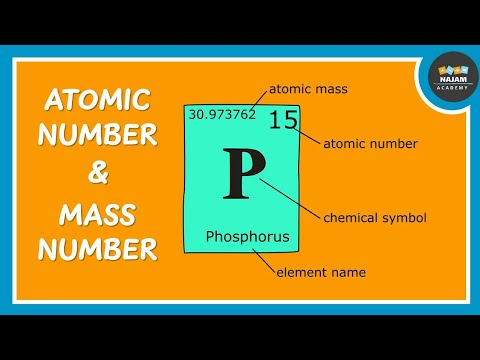
Atomic number
(Z) bottom, number of protons alone (and electrons in neutral atom)
AxZ

Mass number
(A) bottom, total number of P + N
Cations
Positive! lost electrons
Anions
Negative! gained electrons (charge = # of electrons lost, so double negative)
Isotopes
Same number of protons, different number of neutrons.
calculating average atomic mass for isotopes using weighted averages
(Mass X abundance) + (mass X abundance) etc
how to determine ion charge on periodic table
Distance from group 18. to the right of it (groups 1, 2, 3), add one (so charges +1, +2, +3). To the left of it, negative (gr 17 = -1, gr 16= -2, etc)
Formation of ionic compounds/bonds
electrons transferred from one atom to another
Formation of covalent compounds/bonds
Electrons shared. CO parenting
Acid
A substance that produces hydrogen ions when dissolved in water.
Hydrate
A crystalline ionic compound that contains a specific, fixed number of water molecules chemically bound within its crystal lattice.
Organic compound
A molecular compound that is primarily composed of carbon covalently bonded to hydrogen, and often other elements like oxygen, nitrogen, sulfur, and phosphorus.
Hydrocarbon
A specific type of organic compound that contains only carbon and hydrogen atoms.
Naming/writing formulas for ionic compounds
Ionic definition: Formed between a metal and a nonmetal (or polyatomic ions) by transferring electrons.
Transition metals: Use Roman numerals in parentheses to show the charge (e.g., Iron(III) chloride is \(\text{FeCl}_{3}\)).
Polyatomic ions: Memorize common ions like sulfate, nitrate, and ammonium.
Naming: Name the cation first, then the anion with an -ide ending (unless it is a polyatomic ion).
Writing formulas: Balance the positive and negative charges so the overall net charge is zero.
Naming/writing formulas for covalent compounds
Covalent definition: Formed between two nonmetals by sharing electrons.
Prefixes: Use numerical prefixes for the second element and the first element if it has more than one atom (mono-, di-, tri-, tetra-, penta-, hexa-).
Naming: Name the first element with a prefix (drop mono- for the first element), then the second element with a prefix and -ide.
Naming/writing formulas for acids
Binary acids (H + nonmetal): Use the prefix hydro-, change the nonmetal ending to -ic acid (e.g., HCLi s hydrochloric acid).
Oxyacids (H + polyatomic anion)
If the polyatomic ion ends in -ate, change it to -ic acid
If the polyatomic ion ends in -ite, change it to -ous acid.
Naming/writing formulas for hydrates
Naming: Name the ionic compound normally, then add a Greek prefix followed by -hydrate.
Example: CuSO4 5H2O is copper(II) sulfate pentahydrate.
Writing formulas: Use a dot to separate the ionic formula from the water coefficient.
Writing formulas for/naming hydrocarbons & alkanes
Hydrocarbon definition: Organic compounds containing only carbon and hydrogen.
Alkanes: Saturated hydrocarbons with single bonds only, following the general formula CnH2n+2
Alkane prefixes: Meth- (1), eth- (2), prop- (3), but- (4), pent- (5), hex- (6), hept- (7), oct- (8), non- (9), dec- (10) plus the -ane suffix.
Example: Propane has 3 carbons and is C3H8
Recognizing diatomic elements
Diatomic definition: Elements that naturally exist as two-atom molecules when pure.
The 7 elements: Hydrogen H2, Nitrogen N2, Oxygen O2 Fluorine F2, Chlorine Cl2, Bromine Br2 and Iodine I2
Memory trick: "Have No Fear Of Ice Cold Beer" H, N, F, O, I, Cl, Br. or follow the "7" shape on the periodic table starting at Nitrogen (atomic number 7) plus Hydrogen.