Campbell Biology 12th edition: Chapter 7
 Call Kai
 Learn
Learn Practice Test
 Spaced Repetition
 Match
Match Flashcards
 Knowt Play
1/53

There's no tags or description
Looks like no tags are added yet.
Name | Mastery | Learn | Test | Matching | Spaced | Call with Kai | Chat |
|---|
No analytics yet
Send a link to your students to track their progress
54 Terms
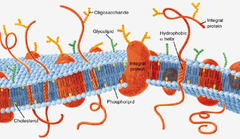
plasma membrane
- in every cell
- separate cell from surroundings
- selectively permeable
- all cell membranes vary in chemical composition
- adapt membrane through enviornment
transport proteins
responsible for controlling passage across cellular membranes

Amphipathic molecules
has both hydrophobic and hydrophilic reigons

phosphate group
hydrophilic

fatty acids
hydrophobic

Fluid mosaic model
individual units that make up a membrane; has some movement

cholesterol
used to keep fatty acids in line

peripheral proteins
on surface of membrane, don't go through membrane (external or internal)

integral proteins
go through membrane; will go into hydrophobic region (lipids) must be chemically different
- hydrophobic reigon has stretches of nonpolar amino acids in a alpha helix

transmembrane proteins
type of integral protein that goes through the entire membrane

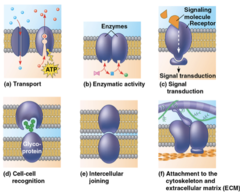
functions of cell-surface membrane proteins
-transport
-location of Enzyme activity
-signal transduction
-cell-cell recognition
-intercellular joining
-attach to cytoskeleton and ECM
cell-cell recognition
cells contain glycoproteins or sugars for other cells to identify it on plasma membrane
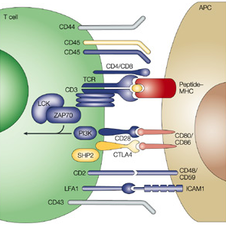
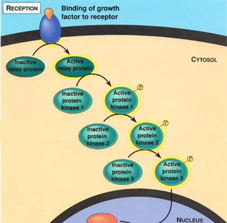
signal transduction
The process by which a cell responds to substances outside the cell through signaling molecules found on the surface of and inside the cell
glycolipids
membrane carbohydrates covalently bonded to lipids

What passes through membranes easily
Hydrophobic lipids/ nonpolar molecules

What needs a protein to pass through membranes
Hydrophilic molecules including ions and polar molecules
types of transport proteins
carrier proteins and channel proteins

Carrier proteins
the substance will bind to carrier protein, then change shape as modified form

channel proteins
they have an opening straight through to the cell

aquaporins
channel proteins that will transport water

passive transport
does not require ATP/ energy to transport substance across membrane
(from high concentration to low concentration)

active transport
requires ATP/ energy to transport substance across membrane
(from low concentration to high concentration)

types of passive transport
- Diffusion (simple)
- Facilitated Diffusion
- Equilibrium
- Osmosis

Concentration Gradient
occurs when the concentration of particles is higher in one area than another

Diffusion (simple)
- Goes right across the membrane
- passive transport
- moves along concentration gradient
Take a sugar cube and put into coffee

Facilitated Diffusion
requires use of transport proteins; needs help
- passive transport

Osmosis
looking at concentration and movement of water
Tonicity
the concentration of the solutes
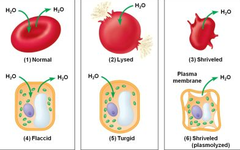
Types of Osmosis
- refers to concentration of solute outside the cell than inside cell
Isotonic solution
Hypertonic solution
Hypotonic solution

Isotonic solution
Iso=equal
equal amount/ concentration of solute inside the cell and outside the cell; equal movement of water inside and outside of cell (animal cell's normal state)

Hypertonic solution
hyper=more
more amount of solutes outside the cell than inside the cell; water leaves the cell

Hypotonic solution
hypo= less
less concentration of solute outside cell than inside cell; water moves into the cell; causes the cell to blow up
(burst in animal cells, blood cells will be lysed, normal for plant cells)

why are cell membranes different
- asymmetrical distribution of proteins, lipids, and associated carbohydrates in the plasma membrane is determined when the membrane is built by the ER and Golgi Apparatus
- Based on how they get produced and released will determine how they are arranged in cell membrane

carbohydrates on extracellular side
vary among species individuals and even cell types in and individual

active transport characteristics
- goes against concentration gradient
- all proteins involved in active transport are carrier proteins
- allows cell to maintain concentration gradients that differ from surroundings

types of active transport
Bulk transport
cotransport
basic active transport

basic active transport
transport that needs ATP to happen
sodium-potassium pump

Sodium-Postassium Pump
a transport protein that is energized by transfer of a phosphate group from the hydrolysis of ATP
(all animal cells have high potassium inside and low sodium outside)
- takes sodium out of cell through carrier protein
- with ATP
- releases it out of cell
- gains potassium and releases inside cell

membrane potential
is the voltage across a membrane
- Created by differences in the distribution of positive and negative ions across the membrane
- cytoplasm side of the membrane is negative in charge compared to the extracellular side

electromechanical gradient
Two combined forces that drive the diffusion of ions across a membrane

chemical force
an ion's concentration gradient

electrical force
the effect of the membrane potential on the ion's movement

electrogenic pump
a transport protein that generated voltage across a membrane
- store energy
- used for cellular work

electrogenic pump of animal cells
sodium potassium pump

electrogenic pump of plants (fungi/bacteria)
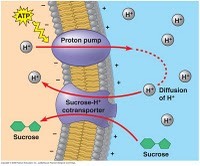
proton pump

proton pump
- involved in metabolism
- actively transports hydrogen ions H+/protons out of cell
-Hydrogen protons get concentrated on one side
- they want to come back through
- When they come back through they generate a generous amount of energy
-wind turbine

cotransport
co= together
- Active transport diffusion of a solute indirectly drives transport of other substances
- both down concentration gradient
bulk transport
- active transport
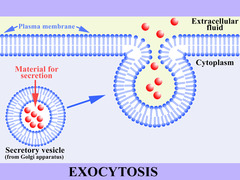
exocytosis
endocytosis

exocytosis
substances leave the cell
ex. proteins being exported from the cell
endocytosis
substances are brought into the cell

types of endocytosis
phagocytosis
pinocytosis
receptor mediated endocytosis

phagocytosis
phag= eat
bringing in larger molecules

pinocytosis
pino= drink
bringing in smaller molecules
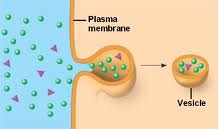
receptor mediated endocytosis
substrate binds to a receptor in order to come in to the cell
