Welding Fundamentals
 Call Kai
 Learn
Learn Practice Test
 Spaced Repetition
 Match
Match Flashcards
 Knowt Play
1/25

Earn XP
Description and Tags
VERY IMPORTANT FOR FINAL.
Name | Mastery | Learn | Test | Matching | Spaced | Call with Kai | Chat |
|---|
No analytics yet
Send a link to your students to track their progress
26 Terms
What is joining?
Welding, brazing, soldering, and adhesive bonding forming a permanent joint between parts
What is assembly?
Mechanical methods (usually) of fastening parts together; Some allow for easy disassembly
What is welding?
A joining process in which two (or more) parts are coalesced at teir contacting surfaces by applying heat and/or pressure
What are some key characteristics of welding?
Provides a permanent join
Usually most economical way to join parts
Not restricted to a factory environment
What are some limitations of welding?
Performed manually with high labor costs
Utilize high energy and are inherently dangerous
Do not allow for convenient diassembly
Joints can have quality defects that can be difficult to detect
What are the two types of welding?
Fusion & solid state welding
What is fusion welding?
Joining processes that melt the base metals
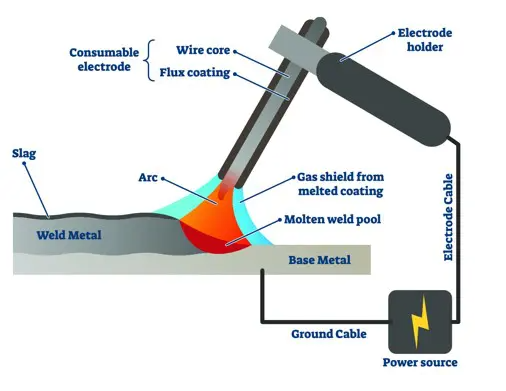
What is arc welding (AW)?
Melting of the metals by an electric arc (ie. stick welding, TIG, MIG)
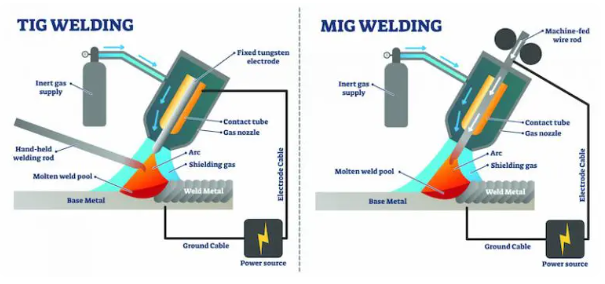
What is the difference between TIG and MIG welding?
TIG (Tungsten Inert Gas) uses a non-consumable tungsten rod to make the arc.
MIG (Metal Inert Gas) uses a consumable wire electrode that becomes the filler metal.
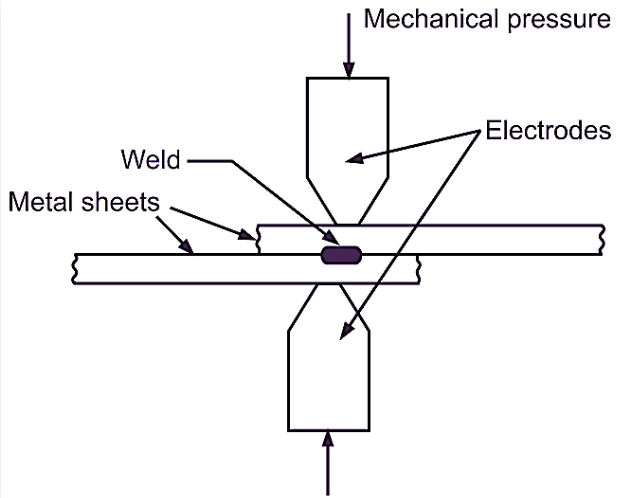
What is resistance welding (RW)?
Melting by heat from resistance to an electric current between faying surfaces held together under pressure (ie. spot welding)
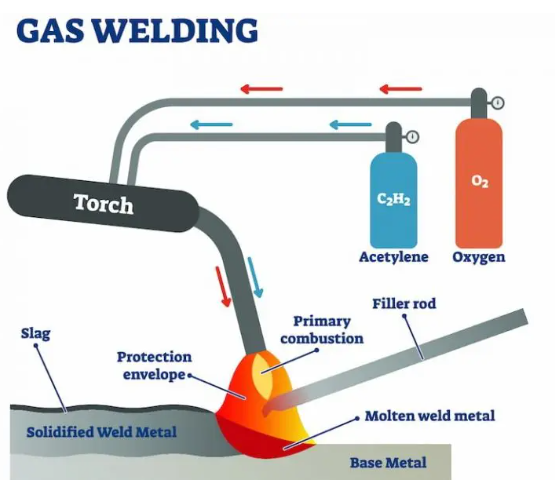
What is oxyfuel gas welding (OFW)?
Melting by an oxyfuel gas like acetylene
How does arc welding work?
During the weld, the base metal is melted and filler metal is added to the motel pool, protected by a shielding gas like argon
What is diffusion welding (DFW)?
Solid state diffusion between two surfaces held together under pressure at elevated temperature
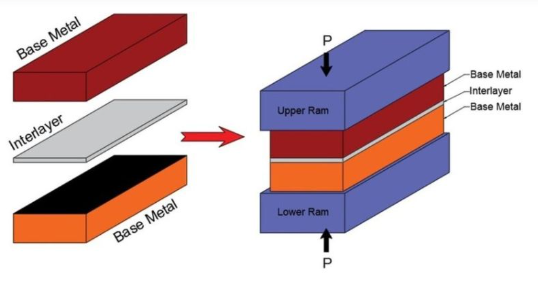
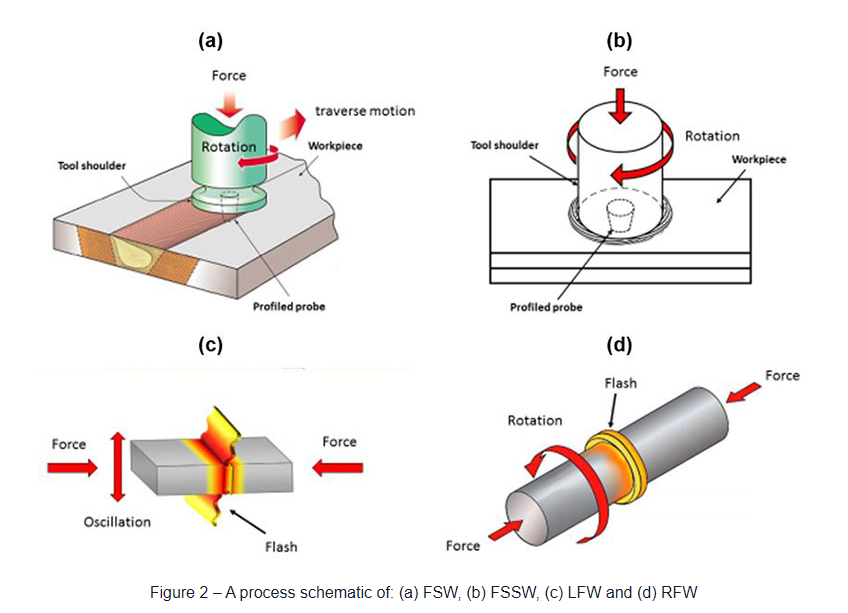
What is friction welding (FRW)?
Using heat of friction to join two surfaces together
What is the welder & fitter?
Welder manually controls path & placement of welding gun
Fitter arranges parts prior to welding
What are some safety hazards with welding?
High temperatures of molten metals
Certain processes use fuels (acetylene in OFW) that are fire hazards
High electrical power can cause risk of shock
UV radiation from arc welding can be dangerous to eyes (requires welding helmet)
Sparks, smoke, fumes from metal & flux must be ventilated properly
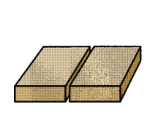
What kind of joint is this?
Butt joint
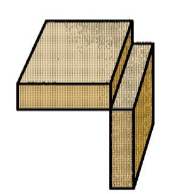
What kind of joint is this?
Corner joint
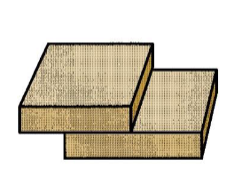
What kind of joint is this?
Lap joint
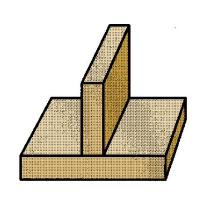
What kind of joint is this?
Tee joint
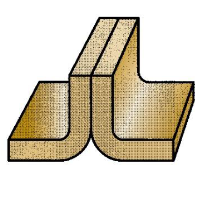
What kind of joint is this?
Edge joint
How does fusion work with welding?
Fusion requires high density heat energy to cause localized melting of base metals with the least amount of energy possible
What is power density?
Power transferred to workpiece per unit surface area [W/mm²]
What happens if the power density is too high? Too low?
If it’s too high, localized temperatures vaporize metal in the affected region.
If it’s too low, heat is conducted into workpiece so melting never occurs.
What are the features of a fusion welded joint?
Fusion zone, weld interface, heat affected zone (HAZ), unaffected base metal zone
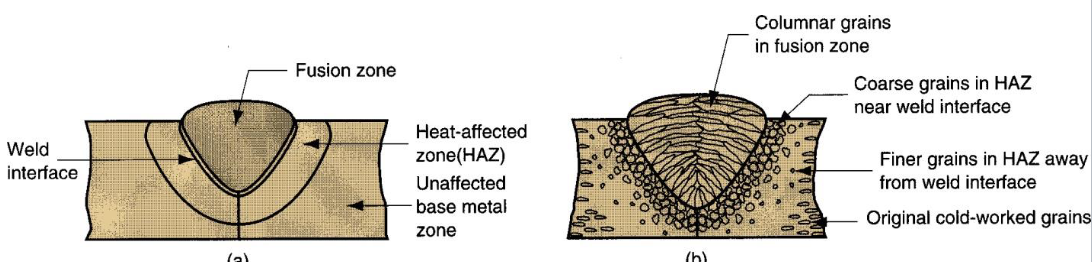
What is the heat affected zone?
Metal has experienced temps below melting but high enough to change the microstructure
Heat treated region that typically negatively affects the mechanical properties.