California Driver's Handbook
 Call Kai
 Learn
Learn Practice Test
 Spaced Repetition
 Match
Match Flashcards
 Knowt Play
1/133

Earn XP
Description and Tags
Name | Mastery | Learn | Test | Matching | Spaced | Call with Kai | Chat |
|---|
No analytics yet
Send a link to your students to track their progress
134 Terms
True or False: When controlling the vehicle, it is not that important to keep both hands on the wheel.
False: Whenever possible, have both hands on the wheel to keep control of the vehicle safely
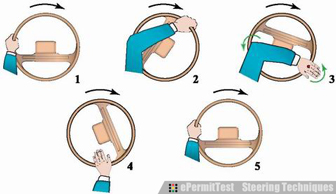
What is hand-over-hand steering?
Starting with both hands on the wheel, reach across the wheel with one hand to grab the opposite side, let go of the wheel with the other hand, and pull up the hand on the wheel.
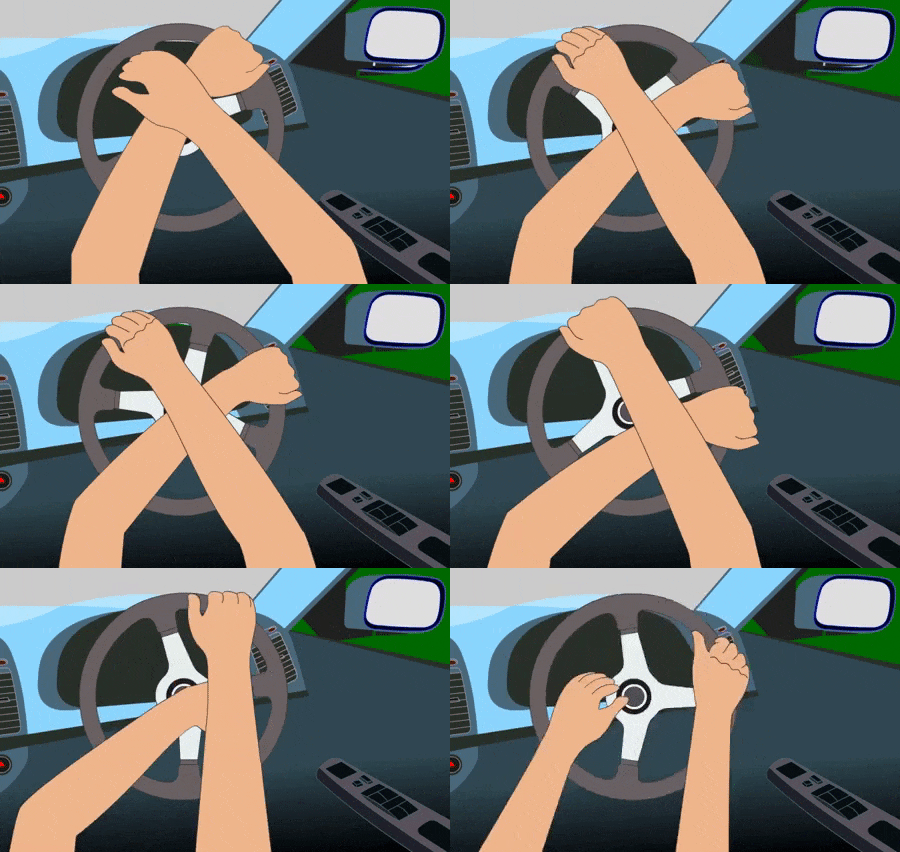
When do you use hand-over-hand steering?
When turning at low speeds, parking, or recovering from a skid.
What is hand-to-hand steering?
Placing the hands at either 9 and 3 OR 8 and 4 without crossing the hands over the middle of the steering wheel.
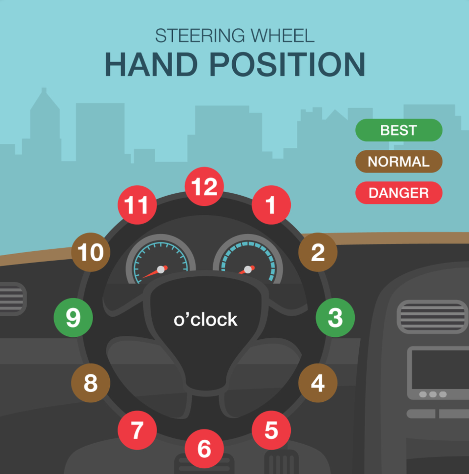
When do you use hand-to-hand steering?
This is the classic steering wheel method of pushing and pulling.
When do you use hand-to-hand steering? (2)
when turning while backing up and seeing where you are going behind you. This involved placing your hand at 12
when operating vehicle controls that make you remove a hand from the wheel
What situations do you signal? (3)
Turning (at least 100 ft before)
Changing lanes (at least 5 seconds before changing lanes when on a freeway)
Pulling in or away from a curb
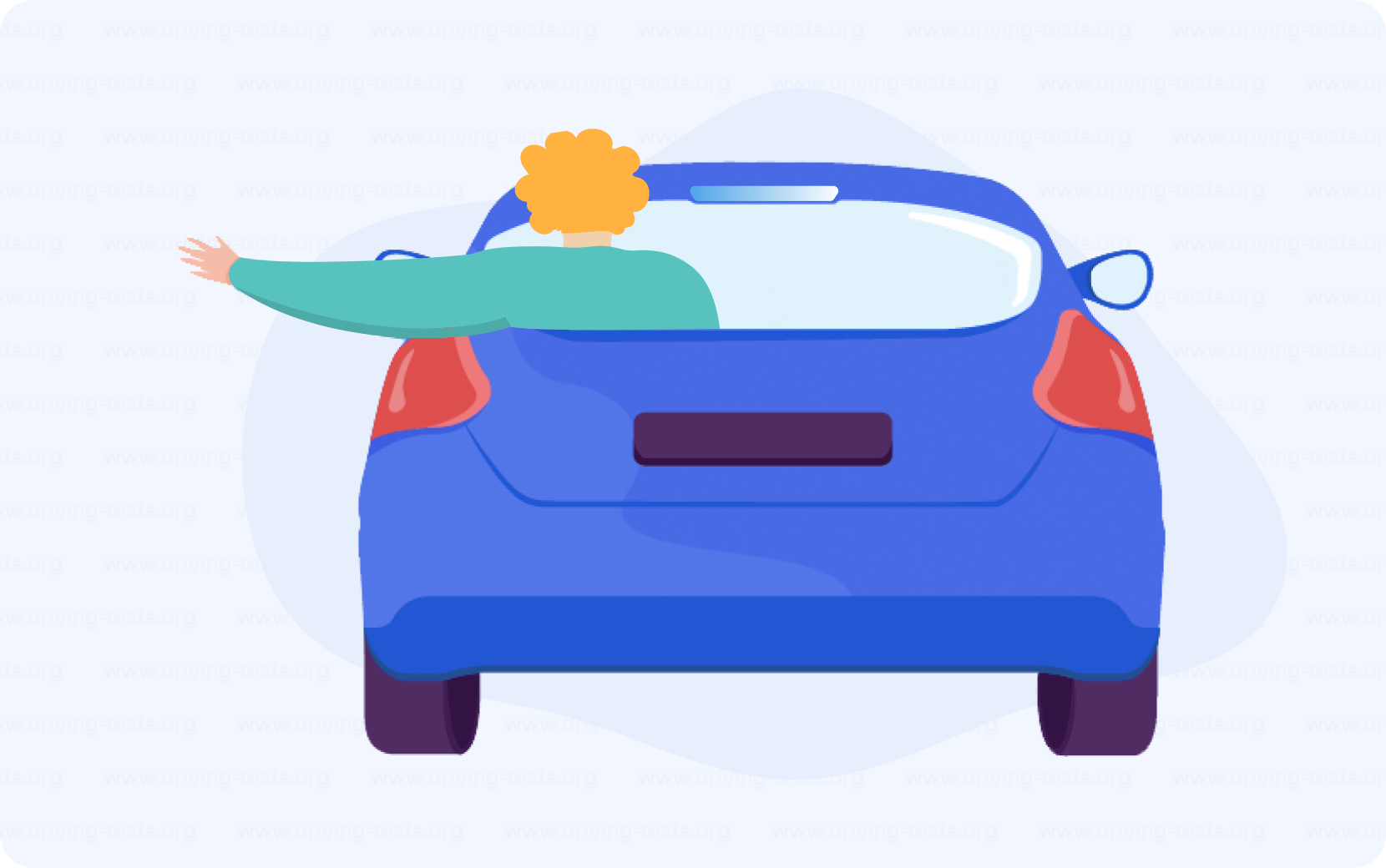
Left turn arm signal
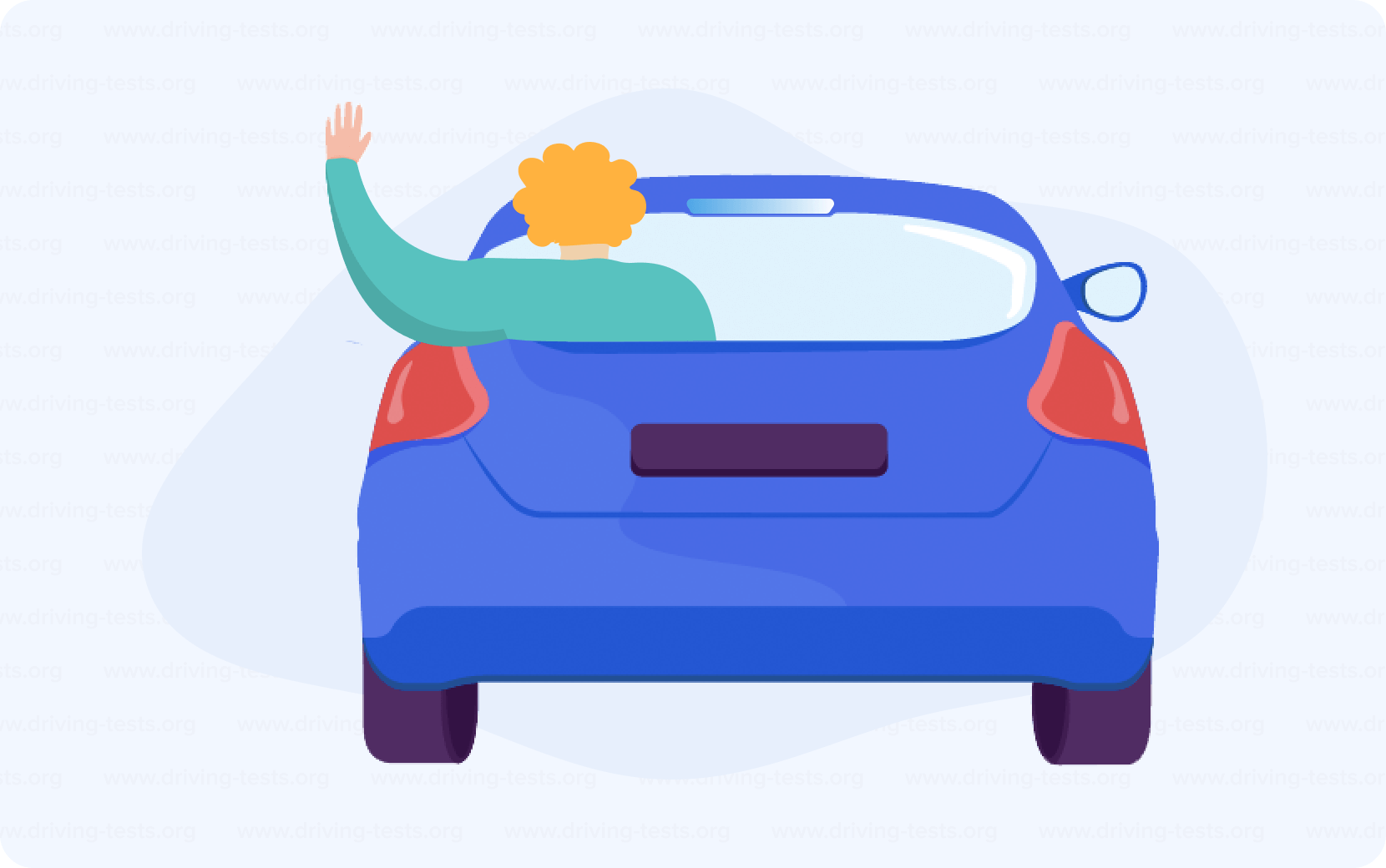
Right turn arm signal
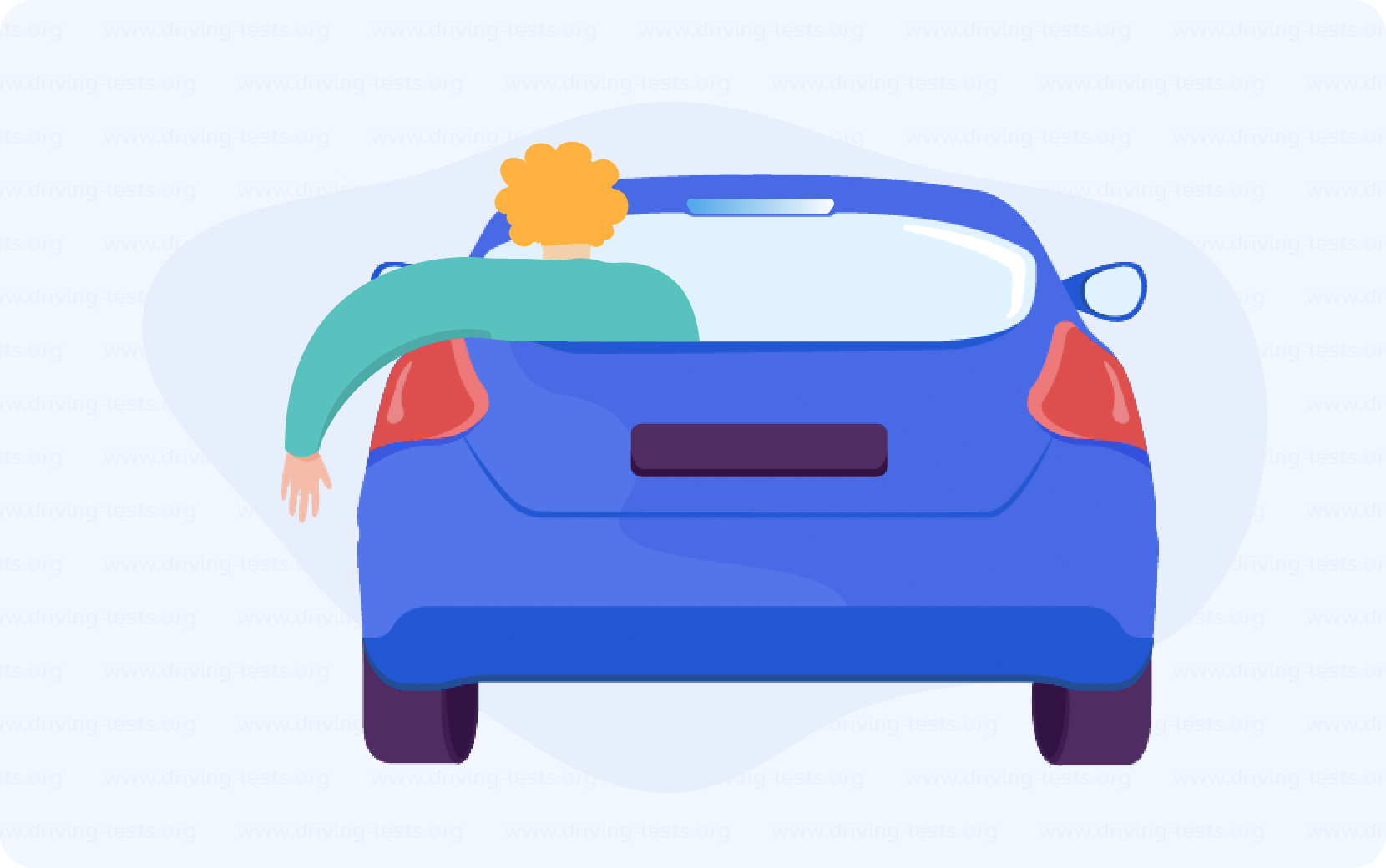
Slow or stop arm signal
How far before turning should you signal?
At least 100 ft before turning
How long before changing lanes should you signal on the freeway?
At least 5 seconds
True or False: You still need to signal when there are no cars or people around you.
True. Even if you can’t see other vehicles or people, they could still be there, especially at night.
When should you use the horn? (2)
to avoid collisions
to alert traffic on narrow mountain roads where you can’t see at least 200 feet ahead
You need to dim high-beams to low beams within __ feet of an approaching vehicle.
500 feet
You need to dim high-beams to low beams within __ feet of following a vehicle.
300 feet
True or False: It is illegal to drive using only parking lights.
True.
You need to use your headlights when: (7)
it’s too dark to see from 1,000 feet away
it’s 30 minutes after sunset or 30 minutes before sunset
in adverse weather
weather prevents you from seeing other vehicles
on mountain roads and tunnels
the road signs say to
you need to help other drivers see your vehicle
When should you use emergency flashers? (2)
when you see a collision or hazard ahead
when you are about to stop for vehicle trouble
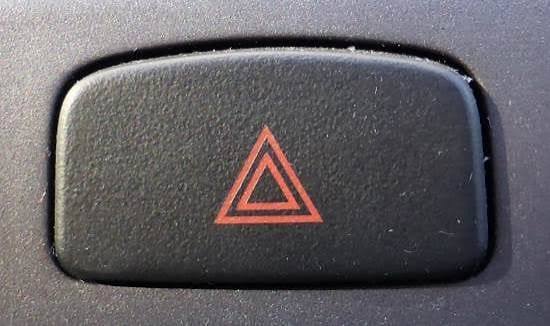
Emergency flashers
How do you use emergency flashers when you see a collision or hazard ahead? (3 steps)
turn on flashers
lightly tap the break 3-4 times
use hand signal when slowing or stopping
How do you use emergency flashers when you are about to stop for vehicle trouble? (3 steps)
turn on flashers (or turn signals, if there are no flashers)
pull off of the road away from traffic OR stop where people can see you
don’t stop on a hill or curve
call for emergency roadside assistance and stay in the vehicle
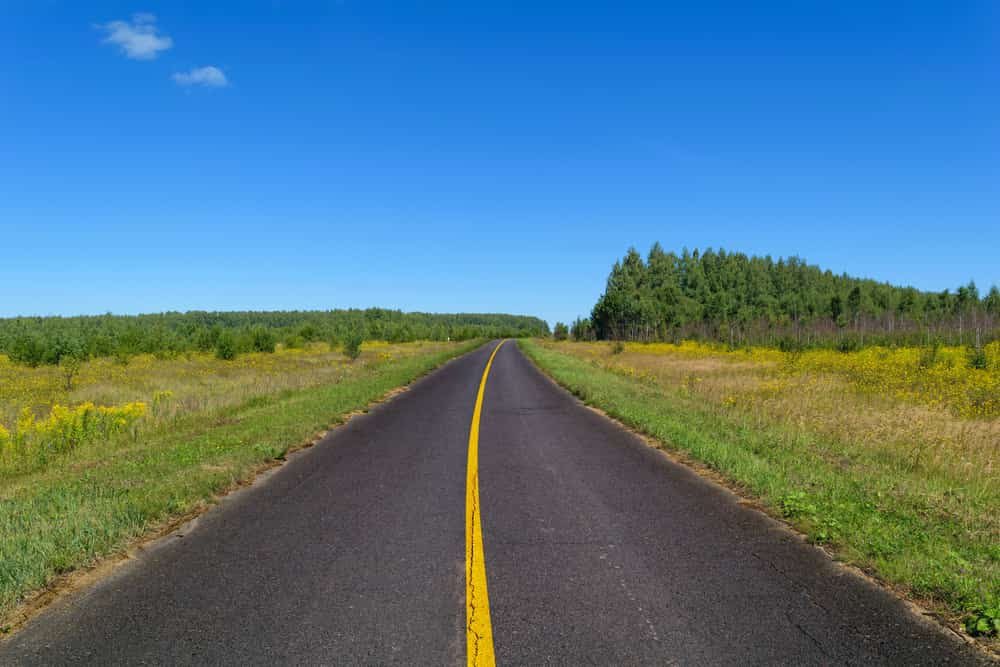
Single Solid Yellow Line
What is it and how do you use it?
It is the center of the road for two-way traffic.
It means that you should not pass the vehicle in front of you if there is only one lane.
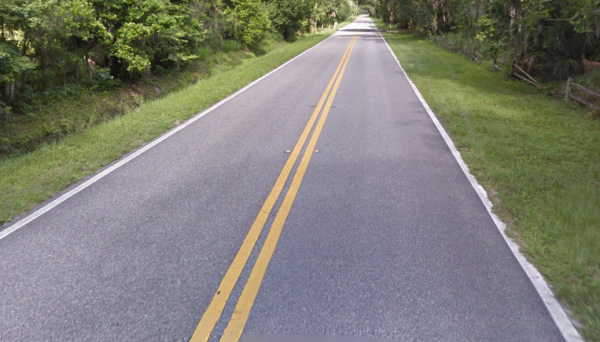
Double Solid Yellow Lines
When can you pass over it? (4)
if you are in an HOV carpool lane with a designated entrance
if you are instructed to do so by construction
if you are turning left across a single set to enter or exit a driveway or private road
if you are turning left across a single set to make a U-turn
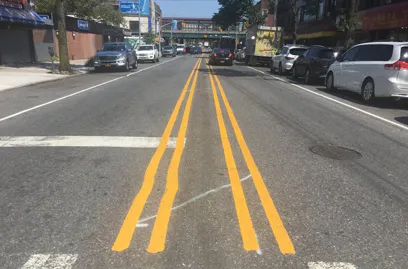
What does it mean when there are two sets of double solid yellow lines that are 2+ feet apart?
It is a barrier. You cannot go over it, make a left turn crossing it, or make a U-turn unless there is a designated opening.
What does HOV mean?
It means high-occupancy vehicle.
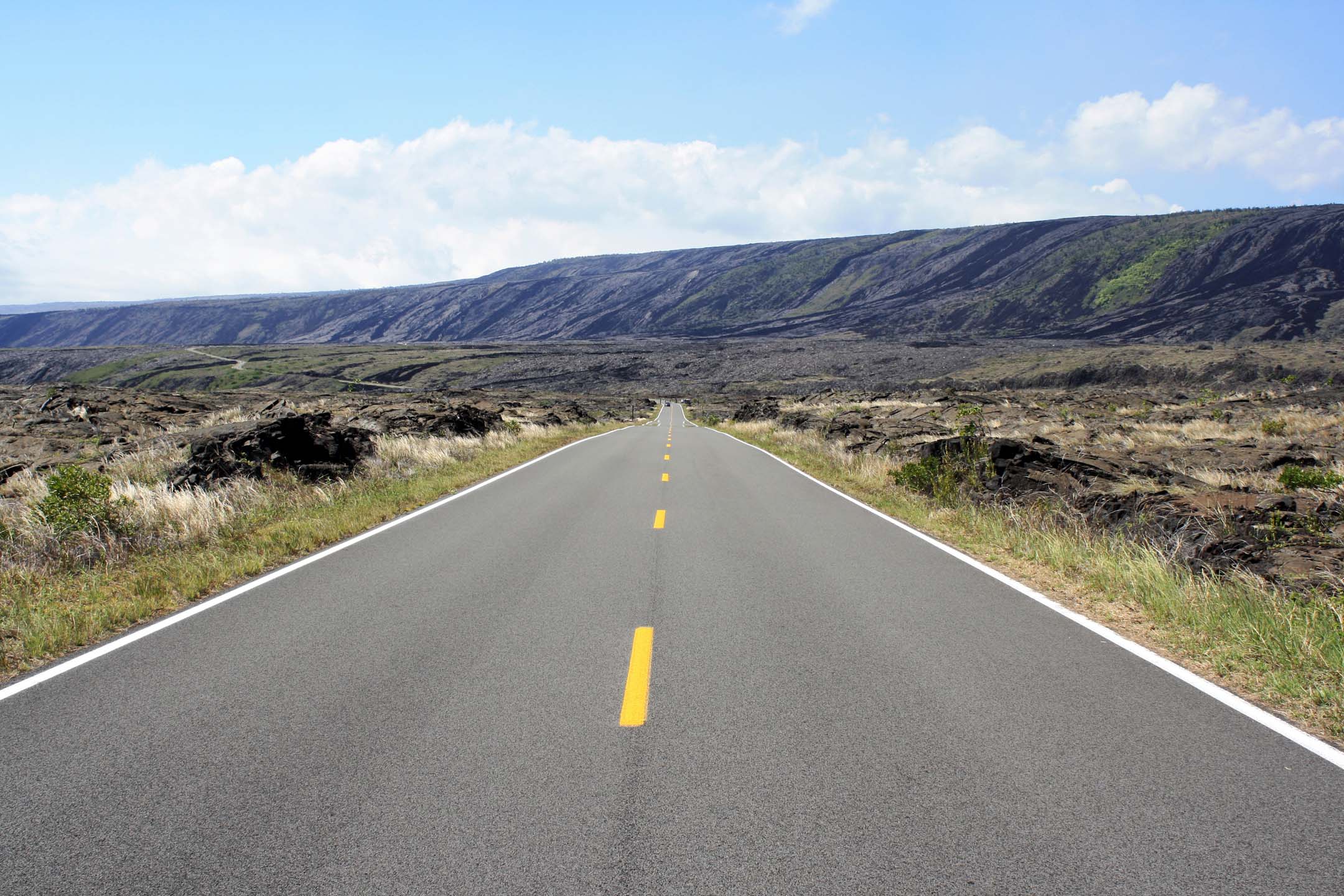
Broken Yellow Line
When can you pass over it?
You can pass over it if the line is next to your driving lane.
What do yellow lane lines mean?
They separate traffic going in opposite directions.
What do white lane lines mean?
They separate traffic going in the same direction.
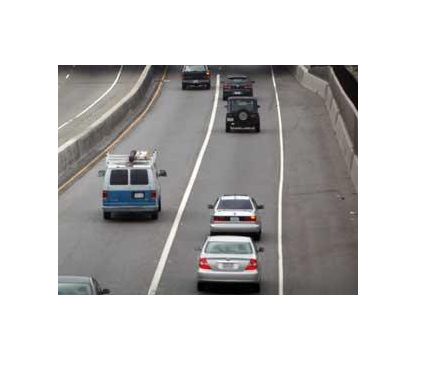
Single Solid White Line
What is it and how do you use it?
It shows traffic lanes going in the same direction, or in marking one-way streets.
You generally can’t cross them.
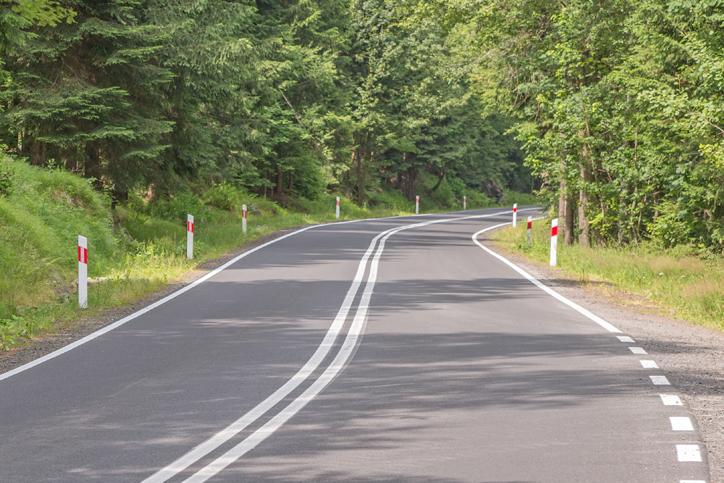
Double Solid White Lines
What is it and how do you use it?
There are a lane barrier between regular use and preferential use lanes. They also are used in or near freeway on and off ramps.
You should not change langes over these lines. Instead, wait for a single broken white line to emerge.
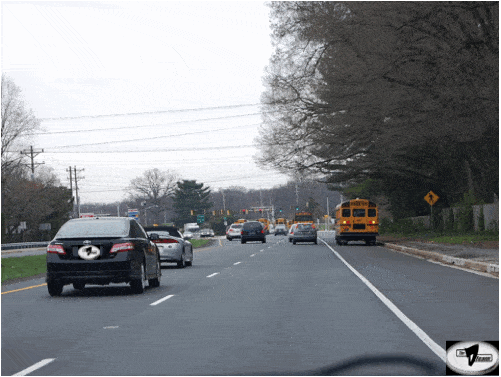
Broken White Lines
When are they used?
They separate traffic lanes on roads with 2+ lanes in the same direction.
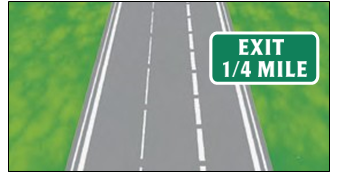
What do large, broken white lines mean?
They are end of lane markings. They signal the end of freeway and street lanes, so you need to prepared to exit the freeway or exit/merge the lane.
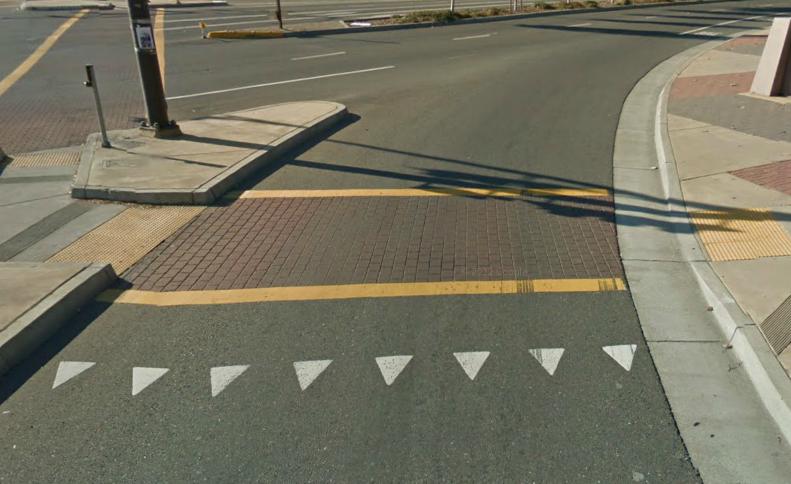
What is it and what does it mean?
It is a yield line.
It shows approaching vehicles to yield or stop, pointing the triangles at the approaching vehicles.
How are traffic lanes numbered?
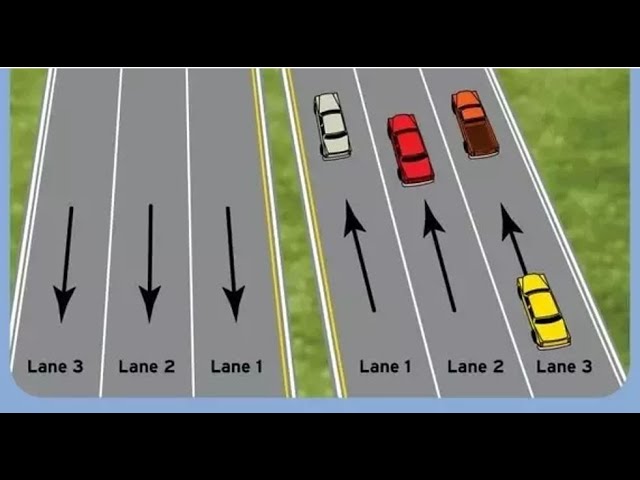
What lane is the fast lane?
The leftmost lane, or number one. You can use it to pass or turn left.
When do you need to use the right lane? (2)
when entering/exiting traffic
when entering the road from a curb or shoulder
What to do when changing lanes? (7 steps)
signal
check mirrors
check traffic behind and beside you
look over your shoulder in the direction you plan to go, and make sure the lane is clear
check blind spots
make sure there is enough space in the lane to go
don’t slow down
What is the passing lane?
It is the leftmost lane closest to the center divider on a multilane road. It is used to pass other vehicles.
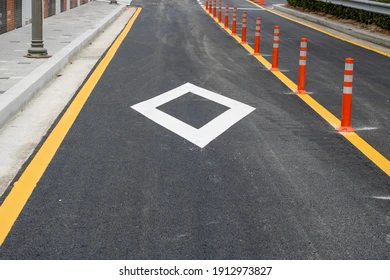
What lane is this?
Who can ride here?
This is a carpool/HOV lane.
Carpools, buses, motorcycles, and low-emission vehicles with decals can drive here.
What is a center left turn lane?
In the middle of a two-way street, it is a lane specifically for left turns.
How far can you drive in a center left turn lane?
200 ft
What are the lines in a center left turn lane?
Two lines: broken inside, solid outside
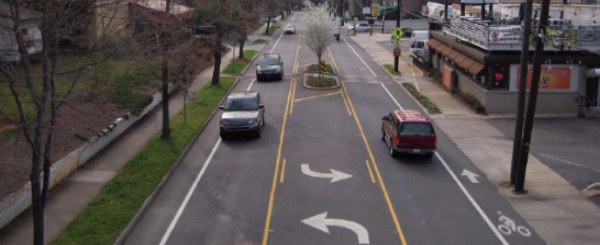
What to do when using the center left turn lane? (5 steps)
look for other vehicles coming towards you
signal
look over shoulder and check blind spots
merge completely
turn when safe
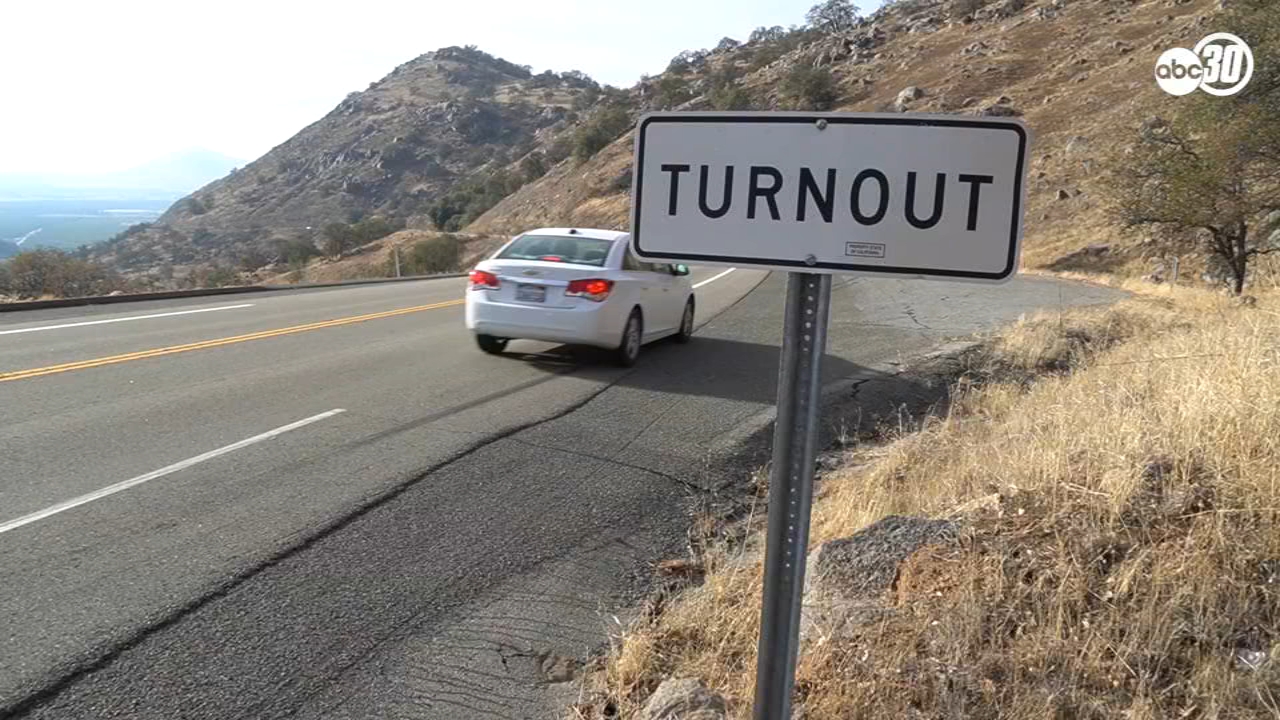
What are turnout areas?
If passing is unsafe and you are driving slowly on a two-lane road, you might merge to these areas on the side of the road to let cars pass
When do you have to use a turnout area?
When you are driving slowly on a two-lane road, where passing is unsafe, and there are 5+ vehicle following you.
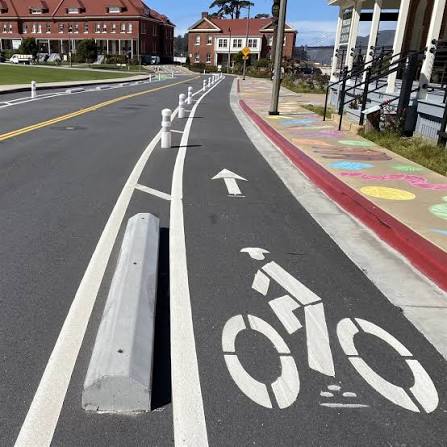
When can you drive in a bicycle lane? (3)
when parking (where permitted by signage)
when entering or leaving the road
when turning right
When should a car drive in the bicycle lane to turn right?
When you are within 200 feet of the intersection.
What type of bicycle lane is a bike lane?
It runs along streets adjacent to vehicle traffic. It has a single solid white line that turns into dashes near the intersection.
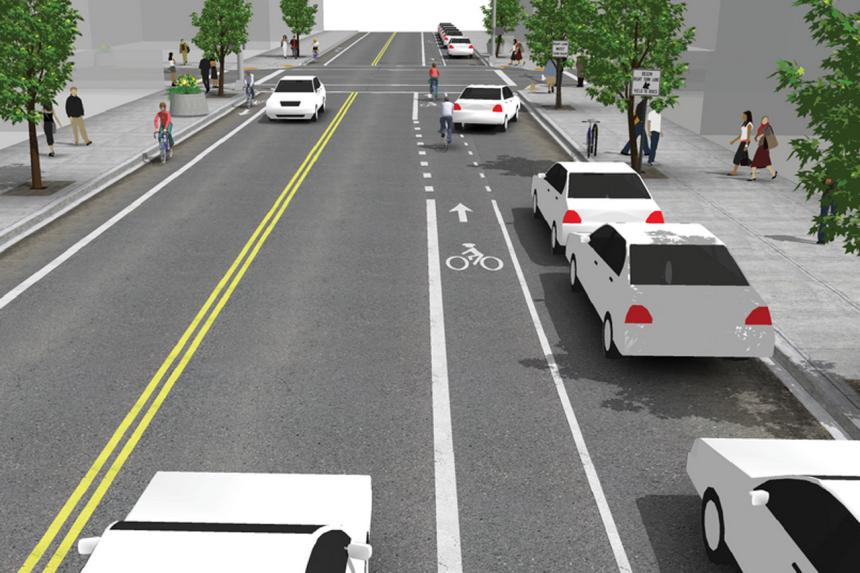
What kind of bicycle lane is this?
A bike lane.
What type of bicycle lane is a buffered bike lane?
It uses chevrons or diagonal markings to provide greater separation from traffic and on-street parking.
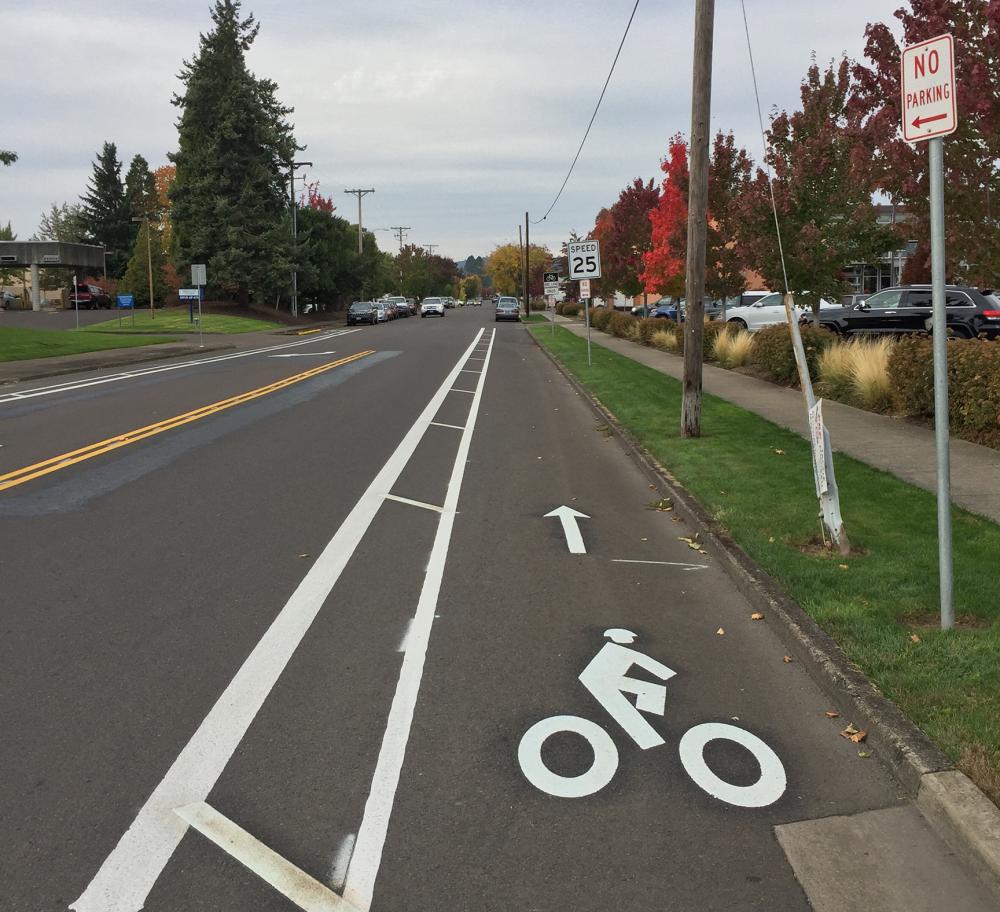
What type of bicycle lane is this?
A buffered bike lane.
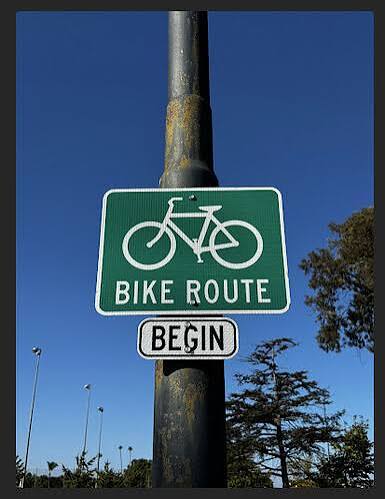
What type of bicycle lane is a bike route?
It uses bike route signs and shared road markings to designate a preferred route for bicycles on streets shared with vehicle traffic.
What type of bicycle lane is a bicycle boulevard?
It prioritizes bicycle traffic on streets shared with vehicle traffic.
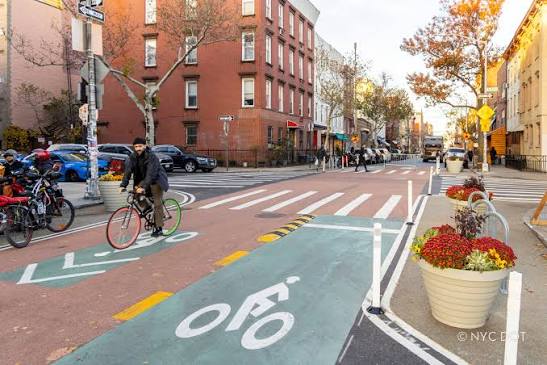
What type of bicycle lane is this?
A bicycle boulevard.
What type of bicycle lane is a separated bikeway?
A lane physically separated from motor vehicle traffic and for exclusive use of bicyclists.
What else is a separated bikeway known as? (2)
cycle track
protected bike lane
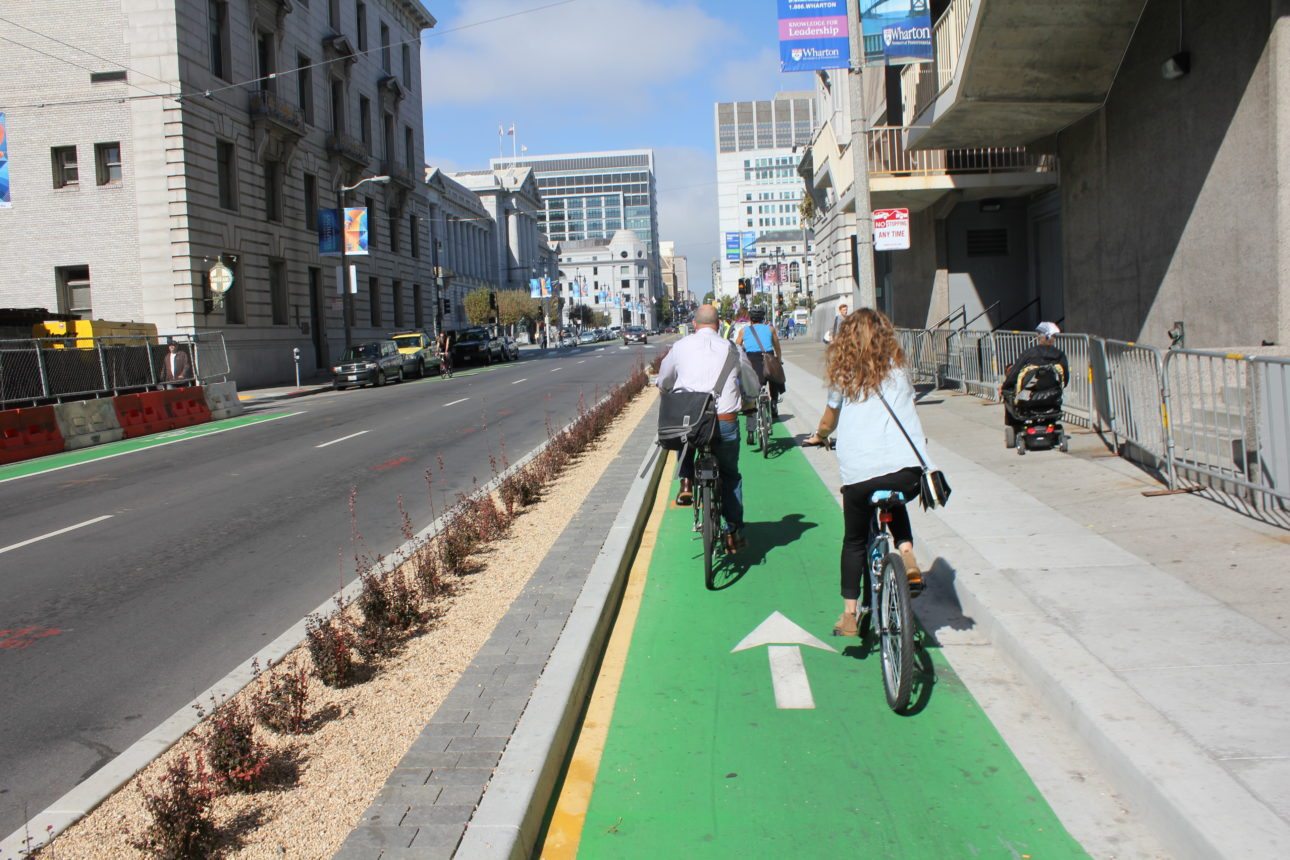
What kind of bicycle lane is this?
A separated bikeway.
What type of bicycle lane is a shared roadway?
It is when bicyclists can occupy the same lane as drivers. There are appropriate markings.
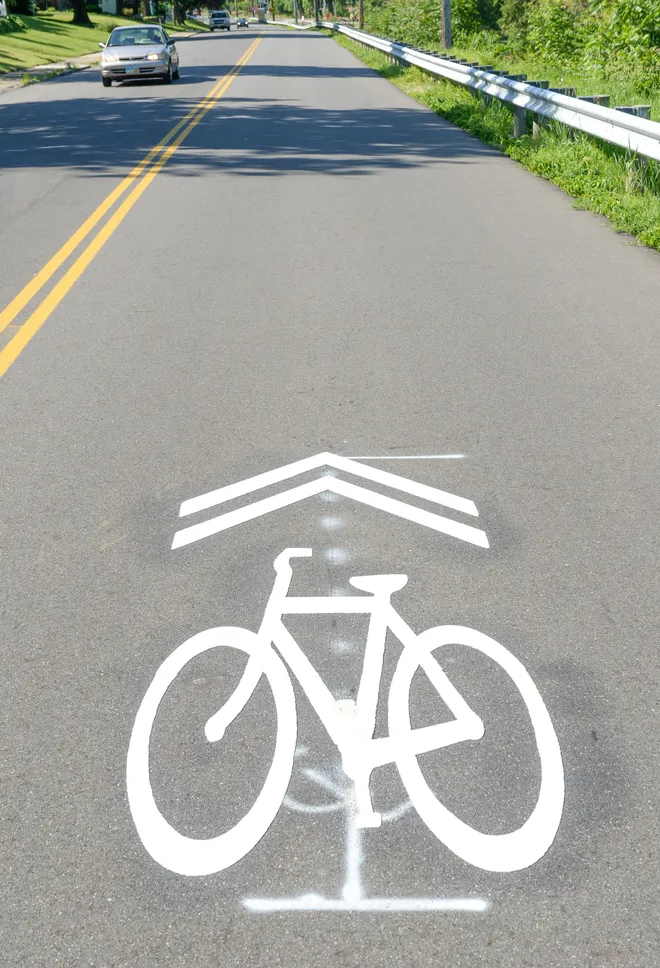
What kind of bicycle lane marking is this?
A shared roadway bicycle marking.
In a shared roadway, what should the distance be between the car and the cyclist?
3 feet of distance.
How do you do a right turn? (7 steps)
drive close to the right edge of the road
watch for pedestrians and bikes
signal 100 ft before
look over right shoulder and reduce speed
stop behind limit line, crosswalk, or intersection
look both ways and turn
complete turn in right lane of the street you are turning onto
What does a limit line look like?
It is a solid white line signaling where to stop at an intersection.
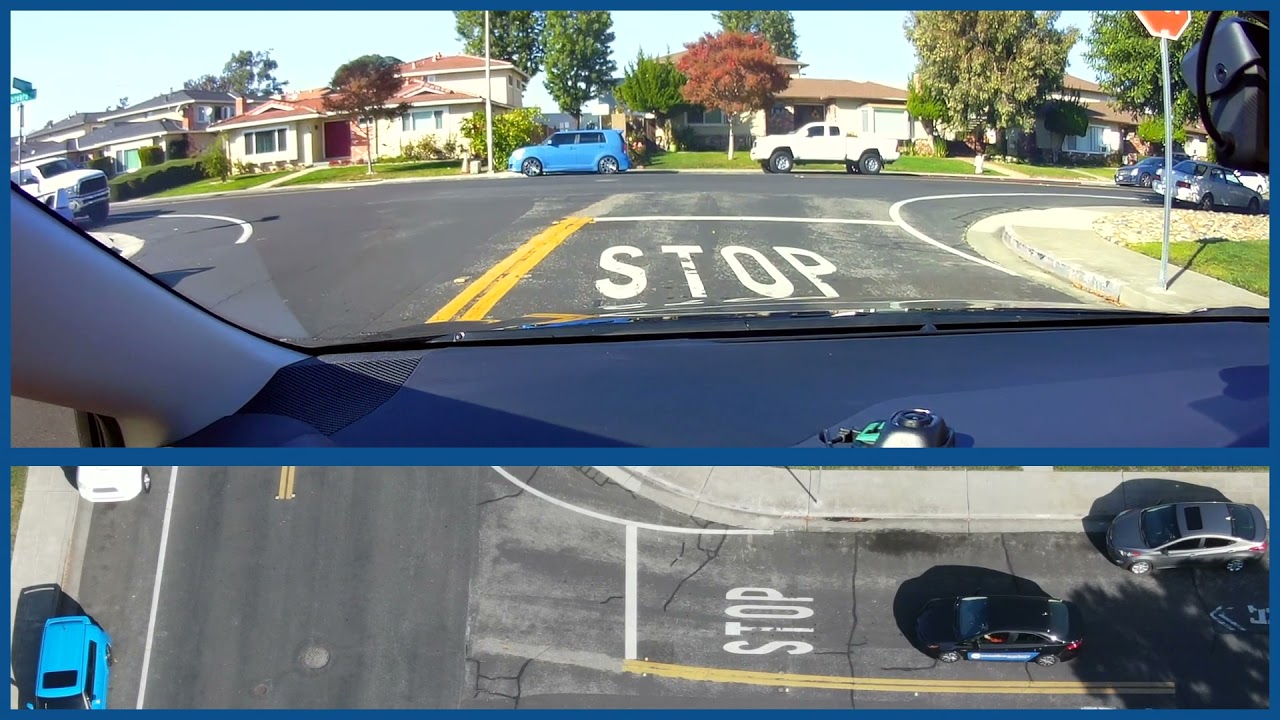
When should a car enter the right turn lane to turn right?
Within 200 ft from the turn.
When can you not right turn against a red light.
When there is a “No Turn on Red” sign.
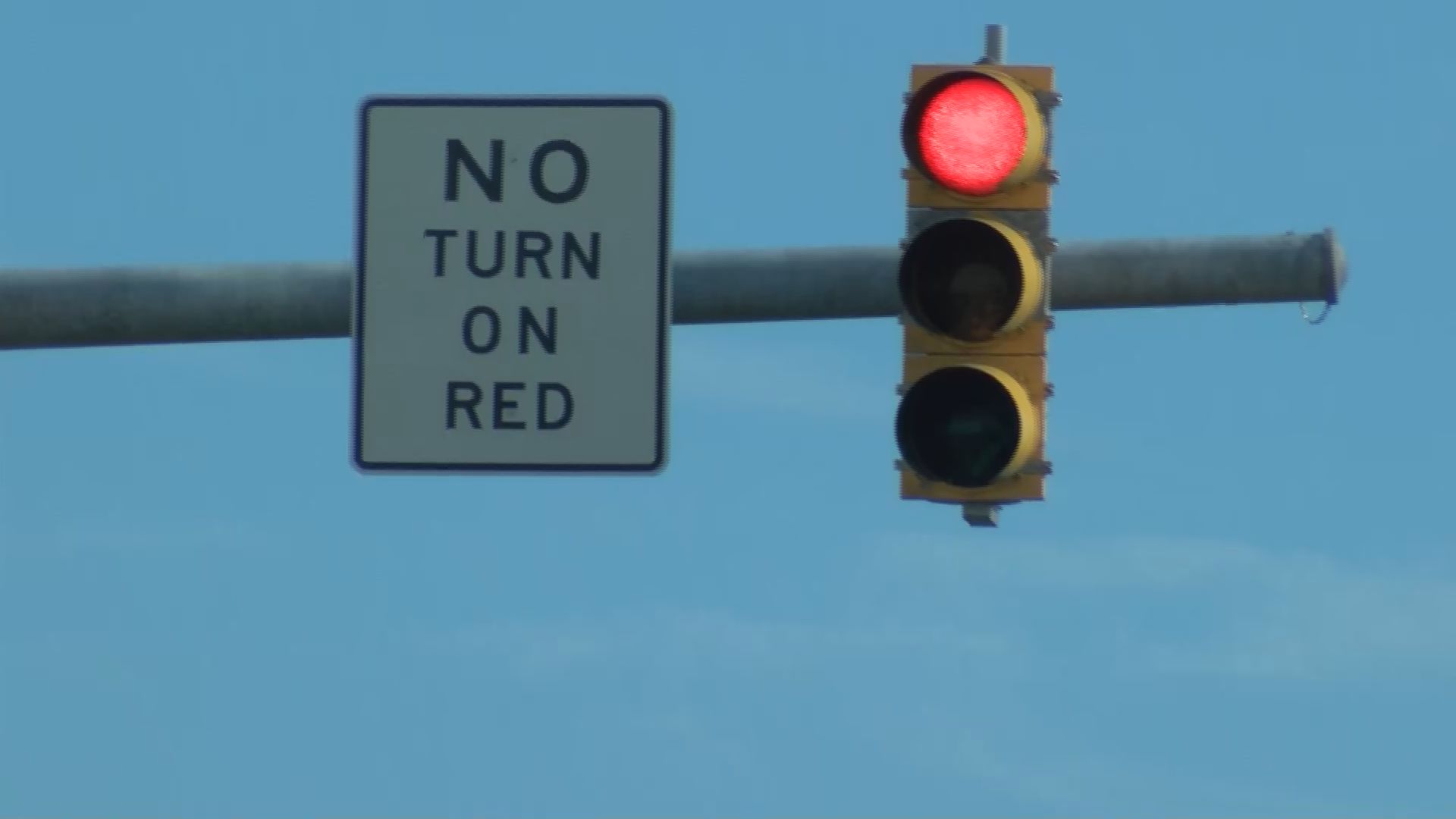
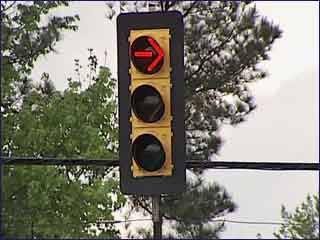
What does this mean?
You cannot turn right if stopped at this light. You must wait until the light changes to green.
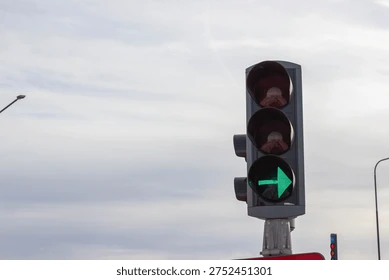
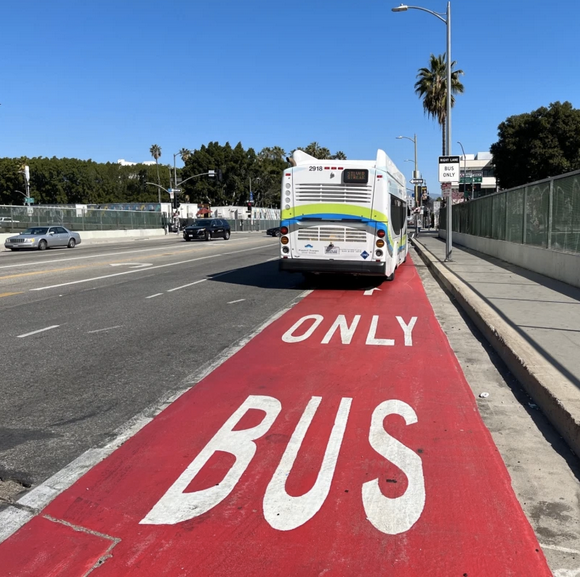
What is this called?
A public transit bus lane.
What can you not do in a public transit bus lane as a car? (4)
cannot drive
cannot stop
cannot park
cannot leave vehicle
What can you do in a public transit bus lane as a car?
You can cross to make a right turn, checking for approaching vehicles and pedestrians accordingly.
Can you use a dedicated right turn lane without stopping?
Yes, but always yield to pedestrians in crosswalk.
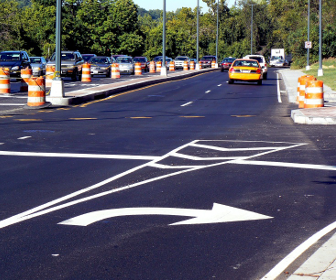
What is this called?
A dedicated right turn lane.
Can you use a dedicated right turn lane on a red light?
Yes, but if there is a light or sign on the right curb of the lane, then you have to obey that.
How do you do a left turn? (7 steps)
drive close to the center divider or into the left turn lane
watch for pedestrians and bikes
signal 100 ft before
look over left shoulder and reduce speed
stop behind limit line, crosswalk, or intersection
look boke ways and turn
complete turn in left lane of road you are entering
When should a car enter the left turn lane to turn left?
Within 200 feet of the turn, without crossing any solid lines.
What direction should the wheels point before starting a left turn?
You should keep them pointed straight until starting the turn.
When can you turn left on a red light?
If you are turning from a one-way street onto another one-way street, granted no signage prevents the turn.
What is a U-turn?
When you turn the vehicle around to go back in the direction you came.
Where on the road can you do a U-turn? (2)
left turn lane
far-left lane
Where areas can you do a U-turn? (4)
across a double yellow line
in a residential district if no vehicles are approaching you within 200 feet
at an intersection on a green traffic light or arrow, unless a “No U-Turn” sign is posted
on a divided highway if a center divider opening is provided
True or False: You can do a U-turn at or on a railroad crossing.
False.
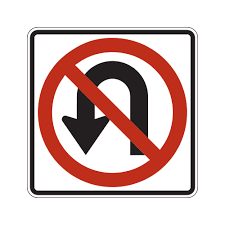
What does this mean?
No U-Turn
True or False: You cannot do a U-turn on a divided highway by crossing the dividing section, curb, strip of land, or two sets of yellow lines.
True.
How far do you need to clearly see around you to do a U-turn?
200 feet in each direction.
True or False: You cannot do a U-turn on a one-way street.
True.
True or False: You can do a U-turn on front of a fire station.
False. You can’t even use the driveway to do so.
True or False: You can do a U-turn in business districts.
False, unless at an intersection or an opening on a divided highway.
How do you brake? (3 steps)
remove foot from the accelerator and let the vehicle slow
lightly press the brake until a full stop
do not cross the limit line
How can you tell how close to stop behind another vehicle?
You need to see their rear wheels after braking.
True or False: When merging onto the highway, you have right-of-way.
False. Highway traffic has right-of-way.
How do you merge onto the highway? (7 steps)
be in the proper lane on the on-ramp
be at or near the speed of traffic
merge when safe without stopping
use mirrors and signals
before, look quickly over shoulder, and always be checking blind spots
leave 3 seconds of space between you and the vehicle in front
don’t cross solid lines
What is the three second rule?
There should be at least three seconds of space between you and other cars.
How much space should be between you and other cars?
3 seconds.
True or False: If you need to cross several lanes, you need to signal and cross them one at a time.
True.
How do you exit a highway? (5)
know and be aware of the approaching exit
change lanes one at a time, signaling and looking over your shoulder
signal 5 seconds before exiting
be at a safe speed
don’t cross solid lines
When should you signal before exiting a highway?
5 seconds before, or 400 feet.
To merge, enter, or exit traffic from a full stop, you need a space that is __ on city streets.
Half a block, or 150 feet.
To merge, enter, or exit traffic from a full stop, you need a space that is __ on the highway.
A full block, or 300 feet.
If approaching a hill or curve, you should pass when it is at least __ ahead.
1/3 of a mile ahead.
How do you pass? (5 steps)
signal that you plan on passing
check your blind spots
drive into the passing lane
speed up to pass the vehicle
signal and return to your original lane
When should you not pass? (4)
when approaching a hill or curse and cannot see approaching traffic
when you are within 100 feet of an intersection, bridge, tunnel, railroad crossing, or other hazardous area
at crossroads and driveways
when you don’t have enough space to return to the lane