Anatomy & Physiology I Lab (Chapter two: Microscope) Practical I
 Call Kai
 Learn
Learn Practice Test
 Spaced Repetition
 Match
Match Flashcards
 Knowt Play
1/52

There's no tags or description
Looks like no tags are added yet.
Name | Mastery | Learn | Test | Matching | Spaced | Call with Kai | Chat |
|---|
No analytics yet
Send a link to your students to track their progress
53 Terms
compound light microscope
What are microscopes used in lab called?
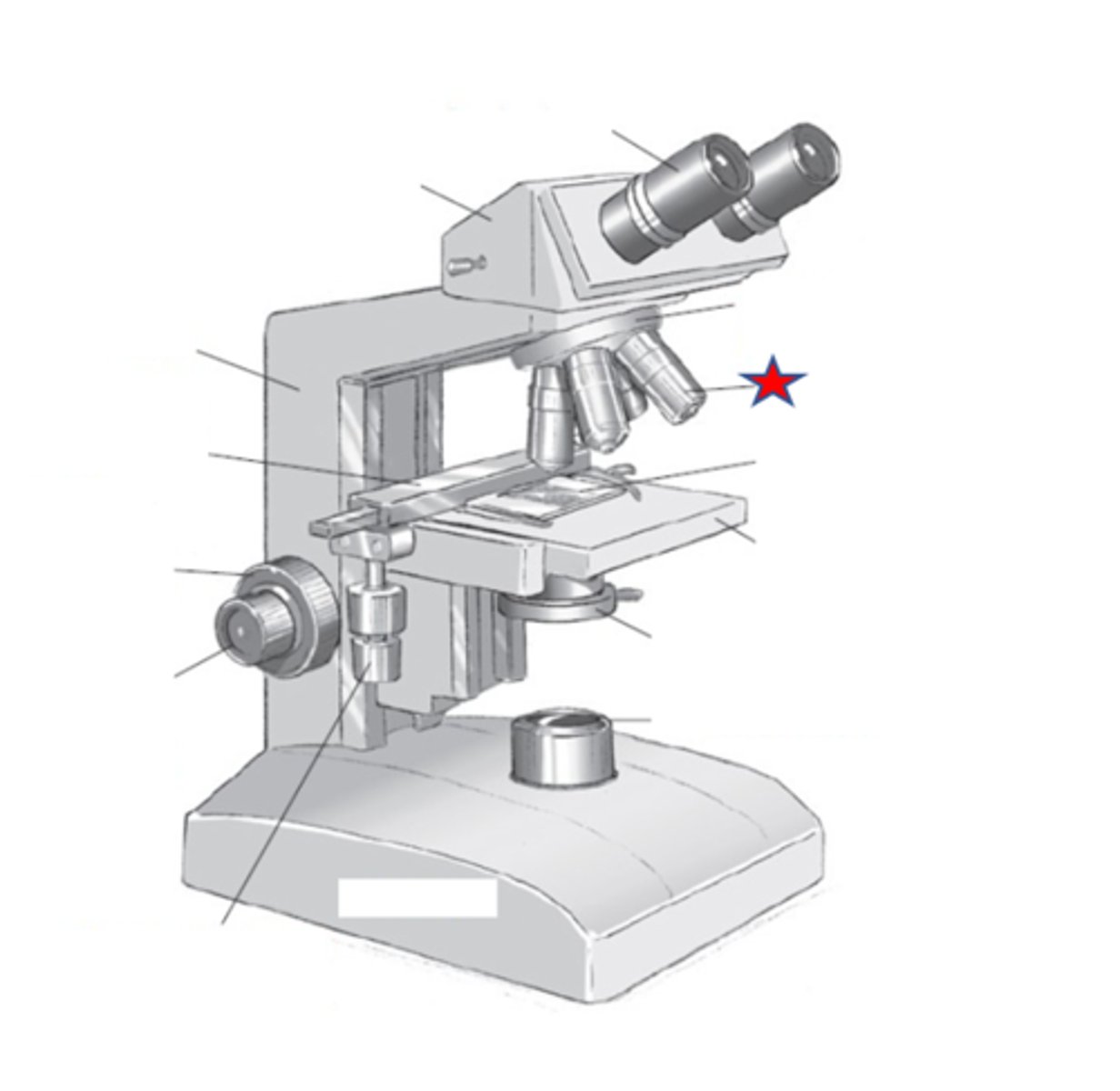
objective lens
Name the starred region in the image.
depth of field
____________ __________ ____________: How much of the total thickness of a specimen is in focus at each magnification.
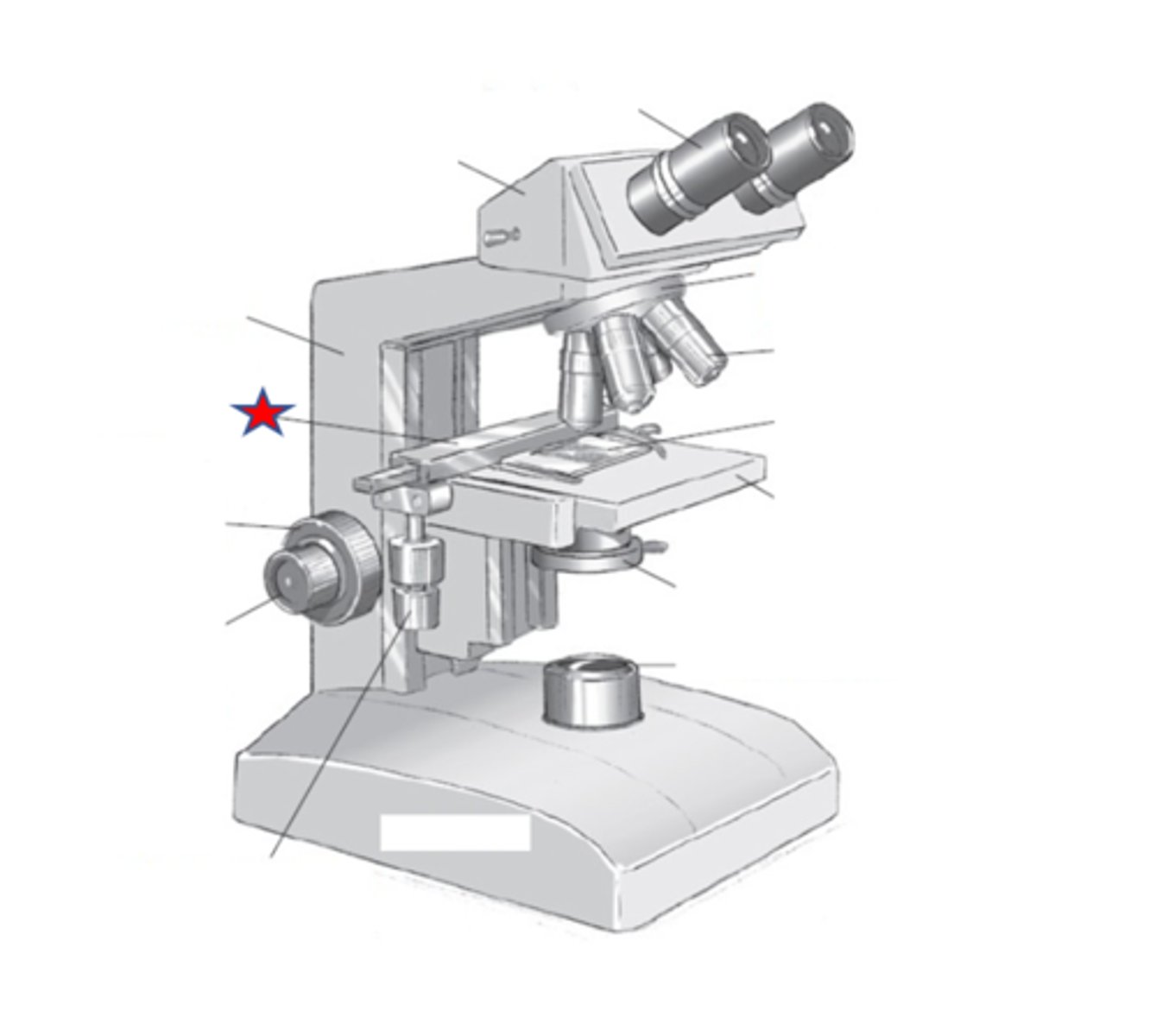
mechanical stage
______________ __________: Platform that holds the slide in place.
stage aperture
____________ _______________: Opening in the stage that allows light to pass through the slide. Not shown in microscope images.
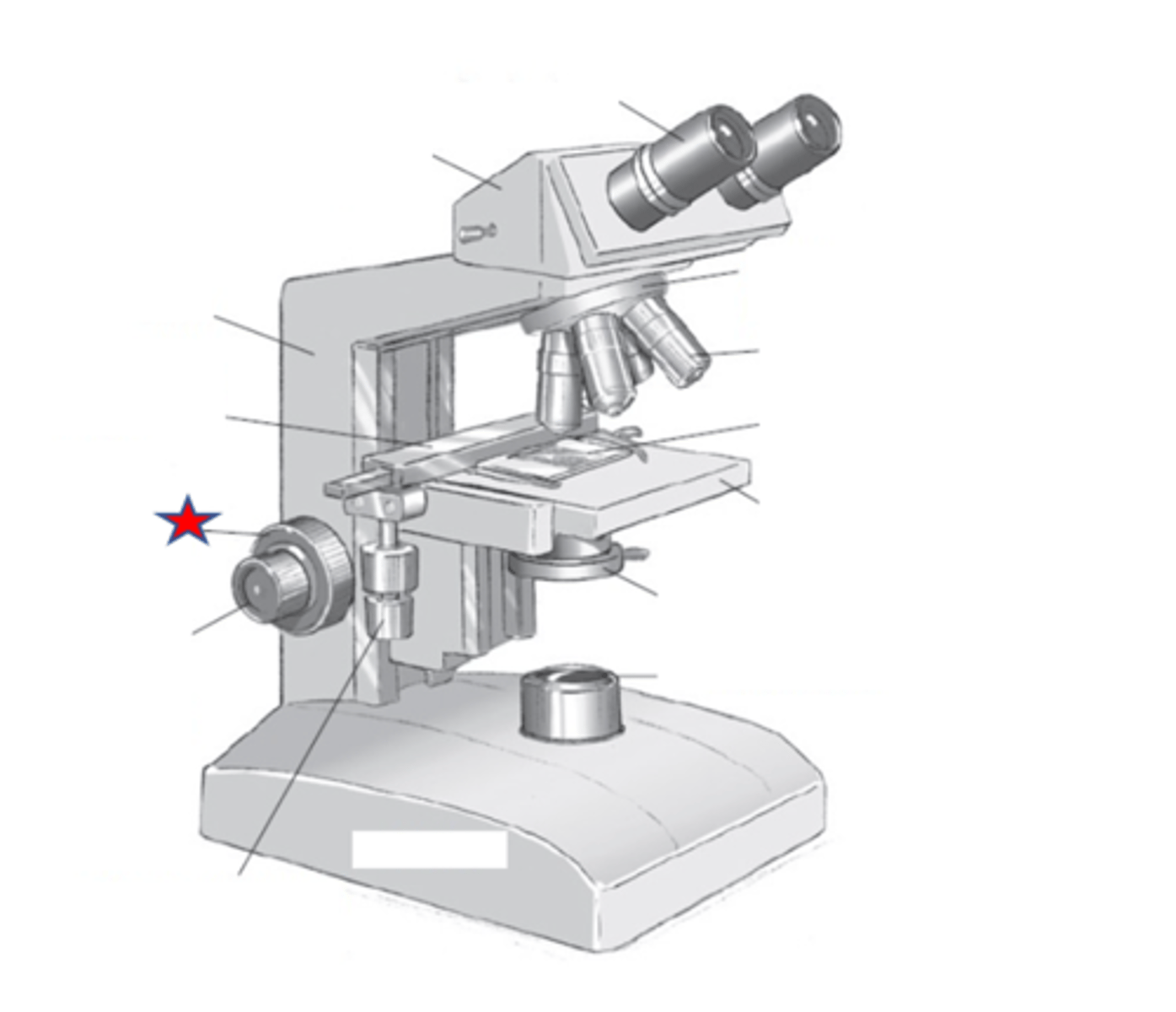
coarse adjustment knob
__________ ____________ ____________: Moves the stage up and down in large increments. NEVER use this knob when the high power objective lens is in place.
both
Transport: Always use ___________ hands while carrying the microscope.
lens paper
Lens care: Never use facial tissue, paper towels, clothing, water, or saliva to clean the micro scope lens. Ask for _________ ___________ to properly clean the lens.
scanning
Storage of microscope:
-Remove slide
-Rotate to the _____________ objective lens
-Lower stage
-Place back into cabinet
edges
Handling slides: Hold slides by the _____________ so you do not leave smudges. Only work with ONE slide at a time.
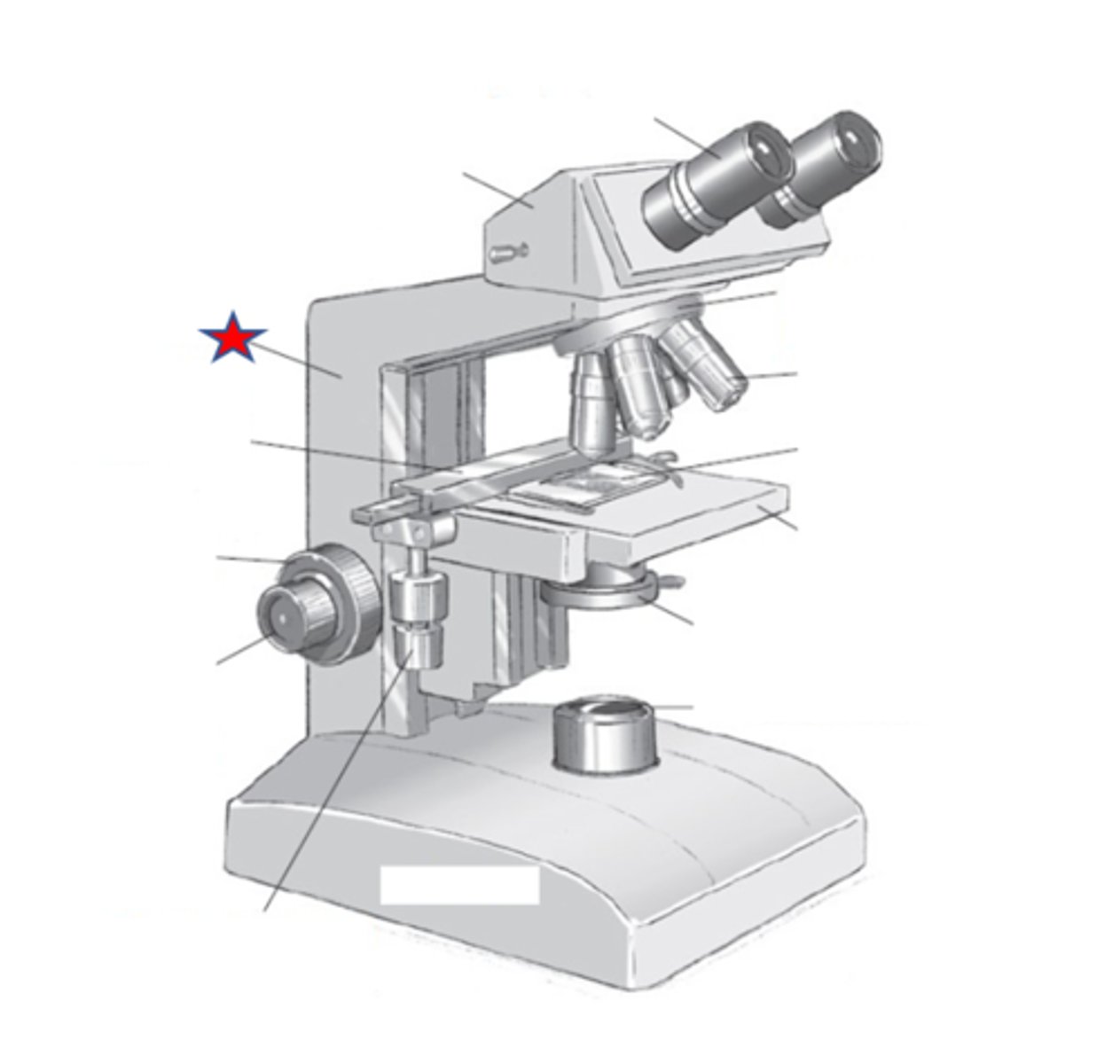
arm
Name the starred region in the image.
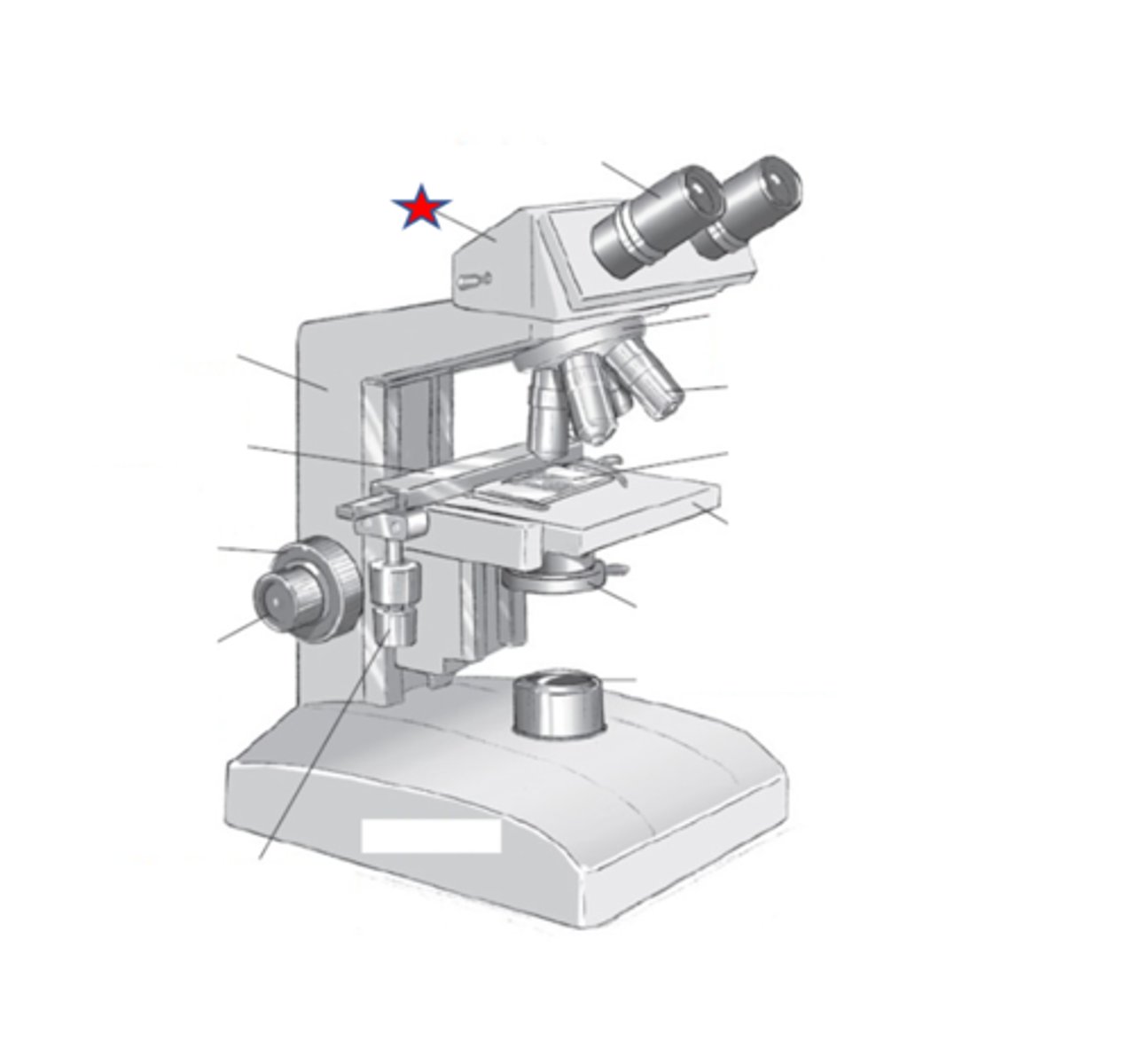
head
Name the starred region in the image.
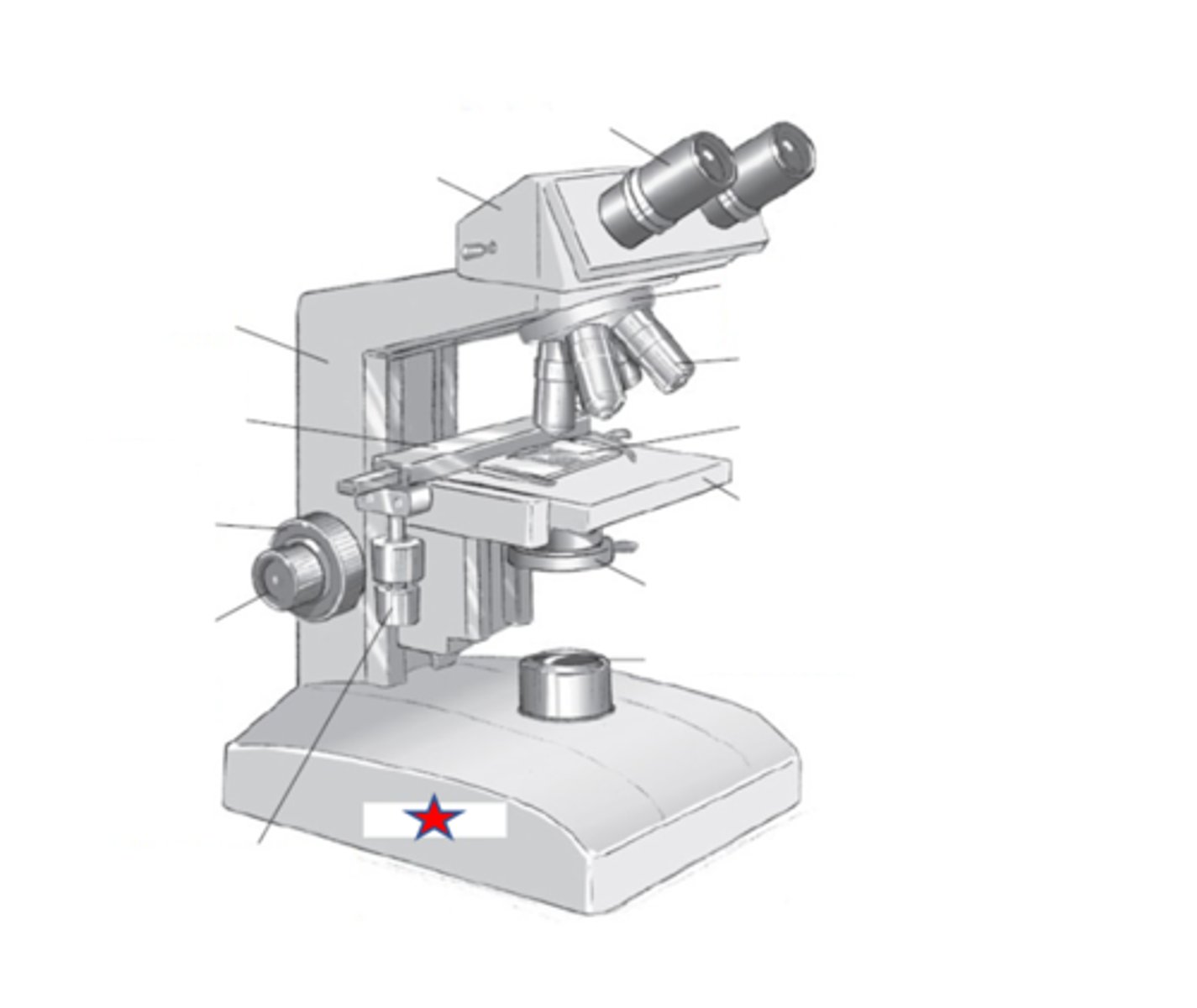
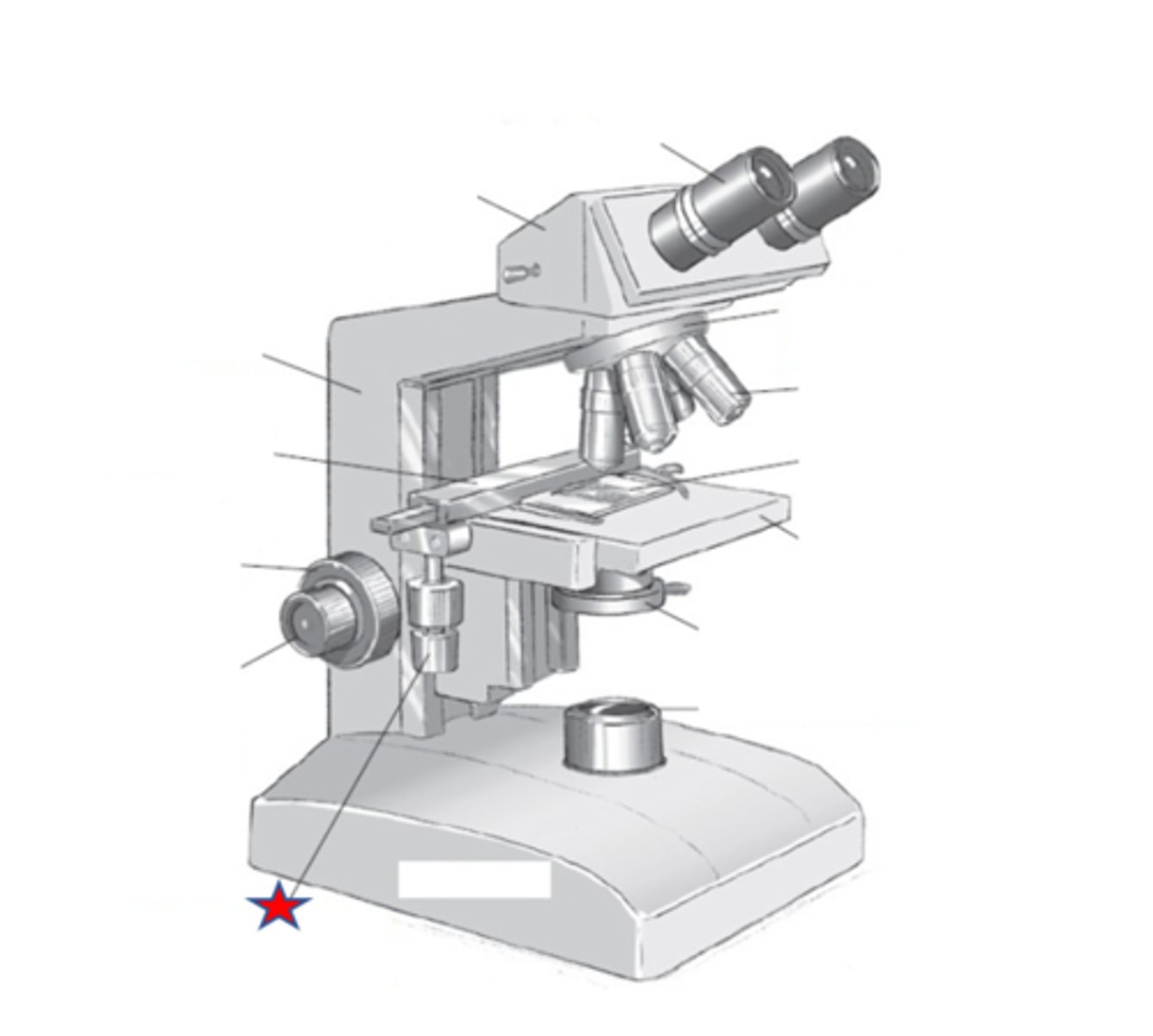
base
Name the starred region in the image.
eyepieces
Name the starred region in the image.
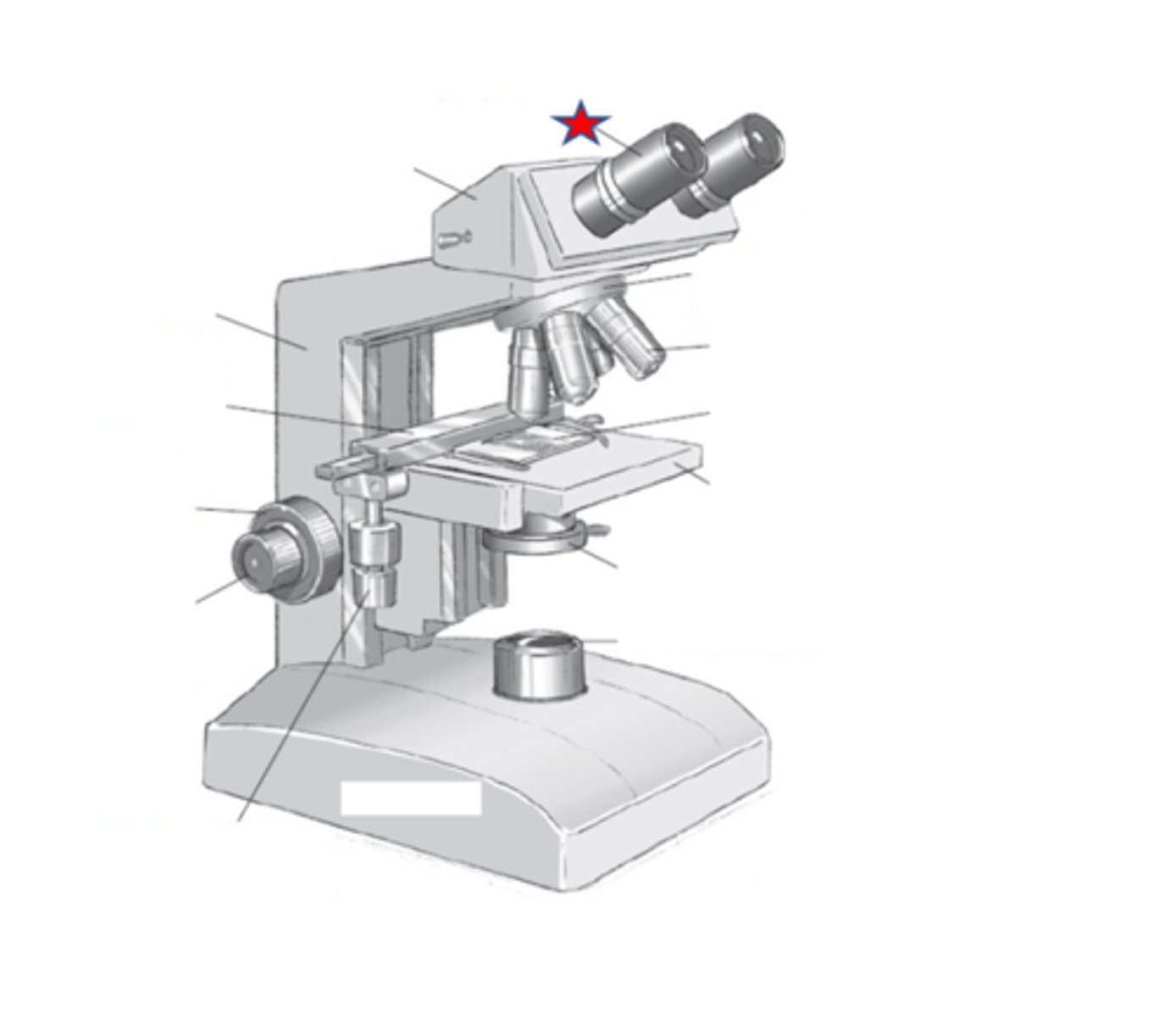
ocular lenses
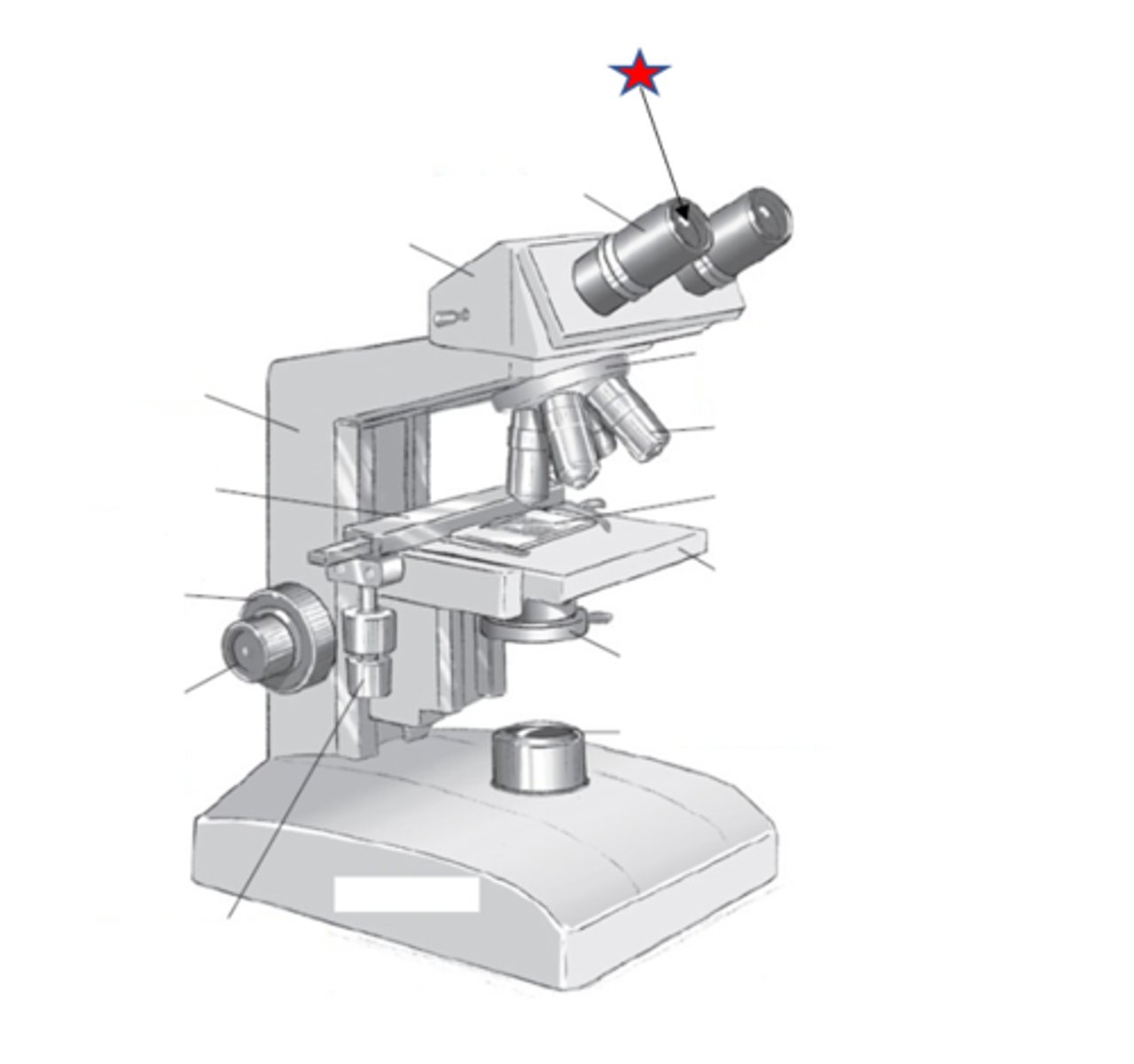
Use the starred image:
____________ ______________: Lenses located inside the eyepieces.
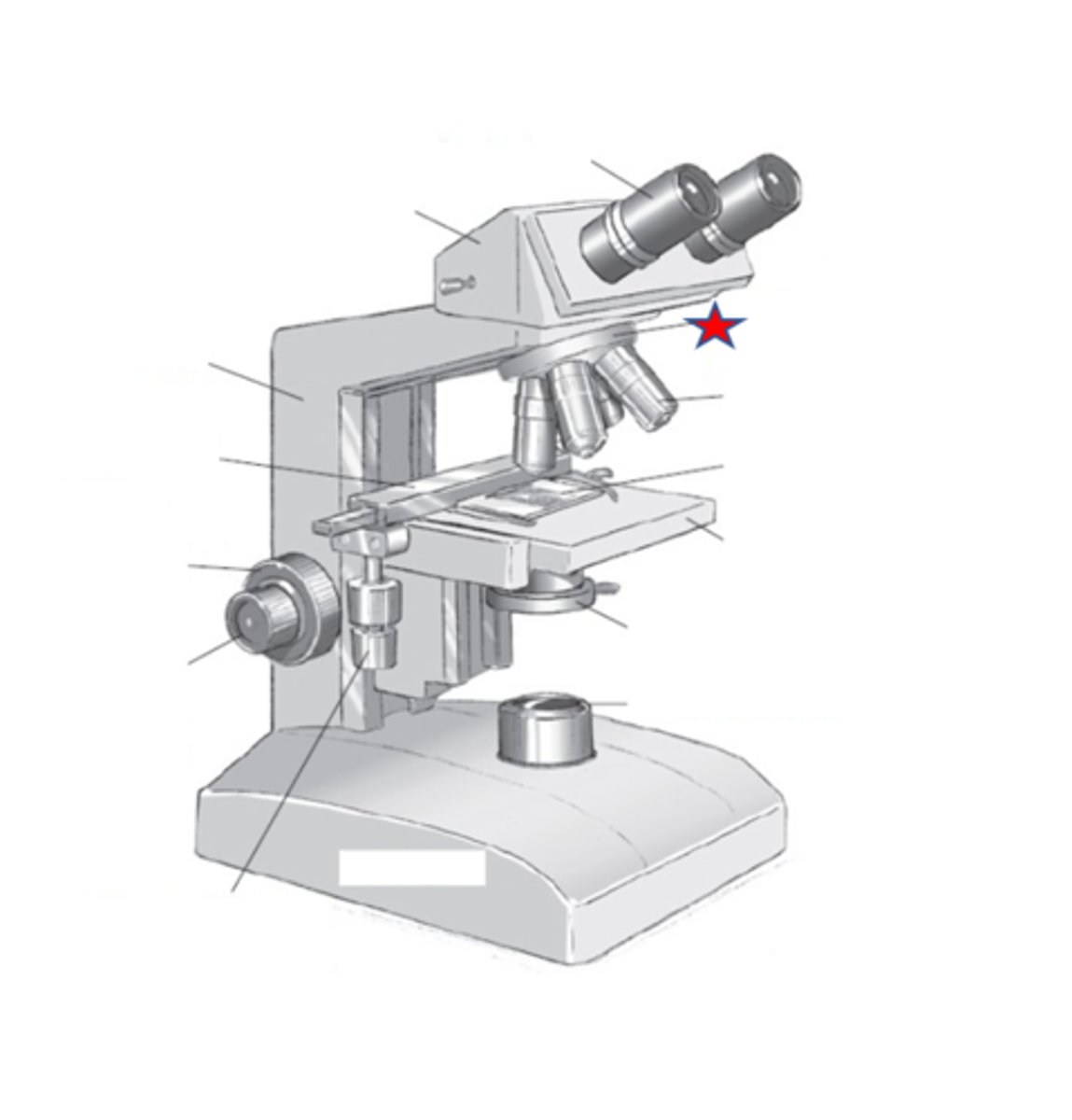
rotating nosepiece
Name the starred region in the image.
mechanical stage
Name the starred region in the image.
mechanical stage controls
Name the starred region in the image.
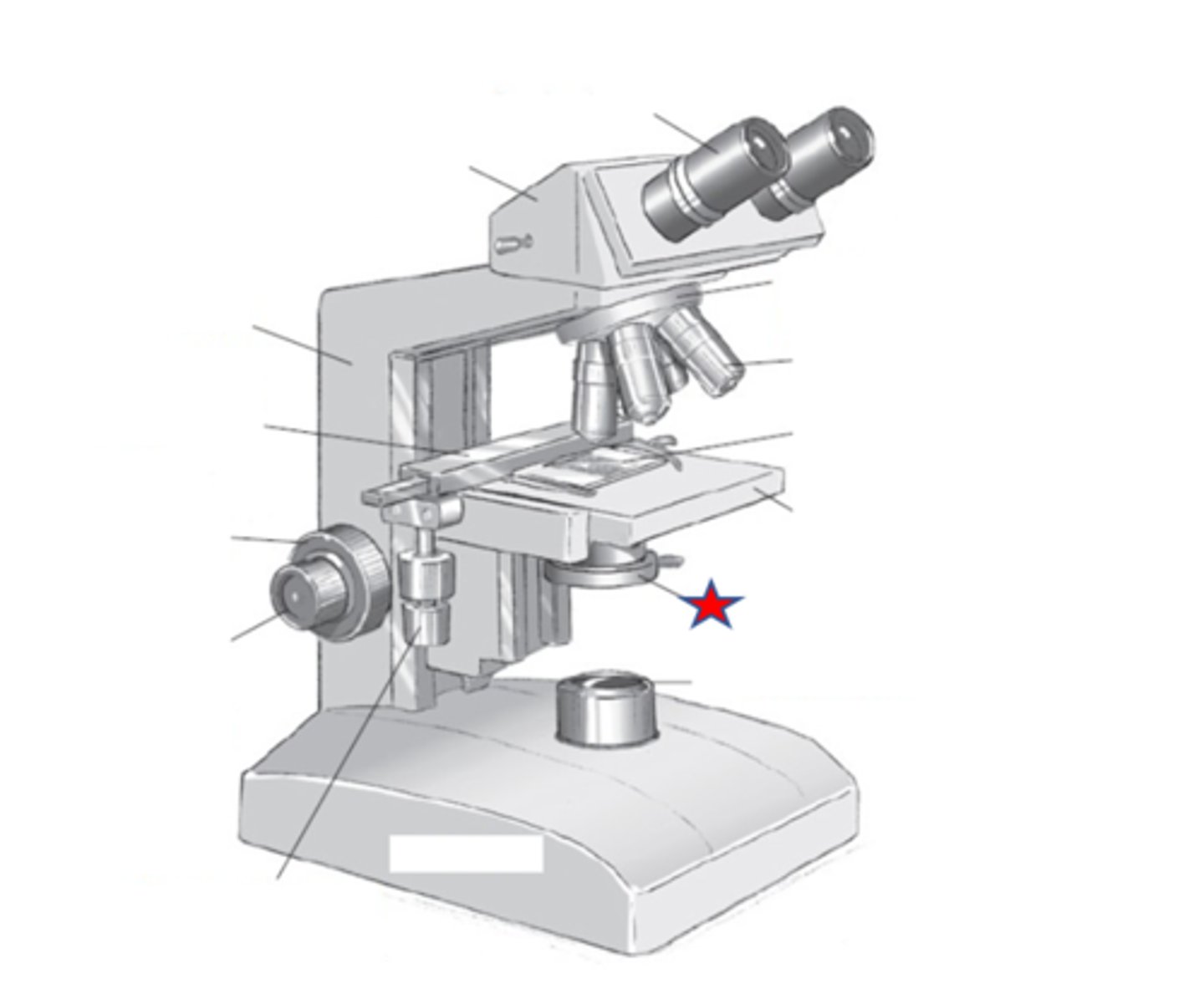
iris diaphragm
Name the starred region in the image.
coarse adjustment knob
Name the starred region in the image.
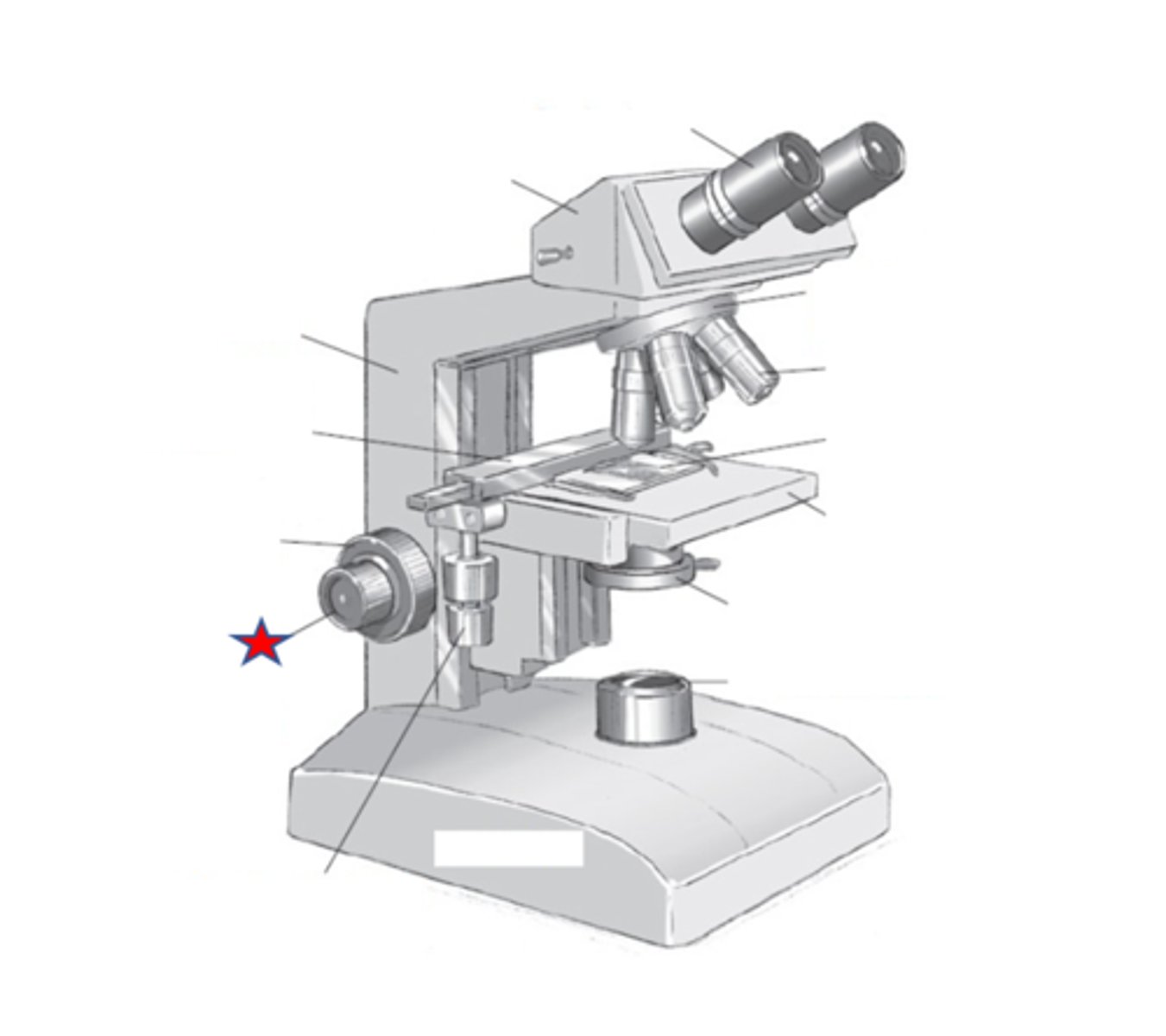
fine adjustment knob
Name the starred region in the image.
light source
Name the starred region in the image.
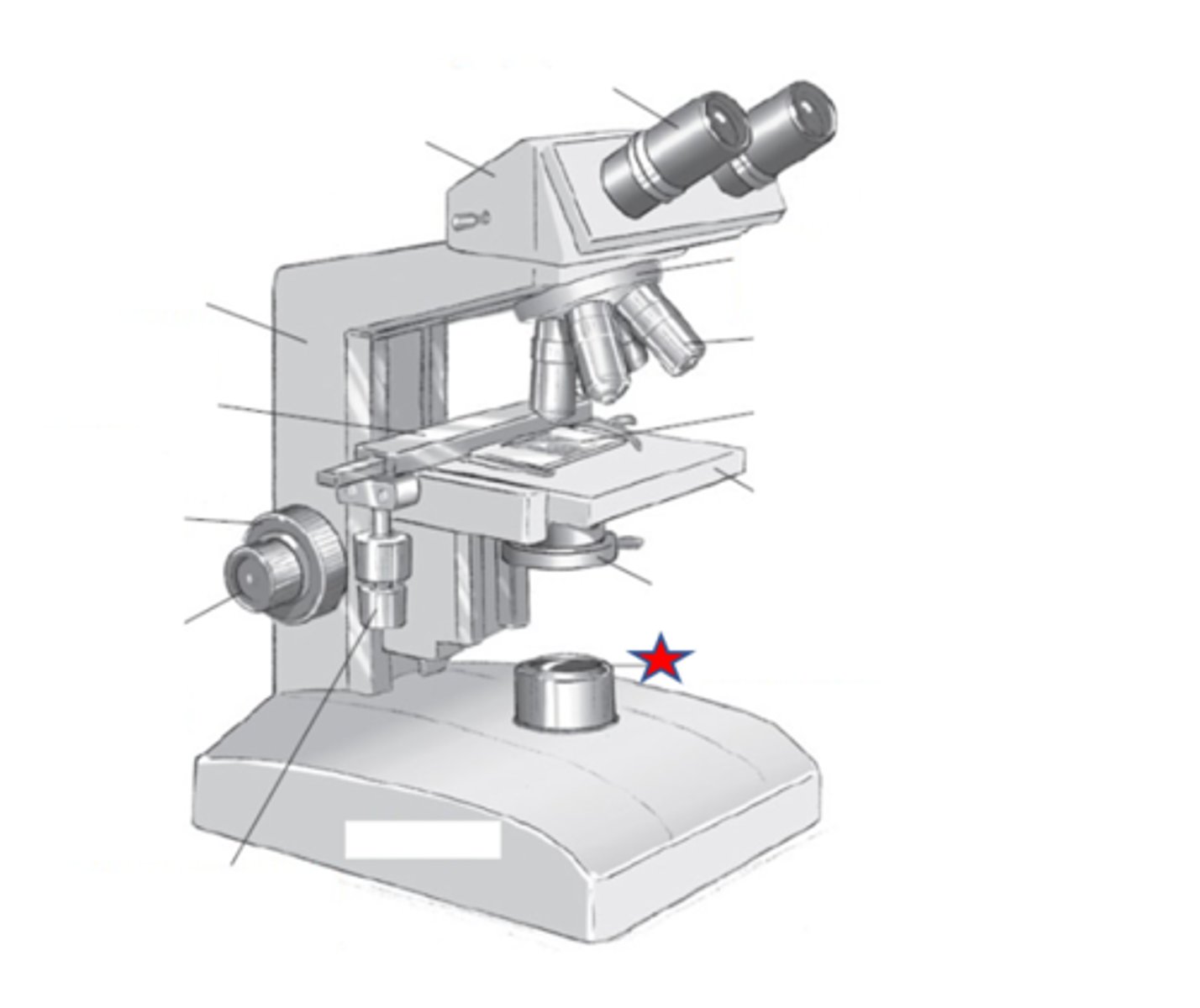
specimen slide
Name the starred region in the image.
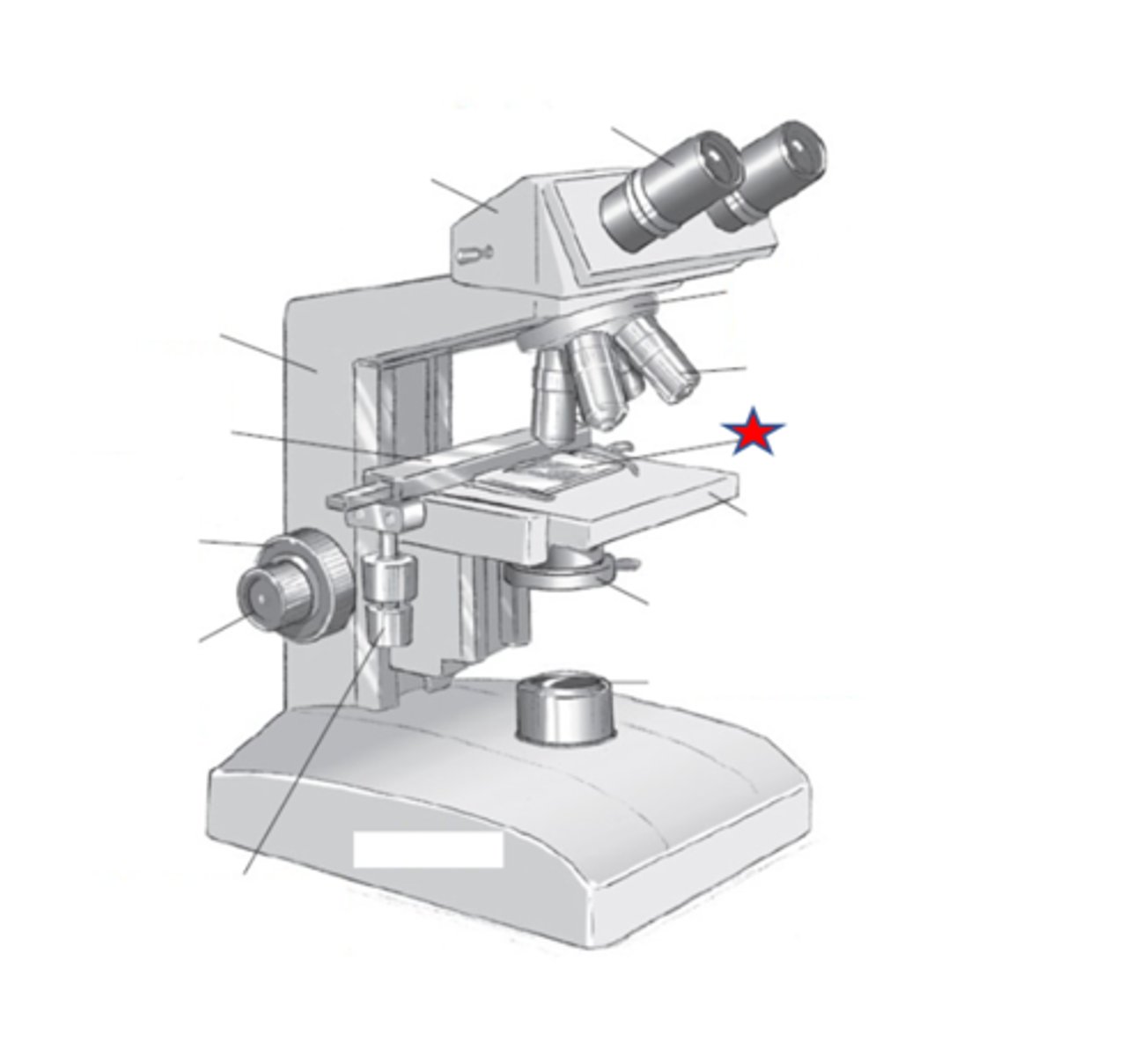
stage
Name the starred region in the image.
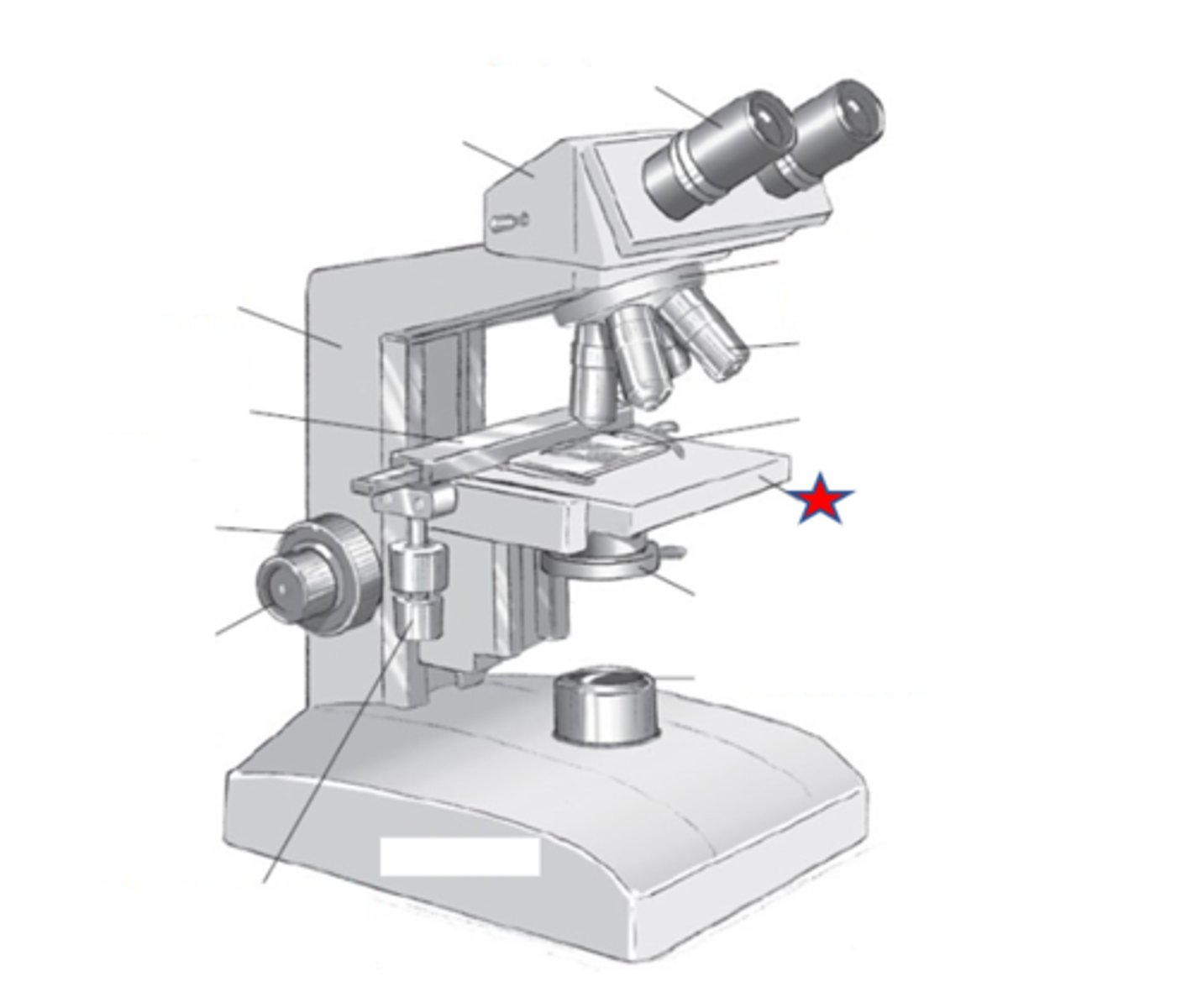
10x
Ocular lens: magnifies ___________.
4x
Scanning objective lens: red ring; magnifies _________.
10x
Low power objective lens: yellow ring; magnifies _________.
40x
High power objective lens: blue ring; magnifies _________.
100x
Oil immersion: white ring; magnifies _________.
high power objective lens
Name the starred region in the image.
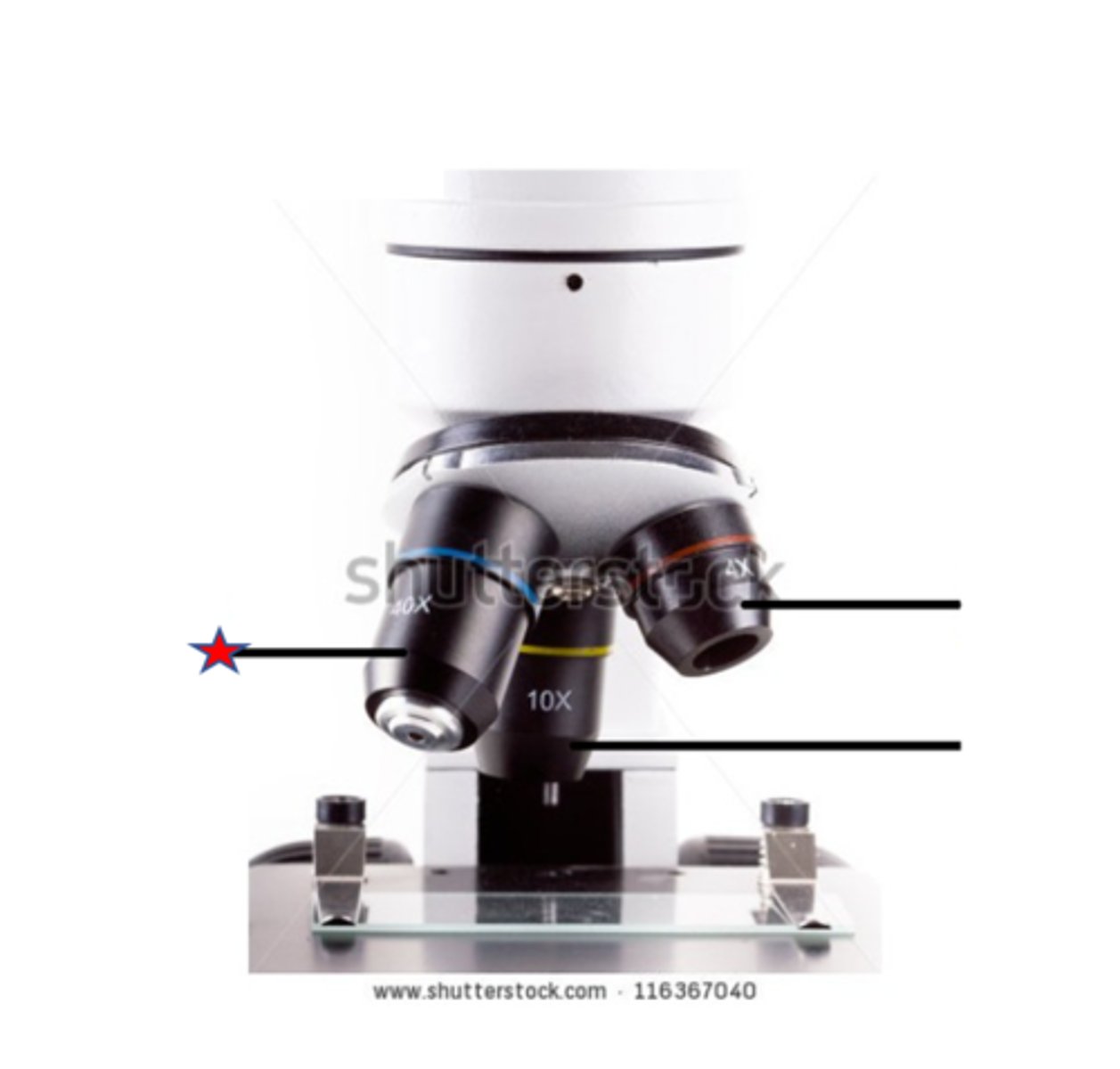
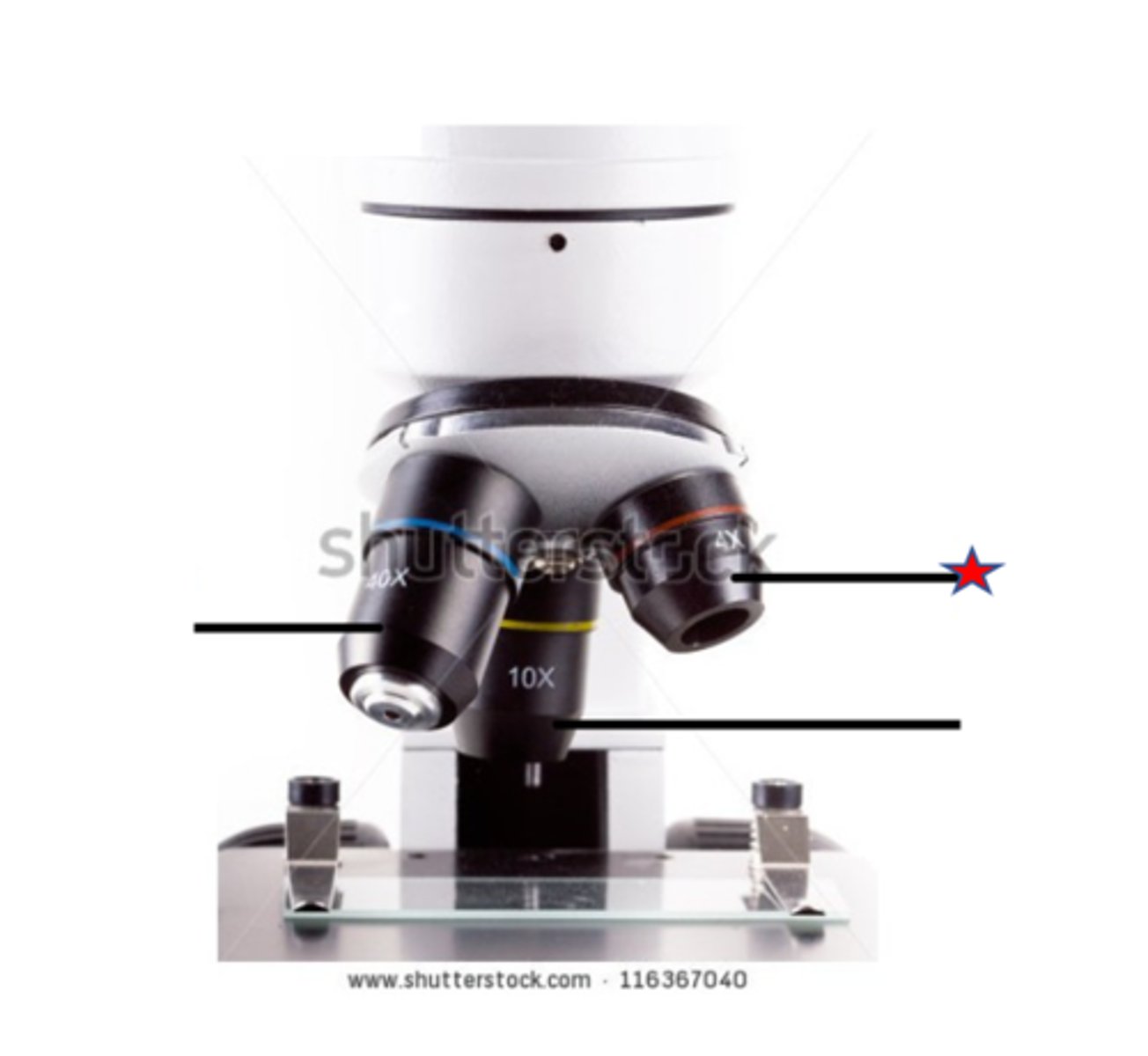
scanning objective lens
Name the starred region in the image.
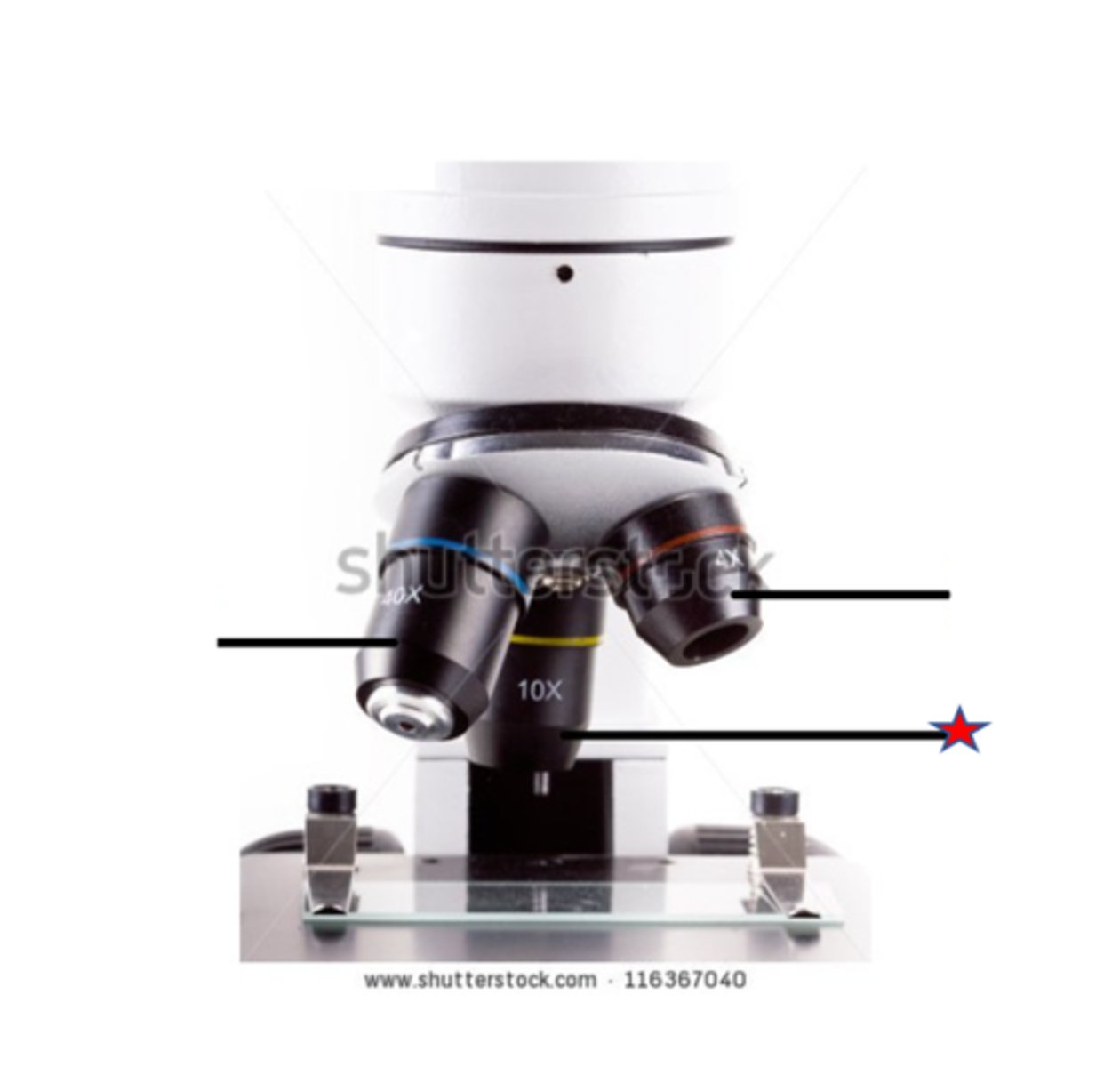
low power objective lens
Name the starred region in the image.
total magnification
____________ _______________: Achieved through the interaction of two lenses: the ocular lens (10x) and the objective lens currently in use.
(ocular lens mag.) X (objective lens mag.) = _____________ _______________
40x
What is the total magnification when the scanning objective lens is in use?
100x
What is the total magnification when the low power objective lens is in use?
400x
What is the total magnification when the high power objective lens is in use?
1,000x
What is the total magnification when the oil immersion lens is in use?
parfocal
______________: If a slide is in clear focus on one objective, when you move to another objective whatever you are viewing will be in partial (almost clear) focus.
field of view
__________ ________ ____________: Everything that is visible when you look through the eyepiece.
working distance
____________ ______________: Distance between bottom of the objective lens to the top of the slide.
fine_
Only use the ___________ adjustment knob when on the high power objective lens.
arm
__________: Attaches the head, rotating nosepiece, and base together.
base
_____________: the bottom surface of the microscope.
head
___________: Part of the microscope that provides attachment points for the ocular and objective lenses.
eyepieces
_____________: Part of the microscope that you look into.
ocular lenses
____________ ___________: Lenses located inside the eyepieces. They magnify an object on the slider 10x its normal size.
rotating nosepiece
_____________ ______________: Connects the objective lenses to the head and rotates to change from one objective lens to another.
mechanical stage controls
______________ __________ ____________: Knobs used to move the stage left and right or up and down.
condenser
_______________: Located under the stage, used to focus light through the slide.
iris diaphragm
_________ _____________: Part of the condenser that opens and closes to allow different amounts of light through the condenser.
fine adjustment knob
__________ __________ ___________: Moves the stage up and down in small increments. ONLY use this knob when the high power objective lens is in place.
scanning objective lens
Which objective lens has the greatest field of view and the deepest depth of field.
oil immersion
_____________ _____________ objective lens: Largest objective lens. Magnifies 100x with a white band. ONLY used with a drop of oil on the cover slip.