L2 | Lumbar Vertebrae
 Call Kai
 Learn
Learn Practice Test
 Spaced Repetition
 Match
Match Flashcards
 Knowt Play
1/8

There's no tags or description
Looks like no tags are added yet.
Name | Mastery | Learn | Test | Matching | Spaced | Call with Kai | Chat |
|---|
No analytics yet
Send a link to your students to track their progress
9 Terms
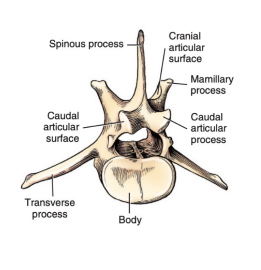
Q: …… have longer bodies than thoracic vertebrae
A. Cervical vertebrae
B. Sacral vertebrae
C. Lumbar vertebrae
D. Coccygeal vertebrae
C. Lumbar vertebrae
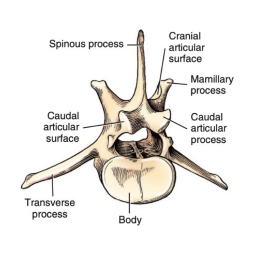
Q: Lumbar vertebrae gradually increase in …… throughout the series.
A. length
B. height
C. width
D. depth
C. width
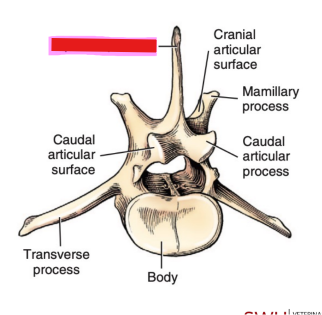
Q: In the lumbar vertebrae, the …… are highest and most massive in the midlumbar region.
A. transverse processes
B. articular processes
C. spinous processes
D. mamillary processes
C. spinous processes
Q: The spinous processes in the midlumbar region feature a …….
A. vertical upright alignment
B. slight cranial inclination
C. sharp caudal redirection
D. complete absence of inclination
B. slight cranial inclination
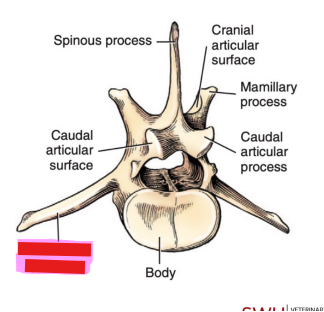
Q: In the lumbar vertebrae, the …… are directed cranially and slightly ventrally.
A. spinous process
B. transverse process
C. articular process
D. mamillary process
B. transverse processes
Q: Where are the transverse processes of the lumbar vertebrae the longest?
A. In the cranial lumbar region
B. In the midlumbar region
C. In the lumbosacral junction
D. Uniformly across all lumbar vertebrae
B. In the midlumbar region
Q: In …… animals, the broad extremities of the transverse processes can be palpated.
A. obese
B. emaciated
C. muscular
D. juvenile
B. emaciated
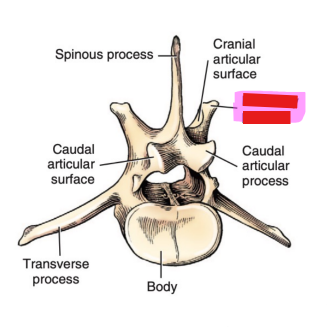
Q: All cranial articular processes of the lumbar vertebrae bear ……
A. accessory processes
B. costal fovea
C. transverse foramina
D. mamillary processes
D. mamillary processes
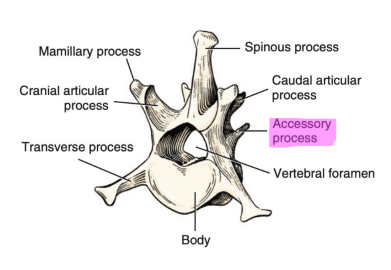
Q: Accessory processes are well developed on the first 3-4 lumbar vertebrae but are absent on the ……
A. 5th and 6th
B. 1st and 2nd
C. 6th and 7th
D. 3rd and 4th
A. 5th and 6th