Basal ganglia pathologies
 Call Kai
 Learn
Learn Practice Test
 Spaced Repetition
 Match
Match Flashcards
 Knowt Play
1/51

There's no tags or description
Looks like no tags are added yet.
Name | Mastery | Learn | Test | Matching | Spaced | Call with Kai | Chat |
|---|
No analytics yet
Send a link to your students to track their progress
52 Terms
Pathways - direct vs indirect

Basal ganglia function
Modulates __ movement
Includes: (x4)

Disorders involving the basal ganglia:

Parkinson’s disease
Chronic, progressive, degenerative brain disorder in ___, due to death of cells that produce __

PD - leads to an overall decrease in ___ and increase in __ leading to rigidity & tremors
decrease in dopamine
increase in ACh
Parkinson’s disease
4 cardinal signs
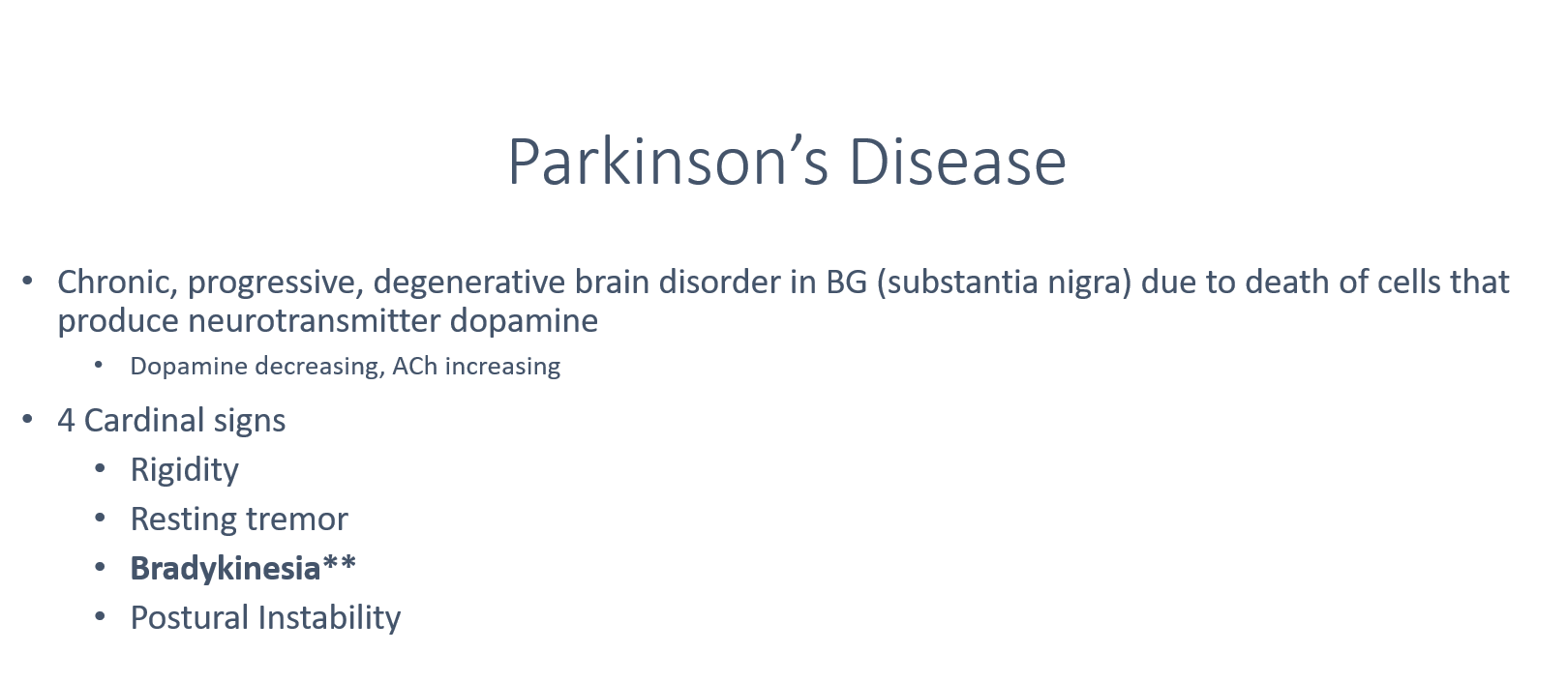
TRAP
Dopamine affect on pathways
Drives the direct pathway - this pathway drive movement - drives movement
Stops the indirect pathways - this pathway inhibits movement - overrides to allow movement
Overall = more movement!!
In order to have a diagnosis of parkinson’s you must have?
Bradykinesia/akinesia
open & close hand - gets smaller as they go
Parkinson’s - risk factors
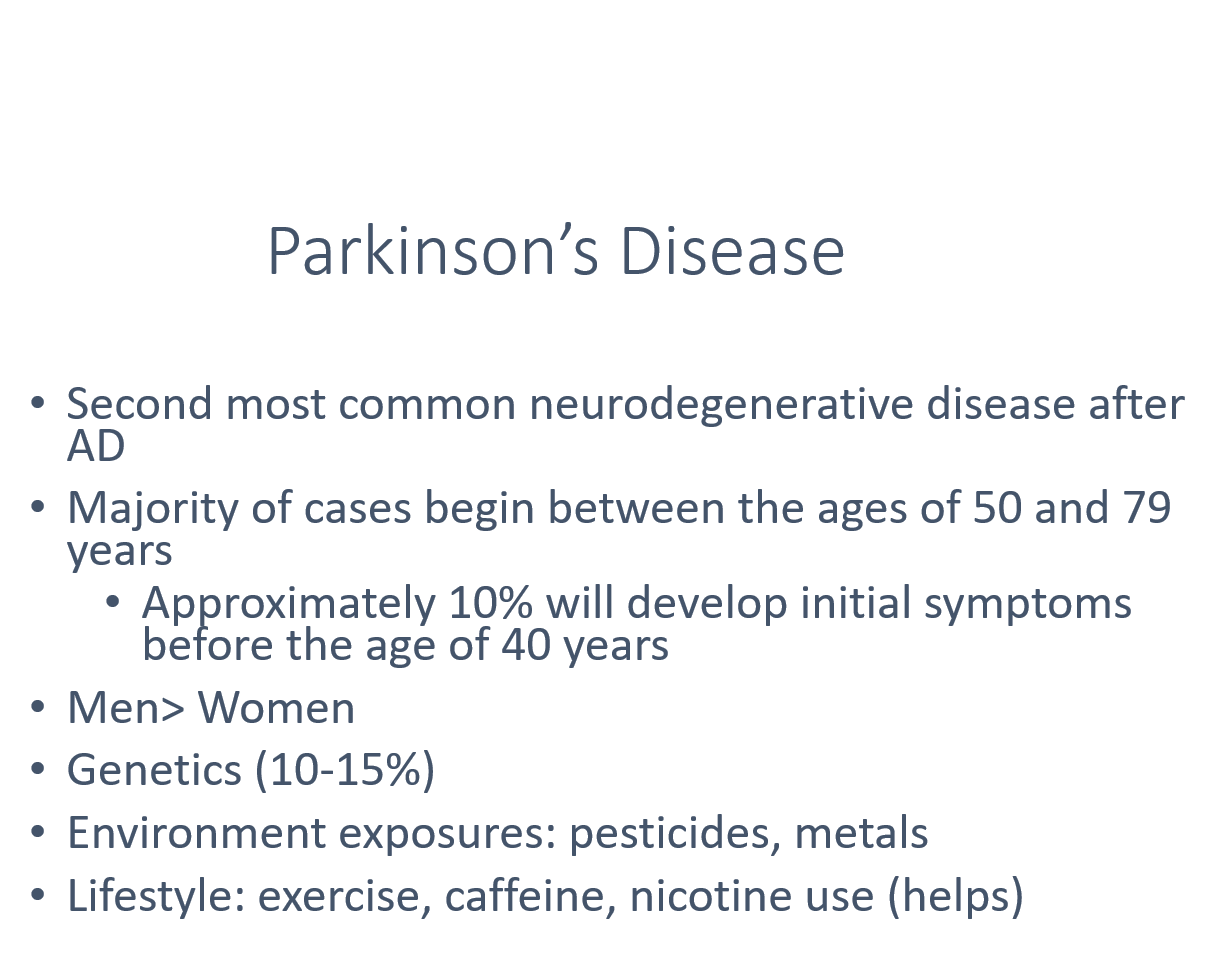
Parkinson’s - pathogenesis
Pathologic hallmark?

Parkinson’s - pathogenesis
Genes & environmental triggers?

PD Clinical Manifestations: Motor

PD Clinical Manifestations: gait impairments
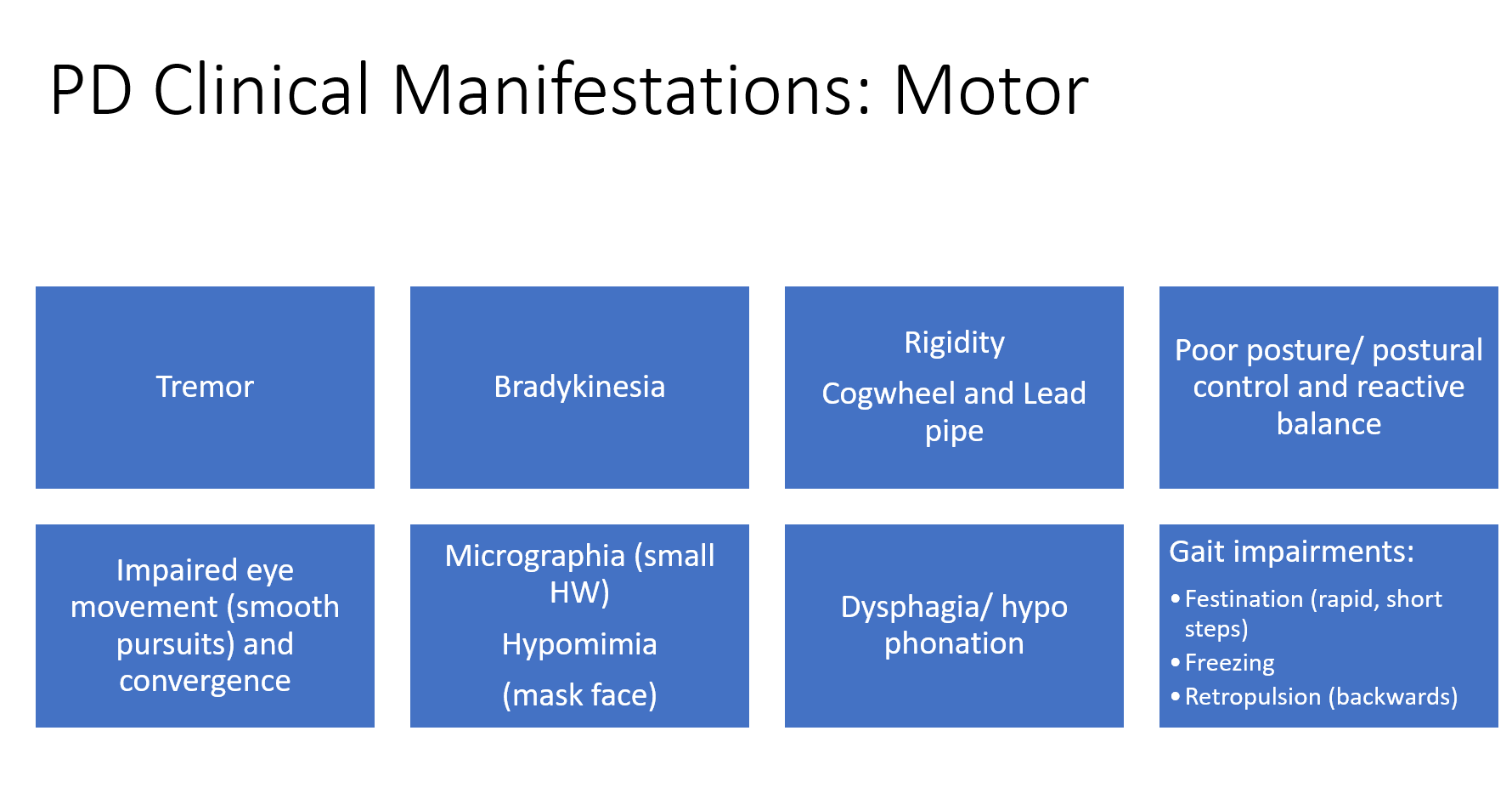
PD
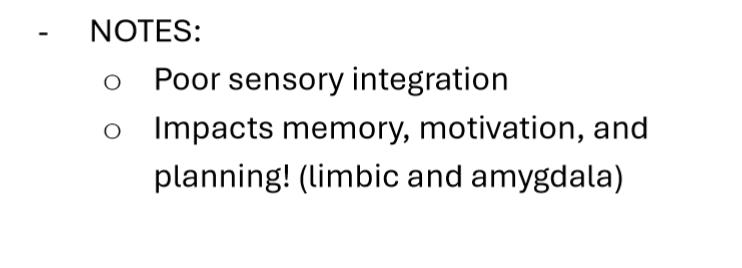
Poor __ integration
Impacts?
Part of the brain?
PD: Clinical Manifestations: Non Motor

Presence of Parkinson’s disease pathology in non-motor regions, including:
peripheral ANS
dorsal motor nucleus of Vagus nerve
olfactory system
BEFORE the development of motor disease
PD Diagnosis
Patient report of s&s: need?
MRI and CI: show?
Positive response to?
DaTSCAN: shows __ depletion
Spinal Tap: __ seed amplification assay
Skin biospy

PD Treatment
Pharm:
Dopamine replacement:
Dopamine agonist or antagonist?
What reduces off time?
__ inhibitors
__: dyskinesia management
Surgical:
__
__
Physical:

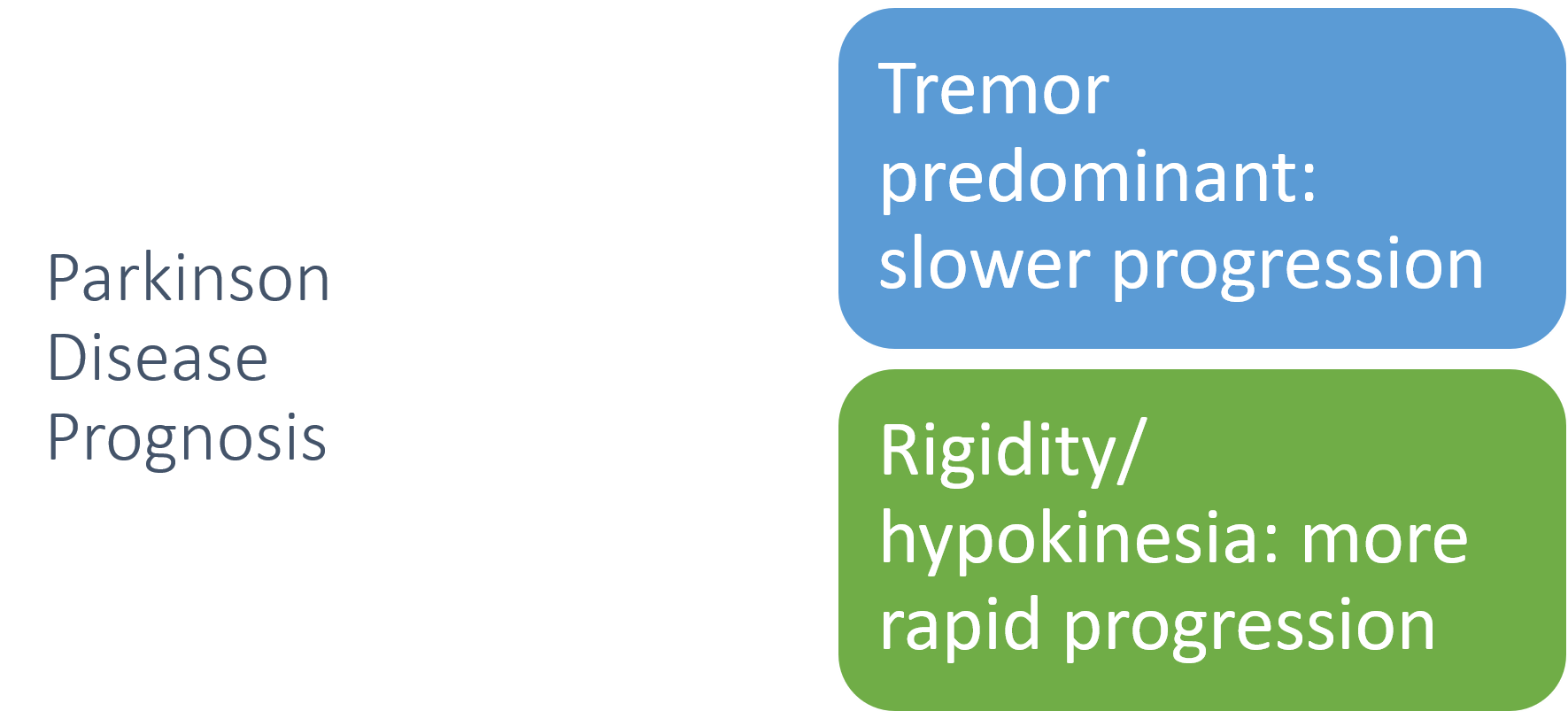
PD:
Slower progression?
Rapid progression?
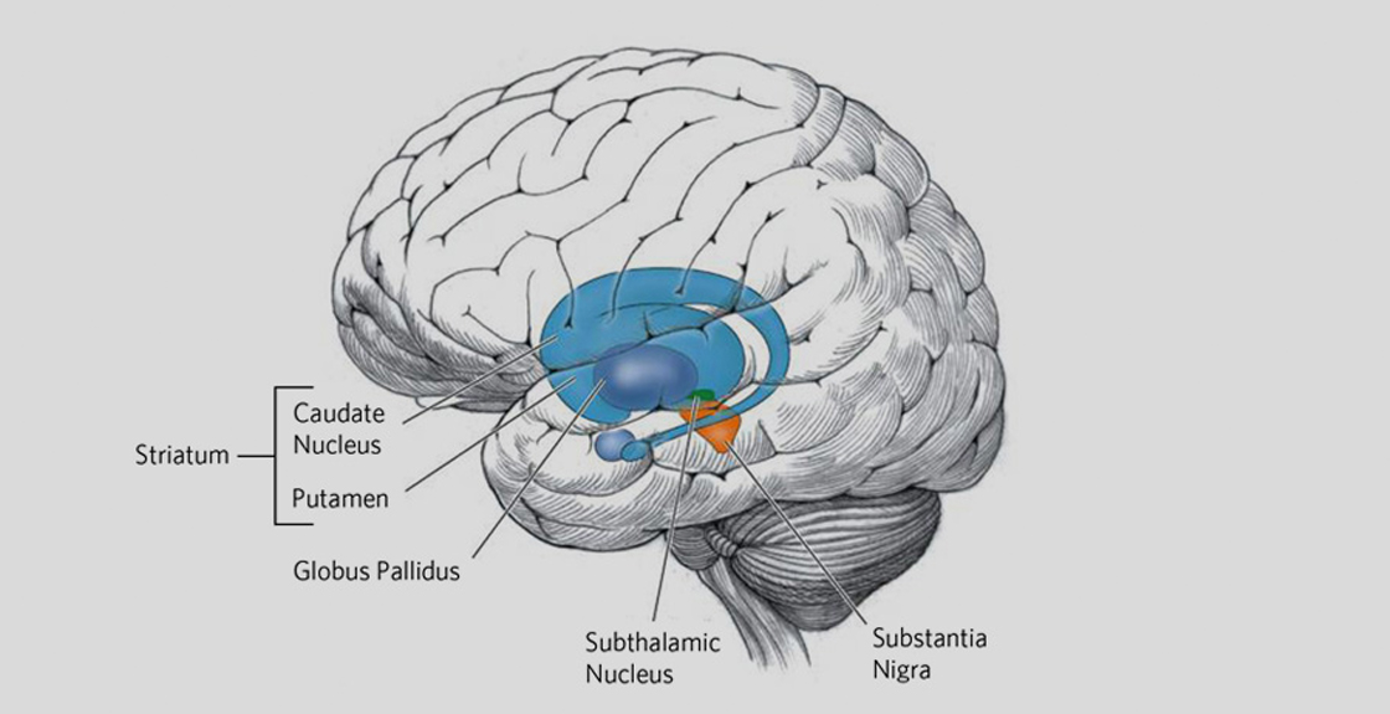
Huntington’s affects what part?
BG - Striatum
Huntington’s
What kind of gene?
Appears at what age?

Huntington’s
characterized by?

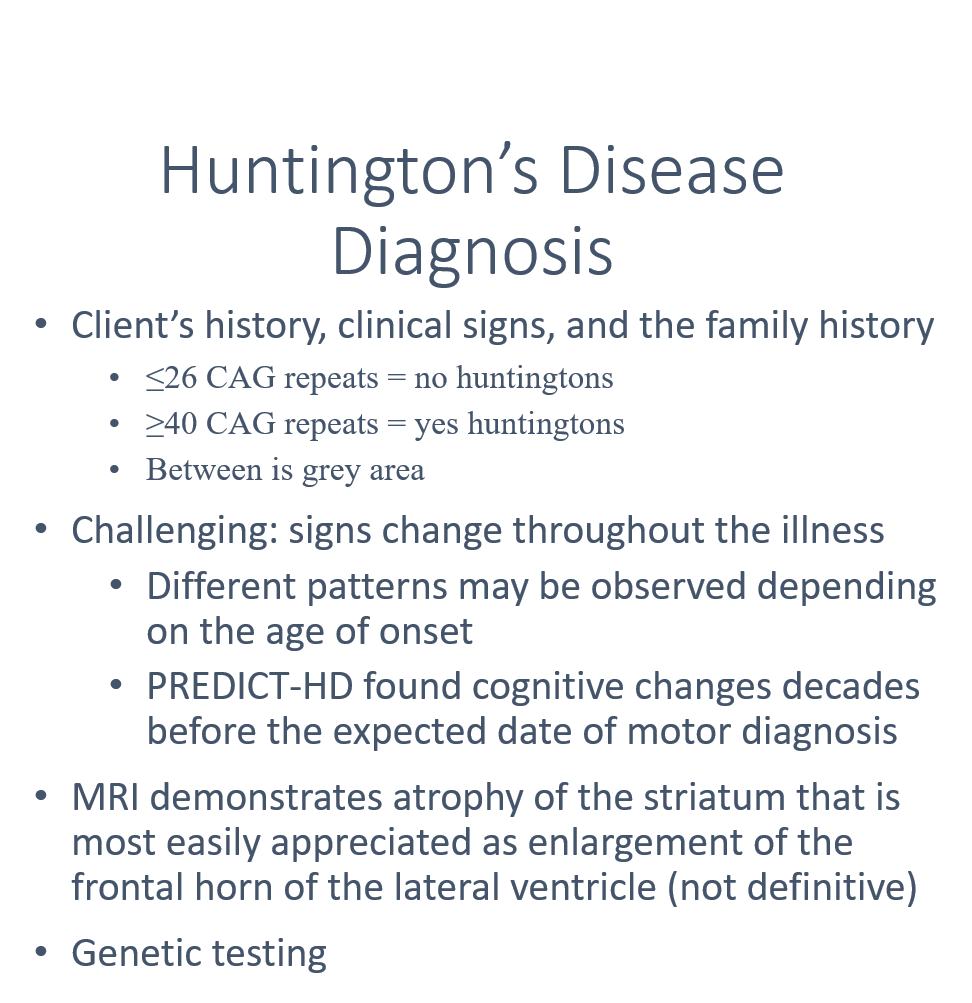
Huntington’s - what gene repeats?
CAG

Huntington’s disease M’s
Middle age
1st sx: mood & memory (subtle, before movement symptoms)
Movement
Early and middle stages of Huntington’s
Neurons projecting from the ___ to the ___ are depleted
The result is an excess of ____ (nt) and excessive excitation of the ___ pathway = abnormal involuntary movements - called?

Late Huntington’s
Loss of the direct inhibitory substance that causes more inhibition of the thalamocortical output, results in what symptoms?

Huntington’s NT

Huntington’s - what is enlarged?
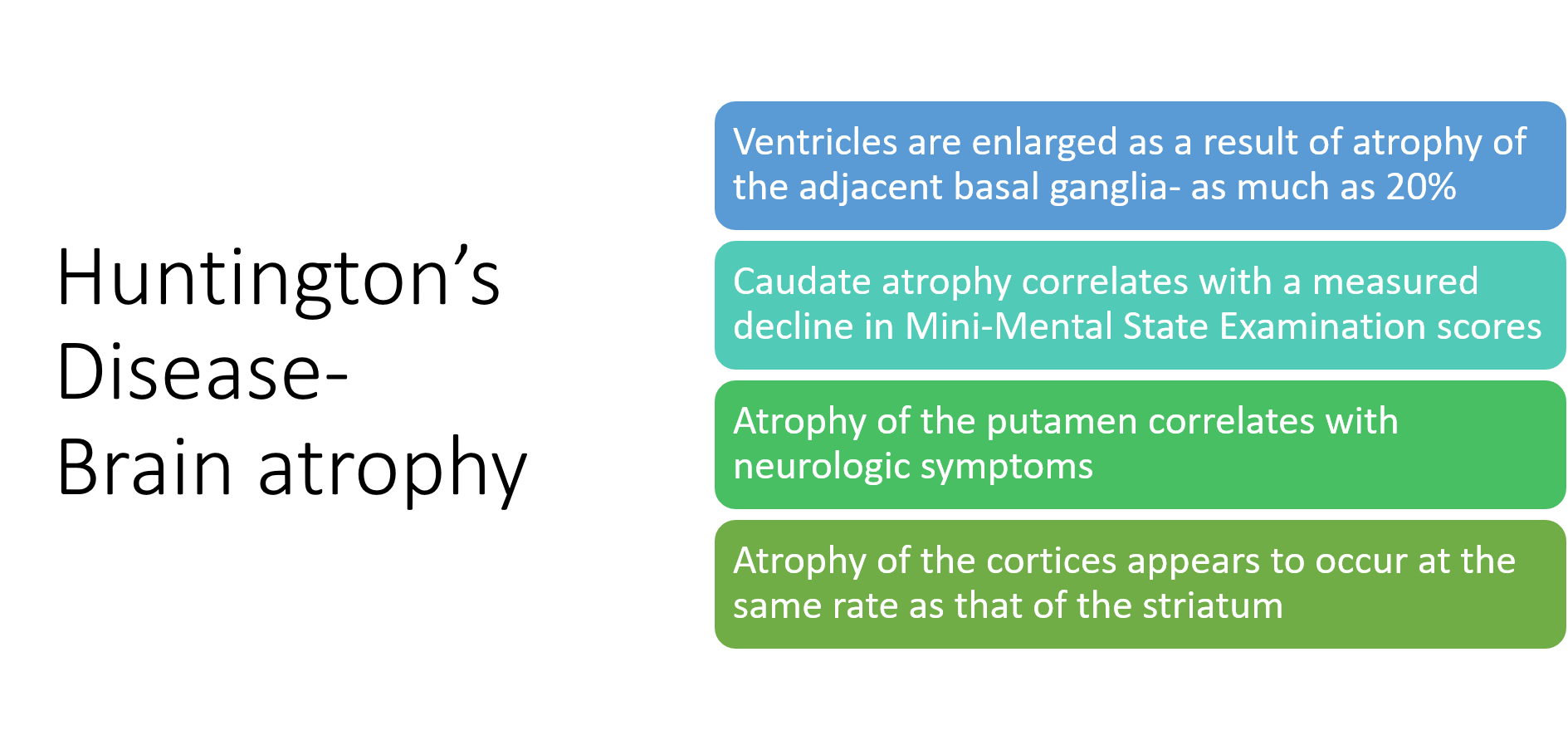
Huntington’s - Caudate atrophy correlates with ?

Huntington’s - Putamen atrophy correlates with?

Huntington’s - atrophy of __ appears to occur at same rate as striatum
Huntington’s - cognitive features
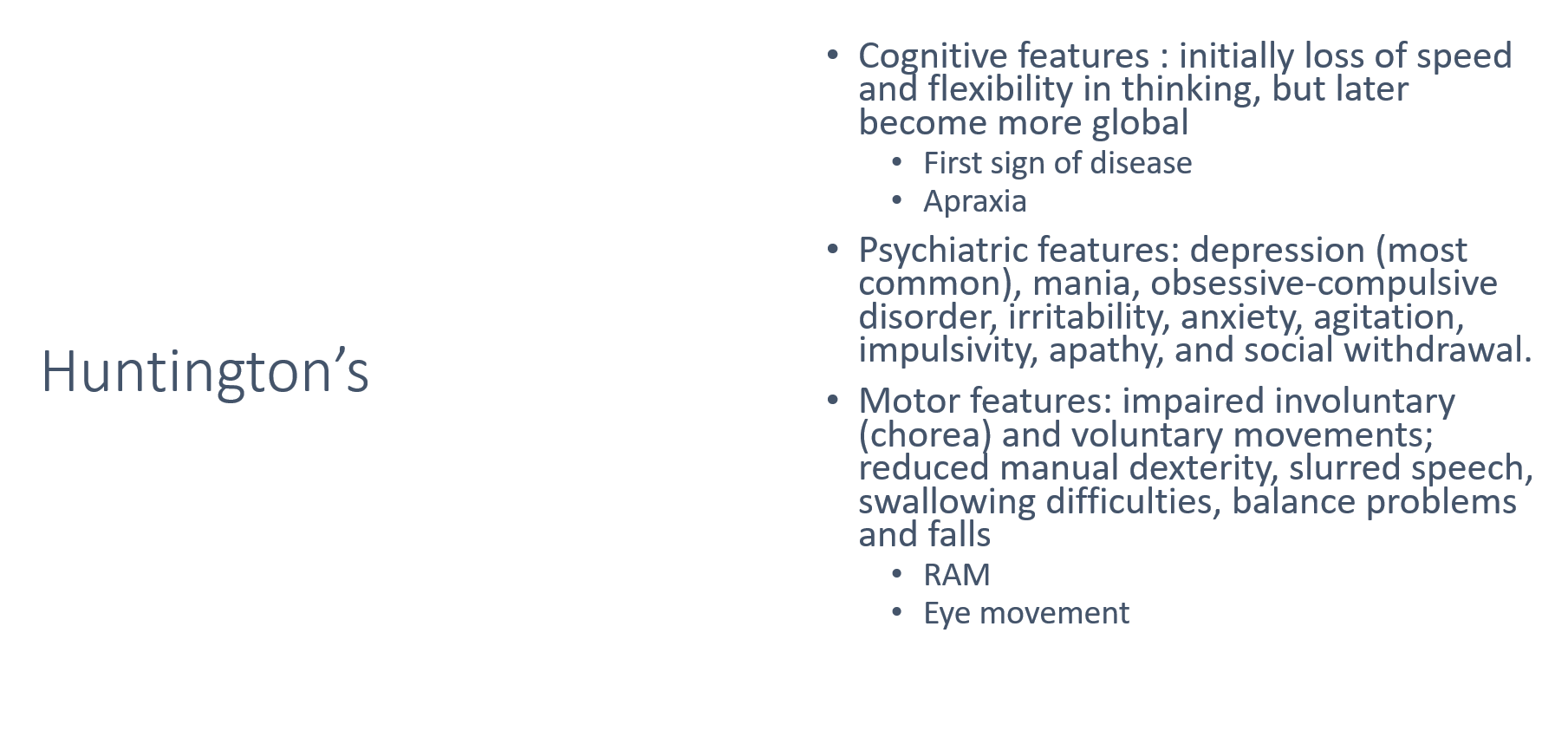
Huntington’s - psychiatric features
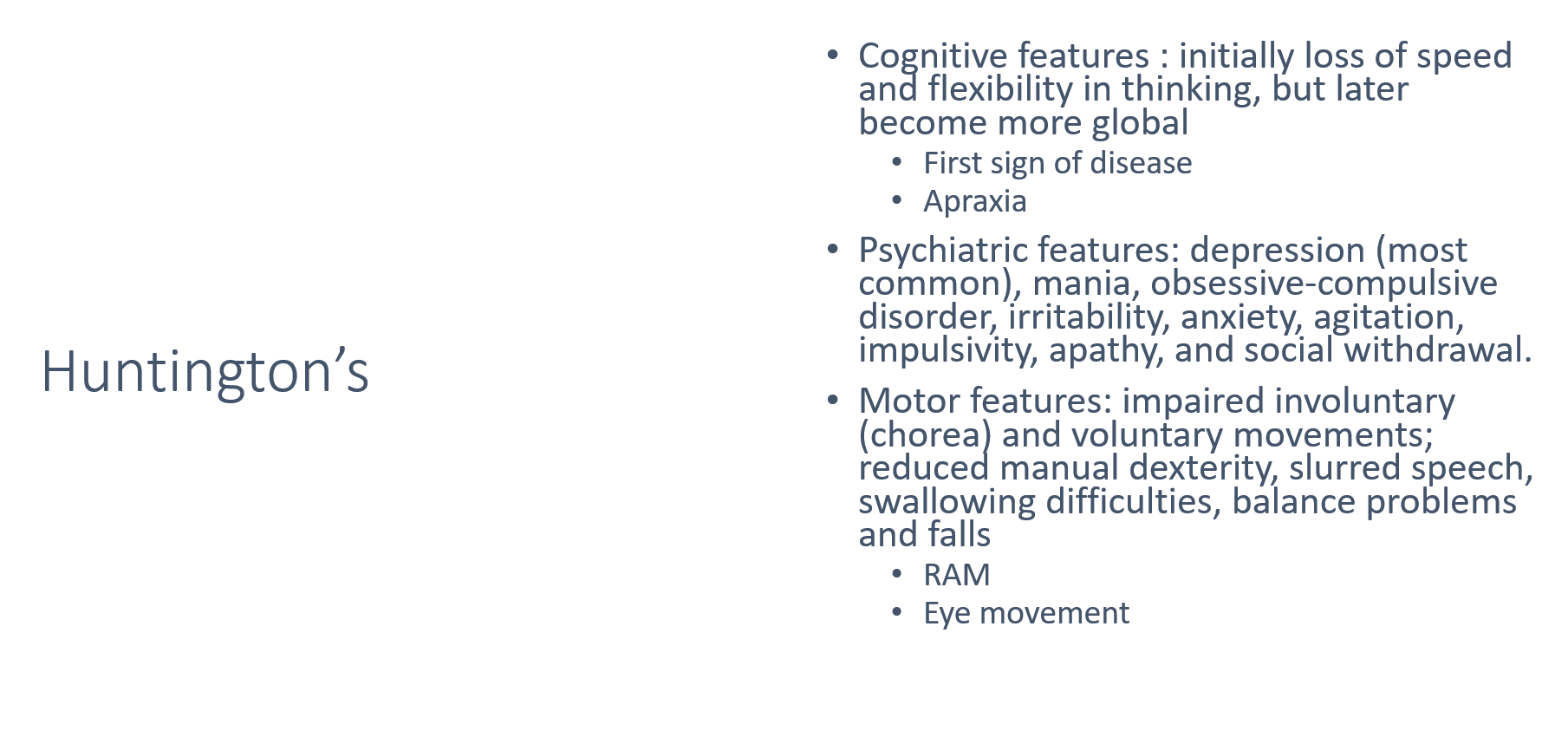
Huntington’s - motor features

Huntington’s - diagnosis
Huntington’s Treatment
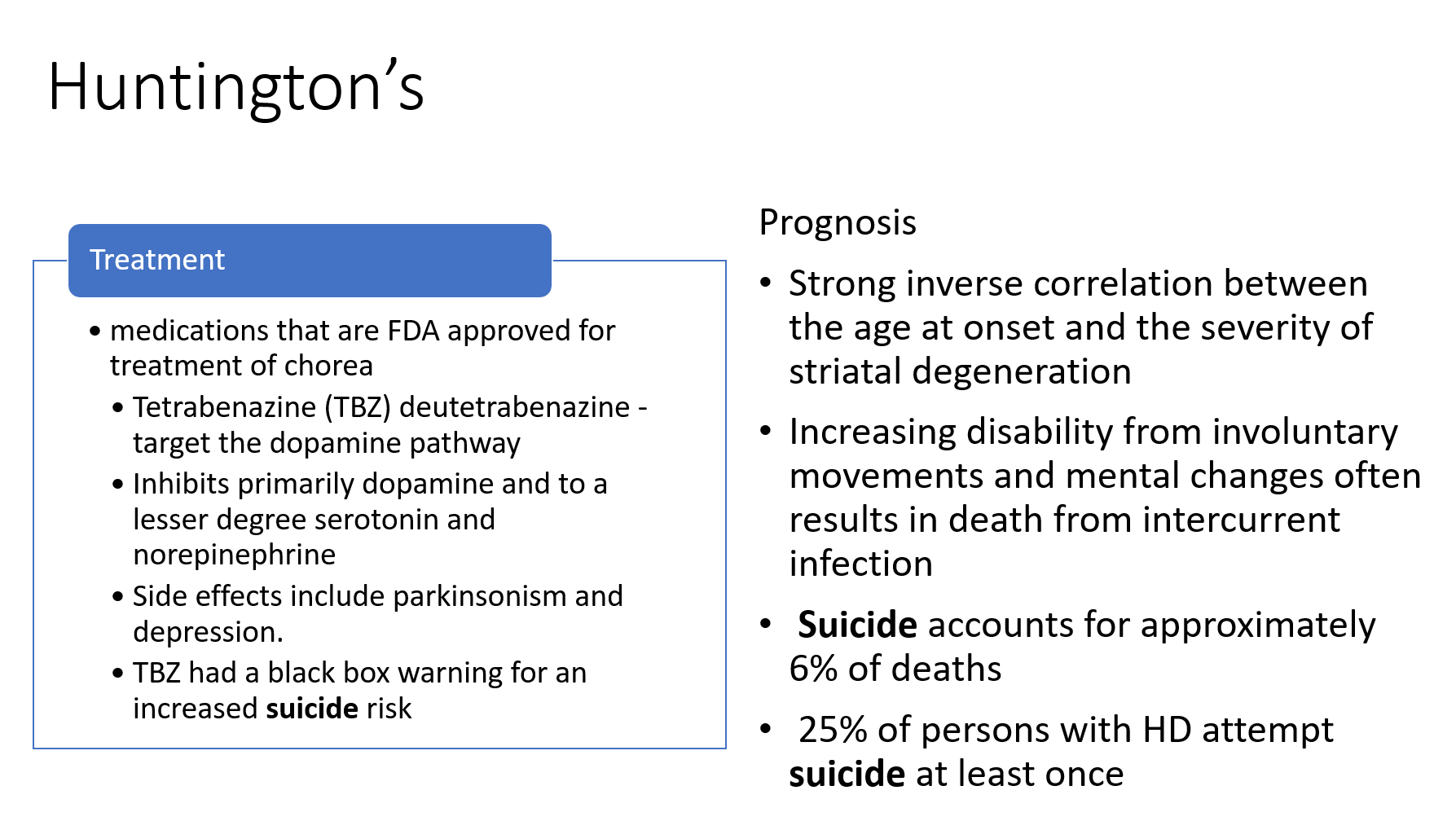
Medication is approved for treatment of?
__: inhibits primarily __ and to a lesser degree __ and __
Side effects include?
Black box warning for?

Huntington’s- prognosis
Strong inverse correlation between?
Increasing disability from involuntary movements and mental changes often results in death from?
Huntington’s Treatment
Current tx’s are __ based
__ gene therapy - promising

Dystonia
Type of muscle contractions?
Type of movement?
Initiated or worsened by?

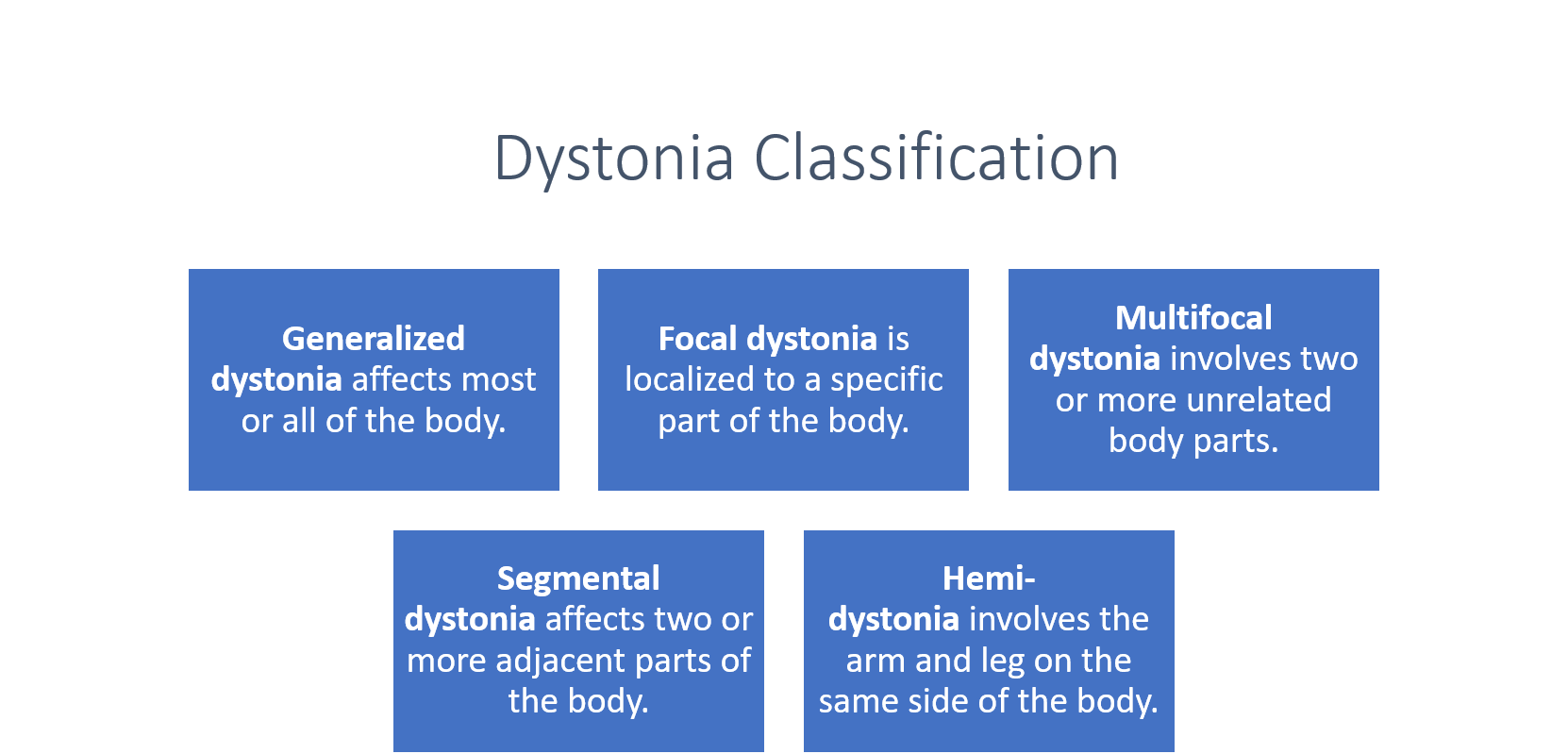
Dystonia affects most or all of the body.

Dystonia localized to a specific part of the body

Dystonia involves two or more unrelated body parts.
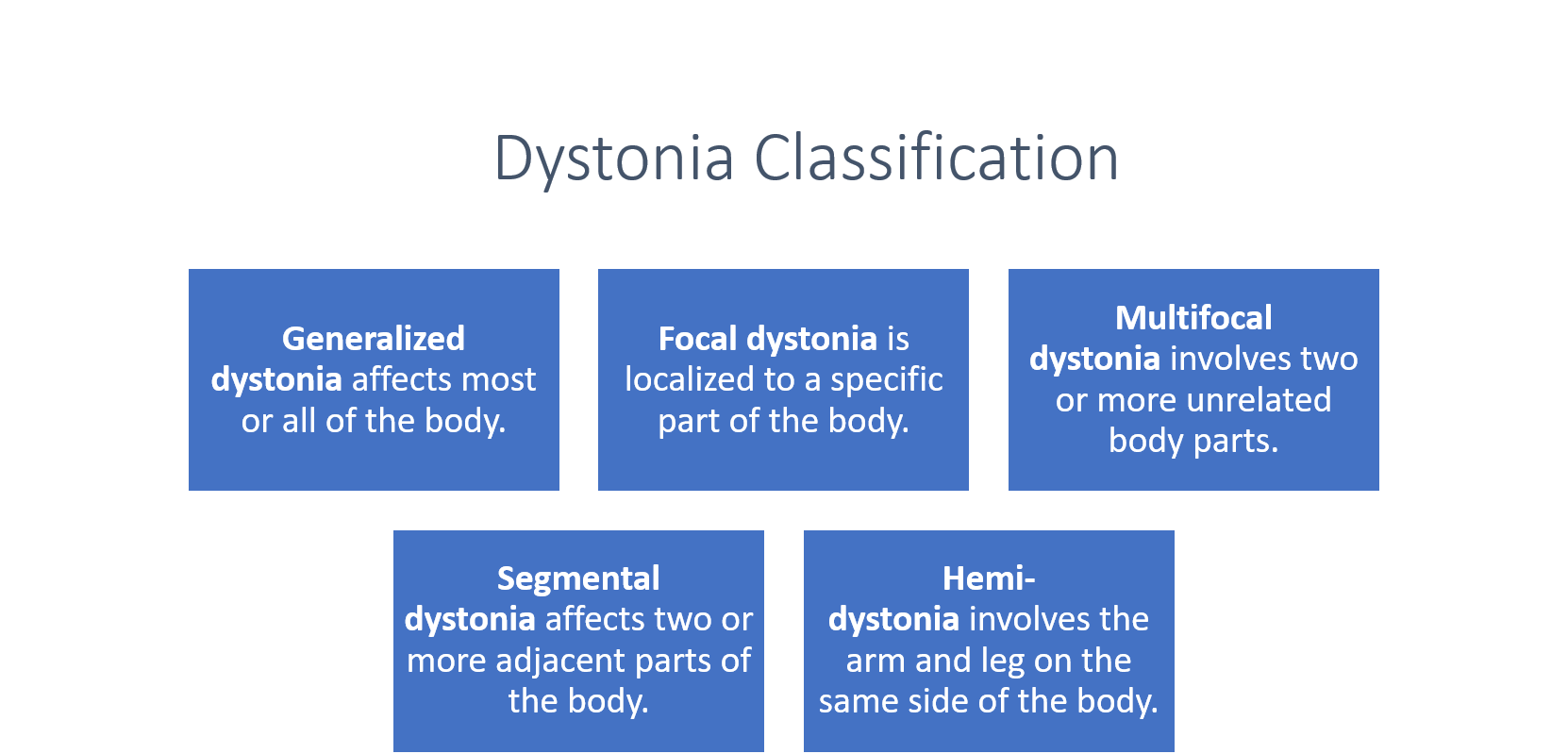
Segmental dystonia affects two or more adjacent parts of the body.
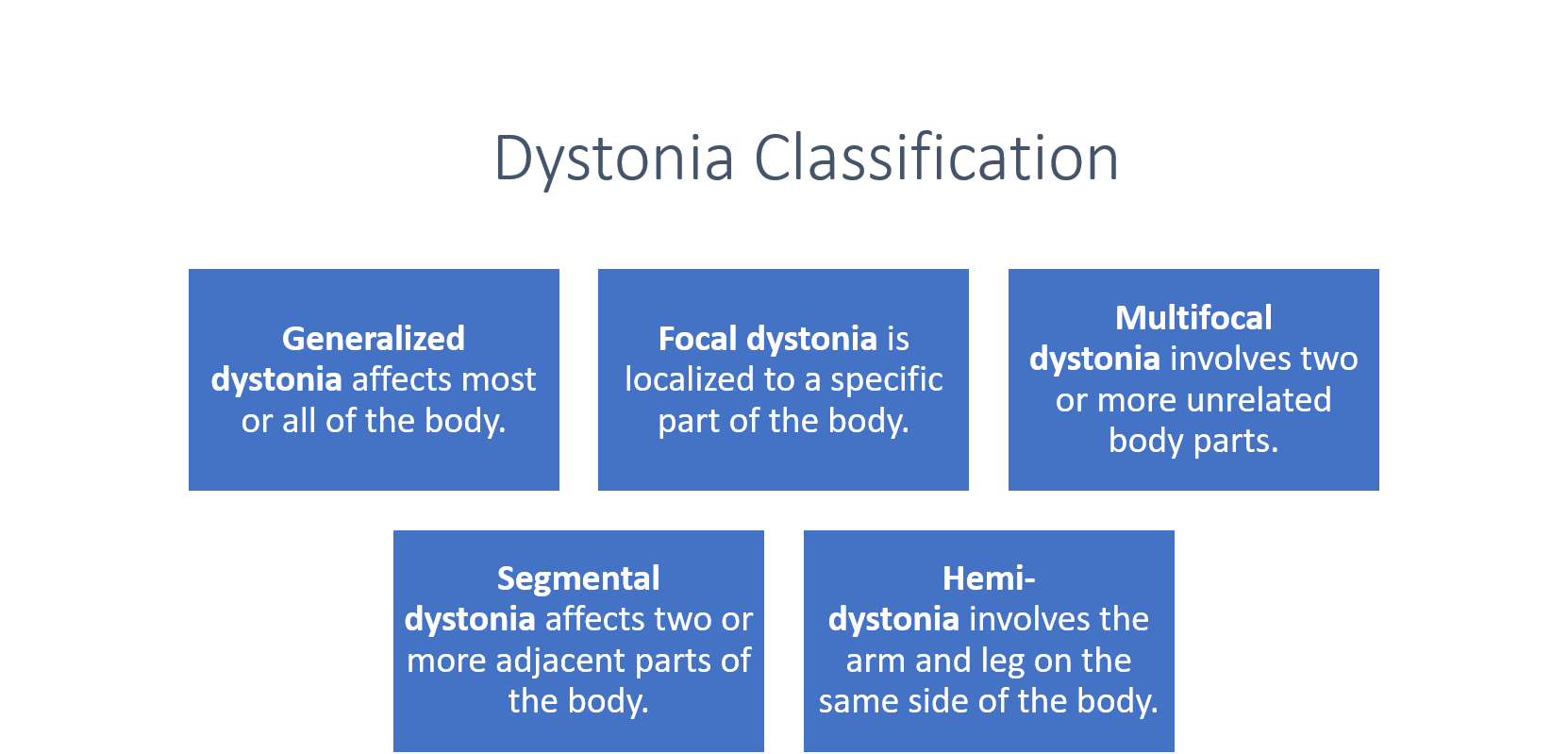
Dystonia involves the arm and leg on the same side of the body.
Dystonia pathophysiology
Loss of?
Overactivity of?
Defective?

Dystonia pathophysiology
Abnormal sensorimotor integration
Defective?
__ tricks in altering dystonic movements

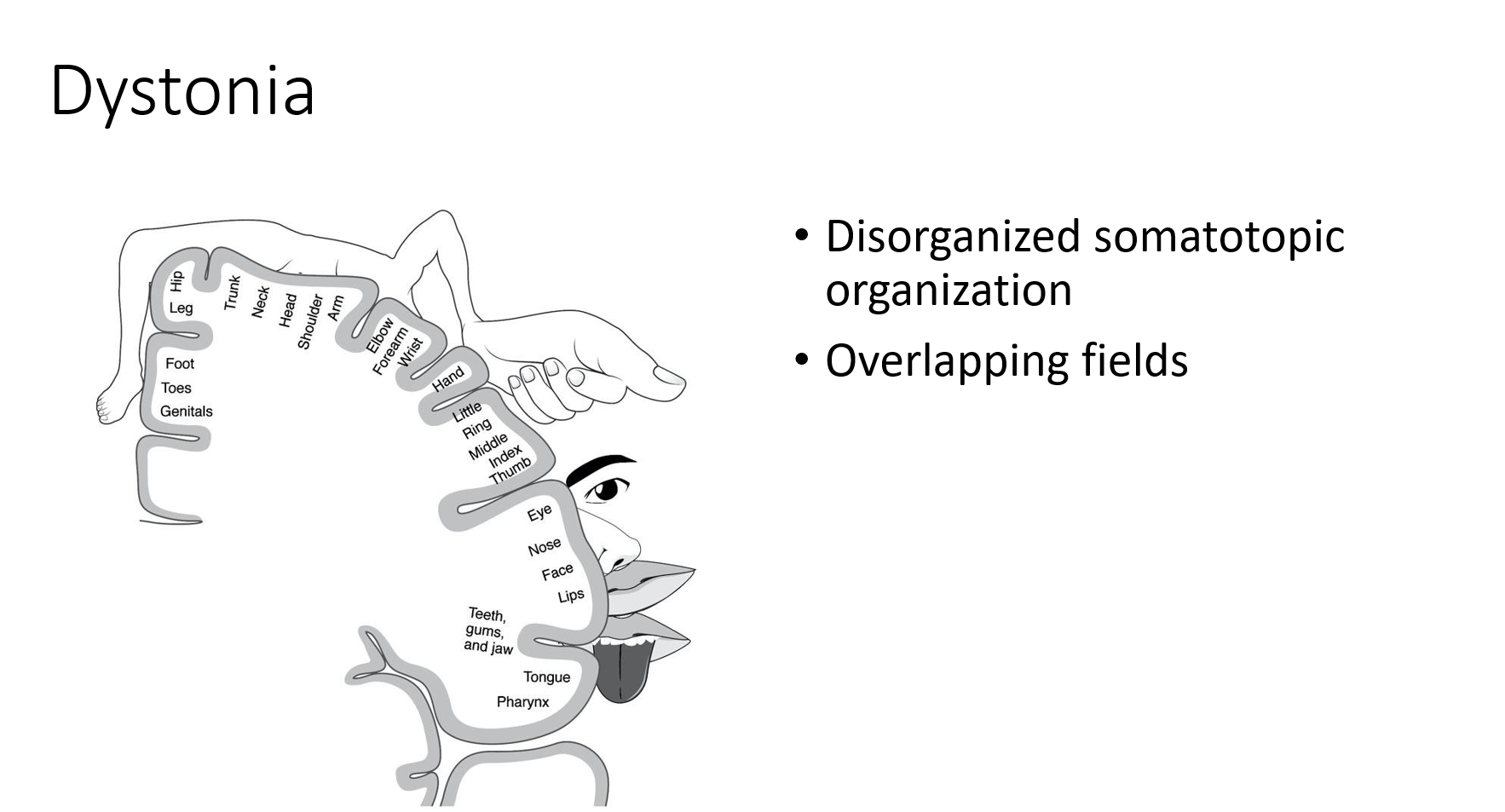
Dystonia
Disorganized ___ organizing
__ fields
Dystonia Diagnosis
__ testing
Clinical presentation criteria
DYT1:
+:
MRI:
Functional MRI:
PET:

Dystonia treatment
Deep brain stimulation of ___
Botox
Medication: __

Dystonia prognosis
Age
Progressively worse over the years?
Remains static for many years?
Progression to segmental dystonia?

Dystonia prognosis
Spontaneous remission occurs in some cases within?
Majority show steady progression of dystonia, with maximal disability occurring after?

What is a sensory trick with dystonia?
changing the sensory input changes or stops the motor output/involuntary action