Case 1: Mike Chiasson
 Call Kai
 Learn
Learn Practice Test
 Spaced Repetition
 Match
Match Flashcards
 Knowt Play
1/65

There's no tags or description
Looks like no tags are added yet.
Name | Mastery | Learn | Test | Matching | Spaced | Call with Kai | Chat |
|---|
No analytics yet
Send a link to your students to track their progress
66 Terms
Extension
Increase angle between 2 body parts
Flexion
Decrease angle between 2 body parts
Abduction
Move away from midline
Adduction
Move towards midline
External Rotation
Rotation away from midline
Internal Rotation
Rotation towards midline
Elevation
Move up/superiorly
Depression
Move down/inferiorly
Circumduction
Circular motion
Plantar/Palmar Flexion
Movement towards front/anterior side (down)
Dorsiflexion
Movement towards dorsal/posterior side (up)
Eversion
Move foot sole outward (away from midline)
Inversion
Move foot sole inward (towards midline)
Pronation
Hands: Palm down + arms at side
Feet: Eversion + dorsiflexion
Supination
Hands: Palm up + arms at side
Feet: Inversion + plantar flexion
Ligaments
Connect bone to bone
Stabilize joint
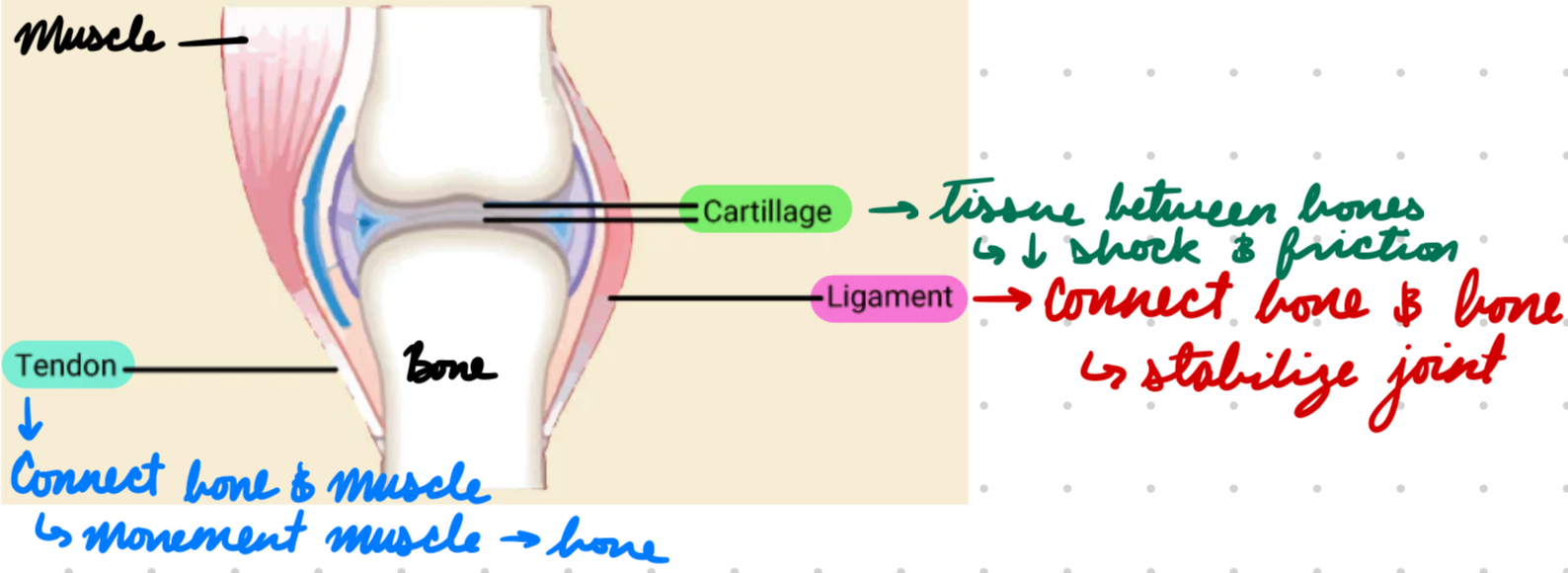
Tendons
Connect muscle to bone
Transmit force from muscle → bone = Movement
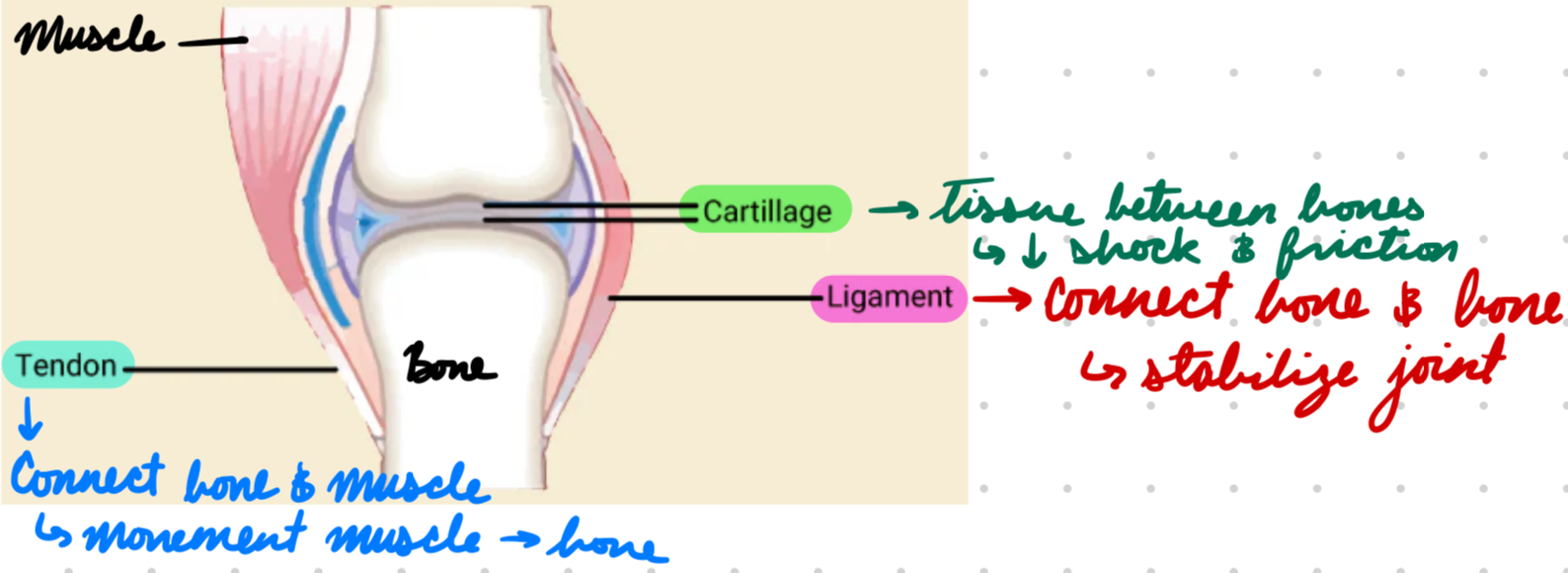
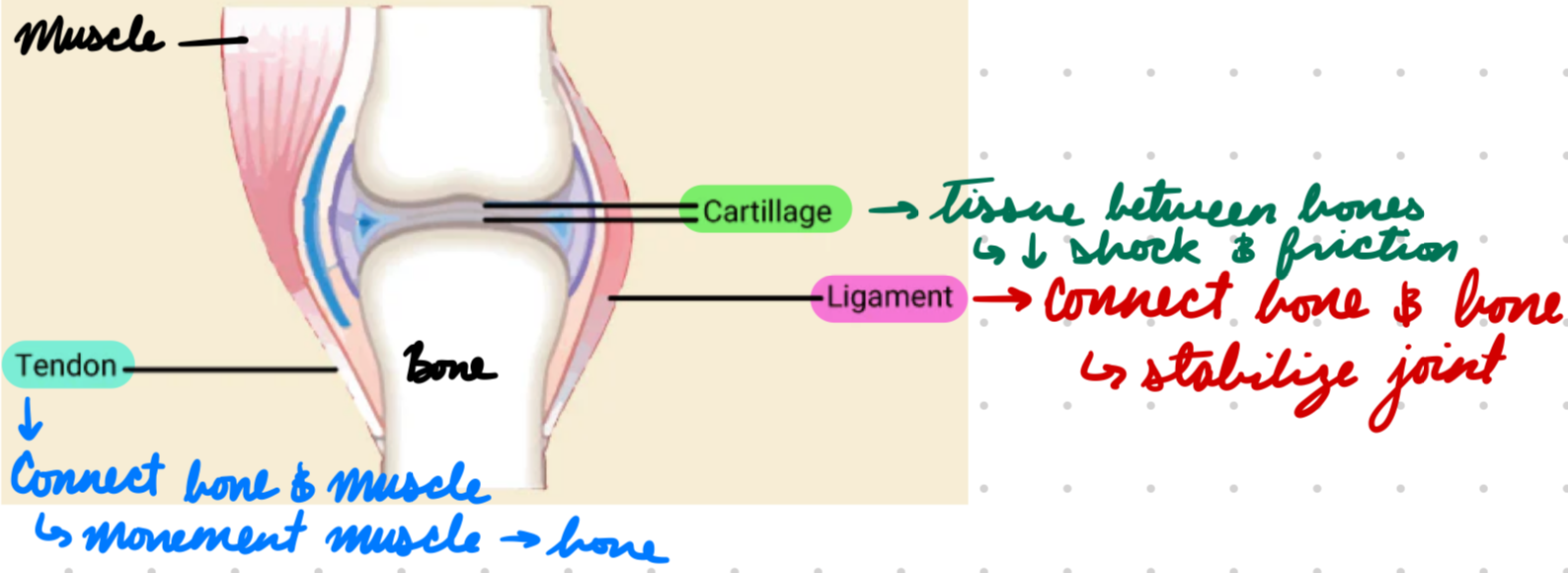
Cartilage
Tissue between joint bones
Cushioning = Absorb + distribute shock
Reduce friction = Smooth movement
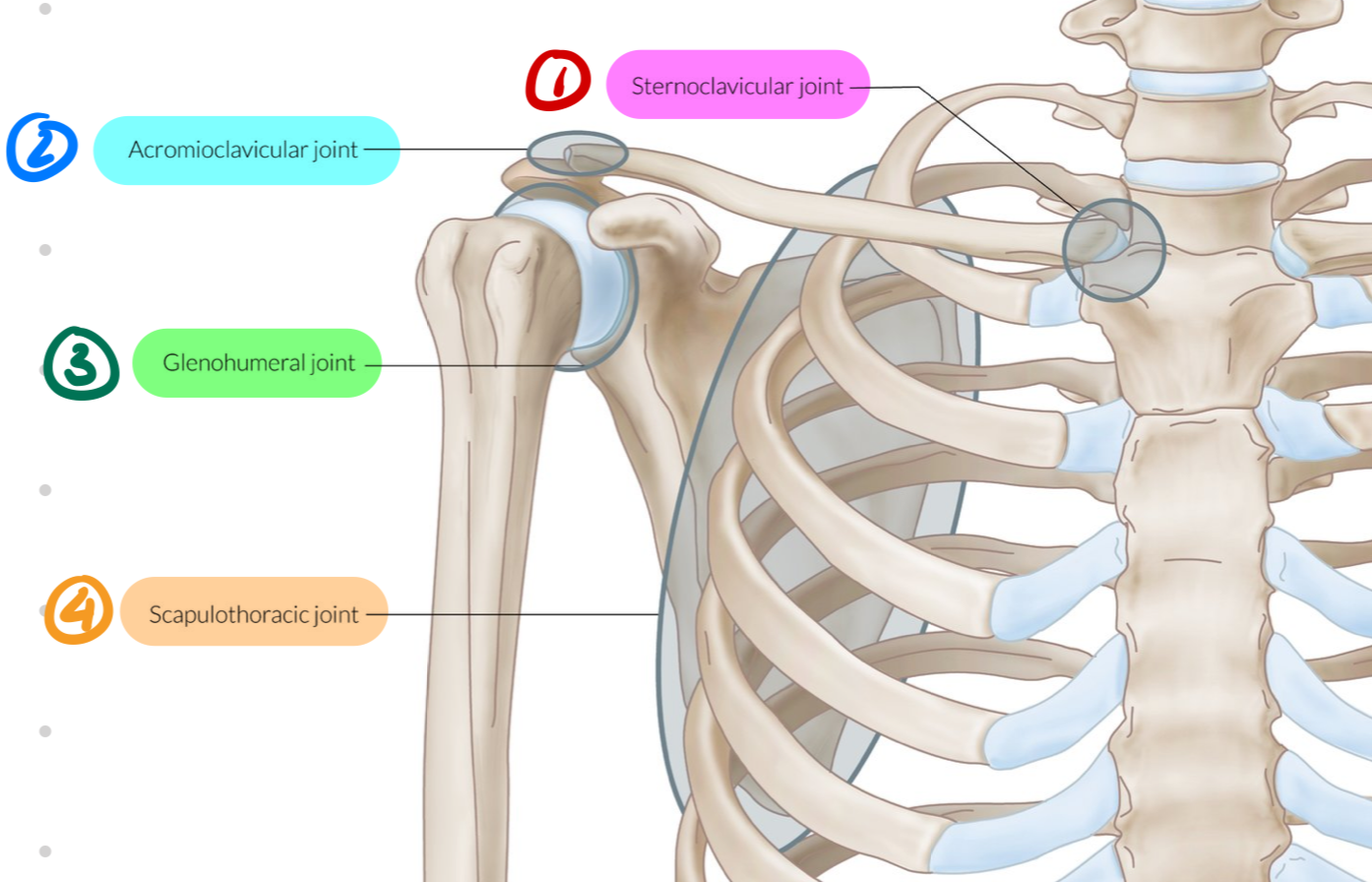
Shoulder/Rotator Cuff: Joints
4 joints
Sternoclavicular
Acromioclavicular (AC)
Glenohumeral
Scapulothoracic
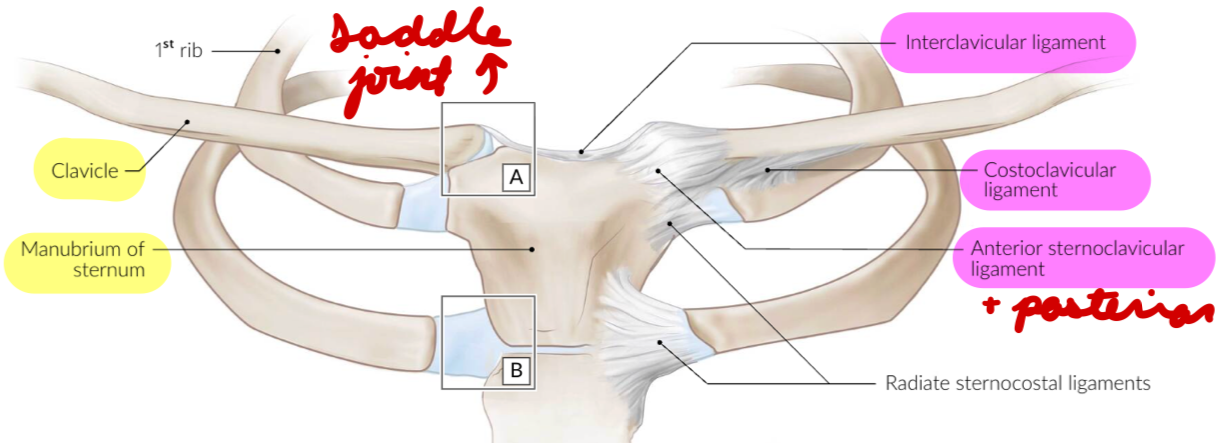
Shoulder: Sternoclavicular Joint
Saddle joint between medial clavicle + sternum manubrium
Ligaments:
Anterior + posterior sternoclavicular
Between manubrium + clavicle
Interclavicular*
Join both clavicle ends
Costoclavicular*
Join first rib + clavicle
Sternoclavicular Joint Movements
Elevtation/depression
Protraction/retraction
Circumduction
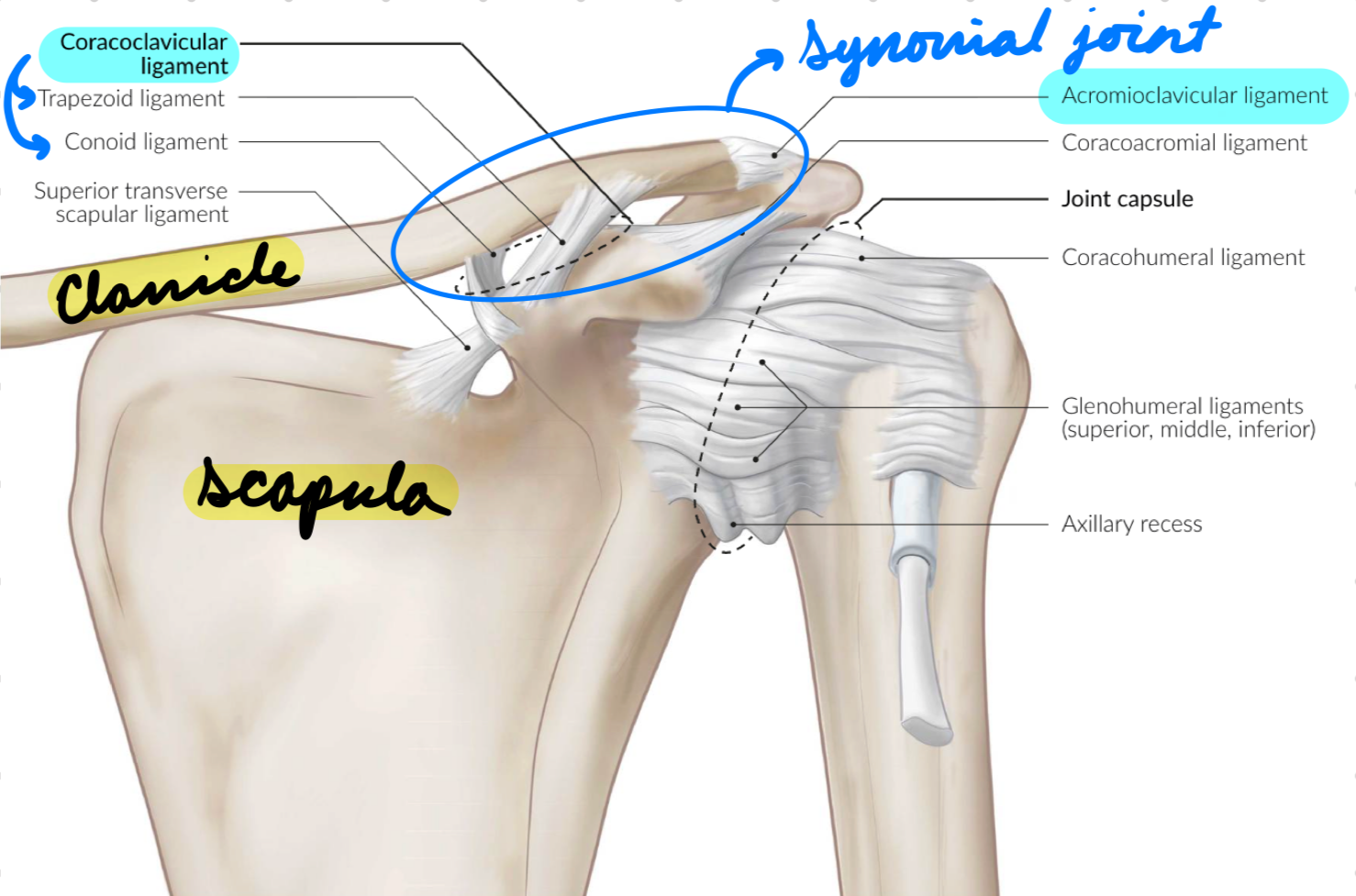
Shoulder: Acromioclavicular (AC) Joint
Synovial joint between clavicle + scapula acromion
Ligaments:
Acromioclavicular
Between acromion + clavicle
Coracoclavicular
Between scapula coracoid process + clavicle
AC Joint Movements
None alone
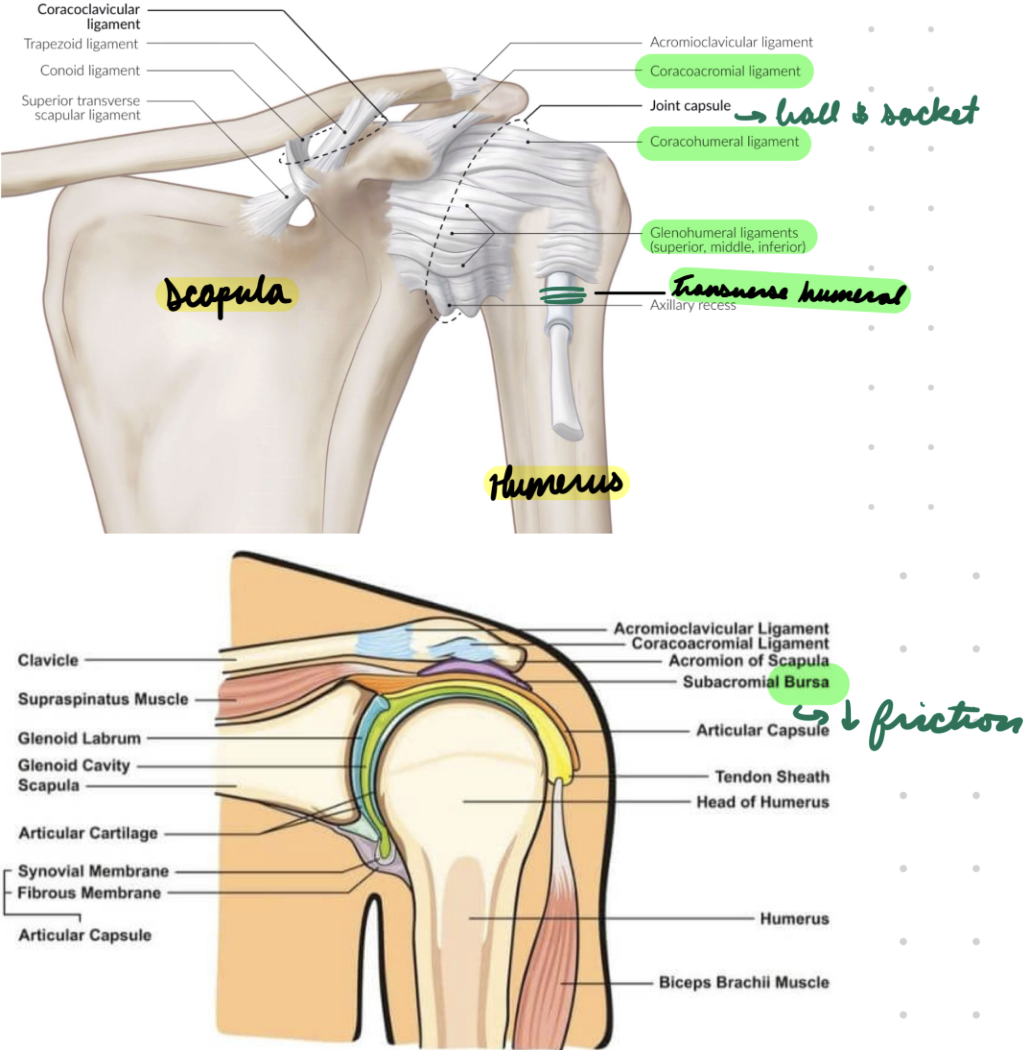
Shoulder: Glenohumeral Joint
Ball-and-socket joint between humerus head + scapula glenoid cavity
Ligaments:
Coracoacromial
Between coracoid process + acromion
Coracohumeral*
Between coracoid process + humerus greater tubercle
Glenohumeral (superior, middle, inferior)
Between glenoid labrum (scapula) + humerus neck
Transverse humeral
Between humerus greater tubercle + humerus lesser tubercle
Bursa: Fluid-filled sacs in synovial membrane reducing friction
Glenohumeral Joint Movements
Flexion/extension
Medial/lateral rotation
Abduction/adduction
Circumduction
Shoulder: Scapulothoracic Joint
Physiological joint
Scapulothoracic Joint Movements
Elevation/depression
Protraction/retraction
Lateral/medial rotation
Shoulder: Bones
2 bones
Clavicle
Scapula
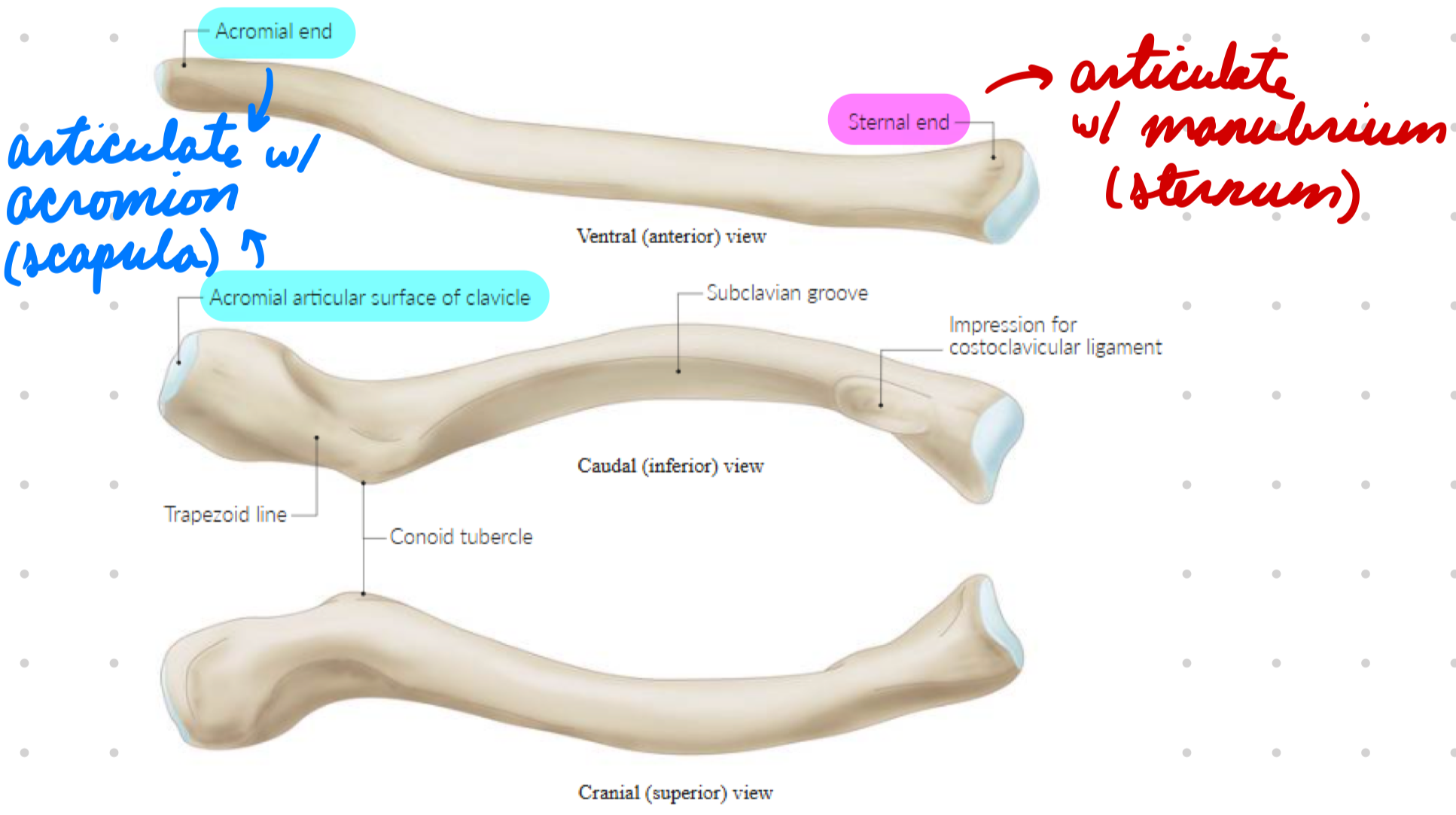
Clavicle
Anterior S-shaped bone connecting scapula + sternum
Above rib 1
Articulation
Medial/Sternal End: Manubrium (sternum) = Sternoclavicular joint
Lateral/Acromial End: Acromion (scapula) = AC joint
Scapula
Posterior flat triangular bone
Above ribs 2-7
Articulation:
Posterior Surface: Clavicle (acromion)
Anterior/Costal Surface: Glenoid fossa + humerus head = Glenohumeral joint
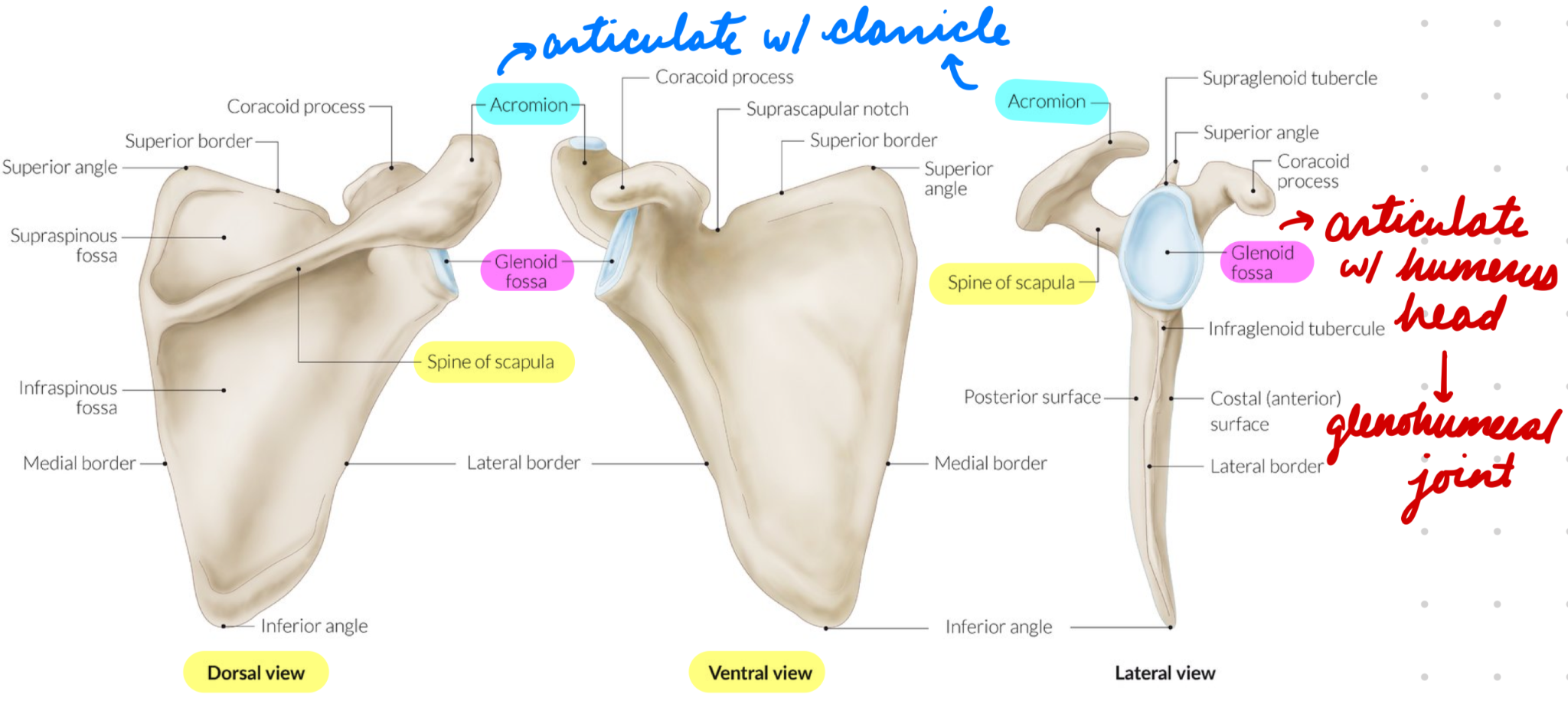
Shoulder: Muscle Groups
Scapulohumeral (intrinsic shoulder)
Anterior axioappendicular
Posterior axioappendicular (extrinsic shoulder)
Scapulohumeral Muscles
Rotator cuff muscles
Teres major
Deltoid
Scapulohumeral: Rotator Cuff Muscles
Subscapularis
Supraspinatus
Infraspinatus
Teres minor
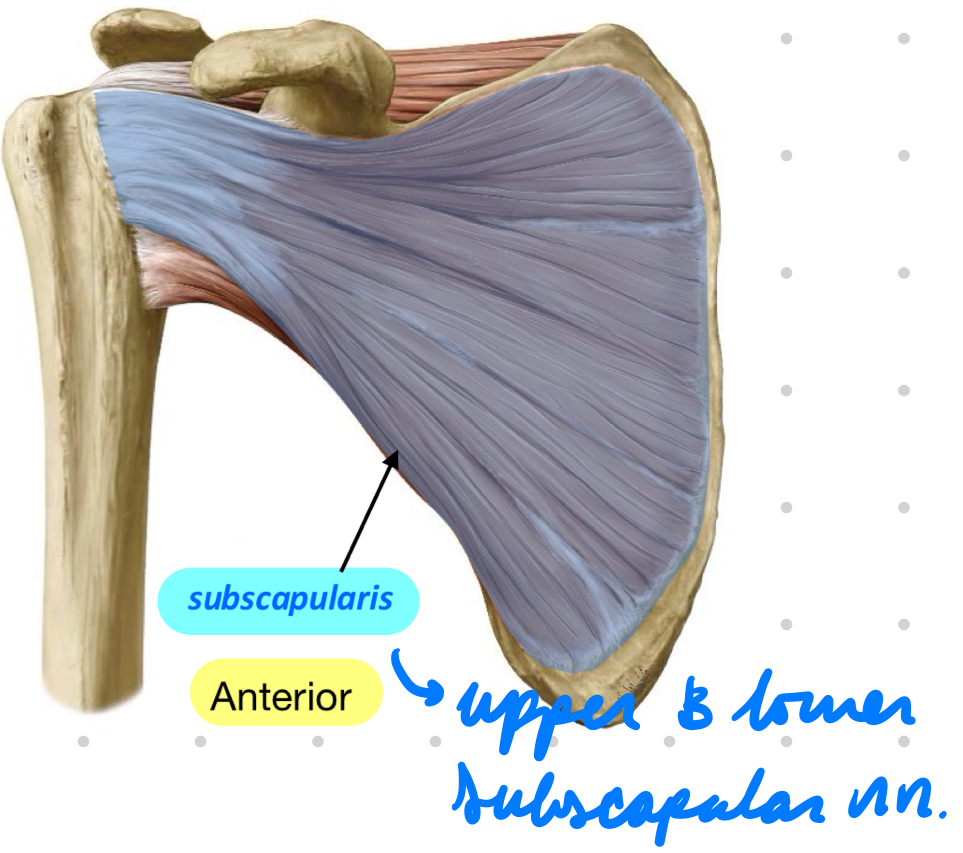
Rotator Cuff: Subscapularis
Anterior
Innervation:
Upper + lower subscapular nn.
Action:
Shoulder internal rotation
Arm adduction*
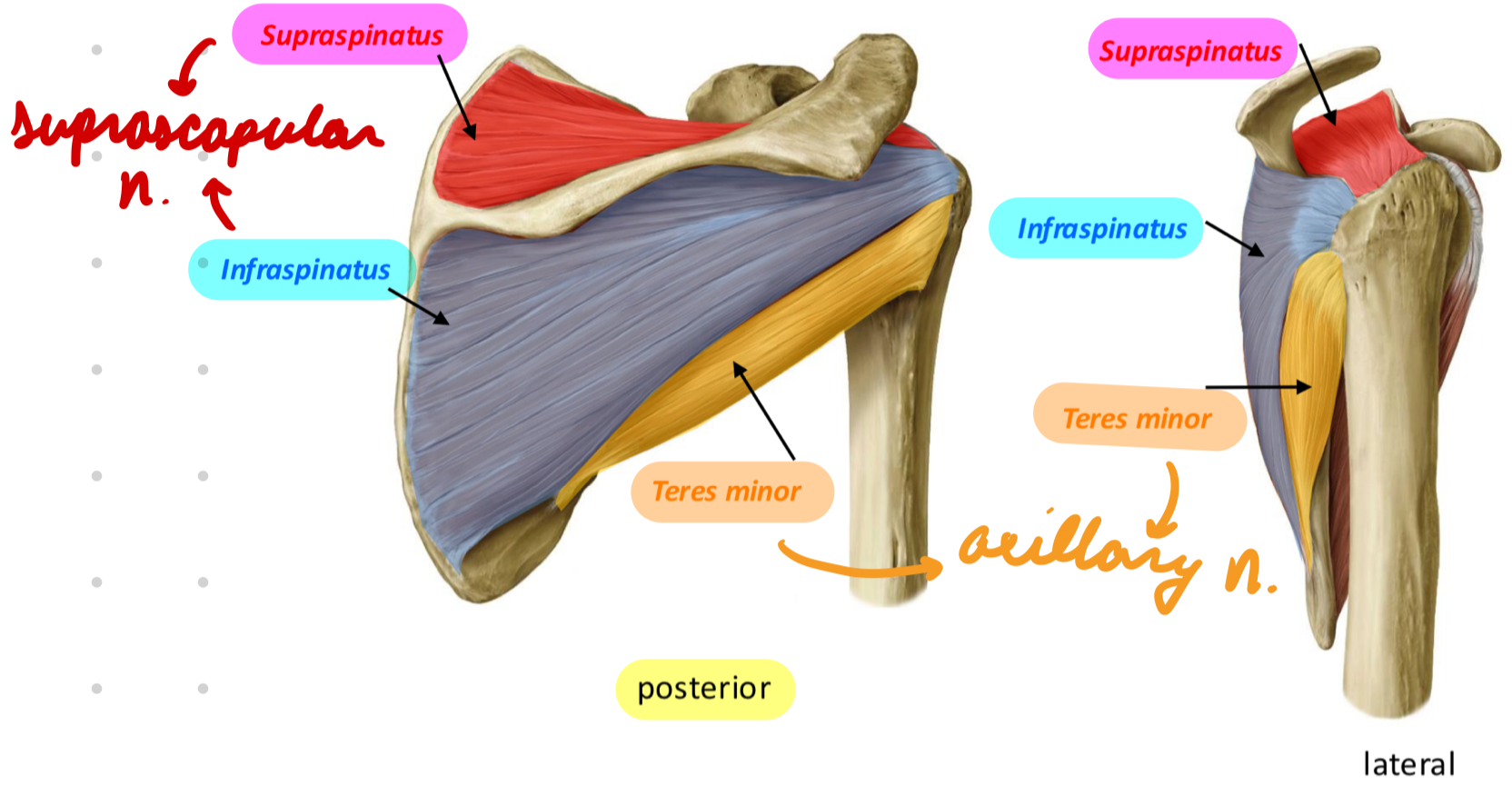
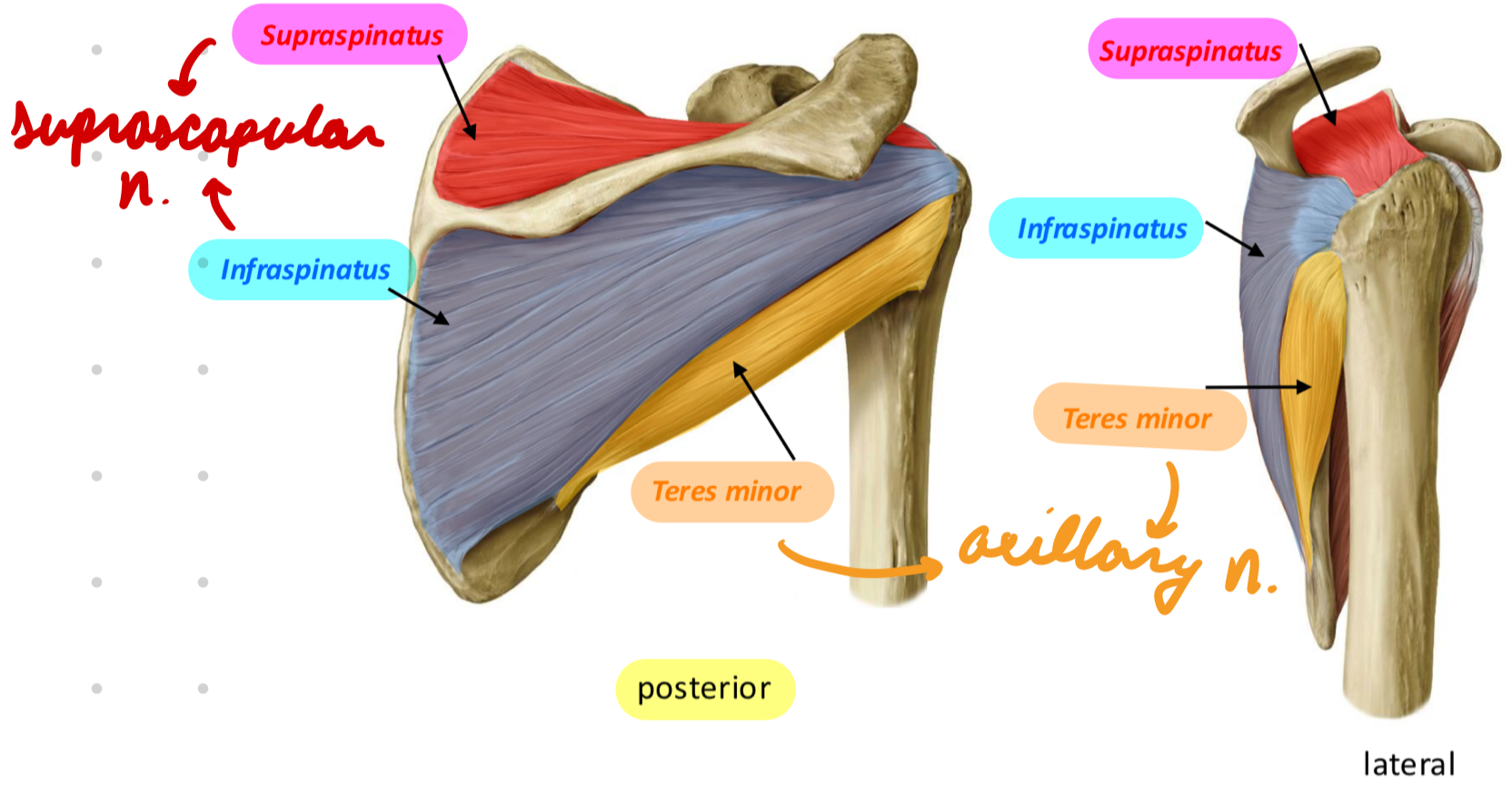
Rotator Cuff: Supraspinatus
Posterior
Innervation: Suprascapular n.*
Action:
Arm abduction ≤ 15º
Shoulder external rotation*
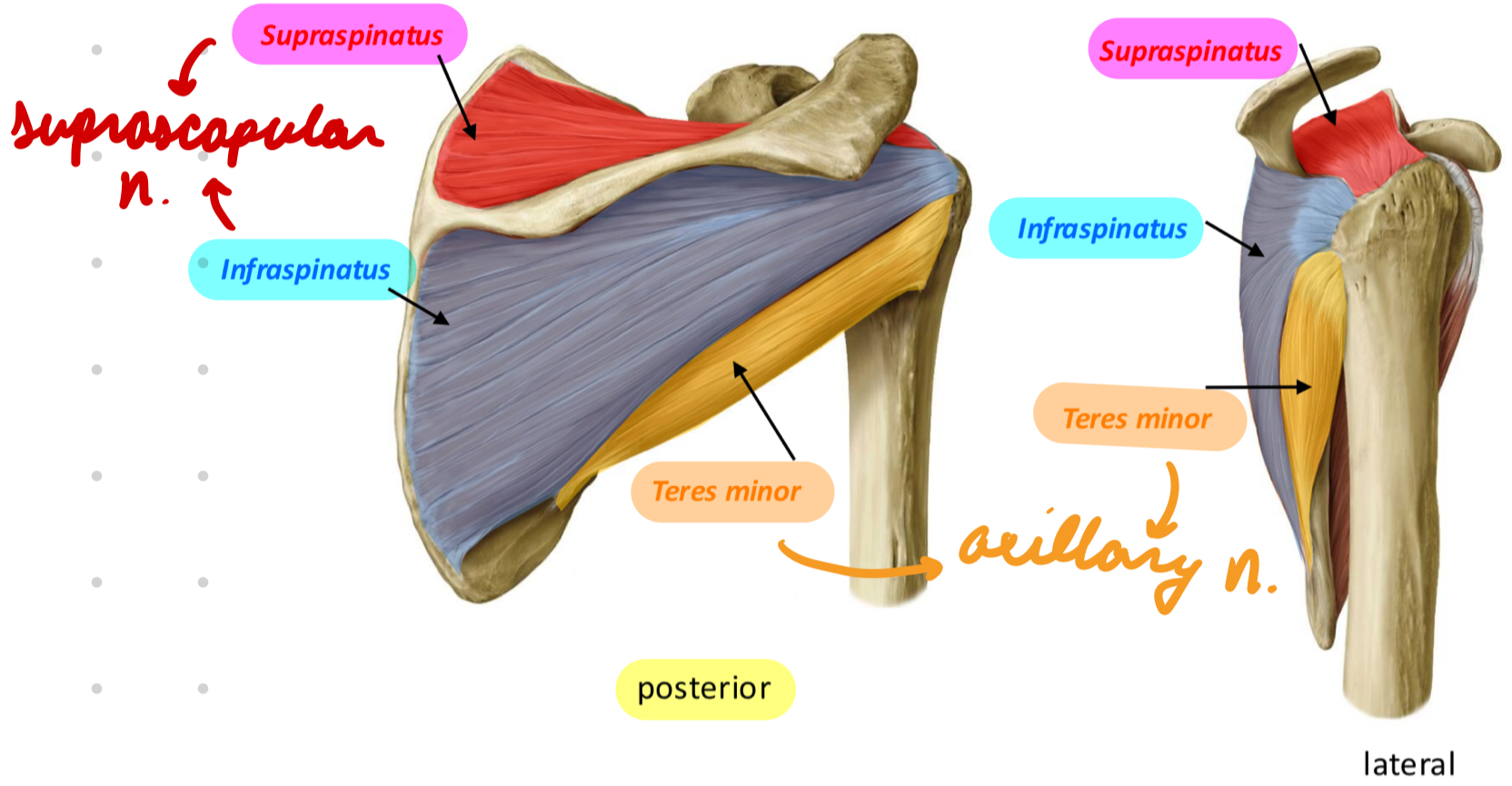
Rotator Cuff: Infraspinatus
Posterior
Innervation: Suprascapular n.*
Action: Arm external rotation*
Rotator Cuff: Teres Minor
Posterior
Innervation: Axillary n.
Action:
Arm external rotation*
Arm adduction
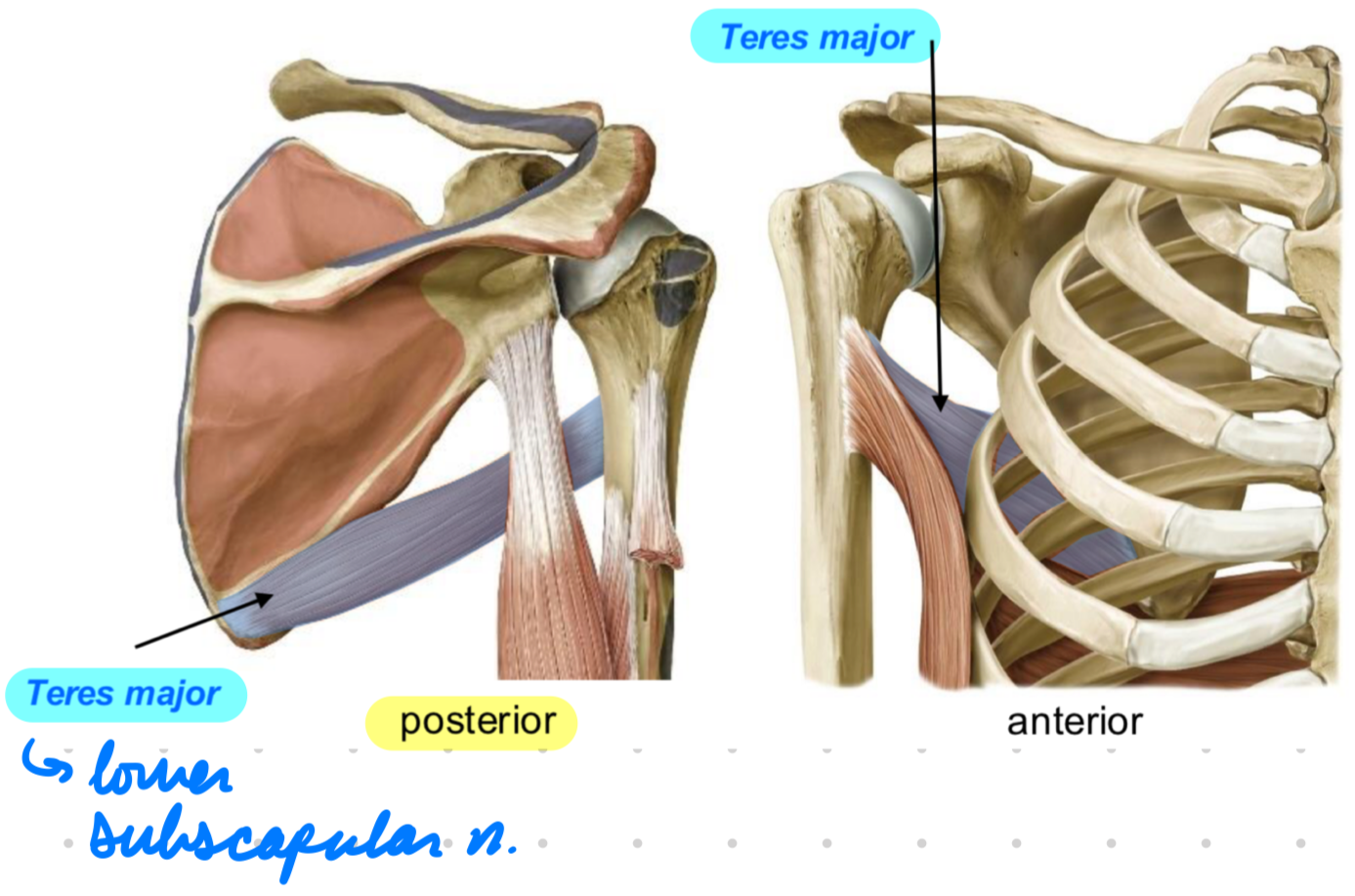
Scapulohumeral: Teres Major
Posterior
Innervation: Lower subscapular n.
Action:
Arm adduction
Arm internal rotation
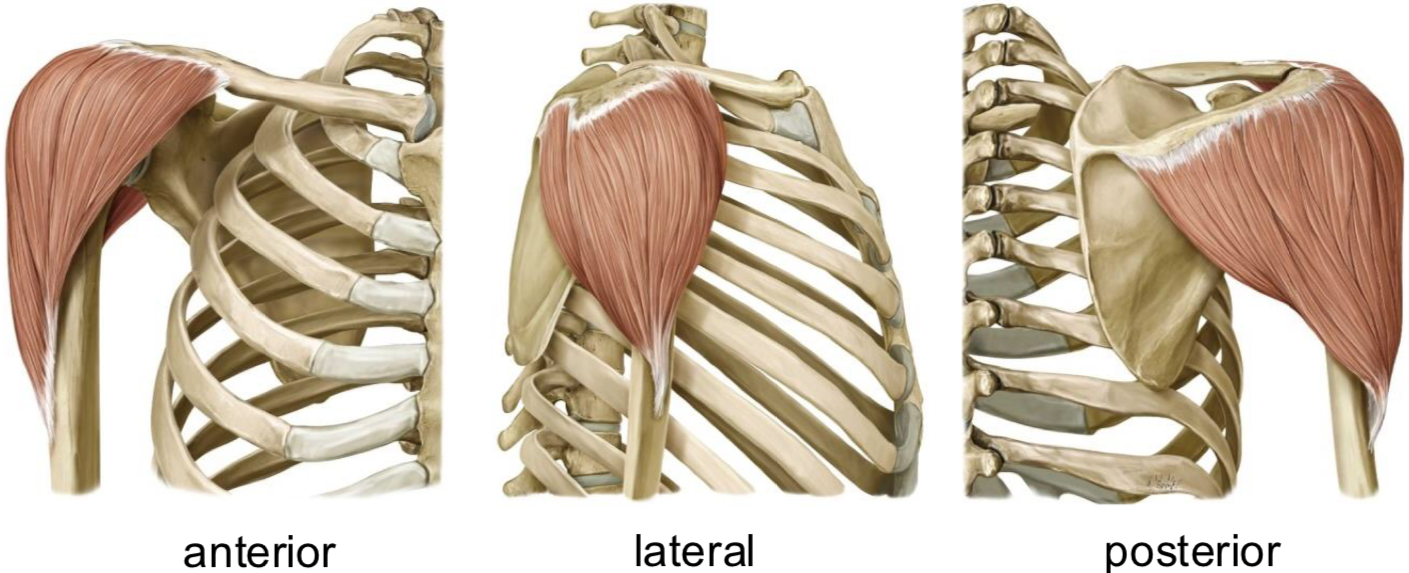
Scapulohumeral: Deltoid
Innervation: Axillary n.
Action:
Arm abduction ≤ 90º
Arm adduction
Arm extension
Arm flexion
Anterior Axioappendicular Muscles
Subclavius*
Pectoralis major
Pectoralis minor
Serratus anterior
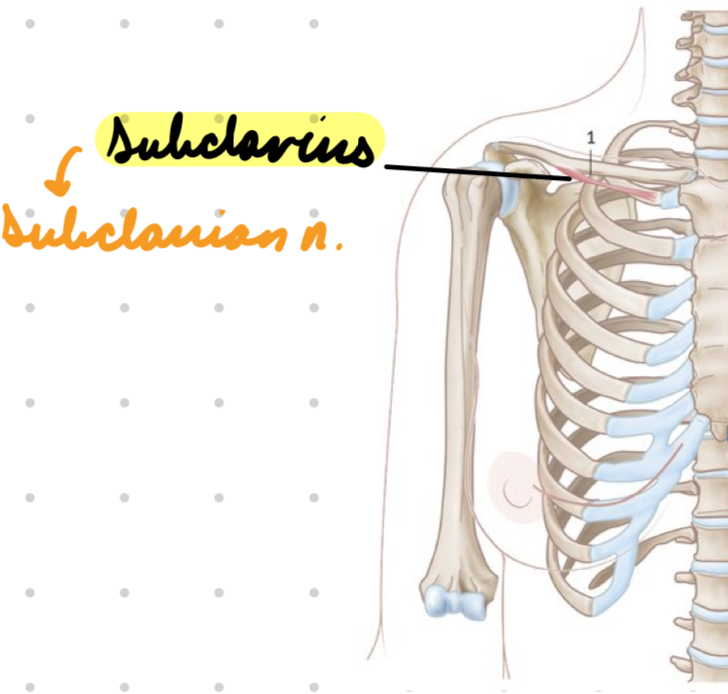
Ant Axioappendicular: Subclavius
Innervation: Subclavian n.
Action: Shoulder + clavicle depression
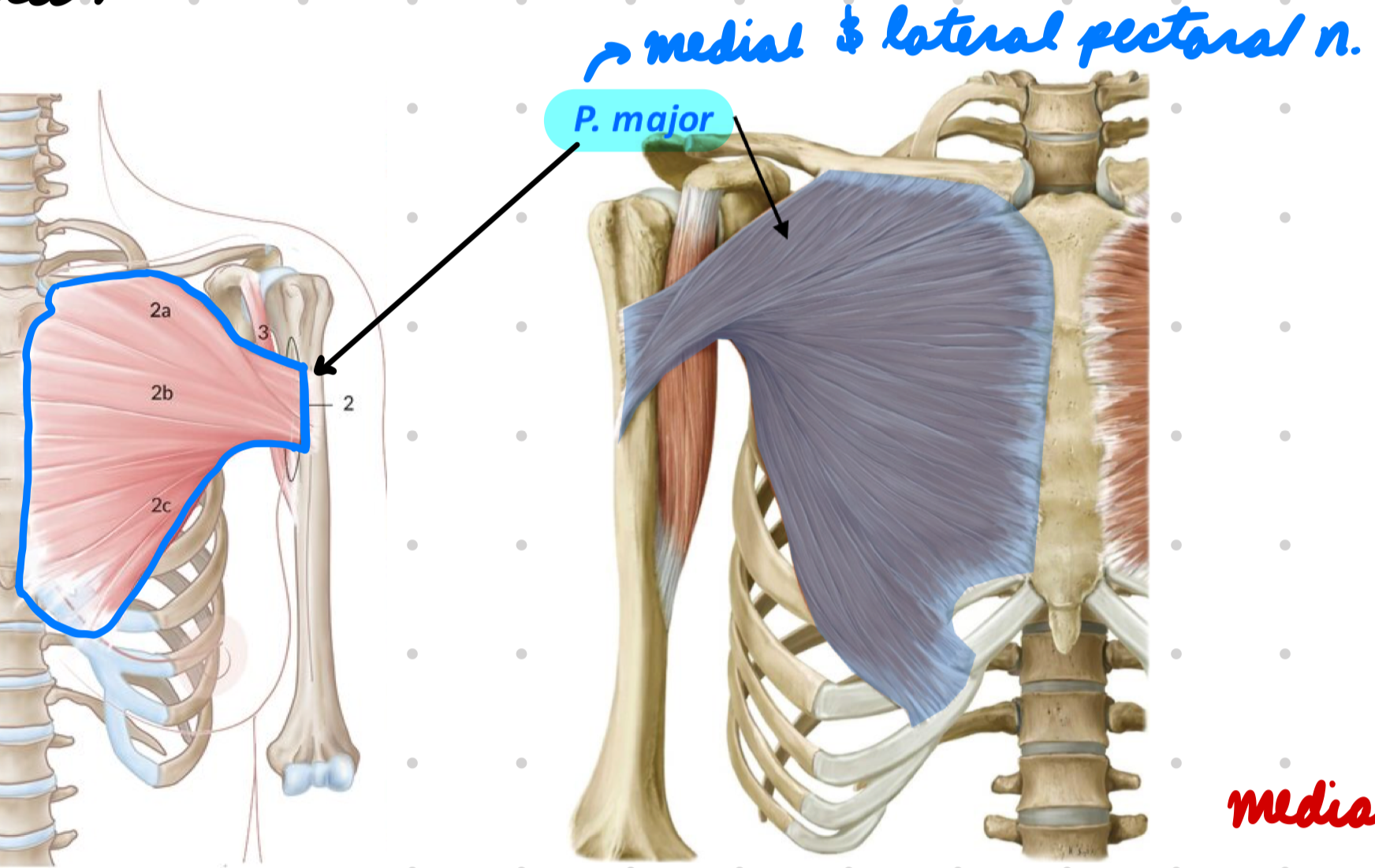
Ant Axioappendicular: Pectoralis Major
Innervation: Medial + lateral pectoral n.
Action:
Arm adduction*
Arm internal rotation
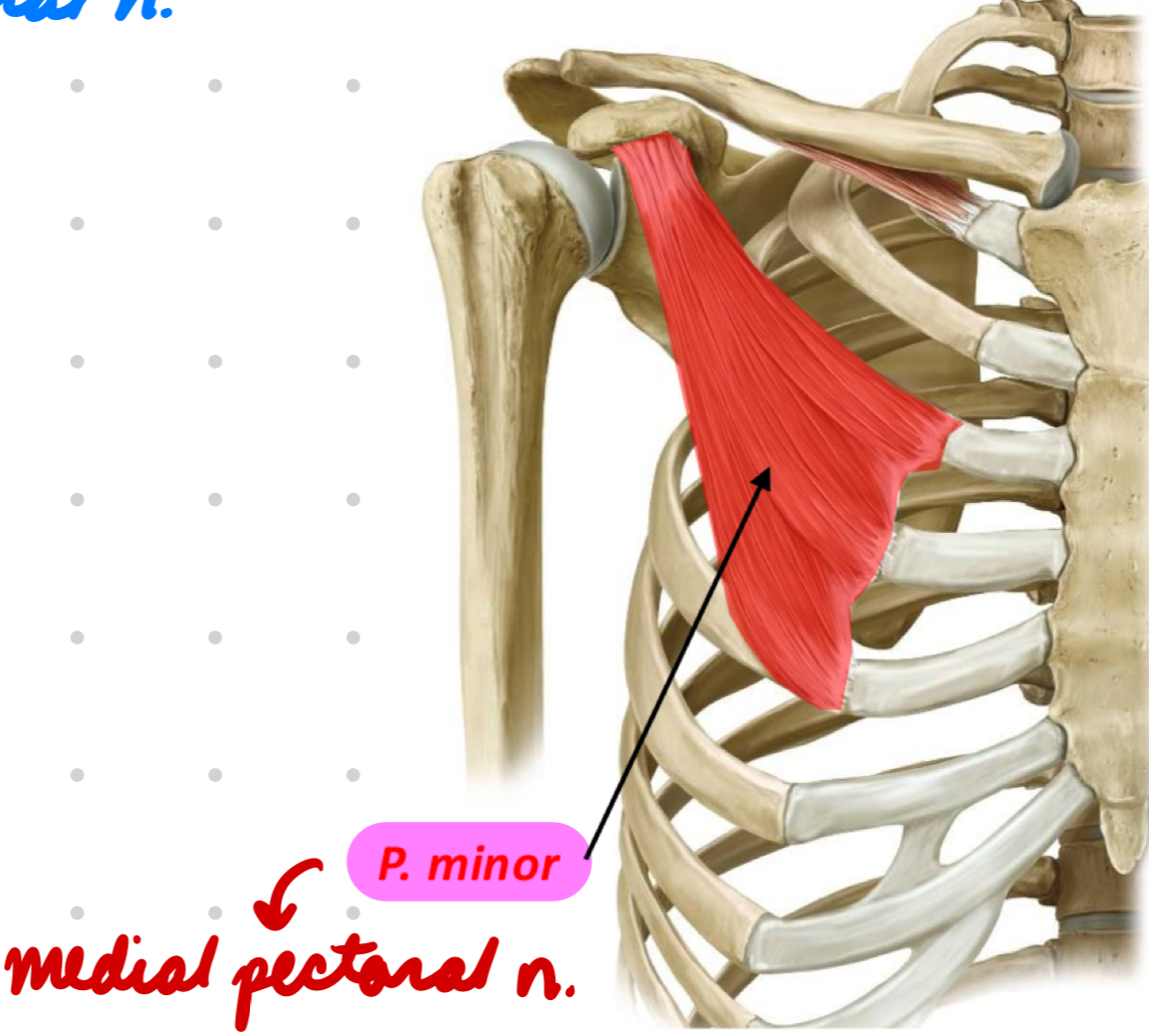
Ant Axioappendicular: Pectoralis Minor
Innervation: Medial pectoral n.
Action:
Scapular protraction
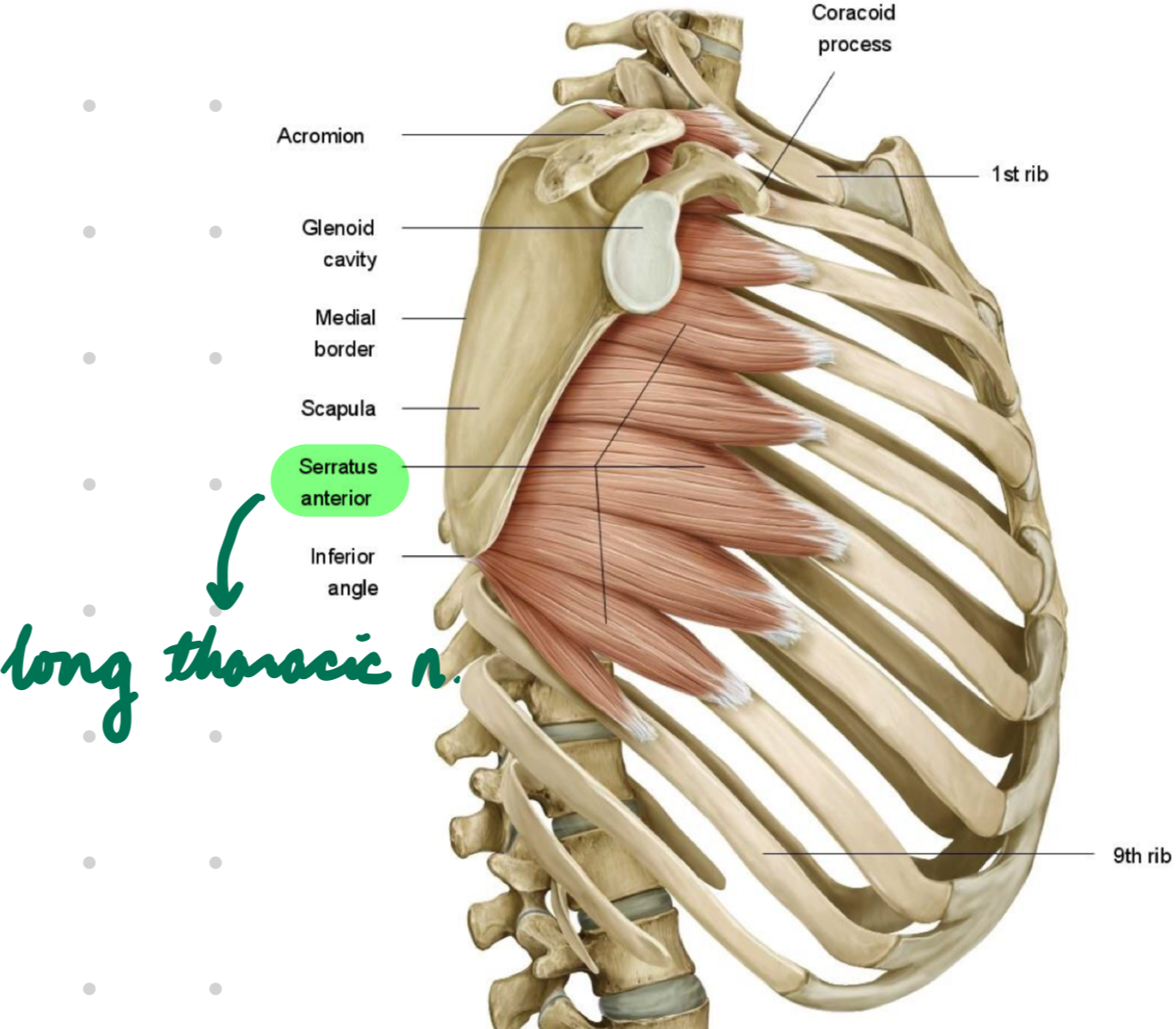
Ant Axioappendicular: Serratus Anterior
Innervation: Long thoracic n.
Action:
Scapular protraction
Shoulder upward rotation
Arm abduction > 100º
Posterior Axioappendicular Muscles
Trapezius
Latissimus dorsi
Levator scapulae
Rhomboid major + minor
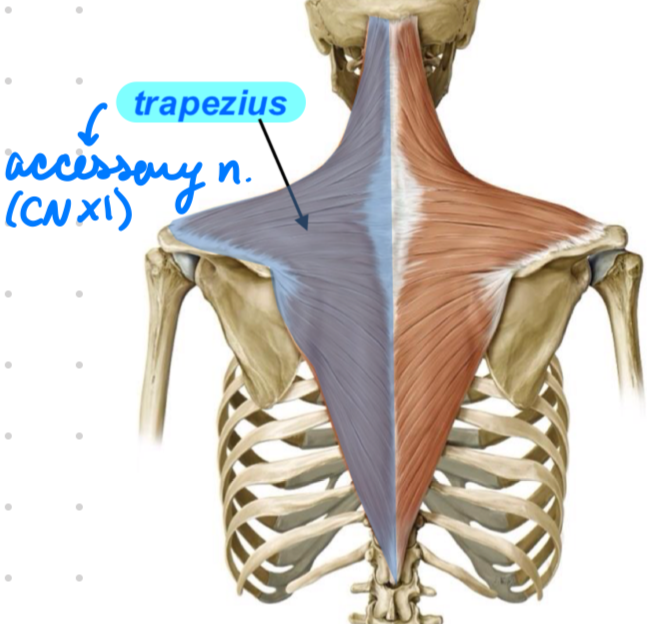
Post Axioappendicular: Trapezius
Innervation: Accessory n. (CN XI)
Action:
Scapular elevation, depression, adduction, upward rotation
Arm abduction > 90º
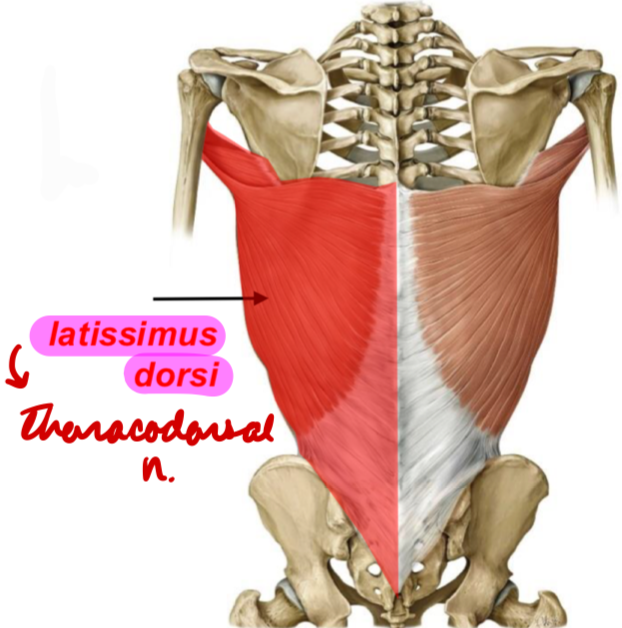
Post Axioappendicular: Latissimus Dorsi
Innervation: Thoracodorsal n.
Action:
Arm adduction, abduction, extension*, internal rotation*
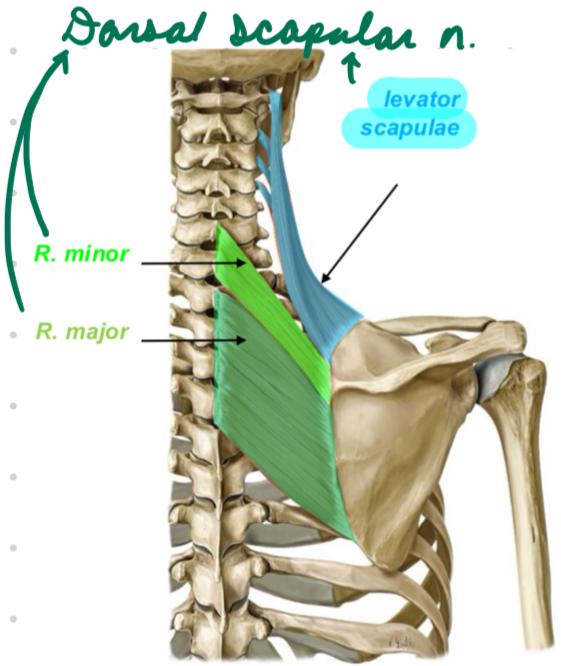
Post Axioappendicular: Levator Scapulae
Innervation: Dorsal scapular n.*
Action:
Scapular elevation
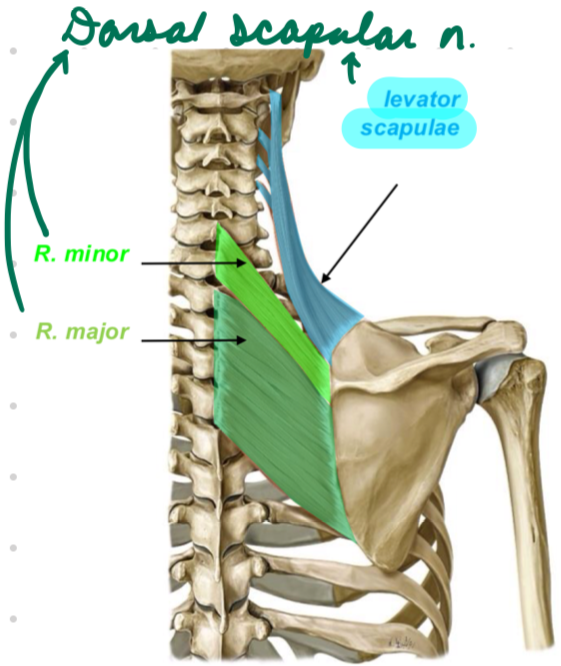
Post Axioappendicular: Rhomboid Major + Minor
Innervation: Dorsal scapular n.
Action:
Scapular elevation + rotation
Chronic Tendon Disorders: Description
Tendinopathy: Tendon strain
Tendonitis: Inflammation
Tenosynovitis: Synovial tendon sheath inflammation
Stenosing Tenoxynovitis/Tenovaginitis: Tendon entrapment
Tendinosis: Tendon degeneration without inflammation
Rotator Cuff Disease/Subacromial Impingement Syndrome: Rotator cuff tendon compression + injury
Tendinopathy: Epidemiology
General risk factors:
Athletes
Occupation with manual labour/repetitive movements
Obesity
Previous tendon injury
Fluoroquinolone use*
Subacromial impingement risk factors:
Overhead sports
Repetitive arm movements (horizontal/overhead)
Decreased rotator cuff strength*
Stroke
Parkinson
Tendinopathy: Etiology
Overuse/overload injury
Repetitive movements = Strain tendon insertion
Trauma
Laceration
Rupture
Tendinopathy: Pathophysiology
Repeated skeletal muscle contraction = Repeated tendon strain = Tendon microtrauma
Improper tendon healing = Tendinopathy
Tendinotitis + Tenosynovitis: + inflammation
Tendinopathy Pathophysiology: Impingement Syndrome
Narrowed subacromial space
Intrinsic: Rotator cuff causes
Tendon overuse = Trauma = Tissue degeneration
Extrinsic: External rotator cuff causes
Mechanical tendon compression by external structures = Tissue degeneration
Tendinopathy: Clinical Presentation
Localized pain/tenderness
Worse with movement
Nocturnal exacerbation when lying on shoulder
Inflammation + swelling
Decreased function
Restricted movement
Tendinopathy: Investigations
Clinical diagnosis
Provacative tests (clinical exam)
Power assessment
Imaging
Tendinopathy Investigations: Provacative Tests
Impingement syndrome:
Neer test
Hawkins-Kennedy test
Painful arc test
AC joint:
Scarf test
Biceps tendon:
Speed’s test
Yergason’s test
Tendinopathy Investigations: Imaging
Not required
Rule out other causes
XR/US/MRI
Impingement syndrome
Narrow acromiohumeral distance
Osteoarthritis
Tendinopathy: Treatment
Conservative management
Refractory management
Tendinopathy Treatment: Conservative Management
Rest
Ice
Braces
Pain management
Topical/oral NSAIDs
Physiotherapy: Strength training
Tendinopathy: Refractory Management
Indication: Pain ≥ 3 months
Corticosteroid injection
Platelet-rich plasma injection*
Topical nitroglycerin
Extracorporeal shock wave therapy*
Surgery
Debridement: Remove damaged tissue = Promote wound healing
Tendon resection
Tendinopathy: Complications
Adhesive capsulitis (frozen shoulder syndrome)
Adhesive Capsulitis: Description
Inflammation + fibrosis of joint capsule = Shoulder joint contracture (movement restriction)
Primary: Idiopathic
Secondary: Previous shoulder injury + prolonged immobilization
Adhesive Capsulitis: Pathophysiology
Guarding + immobilization = Increase fibrosis + adhesions across glenohumeral joint = Function loss (movement restriction) + myofascial pain (localized knots in muscles)
Adhesive Capsulitis: Clinical Presentation
Pain
Stiffness
Restricted active + passive ROM
Adhesive Capsulitis: Treatment
Physiotherapy
NSAIDs*
Corticosteroid injections*
Surgery