Chapter 10 Airway Management
 Call Kai
 Learn
Learn Practice Test
 Spaced Repetition
 Match
Match Flashcards
 Knowt Play
1/56

There's no tags or description
Looks like no tags are added yet.
Name | Mastery | Learn | Test | Matching | Spaced | Call with Kai | Chat |
|---|
No analytics yet
Send a link to your students to track their progress
57 Terms
Clinical Death
Happens immediately when the heart stops
Biological Death
Occurs approximately four to six minutes after the onset of clinical death.
-Oxygen was not being delivered to the brain, which leads to brain tissue death.
Hypoxia
Lack of oxygen in the body tissues.
Hypoxemia
Low levels of oxygen in the blood.
What are the two primary muscles for breathing?
The diaphragm and the intercostal muscles.
Accessory Muscle Use
Sign of respiratory distress.
Using abdominals, pecs , scalenes, and sternocleidomastoid muscles to assist in breathing.
Pertinent Positive
Presence of a sign or symptom that helps identify a patient's condition.
Pertinent Negative
Absence of a sign or symptom that helps identify a patient's condition.
OPA Name
Oropharyngeal airway
OPA Indication
Patient cannot protect airway, they will have a snoring sound when breathing. The patient is unconscious without a gag reflex
OPA Contraindication
Patent gag reflex.
OPA Size Measurement
Measure from ear to mouth
OPA Adult Insetion
90 to 180 degrees
OPA Pediatric Insertion
Straight in, or 90 degrees
OPA two ways to open patient mouth
Tongue Jaw Lift or Cross Finger
NPA Name
Nasopharyngeal airway
NPA Indication
Patient who cannot protect airway with a gag reflex
NPA Contraindications
Patient with facial trauma and or skull fracture (if you insert an NPA with a patient with a skull fracture, there is a chance you could enter the cranial vault)
NPA Size Measurement
From the ear to the nose
NPA Insertion
Largest nostril bevel to the septum
Suction Indication
Gurgling sound - sign fluid is in the upper airway
Suction Limitations
Cannot suction out large particles, so manual before mechanical: turn the patient to the side first and get out any large chunks
When do you stop suction
When the heart rate drops, it has been longer than 15 seconds, or suctioned everything out
Suction Oral Pressure Adult
300mmHg
Suction Oral Pressure Pediatric
80-120mmHg
Suction Time Limits: Oral suction
15 seconds then stop, or if the heart rate drops stop then (whichever comes first)
If heart rate drops, stop suction and give oxygen until heart rate returns
-You can only suction on the way out
Oral Suction Names
Rigid, hard, tonsil tip, tonsil sucker, yaunker
Spontaneous Respirations
Breathing that occurs without assistance.
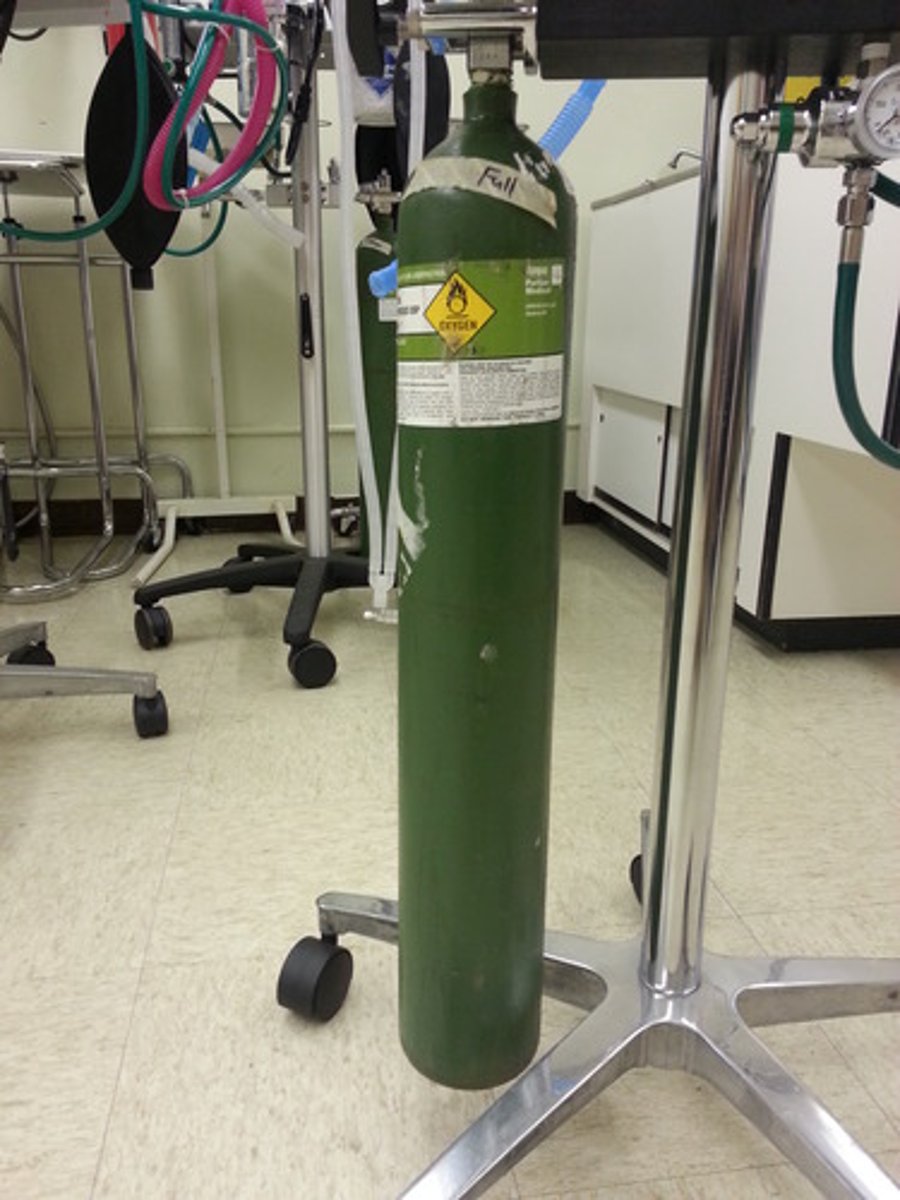
Three ways to identify an oxygen cylinder
Green, 2-5 pin index, stamped oxygen on the tank
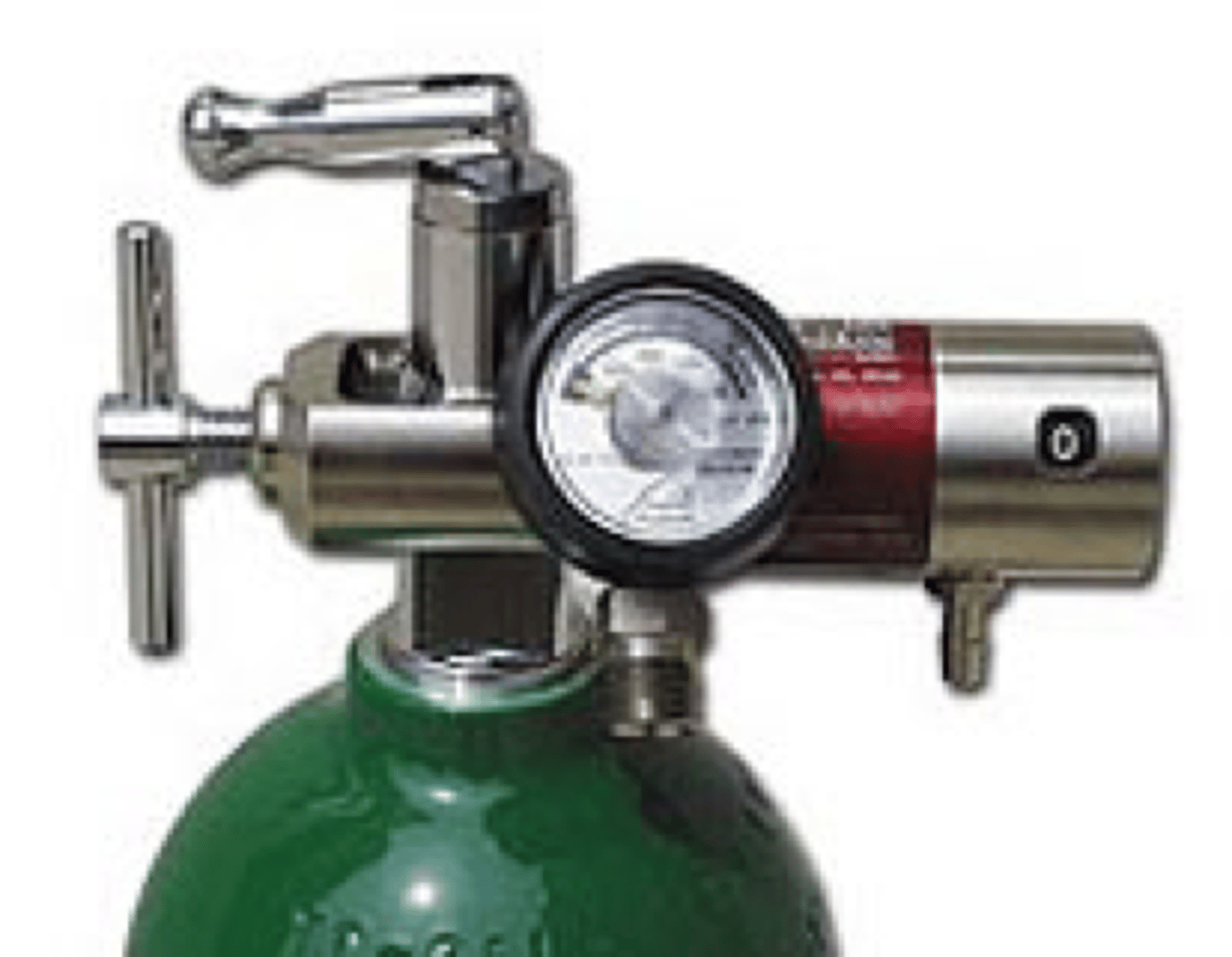
Three ways to identify a regulator
O ring, pressure gauge in PSI, flow meter in LPM
Oxygen tank keys are made of?
Plastic or aluminum
Maximum Residual Pressure
2000psi
Minimum Residual Pressure
200psi
When is oxygen indication?
Patient's whose oxygen is less than 94% (but remember, treat the patient and not the number)
Patients in respiratory distress/failure
Patient's with inhaled overdoses
Patient's who are having an allergic reaction
Pregnant patient's with complications (breach)
Non-Rebreather Flow Rate
10-15 LPM
High flow device
Non-Rebreather Oxygen Concentration
80-95%
How full must a Non-Rebreather reservoir be before putting on a patient?
At least 50% full
Nasal Cannula Flow Rate
1-6 LPM
Low flow device
Nasal Cannula Oxygen Concentration
22-44%
With every increase of 1LPM on a NC, means a 4% increase in oxygen concentration
1LPM = 22%, 2LPM = 26% etc
Mouth to Mask: How to open patient's airway
Head tilt chin lift (if no trauma)
Mouth to Mask oxygen concentration on room air
16%
Mouth to Mask Flow Rate
15LPM
Mouth to Mask Oxygen Concentration on oxygen
50-60%
Mouth to Mask: How long do you deliver a breath
Over 1 second
Each breath should deliver enough air to make the chest rise and fall for what would be normal for that patient (an obese patient may require a more forceful breath to get good chest rise)
Mouth to Mask: How often do you give a breath for an adult
Every 5 to 6 seconds
Mouth to Mask: How often do you give a breath to a pediatric?
Every 3 to 5 seconds
What is Gastric Distention?
Air in the stomach due to poor ventilations or ventilations that are done incorrectly
3 causes of gastric distention
Too forceful/fast of breaths, too much air in the lungs, and not opening the airway
5 causes for poor masks seals
Fluid on the face
No teeth
Facial Fractures
Facial Hair
Facial Deformities
Full name of BVM
Bag-Valve-Mask
AKA AMBU Bag
Clamp used for one person use of BVM
C/E Clamp
BVM is best used with how many rescuers?
2
BVM oxygen concentration on room air
21%
BVM Flow Rate
15 LPM
BVM oxygen concentration without reservoir on oxygen
50-60%
BVM oxygen concentration with reservoir on oxygen
80-100%
Chocking Patient
If they can pass air, encourage them to cough. If they have a full obstruction, do abdominal thrusts until the obstruction clears or the patient passes out. If they go unconscious begin CPR