lecture 11: hypercoaguable states
 Studied by 0 people
 Call with Kai
 Learn
Learn Practice Test
 Spaced Repetition
 Match
Match Flashcards
 Knowt Play
1/47

There's no tags or description
Looks like no tags are added yet.
Name | Mastery | Learn | Test | Matching | Spaced | Call with Kai |
|---|
No study sessions yet.
48 Terms
•Diminished blood flow
•Damage to the Vascular Wall
•Thrombotic shift
define virchow's triad
deep vein thrombosis, pulmonary embolus, cerebral infarction, myocardial infarction, organ infarcts
problems associated with thrombophilia
pulses
in assessing for thrombophilias, always check for
loss of limb
Both venous and arterial clots can cause limb pain, but missing an arterial clot can cause
-atherosclerotic lesion with active inflammation
-composed of fibrin and platelets
characterize arterial thrombosis
-red blood cell and fibrin rich
-composed of red blood cells and fibrin fibers
characterize venous thrombosis
thrombosis in the setting of an atherosclerotic plaque
#1 cause of death in the world
Factor V Leiden mutation
-but it is generally a weak hypercoaguable risk factor, needs associated athersclerosis, immobilization, etc
most common inherited disorder leading to DVT
•Activated Protein C Resistance- impaired down regulation of procoagulant activity, normally protein C inactivates factor Va thus reducing thrombin generation. Prevents factor V over activity by protein C
pathogenesis of Factor V Leiden disorder
heterozygous form of factor V leiden mutation
-homozygous increases risk by 90x
nearly 1/4 pts with initial DVT have this mutation
•cancer, lupus anticoagulant, pregnancy, oral contraceptives, hormone replacement
acquired activated protein C resistance may be seen with
Prothrombin G20210A mutation
•Mutation leads to higher prothrombin levels due to increased mRNA leading to increased circulating prothrombin levels
-low vitamin K
-inherited deficiency
Protein C and S deficiency may be due to
•Starting warfarin Tx can result in a hypercoagulable state initially due to inhibition of protein C and S early before vitamin K factors inhibited (II, IX, X) known as warfarin-induced skin necrosis, start LMWH or heparin before instituting warfarin therapy
do NOT treat protein C deficienct pt with warfarin bc
purpura fulminans
•neonatal homozygous form of protein C or S deficiency seen as widespread venous thrombosis and skin necrosis (also seen with meningococcus and gram-negative infections, DIC)
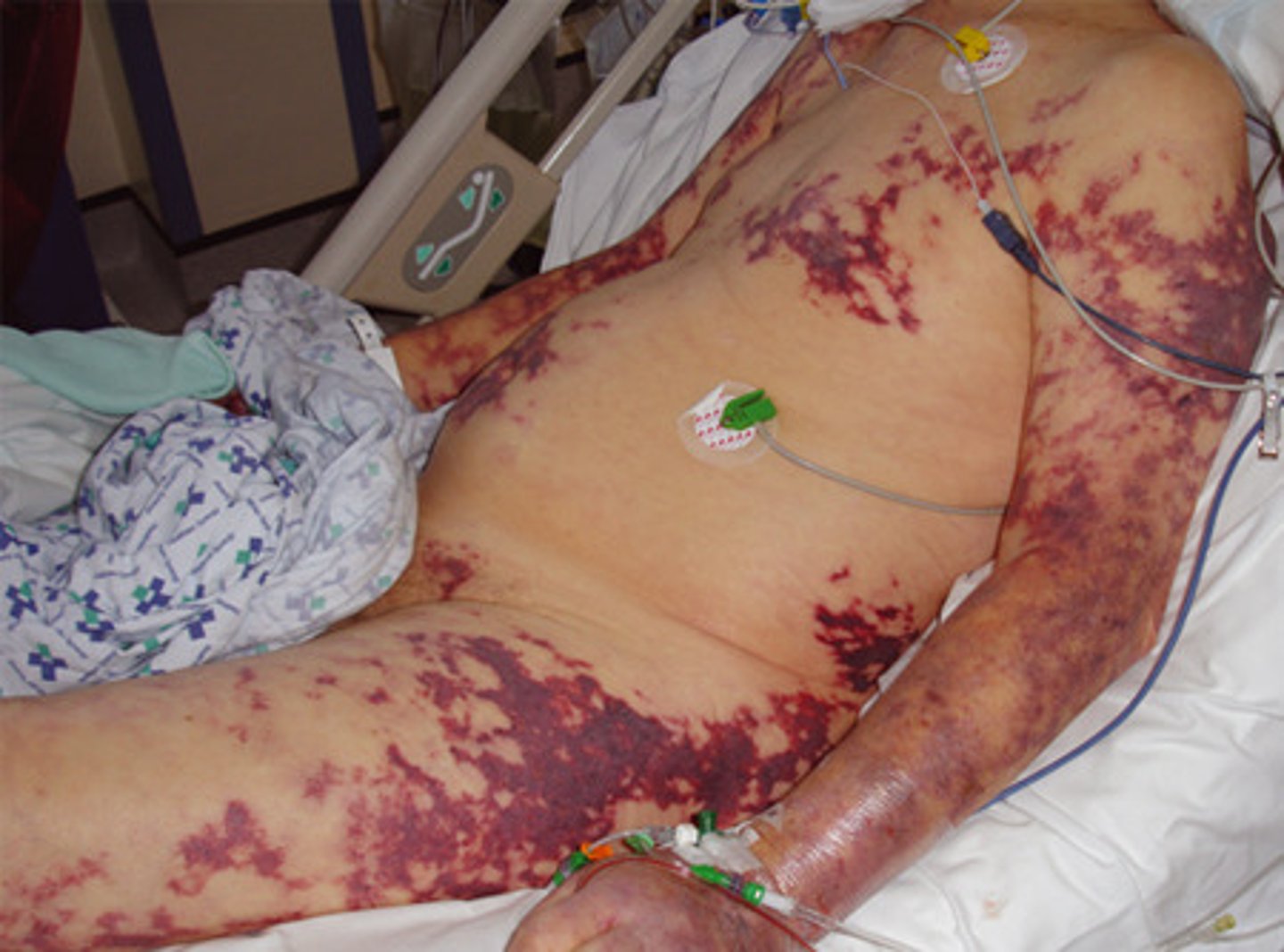
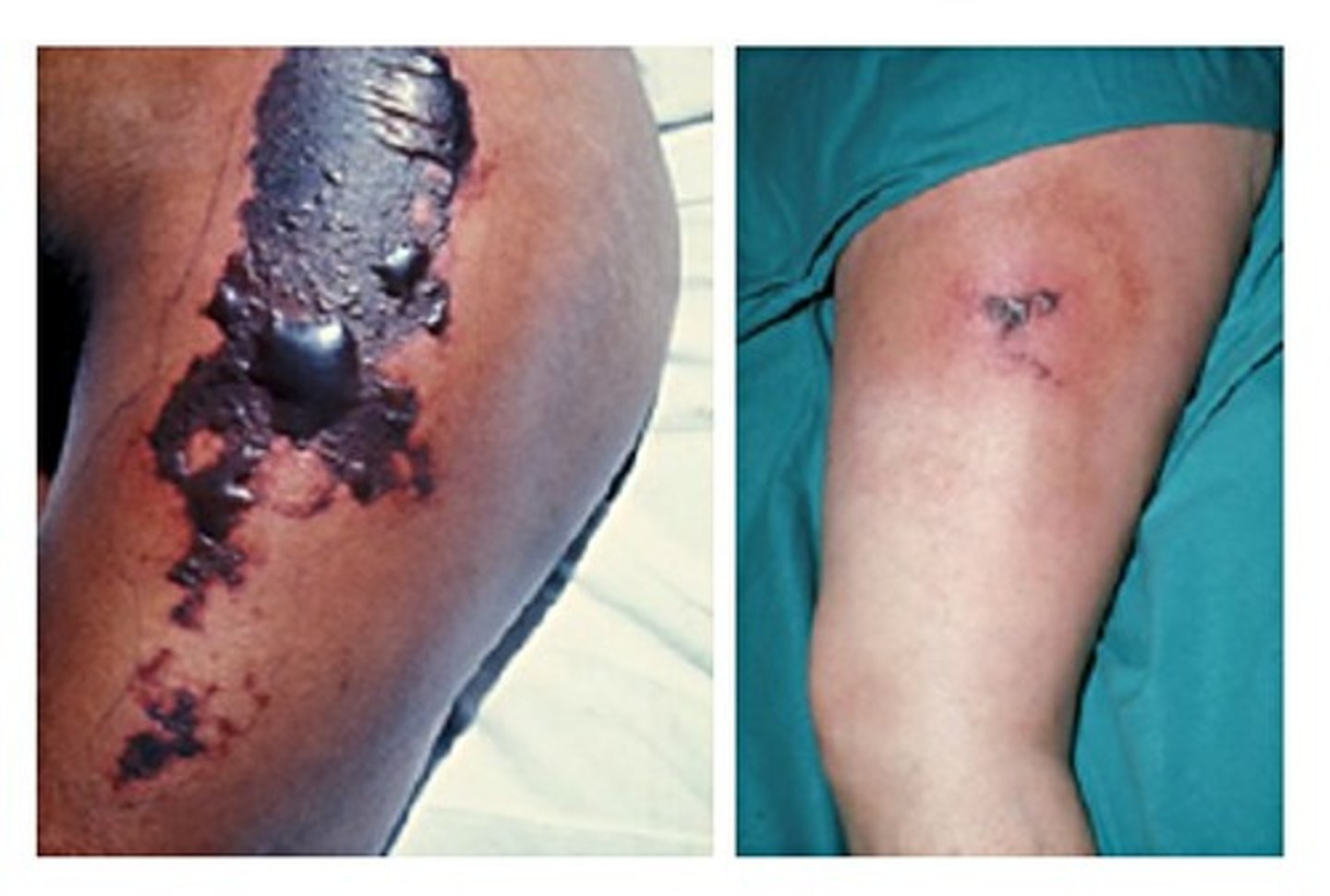
warfarin induced skin necrosis
- due to protein C deficiency which is exacerbated
- protein C deficiency can be acquired or inherited
1) stop warfarin, start heparin
2) give vitamin K
3) If needed, proceed to Protein C concentrate or FFP which has protein C
Dysfibrinogenemia
-abnormal fibrinogen protein
-usually bleed, but can get hypercoaguable
-associated with liver disease, tho can be congenital
autosomal dominant
inheritance of antithrombin deficiency
antithrombin III
complexes with heparin sulfates to inhibit both formed thrombin and Xa
almost exclusively venous
thrombosis type associated with antithrombin deficiency
nephrotic syndrome by proteinuria, hepatic veno-occlusive disease or ascites in liver disease and multiple other diseases
causes of acquired antithrombin III deficiency
elevated homocysteine lead to premature atherosclerosis of coronary, peripheral and cerebral vessels
how would a folate metabolism variant lead to thrombus?
severe elevations of homocysteine---> severe premature atherosclerosis and thromboembolism
genetic cystathionine beta synthetase deficiency causes
B12, B6, and folate supplement
most common treatment of hyperhomocysteinemia associated with premature atherosclerosis
MTHFR gene (worst form homozygous)
gene mutation associated with folate metabolism variant
an L-methylfolate supplement when treating depression
pts with mutated genotypes of folate metabolism have been sugugested to benefit frorm
group O
-greater risk off bleeding
factor VIII and vWF levels lower in this blood group
Risk of thrombosis greater in AA, AB, BB than AO, BO, OO
risk of thrombosis is greater in these blood groups
atrial fibrillation and heart disease
heart defect associated with acquired venous thrombosis
-protein C resistance acquired
-protein S levels decrease throughout pregnancy
why do OCPs and pregnancy increase risk off venous thrombosis?
nephrotic syndrome & extreme liver ascites
__________ can cause ATIII loss by proteinuria
crohn's and ulcerative colitis
bowel conditions that may lead to acquired venous thrombosis
Trousseau's syndrome
a migratory thrombophlebitis - presents with redness and tenderness on palpation of extremities. associated with a visceral malignancy mostly pancreatic adenocarcinoma or adenocarcinoma of the colon and lung etc.
essential thrombocythemia
•arterial and venous thrombosis, wholly characterized by an elevated platelet count. Low dose aspirin and hydroxyurea may prevent thrombocytosis
-myeloproliferative disorder
Chronic Myelogenous Leukemia (CML)
•clonal disorder. Increased number of WBCs at different levels of maturity
-myeloproliferative disorder ---> hypercoaguability
polycythemia vera
•high incidence of venous thrombosis in mesenteric, portal and hepatic systems. Literally, too many red blood cells.
-myeloproliferative disorder---> hypercoaguability
•May decrease counts with hydroxyurea and anagrelide. Antiplatelet agents may cause bleeding so caution with aspirin.
management of platelet disorders causing hypercoaguability
secondary thrombocytosis
response to hemorrhage, disease process (IDA, chronic infection, RA), or splenectomy
-less thrombogenic
•Compression stockings,
•activity and ambulation,
•heparin or low-molecular-weight heparin,
•inferior vena cava filters may be used for recurrent thrombosis prevention before surgery
surgical prophylxis mechanisms to avoid thrombosis
antiphospholipid syndrome
characterized by recurrent arterial or venous thrombosis, thrombocytopenia and recurrent fetal loss resulting from placental vascular insufficiency, primary or secondary to autoimmune diseases (especially systemic lupus erythematosus).
-anticardiolipin antibodies
-lupus anticoagulant (misnomer)
-paradoxical prolonged PTT
lab findings associated with anti-phospholipid syndrome
•Strong family history
•Unprovoked thrombotic event
•3 or more first trimester losses
•1 or more late fetal losses
consider screening for hypercoaguable disorder if
heparin
this anticoag MAY impart a survival benefit in cancer pts
heparin
•the stalwart for anticoagulation: it is inexpensive, easy to monitor and has a short half-life
easier to administer
why prefer LMWH over heparin
warfarin
treatment of choice of long term anticoagulant therapy
Andexanet alfa
med to stop bleeding secondary to thrombotic disorder
warfarin
treatment of choice of long term anticoagulant therapy