Dentures CH 1
 Call Kai
 Learn
Learn Practice Test
 Spaced Repetition
 Match
Match Flashcards
 Knowt Play
1/82

There's no tags or description
Looks like no tags are added yet.
Name | Mastery | Learn | Test | Matching | Spaced | Call with Kai | Chat |
|---|
No analytics yet
Send a link to your students to track their progress
83 Terms
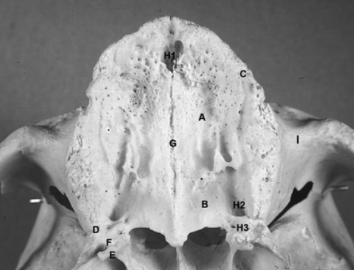
A
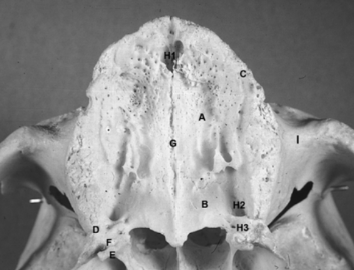
palatine processes of maxillae
form the anterior ¾ of hard palate
palatine processes of maxillae
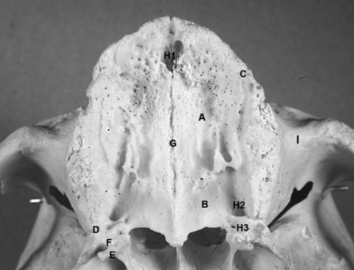
B
horizontal plates of the palatine bones
form the posterior ¼ of the hard palate
horizontal plates of the palatine bones
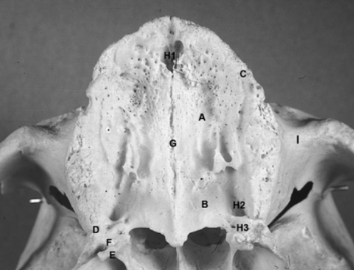
C
alveolar ridge
this is a horseshoe-shaped ridge superimposed on the maxilla and palatine bones
alveolar ridge
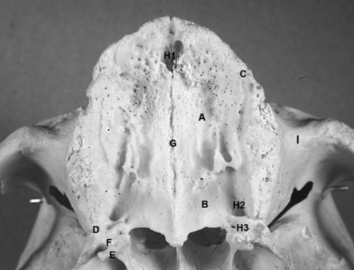
D
maxillary tuberosity
the terminations on each side of the alveolar ridge posteriorly
maxillary tuberosity
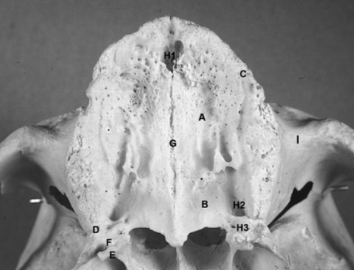
E
hamulus/ hamular process
the tip of the internal pterygoid plate of the sphenoid bone just posterior to the maxillary tuberosity
hamulus/ hamular process
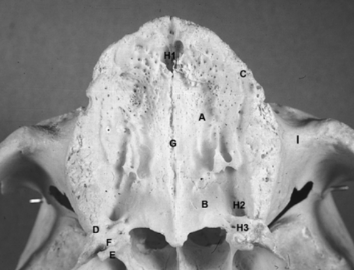
F
hamular notch or pterygomaxillary notch
a notch between the maxillary tuberosity and the hamular process
hamular notch or pterygomaxillary notch
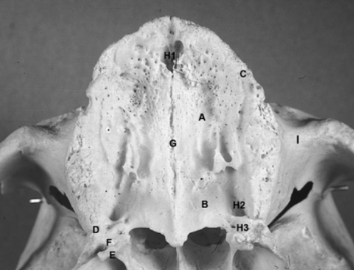
G
maxillary/ median suture
the antero-posterior line of union of the bones in the center of the vault
maxillary/ median suture
an excessive exostosis of bone in the center of the vault to form a rounded elevation
torus palatinus
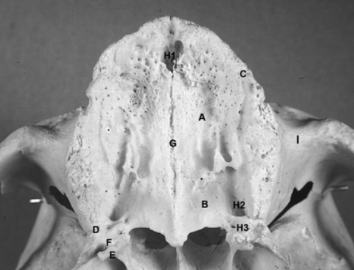
H1
incisive foramen
in midline just lingual to the crest of the residual alveolar ridge
incisive foramen
nerve associated with incisive foramen
nasopalatine
a maxillary denture could impinge on the nasopalatine nerve if precautions aren’t taken
true
H2
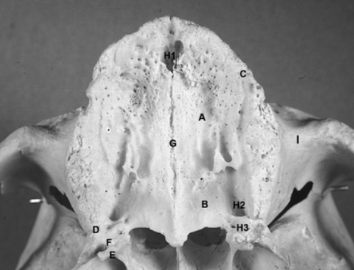
greater palatine foramen
bilaterally located on the lingual side of the alveolar ridge in the second molar area- near the junction of the ridge and the horizontal portion of the vault
greater palatine foramen
nerve associate with greater palatine foramen
anterior palatine nerve
artery associated with greater palatine foramen
descending palatine artery
a maxillary denture usually impinges on the anterior palatine nerve and precautions should be taken
false
H3
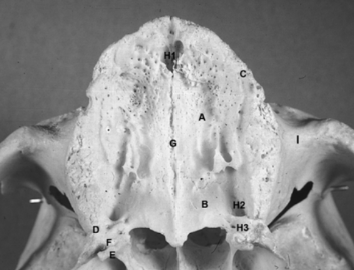
lesser palatine foramen
usually located slightly to the distal of the greater palatine foramen
lesser palatine foramen
I
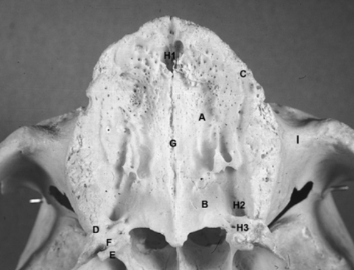
malar/ zygomatic process of maxilla
extends upward and outward on the buccal aspect of the residual alveolar ridge in the region of the first molar
malar/ zygomatic process of maxilla
J
cuspid eminence
over the cuspid root- usually remains following removal of the teeth and serves as a guide to positioning the artificial tooth
cuspid eminence
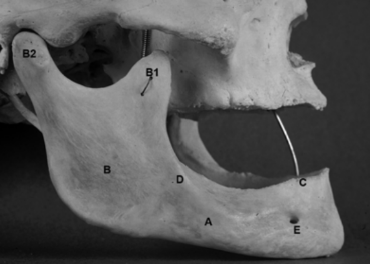
A
body of the mandible
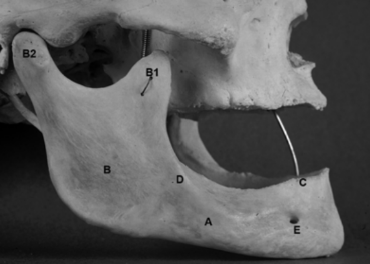
B
rami (2, R & L)
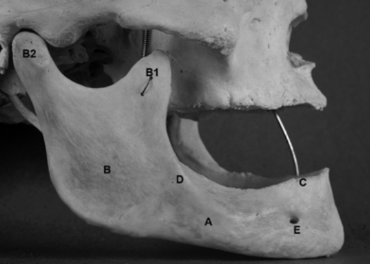
B1
coronoid process
the anterior process on which the tendon of the temporalis muscle inserts
coronoid process
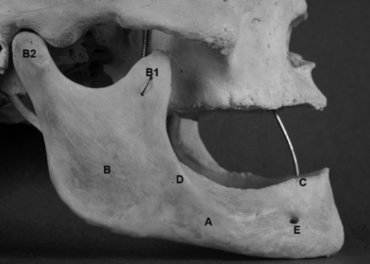
B2
condyle
distal process - has a neck and a convex, oblong head that articulate with glenoid (articular) fossa at the base of the temporal bone
condyle
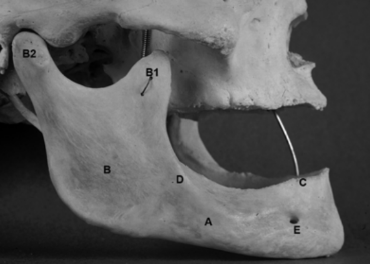
C
residual alveolar ridge
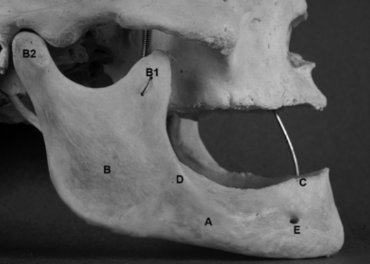
D
external oblique ridge
extends downward and forward as a curved ridge from the anterior border of the ramus onto the buccal surface of the body of the mandible at its junction with the alveolar ridge
external oblique ridge
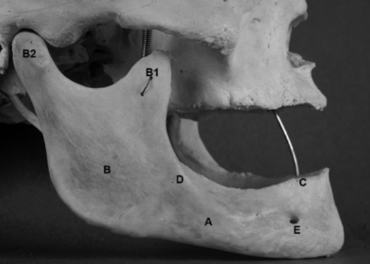
E
mental foramen
located on the lingual aspect of the body of the mandible in the molar region and runs downward and forward
mylohyoid ridge
superior and inferior- locate on the lingual aspect at the midline of the body of the mandible
genial tubercles
muscle attached to SUPERIOR genial tubercle
genioglossus muscle
muscle attached to INFERIOR genial tubercle
geniohyoid muscle
the maxillary ridge resorbs at the expense of the _ and _
crest and labial or buccal aspect
the maxillary crest of the ridge is moving in a _ and _ direction
superior and lingual
the maxillary arch has a tendency to become __ due to the resorption process
smaller
the mandibular ridge resorbs at the expense of the _ of the ridge
crest
the mandibular crest of the ridge is moving in a _ direction
inferior
due to the flaring shape of the body of the mandible, the mandibular arch has a tendency to become _ as a result of the resorption process
larger
in general the resorption rate is 4x faster in the edentulous __
mandible
an insertion of the _ muscle may be recorded on the outer portion of the buccal flange of the maxillary impression
temporalis
the _ muscle has an effect on the disto-buccal border of the mandibular impression; when contracted, it apples pressure against the buccinator which in turn form the disto-buccal corner
masseter
a few fibers of the _ muscle arise from the tuberosity area and will cause the indentation of this muscle to be recorded in the maxillary impression (posterior aspect of the buccal flange)
medial pterygoid
the fourth muscle of mastication; has no direct effect on the denture area
lateral pterygoid
runs from the hamulas to the mandible in the area of the underlying retromolar pad
pterygomandibular raphe
the _ and _muscles attach at the pterygomandibular raphe
buccinator and superior constrictor
limits the distal extension of the lingual flange of the mandibular denture along with superior constrictor
palatoglossus muscle
extends from the pterygo-mandibular raphe to the orbicularis oris
buccinator muscle
the _ muscle is a limiting factor of the length of the lingual flange of the mandibular denture
mylohyoid
the muscle that drops the soft palate; a denture will rest on a portion of this muscle in the posterior palatal seal area
tensor veli palatini
elevate the soft palate
levator veli palatini
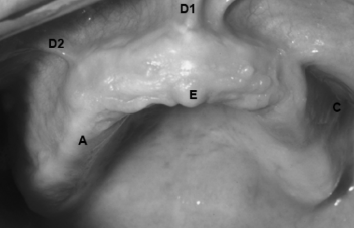
A
residual alveolar ridge
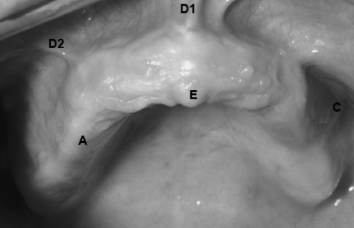
C
malar/ zygomatic process
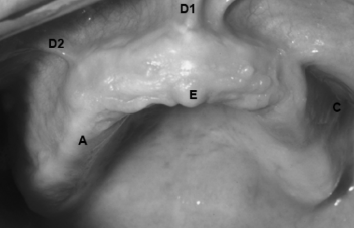
D
frenae
frenum located in the midline; a loe of mucous membrane; attaches the orbicularis oris to the ridge; there are NO muscle fibers in this frenum
labial
frenum located on the buccal aspect of the ridge in the region of the first bicuspid; zygomaticus and caninus muscle fibers present in this frenum
buccal
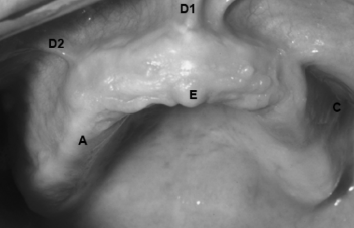
E
incisive papilla
pressure to this area from a denture may impinge upon the naso-palatine nerve and produce a burning or tingling sensation in the anterior area
incisive papilla
fatty zone
anterior one-half of palate
glandular zone
posterior one-half of palate
posterior extension of the denture laterally
hamular notch area
anterior boundary of hamular notch area
maxillary tuberosity
posterior boundary of hamular notch area
hamulus
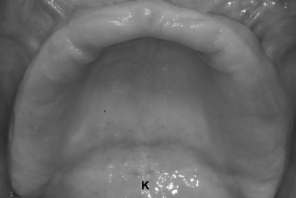
K
fovea palatinae
two small pinpoint depressions in the midline of the posterior part of the maxillary vault; coalescence of mucous glands
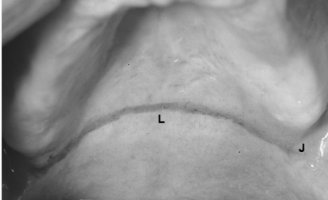
L
vibrating line
marks the beginning of the motion in the soft palate when an individual say “ah” and the soft palate elevates; usually passes 1-2 mm anterior to the fovea palatinae; distal end of the denture should extend to this point
vibrating line
the area anterior from the vibrating line that is displaceable
posterior palatal seal area
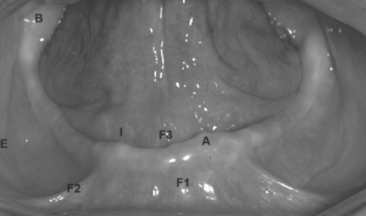
B
retromolar pad
posterior extension of the denture is at the base; serves as a landmark for positioning the occlusal plane of the artificial teeth
retromolar pad
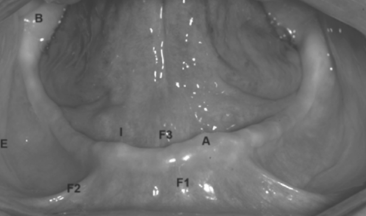
C
pterygo-mandibular raphe
limits buccal extension of the denture
external oblique ridge