Cambodia Post Vietnam
 Studied by 0 people
 Call Kai
 Learn
Learn Practice Test
 Spaced Repetition
 Match
Match Flashcards
 Knowt Play
1/16

There's no tags or description
Looks like no tags are added yet.
Name | Mastery | Learn | Test | Matching | Spaced |
|---|
No study sessions yet.
17 Terms
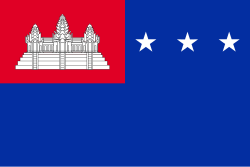
What is this flag?
1970-75 Flag of Cambodia - Khmer Republic
Red flag = Khmer Rouge
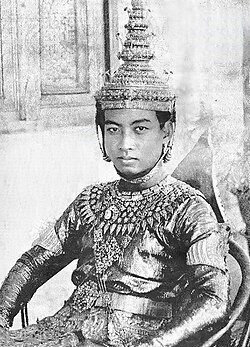
Who is this?
Prince Sihanouk
Monarchy/dictatorship
How is Cambodia involved in the Cold War?
Ho Chi Minh trail
US scatter weed killer over huge areas of jungle on trail
No combat troops due to neutral area
How did Nixon’s bombing of Cambodia help the Khmer Rouge?
March 1969 Operation Menu
Bombing, supply lines; show of strength, strategic fear of Communist influence in Cambodia on border with Vietnam
Supported pro-US General Lon Nol in his war against the Khmer Rouge, supported by NV.
April 1970, 20,000 US ground troops joined ARVN; US air support lines,
In the letter from the ambassador to Cambodia to Johnson, who is the ‘bloc’?
Eastern bloc, communist countries politically
Economically and militarily aligned with the Soviet Union/USSR
What does this letter express?
Cambodia’s external Communist threat is currently limited, and the country has defended its sovereignty since independence in 1954, including resisting Viet Minh and Viet Cong incursions
Many border incidents attributed to Cambodia’s neighbors are in fact caused by Communist incursions
Communist Bloc strategy: avoid direct pressure on Cambodia while waiting for a regional outcome
China/other Communist states court Cambodia through support for neutralism and economic aid, creating an image of friendship
Prince Sihanouk recognises long-term Communist threat, especially if Laos or South Vietnam fall, and is striving to maintain Cambodia’s independence and neutrality
How is this linked to the US in Vietnam?
USA see communism as monolithic threat, working together under Moscow who are pulling the strings
US believe Sihanouk will try to resist communism; Sihanouk thinks Laos/SV already gone
Laos/SV more likely to have greater influence with going communist
Danger of the dominoes falling
Who was General Lon Nol? What are the similarities to Diem and Thieu in Vietnam?
Cambodian military officer/politician
Similar in authoritarian/brutal regime
Military general who lead a coup like Thieu and established regime
What else occurred that involved Lon Nol?
Dropped 430,000 tonnes on Cambodia
Lon Nol accepted US help
Corrupt, inefficient leader, worried about his own overthrow, so didn't allow collusion between armed forces
Communists in alliance with NV
Bombing did not permanently disrupt logistics and communications
Drove some into the hands of the KR
Why did fighting continue in Cambodia despite the Paris Peace Accords for Vietnam?
North Vietnamese exit should have put the government on route to victory
Khmer Rouge only numbered 40,000
KR intensified their fighting
Pincer movement around Phnom Penh
April 1975: The capital falls to Communists
What was the impact of the Khmer Rouge’s leadership from 1975 to 1979?
April 1975: Lon Nol government collapsed
Communist forces entered Phnom Penh, ordered its inhabitants to abandon the city/take up life in rural areas
Phnom Penh/other cities and towns throughout the country emptied in less than a week
1000’s of city dwellers died on the forced marches, conditions worsened in following years
Democratic Kampuchea
Next 6 months, Cambodia experienced most rapid/radical social transformation in its history
Money, markets/private property were abolished
Schools, hospitals, shops, offices/monasteries closed
Nothing published; no travel without permission; everyone ordered to wear peasant work clothes
Party leaders controlled everything, but remained in hiding/explained few of their decisions - urged everyone to “build and defend” the country
How can these impacts be simplified?
Fall of Saigon—30 April 1975
Khmer Rouge entered Phnom Penh - 17 April 1975
Laos became communist 2 December 1975
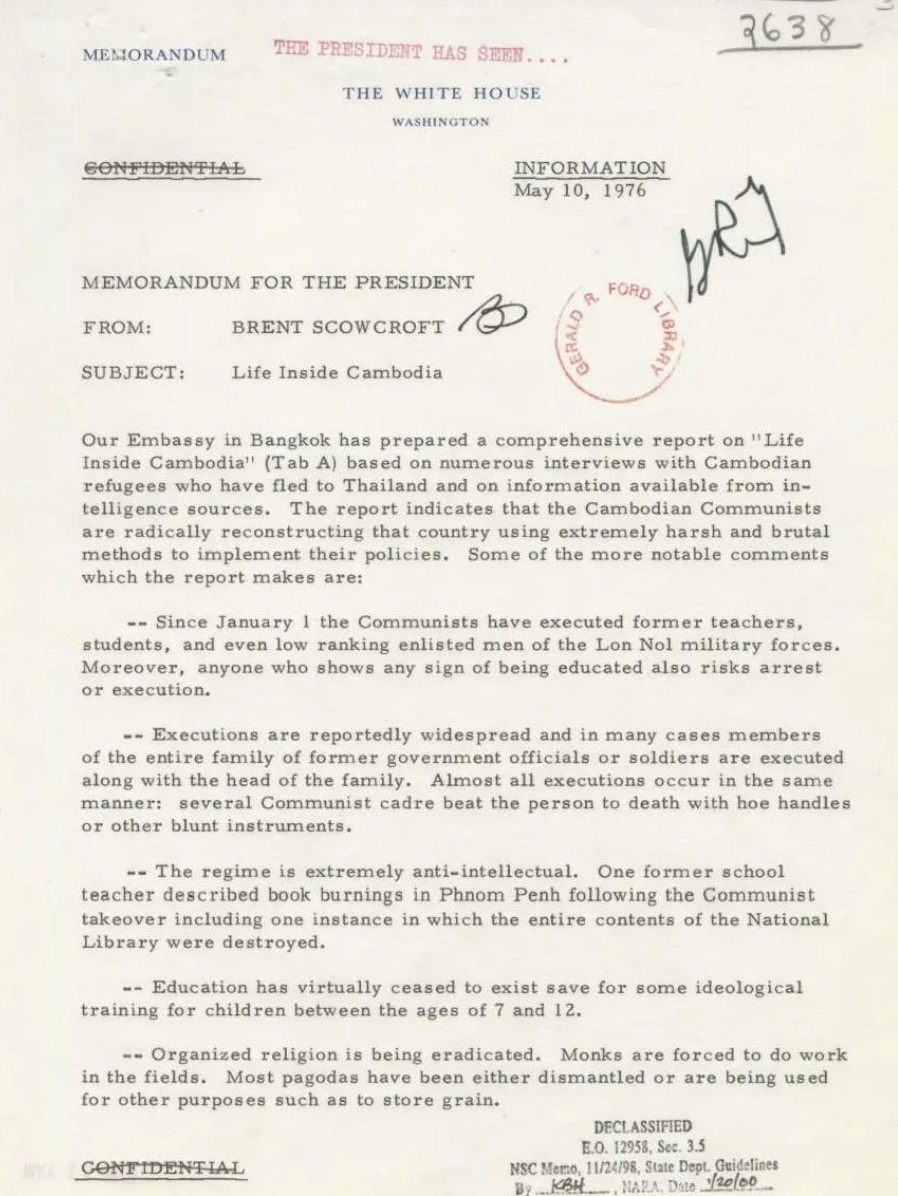
In a memo from the national security advisor to President Ford, what was happening to the people of Cambodia?
Cambodian refugees fled to Thailand
Cambodian communists reconstructing the country through harsh/brutal methods to implement their policies
Former teachers, students/low-ranking men in Nol’s military forces executed
Even members of entire family of former government officials/soldiers executed
Book burnings in Phnom Penh
Education ceased to exist to save for ideological training for children 7-12
Organised religion eradicated—monks work in fields, most pagodas dismantled/used for other purposes (storing grain)
Some people in the US called for action to stop this. Why was nothing done?
1976–77: new regime, following Maoist China, sought to collectivise Cambodia totally
Population mobilised into an unpaid labour force/sought to double the average prerevolutionary yields of rice immediately (on national scale)
Enormous human costs of that ill-conceived experiment
How did the new regime achieve this?
The Killing Fields
Pol Pot
Ideological cleansing
Enforced self sufficiency
Random execution of subversive elements
Genocide; almost wholly wiping out educated and professional classes
Destroy society and replace it with a new agricultural society
Cities emptied
What were the consequences?
Conservative estimates: between April 1975-early 1979, when regime overthrown, at least 1.5 million Cambodians—20% total population—died from overwork, starvation, disease, or execution
1/2 population became refugees
Vietnamese invasion leads to toppling of regime 1979
What did these events in Cambodia mean for the Cold War?
Solidifies US' current defeat, although eventually win
Another win for communism—Vietnam falls 1975, then Laos, Khmer Rouge
Military unwillingness/need to recover
USSR lack of control over Khmer Rouge, instability
Another domino
ONE OF THE LOWEST POINTS OF AMERICAN MORALE
Vietnamese communists fight Khmer Rouge