Lecture 15: gymnosperms

0.0(0)
studied byStudied by 0 people
0.0(0)
full-widthCall with Kai
learnLearn
examPractice Test
spaced repetitionSpaced Repetition
heart puzzleMatch
flashcardsFlashcards
GameKnowt Play
Card Sorting

1/21

encourage image

There's no tags or description

Looks like no tags are added yet.

Study Analytics
Name
Mastery
Learn
Test
Matching
Spaced
Call with Kai

No study sessions yet.

22 Terms

1
New cards

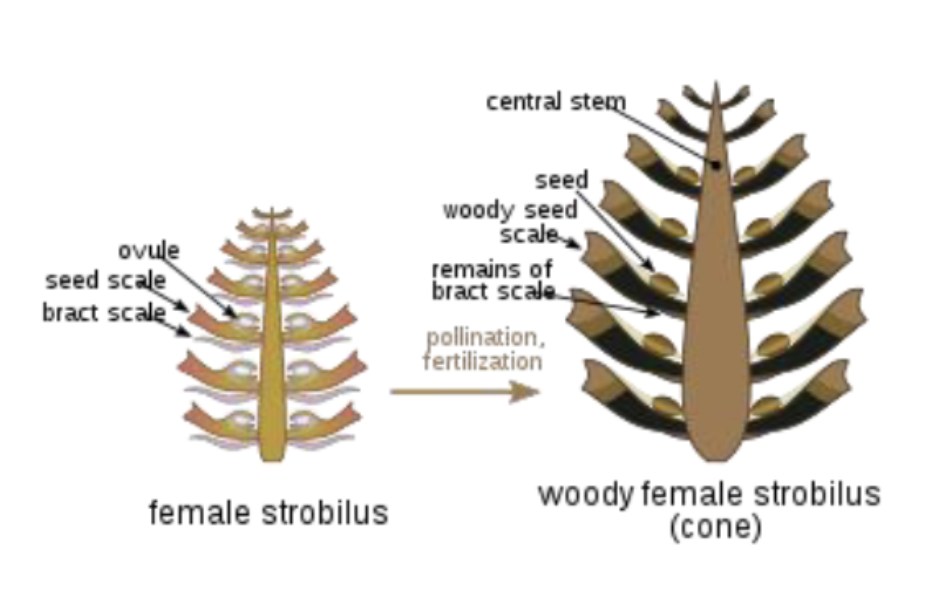
Female cones

  • Megastrobilus

  • Woody and larger than male cone

  • Woody bracts=modified stem tissues

    • One ovule per woody bract

    • Distinct between species

<ul><li><p><span style="background-color: transparent;"><strong><span>Megastrobilus</span></strong></span></p></li><li><p><span style="background-color: transparent;"><span>Woody and larger than male cone</span></span></p></li><li><p><span style="background-color: transparent;"><span>Woody bracts=modified stem tissues</span></span></p><ul><li><p><span style="background-color: transparent;"><span>One ovule per woody bract</span></span></p></li><li><p><span style="background-color: transparent;"><span>Distinct between species</span></span></p></li></ul></li></ul><p></p>
2
New cards

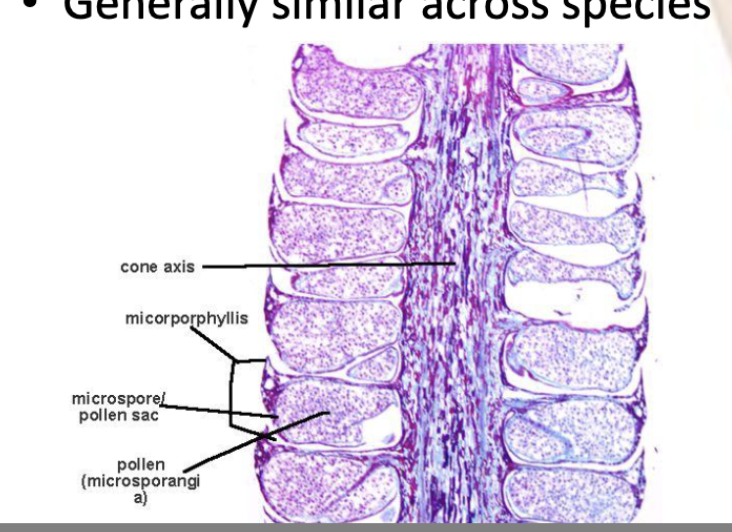
Male cones

  • Microstrobilus

  • Herbaceous and smaller than female cone

  • bract=microsporophyll (leaf driven)

    • Multiple pollen grains per bract

  • Similar across species

<ul><li><p><span style="background-color: transparent;"><span>Microstrobilus</span></span></p></li><li><p><span style="background-color: transparent;"><span>Herbaceous and smaller than female cone</span></span></p></li><li><p><span style="background-color: transparent;"><span>bract=microsporophyll (leaf driven)</span></span></p><ul><li><p><span style="background-color: transparent;"><span>Multiple pollen grains per bract</span></span></p></li></ul></li><li><p><span style="background-color: transparent;"><span>Similar across species</span></span></p></li></ul><p></p>
3
New cards

Seed ferns

Pteridospermatophyta

  • Extinct fern group

  • Seed like structures in fossil record→ first gymnosperm groups

4
New cards

Coniferophyta: Conifers characteristics?

  • Largest group 

Characteristics:

  • Woody secondary growth

  • Dominant tree species in very northern locations

  • Needle-shaped growth

  • Evergreen persistent foliage in many species

Families: Pinaceae, Cupressacea, Taxaceae
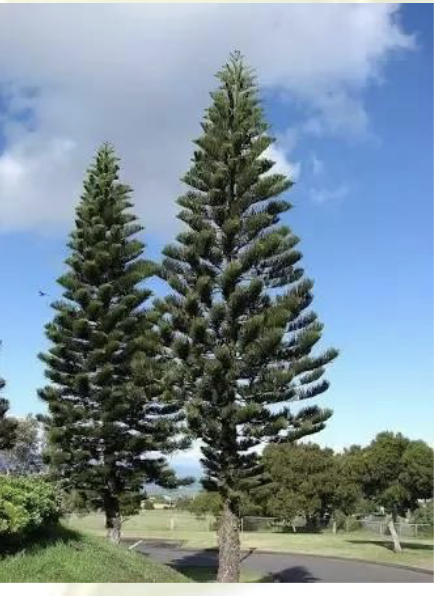
<ul><li><p><span style="background-color: transparent;"><span>Largest group&nbsp;</span></span></p></li></ul><p><span style="background-color: transparent;"><span>Characteristics:</span></span></p><ul><li><p><span style="background-color: transparent;"><span>Woody secondary growth</span></span></p></li><li><p><span style="background-color: transparent;"><span>Dominant tree species in very northern locations</span></span></p></li><li><p><span style="background-color: transparent;"><span>Needle-shaped growth</span></span></p></li><li><p><span style="background-color: transparent;"><span>Evergreen persistent foliage in many species</span></span></p></li></ul><p><span style="background-color: transparent;"><span>Families: Pinaceae, Cupressacea, Taxaceae</span></span></p>
5
New cards

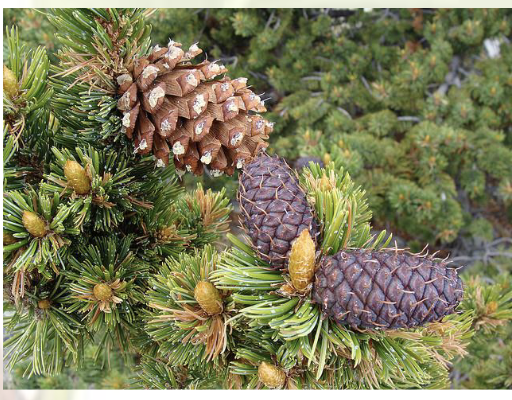
Pinaceae: what do they contain?

“traditional conifers”

Contains

  • Pines

  • Spruces

  • Larches

  • Hemlocks

  • Firs

  • Cedars

6
New cards

Pinaceae: what are their traits?

  • Evergreen (M)

  • Needle-like leaves

  • Monoecious 

  • Many have whorled branches

  • Resinous

  • Large female cones (mostly woody)

  • Small male cones

  • Wind Pollination

  • Pollen has extra extension “wings”

<ul><li><p><span style="background-color: transparent;"><span>Evergreen (M)</span></span></p></li><li><p><span style="background-color: transparent;"><span>Needle-like leaves</span></span></p></li><li><p><span style="background-color: transparent;"><span>Monoecious&nbsp;</span></span></p></li><li><p><span style="background-color: transparent;"><span>Many have whorled branches</span></span></p></li><li><p><span style="background-color: transparent;"><span>Resinous</span></span></p></li><li><p><span style="background-color: transparent;"><span>Large female cones (mostly woody)</span></span></p></li><li><p><span style="background-color: transparent;"><span>Small male cones</span></span></p></li><li><p><span style="background-color: transparent;"><span>Wind Pollination</span></span></p></li><li><p><span style="background-color: transparent;"><span>Pollen has extra extension “wings”</span></span></p></li></ul><p></p>
7
New cards

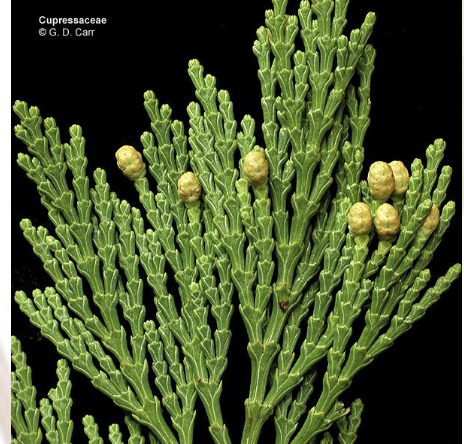
Cupressaceae: what are their traits?

CN: cypress family

  • Variable group 

Traits

  • Many scale like leaves

  • Woody trees or shrubs

  • Cones: woody or fleshy 

<p><span style="background-color: transparent;"><span>CN: cypress family</span></span></p><ul><li><p><span style="background-color: transparent;"><span>Variable group&nbsp;</span></span></p></li></ul><p><span style="background-color: transparent;"><span>Traits</span></span></p><ul><li><p><span style="background-color: transparent;"><span>Many scale like leaves</span></span></p></li><li><p><span style="background-color: transparent;"><span>Woody trees or shrubs</span></span></p></li><li><p><span style="background-color: transparent;"><span>Cones: woody or fleshy&nbsp;</span></span></p></li></ul><p></p>
8
New cards

Taxaceae: what are their traits?

CN: yew family

Traits: 

  • Evergreen 

  • Small trees or shrubs

  • Female cones=SPECIALIZED

    • Single seed and a single scale that develops into a fleshy aril (resembling a fruit)

→ attracts birds, seed dispersal
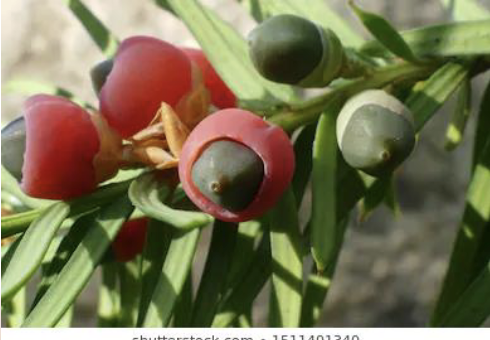
<p><span style="background-color: transparent;"><span>CN:</span><strong><span> </span></strong><span>yew family</span></span></p><p><span style="background-color: transparent;"><span>Traits:&nbsp;</span></span></p><ul><li><p><span style="background-color: transparent;"><span>Evergreen&nbsp;</span></span></p></li><li><p><span style="background-color: transparent;"><span>Small trees or shrubs</span></span></p></li><li><p><span style="background-color: transparent;"><span>Female cones=SPECIALIZED</span></span></p><ul><li><p><span style="background-color: transparent;"><span>Single seed and a single scale that develops into a fleshy aril (resembling a fruit)</span></span></p></li></ul></li></ul><p><span style="background-color: transparent;"><span>→ attracts birds, seed dispersal</span></span></p>
9
New cards

Coniferophyta Lifecycle: Male structure

Sporophyte dominant; gametophyte relies on sporophyte for nutrition 

Male structure:

  • Microsporophylls organized into a strobili

  • Single celled microspore produced

  • Microspore goes through meiosis and mitosis

    • Forms pollen (multicellular haploid organism=gametophyte)

  • pollen=wind dispersed

  • Pollen lands on female egg cell→germinates→releases sperm cells

10
New cards

Coniferophyta Lifecycle: within the cone

  • Mother diploid cell undertakes meiosis

    • Produces 4 daughter cells→ 3 die→ 1 becomes megaspore

  • Megaspore goes through mitosis → produces female gametophyte

    • Forms archegonia, then eggs

  • Eggs =fertilized by wind-dispersed pollen

11
New cards

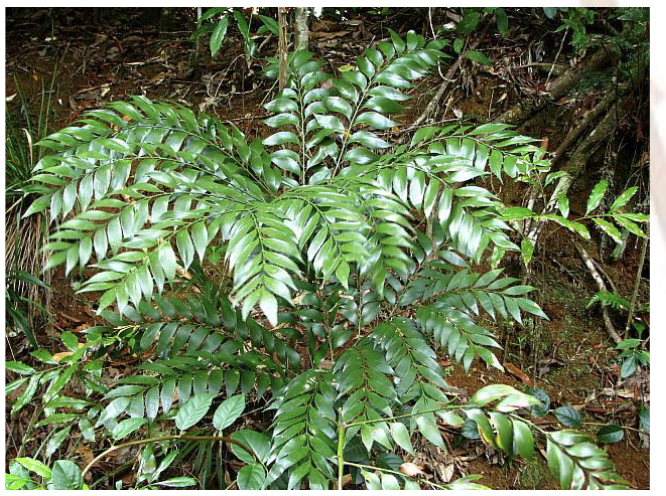
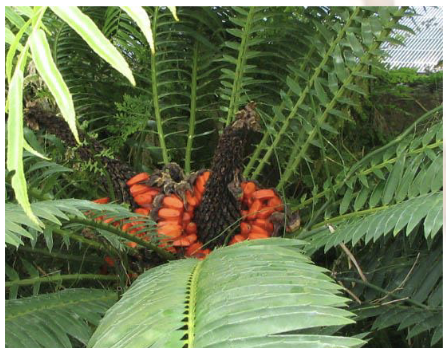
Cycadophyta: Cycads

  • 2nd largest group

Characteristics:

  • Woody secondary growth

  • Short height

  • Hard and stiff evergreen leaves

    • Pinnate

  • Slowwwww growth

  • Dioecious

Families:  Cycadaceae, Strangeriaceae, Zamiaceae
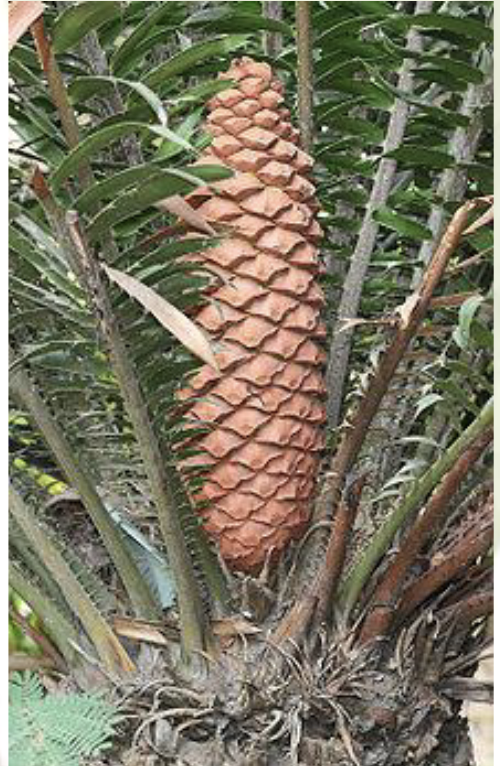
<ul><li><p><span style="background-color: transparent;"><span>2nd largest group</span></span></p></li></ul><p><span style="background-color: transparent;"><span>Characteristics:</span></span></p><ul><li><p><span style="background-color: transparent;"><span>Woody secondary growth</span></span></p></li><li><p><span style="background-color: transparent;"><span>Short height</span></span></p></li><li><p><span style="background-color: transparent;"><span>Hard and stiff evergreen leaves</span></span></p><ul><li><p><span style="background-color: transparent;"><span>Pinnate</span></span></p></li></ul></li><li><p><span style="background-color: transparent;"><em><span>Slowwwww </span></em><span>growth</span></span></p></li><li><p><span style="background-color: transparent;"><span>Dioecious</span></span></p></li></ul><p><span style="background-color: transparent;"><span>Families: </span><strong><span>&nbsp;Cycadaceae, Strangeriaceae, Zamiaceae</span></strong></span></p>
12
New cards

Cycadaceae: what is genus and traits?

CN: cycad family

  • Genus: Cycas

Traits: 

  • Woody

  • Mostly “Palm like growth”

  • Dioecious

  • Female cones are megasporophylls (leaf NOT stem tissue)
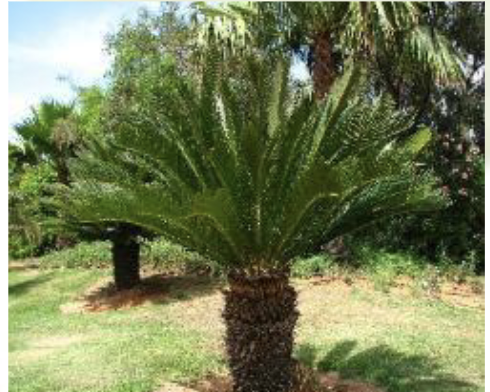
<p><span style="background-color: transparent;"><span>CN: cycad family</span></span></p><ul><li><p><span style="background-color: transparent;"><span>Genus: Cycas</span></span></p></li></ul><p><span style="background-color: transparent;"><span>Traits:&nbsp;</span></span></p><ul><li><p><span style="background-color: transparent;"><span>Woody</span></span></p></li><li><p><span style="background-color: transparent;"><span>Mostly “Palm like growth”</span></span></p></li><li><p><span style="background-color: transparent;"><span>Dioecious</span></span></p></li><li><p><span style="background-color: transparent;"><span>Female cones are megasporophylls (leaf NOT stem tissue)</span></span></p></li></ul><p></p>
13
New cards

Strangeriaceae: traits?

  • Small family, only 3 living species

Traits:

  • “Fern-like” growth

<ul><li><p><span style="background-color: transparent;"><span>Small family, only 3 living species</span></span></p></li></ul><p><span style="background-color: transparent;"><span>Traits:</span></span></p><ul><li><p><span style="background-color: transparent;"><span>“Fern-like” growth</span></span></p></li></ul><p></p>
14
New cards

Zamiaceae: traits?

Sago-palm family

Traits:

  • Palm-like

  • Perennial

  • Evergreen

  • Dioecious

<p><span style="background-color: transparent;"><span>Sago-palm family</span></span></p><p><span style="background-color: transparent;"><span>Traits:</span></span></p><ul><li><p><span style="background-color: transparent;"><span>Palm-like</span></span></p></li><li><p><span style="background-color: transparent;"><span>Perennial</span></span></p></li><li><p><span style="background-color: transparent;"><span>Evergreen</span></span></p></li><li><p><span style="background-color: transparent;"><span>Dioecious</span></span></p></li></ul><p></p>
15
New cards

Cycadophyta: Lifecycle: male vs female?

  • Both male and female structures are composed of sporophylls (spore-bearing leaves)

  • Male: compound strobilus structure

  • Female: megasporophylls only!

    • Doesn’t form a compound strobilus in most species

16
New cards

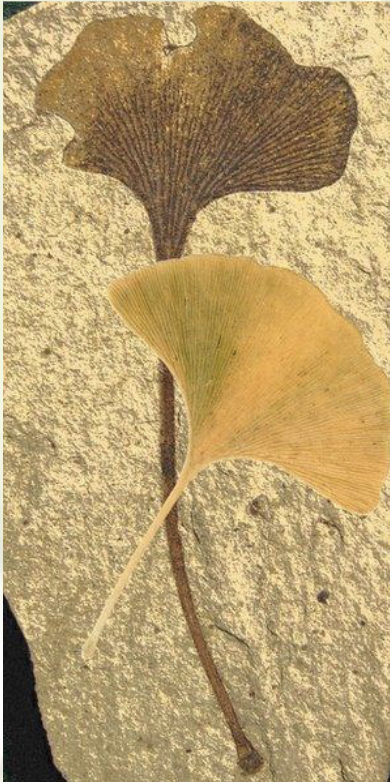
Ginkophta: Ginkos: what is unique about them? Characteristics?

  • Smallest group in gymnosperms

  • 1 single species: Ginkgo biloba (living fossil, survived 270 million years, most species only 1 million years), largest wild population cultivated by chinese monks for ~1000 yrs

  • Used to be more diverse taxonomy

Characteristics:

  • Fan-shaped leaves

  • Dioecious

  • Fruit-like structure for female gametophytes

    • NO cones!!!

<ul><li><p><span style="background-color: transparent;"><span>Smallest group in gymnosperms</span></span></p></li><li><p><span style="background-color: transparent;"><span>1 single species: </span><em><span>Ginkgo biloba </span></em><span>(living fossil, survived 270 million years, most species only 1 million years), largest wild population cultivated by chinese monks for ~1000 yrs</span></span></p></li><li><p><span style="background-color: transparent;"><span>Used to be more diverse taxonomy</span></span></p></li></ul><p><span style="background-color: transparent;"><span>Characteristics:</span></span></p><ul><li><p><span style="background-color: transparent;"><span>Fan-shaped leaves</span></span></p></li><li><p><span style="background-color: transparent;"><span>Dioecious</span></span></p></li><li><p><span style="background-color: transparent;"><span>Fruit-like structure for female gametophytes</span></span></p><ul><li><p><span style="background-color: transparent;"><span>NO cones!!!</span></span></p></li></ul></li></ul><p></p>
17
New cards

Ginkophyta: Lifecycle: male and female

  • Male structures: simplified sporophyll stobili with only two bracts

  • Female structures: simplified strobili with only 2 ovules 

    • NO cones produced!

  • Seed protected by stinky ahhh fruit-like substance

    • Developed from integument

18
New cards

Gnetophyta: Gnetidae: weird ones

Weird ahhh species

Was once more diverse alas

Contain vessel elements and tracheids!!

  • Evolved independently of vessel elements in angiosperms

  • Closest evolutionary link to angiosperms

Characteristics:

  • Share little in common (other than DNA)

  • Have evolved to be SPECIALIZED in their respective habitats
<p><span style="background-color: transparent;"><span>Weird ahhh species</span></span></p><p><span style="background-color: transparent;"><span>Was once more diverse alas</span></span></p><p><span style="background-color: transparent;"><span>Contain vessel elements and tracheids!!</span></span></p><ul><li><p><span style="background-color: transparent;"><span>Evolved independently of vessel elements in angiosperms</span></span></p></li><li><p><span style="background-color: transparent;"><span>Closest evolutionary link to angiosperms</span></span></p></li></ul><p><span style="background-color: transparent;"><span>Characteristics:</span></span></p><ul><li><p><span style="background-color: transparent;"><span>Share little in common (other than DNA)</span></span></p></li><li><p><span style="background-color: transparent;"><span>Have evolved to be SPECIALIZED in their respective habitats</span></span></p></li></ul><p></p>
19
New cards

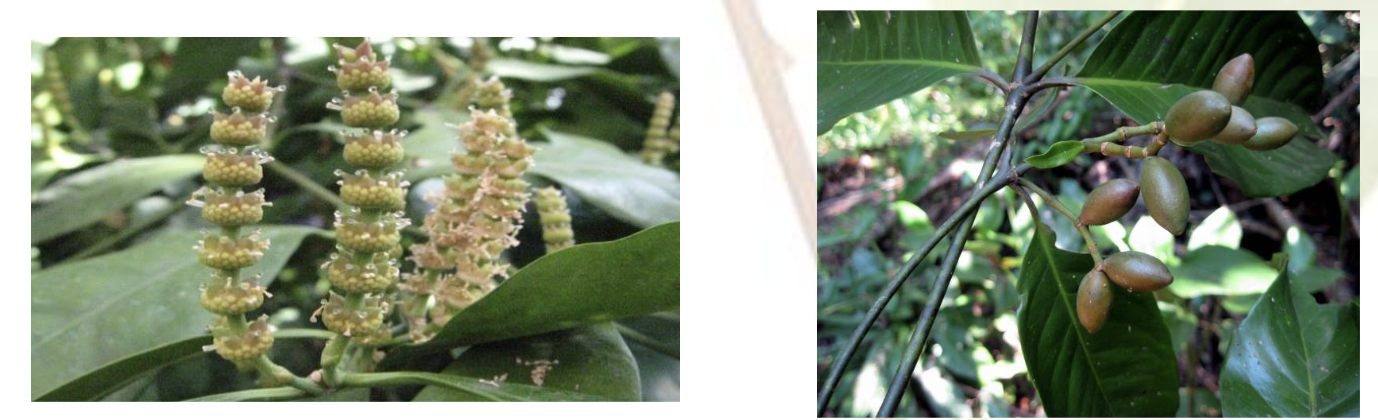
Gnetum sp.: what does it look like

  • Mainly woody tropical vines or trees

  • Superficially look like angiosperms

    • Cones not flowers though

<ul><li><p><span style="background-color: transparent;"><span>Mainly woody tropical vines or trees</span></span></p></li><li><p><span style="background-color: transparent;"><span>Superficially look like angiosperms</span></span></p><ul><li><p><span style="background-color: transparent;"><span>Cones not flowers though </span></span></p></li></ul></li></ul><p></p>
20
New cards

Ephedra sp.: what does it look like?

Looks like grass or equisetum with cones!
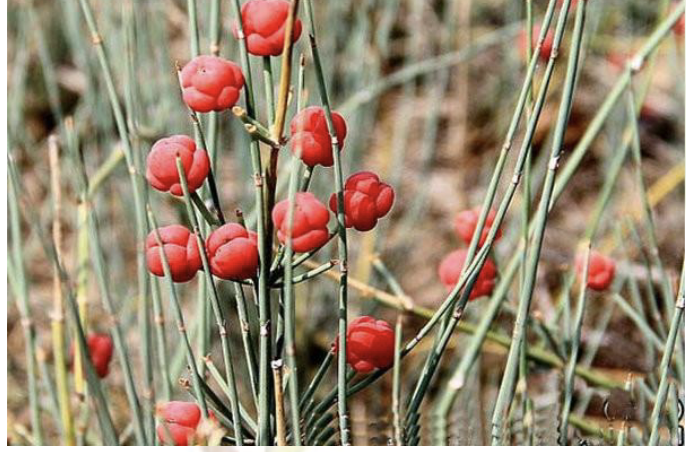
<p><span style="background-color: transparent;"><span>Looks like grass or equisetum with cones!</span></span></p>
21
New cards

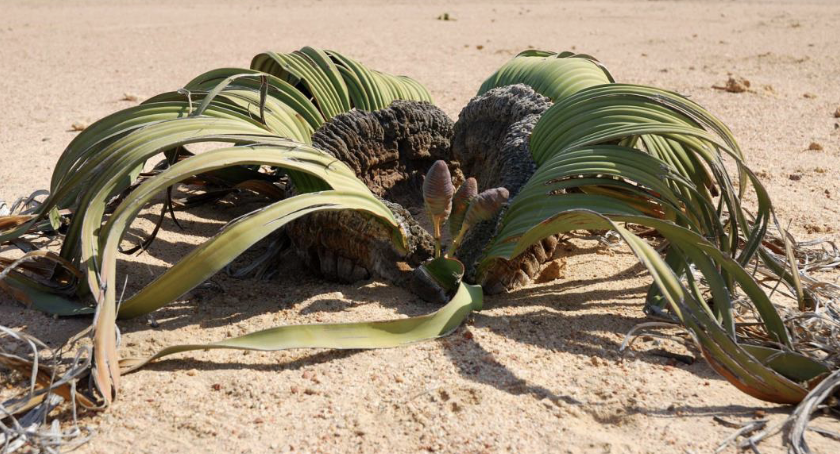
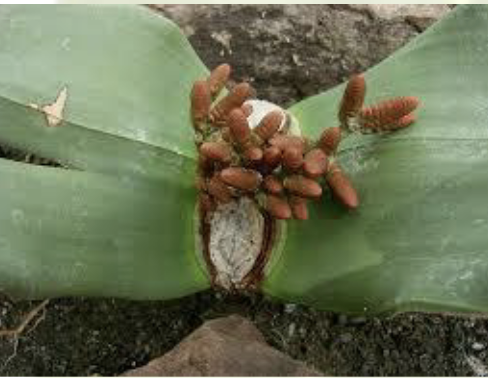
Welwitschia mirabillis:

  • Desert-specialist

  • Two large leaves growing continuously from the base of the plant

  • Only species in its order

<ul><li><p><span style="background-color: transparent;"><span>Desert-specialist</span></span></p></li><li><p><span style="background-color: transparent;"><span>Two large leaves growing continuously from the base of the plant</span></span></p></li><li><p><span style="background-color: transparent;"><span>Only species in its order</span></span></p></li></ul><p></p>
22
New cards

Gnetophyta: Lifecycle: common themes?

  • Highly divergent between diverse groups

  • 1 common theme:

    • Double fertilization!! (only in some) In all angiosperms
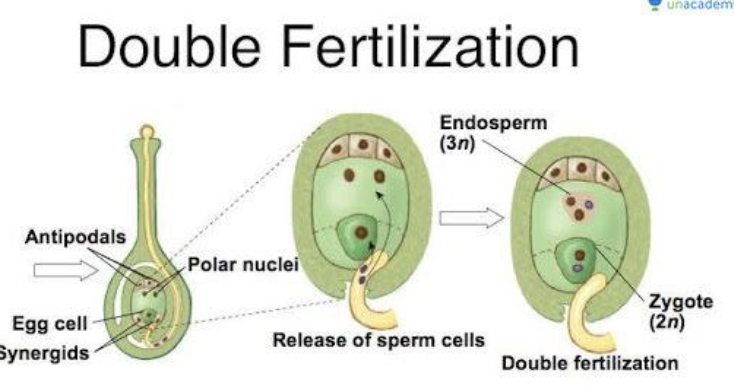
<ul><li><p><span style="background-color: transparent;"><span>Highly divergent between diverse groups</span></span></p></li><li><p><span style="background-color: transparent;"><span>1 common theme:</span></span></p><ul><li><p><span style="background-color: transparent;"><strong><span>Double fertilization!! </span></strong><span>(only in some) In all angiosperms</span></span></p></li></ul></li></ul><p></p>