Ch. 23 - Enzymes & Hormones of the Digestive System
 Call Kai
 Learn
Learn Practice Test
 Spaced Repetition
 Match
Match Flashcards
 Knowt Play
1/14

Earn XP
Description and Tags
Lecture Exam 4
Name | Mastery | Learn | Test | Matching | Spaced | Call with Kai | Chat |
|---|
No analytics yet
Send a link to your students to track their progress
15 Terms
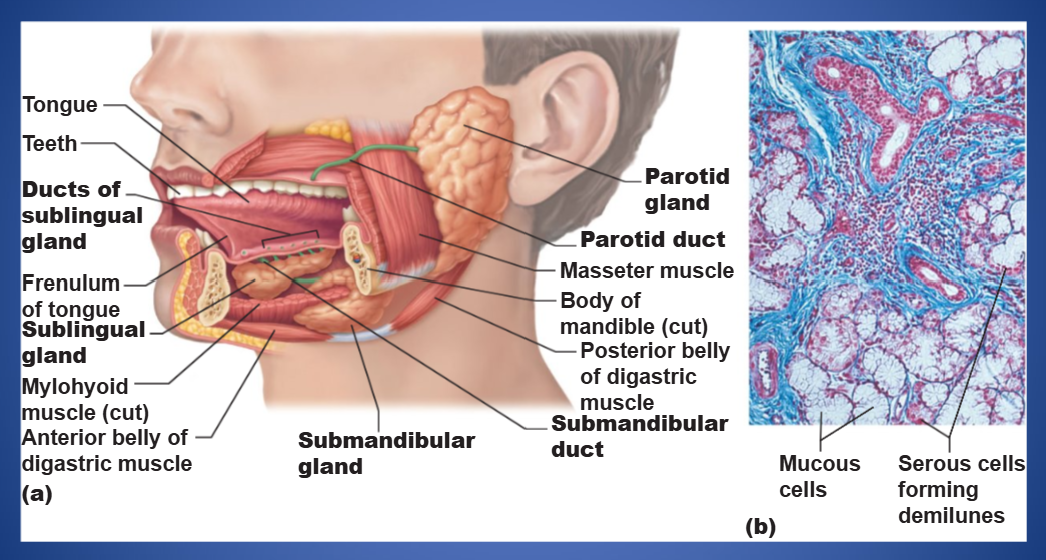
Identify the location, secretory cell, and function of salivary amylase
LOCATION: mouth
SECRETORY CELL: by serous cells in the salivary glands
FUNCTION: begin carbohydrate digestion
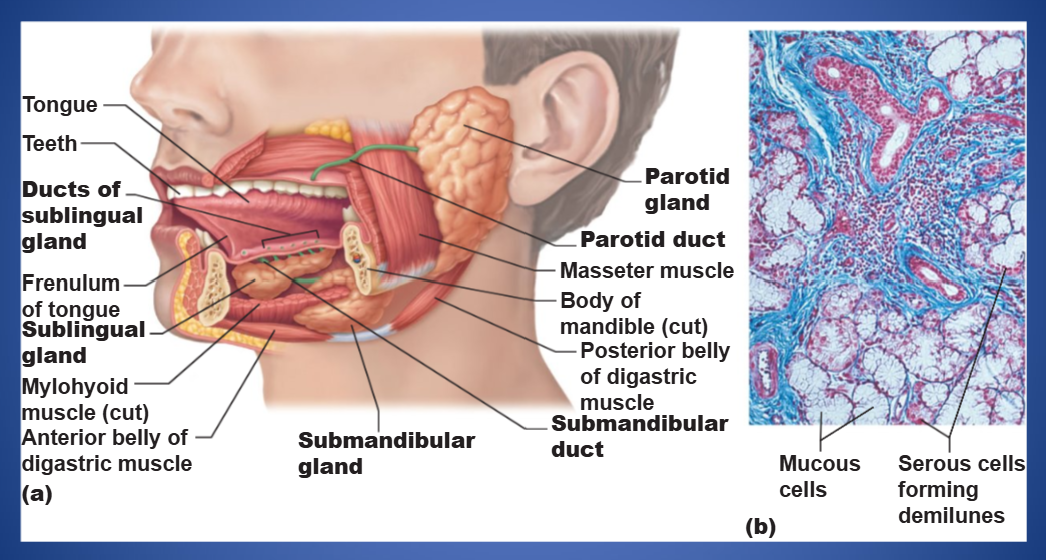
Identify the location, secretory gland, and function of lingual lipase
LOCATION: mouth
SECRETORY gland: lingual glands
FUNCTION: begin chemical fat digestion
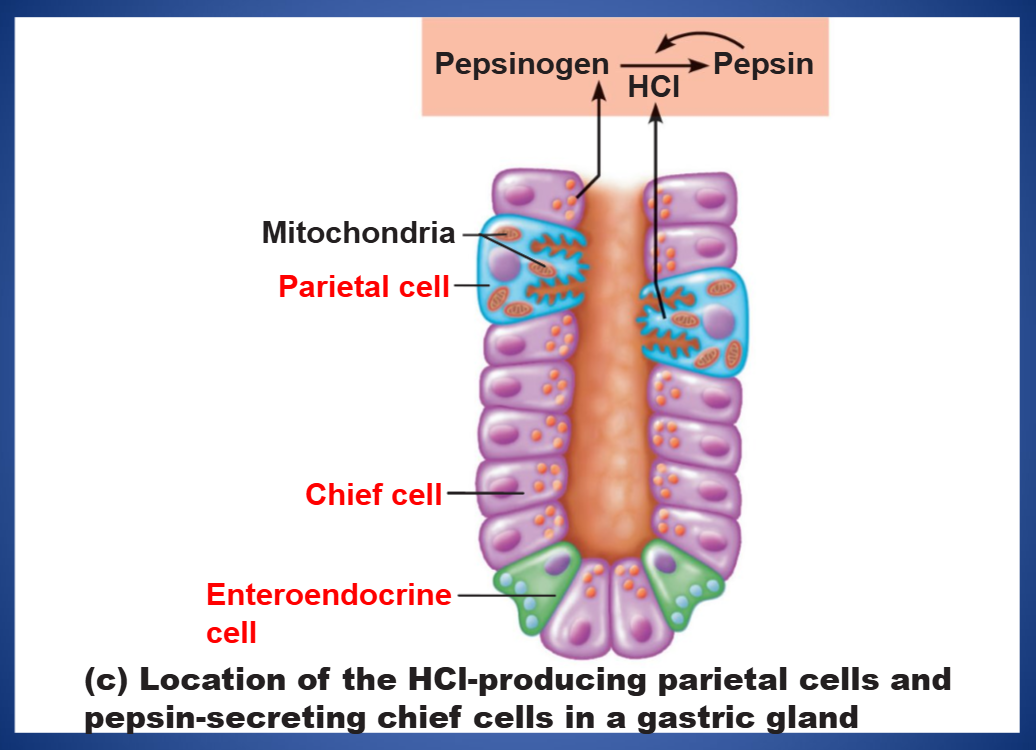
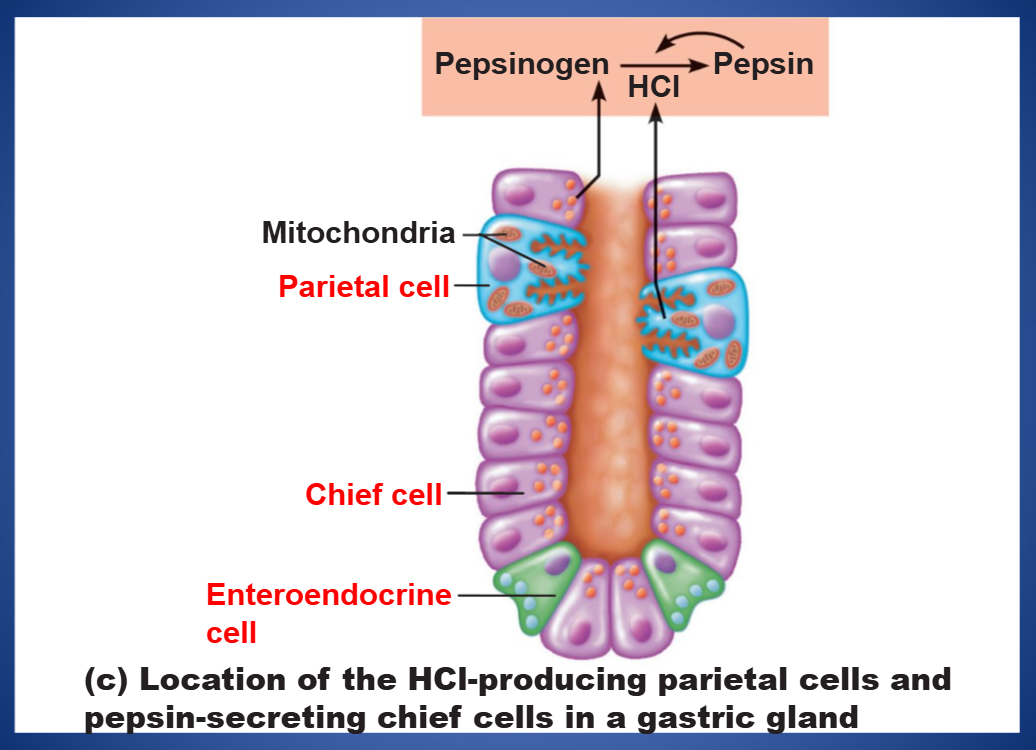
Describe the location, secretory cell, and function of pepsin
LOCATION: stomach
SECRETORY CELL: chief cells (as inactive pepsinogen)
FUNCTION: to digest proteins once activated by HCl
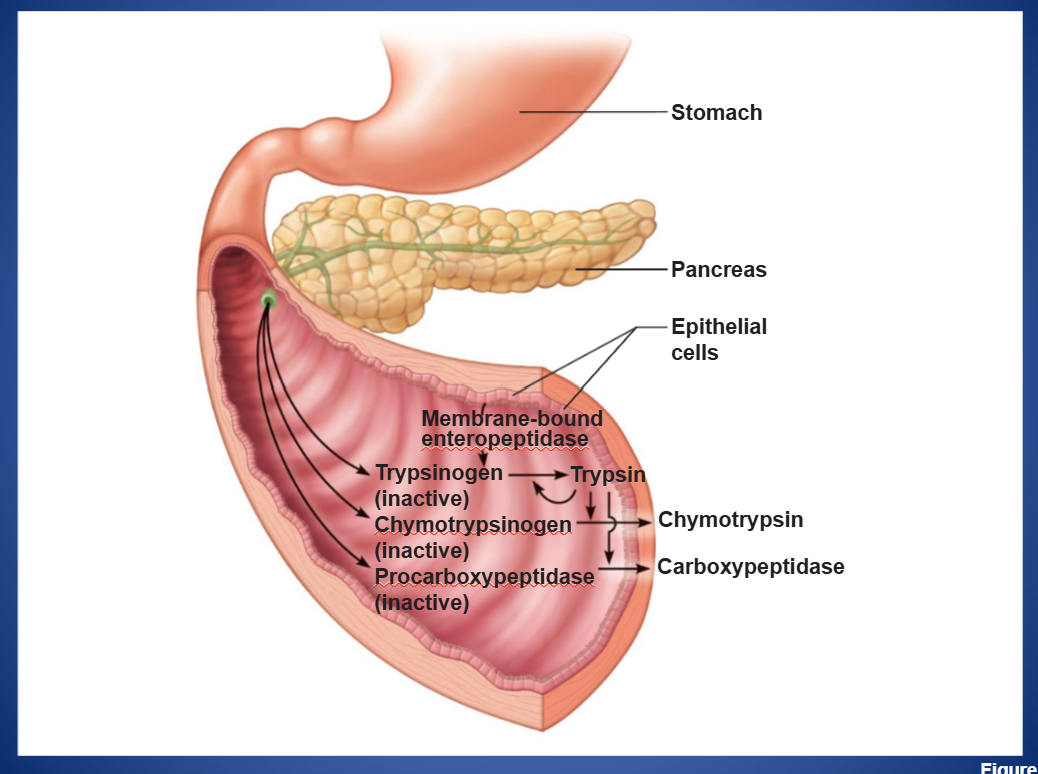
Identify the location, source, and function of trypsin
LOCATION: small intestine
SOURCE: pancreas (as inactive trypsinogen)
FUNCTION: digest proteins
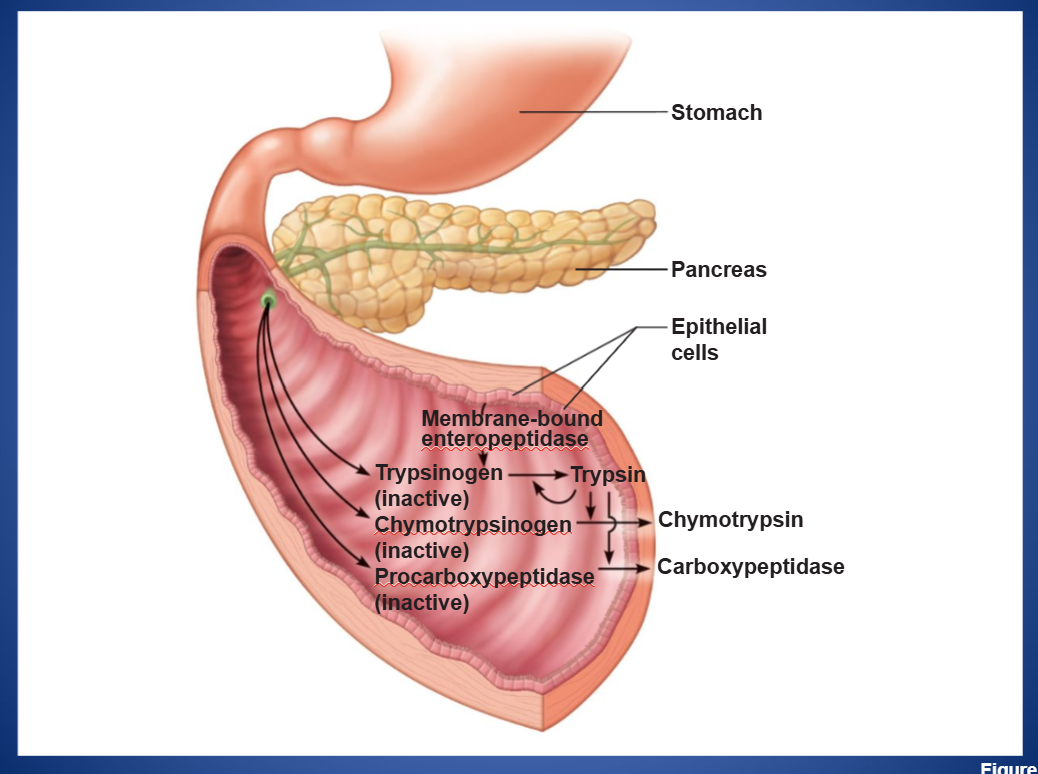
Name the location, source, and function of chymotrypsin
LOCATION: small intestine
SOURCE: pancreas (as inactive chymotrypsinogen)
FUNCTION: digest proteins
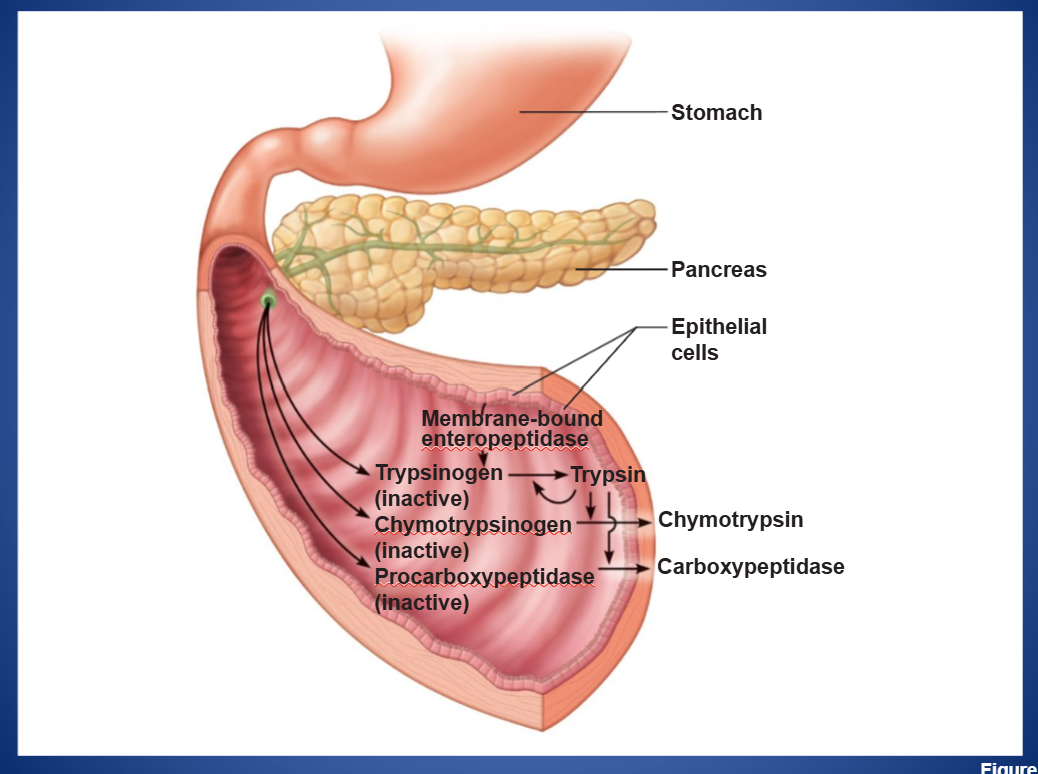
Identify the location, source, and function of carboxypeptidase
LOCATION: small intestine
SOURCE: pancreas (as inactive procarboxypeptidase)
FUNCTION: digest proteins
State the location, source, and function of pancreatic ribonuclease
LOCATION: small intestine
SOURCE: pancreas
FUNCTION: chemically digest RNA
State the location, source, and function of pancreatic deoxyribonuclease
LOCATION: small intestine
SOURCE: pancreas
FUNCTION: chemically digest DNA
Describe the location, source, and function of pancreatic amylase
LOCATION: small intestine
SOURCE: pancreas
FUNCTION: digest carbohydrates
Describe the location, source, and function of pancreatic lipase
LOCATION: small intestine
SOURCE: pancreas
FUNCTION: digest fats
Identify the location and function of brush border enzymes
LOCATION: microvilli of the small intestine
FUNCTION: perform final chemical digestion of carbohydrates, proteins, and nucleic acids
State the location, secretory cell, and function of gastrin
LOCATION: stomach
SECRETORY CELL: enteroendocrine G cells in the stomach
FUNCTION: stimulate gastric juice secretion and motility
Describe the location, secretory cell, and function of cholecystokinin (CCK)
LOCATION: duodenum, gallbladder, pancreas
SECRETORY CELL: duodenal enteroendocrine cells
FUNCTION: cause gallbladder contraction and the release of enzyme-rich pancreatic juice
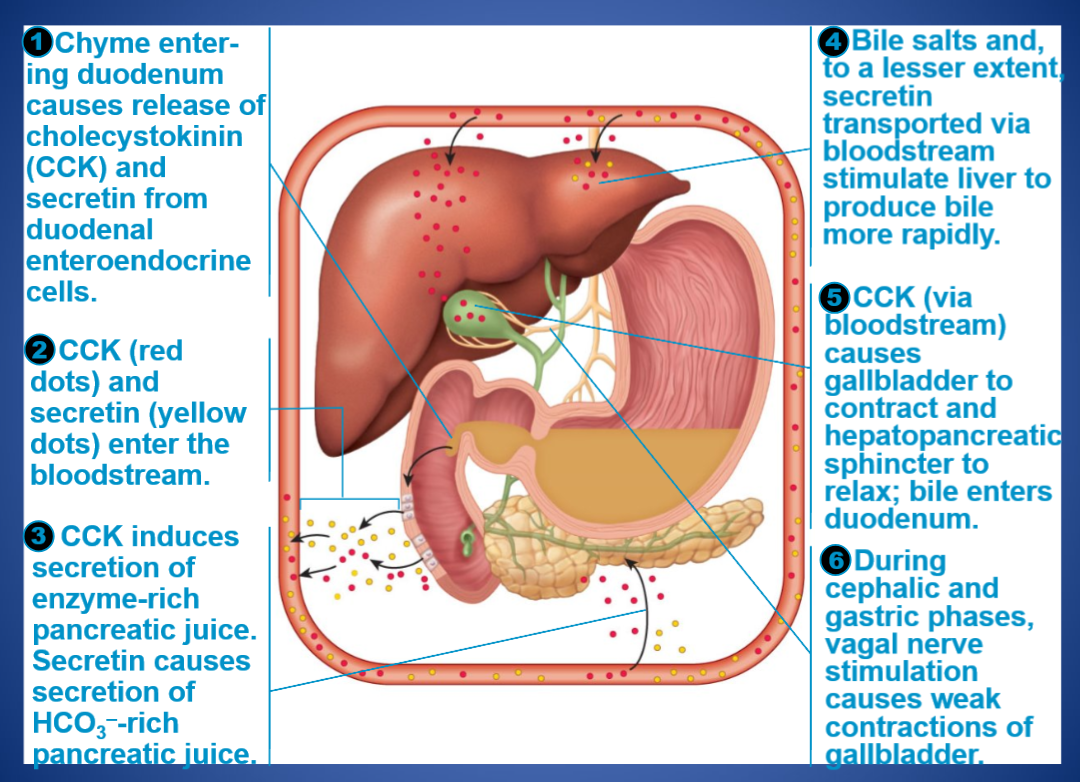
Describe the location, source, and function of secretin
LOCATION: liver
SOURCE: duodenal enteroendocrine cells
FUNCTION: stimulate liver bile production and the release of bicarbonate-rich pancreatic juice
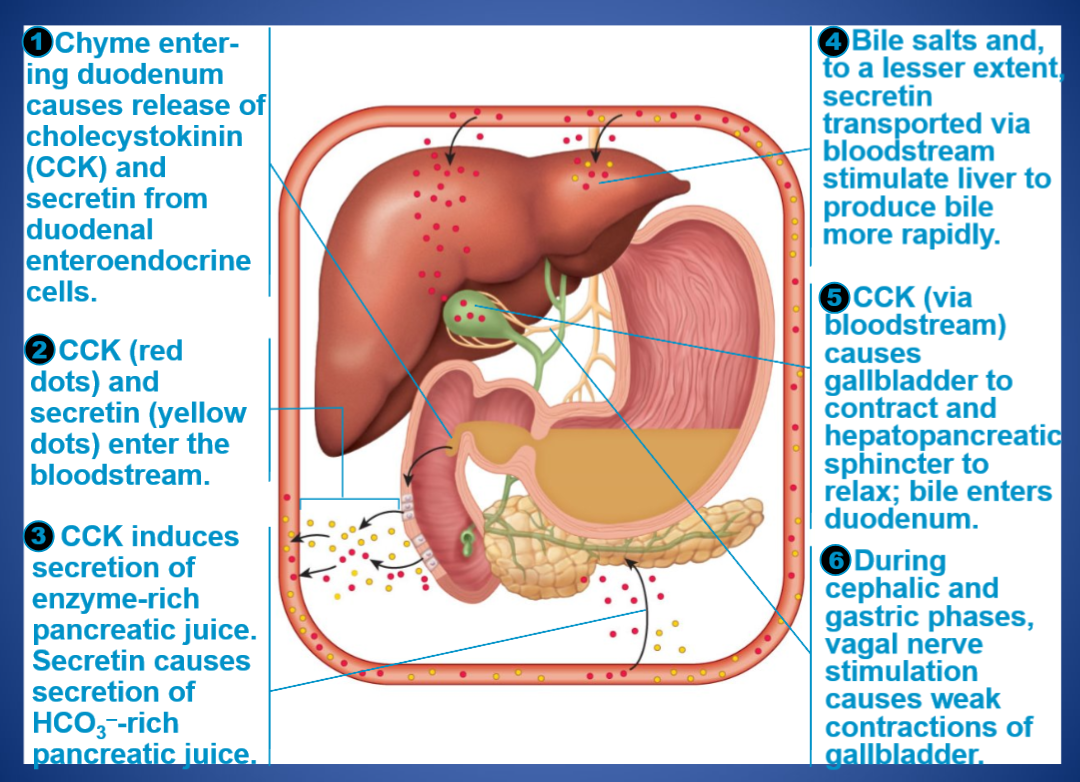
Define the function and primary components of enterogastrones
COMPONENTS: Hormonal group including CCK and secretin
FUNCTION: inhibits gastric secretion and duodenal filling