BLOOD
 Call Kai
 Learn
Learn Practice Test
 Spaced Repetition
 Match
Match Flashcards
 Knowt Play
1/39

There's no tags or description
Looks like no tags are added yet.
Name | Mastery | Learn | Test | Matching | Spaced | Call with Kai | Chat |
|---|
No analytics yet
Send a link to your students to track their progress
40 Terms
Blood
a liquid connective tissue
Suspended in the watery plasma are seven types of cells and cell fragments.
neutrophils
eosinophils
basophils
lymphocytes
monocytes
5 kinds of white blood cells
transport oxygen, food molecules, ions, waste, hormones through the body
Defense against foreign agents
Functions of blood
Bone marrow
produces blood cells
Multipotent stem cell
a single type of cell
Interleukin-7
the major cytokine in stimulating bone marrow stem cells to produce lymphocytes
Erythropoietin
produced by the kidneys
enhances the production of red blood cells (RBCs).
Thrombopoietin (TPO)
assisted by Interleukin-11 (IL-11)
stimulates the production of megakaryocytes
fragmentation produces platelets.
Granulocyte-monocyte colony-stimulating factor (GM-CSF),
sends cells down the path leading to both those cell types
Erythrocytes
The most numerous type in the blood.
Responsible for transport of oxygen and carbon dioxide
Women an average about 4.8 million of these cells per cubic millimeter of blood.
Men average about 5.4 x 10⁶ per ul.
Hemoglobin
produced by red blood cells, 90% of the cell weight
120 days
terminally differentiated, programmed cell death of RBCS
Anemia
is a shortage of RBCS
the amount of hemoglobin in them.
Iron deficiency
Most common cause of anemia
Leukocytes
are much less numerous than red (the ratio)
between the two is around 1:700),
have nuclei
participate in protecting the body from infectior
lymphocytes and monocytes
wbcs consisted of ___ in clear cytoplasm
B lymphocytes
These are responsible for making antibodies.
T lymphocytes
different kinds of lymphocytes based on different functions
There are several subsets of these: inflammatory, cytotoxic, helper
Helper T cells
that enhance the production of antibodies by
B cells
Inflammatory T cells
that recruit macrophages and neutrophils to the site of infection or other tissue damage
cytotoxic T lymphocytes
that kill virus-infected and, perhaps, tumor cells
Large Granular lymphocytes
What is this
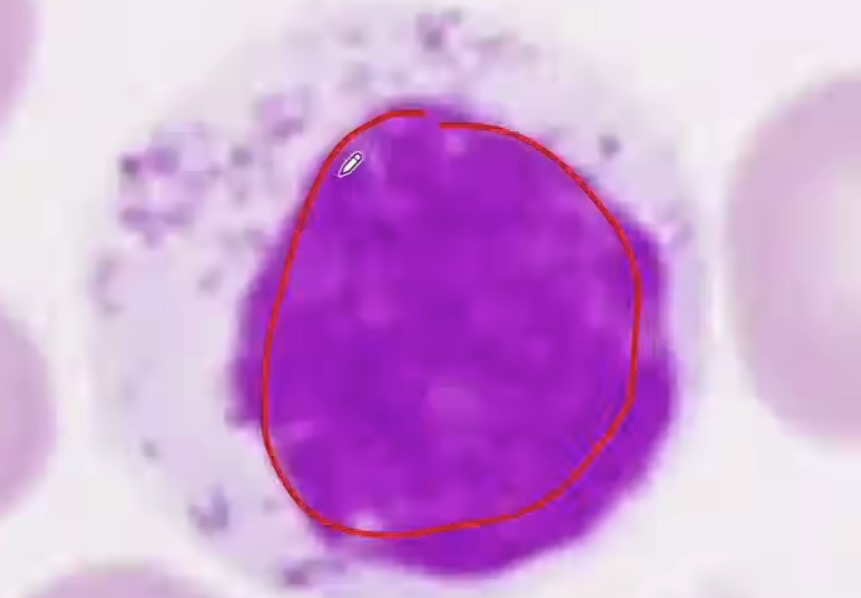
Lymphocyte
What is C
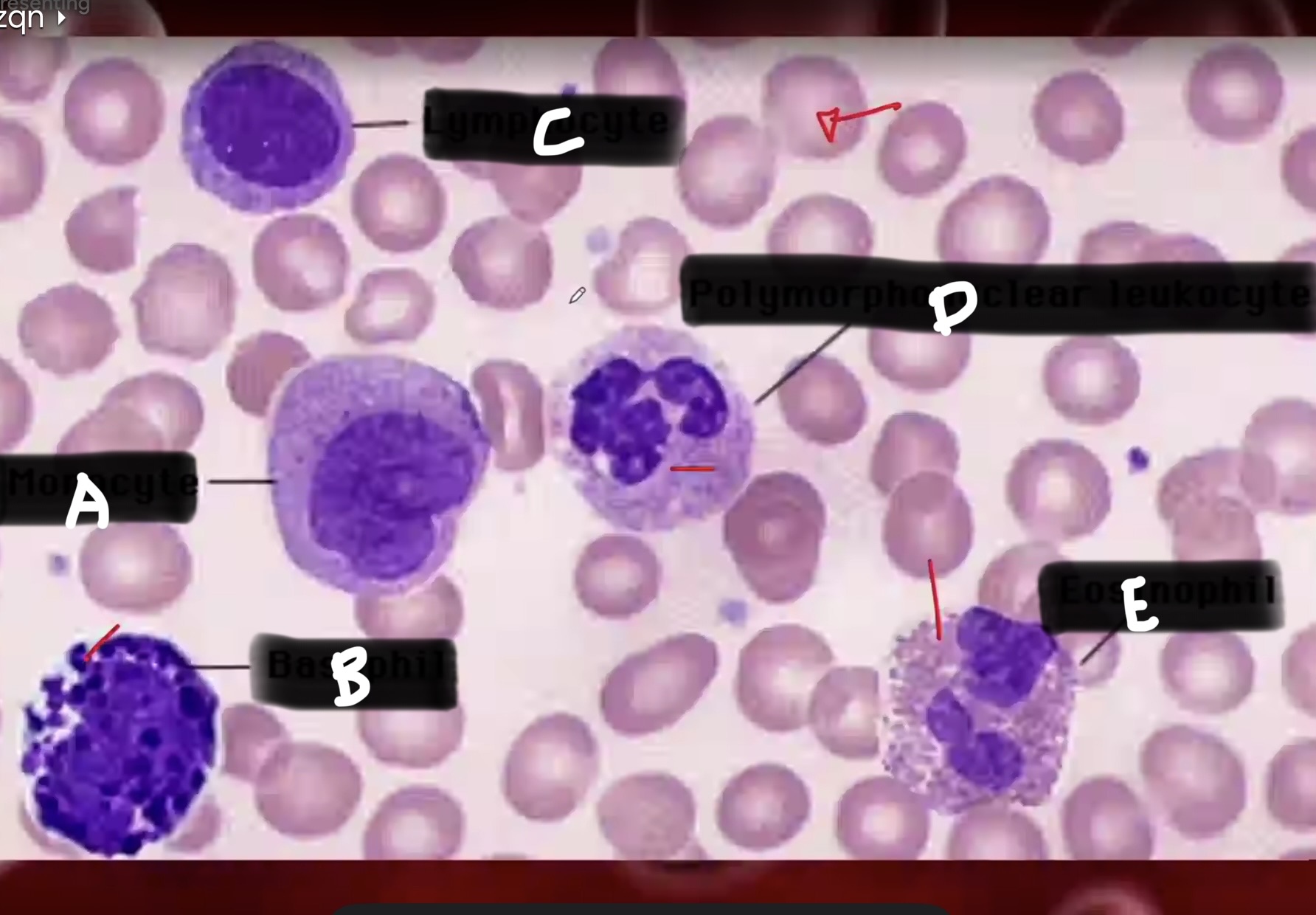
Monocyte
What is A
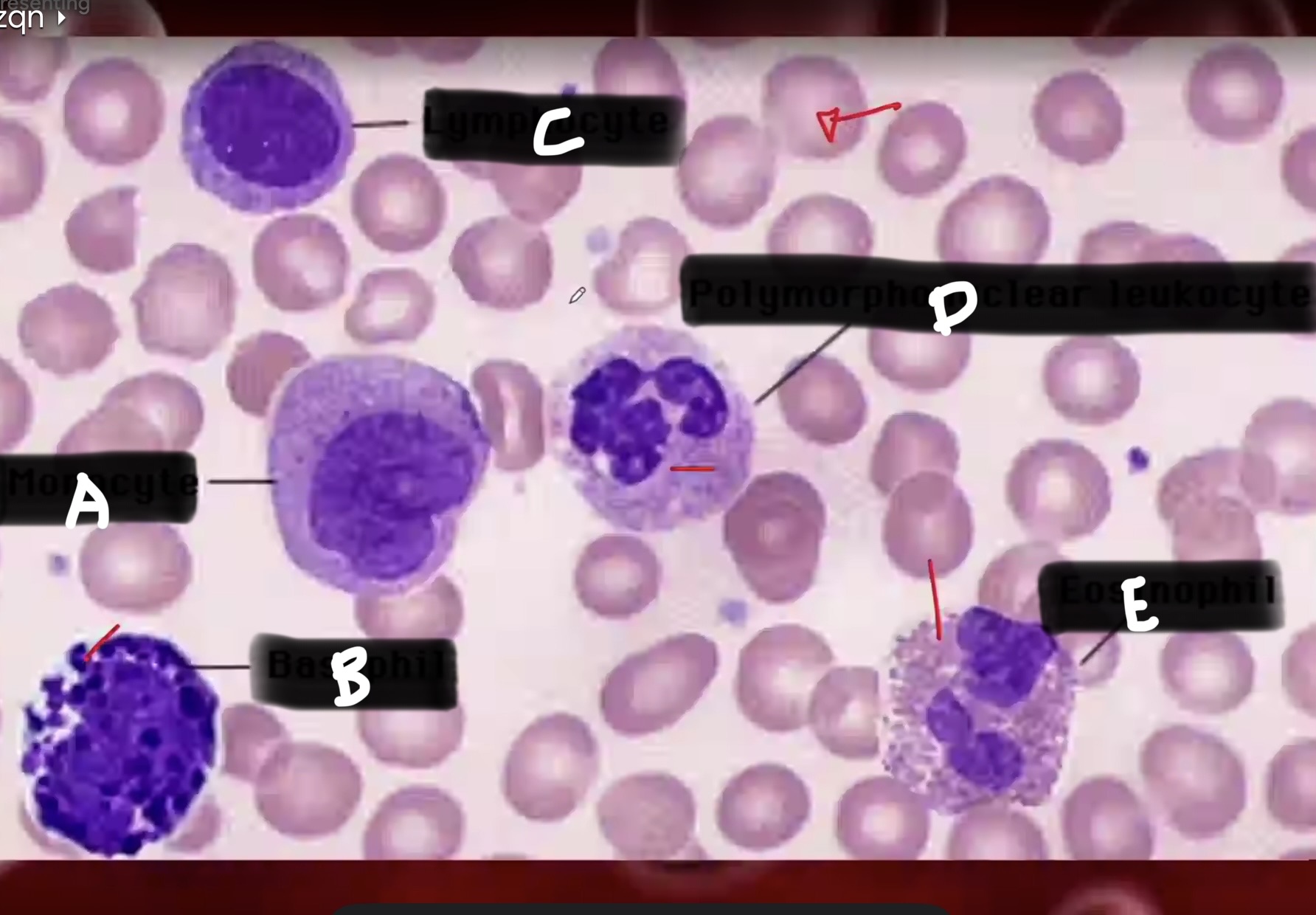
Basophil
What is B
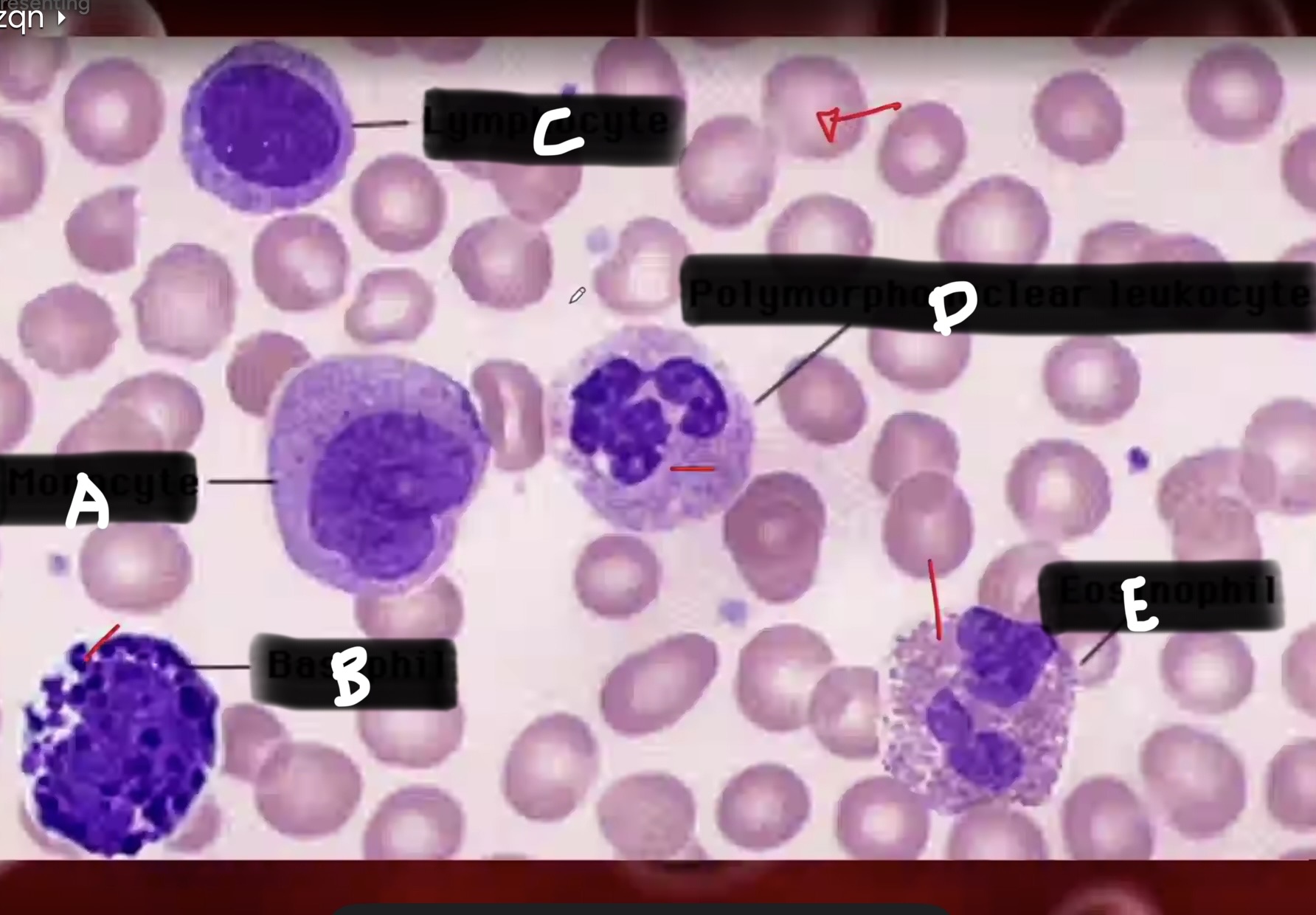
Eosinophil
What is E
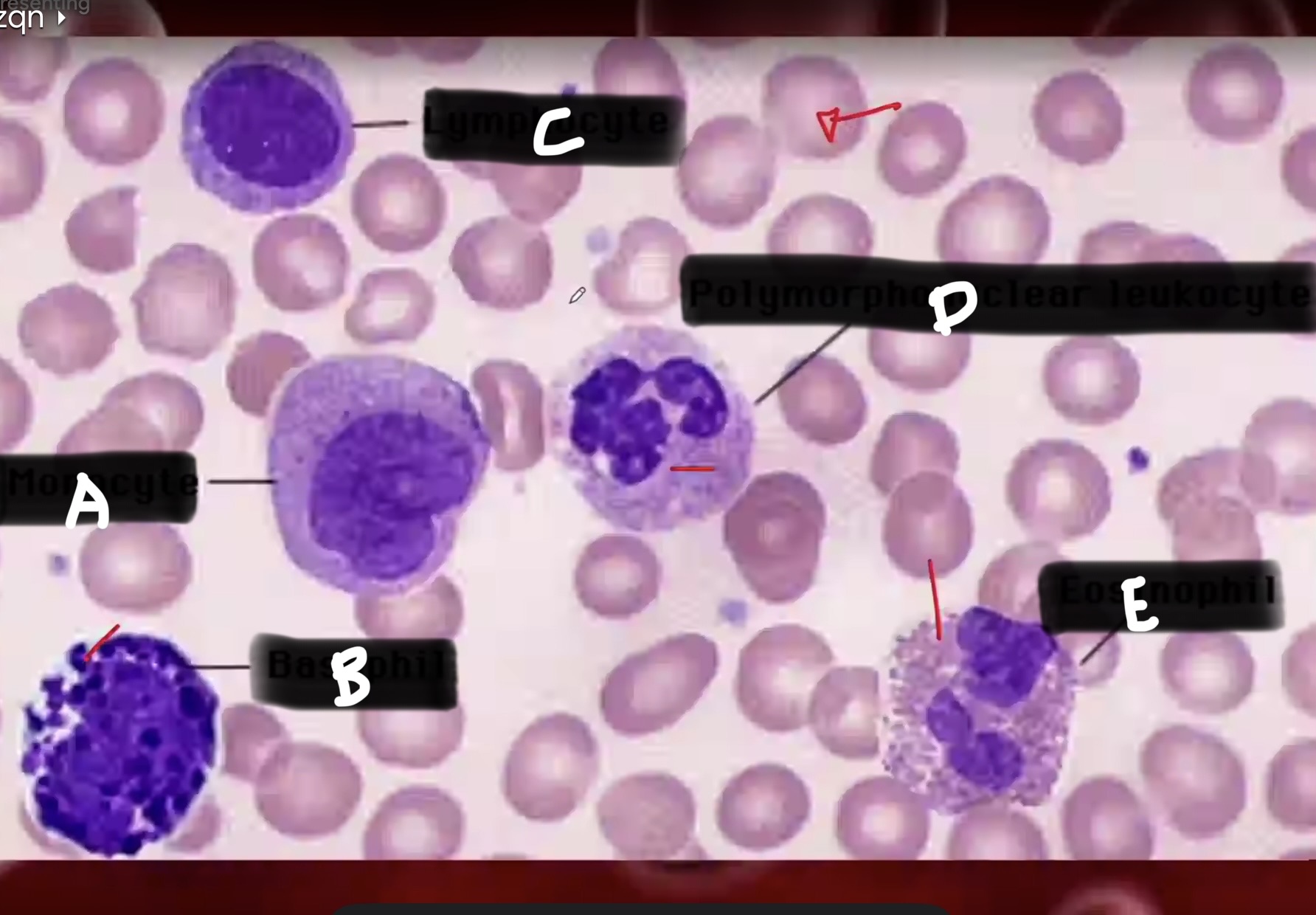
Monocytes
leave the blood and become macrophages.
Horse shoe
Shape of monocytes
Macrophages
large, phagocytic cells that engulf
foreign material (antigens) that enter the body
dead and dying cells of the body.
Neutrophil
What is A
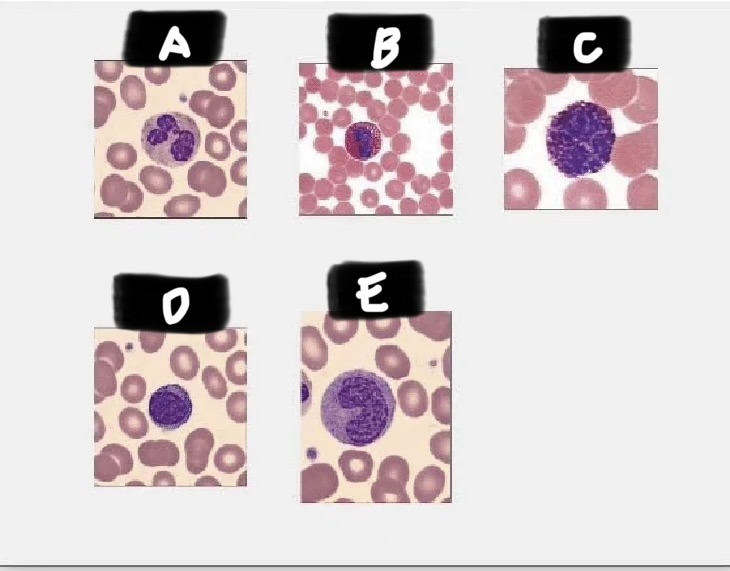
Eosinophil
what is B
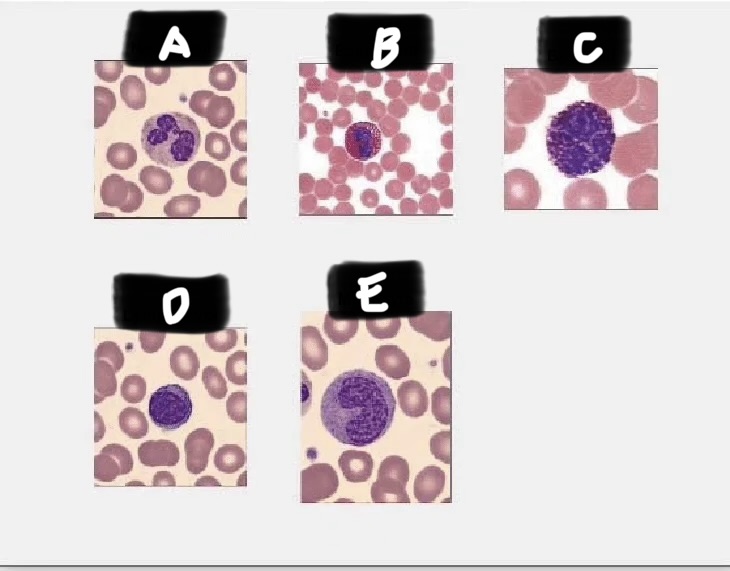
Basophil
what is C
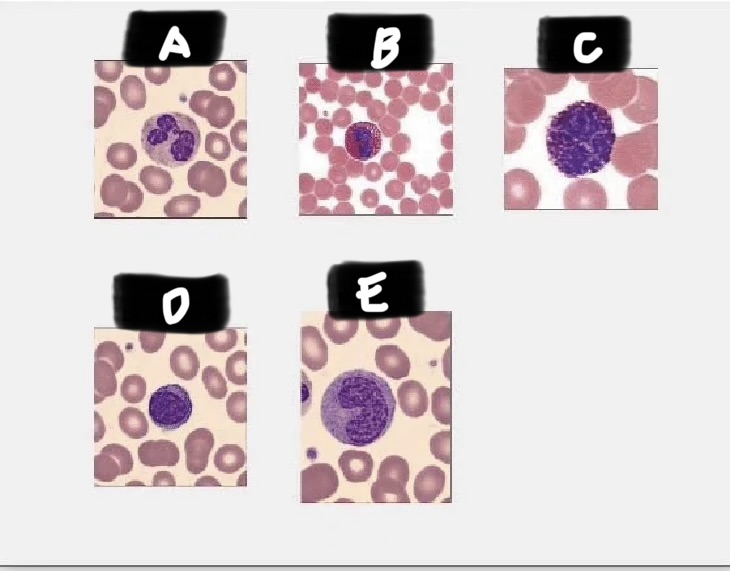
Lymphocyte
what is D
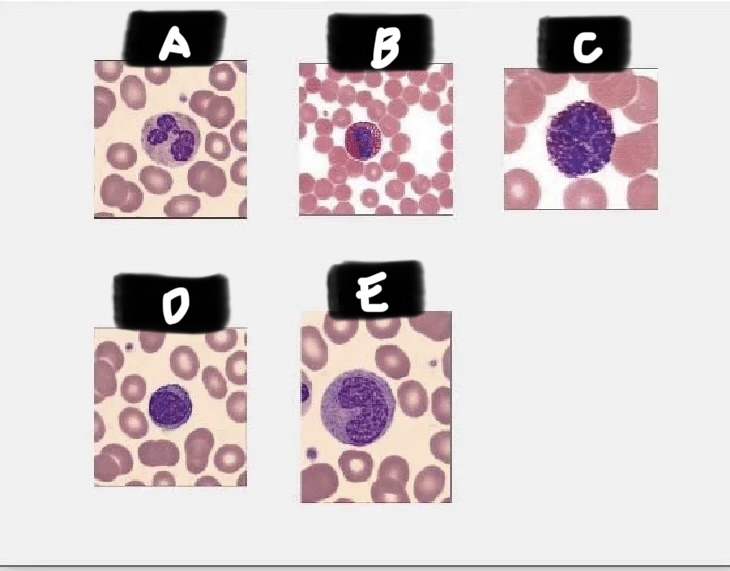
Monocyte
What is E
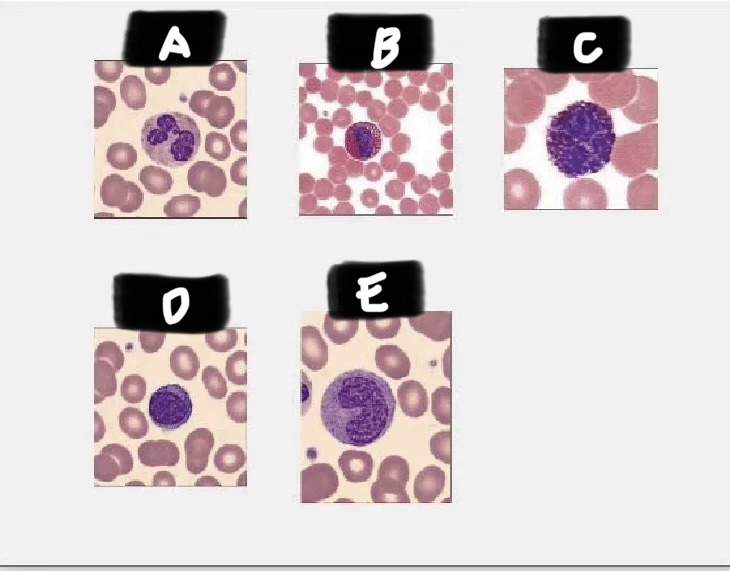
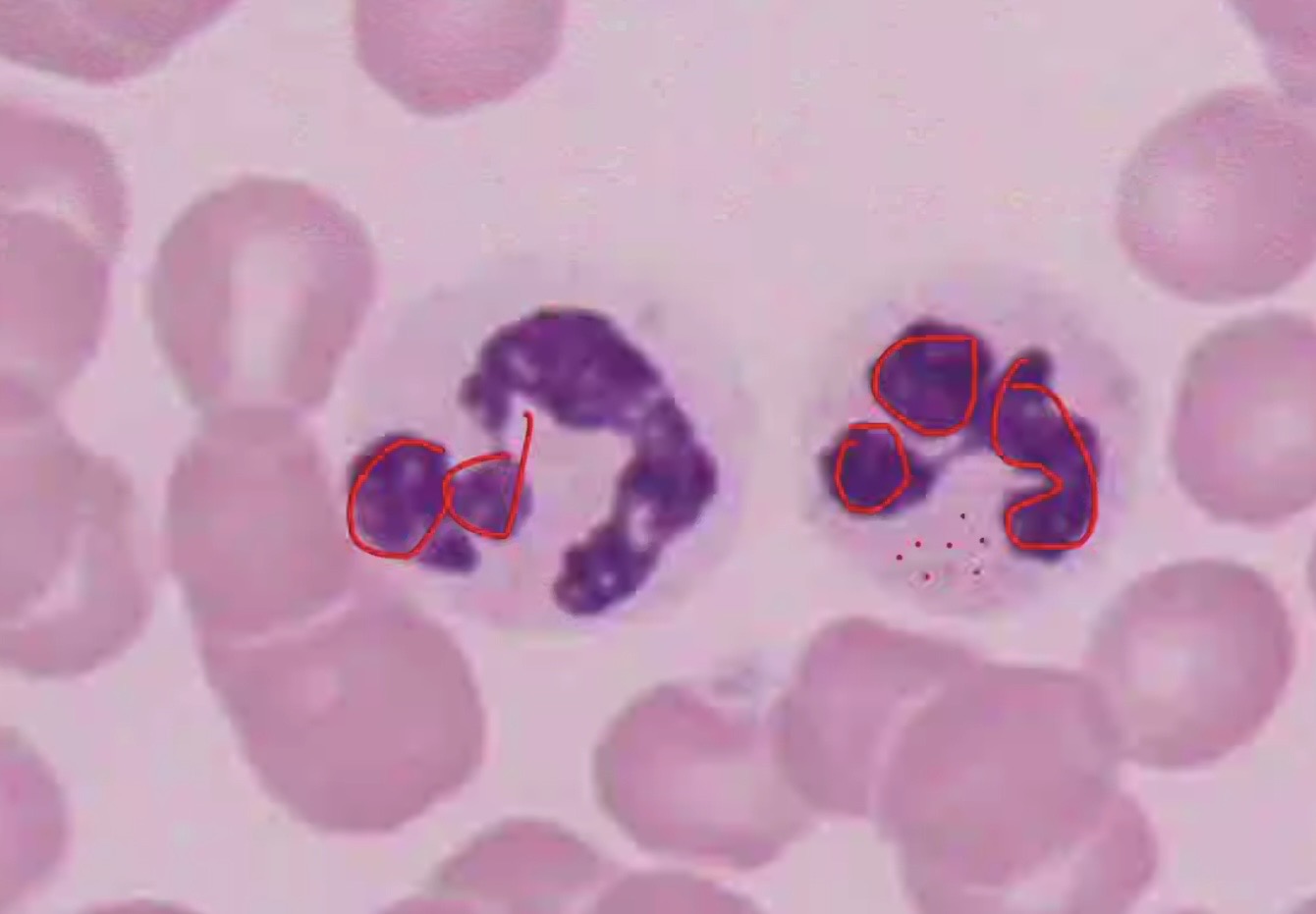
Neutrophils
The most abundant of the WBCs.
kill the invaders (e.g., bacteria) and then engulf the remnants by phagocytosis.
Eosinophils
The number in the blood is normally quite low (0-450/ul).
Their numbers increase sharply in certain diseases, especially infections by parasitic worms.
They are cytotoxic, releasing the contents of their granules on the invader.
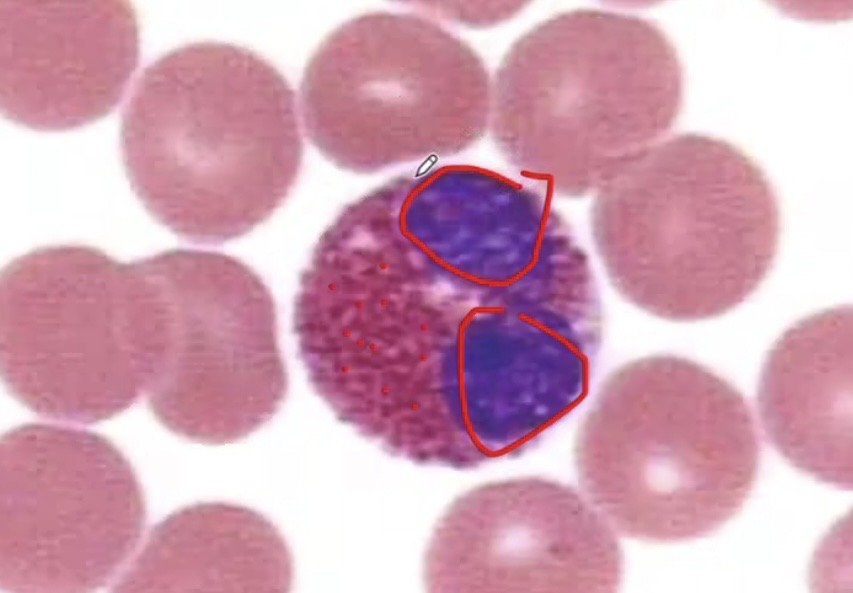
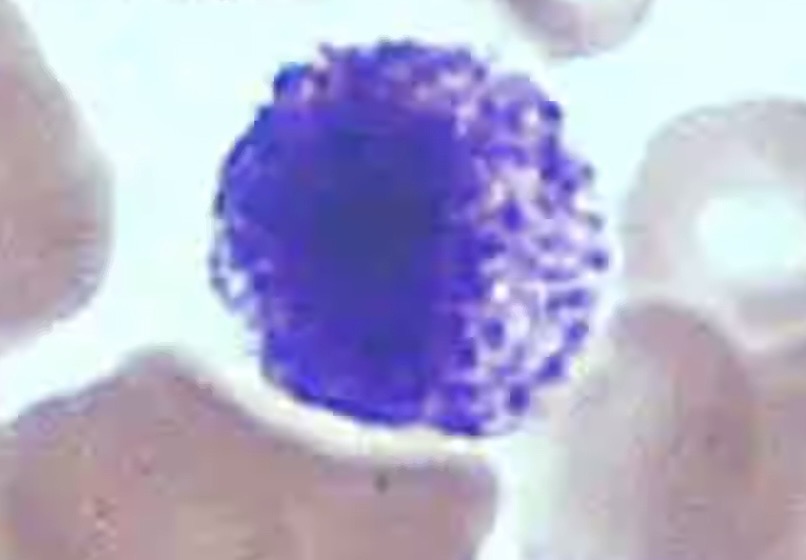
Basophils
The number also increases during infection.
• They leave the blood and accumulate at the site of infection or other inflammation.
discharge the contents of their granules, releasing a variety of mediators
histamine
serotonin
prostaglandins and leukotrienes
released mediators of basophils
Platelets
cell fragments produced from megakaryocytes.
Normal values in blood: 150,000-350,000 per microliter (ul) or cubic millimeter (mm3).
below 50,000 ul
1. danger of uncontrolled bleeding because of the essential role that platelets have in blood clotting.
Some causes: certain drugs and herbal remedies;
autoimmunity