4.11 The Basilica Nova & Old St. Peter's Church
 Call Kai
 Learn
Learn Practice Test
 Spaced Repetition
 Match
Match Flashcards
 Knowt Play
1/7

Earn XP
Description and Tags
Going Big--Vaults Combined for Monumental Roman Architecture and a Symbolic Floor Plan for Early Christian Churches
Name | Mastery | Learn | Test | Matching | Spaced | Call with Kai | Chat |
|---|
No analytics yet
Send a link to your students to track their progress
8 Terms
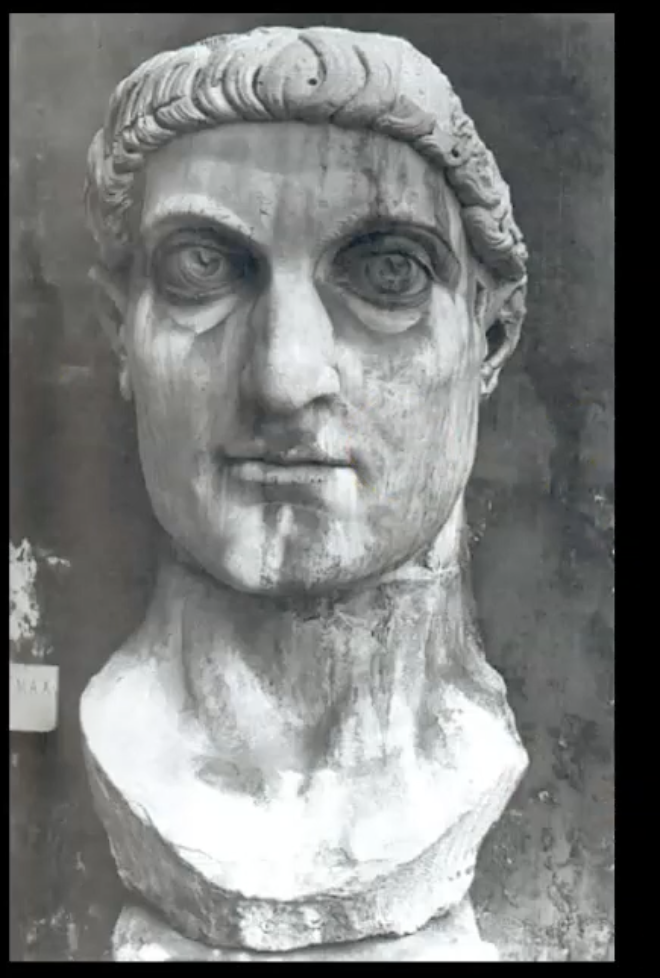
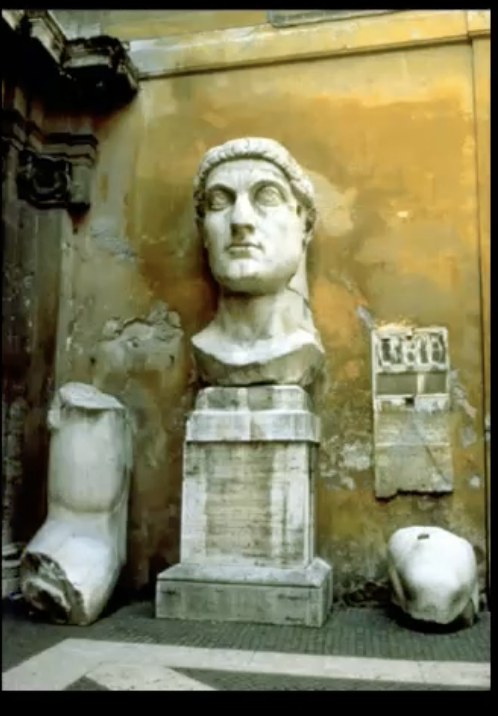
Monumental Head of Constantine, early 4th century
-a marble sculpture, over 8'5 ft( super extra large compared to a human),
-only what remains is sort of the elbow and bicep of Constantine;
-a depiction of the emperor in a seated or enthroned position
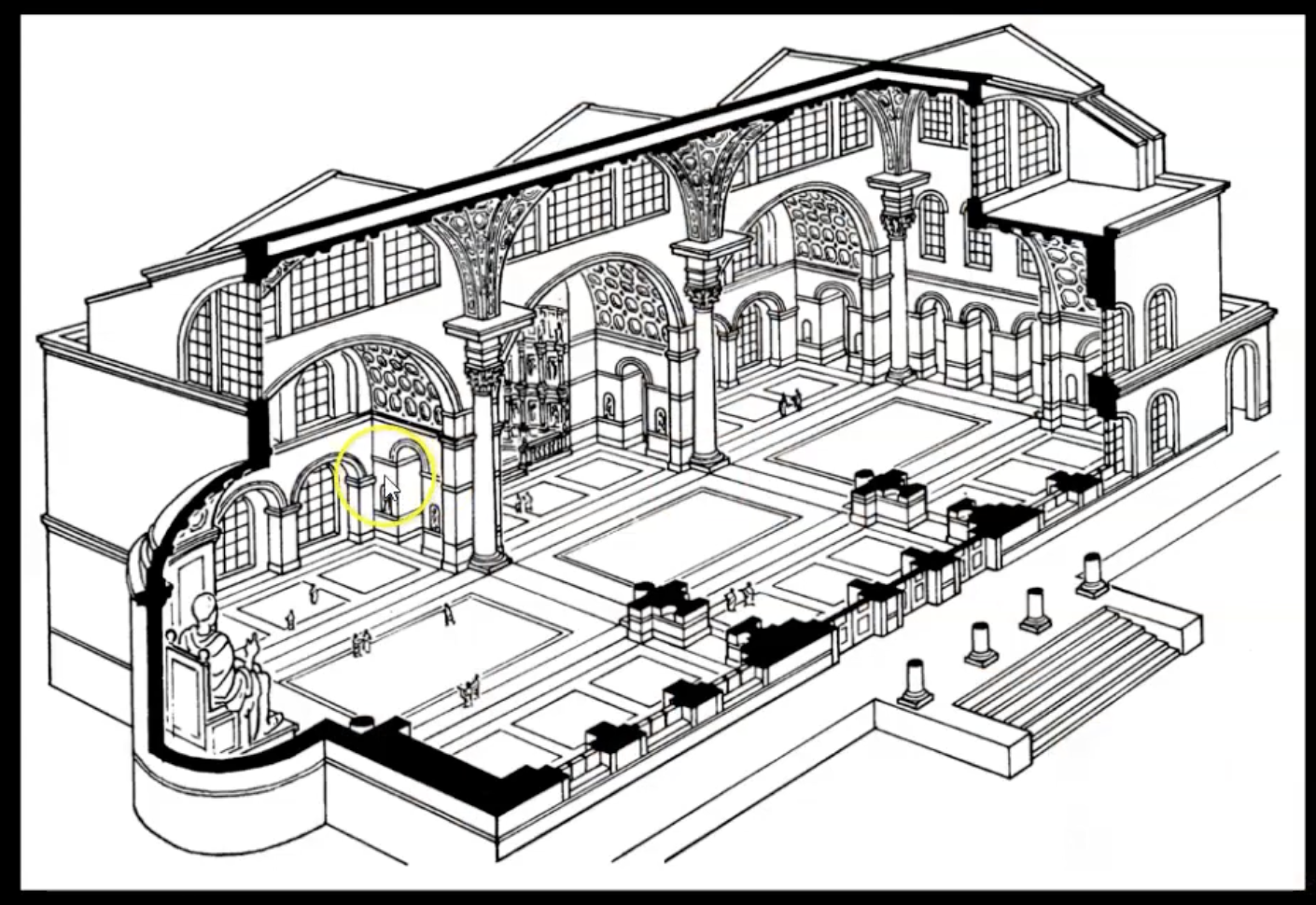
Basilica Nova, or Basilica of Constantine( reconstruction), Rome, ca. 312. (Vương cung thánh đường)
The groin vault (Mái vòm giao nhau) used repeatedly on a monumental scale
-Monumental Head of Constantine was displayed was inside this very large structure.
-relevant innovation use of the repeated groin vault with fenestrations. It was widely used in the Roman Empire, and because of the strength
-vaults are essentially expanses that don't require any kind of columns to hold up the roof, many of them are were born from the arch principle.
-with the arch is that it displaces the weight not only downward but to the sides-> extending an arch creates a barrel vault (a trio of barrel vaults on the side aisles)
-another arch shape( the top) here and this arch would have continued on from one end of the building to the other and the intersection of that barrel vault with the side barrel vaults created the "groin vault" which run perpendicular to one another.
->this is a repeated groin vault formula that allowed the creation of what was not a religious structure, but a government structure in the era of Constantine.
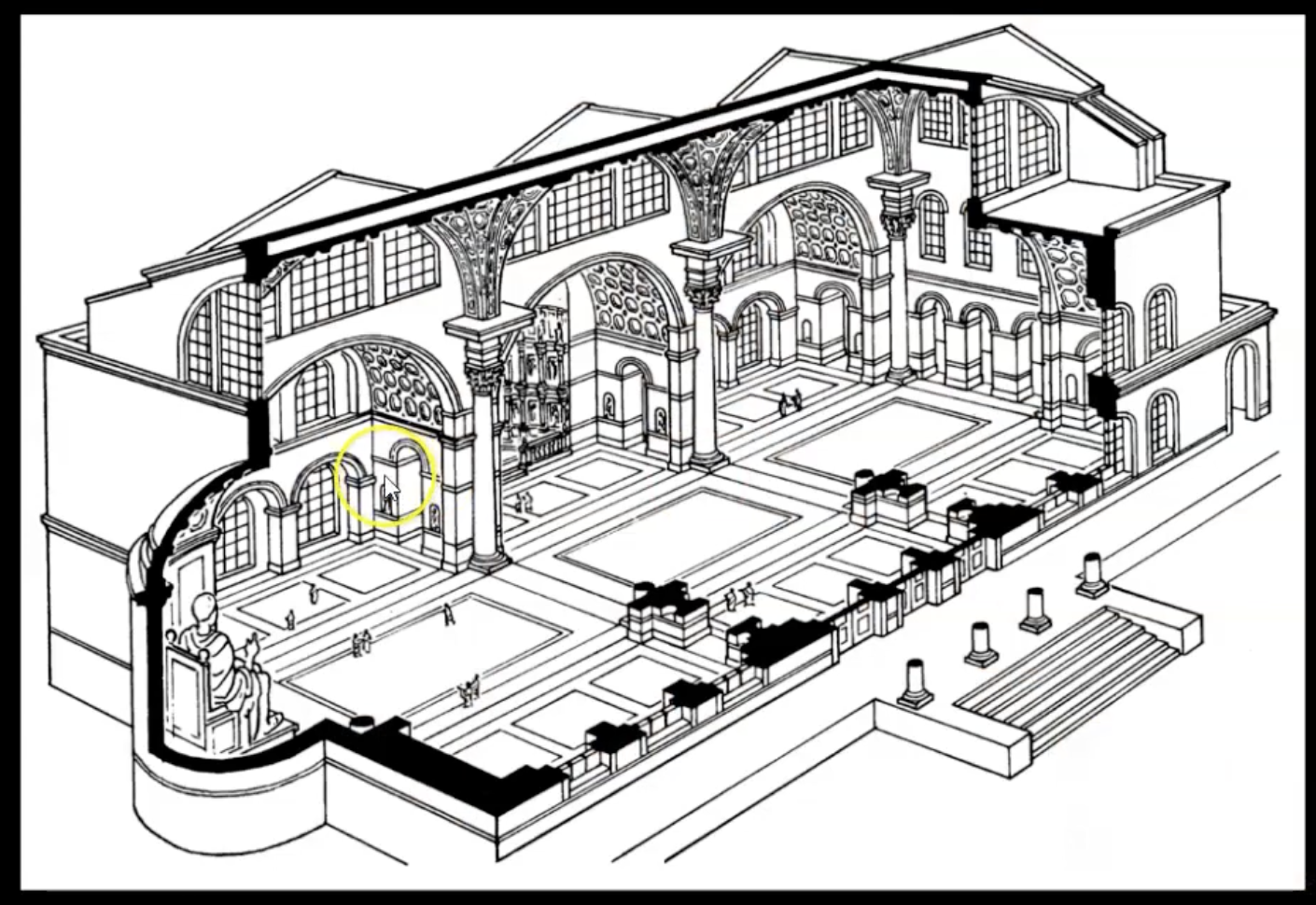
Basilica Nova, or Basilica of Constantine( reconstruction), Rome, ca. 312. (Vương cung thánh đường)
The groin vault (Mái vòm giao nhau) used repeatedly on a monumental scale
-(the left) end of the building is where the enormous sculpture of the ruler himself ( the highest attention, not a religious building like statue for god, this is for goverment)
-because of the strength of these vaults- are able in the upper levels to create a clerestory.
-They can open up those walls and create fenestration to let air and light to penetrate this particular space = they don't need a solid wall to hold the roof up,
-these architectural innovations: these systems of vaults, whether barrel or groin or both that came along in the Roman Empire, the invention of cement
-> allowed them to cheaply and quickly with incredible structural integrity build these massive monumental buildings
-the vaults reach 115 ft and the length of the place is about 300 ft.
-> monumental structures like this become commonplace in the Roman Empire, even in the late empire periods.
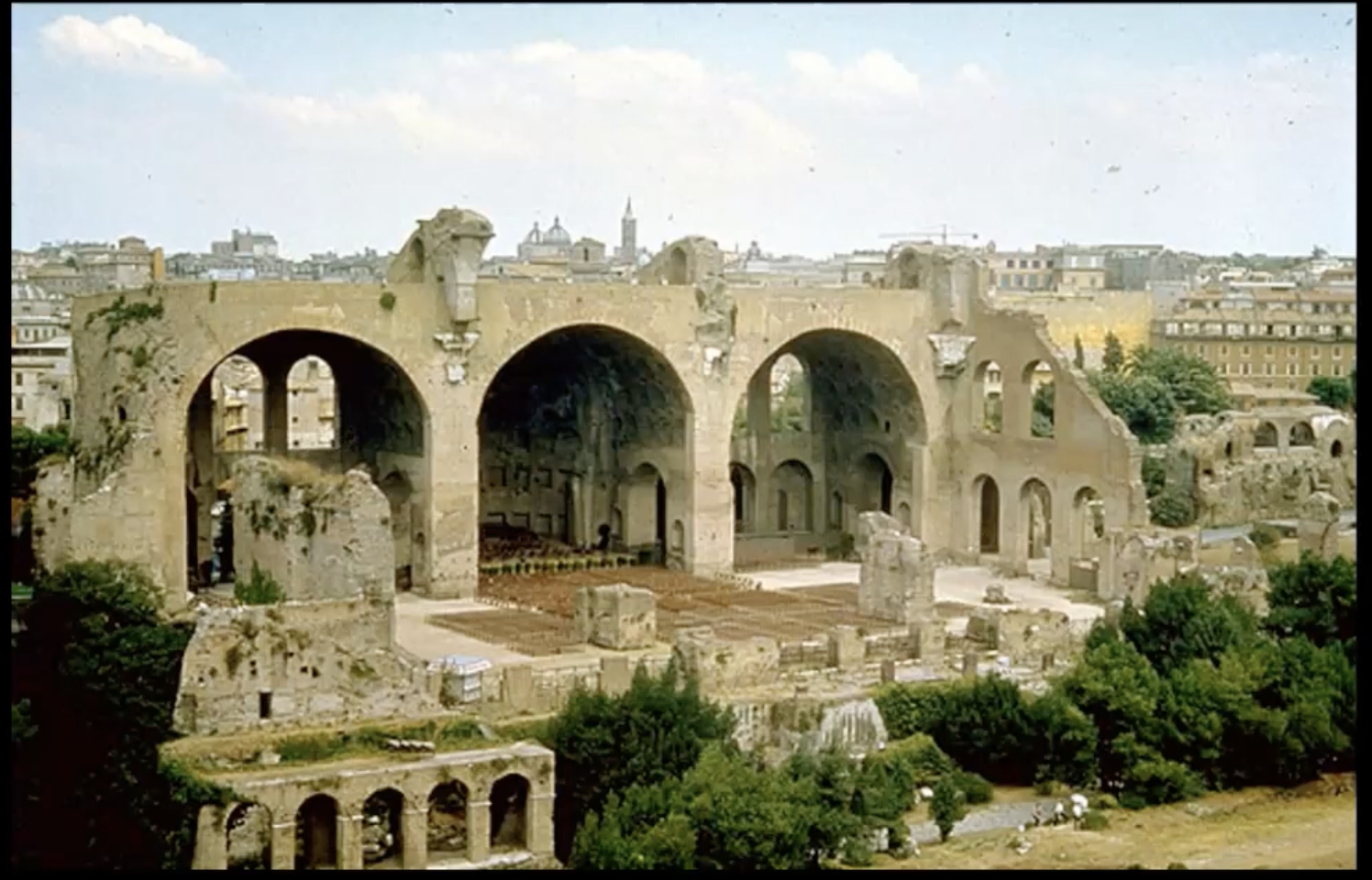
Ruin (Tàn tích) of Basilica Nova
-enormous barrel vaults with coffers inside ( js like triumphal arches) --the intersecting barrel vault forming the sequence of groin vaults
-the big statue of of Constantine himself would be there.
-with such heights, they did have to really buttress and have thick walls at the base of the building, some as thick as 20 ft to kind of handle all that weight as it channeled downward.
→ still, concrete, the innovation of these Roman arches, really made a world of difference and took architecture to the next great leap forward that will continue until the present
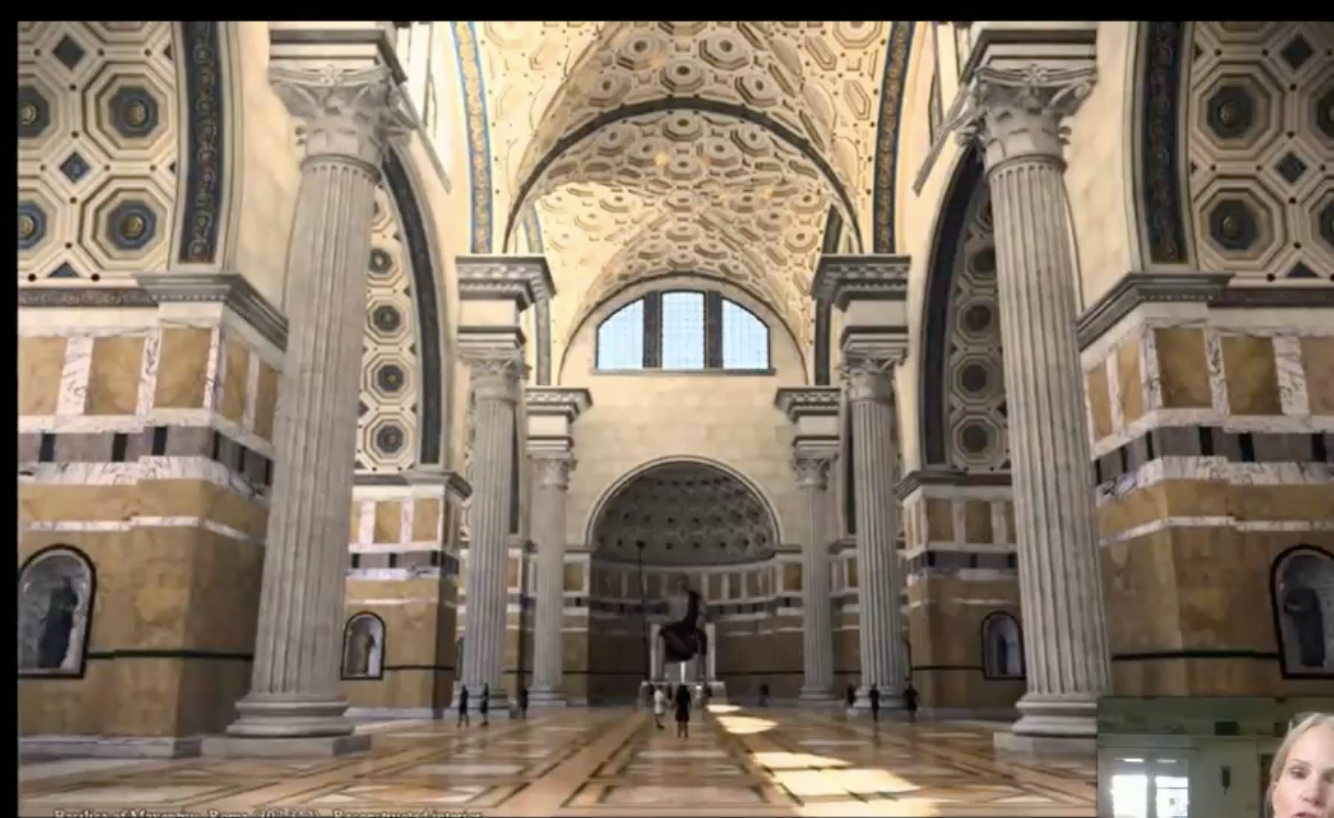
Artist’s rendering( bản phác thảo) of interior with colossal statue
-interior of the Basilica Nova
-enormous sculpture of Constantine seated or enthroned
-enter and a very central axis taking you from the entrance down to the end of this particular space here.
-looking up, a subtle x shape in a coffered ceiling (dạng ô lõm) that delineates (vạch rõ) the intersection of the two barrel vaults forming the groin vault.
-on the left and right would be the trio of additional barrel vaults
-at the very top it was an example of the fenestrationor the essentially the windows-the grills- that would allow light into these massive sanctuaries
-the requisite Corinthian capital- a Roman favorite with fluted columns providing additional support and decorative features in a space that would have been covered from end to end in the best marble Italy had to offer.
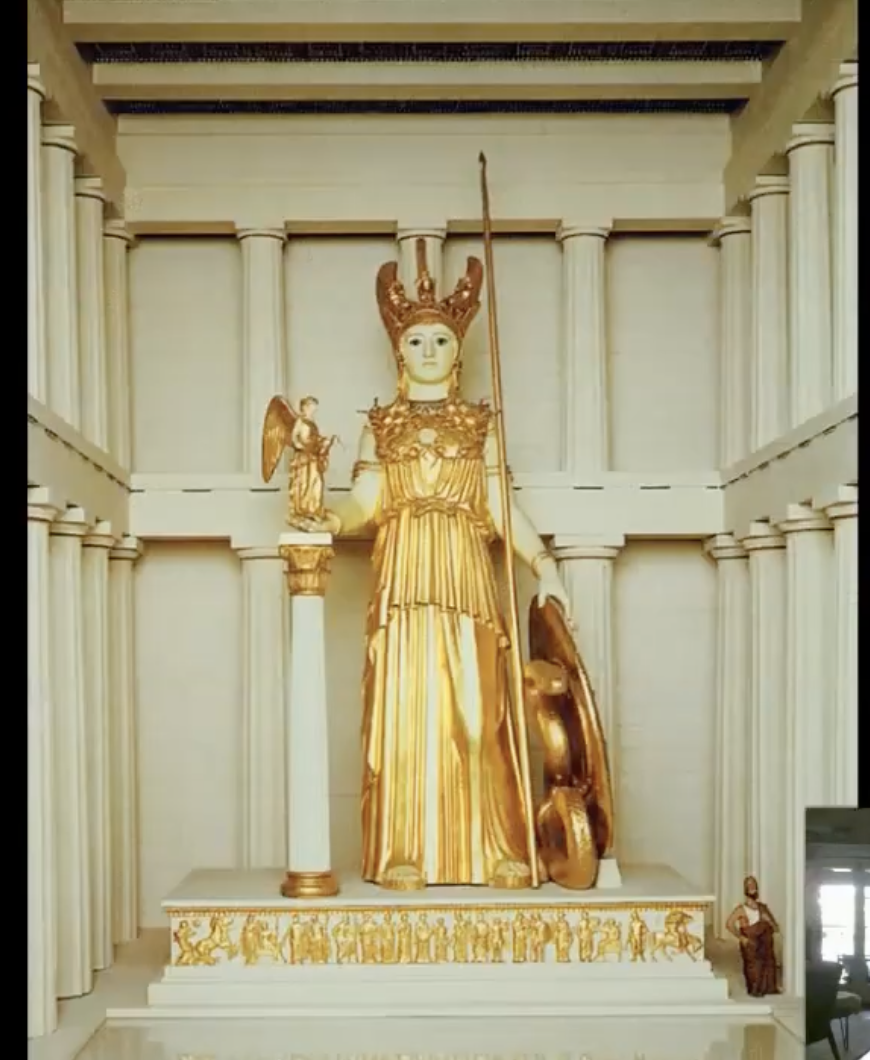
religious architecture
-The concept of putting religious god or goddess in a religious structure on in their own space-similar in the Athena Parthenos. But here it's about a government building and a ruler, but again, the concept is very similar
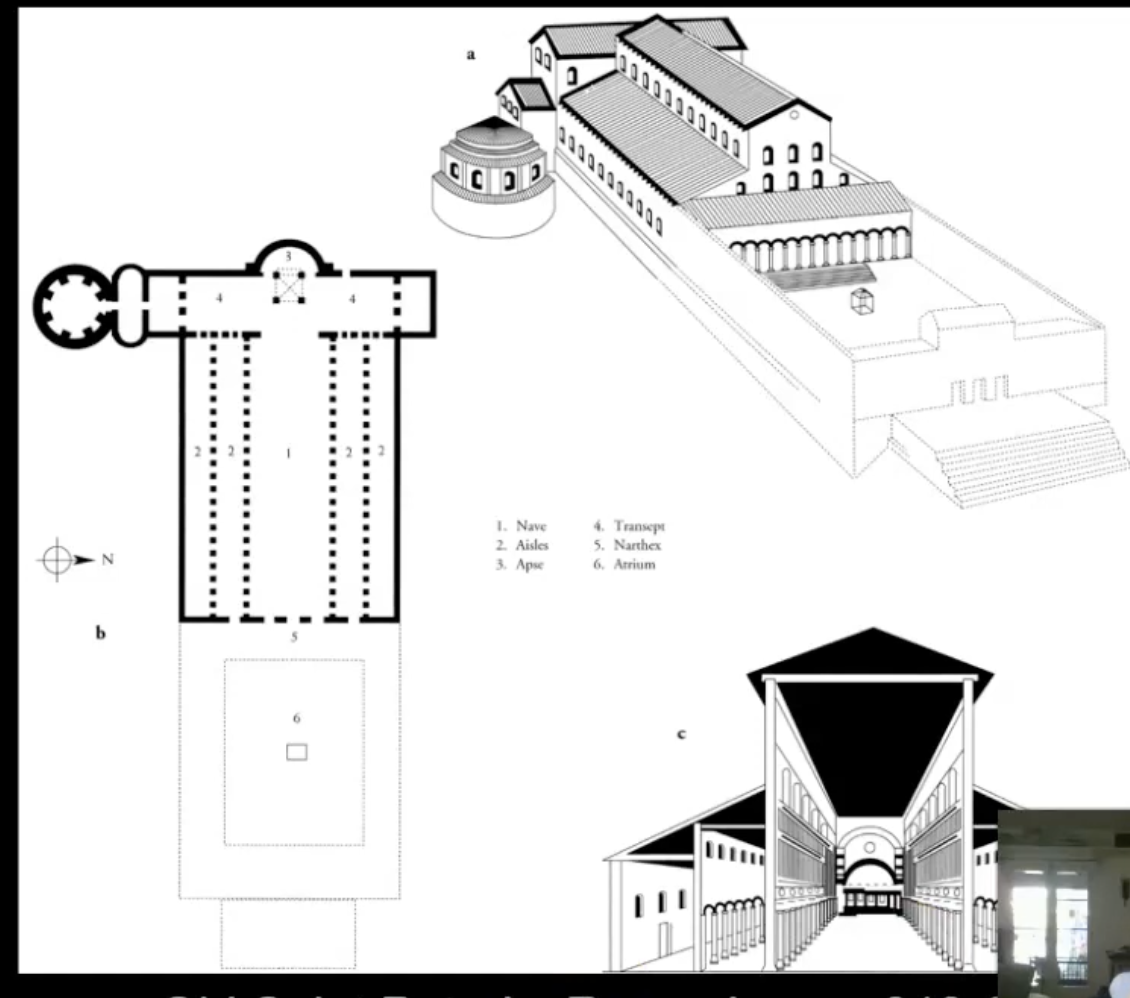
Old Saint Peter’s, Rome, begun 319
-is important because it provides the plan for future church architecture particularly in western Europe; it's gonna have a huge impact particularly in medieval Europe
-looking down: it is in the shape of a Christian cross, that of course is a reference to the crucifixion of Christ (built in Rome)
-inside: enter through an open air courtyard or atrium→ enter one side of the building → proceed up #1 "nave" (gian chính) of the church→ take to where the altar would be located
#3: "apse" (hốc tường hình bán nguyệt/gian cung thánh) this is a slight kind of a semi-circular space that bumps out.
#4: "transept," (gian ngang)- where the relics, special, precious objects relating to Christianity, relating to the saint, maybe an article of clothing that would be venerated and worshipped in that location.
#2: the aisles (lối đi dọc)
Difference
church architecture is different from temple architecture from the polytheistic era is:
+there's more interest in getting people inside the sanctuary to worship than to have them worship elsewhere through exterior rituals or to venerate, worship a sculpture that's the only thing that's allowed in the sanctuary like in a Greek temple.
Now in the era of Christianity they're going to pack the house to hear those sermons to be moved by the stories of the gospels
-instead of venerating an idol at one end of the churc, they focus on the altar and the person officiating the sermon and service.
-> in this art in this kind of a church from another very similar era taking us back what you find is... there'll be more embellishment inside than outside. Christian churches will look a little bit plain actually for a while at least...at least in early Christian times..and all the focus will be on the interior decor.