Unit 3 Biology
 Call Kai
 Learn
Learn Practice Test
 Spaced Repetition
 Match
Match Flashcards
 Knowt Play
1/42

There's no tags or description
Looks like no tags are added yet.
Name | Mastery | Learn | Test | Matching | Spaced | Call with Kai | Chat |
|---|
No analytics yet
Send a link to your students to track their progress
43 Terms
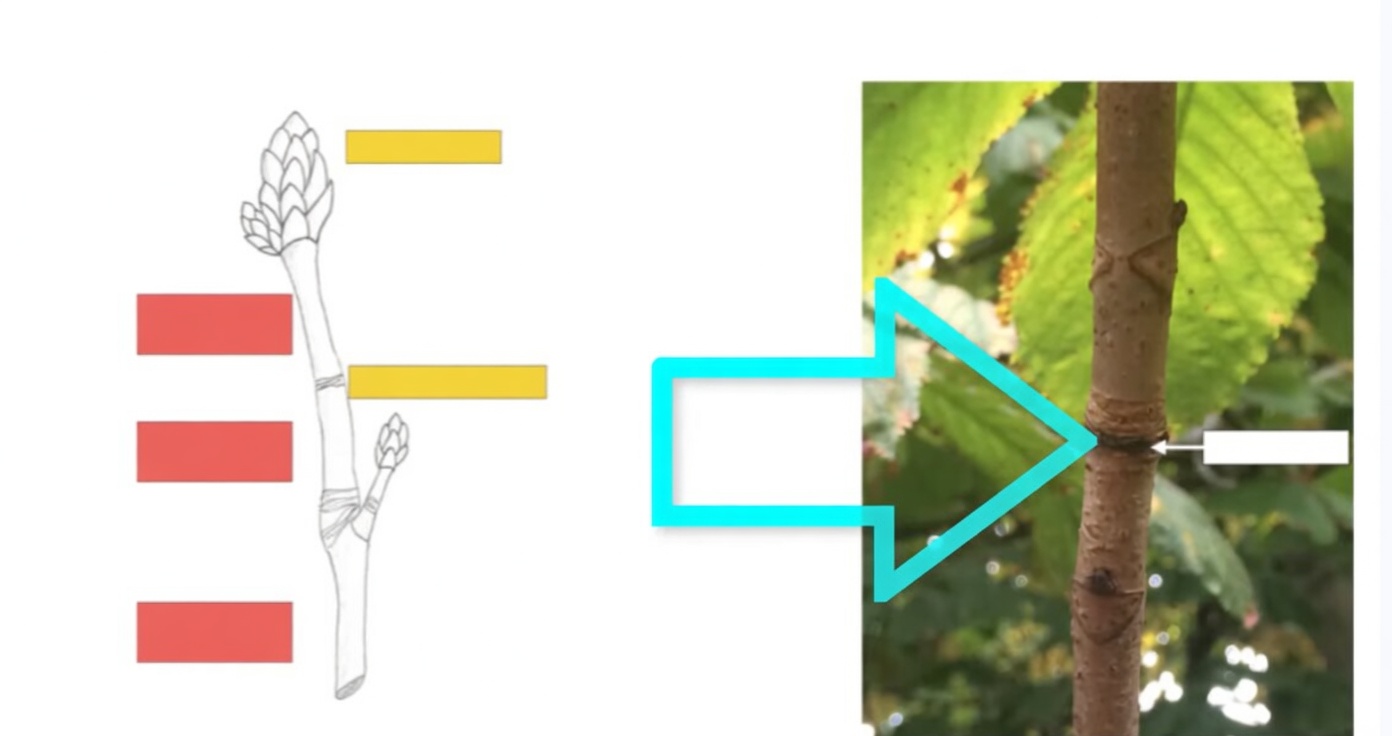
Woody Stem Key Features
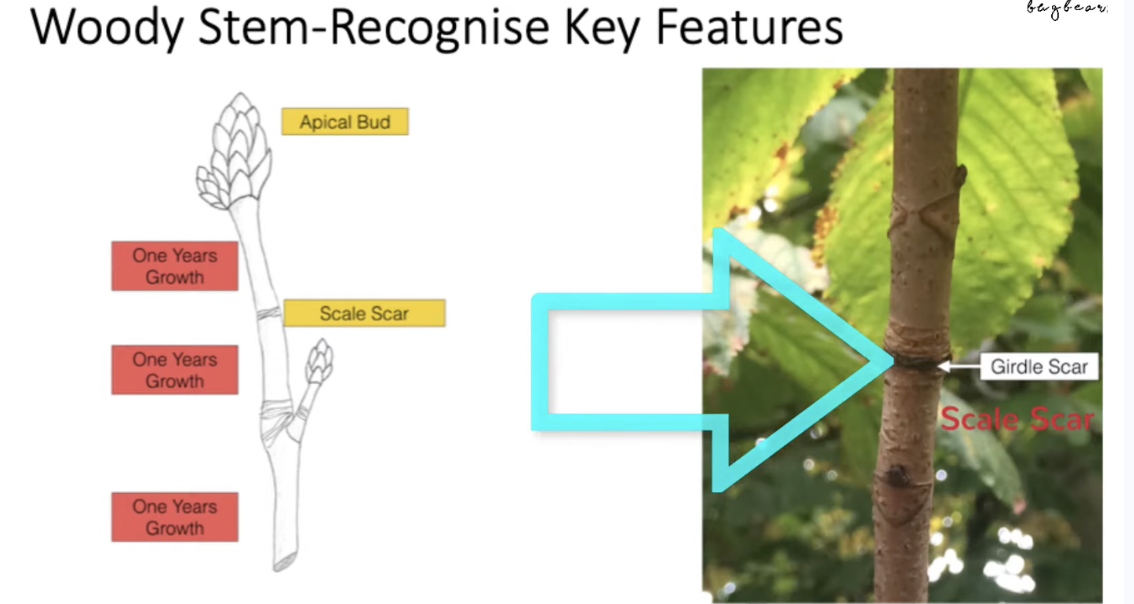
What is apical bud?
Main growing bud located at the very tip of a plant stem or branch
How do plants grow and why?
Plants grow by growing longer tips and roots, because there is apical meristems (meristematic tissue), plant tissue capable of producing new cells by mitosis.
Axillary or lateral buds?
Axillary bud is the bud that will give rise to new branches
Why do axillary buds not grow?
Meristems are also found in the axillary or lateral buds. These buds do not grow because of apical dominance where hormones produced by the apical buds inhibit side branching
Leaf scar
Leaf scar is the scar left when a leaf falls from stem
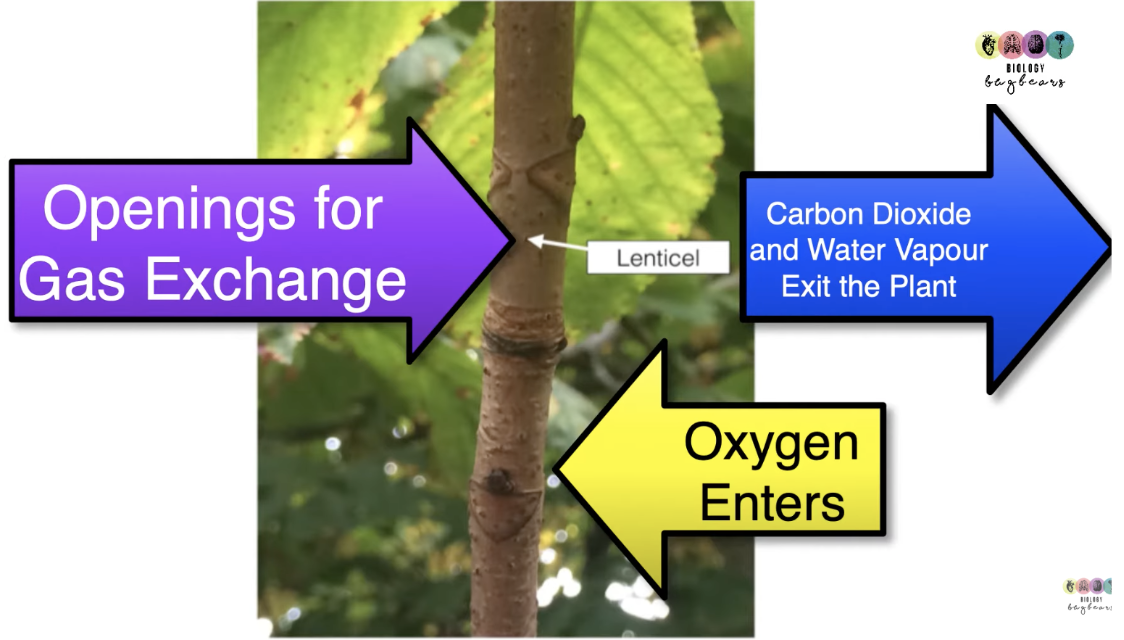
Lenticels
Lenticels are openings for gas exchange. CO2 and water vapour exit the plant and oxygen enters
The function of the stem
To support aerial parts of the plant
Transport material
Photosynthesus
Food storage
Structure of the leaf
Features of the leaf
Thin flat lamina
Petiole
Ventation
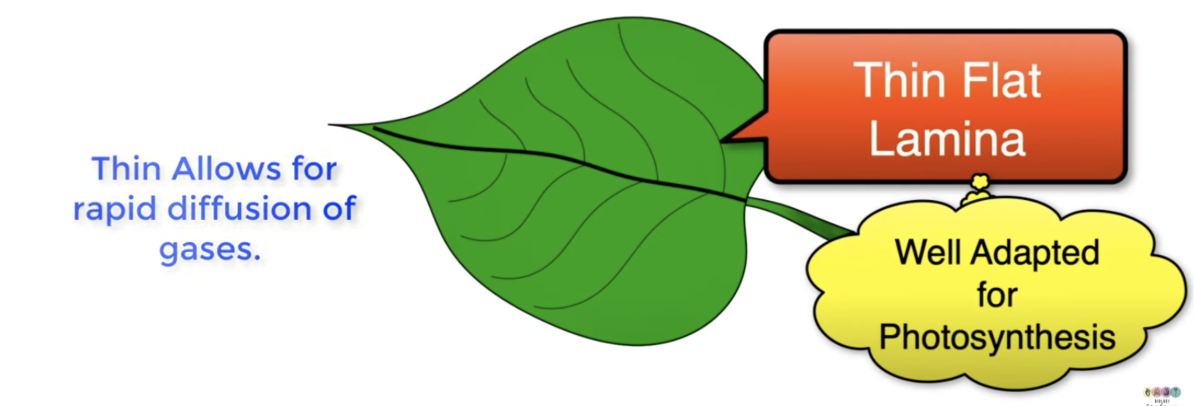
Why do leaves have a thin flat lamina?
It allows it to be well adapted for photosynthesis.
Thin allows rapid diffusion of gases.
Broad and flat surface allows them to absorb maximal sunlight
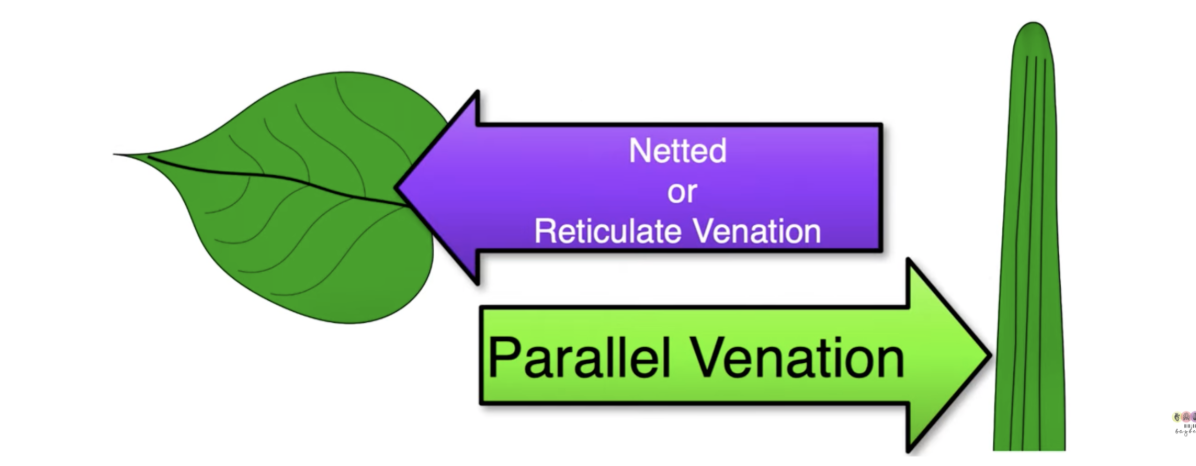
Why do leaves have a ventation?
Attached to the petiole & contains vascular tissue. Smaller veins branch off it.
It can be netted or ventriculate ventilation or it can be parallel.
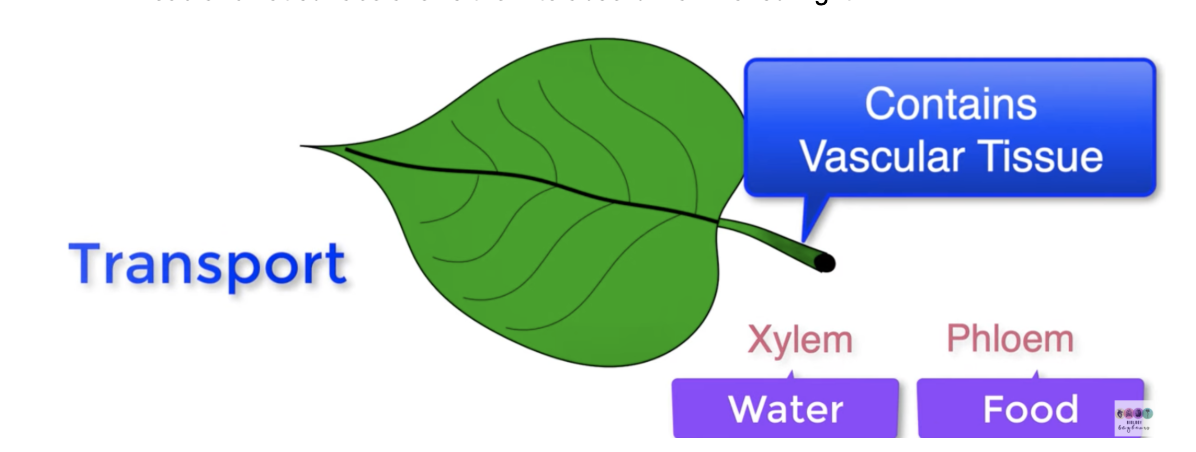
Why do leaves have a Petiole?
Petiole: This attaches the stem of the leaf to the stalk of the plant. It contains vascular tissue such as xylem and phloem; phloem transports food to other parts of the plant and xylem transports water into the leaf.
Functions of the leaf
Photosynthesis
To store food
Gas exchange
Transpiration (loss of water vapour from the underside of the plant
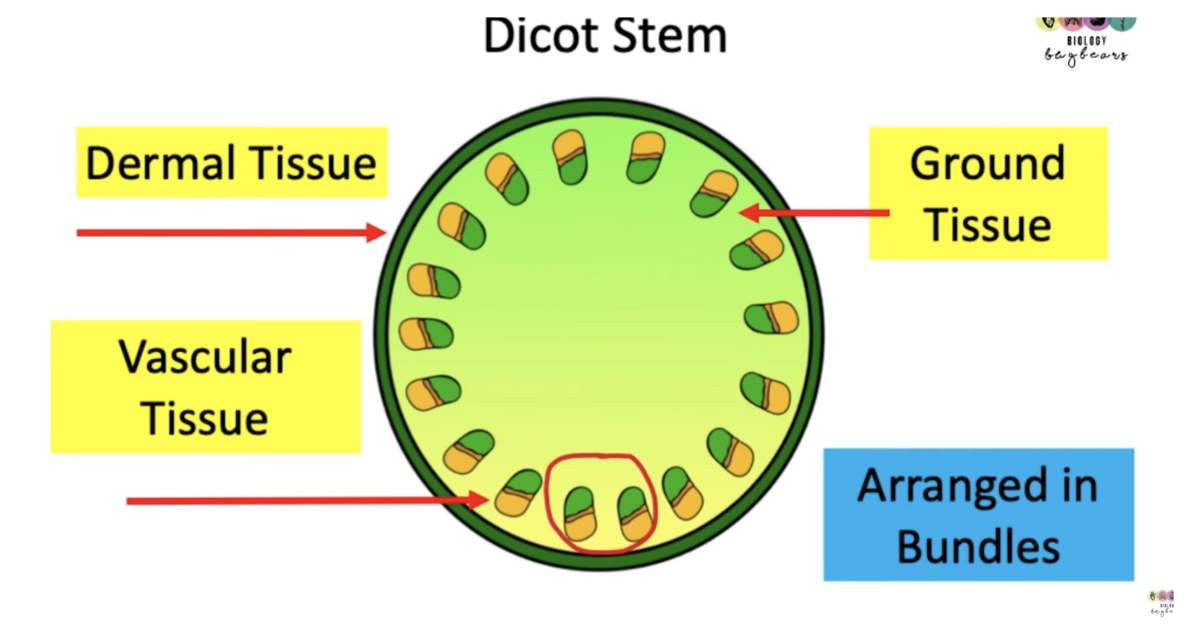
Plant Tissue:
Ground, dermal and vascular tissue
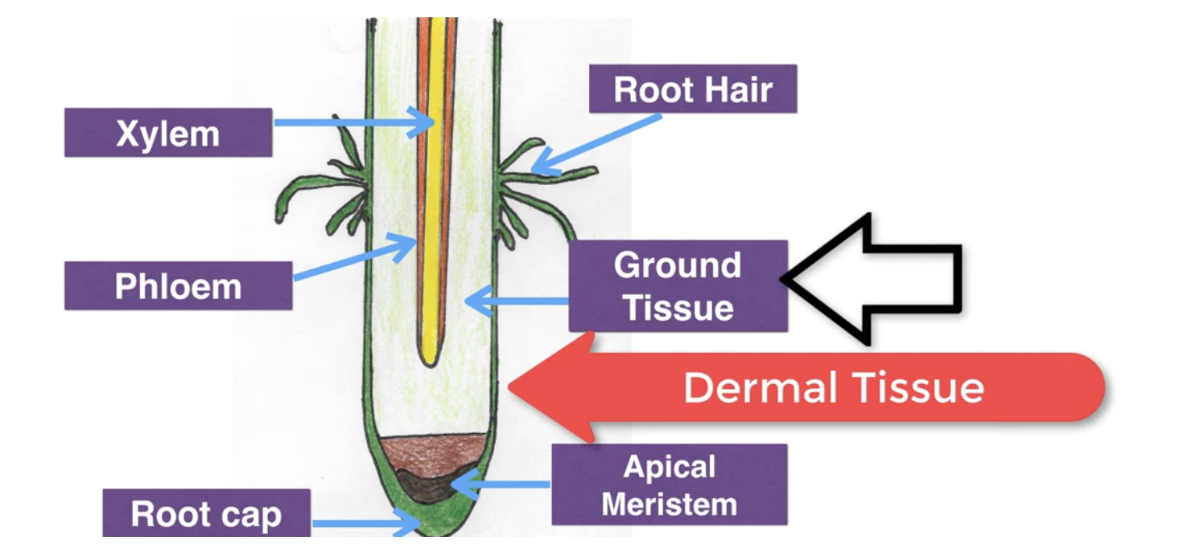
Dermal tissue: Offers protection
Ground tissue: Makes up the bulk of the plant, offers support and photosynthesis.
Vascular tissue: Contains xylem to transport water and minerals up the plant, whereas the phloem transports food downwards
What are the two classes of flowering plants
Dicots and monocots.
Dicots
Dicots have two seed leafs / cotyledoms, also for food storage,
Dicot other characteritics
Have a netted or reticulate ventilation
Flower parts arranged in 4/5 or 4/5 multiples.
Vascular bundles arranged in a fixed arrangement around the edge.
Dicot Diagram
Monocots
Monocts have one cotyledon in the seed. The seed leaf is for food storage.
Monocot other characteristcs
Tend to have parallel venation.
Flower parts are in 3 parts or multiples of 3
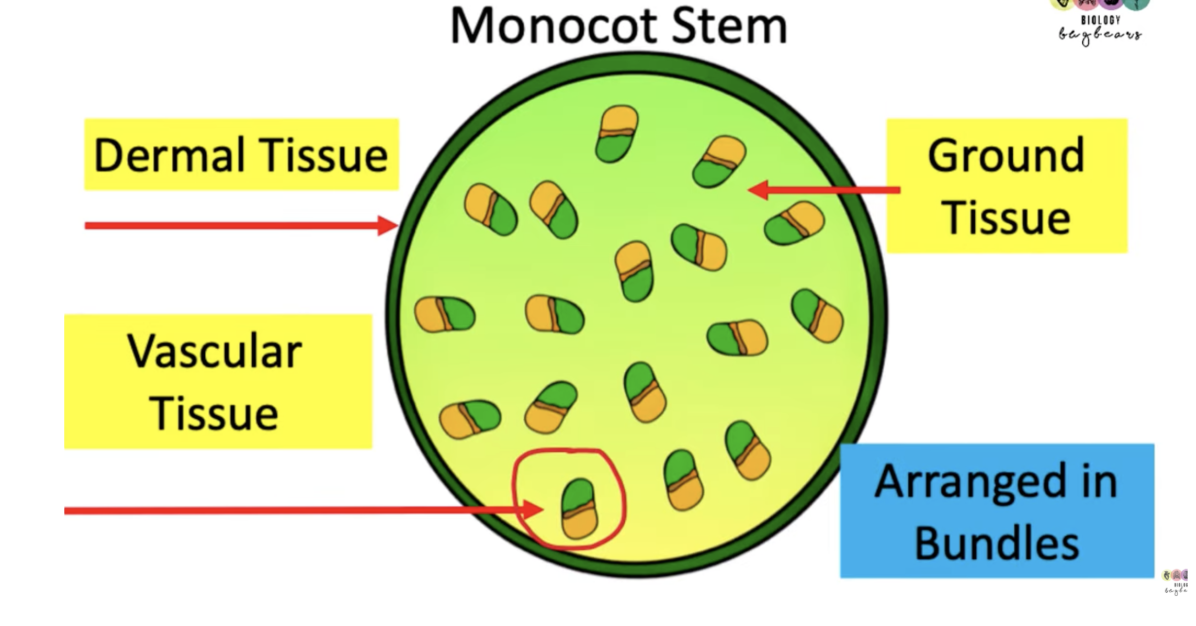
Monocot diagram
They have vascular tissue, arranged in bundles and organised in a non fixed pattern.
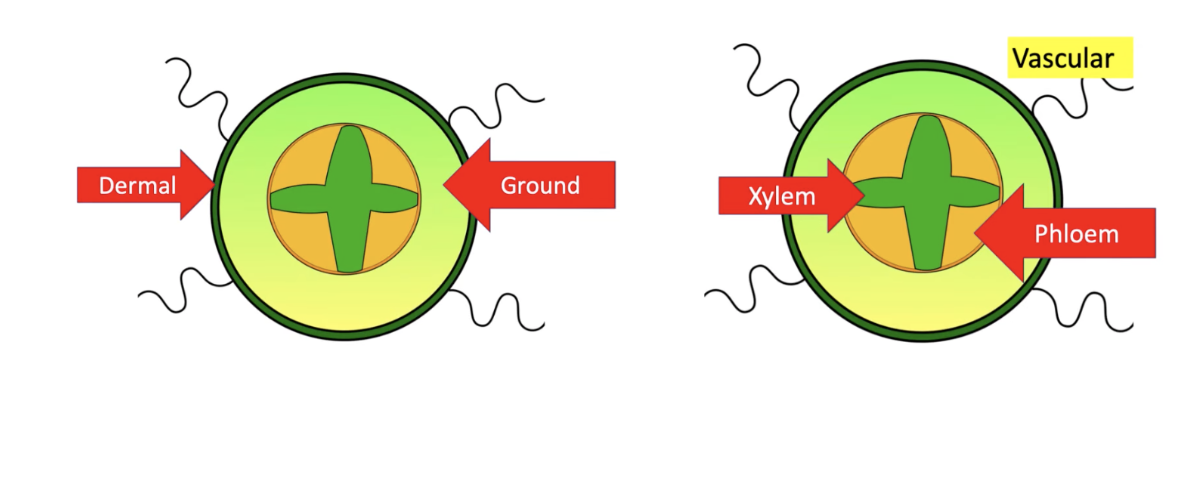
Transection of a dicot root
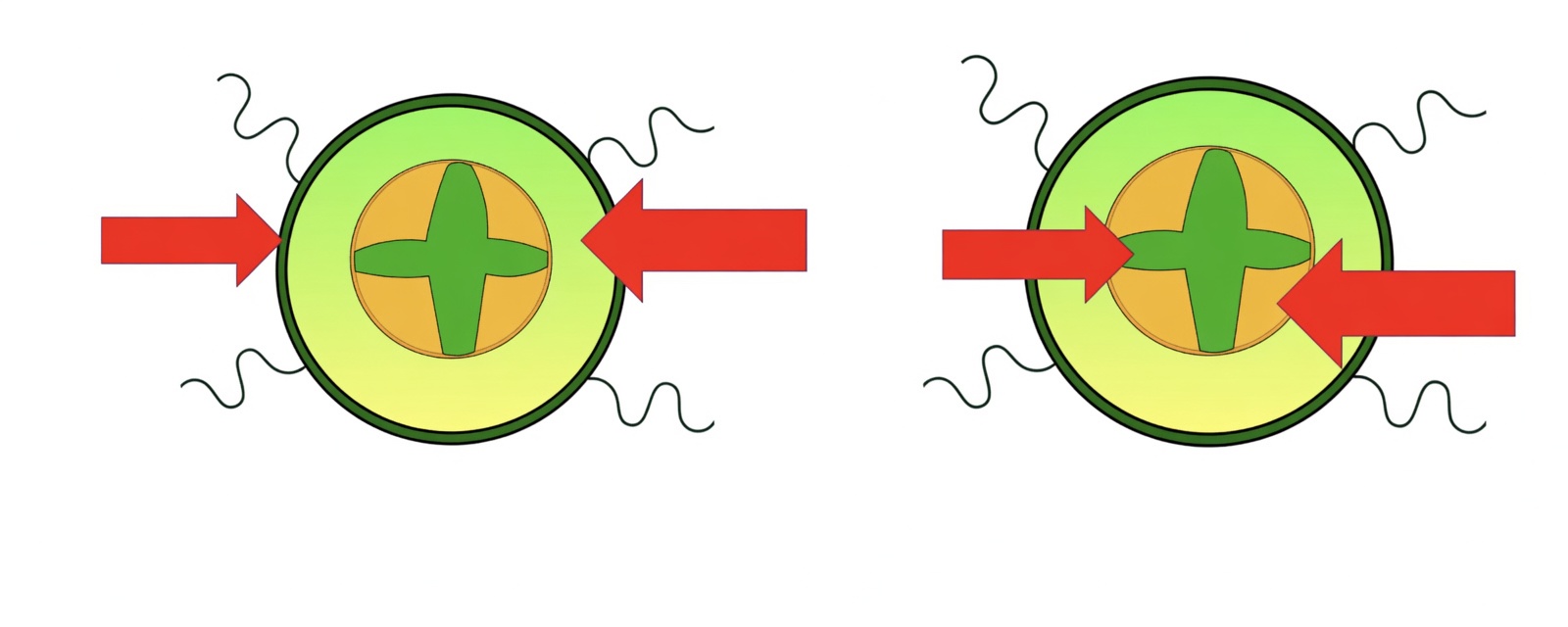
Dicot root’s vascular tissue is not arranged in bundles. It has a star like xylem with the phloem in between.
With root hairs to absorb water.
Different types of roots
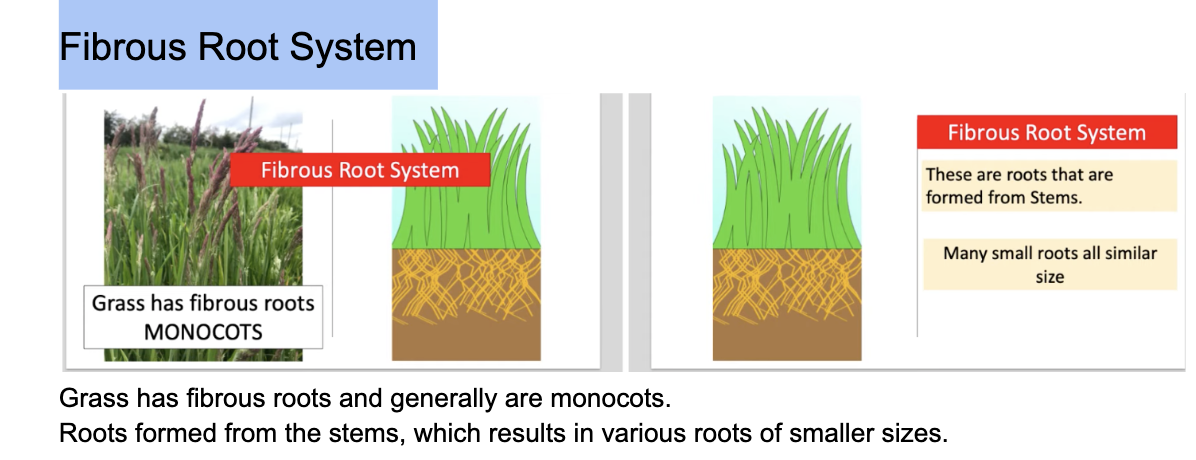
Fibrous Root System
Tap Roots
Fibrous Root Diagram
Fibrous Root System Details
Grass has fibrous roots and generally are monocots.
Roots formed from the stems, which results in various roots of smaller sizes.
Tap Root Diagram
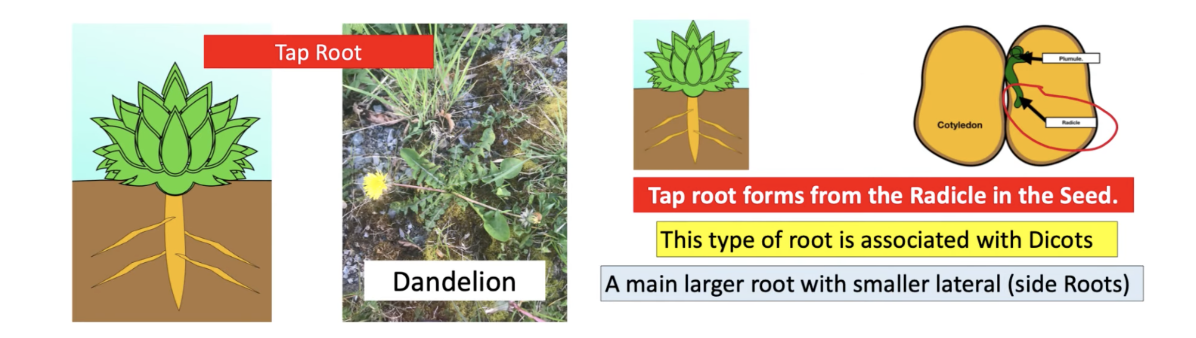
Tap Roots Details
The tap root forms from the radical in the seed.
This is associated with dicots.
It’s a main larger root with smaller lateral side roots stemming from it.
Longitudinal section of roots ZONES
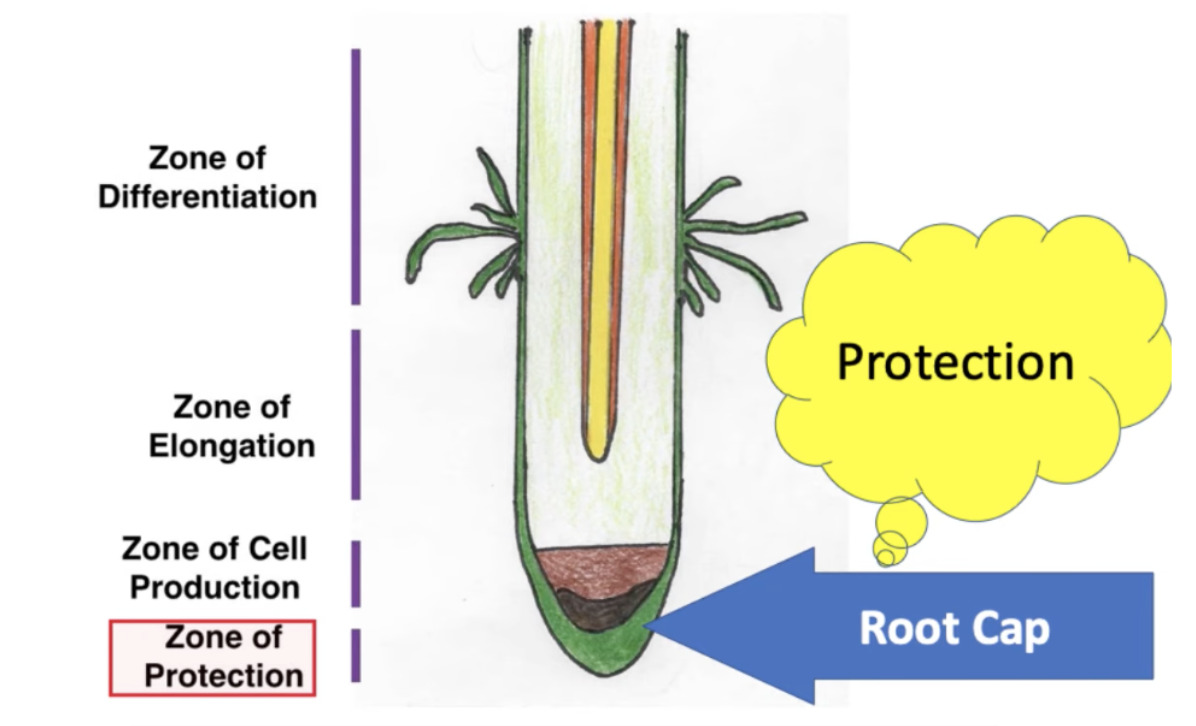
Section Of Roots Details
Zone of protection (root caps) protects root as it grows down into the soil.
Zone of cell production contains meristems that are capable of creating new cells via mitosis
Zone of elongation is where these new cells get longer
Zone of differentiation, these elongated cells turn into dermal, ground or vascular tissue
Function of roots
Anchorage
Absorb water and minerals
Transport
Storage
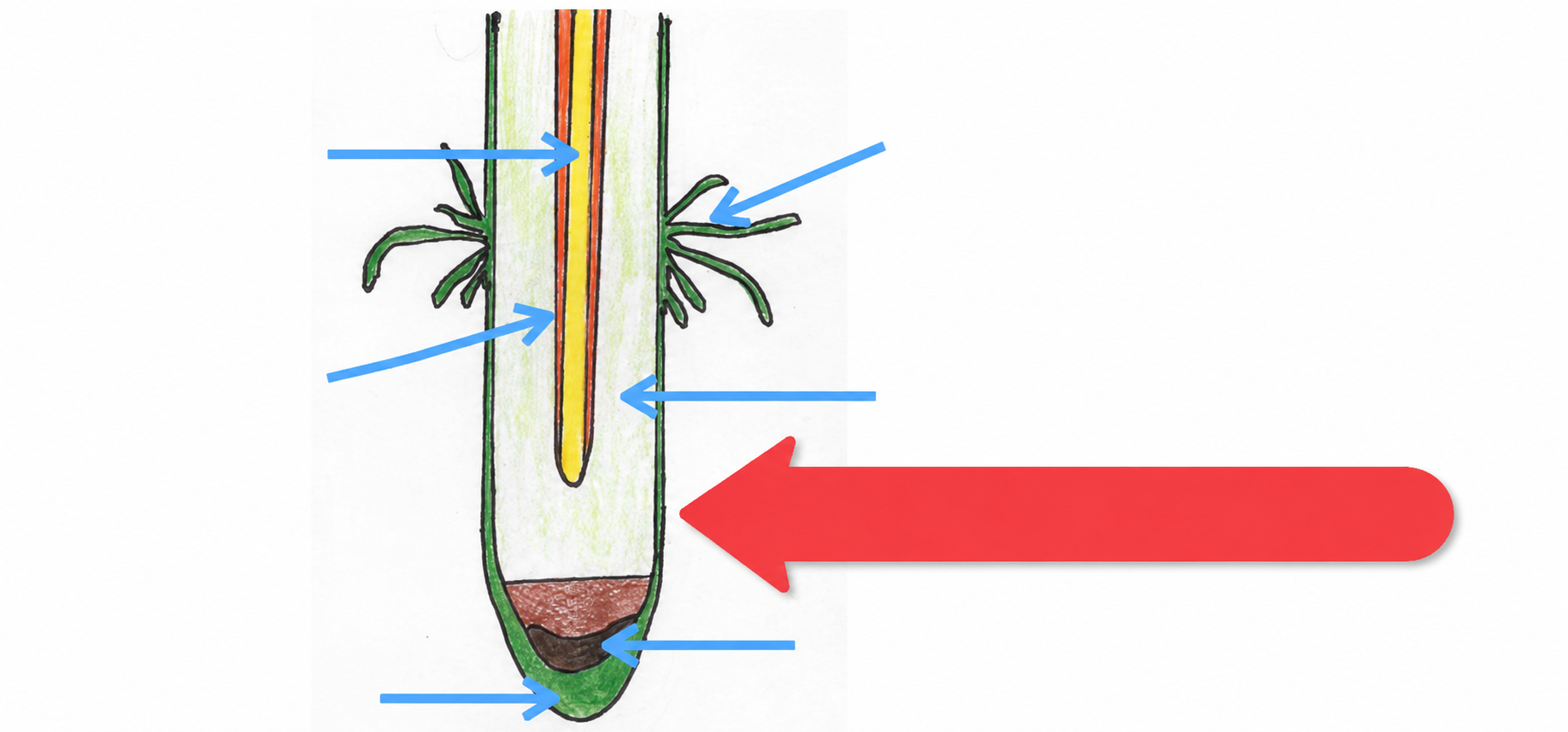
The longitudinal diagram of root TISSUE
Xylem role
Xylem transports water and dissolved minerals.
Xylem Details
Two forms:
Tracheids
Xylem Vessels
Tracheid Details
Long hollow tubes
Tapered tissue with pointy ends
It contains holes called pits
Overlaps with other tracheids
Xylem Vessles
Wider than tracheids and are tubes
Xylem vessels details
Long hollow continous tube
Vessels are wider than tracheids
Vessels are more effiicent at water transport
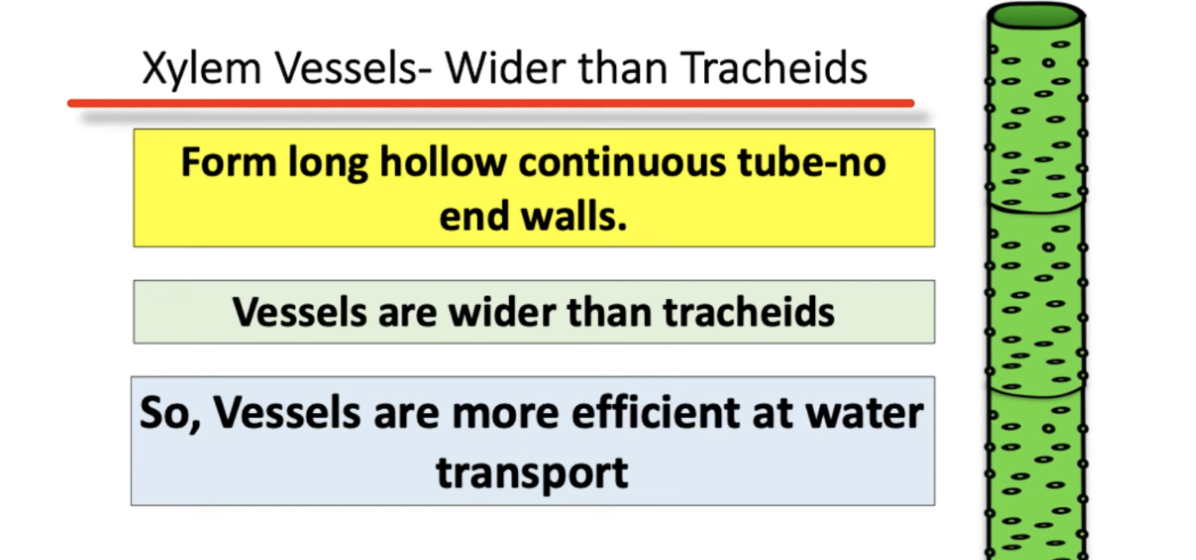
Xylem Vessel Structure Diagram
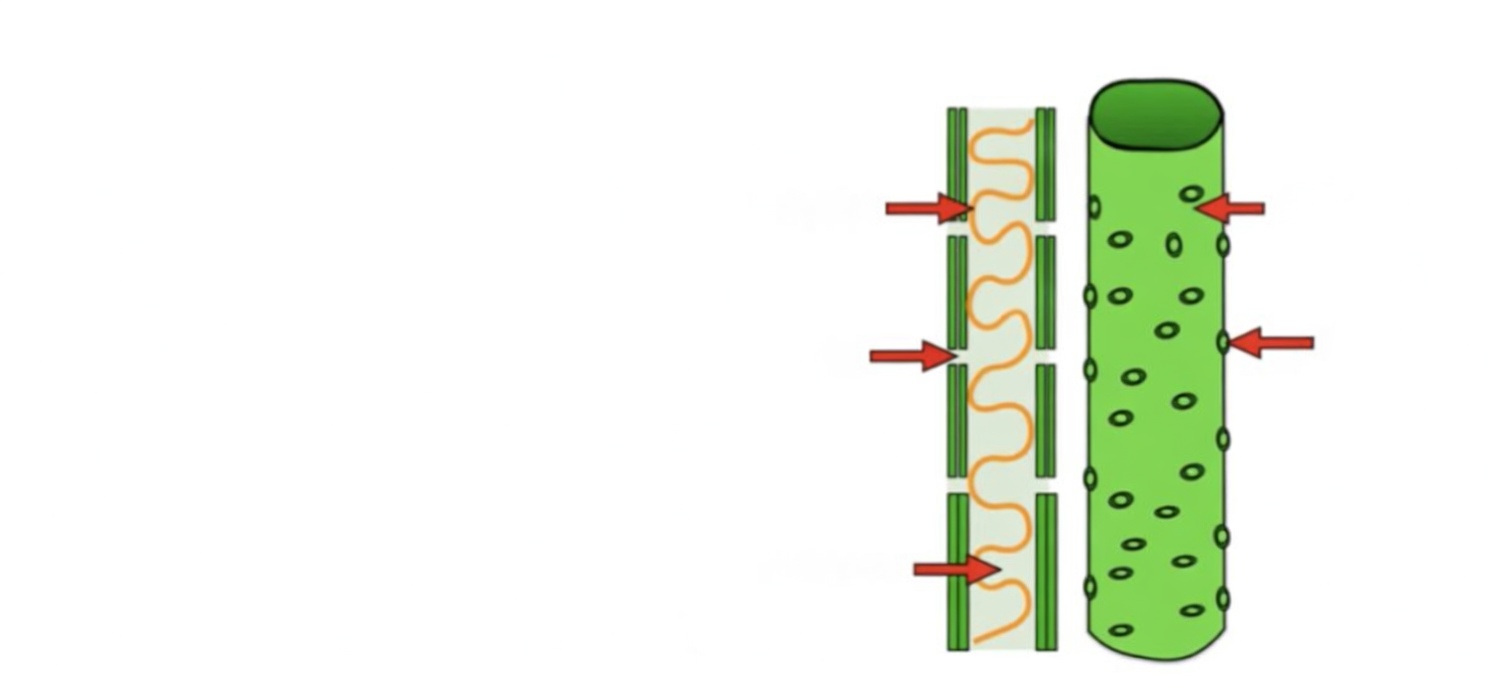
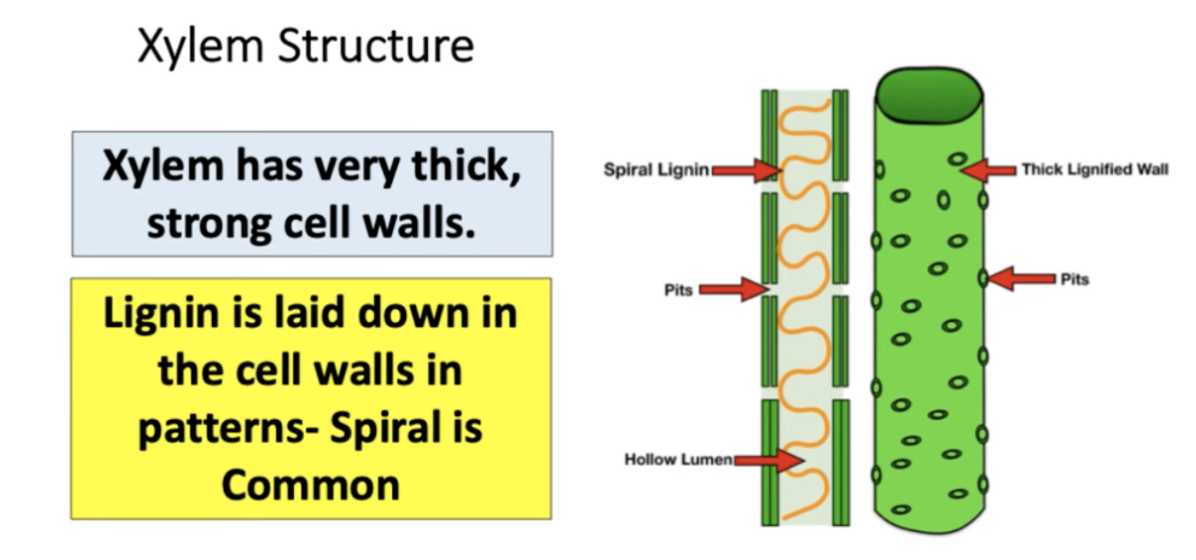
Xylem Tubes Details
Hollow Lumen:
Where water and minerals pass through
Pits:
Where water can flow through and pass sideways
Cell walls:
Thick with spiral of lignin. It’s presence prevents inwards collapse of xylem.
Xylem Details
Classed as dead cells (cells living contents are dead at maturity)
The vessels are hollow tubes which are made up of vessel members - these stack to form the xylem vessel
Lignin is the key to the strength of the xylem
Phloem details
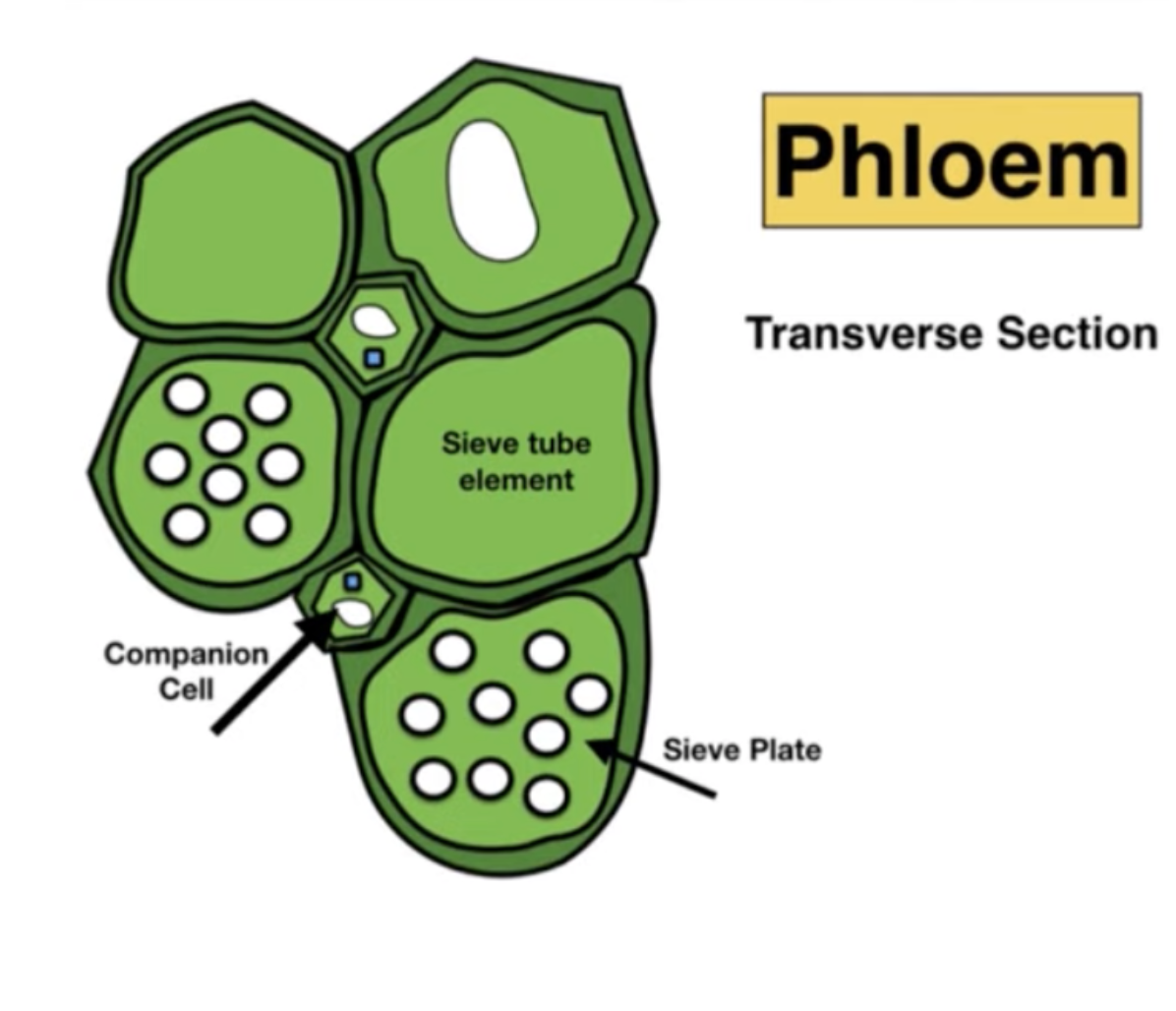
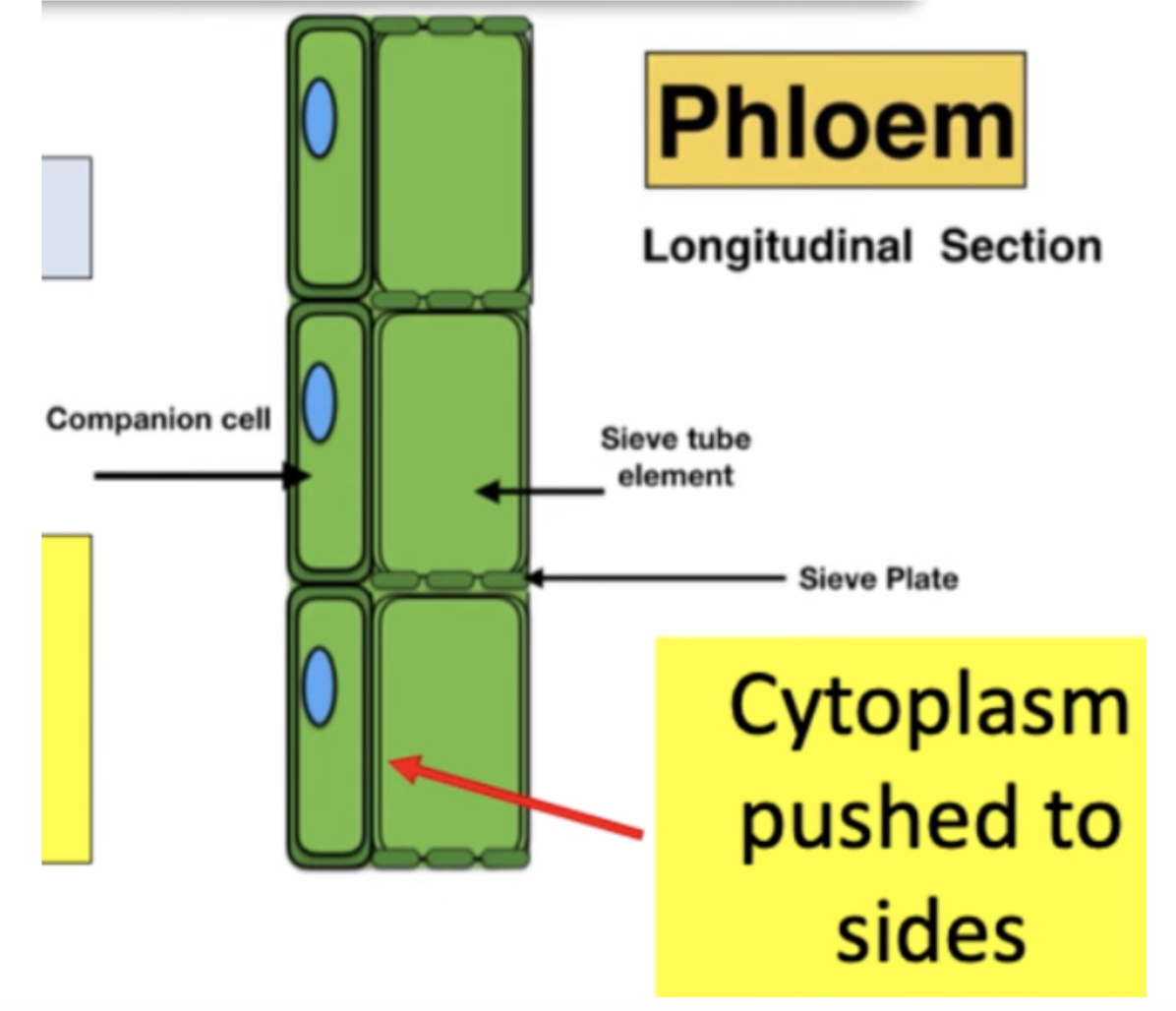
Made of sieve tubes elements stacked to form sieve tubes.
Each sieve tube element has a companion cell joined
Sieve tube elements have plates are at the bottom, with many holes
Cytoplasm pushed to the sides of every sieve tube element
Due to the presence of companion cells, it’s considered living tissue.
Phloem longitudinal diagram
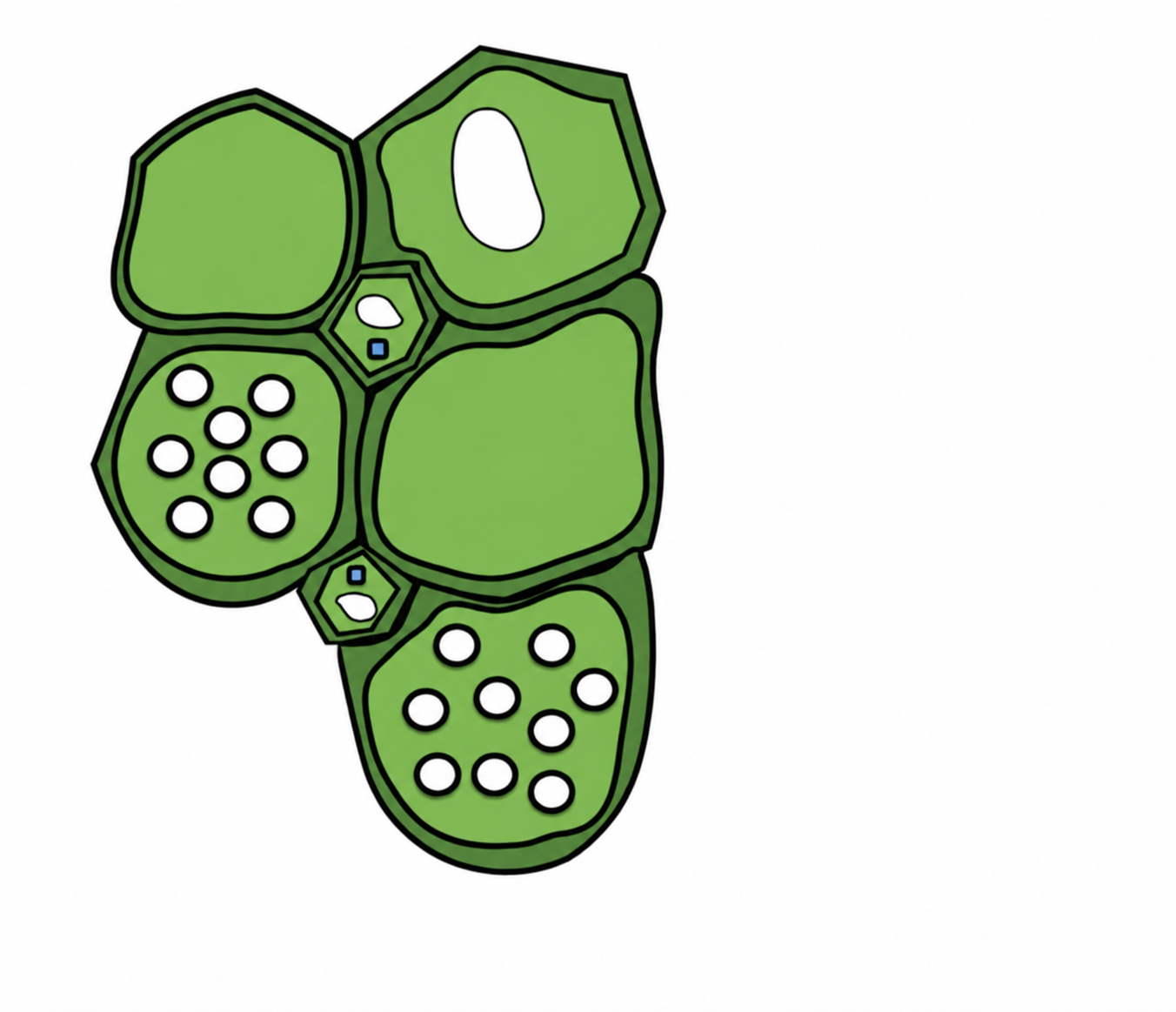
Phloem transverse diagram