Natural Law
 Call Kai
 Learn
Learn Practice Test
 Spaced Repetition
 Match
Match Flashcards
 Knowt Play
1/54

There's no tags or description
Looks like no tags are added yet.
Name | Mastery | Learn | Test | Matching | Spaced | Call with Kai | Chat |
|---|
No analytics yet
Send a link to your students to track their progress
55 Terms
what is telos
a greek word meaning purpose or end
what is eudaimonia
living well/human flourishing
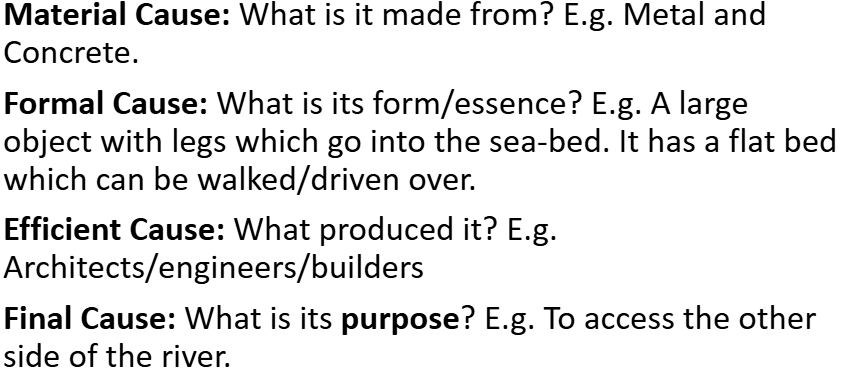
what are aristotles 4 causes
what does aristotle say is humans telos
eudaimonia
how do we achieve eudaimonia

what did the stoics believe

aristotle believed the ‘inner principle o…’
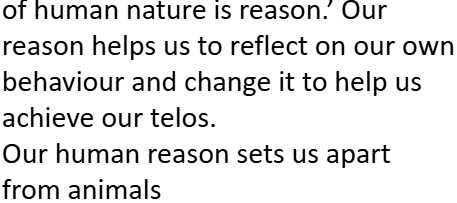
for aristotle a decision is good if
it helps us to achieve our telos/purpose
what is our telos according to aquinas
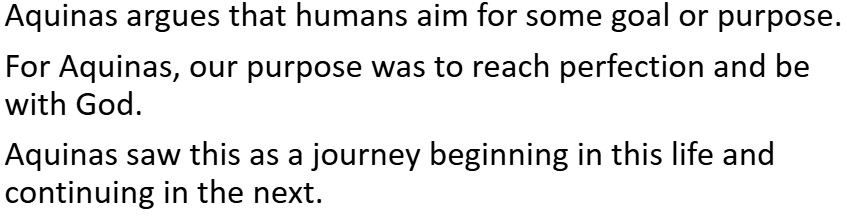
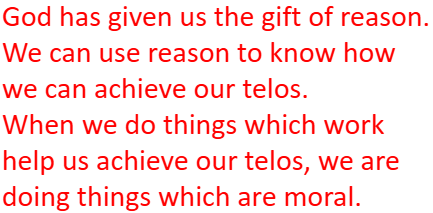
how do we achieve our telos according to aquinas
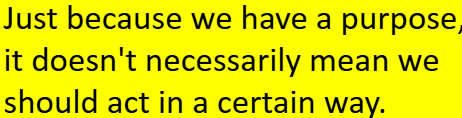
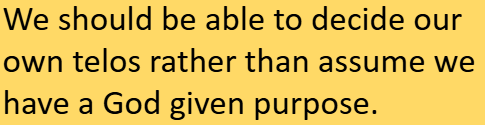
argument against ‘since we have a purpose we should behave in a certain way’
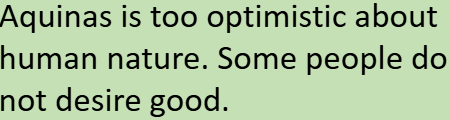
argument against ‘our purpose involves an innate desire to do good and avoid evil’
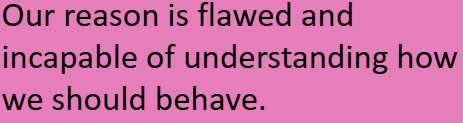
argument against ‘reason is required to know how to achieve our telos’
argument against ‘our purpose is to reach perfection and be with god’
what does absolutism mean
the idea that right and wrong is fixed at all time for all people
what does deontological mean
the rightness or wrongness of the action itself
aquinas quote about needing natural law
‘man needs to be directed to his supernatural end in a higher way'
supporting an absolutist approach to ethics means there are certain things that are always right and wrong so there must be something or someone from which morality come from.
what’s this for aquinas
the eternal law of the creator who is the efficient and final cause
the eternal law is the mind of god
what are the 4 tiers of law
eternal law, divine law, natural law, human law
what is eternal

what is divine law

what is natural law

what is human law

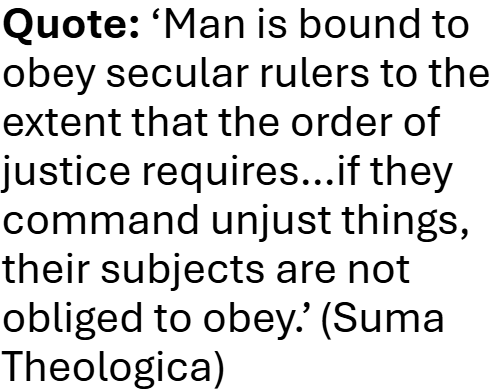
aquinas quote about whether its okay to break the human law
natural law is a….. and d……
absolutist and deontological
what is the synderesis principle
natural inclination directing people towards good and away from evil
how does the synderesis principle help us to meet our telos
if we work towards our telos we are doing what is morally good
god has placed within us a natural inclination to do good and avoid evil
if we do this we will achieve our telos
what is a primary precept
things are reason tells us to do so we act morally as god has given us reason to work out what his will for us is
they are 5 ways to flourish
are the primary precepts rules

what are the 5 primary precepts
P reservation of life
O rdered society
W orship god
E ducation
R eproduction
the primary precepts are a… and u….
absolute and universal
what is a secondary precept
more specific rules that can be deduced from the primary precepts
examples of secondary precepts for each primary precept
P - abortion is wrong
O - do not commit adultery
W - pray
E - free education
R - do not use contraception
quote that states the primary precepts are fixed
‘the natural law is altogether unchangeable in its first principles’
quote that states the secondary precepts are more flexible
‘its secondary principles…… may be changed in some particular cases’
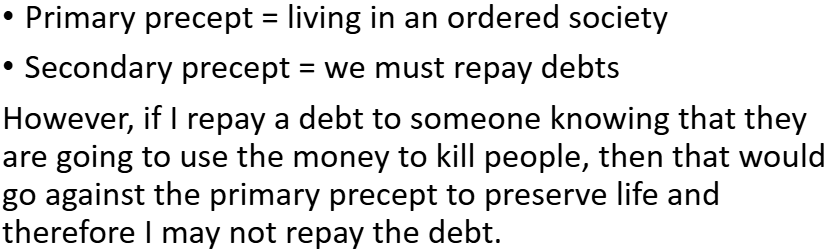
example of the secondary precepts being flexible
what is a real good
when our reason has correctly worked out what is good
what is an apparent good
when a person has applied their reason in the wrong way and not correctly worked out what is good
do humans knowingly seek do to evil
no evil acts are committed because the person falsely believes them to be good (silly hitler you just didnt apply your reason correctly)
what are some of the issues with the precepts
too rigid/absolute, secondary precepts can be misinterpreted, conflicting precepts, does not consider consequences
what is an interior good
interior acts are about our motivation or our intentions/reason for acting a certain way
what is an exterior act
exterior acts are the act which are visible - the thing that someone does
what is the best way to act
to do the right thing (exterior act) and for the right reasons (interior act)
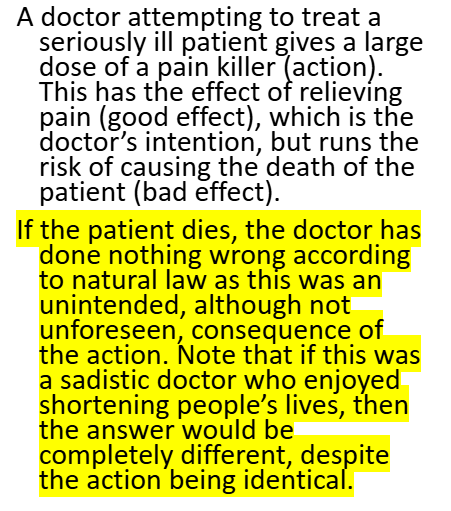
give an example to explain what is meant by an act having two ends

what is the doctorine of double effect
according to the principle of double effect, sometimes it is permissible to cause a harm as an unintended and merely foreseen side effect (or “double effect”) of bringing about a good result even though it would not be permissible to cause such a harm as a means to bringing about the same good end.
doctrine of double effect diagram

who provided the conditions for the doctrine of double effect
Joseph Mangan
what are the conditions for the doctrine of double effect
the nature of the act condition
the right intention condition
the mean-end condition
the proportionality condition
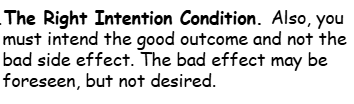
what is the right intention condition (DofDE)
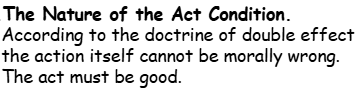
what is the nature of the act condition (DofDE)
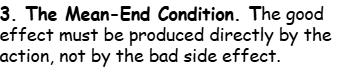
what is the mean-end condition (DofDE)
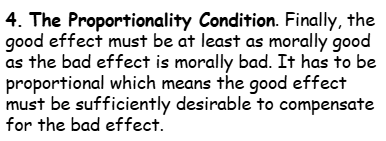
what is the proportionality condition (DofDE)
doctrine of double effect applied to the trolley problem

doctrine of double effect applied to abortion

doctrine of double effect applied to euthanasia