Platyhelminthes (Intro)
 Call Kai
 Learn
Learn Practice Test
 Spaced Repetition
 Match
Match Flashcards
 Knowt Play
1/61

Earn XP
Description and Tags
flat worms ---Class: Trematoda, Cestoda, Turbellaria
Name | Mastery | Learn | Test | Matching | Spaced | Call with Kai | Chat |
|---|
No analytics yet
Send a link to your students to track their progress
62 Terms
Class Turbellaria
aka Planarians; non-parasitic helminths, reside in fresh water
Class Trematoda
aka Flukes; Parasitic, monozoic (unsegmented body)
Class Cestoda
aka Tapeworms; parasitic, usually polyzoic (segmented body)
Schistosoma
long and narrow-bodied flukes
stomach flukes
thickly fleshed flukes
Fasciola
leaf-like flukes
tegument
most helminths that do not have an alimentary tract rely on ___ to absorb nutrients
Schistocomatidae
only family in Class Trematoda that are not hermaphrodites
Monogenea and Digenea
Two subclasses of Trematodes based on their life cycles
Subclass Monogenea
Subclass of Trematoda that needs only one host for reproduction, has a direct life cycle (no intermediate host), primarily external parasites of fish and other amphibious animals.
Subclass Digenea
subclass of Trematoda that needs more than one host for reproduction, found exclusively in vertebrates and are of considerable vet importance, eggs are shed usually in feces/urine of final host
molluscan (usually snail) IH
Where do the larval stages of Subclass Digenea develop
attachment
function of two muscular suckers on adult flukes
acetabulum
ventral sucker of adult flukes
anterior end
location of adult flukes’ oral suckers
cross and self
types of fertilization that may occur to Trematodes
seminal vesicle and cirrus
structures found inside the cirrus sac
vitelline glands
where does the yolk acquired by the ovum to form shells come from (female flukes)
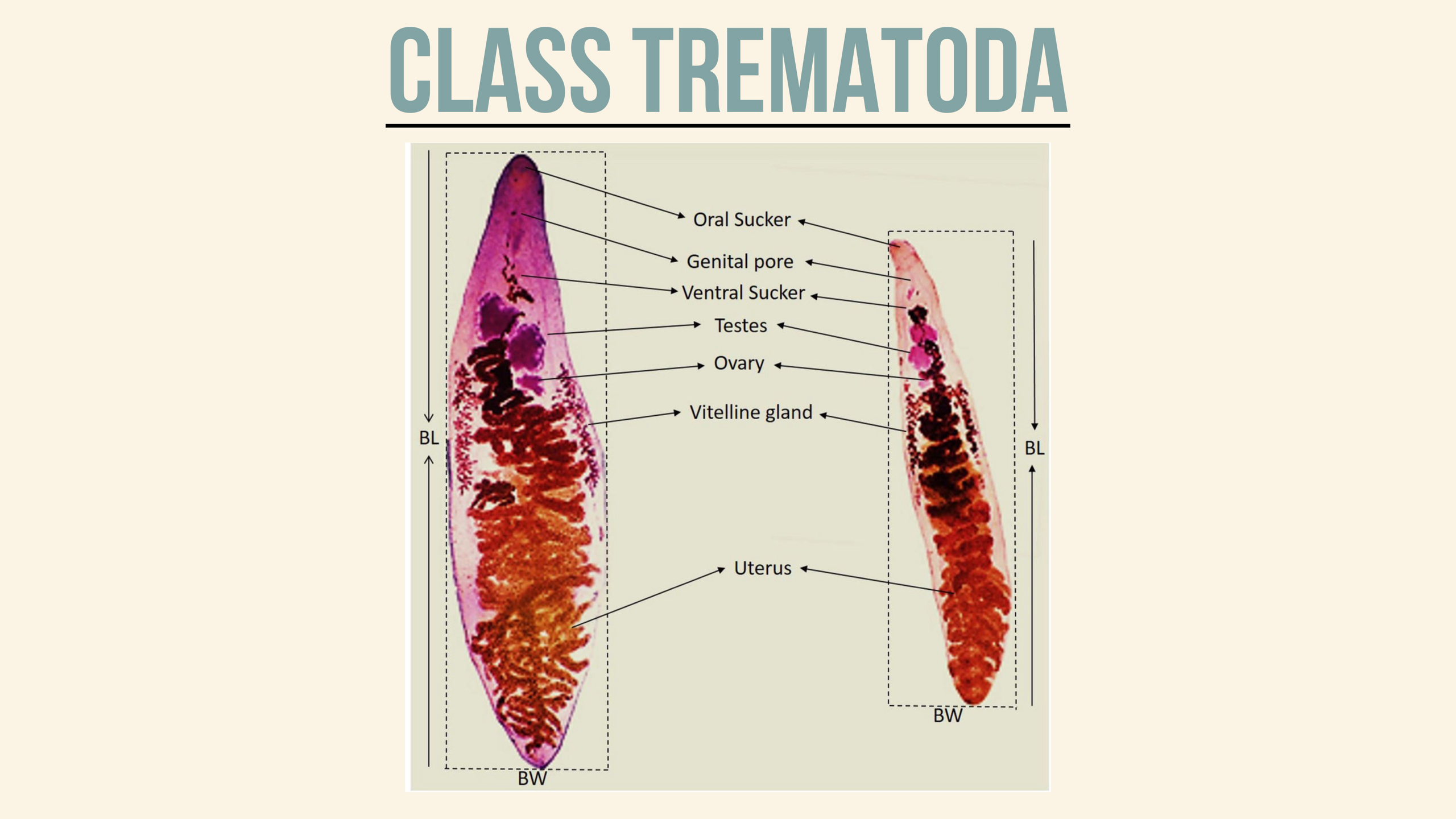
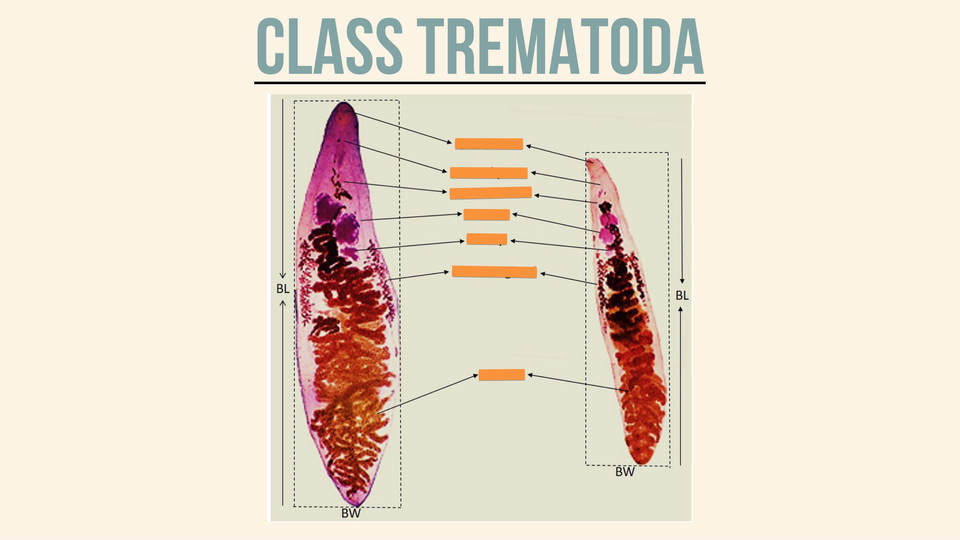
ID the parts
mollusc
in most spp of Trematoda, the first intermediate host is a ____ in which further development of hatched larvae takes place
nematodes
one egg : one adult
flukes
one egg : hundreds of adults
parthenogenesis
flukes can perform ____ inside the mollusc host
miracidium
a pyriform (pear-shaped) larva develops inside the egg
light and temperature
stimuli that trigger the miracidium to release an enzyme that attacks the proteinaceous cement that holds the operculum in place
operculum
hinged lid that springs open where the miracidium emerges within a few minutes
~ 30 mins
how long does the entire process of penetration of miracidium into the soft tissues of a suitable snail host take?
metacercaria
infective stage of flukes for grazing animals
mastication (mechanical)
once metacercaria is ingested by grazing animals, how is the outer cyst wall removed
intestine
rupture of the inner cyst of metacercaria occurs in which organ?
marita
emergent juvenile fluke is often called what?
Egg → Miracidium → Sporocyst → Redia → Cercaria → Metacercaria → Marita → Adult
stages of the complete life cycle of flukes
Gymnocephalous
cercariae with long simple tail
Leptocercous
other name for gymnocephalous
Furcocercous
cercariae with a forked tail
Fasciola spp
flukes spp — Gymnocephalous
Schistosoma spp
Flukes spp with forked tail
Lephorcercous
cercariae with a dorsal, long, undulating fin fold
Opistorchis spp
spp of flukes that are Lephocercous
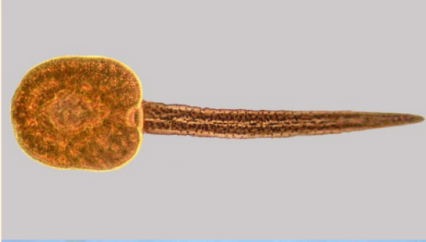
Gymnocephalous/Leptocercous
ID the cercariae
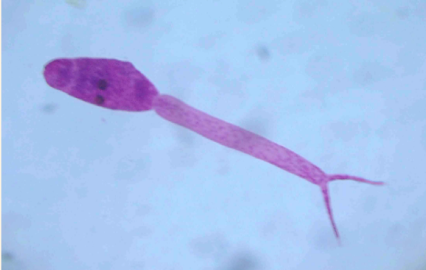
Furcocercous
ID the cercariae
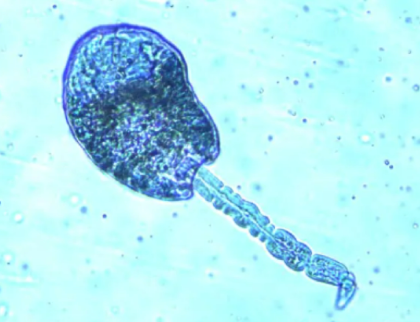
Lephocercous
ID the cercariae
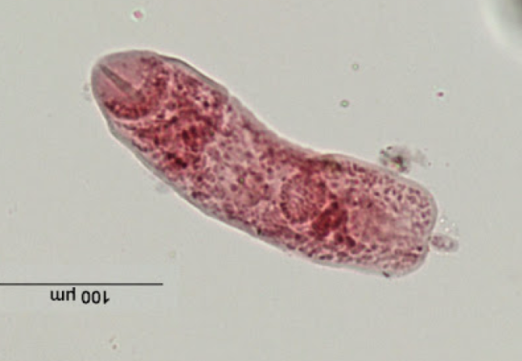
Microcercous
ID the cercariae
Cercariaeum
Cercariae with no tail
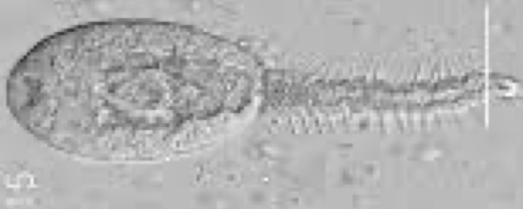
Trichocercous
ID the cercariae
Trichocercous
cercariae with spiny tail
Microcercous
Cercariae with small stumpy tail
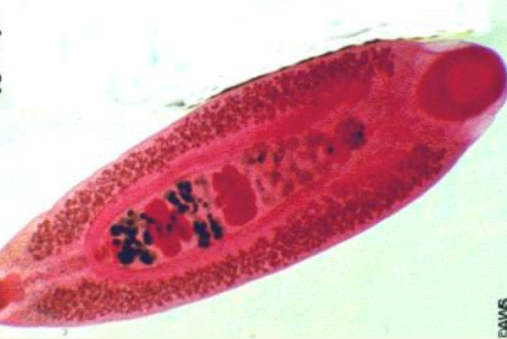
Monostome
Classification of fluke with an oral sucker but no ventral sucker
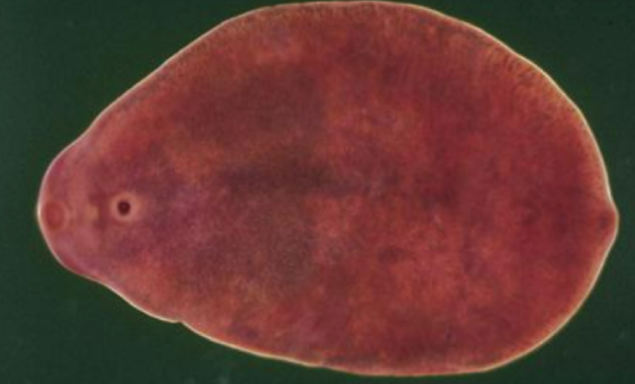
amphistome
fluke with an oral sucker and an acetabulum at the posterior end
Cyclocoelum spp
example of monostome fluke
Zygocotyle spp
example of amphistome
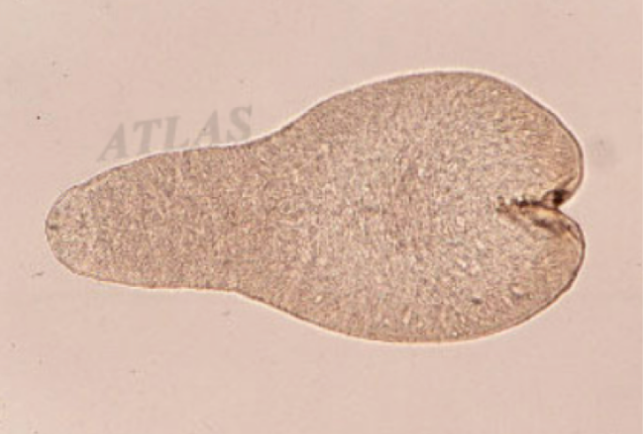
Distome
has an oral sucker and acetabulum found at the anterior end
Alloglossidium spp
example of distome fluke
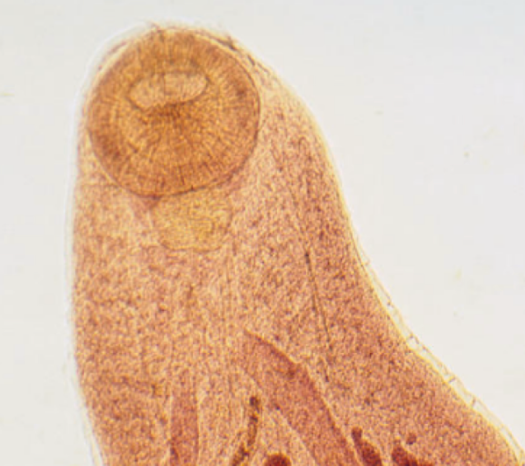
Cyclocoelum spp
Monostome spp
Zygocotyle spp
Amphistome spp
Alloglossidium spp
Distome spp
Cyathocotyle spp
holostome spp
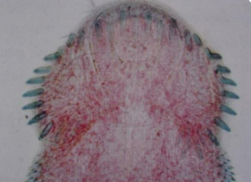
Echinostoma spp
Echinostosome spp
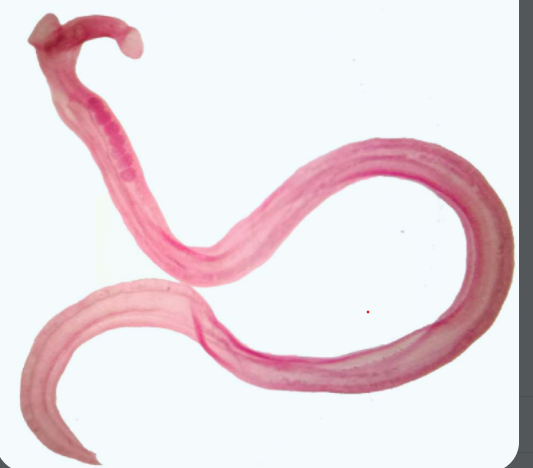
Schistosoma spp
Schistosome spp
Holostome
a type of distome that has the body split into distinct anterior and posterior portions
Echinostome
has spines surrounding the oral sucker; head collars are present
Schistosome
has a strong oral sucker and an acetabulum near the anterior end