Methods in micro cult and phys
 Call Kai
 Learn
Learn Practice Test
 Spaced Repetition
 Match
Match Flashcards
 Knowt Play
1/99

There's no tags or description
Looks like no tags are added yet.
Name | Mastery | Learn | Test | Matching | Spaced | Call with Kai | Chat |
|---|
No analytics yet
Send a link to your students to track their progress
100 Terms
What are the 3 domains of life
1)Archaea-extremophiles
2)Bacteria
3)Eukarya -prokaryotes
Ways to differentiate bacteria on phenotypic characteristics?
1) Morphology
2) Culturing conditions
3)Physiology
4)Pathogenic characteristics
Shape is indicative of what?
Function
Gram postive cell structure vrs Gram neg
Gram positive: thin peptidoglycan (polymer that gives cell wall strength cross linking via AA),
Gram neg: thick layer of peptidoglycan, outer and inner membranes
what does mycoplasma mean?
-no cell wall
In gram staining process what will happen w Gram neg and Gram pos
-Gram neg will not be stained and be pink
-Gram positive will be stained purple
Gram staining procedure?
1) add methanol to fix cells to surface
2)add crystal violet
3) add iodine which binds stain to gram positive cells
4) wash w ethanol-removes purple from gram neg
5)add safranin counterstain to show gram neg which will be pink and Gram positive will be purple
What happens to gram pos and gram neg in KOH procedure
-Gram positive cells rigid, add kOH cell stays intact DNA stays inside
-Gram negative, KOH punches holes DNA comes out bc weak peptidoglycan
Unnexpected results in GRam staining?
1) wrong procedure
2)old gram positive bacteria could be stained pink previosly
3) atypical cell wall
Mycobacteria cell wall structure simular to what?
-Gram positive but it has an outer layer of waxy mycolic acid that prevents dye penetration
What gene is in all living things?
-16 rRNA each thing has a unique one
How many mutations every million years?
1
How many variable regions are in 16rRNA gene?
9: variable regions have been used to classify and identify bacteria: we analyze the seq of dna that encodes it not the RNA molecule
Advantages of bacteria identification using 16S rRNA gene sequence?
1) do not need to grow or culture bacteria only need presence of bacterial DNA
2) less time
Disadvantages of bacterial identification using 16S rRNA gene seq?
dependent on matching to a known sequence 95% same is considered same genus
lacks resolution
cannot reveal metabolic capabilities of the bacteria= does not reveal functional diversity
high risk of contamination
Meaning of species for plants and animals?
-can interbreed to make fertile offspring
does NOT apply to bacteria bc its asexual
What is the most continoulsy living domain?
-cyannobacteria
Antibiotic resistanance partially due to
not taking full course of antibiotics
Factors to consider when trying to grow soil microorganisms:
1)oxygen conc
2)pH
3)Temp
4)Pressure'
5)Osmolarity
6)types of nutrients
Bacterial growth caused by what?
Growth in size, needs expansion of cell wall
Septal zonal growth vrs Polar growth in bacteria
Septal; symmetrical cell growth both sides grow equally
Polar: Asymetrical growth
Binary fission is what?
also known as vegetative growth
Growth in numbers during exponential growth 2^n 1 becomes 2 becomes 4 becomes 8 ect
replication of chromosome and seperation of cells cells start splitting b4 chromosome duplicates
DNA replication continues bidirectionally
1) Dna origin replicates and migrates
2) Dna replication continues bidirectionally
3)DNA starts next round
4)Septum forms in middle
5) division of two cells
Bacterial growth curve?

log means its doubling : log makes it straight
stationary phase it is not increasing or decreasing bc not enough nutrients
steeper the curve faster the growth
What is wrong w this curve?
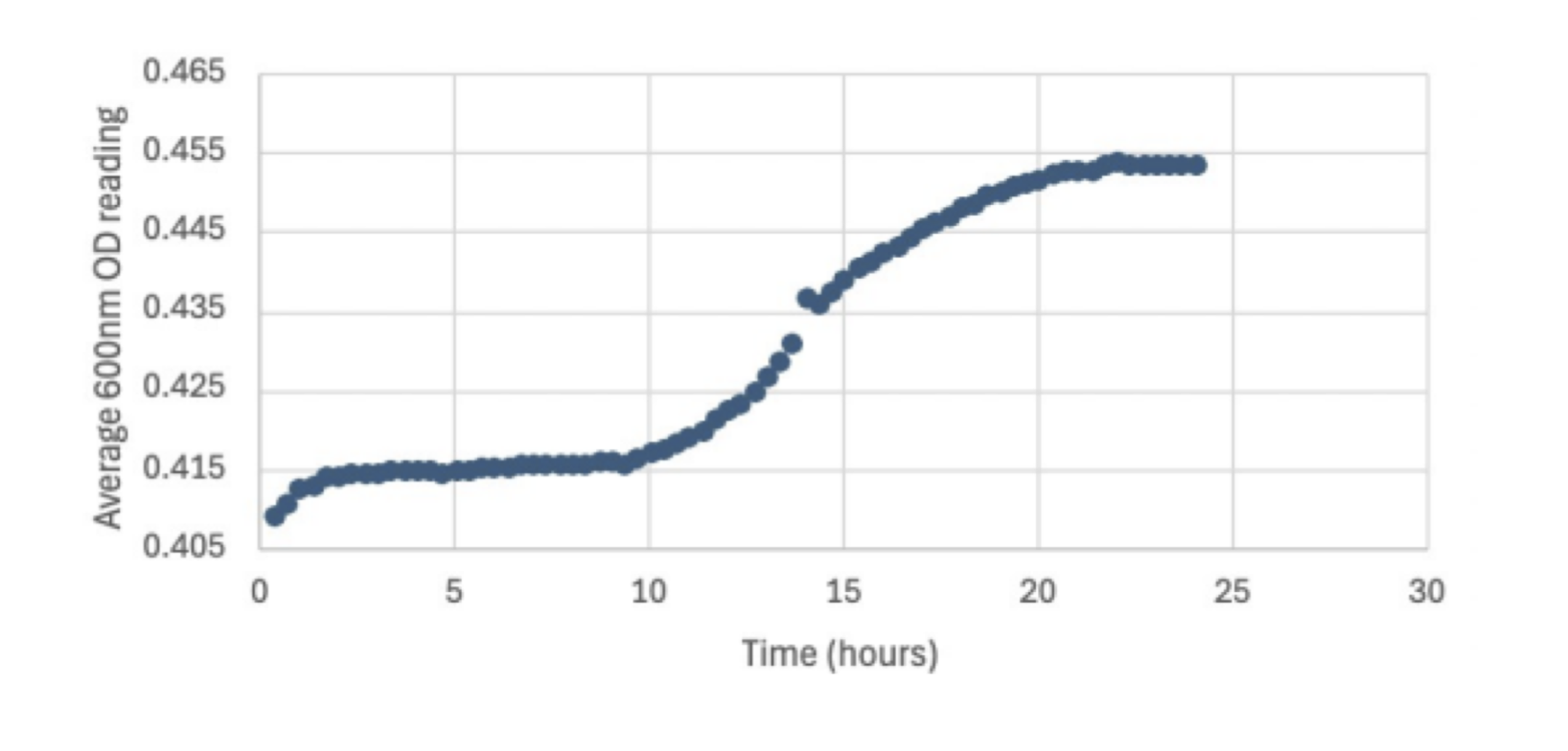
not doubling
growing slow
Interpret this?

the light gray is actually steeper and therefor faster
What is a chemostat and what does it do?
Chemostat tech ensures logarithmic growth by constantly adding and removing equal amounts of culture media by feeding food and excreting the waste
make the culture continuous keeps the bacteria at log
the log OD vs time for a chemostat will have no death phase
Why would bacteria form spores?
spores can survive non favorable enviorments its a way to keep living
What phase of growth does spore formation occur at?
-stationary
What are the three Types of spores?
1) Endospores: can withstand harsh conditions, produced by bacillius, 1 bacterium produces 1 endospore that gernminates to form 1 bacterium( not reproductive)
2)Asexual reproductive spores (arthrospores): Acintomycetes family less tolerant then endospores but can still survive harsh conditions, 1 bacterium produce many spores (reproductive) function is reproduce and disperse
3)Myxospores: produced by myxobacteria during nutrient limitation
Endospore cycle?
1) septum forms near one pole (asymetrical) Dna replicates and extends into axial filament
2) septum seperates forespore from mother cell, DNA is pumped through septum until each compartment gets a chromosome
3) Mother cell engulfs forespore surrounding it w second membrane
4)Chromosomes of mother cell disintegrate
5)Forespore develops a cortex layer of peptidoglycan between og forespore membrane and the membrane from the mother cell coat proteins are diposited on outer membrane
6)Dipicolinic acid is synthesised and calcium is incorportaed into the spore coat
7)mother cell releases spore
in sporulation inhibitors are inhibited
What is Clostridium botulinum?
gram positive anarobic bacteria that forms endospores
vegitative cells produce botulinum toxin that makes botox
can contaminate food and survive boiling conditions
How to prevent botulism from home canned foods:
Acidifying low acid foods .acid less than 4.6 prevents endospore germination
Pressure canner
Asexual reprosuctive spores (arthospores) vrs Endospores
Asexual spores mother cell produces many babies light and good for spreading
Endo mother produces one baby and then dies
64% of natural antibiotic classes produced by?
Actinomycetes
How do arthospores produce antibiotics?
during stationary phase of growth
What is the basis of Streptomyces Antibiotic Activity Medium (SAM) and Bennet Agar?
Arthrospores
moderate amount of carbon and nitrogen induce nutrient limiting conditions driving the culture ton a stationary phase and therefore inducing antibiotic production.
limiting nutrients lead to what?
lead to spore formation
Do spores produce antibiotics?
no its the vegatative cells that produce antibiotics during the stationary phase
When are Myxospores produced?
When nutreints are limited
How do myxospores function?
Travel in packs and spirolate when out of food meaning that they put the spores on the inside and let bacteria be on the outside to sacrifice it as food in a spiral
one cell makes one spore not reproductive
Who is the predator of the microbial world?
Myxobacteria
also produce antibiotics to kill prey
What is the mordant in gram staining?
Iodine
Which bacteria does reproductive sporulation?
What are the two types of microbial nutritional requirements?
1) Macronutrients (g/L, mg/L)
2) Micronutrients (ug/L)
What are examples of Macronutrients?
SCHNOP
Sulfer-in some AA
carbon, hydrogen, oxygen: major biological molecules, carbohydrates,proteins,lipids,nucleic acids
nitrogen: proteins and nucleic acids
phosphorus: nucleic acids and phospholipids
Sources of carbon?
1) Organic carbon sources (heterotrophs)
2) Carbon dioxide CO2(autotrophs): include photosynthetic bacteria eg cyanobacteria chemolithotrophic bacteria
In a lab what can be done to CO2?
can be bubbled into media
provided in form of carbonate or bicarbonate salts: CaCO3, NaHCO3 which are converted to CO2 by the enzyme carbonic anhydrase produced by autotrophs
Sources of nitrogen?
1) Ammonium (NH4) or organic nitrogen compounds eg proteins
2) Diazotrophs: few types of bacteria that produce an enzyme called nitrogenase that converts nitrogen gas to ammonium
N2 + 3H2→ 2NH3
Do you need a nitrogen source in media to grow diazotrophs?
no
Examples of Macronutrients?
Inorganic
Metal ions: Potassium, Calcium, Magnesium,Sodium,Iron
CPISM
What are macronutrients used for?
Required in some enzymes (cofactors)
Electron carriers
membrane stability
Examples of Micronutrients?
in ug/L
Metal ions: copper, Maganese,Molybdenum,Zinc,Copper,Nickel,Chromium,Selenium,Tungsten
Do all bacteria need micronutrients?
no-only some enzymes need them to function
Examples of supplementary nutrients?
Vitamins, AA, nucleotides
may be needed for some microrganisms
What is Bioremediation?
using living organisms usually microorganisms to clean up waste
ex Exxon valdez spill 11 million gallons of oil in Alaska bacteria can digest some oil
crude oil mix of hydrocarbons water insoluble(hydrophobic) lack other macronutrients
microorganisms can use hydrocarbons from crude oil as a carbon source for growth
What is Bioaugmentation?
use of fertillizers containing Nitrogen and phosphorous nutrients to ENHANCE growth of microorganisms by providing nutrients that are limited in their enviroment
can be used to enchance bioremediation of enviormental pollutants by bacteria
Why do different bacteria have different nutrient requirements?
Because of differences in:
(1) metabolic capabilities — the enzymes and pathways they have
(2) their ability to transport a given nutrient into the cell.
What allows cyanobacteria (photosynthetic bacteria) to be autotrophs?
They possess the necessary proteins/enzymes to assimilate carbon in the form of carbon dioxide gas (CO₂).
How do heterotrophic bacteria acquire carbon, and why?
They acquire carbon from organic sources, such as sugars, because they lack the proteins/enzymes needed to fix CO₂ the way autotrophs do.
Why can some bacteria not use lactose as a carbon source?
Because they lack the enzymes needed to transform lactose into central metabolites (usable metabolic intermediates), even if lactose is present.
Besides having the right enzymes, what else does a bacterium need in order to use a nutrient?
The ability to transport that nutrient across the cell membrane and into the cell
What are the three ways culture media can be classified?
(1) physical state: liquid vrs semi-solid
(2) chemical/nutritional content: defined vrs complex, enriched vrs oligotrophic
(3) function (what they're used for) general vrs selective vs differntial vrs enrichment media
What are the two main categories of liquid culture?
(1) Batch culture (tube, flask, etc. with a finite volume of media)
(2) continuous culture.
What is semi-solid media typically composed of, and how is it usually presented?
Media containing agar or another solidifying agent, usually poured into petri plates.
streak plate, pour plate, spread plate
most bacteria cant use agar (from seaweed) as carbon source
What kind of bacterias can grow in solid vrs liquid?
liquid will have arrobic on top and ararobic on bottom has layers
solid will only be arobic
What is agar?
A polysaccharide (made of galactose analogs) derived from the cell wall of red algae.
Why is agar useful as a solidifying agent for bacterial culture media?
Most bacteria cannot break down this polysaccharide, so they can't use it as a carbon source — it stays structurally stable while bacteria grow on/in it.
Has thermo-reversble properties It can switch between liquid >85C (random coils) and solid <45C states( helices bundle and bunches form a mesh w water to make gel) depending on temperature, and this process can be repeated (melted and re-solidified).
Increased conc amounts of Agar make the media what?
more solid
decreased amounts make it more liquid
What is Gellan gum? (Gelrite)
another gelling agent
polysaccaride produced by bacterium Sphingomonas elodea
can be used to culture thermophiles
Agar and Gellan gum are used in what industry?
food as thickening agents
vegan
To obtain high densities of bacterial cells what media would u use?
liquid bc all parts can support growth anerobic and arobic
To seperate diff species of bacteria in a mixed culture what media would u use?
solid dont want them to move freely
What is chemically defined media?
precise composition is known
you can calculate conc of each element ex C,N.P
What is complex media?
has macro and micronutrients but exact composition of each element is variable
batch to batch variation is possible
ex nutrient broth: beef extract, peptone
Common ingredients of complex media?
Ingredients commonly found in complex media:
Peptone – digests of animal tissues.
Tryptone – enzymatic digest of casein (milk protein).
Yeast extract – cell contents of yeasts.
Beef extract – dried extract of beef (bovine skeletal muscle).
Soytone –enzymatic digest of soy.
Is complex or defined media more time consuming and has more components?
defined
Which medium will allow you to modify eg change the carbon or nitrogen source
without changing the other components ?
defined
In complex media can you swap the individual chemical components (C, N
etc) found in beef extract, peptone, soytone etc?
no
What is enriched media?
type of complex medium for cultivating fastidious (extra complex) heterotrophs
- Usually contains blood or serum
What are fastidious heterotrops?
Fastidious heterotrophs are prokaryotes with complex growth factor requirements
require additional nutrients not found in normal complex media.
Examples of enriched media agar?
blood agar:(sheep blood) grows Streptococcus Pyogenes
Chocolate agar (boiled blood): Neisseria gonorrhea
What kind of agar is blood agar?
complex
fastidious
Heat with agitation to dissolve agar. Autoclave 15 min at 121°C. Cool to 50°C.
Add 5 ml defibrinated sheep red blood cells to 100 ml melted agar.
Does presence of tryptone and phytone/soytone provide enough nutrients for fastidious bacteria?
no
How do you make chocolate agar?
1.Sterillize by autoclaving
2. Add 5-7% v/v of defibrinated blood (horse or
sheep blood). Then place the media in a water
bath of 75 -80°C. Keep swirling gently until the
color changes to dark brown.
hemoglobin solution will be added
Is blood agar only suitable for growth of S. pyogenes ?
For example, do you think Escherichia coli can grow on blood agar ?
yes extra nutrients
Examples of enriched media?
brain heart infusion media
What are oligotrophs?
Bacteria that prefer to grow in media containing lower levels of nutrients, and that normally live in nutrient-poor environments (e.g., sea water).
What growth characteristic is typical of oligotrophic bacteria?
They are very slow growing.
What example illustrates oligotrophic bacterial growth preferences?
Some bacteria grow on 1/10 diluted tryptic soy broth (0.1 TSA) but not on full-strength (normal) tryptic soy broth.
Because oligotrophic bacteria are adapted to low-nutrient environments — high nutrient concentrations (like full-strength media) can actually be inhibitory or unsuitable for their growth, rather than beneficial.
What is general purpose media?
useful for different heterotrophs
may contain extracts and digests of animals, plant or yeast organic matter
What is selective media?
Selects for growth of organisms with a particular trait
normally contains compunds that inhibit growth of certain organisms therefore selecting for bacteria that can tolerate the inhibitory compound or condition
What is differential media?
Allows for visualization of physiological traits usually contains some kind of dye or pH indicator
due to visible differences in color
What kind of media is macconkey agar?
Selective and differential
Complex
selectes for enteric bacteria
Crystal violet - kills gram positive bacteria
Bile salts - allow only bacteria that grows in the intestine
to survivepH indicator - bacteria that ferments lactose form red colonies
Lactose – main carbon source
Peptone – provide other macro and micronutrients
Agar - to solidify media
Why is MacConkey agar selective?
MacConkey agar is selective because it contains bile salts and crystal violet, which inhibit the growth of Gram-positive bacteria (like S. aureus) while allowing Gram-negative bacteria (like E. coli) to grow
How is MacConkey Agar diifferential?
MacConkey agar is differential because it contains lactose and a pH indicator — lactose-fermenting bacteria (like E. coli) produce acid that turns their colonies pink, while non-lactose fermenters (like S. typhi) can't ferment it and stay white, letting you visually distinguish between the two even though both can grow.
What is enrichment media?
Use to increase the concentration of one microbe over others, therefore
enriching a sample for the microorganism of interest.Generally a liquid media.
Include specific nutrients/compounds to promote growth of particular bacteria.Unlike selective media, it rarely contains inhibitory compounds to prevent
growth of certain organisms.
What is the key difference between enrichment media and enriched media?
Enrichment media increases the relative abundance of a target organism from a mixed sample (usually liquid, no inhibitors)Encourage growth of some microorganisms SUPPRESS growth of others. We are increasing the concentration of particular microbes in this medium – hence enrichment
of particular microbes growth of one kills other bc too goodenriched media supports growth of fastidious organisms by adding extra nutrients (like blood or serum) to complex media. make richer leave other alone
What is the purpose of using M9 salts + crude oil as a medium?
To enrich for bacteria from soil that can use crude oil as a carbon source — since M9 salts alone provide no organic carbon, only bacteria capable of metabolizing hydrocarbons in crude oil can grow, allowing them to be selectively enriched from a mixed soil sample.
Examples of enrichment media
Alkaline-Peptone water
Enrichment media for Vibrio spp. Vibrio can tolerate high
salt concentration and alkaline pH.
Can be used to promote growth of Vibrio in a mix culture sample e.g.
wastewater.
What is an unculturable microorganisms?
Bacteria that can only be cultured in living hosts ex: Mycobacterium leprae causes leprosy
more than 99% of bacteria present in environment cant be cultured