EVBM Midterm Prep
 Call Kai
 Learn
Learn Practice Test
 Spaced Repetition
 Match
Match Flashcards
 Knowt Play
1/58

There's no tags or description
Looks like no tags are added yet.
Name | Mastery | Learn | Test | Matching | Spaced | Call with Kai | Chat |
|---|
No analytics yet
Send a link to your students to track their progress
59 Terms
Which statement is most consistent with the prework’s description of EBVM?
a. EBVM must be followed as a sequence in every clinical situation.
b. EBVM is useful when a veterinarian plans to publish research.
c. EBVM is a flexible approach to support clinical decision-making.
d. EBVM replaces clinical judgment with published evidence.
c. Correct.
EBVM is a flexible approach that integrates evidence, clinical expertise, and owner/patient factors to support decisions.
In the EBVM cycle, what is the primary function of Ask?
a. To judge the methodological quality of a paper
b. To define a focused clinical question that can guide the search for evidence
c. To implement a treatment plan in practice
d. To evaluate the effect of a change after implementation
b. Correct.
To define a focused clinical question that can guide the search for evidence.
A veterinarian is concerned about a recurring clinical problem and wants to begin looking for evidence. According to the prework, what is the main reason to complete the Ask step before searching?
a. To clarify which patient, intervention, comparison, and outcome should guide the search
b. To identify the clinical problem itself, since it is recurring
c. To identify which article type, evidence level, and publication date should be prioritized
d. To determine which treatment, client preference, and clinical action should be applied
a. Correct.
Ask clarifies the clinical question so the search is directed toward evidence that can answer the actual concern.
A veterinarian asks, “In dogs with osteoarthritis, does Drug A compared with placebo reduce pain scores?”
What type of clinical question is this?
a. Treatment
b. Prevalence
c. Diagnosis
d. Aetiology/risk
a. Correct.
The question asks whether an intervention improves an outcome, so it is a treatment question.
Which option could appropriately serve as the I element in a PICO(T) question?
a. Adult dogs with osteoarthritis
b. Treatment with Drug A
c. Pain score after four weeks
d. Placebo group
b. Correct.
“Treatment with Drug A” is the intervention being considered, so it belongs in I.
A veterinarian is advising a beef producer whose calves develop infectious bovine keratoconjunctivitis during the grazing season. The producer asks whether vaccination is likely to reduce new cases compared with not vaccinating the group this season.
Which version is best structured as a PICO(T) question?
a. In calves at risk of infectious bovine keratoconjunctivitis, does vaccination compared with no vaccination reduce new cases during the grazing season?
b. In calves affected by infectious bovine keratoconjunctivitis, does antibiotic treatment compared with supportive care reduce corneal damage during an outbreak?
c. In cattle herds with recurring infectious bovine keratoconjunctivitis, does fly control compared with pasture rotation reduce eye irritation during summer?
d. In beef operations concerned about infectious bovine keratoconjunctivitis, does owner education compared with written guidelines improve prevention practices this season?
a. Correct.
This option matches the stem: calves at risk, vaccination, no vaccination, new cases, and the grazing-season time frame.
Dr. Reyes is a veterinarian at a suburban Florida practice serving small animal and backyard poultry clients. On a late summer Tuesday morning, she receives a call from the Florida Department of Health. A public health nurse informs her that six laboratory-confirmed cases of Salmonella typhimurium have been reported over the past two weeks in her clinic’s community. Three affected individuals are children under 10 years old. Preliminary epidemiological investigation has identified backyard poultry as a common exposure for all six cases. Dr. Reyes provides veterinary care to several backyard poultry flocks, including one belonging to the family of one of the ill children
Dr. Reyes ends the call. She is aware that she needs to act, but she wants to act well, not just quickly. Thinking through the EBVM 5A framework, which step is most urgently needed as she hangs up the phone?
A. Ask. Before taking action, Dr. Reyes should formulate a focused clinical question that defines what she is actually trying to determine about Salmonella transmission, risk, and management in this context. Without a clear question, she may aim her actions at the wrong target.
B. Acquire. Dr. Reyes should retrieve current, authoritative, evidence-based protocols from the CDC and USDA on Salmonella management in backyard poultry. Authoritative, evidence-based protocols for this scenario already exist and are publicly available.
C. Appraise. Before committing to any action, Dr. Reyes should evaluate the strength of the epidemiological evidence connecting her client’s flock to the outbreak. The causal connection has not yet been confirmed.
D. Apply. Dr. Reyes should implement biosecurity and hygiene interventions in her client’s flocks. The evidence base for these interventions is well-established and the urgency of active human illnesses takes precedence
a. Correct.
Strongest answer for this module. Dr. Reyes needs to slow down just enough to frame what question she is truly trying to answer. The call raises several possible uncertainties — public-health response, source attribution, flock risk, human illness prevention, biosecurity, and client communication. Without clarifying the question, she may search for or act on guidance that does not match the actual decision she needs to make.
Dr. Reyes decides the first thing she needs to do is Ask a focused question. She works through most of her PICO(T) framework based on her conversation with the health department. Here is where she lands:
P: Backyard poultry flocks with confirmed or suspected Salmonella colonization
I: Structured biosecurity and hygiene intervention
C: Standard husbandry guidance
T: 90 days post-intervention
She is stalled on the Outcome component. Which of the following best completes her PICO(T) for the purpose of guiding a focused and searchable literature review?
a. Salmonella shedding prevalence in the flock environment
b. Incidence of confirmed human Salmonella illness with direct flock contact
c. Flock owner adherence to biosecurity practices
d. Complete elimination of S. typhimurium from backyard flocks
b. Best answer.
This outcome directly reflects the public-health problem in the vignette: confirmed human salmonellosis linked to backyard poultry exposure. It is measurable, decision-relevant, and aligned with the One Health stakes of the case.
Later that morning, Dr. Reyes runs a PubMed search using the PICO(T) question she developed:
P: Backyard poultry flocks with confirmed or suspected Salmonella colonization
I: Structured biosecurity and hygiene intervention
C: Standard husbandry guidance
O: Incidence of confirmed human Salmonella illness with direct flock contact
T: 90 days post-intervention
Among the results, she finds a relevant peer-reviewed systematic review and meta-analysis: Totton et al. “A systematic review and meta-analysis of the effectiveness of biosecurity and vaccination in reducing Salmonella spp. in broiler chickens.” Food Research International. 2012.
She downloads the article, reads the abstract carefully, and notes that it seems relevant to her question. Then she sets the paper aside and moves on to her afternoon appointments.
a. She has not formally appraised the methodological quality of the systematic review.
b. She has not confirmed that the systematic review directly answers her original PICO(T) question.
c. She has not translated the evidence into a specific management recommendation for the flocks and families involved.
d. She has not converted her clinical PICO(T) question into a research hypothesis that could be tested in a new study.
b. Best answer for this session.
Dr. Reyes must return to the question she asked and determine whether the evidence actually addresses the original PICO(T). The review concerns biosecurity and vaccination for reducing Salmonella in broiler chickens, while her PICO(T) focuses on backyard poultry flocks and confirmed human illness linked to direct flock contact.
Which of the following is an experimental study?
a. Cross-sectional study
b. Case-control study
c. Randomized controlled trial
d. Cohort study
c. Correct.
Experimental studies are characterized by the investigator actively assigning an intervention or exposure. In a randomized controlled trial (RCT), subjects are allocated to treatment groups by the investigator, often using randomization to minimize bias. Cross-sectional, case-control, and cohort studies are all observational designs because the investigator observes naturally occurring exposures rather than assigning them
A study follows dogs exposed to a high-fat diet over time to assess development of pancreatitis. What type?
a. Case-control
b. Cohort
c. Cross-sectional
d. RCT
b. Correct.
A cohort study begins with exposure status and follows subjects forward (prospectively or retrospectively) to determine whether an outcome develops. Here, dogs are grouped based on exposure to a high-fat diet and monitored for subsequent pancreatitis.
Which design is best for rare diseases?
a. Cohort
b. Case-control
c. Cross-sectional
d. RCT
b. Correct.
Case-control studies start with animals that already have the disease (cases) and compare them with animals that do not (controls). Because researchers do not have to wait for rare diseases to occur, this design is efficient and cost-effective for uncommon outcomes.
What defines an experimental study?
a. Observing naturally occurring exposure
b. Investigator assigns exposure/intervention
c. No control group
d. Retrospective data only
b. Correct.
The defining feature of experimental research is investigator control over the intervention. Randomization, blinding, and control groups may strengthen study quality, but the fundamental distinction is that the researcher assigns the treatment or exposure
A clinician is searching for high-quality veterinary clinical trials on canine osteoarthritis. Which resource is most likely to yield the most relevant veterinary-focused studies?
a. PubMed
b. CAB Abstracts
c. Google Scholar
d. Wikipedia
b. Correct.
Rationale: Abstracts has stronger coverage of veterinary and agricultural literature compared to PubMed, which is more human-focused.
Other Expert rationale:
CAB Abstracts provides broader coverage of veterinary, animal science, and agricultural journals than PubMed. While PubMed is an excellent biomedical database, CAB Abstracts indexes many veterinary journals that are not included in PubMed, making it the preferred starting point for comprehensive veterinary literature searches.
What is a key limitation of using PubMed for veterinary evidence searches?
a. It includes too many randomized controlled trials
b. It lacks indexing of human medical literature
c. It has limited coverage of veterinary-specific journals
d. It only includes review articles
c. Correct.
Rationale: PubMed underrepresents veterinary journals compared to CAB Abstracts.
Expert rationale:
PubMed was developed primarily for human biomedical literature. Although it contains many veterinary articles, its coverage of veterinary-specific journals is incomplete compared with CAB Abstracts. Relying on PubMed alone may therefore miss relevant veterinary evidence.
Which resource is most likely to provide the highest level of evidence for clinical decision-making?
a. A veterinary textbook published 10 years ago
b. A narrative review article
c. A systematic review with meta-analysis
d. A single expert’s blog
c. Correct.
Systematic reviews use explicit, reproducible methods to identify and critically appraise all relevant studies addressing a question. A meta-analysis further combines quantitative results across studies, increasing statistical power and precision. Because they synthesize the totality of available evidence, systematic reviews with meta-analysis are generally considered among the highest levels of evidence for intervention questions.
Dr. Reyes has just developed a PICO(T) question related to Salmonella transmission and biosecurity interventions in backyard poultry. She now needs to acquire evidence to guide her decision-making.
Which of the following is the most appropriate initial information source for Dr. Reyes’ situation?
a. PubMed
b. CAB Abstracts
c. ProMED
d. Zoological Record
e. Google Scholar
B. CAB Abstracts
Rationale
CAB Abstracts is generally considered the strongest starting point for veterinary evidence acquisition because it provides extensive coverage of veterinary, agricultural, animal production, epidemiology, and One Health literature. It often indexes veterinary journals that are not included in PubMed.
Given the severity of the Salmonella cases reported, a group of researchers collected samples from the affected patients, with the goal of assessing the resistance to currently used antibiotics. In the lab, cultures were assigned, at random, to either Azithromycin, or Ampicillin.
What type of research design are they conducting?
a. Expert Opinion
b. Case Control Study
c. Randomized Control Design
d. Cohort Study
C. Correct.
Rationale
The defining feature is random assignment to intervention groups. Randomization minimizes allocation bias and is the hallmark of an experimental study design
A degree of antibiotic resistance was noted in all of them. Hence, The U.S. Department of Health and Human Services (HHS) is working with records of the past 15 years of Salmonellosis cases to assess potential association with antibiotic resistance (mainly in Beta-Lactams and Macrolides). Human patients recorded with Salmonellosis were retrospectively reported according to use of Beta-Lactams or Macrolides, and their case severity (<4 days or >4 days in ICU) as response.
What is the best definition for this study design:
a. Systematic Review
b. Case Control Study
c. Randomized Control Design
d. Cohort Study
d. Correct.
Rationale
Subjects are grouped according to an exposure and followed (retrospectively) to determine outcomes.
The logic is:
Exposure → Outcome
This is the defining structure of a cohort study.
Why Students Choose Case-Control
Many learners see:
retrospective data collection
existing records
and immediately think "case-control."
However, case-control studies begin with:
Outcome → Prior Exposure
In this scenario, investigators start with antibiotic exposure status and examine subsequent severity outcomes.
Which is the best example of a PICO question? Why?
a. What causes mastitis?
b. Does antibiotic X work?
c. In dairy cows with mastitis, does antibiotic X compared to Y reduce time to recovery?
d. How do you treat mastitis?
c. Correct.
This presents a clear, focused, and answerable question that incorporates all aspects of a PICO. P=dairy cows I=antibiotic X C=antibiotic Y O=reduction in recovery from mastitis
Expert response
Option C contains all four PICO elements:
P (Population): dairy cows with mastitis
I (Intervention): antibiotic X
C (Comparison): antibiotic Y
O (Outcome): reduced time to recovery
A good PICO question is specific, answerable, and guides an efficient literature search. Questions such as "What causes mastitis?" are too broad, while "Does antibiotic X work?" lacks a population, comparison, and outcome.
Which Boolean operator broadens a search?
a. AND
b. OR
c. NOT
d. WITH
b. Correct.
OR broadens a search by including synonyms or related terms.
AND narrows a search by requiring both concepts.
NOT excludes concepts and should be used cautiously because relevant studies may be inadvertently removed.
Example:
(parvovirus OR parvo)
retrieves articles containing either term
What do quotation marks do in database searches?
a. Exclude terms
b. Combine synonyms
c. Search for exact phrases
d. Rank results
c. Correct.
Quotation marks search for an exact phrase.
Example:
"canine parvovirus"
Without quotation marks, databases may search for "canine" and "parvovirus" separately, yielding many irrelevant results.
Which is the highest level of evidence?
a. Case report
b. Cohort study
c. Systematic review/meta-analysis
d. Expert opinion
c. Correct.
Systematic reviews and meta-analyses sit near the top of the evidence hierarchy because they synthesize multiple studies and often provide more precise estimates of treatment effects.
Typical hierarchy:
Systematic review/meta-analysis
Randomized controlled trial
Cohort study
Case-control study
Case report
Expert opinion
However, the "highest level" is not always the "best" evidence. Applicability and quality must also be considered.
When collecting sources for a literature review on vaccine hesitancy you come across an opinion article from an online blog that in dogs links the rabies vaccine to obesity. Upon further investigation you discover that the article was written by the leader of a local anti-vaccine group and was self-published but cites several scientific studies.
Rank the following factors from MOST important to LEAST important when deciding whether to use a source in a literature review.
Peer review, Minimization of bias, Credible authorship, Transparent methodology
I would not use the blog article itself as a source of evidence because it is self-published, authored by someone with a strong ideological position, and has not undergone peer review.
However, I would examine the scientific studies cited within the article. Those primary studies may be appropriate sources if they are methodologically sound and relevant.
A literature review should prioritize:
Peer-reviewed research
Transparent methodology
Minimized bias
Credible authorship
The blog could be cited only as an example of vaccine misinformation or public perceptions, not as evidence supporting a biological association between rabies vaccination and obesity.
A shelter is experiencing an outbreak of canine parvovirus. The team wants to evaluate whether vaccination at intake reduces disease spread.
Based on the scenario, complete the following:
Population (P):
Intervention (I):
Comparison (C):
Outcome (O):
Using these elements, write a complete PICO question.
Expert Response:
A well-constructed PICO question is:
In dogs entering animal shelters, does vaccination at intake, compared with delayed or no vaccination, reduce the incidence of canine parvovirus outbreaks?
This question clearly identifies the population, intervention, comparison, and outcome and can guide an effective literature search.
You want to search for literature on canine parvovirus vaccination effectiveness in shelters.
Task:
Build a search string using:
Synonyms
Boolean operators
Parentheses
Quotation marks
("canine parvovirus" OR "parvo") AND (vaccination OR immunization) AND (shelter OR "animal shelter")
1. How would you narrow this search?
2. How would you broaden it?
Expert response
This strategy:
Uses synonyms (parvo, canine parvovirus)
Uses OR to broaden concepts
Uses AND to combine concepts
Uses parentheses to organize terms
Uses quotation marks for exact phrases
Scenario
You are preparing a literature review on the prevention of canine parvovirus in animal shelters. Your team has identified four potential sources. Review the information provided and rank the sources from strongest to weakest evidence.
Abstract 1
Summary:
Researchers examined treatment outcomes for canine parvovirus in a private animal shelter over an 11.5-year period. The study included 5,127 infected dogs and evaluated survival rates, seasonality, mortality risk factors, and resource requirements associated with treatment. The overall survival rate was 86.6%, with most fatalities occurring within the first five days of treatment. The findings suggest that canine parvovirus can be successfully treated in a shelter setting using a structured treatment approach and a volunteer workforce.
Key Points:
Observational shelter study
5,127 dogs included
11.5 years of data
Examined treatment outcomes and risk factors
No comparison group
Abstract 2
Summary:
This systematic review and meta-analysis evaluated the prevalence and epidemiological characteristics of canine parvovirus in mainland China. Researchers analyzed 39 studies representing 137,844 dogs and found an overall prevalence of 36%. The analysis identified associations between infection and factors such as age, breed, season, and vaccination status. The authors concluded that continued surveillance and prevention efforts are needed to reduce disease transmission.
Key Points:
Systematic review and meta-analysis
39 studies included
137,844 dogs
Statistical synthesis of evidence
Not specific to shelter populations
Abstract 3
Summary:
This study evaluated whether a deferred intake protocol could reduce canine parvovirus transmission among puppies transferred from a rural shelter to a rescue organization. Instead of immediately accepting surrendered puppies, community members temporarily cared for them until they could be transported. After implementation of the protocol, parvovirus incidence decreased significantly from 47% to 9%. The findings suggest that deferred intake strategies may be effective for reducing disease spread in shelter environments.
Key Points:
Intervention study
Evaluated a prevention strategy
Significant reduction in disease incidence
Shelter-specific setting
Single-site, non-randomized design
Abstract 4
Summary:
This article tells the story of a puppy named Esme who was diagnosed with canine parvovirus after being admitted to an animal shelter. The article describes the challenges shelters face when managing parvovirus outbreaks and highlights the treatment and recovery of a single dog. While the story provides useful context on the disease's impact, it does not present research methods, data analysis, or systematic findings.
Key Points:
Narrative/news article
Anecdotal evidence
No formal study design
No comparison group
High potential for bias
You have been asked to develop evidence-based recommendations for preventing canine parvovirus transmission in animal shelters. Review the sources and determine which evidence would be most valuable for informing your recommendations.
When ranking the sources, consider:
• Study design
• Risk of bias
• Applicability to shelter medicine
• Sample size
Rank the sources from strongest to weakest evidence and be prepared to justify your decision.
Rank: Abstract 1, Abstract 2, Abstract 3, Abstract 4.
Rank #1: Abstract 2
Systematic review and meta-analysis
Strengths
Highest evidence level
Large sample size (137,844 dogs)
Combines 39 studies
Statistical synthesis
Limitations
Focused on mainland China
Population differs from shelters
Heterogeneity among studies
Applicability
Moderate. Strong evidence, but shelter-specific recommendations require caution.
Rank #2: Abstract 3
Intervention study examining deferred intake protocol
Strengths
Directly relevant to shelters
Evaluates prevention strategy
Demonstrates statistically significant reduction in disease incidence
Limitations
Single setting
Small sample size
Non-randomized
Applicability
High. Results are immediately relevant to shelter medicine.
Rank #3: Abstract 1
Large observational shelter study
Strengths
Long study duration (11.5 years)
Large sample size (5,127 dogs)
Real-world shelter environment
Limitations
Descriptive study
No comparison group
Focuses on treatment rather than prevention
Applicability
Moderate to high.
Rank #4: Abstract 4
Narrative story/news article
Strengths
Engaging example
Highlights clinical importance
Limitations
Anecdotal
No study design
High risk of bias
No systematic data collection
Applicability
Low.
Your team is preparing a literature review to inform shelter medicine practices.
Research Question:
How effective is vaccination at intake in preventing canine parvovirus outbreaks in animal shelters?
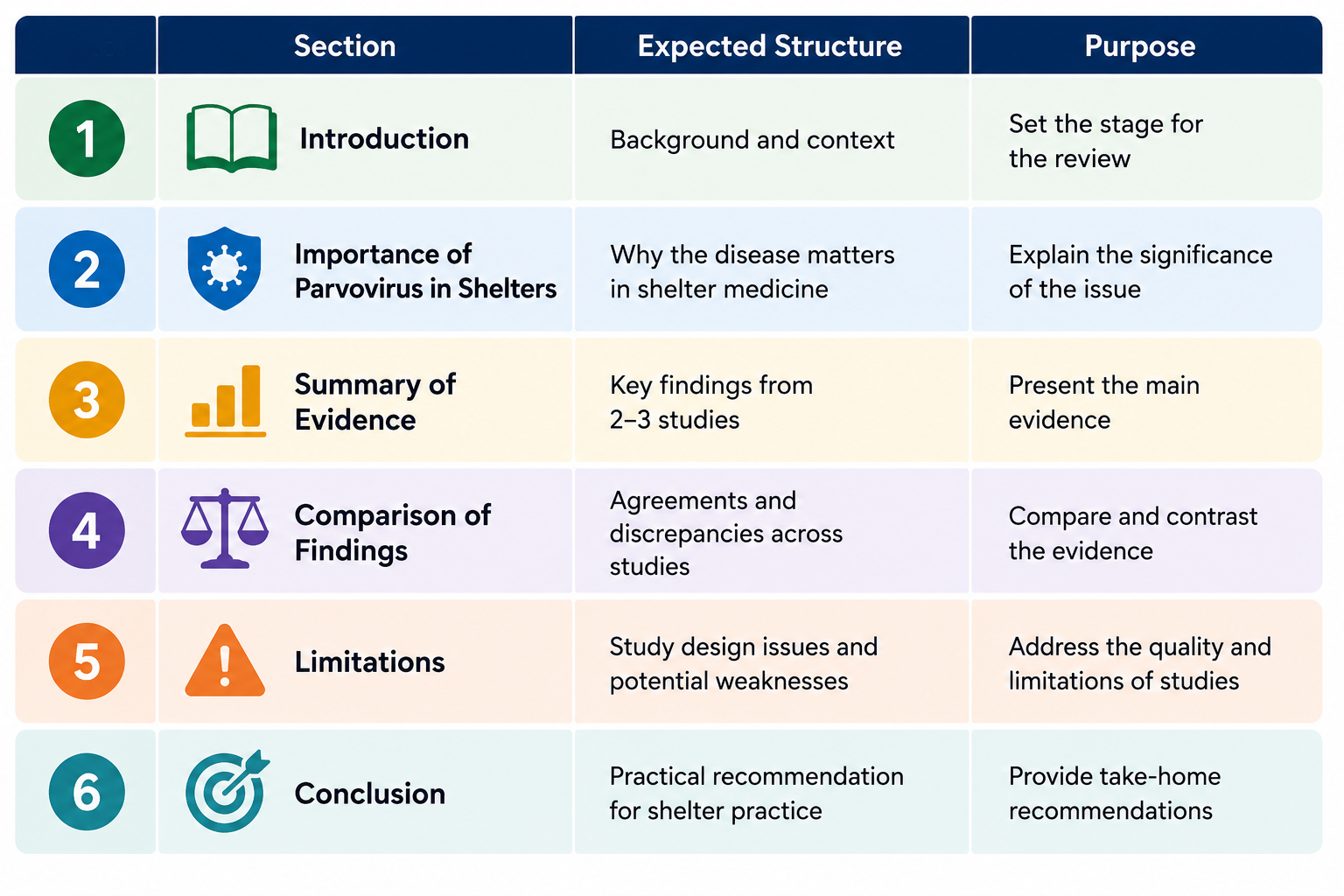
Using the literature review framework below as a guide, identify 1–2 key bullet points that could be included in each section of the review.
Focus on:
Relevant evidence
Major findings
Study limitations
Practical recommendations
Summary of Evidence
Study 1
Systematic review/meta-analysis
CPV prevalence is common.
Immunization status influences infection risk.
Study 2
Shelter intervention study
Deferred intake protocol reduced CPV incidence from 47% to 9%.
Study 3
Longitudinal shelter study
Successful management of CPV outbreaks is possible with structured protocols.
Agreements
Prevention is critical.
Vaccination and biosecurity reduce transmission.
Shelter management practices influence outcomes.
Differences
Populations differ.
Study designs vary.
Geographic settings vary.
Limitations
Few randomized studies.
Some studies are observational.
Generalizability between shelters may be limited.
Differences in vaccination protocols and populations.
Conclusion
Current evidence supports early preventive strategies and suggests vaccination at intake is likely beneficial in reducing transmission risk.
Practical Recommendation
Shelters should vaccinate dogs immediately upon intake and combine vaccination with isolation, sanitation, and biosecurity protocols to minimize canine parvovirus outbreaks.
What is an example of selection bias?
a. Misclassification of disease
b. Loss to follow-up differs between groups
c. Incorrect statistical test
d. Small sample size
b. Correct.
Expert response
Selection bias occurs when the individuals included in the final analysis differ systematically from those originally enrolled. Differential loss to follow-up can distort results because the remaining animals may no longer represent the original population. This threatens internal validity and may exaggerate or underestimate treatment effects.
Which element MOST directly affects internal validity?
a. Sample size
b. Bias
c. External validity
d. Generalizability
b. Correct.
Expert response
Internal validity reflects whether the study's results are trustworthy and whether observed differences are due to the intervention rather than systematic error. Bias—including selection bias, measurement bias, and confounding—directly threatens validity. Sample size influences precision, whereas external validity and generalizability concern how widely results apply.
A study evaluates a new flea treatment in dogs. 15 dogs receive the drug, and flea counts are compared before and after treatment.
Identify an error in this study.
a. Inappropriate statistical methods
b. Small sample size
c. No controls
d. No technical replicates
c. Correct.
Expert response
Without a control group, it is impossible to determine whether changes in flea counts are due to the treatment or to other factors such as seasonality, spontaneous variation, or environmental changes. Although the sample size is small, the absence of controls is the major design flaw because it prevents meaningful comparisons and limits causal inference.
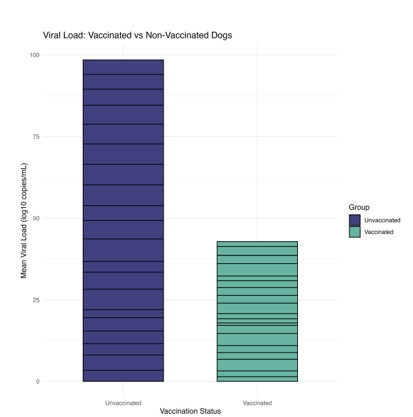
A study was conducted to test the efficacy of a vaccine against canine distemper virus by measuring viral load in the blood of shelter dogs that had been vaccinated versus those that had not. The study used 2330 dogs and reported strong success of this vaccine in reducing viral load.
Do you notice any issues with how the results are displayed?
a. The sample size is not shown in the graph
b. The graph does not show controls
c. There is no measure of variability shown
d. There is no p-value
c. Correct.
Expert response
Measures of variability (standard deviation, confidence intervals, or error bars) provide information about the consistency and precision of results. Showing only averages can make findings appear more certain than they really are. Readers need measures of variability to assess the reliability and biological significance of the data.
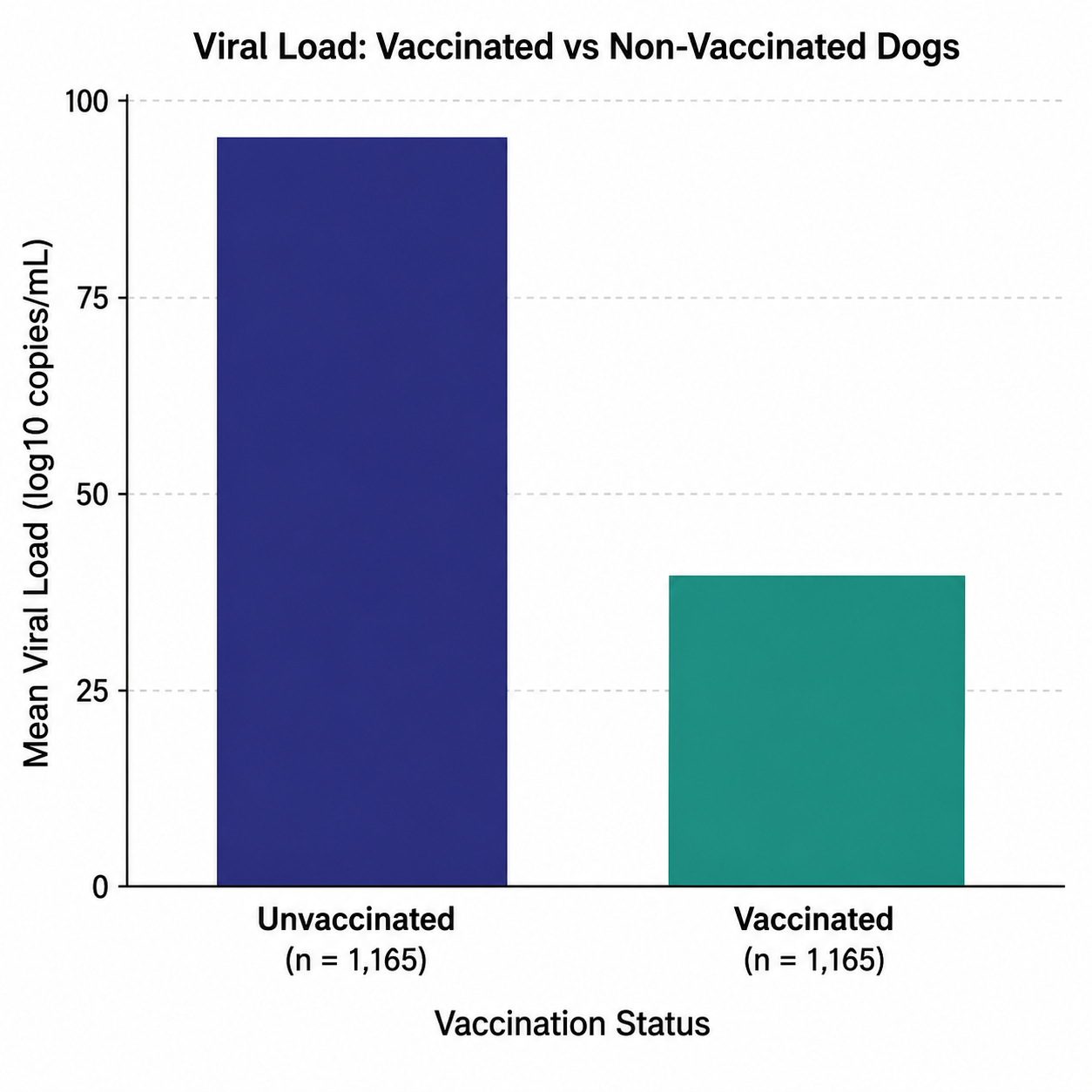
A study evaluated the effectiveness of a canine distemper vaccine by comparing viral load in vaccinated and unvaccinated shelter dogs. The study included 2,330 dogs. Results are shown below.
What important component of a strong research study is not provided in the study summary?
a. Too large of sample size
b. No hypothesis stated
c. No controls
d. Inappropriate methodology
b. Correct.
Expert response
A clearly stated research question or hypothesis is a hallmark of quality research. Without a predefined hypothesis, it becomes difficult to determine whether the study design, analysis, and conclusions appropriately address the intended question. Large sample sizes are generally beneficial because they improve precision and statistical power; therefore, "too large of sample size" is rarely considered a methodological weakness
As a team:
Review both studies.
Assess each study using the EBVM quality elements.
Identify at least two strengths and two limitations for each study.
Determine which study provides stronger evidence.
As you read, consider:
• What evidence suggests this is a strong study?
• What evidence may limit your confidence in the findings?
• How were dogs assigned to treatment groups?
• How were outcomes measured?
• Do the results support the authors' conclusions?
• What information would you want to know that is not provided?
Study 1:
Blagburn et al. (2016). Efficacy of four commercially available heartworm preventive products against the JYD-34 strain of Dirofilaria immitis.
Background: Heartworm disease in dogs can be severe and life threatening. Resistance to available heartworm preventives was considered among potential causes of increased reports of failed heartworm prevention in dogs. The objective of the present study was to compare the efficacy of four commercially available heartworm disease preventives against the JYD-34 strain of D. immitis.
Methods: Forty laboratory-reared dogs approximately 6 months old were used. Each dog was infected with fifty, thirdstage heartworm larvae on study day (SD) -30. On SD-1, the dogs were randomized to five groups of eight dogs each. On SD-0, dogs in groups 1–4 were treated as follows: Group 1: ivermectin/pyrantel pamoate chewable tablets; Group 2: milbemycin oxime/spinosad tablets; Group 3: selamectin topical solution; and Group 4: imidacloprid/moxidectin topical solution. Dogs in Group 5 were not treated and served as controls. The dogs were treated according to their current body weights and labelled dose banding for each product. Groups 1, 2, and 3 were retreated with their respective products and current body weights on SD 31 and 60. On SDs 124–126 the dogs were euthanized and necropsied for recovery of adult heartworms.
Results: Adult heartworms were recovered at necropsy from each of the dogs in the control group (13–32 worms/ dog, geometric mean (GM) = 18.4 worms/dog). Adult heartworms and/or worm fragments were also recovered from each of the dogs treated with ivermectin/pyrantel pamoate, milbemycin oxime/spinosad or selamectin. Geometric means of worms recovered from dogs in each of these groups were 13.1, 8.8, and 13.1, resulting in efficacies compared to controls of 29.0, 52.2, and 28.8 %, respectively. All dogs in Group 4 (imidacloprid/moxidectin) were free of adult heartworms (100 % efficacy).
Conclusions: The combination of imidacloprid/moxidectin was 100 % effective in this study in preventing development of JYD-34 laboratory strain of D. immitis in dogs following a single treatment, while three monthly treatments of the three other commercial products provided less than 100 % efficacy. The high efficacy achieved with imidacloprid/moxidectin was likely due to the unique pharmacokinetic properties of the topical form
Study 2:
Snyder, Daniel E., et al. "Assessment of the effectiveness of a combination product of spinosad and milbemycin oxime on the prophylaxis of canine heartworm infection." Veterinary parasitology 180.3-4 (2011): 262-266.
Three separate randomized, blinded, vehicle-controlled studies were conducted to determine the effectiveness of a single treatment and consecutive monthly treatments of a combination flavored tablet product containing spinosad and milbemycin oxime (MBO) in the prevention of the establishment of heartworm infections in dogs challenged with recent field isolates of the heartworm (HW), Dirofilaria immitis. For each study, dogs were allocated randomly based on pre-treatment body weights to treated or control groups of 10 animals each. Dogs were infected once with infective HW larvae, on Day-30, using either a Michigan isolate or a Georgia (MP3) isolate of D. immitis. Treatments of beef-flavored chewable tablets were administered in two studies one time either on Day 0 or Day 15, and in one study twice (Days 0 and 30, or Days 15 and 45) or 3 times (Days 0, 30 and 60). For the combination product groups, dosages were in the range of 30–45 mg/kg (13.6–20.5 mg/lb) for spinosad and 0.5–0.75 mg/kg (0.2–0.34 mg/lb) for MBO. Necropsies for heartworm counts were completed following euthanasia on Day 120 or Day 123.
A single treatment with the combination product of spinosad and MBO 30 or 45 days post-inoculation with infective HW larvae was completely effective (100%) in preventing establishment of the Michigan D. immitis isolate, but efficacy against the Georgia MP3 isolate was incomplete, with geometric mean reductions in HW counts relative to vehicle treated controls of 99% reduction of the 30 day infection and a 98.9% reduction of the 45 day old infection. Against this same MP3 isolate, 3 consecutive monthly treatments provided complete prevention (100%) against establishment of D. immitis infections.
The combination product of spinosad and MBO provides effective control of canine heartworms. A single treatment at 30 days post infection showed high but incomplete effectiveness against a heartworm isolate that had been shown to be partially refractory to treatment with marketed monthly heartworm preventives. Three consecutive monthly treatments provided complete control, providing support to the recommendation that heartworm prophylaxis should be maintained year round for optimal effectiveness.
This is just context for the next questions!
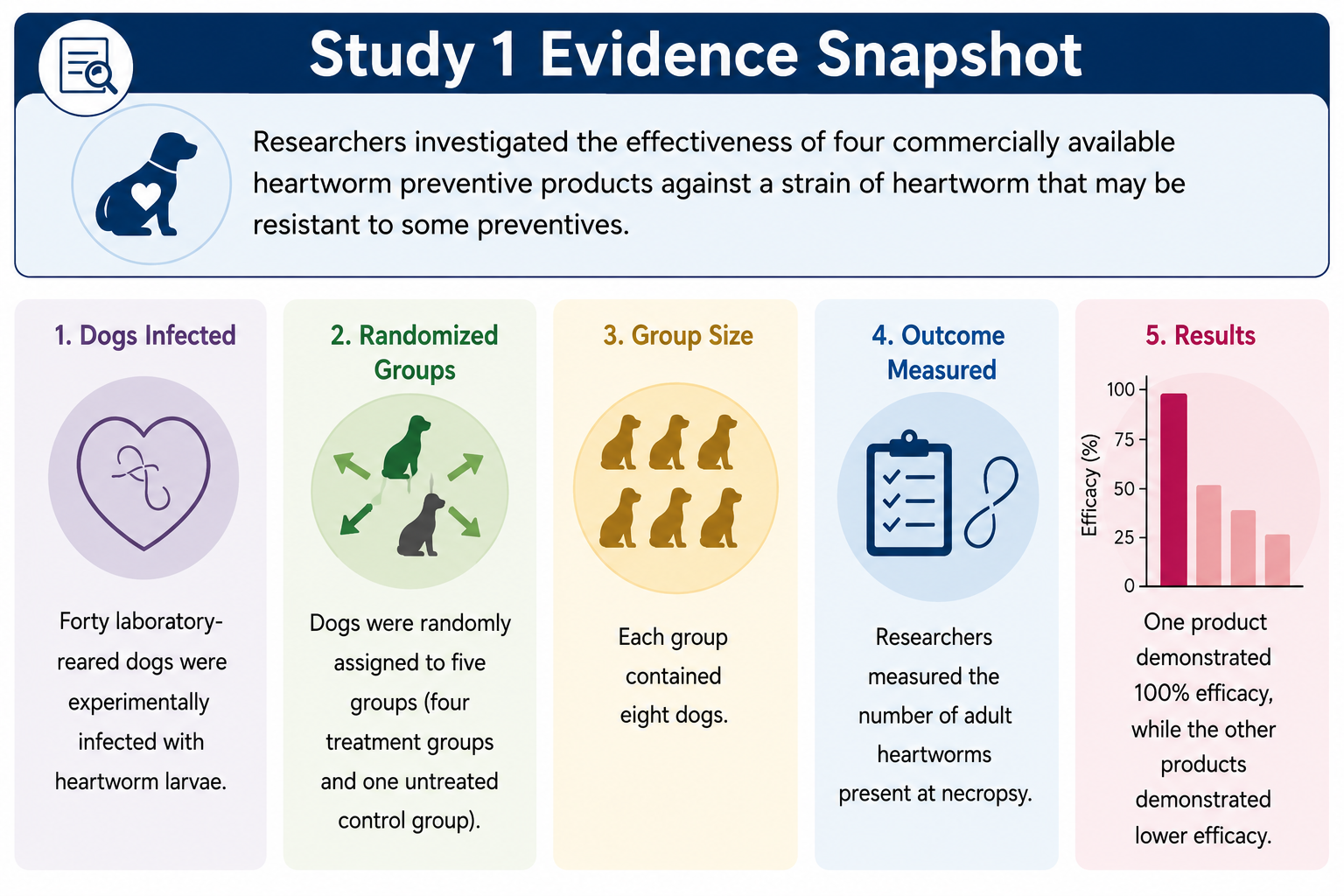
Which feature of the study most strengthens the researchers' ability to conclude that differences in heartworm infection rates were caused by the preventive treatments?
a. Use of laboratory-reared dogs
b. Random assignment of dogs to treatment groups
c.Inclusion of only six-month-old dogs
d. Use of commercially available products
b. Correct.
Expert Response
Randomization reduces selection bias and improves internal validity by making treatment groups more comparable. Because exposures are assigned experimentally, randomized controlled trials provide stronger evidence for causation than observational studies.
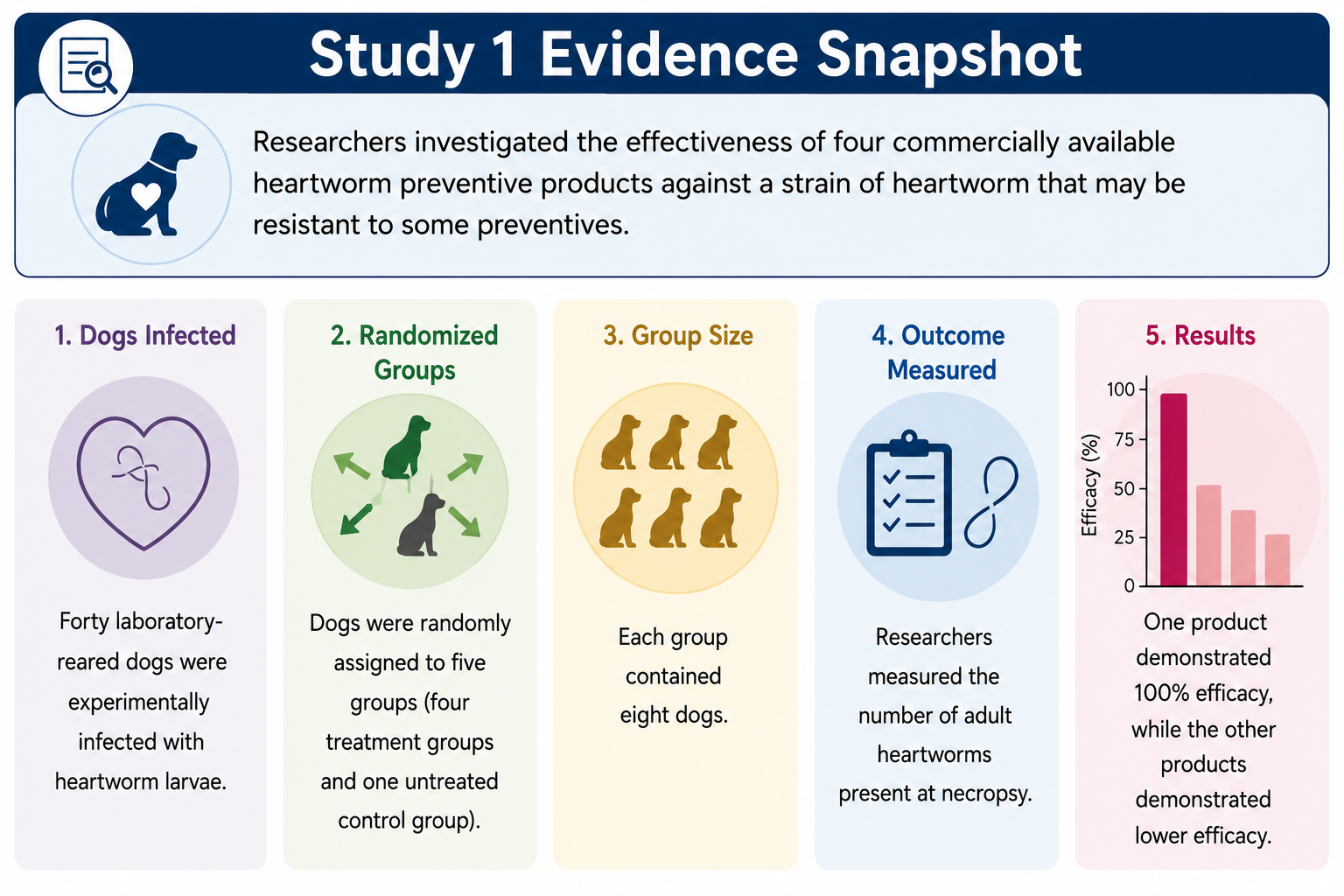
Prompt: Refer to the Evidence Snapshot.
Which characteristic of the study most limits how confidently the results can be applied to dogs seen in everyday veterinary practice?
a. Lack of statistical analysis
b. Small sample size
c. Use of experimentally infected laboratory dogs
d. Absence of a control group
c. Correct.
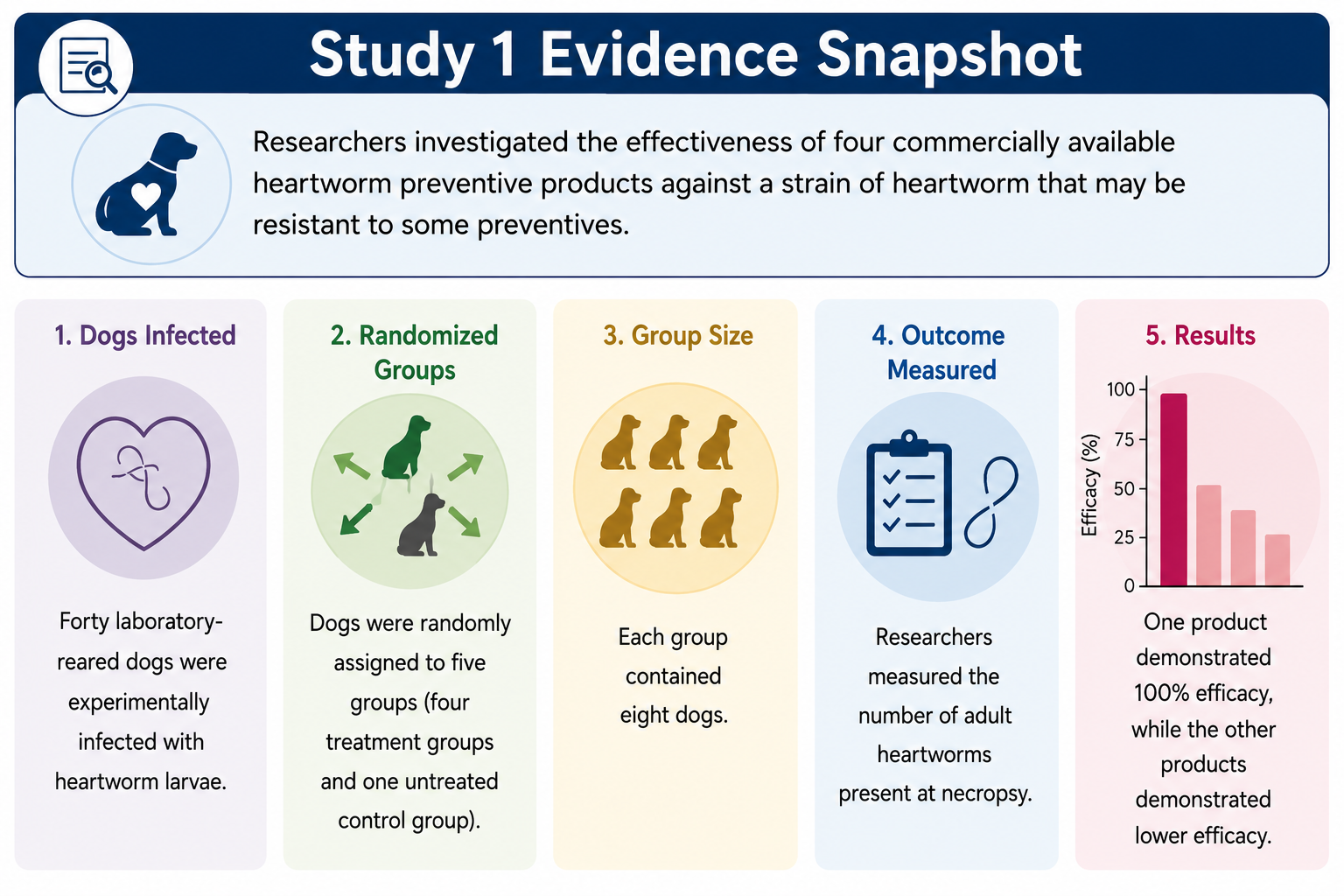
Prompt:
Refer to the Study 1 Evidence Snapshot.
Your team is evaluating how the researchers measured whether the heartworm preventive was effective.
Question: Which outcome measure provides the most objective evidence that the treatment was effective?
a. Owner observations of the dogs after treatment
b. Clinical signs observed during the study
c. Adult heartworm counts obtained at necropsy
d. Quality-of-life scores assigned by the researchers
c. Correct
Expert Response
Objective outcomes are less susceptible to measurement bias. Counting worms at necropsy provides a direct measure of efficacy and improves confidence in the results.
Scenario
As your team reviews the two heartworm study snapshots, you notice that each treatment group included only 8–10 dogs. Before recommending changes to the clinic's heartworm prevention protocol, your team discusses how the sample sizes affect the strength of the evidence.
Which statement best explains how the sample sizes affect your confidence in the findings?
a. Increased risk of confounding
b. Reduced precision and statistical power
c. Increased external validity
d. Elimination of measurement bias
b. Correct.
Expert Response
Small studies may fail to detect true differences and often produce less precise estimates. Sample size affects confidence in estimates but does not automatically create bias.
Scenario
A veterinarian is treating dogs in an area where the JYD-34 strain of heartworm has been identified. Your team reviews the two study snapshots before recommending a heartworm preventive.
Question
Based on the study snapshots, which study provides the most applicable evidence for making a clinical recommendation for dogs exposed to the JYD-34 strain?
a. Study 1, because it directly evaluated preventive products against the JYD-34 strain.
b. Study 1, because it had the largest sample size.
c. Study 2, because observational studies provide stronger evidence than randomized trials.
d Study 2, because blinding eliminates all bias.
a. Correct.
Expert Response
Both studies used strong experimental designs. However, Study 1 provides the most applicable evidence because it directly evaluated preventive products against the JYD-34 strain, which matches the clinical scenario. When making evidence-based clinical decisions, researchers should consider both study quality and how closely the study matches the patient or problem being addressed.
A veterinarian notices that calves receiving a recently introduced oral electrolyte product appear to recover from diarrhea more quickly than calves receiving the previous formulation.
Before searching the literature, the veterinarian wants to formulate a focused clinical question.
Which element should be identified first to create a well-structured PICO question?
A. The journal most likely to publish the study
B. The clinical population of interest
C. The level of evidence expected
D. The statistical test that will be used
b. Correct.
A veterinarian asks:
"In horses undergoing elective arthroscopy, does perioperative antimicrobial administration compared with no antimicrobial administration reduce surgical site infections?"
What type of clinical question is this?
A. Diagnosis
B. Prognosis
C. Treatment/Prevention
D. Harm (Etiology)
c. Correct.
Researchers survey all dairy farms within one county during July to determine the proportion currently experiencing digital dermatitis.
Which study design best describes this investigation?
A. Cohort study
B. Randomized controlled trial
C. Cross-sectional study
D. Case-control study
c. Correct.
Investigators identify dogs diagnosed with cranial cruciate ligament rupture and compare them with similar dogs without the disease to determine whether obesity was more common before injury.
Which study design is being used?
A. Cohort study
B. Case-control study
C. Randomized controlled trial
D. Cross-sectional study
b. Correct.
A veterinarian is searching for evidence regarding treatment of bovine respiratory disease.
Which resource is generally most likely to provide the most comprehensive veterinary literature search?
A. Google
B. CAB Abstracts
C. Wikipedia
D. General pathology textbook
b. Correct.
A clinician finds two articles discussing treatment of feline diabetes. One is a textbook chapter written 12 years ago, while the other is a recently published randomized clinical trial.
Which source should generally receive greater weight when making an evidence-based clinical decision?
A. The textbook chapter because textbooks summarize expert opinion
B. The randomized clinical trial because it provides newer primary evidence
C. Both sources should always be weighted equally
D. Neither source because only systematic reviews should be used
b. Correct.
A veterinary student wants to identify articles evaluating pain management following ovariohysterectomy in dogs.
Which search strategy is most likely to retrieve relevant articles?
A. dog AND surgery
B. (dog OR canine) AND (ovariohysterectomy OR spay) AND (analgesia OR pain)
C. dog NOT analgesia
D. ovariohysterectomy pain
b. Correct.
A student searches PubMed using:
dogs AND cruciate ligament
More than 8,000 articles are retrieved.
Which revision would most effectively narrow the search?
A. Replace AND with OR
B. Add additional concepts using AND
C. Remove "cruciate ligament"
D. Replace quotation marks with parentheses
b. Correct.
A student is preparing a literature review on feline hyperthyroidism. After identifying several high-quality studies, the student must decide how to use them.
Which approach best reflects evidence-based literature review practices?
A. Summarize only the article with the largest sample size.
B. Integrate findings from multiple relevant studies while discussing their strengths and
limitations.
C. Include only studies that support the student's opinion.
D. Cite only review articles because they summarize the literature.
b. Correct.
A veterinarian searches for evidence regarding treatment of equine gastric ulcer syndrome.
After reading several abstracts, the clinician notices that two studies use different populations and different outcome measures.
Before applying the results to a patient, what should the clinician evaluate next?
A. Whether the study conclusions agree with the discussion section.
B. Whether the evidence is applicable to the patient and clinical situation.
C. Whether the journal has a high impact factor.
D. Whether the first author is a specialist.
b. Correct.
You read a well designed randomized control trial in cattle, testing drug A vs drug B. The alternative hypothesis of the study was the drug B resolves the clinical mastitis faster than drug A. Upon testing, Drug B resolved the clinical cases 3 days faster than drug A, displaying
a P-value of 0.03.
Based on the information provided, mark the correct statement about it:
A. The null hypothesis is rejected. The data provided showed that under the described scenario, drug B resolves the clinical cases faster than A
B. The null hypothesis is rejected. The results provided showed that under the described scenario, drug B resolves the clinical cases faster than A, indicating a lower incidence of mastitis upon its implementation
C. The null hypothesis should not be rejected. Based on the P-value displayed, it demonstrates that under the described scenario drug B is more efficient than A.
D. The null hypothesis should not be rejected. Based on the P-value displayed, it demonstrates that under the described scenario there is no difference between treatments
a. Correct.
Mark the correct statements about PICO[T]
A. P, in the PICO(T) stands for "Problem"
B. Every PICO(T) should always have an Outcome, as a measurable result
C. (T), stands for time. It must always be present when developing the statement
D. The C, stands for comparison. It must always be present when developing the statement
b. Correct.
Analyze this sentence from a reviewer, upon evaluating a dermatological drug to prevent ticks in dogs :
" Dear author, (...) Upon reviewing your methods I couldn't but notice that your control group (no drugs) were all disclosed to live indoor, whereas the treatment group (drug) had yard access."
The different living situation between groups corresponds to a:
A. Random Bias
B. Confounding
C. Random error
D. Information bias
b. Correct.
Suppose investigators recruited animals as follows:
Treatment group: Dogs whose owners agreed to administer weight loss diet and allowed them outdoor yard access.
Control group: Dogs from an indoor boarding facility whose owners declined the diet
One aspect invalidates a meaningful comparison between the treatment and control group:
A. Confounding
B. Different Prevalence
C. Selection Bias
D. Random Error
c. Correct.
Consider the following
1. New cases of HIV
2. Percentage of people living with HIV
3. Percentage of people dead and with records of HIV
What options best categories this items
A. Incidence, Survival, Prevalence
B. Risk, Survival, Prevalence
C. Incidence, Prevalence, Survival
D. None of the above
c. Correct.
Read the caption about this study:
"(...) Briefly, we have contacted authors that have previously published articles using antibiotics in gram negative bacteria in cows with clinical mastitis. We kindly asked for their data. A total of 15 studies were gathered, accounting for more than 2,000 animals. Altogether we compared the animal mortality in animals subject to antibiotics versus without"
What option best describe the study above
A. Literature review
B. Meta analysis
C. Cross-sectional study
D. Cohort study
b. Correct.
(Based on an ApEx question of Acquire I)
The U.S. Department of Health and Human Services (HHS) is working with records of the past 15 years of Salmonellosis cases to assess potential association with antibiotic resistance (mainly in Beta-Lactams and Macrolides). Human patients recorded with Salmonellosis were retrospectively reported according to use of Beta-Lactams or Macrolides, and their case severity (<4 days or >4 days in ICU) as response.
What is the best definition for this study design, and how many outcomes are possible based on the description ?
A. Randomized control trial, and 4 outcomes
B. Cohort Study, and 2 outcomes
C. Case Control study, and 3 outcomes
D. Cohort Study, and 4 outcomes
d. Correct.
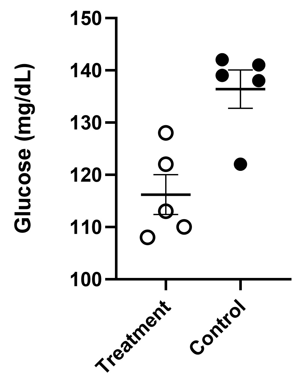
Based on the graph below and your knowledge on Mean, Standard Error of the mean, and P-value, mark the correct alternative bellow:
Mean glucose for Treatment = 115 mg/ml; Control = 135 mg/ml
(The image above has no P-value displayed)
A. Based on the difference between the group means, and non-overlapping standard errors, we can affirm that the glucose concentration is significantly different between groups
B. Based on the lack of difference between the group means, and non-overlapping standard errors, we can affirm that the glucose concentration is significantly different between groups
C. Based on the difference between the group means, and non-overlapping standard errors, we can affirm that the glucose concentration is NOT significantly different between groups
D. None of the above
d. Correct.
A researcher investigating pregnancy loss in dairy cows. Upon ultrasound evaluation the vet identified an animal carrying a high-risk pregnancy (slow hear beat). Then, the vet immediately pairs the above mentioned cow, with a another herd mate carrying a normal/viable pregnancy. Cows were re-evaluated 14 days later to assess pregnancy loss incidence between groups.
What type of study is this ?
A. Randomized control trial
B. Cohort Study
C. Case Control
D. Cross-sectional study
c. Correct.
PICO stands for:
MARK THE FALSE ALTERNATIVE
A. Patient, Population
B. Intervention, Exposure, Diagnosis
C. Case, Condition
D. Outcome
c. Correct