Botany Unit 1
 Call Kai
 Learn
Learn Practice Test
 Spaced Repetition
 Match
Match Flashcards
 Knowt Play
1/59

Earn XP
Description and Tags
Vocabulary flashcards generated from General Botany lecture notes covering plant subfields, classification, history of cell biology, cell structures, bacteria, cyanobacteria, archaea, and viruses.
Name | Mastery | Learn | Test | Matching | Spaced | Call with Kai | Chat |
|---|
No analytics yet
Send a link to your students to track their progress
60 Terms
Botany
The scientific study of plants.
Plant Anatomy
The branch of botany that focuses on the internal structure of plants.
Plant Physiology
The branch of botany concerned with plant function and metabolic processes.
Plant Taxonomy
The study and discipline of describing, naming, and classifying plants.
Plant Systematics
The field of botany studying plant diversity and evolutionary history.
Plant Geography
The study of the geographic distribution of plants.
Plant Ecology
The study of the interaction of plants with other organisms and their environment.
Plant Morphology
The branch of botany dealing with the external form and structure of plants.
Plant Genetics
The study of plant heredity.
Cell Biology (cytology)
The study of cell structure and function.
Ethnobotany
The study of the human use of plants.
Theophrastus
A student of Aristotle and Plato (371-287 BCE) known as the "Father of Botany" who was the first known person to classify plants.
Carolus Linnaeus
A Swedish naturalist (1707-1778) who authored Species Plantarum and established the modern binomial nomenclature system.
Binomial Nomenclature
A two-name naming system that uses genus and species names to identify living organisms.
Specific Epithet
The abbreviated name of the author (person who originally placed the species in a particular genus) attached to the species name.
Type Specimen
An annotated plant specimen placed in an herbarium so that the public has access to it as a basis for comparison.

Dichotomous Key
An identification tool consisting of a series of two-choice options at each step that leads the user to the correct name of an organism.
Cladistics
A method of classification that examines phylogenetic relationships among organisms based on shared features using cladograms.

Cladogram
An evolutionary tree used in cladistics to show relationships among groups (clades) believed to have evolved from a common ancestor.
Robert Hooke
The scientist who observed dead cork cell walls in 1665 and named "cells".
Antony Van Leeuwenhoek
The scientist who observed protozoa and bacteria in the 1670s and called them "animalcules".
Robert Brown
The scientist who observed and named the cell nucleus in 1831.
Rudolph Virchow
The scientist who established in 1858 that cells come from preexisting cells.
Prokaryotic Cell
A cell lacking a true nucleus and membrane-bound organelles.
Eukaryotic Cell
A cell possessing a true membrane-bound nucleus and membrane-bound organelles.
Primary Cell Wall
A flexible outer cell layer composed of cellulose, hemicellulose, pectin, and glycoproteins.
Secondary Cell Wall
A rigid, woody cell layer deposited inside the primary cell wall made of cellulose and lignin.
Plasmodesmata
Cytoplasm extensions extending through pores between adjacent cells that allow movement of sugars, ions, and proteins.
Dictyosomes
Stacks of flattened vesicles that collect and package oils, enzymes, and other substances for secretion.
Thylakoids
Disc-shaped structures made of folded inner membrane inside chloroplasts that contain chlorophyll.
Grana
Stacks of thylakoids inside a chloroplast.
Stroma
The fluid matrix surrounding the grana inside a chloroplast.
Chromoplast
A plastid containing carotenoid pigments responsible for red, orange, and yellow colors.
Leucoplast
A colorless plastid that stores starch and oil.
Cristae
Folds formed by the inner membrane of mitochondria to increase surface area for cellular respiration.
Central Vacuole
A large membrane-bound organelle in plant cells that maintains turgor pressure and provides storage.
Binary Fission
An asexual reproduction process in bacteria that results in cell division without mitosis.
Conjugation
A bacterial recombination process where a plasmid or part of DNA is transferred from one cell to another through pili.
Transformation
A bacterial recombination process where a cell takes up fragments of DNA released into the growing medium by dead cells.
Transduction
A bacterial recombination process where DNA fragments are carried from one cell to another by a virus.
Peptidoglycan
A polymer of amino acids and sugars found in the cell walls of true bacteria (Eubacteria).
Cyanobacteria
Photosynthetic blue-green bacteria containing chlorophyll a and phycobilins that produce O2 and fix N2.
Akinetes
Thick-walled, spore-like cells produced by cyanobacteria to survive adverse environmental conditions.
Heterocysts
Colorless, specialized cells in cyanobacteria responsible for nitrogen (N2) fixation.
Methanogens
Anaerobic archaea that live in swamps, hot springs, or animal digestive tracts and produce methane (CH4).
Halophiles
Archaea that thrive in highly saline environments and contain the red pigment rhodopsin.
Sulfur Bacteria
Thermophilic archaea (Sulfolobus) that thrive in acidic sulfur hot springs and ocean vents.
Bacteriophages
Viruses that specifically attack and infect bacteria.
Interferons
Proteins released by cells of higher animals in response to viral infection to protect surrounding cells.
Anabaena
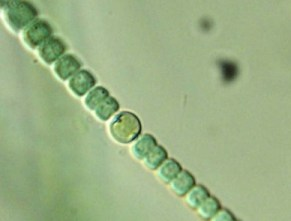
Oscillatoria

Nostoc

Merismopedia

Spirulina

Lyngbya
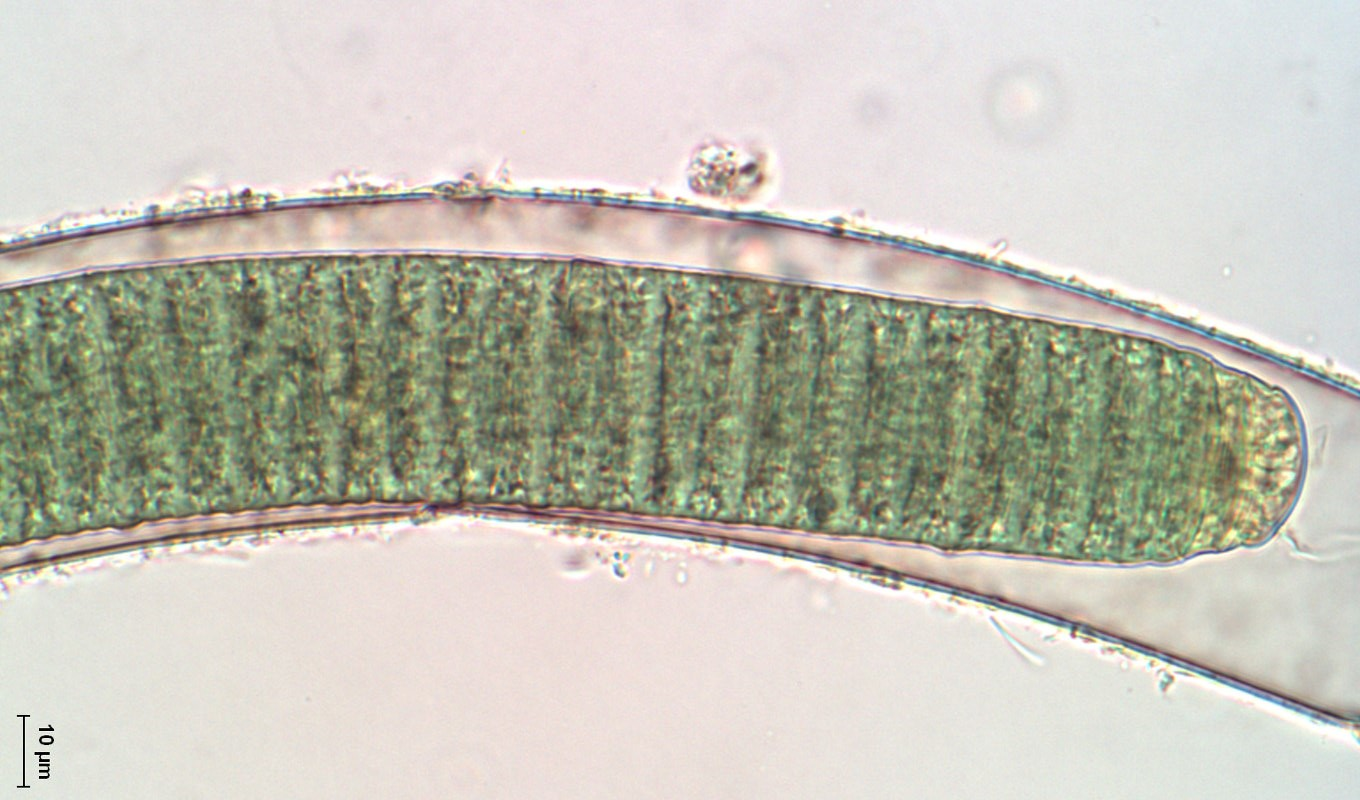
plasma membrane
controls what enters and exits the cell, made up of a phospholipid bilayer
plastids
membrane-bound organelles that are the sites of photosynthesis or storage
microbodies
perioxisomes and glyocisome (contain digestive enzymes)
cytoskeleton
microtubules and microfilaments involved in movement within the cell and support the cell