Anxiety and Depression (Intro to Mental Disorders)
 Studied by 0 people
 Call with Kai
 Learn
Learn Practice Test
 Spaced Repetition
 Match
Match Flashcards
 Knowt Play
1/26

There's no tags or description
Looks like no tags are added yet.
Name | Mastery | Learn | Test | Matching | Spaced | Call with Kai |
|---|
No study sessions yet.
27 Terms
What is prevalence of depression and anxiety disorders in the UK? (4)
1. 1 in 4 have some kind of depression/anxiety disorder in their life.
2. 2x more prevalent in women than men.
3. Men are less likely to access treatment and have 3x higher suicide rate.
4. Post-natal depression is common complication in pregnancy.
What is the gender difference in terms of prevalence
Twice as common in women as in men.
Post-natal depression affects 10% of pregnancies.
What is the impact of depression and anxiety disorders? (3)
1. 1% UK GDP loss
2. Leading reason people retire early
3. Leading cause of premature death in doctors (suicide).
What are the top 4 leading disability causes?
1. Road injuries
2. Headache disorders
3. Self-harm
4. Depressive
What is the course of depression and anxiety disorders? (4)
1. 50% long-term with relapsing + remitting
2. 50% response to adverse life event only eg. loss of relationship
3. 3/4 adult cases start in childhood
4. Can have an organic cause so its prognosis depends on underlying issue
What are the risks of depression and anxiety disorders? (7)
1. Suicide
2. Self-harm
3. Self-neglect
4. Neglecting vulnerable others
5. Exploitation by others
6. Addiction
7. Homicide/infanticide
What is the 2 question the GP can ask about depression
During the last month have you often been bothered by feeling down, depressed, or hopeless? (low mood)
Do you have little interest or pleasure in doing things? (low plessure)
What are the core and associated symptoms of depression? (7)
2 weeks of low mood (often worse in morning) accompanied with:
1. change in sleep
2. change in appetite/weight
3. fatigue/loss of energy
4. agitation or slowed movements
5. poor concentration or indecisiveness
6. worthlessness / XS guilt
7. suicidal ideation
What are the related conditions to depression and anxiety? (7)
1. Adjustment disorder: subthreshold response to specific life event
2. Dysthymia: subthreshold depressive symptoms most days for 2y+.
3. Seasonal affective: recurrence at same time each yr
4. Grief: normal reaction to significant loss
5. Bipolar depression: mania episodes, >4d of elation or irritability
6. Atypical depression: sleep more, eat more, worse in evening
7. Melancholic depression: most severe, slowed done, worse in morning and weight loss.
What is the mental state examination? (ASEPTIC)
Appearance: neglect of self (poor nutrition, dehydration), agitation, slowing.
Speech: slowed, short answers, agitated.
Emotion (mood): 'objective'/'subjective'
Perception (hallucinations): sad music, 2nd derogatory person voice
Thought: worthless, helplessless, low self-confidence, preoccupied by guilt, suicidal ideation.
Insight: undeserving of help ('waste of space')
Cognition: poor concentration and attention.
How do you determine a suicide risk? (5)
i.e. likelihood of this person intentionally taking their own life in the near future.
1. Intention: plan to end life, putting affairs in order, concealment.
2. Thinking: hopeless, helpless, painful to live
3. Behaviour: recklesness, recent self-harm, substance mis-use, unstable mental illness and past violence.
4. Medical risk: likelihood of dying or serious damage eg. hanging, asphyxia.
5. Protective factors: responsibilities eg. children, religious beliefs, something to look forward to and support.
What organic causes of depression can be found from blood test results? (4)
Helpful in some cases:
1. FBC: anaemia, chronic disease
2. U&E/LFT: renal/hepatic disease, hyponatremia
3. Bone profile: Ca, Vit D deficiencies - hypothyroidism (can lead to depression)
4. Haematinics: Ferritin, B12, folate, blood glucose.
What substances can cause depression? (2)
1. Alcohol
2. Benzodiazepines
Depressants that cause stimulant withdrawal.
What prescribed drugs can be an organic cause of depression? (7)
1. Interferon-⍺ (cancers)
2. Steroids
3. Anti-HIV
4. Acne meds
5. Hormonal (contraceptive)
6. Anti-reward drugs (in Parkinson's)
7. Beta-blockers (antihypertensives)
What physical health conditions can be an organic cause of depression? (4)
1. Endocrine
2. Viral
3. Head trauma
4. Neuro diseases.
What are the main symptoms of an anxiety disorder? (5)
1. Fear: specific, present danger
2. Panic: intense, physical arousal symptoms
3. Phobia: repeated fear of non-typical, specific threat
4. Anxiety: psychological symptoms of fear of what might happen in future - overestimating threat, underestimating coping skills and resources
5. Worry: painful recurrent thoughts like trying to solve an unsolvable problem.
What do clinically important anxiety disorders usually have?
Physical (SNS hyperactivity) AND psychological symptoms of anxiety + avoidance of threat or checking for reassurance.
What are the different types of anxiety disorders? (8)
1. Simple phobias: fear of specific object/activity
2. Social anxiety disorder: fear of negative judgement
3. Panic disorder: panic attacks, avoiding source or place of panic, can be associated with agoraphobia (crowded places) + others.
4. Agoraphobia: fear of crowded spaces
5. PTSD: indirect/direct, reliving bad experiences, hypervigilance
6. OCD: obsessive thoughts around threatening outcome and compulsion to neutralise threat
7. Health anxiety: fear of having serious illness and misinterpreting symptoms
8. GAD (generalised anxiety disorder): worry for >6mo with insomnia, muscle tension with headaches, backaches and autonomic physical symptoms.
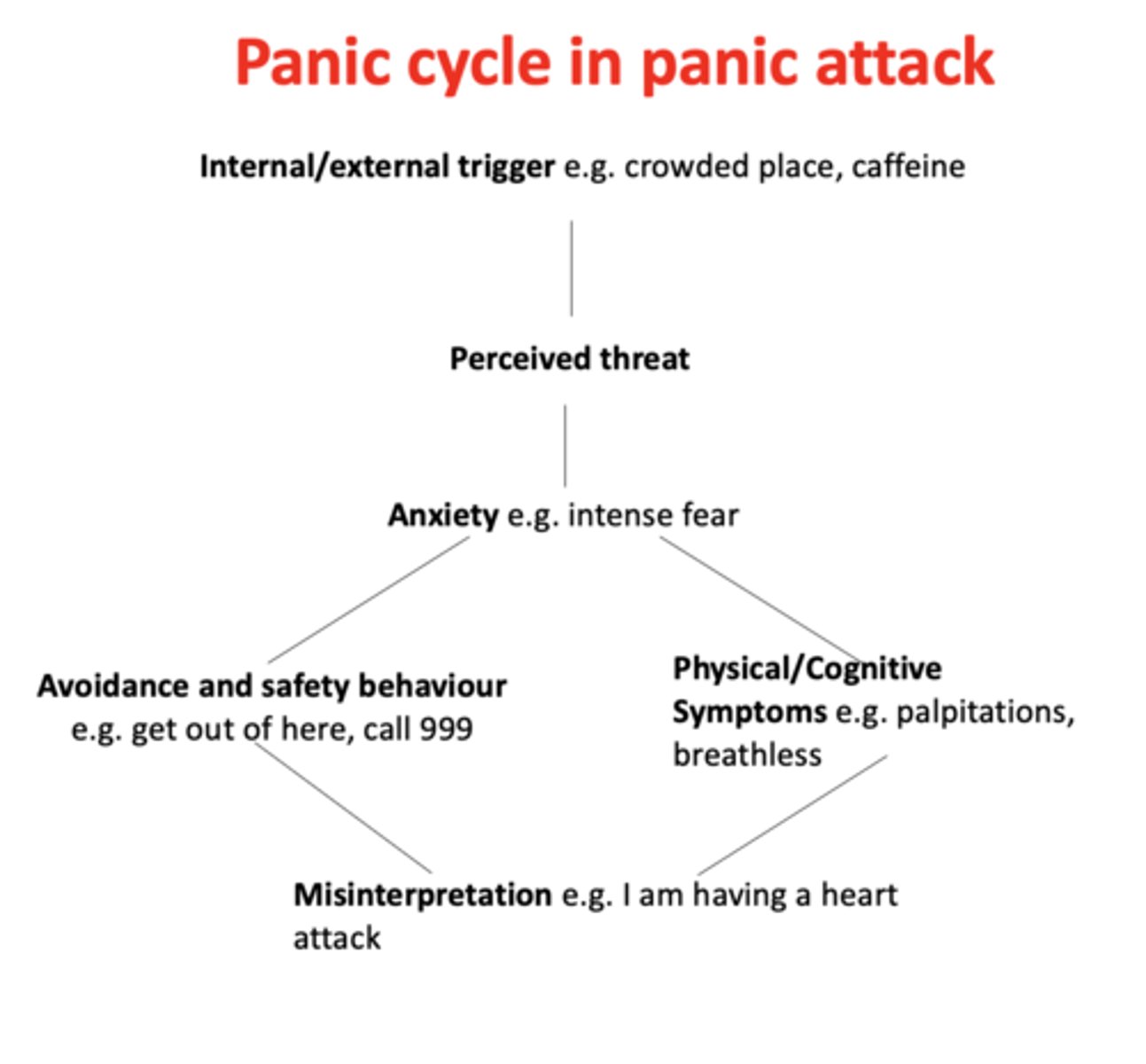
Outline the panic cycle in a panic attack. (4)
1. Internal/external trigger (eg. crowded place) leads to a perceived threat, which causes anxiety (intense fear).
2. Leads to either avoidance/safety behaviour or
3. physical/cognitive symptoms (palpitations + breathlessness).
4. This causes a misinterpretation (i'm having a heart attack).
What are the average ages of onset for anxiety disorders?
Some can present early or later.
Separation anxieties and specific phobias start in childhood.
Social phobias manifest in early adolescence.
OCD and PTSD have later ages of onset.
Panic disorder and GAD manifest much later in life.
Explain the electrical non-pharmacological treatments for depression. (3)
1. Electroconvulsive therapy: severe/treatment-resistant depression. Pt. is given general anaesthetic + muscle relaxant and electricity induces an epileptic seizure, for 12 treatments.
2. Vagal nerve stimulation and deep brain stimulation: rarely used, needs an operation to implant.
3. Transcranial direct current stimulation: anxiety disorders + mild-moderate depression.
Explain the magnetic non-pharmacological treatment for depression.
Transcranial magnetic stimulation - 20 treatments w/ no anaesthetic or seizures.
Usually targeted just to the fronto-limbic circuits in depression, doesn't penetrate far into brain.
What are the psychological treatments for depression? (3)
1. IAPT services for 1º and 2º care in psychotherapy
2. Online, group and family forums
3. For specific causes - bereavement (CRUISE), marital (RELATE) etc.
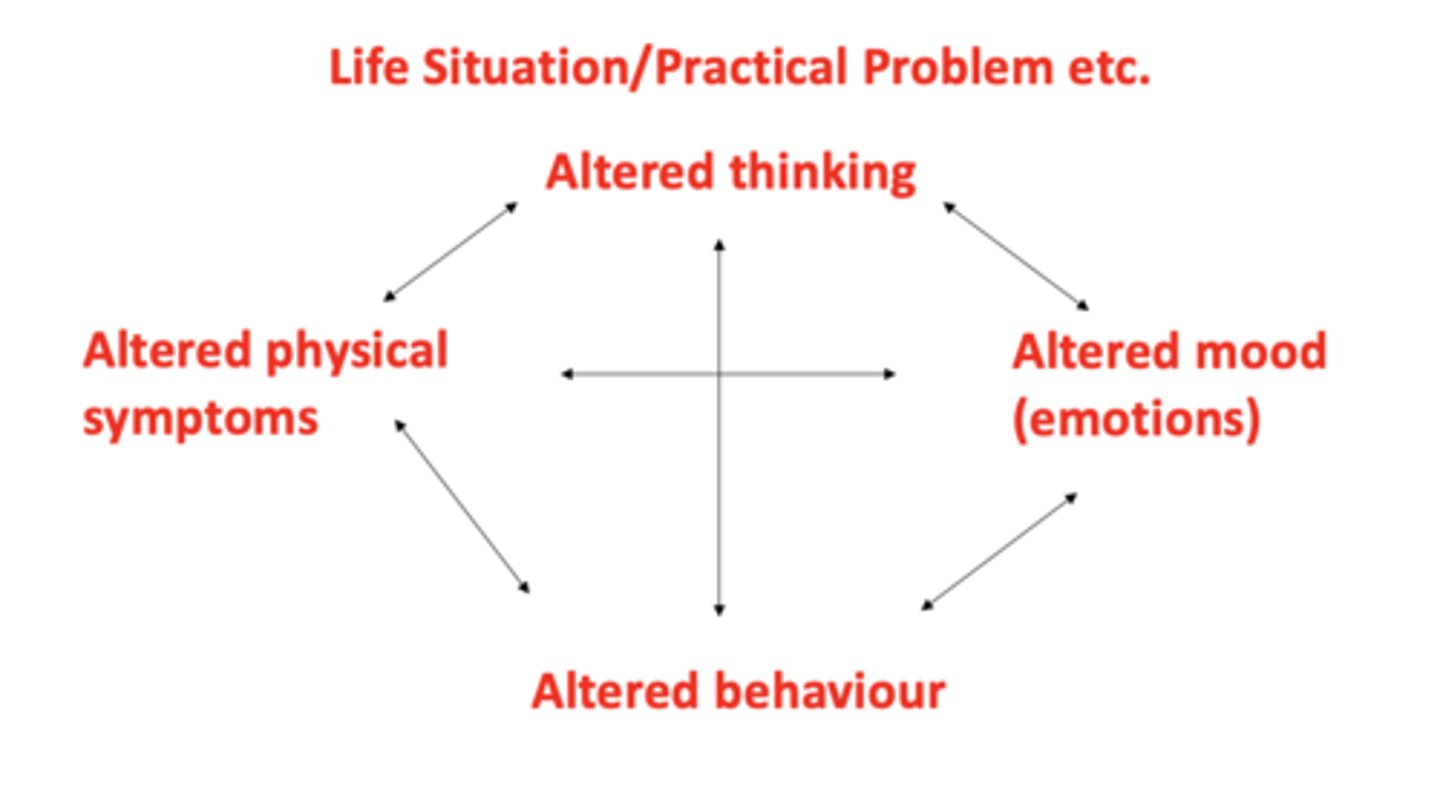
CBT
What is cognitive behavioural therapy (CBT)?
Targets reasons why depression/anxiety are still present, not what caused them and has most evidence of all psychotherapies.
Looks at:
1. altered thinking
2. altered mood
3. altered physical symptoms
4. altered behaviour
What is the way of thinking in depression? (3)
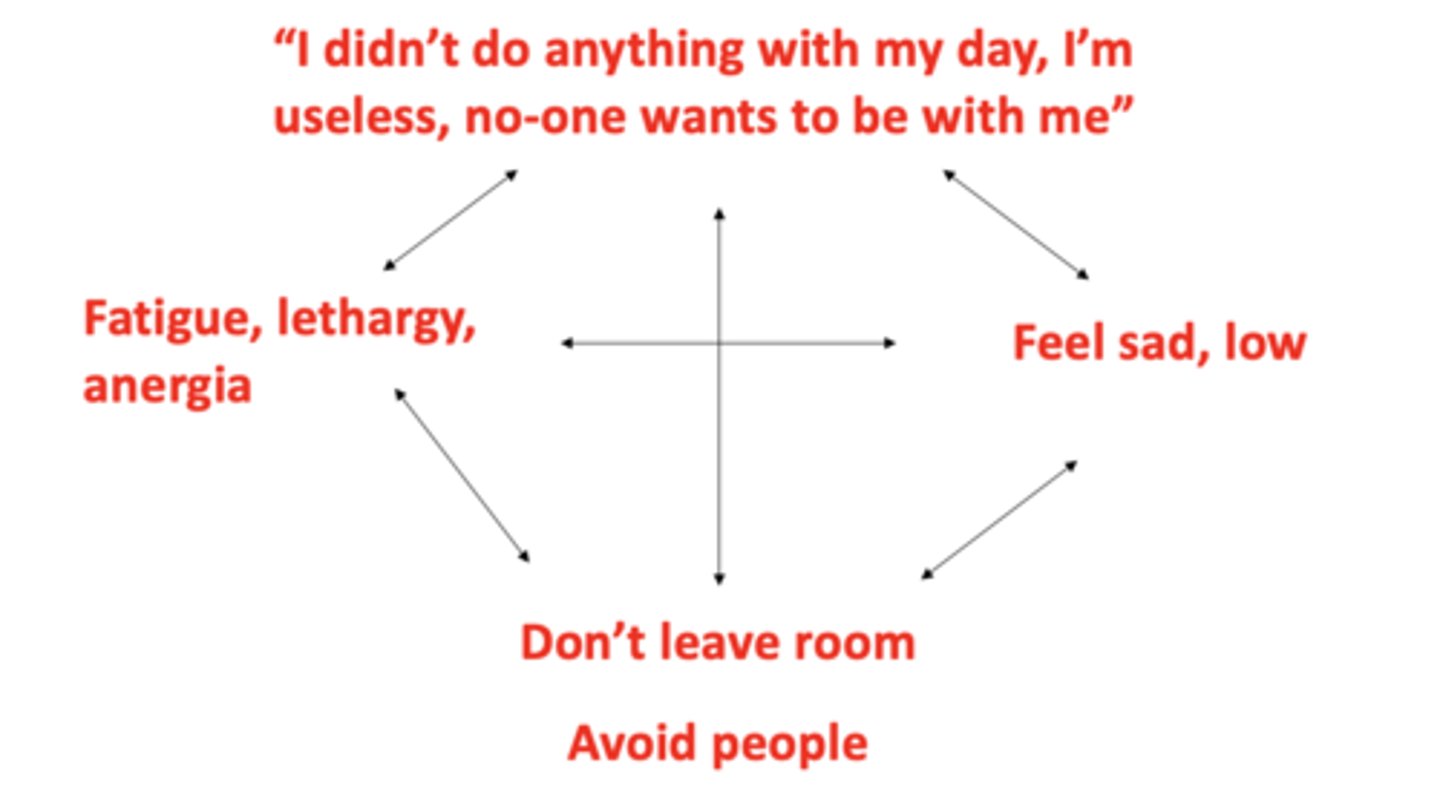
1. Negative automatic thoughts: 'i didn't get a promotion, John did'
2. Cognitive distortions: all or nothing thinking (i either do things perfect or i'm useless), emotional reasoning, personalisation ('must be my fault'), mental filtering (focusing on small negative things).
3. Beck's cognitive triad: -ve thoughts about self, world and future - 'i'm a bad person, world is a bad place and nothing will get better'.
What is behavioural activation?
Initial treatment for severe depression, important for all severities.
- Helps outline the mechanism behind the behaviour and how it makes you feel.
Give other psychological treatments for depression aside from CBT. (8)
1. Mindfulness based cognitive behaviour: identify -ve thoughts and meditate to make them irrelevant
2. Behaviour therapy: exposure to fear in real life, VR or imagination.
3. Eye movement desensitisation: trauma, move eyes when recollecting to process raw memories.
4. Problem solving: depression due to specific life event.
5. Interpersonal therapy: looking at relationships and recurring patterns
6. Family + marital therapy: working on how people relate to each other at same time.
7. Psychodynamic psychotherapy: subconscious, predisposing/precipitating factors.
8. Supportive listening: non-judgemental listening to help reframe person's situation, asking questions and repeating back in neutral ways.