2- NOMENCLATURE, HYBRIDIZATION, IMFA
 Call Kai
 Learn
Learn Practice Test
 Spaced Repetition
 Match
Match Flashcards
 Knowt Play
1/59

There's no tags or description
Looks like no tags are added yet.
Name | Mastery | Learn | Test | Matching | Spaced | Call with Kai | Chat |
|---|
No analytics yet
Send a link to your students to track their progress
60 Terms
1. Identify the parent chain prefix
2. Use the parent to determine if the bond type infix
3. Determine the real suffix portion
4. Identify the substituents to prefix, if any
5. Indicate the proper locants on the parent
6. Assemble using the standard format (prefix-parent-suffix)
NOMENCLATURE Recommended approach:
(Arrange from 1-6)
Determine the real suffix portion
Identify the substituents to prefix, if any
Identify the parent chain prefix
Indicate the proper locants on the parent
Assemble using the standard format (prefix-parent-suffix)
Use the parent to determine if the bond type infix
Recommended approach:
1. Identify the parent chain prefix
2. Use the parent to determine if the bond type infix
3. Determine the real suffix portion
4. Identify the substituents to prefix, if any
5. Indicate the proper locants on the parent
6. Assemble using the standard format (prefix-parent-suffix)
Reminders:
1. Use cyclo- for ring systems
2. Use multiplicative prefixes (e.g. di, tri, tetra) when needed
3. Alphabetization (usually for multiple prefixes)
4. Mind rules for locant assignment (often lowest numbers aka first point of difference, sometimes priority groups or alphabetization)
5. Terminal groups have no locants
Recommended approach and reminders (enumerate)
c. cyclo-
[NOMENCLATURE]
Which prefix is used for a ring structure?
a. iso-
b. neo-
c. cyclo-
d. sec-
b. di-
Use multiplicative prefixes (e.g. di, tri, tetra) when needed
[NOMENCLATURE]
Which prefix indicates two identical substituents?
a. mono-
b. di-
c. tri-
d. tetra-
c. alphabetization
[NOMENCLATURE]
In naming compounds, substituents are generally arranged according to:
a. molecular weight
b. size
c. alphabetization
d. boiling point
d. lowest numbers possible
[NOMENCLATURE]
When assigning numbers to substituents, the preferred rule is:
a. highest numbers possible
b. random numbering
c. alphabetical numbering
d. lowest numbers possible
true
[NOMENCLATURE]
[t/f] Terminal groups have no locants
Uses purely p orbitals = Pi
Uses most orbitals with s character = Sigma
Anything after sigma = Pi
Headways overlap/collision = Sigma
Sideways/lateral overlap/collision = Pi
Stronger = Sigma
First bond = Sigma
Weaker = Pi
[BONDING & HYBRIDIZATION]
Sigma or Pi?
Uses purely p orbitals = ____
Uses most orbitals with s character = ____
Anything after sigma = ____
Headways overlap/collision = ____
Sideways/lateral overlap/collision = ____
Stronger = ____
First bond = ____
Weaker = ____
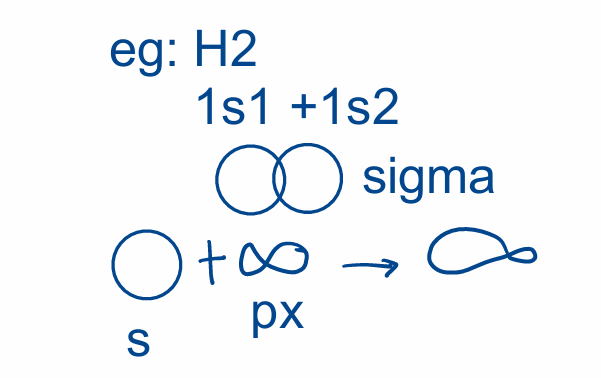
[BONDING & HYBRIDIZATION]
Example of orbital with s character and headways overlap/collision in formination of sigma bonds.
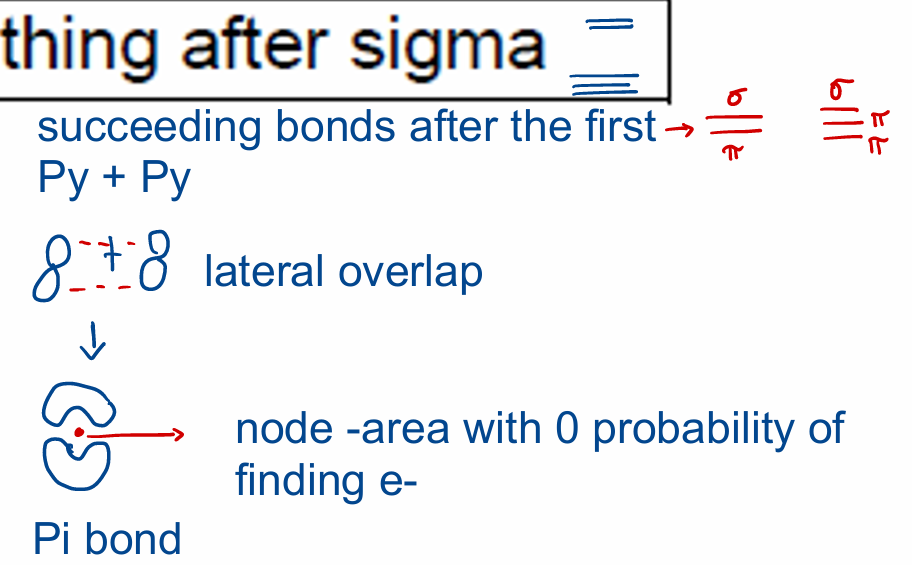
[BONDING & HYBRIDIZATION]
Example of “anything after sigma bond” in formation of Pi bonds.
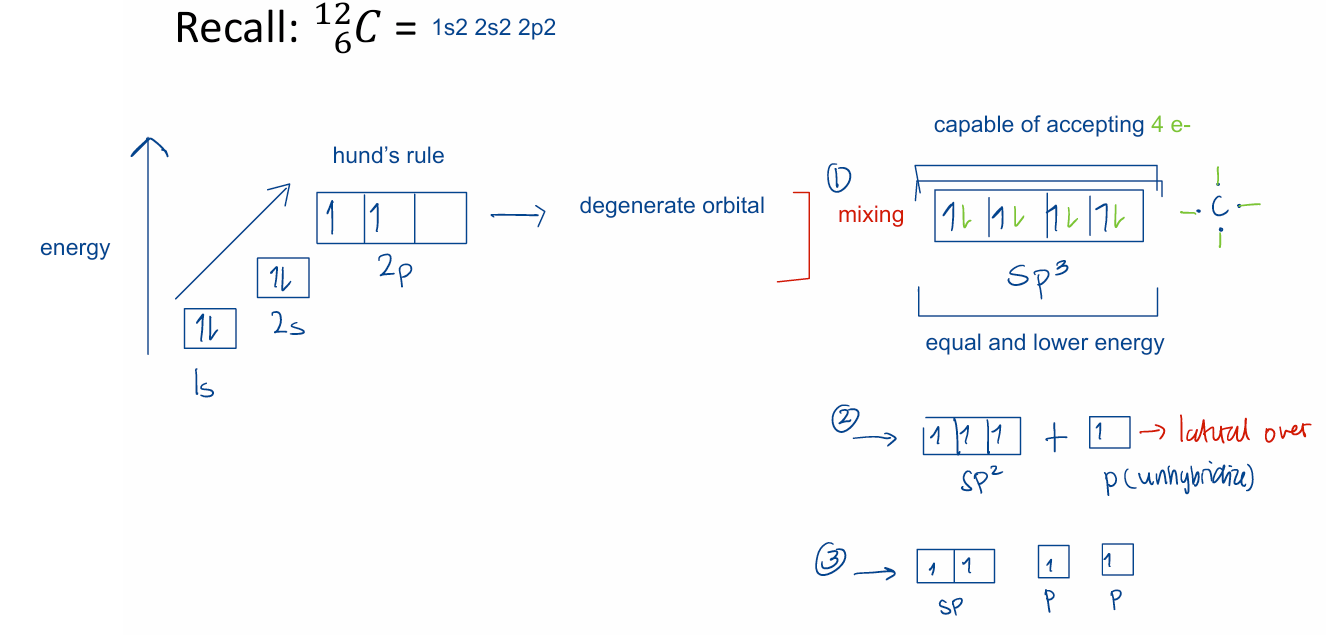
[BONDING & HYBRIDIZATION]
Hybridization of Carbon
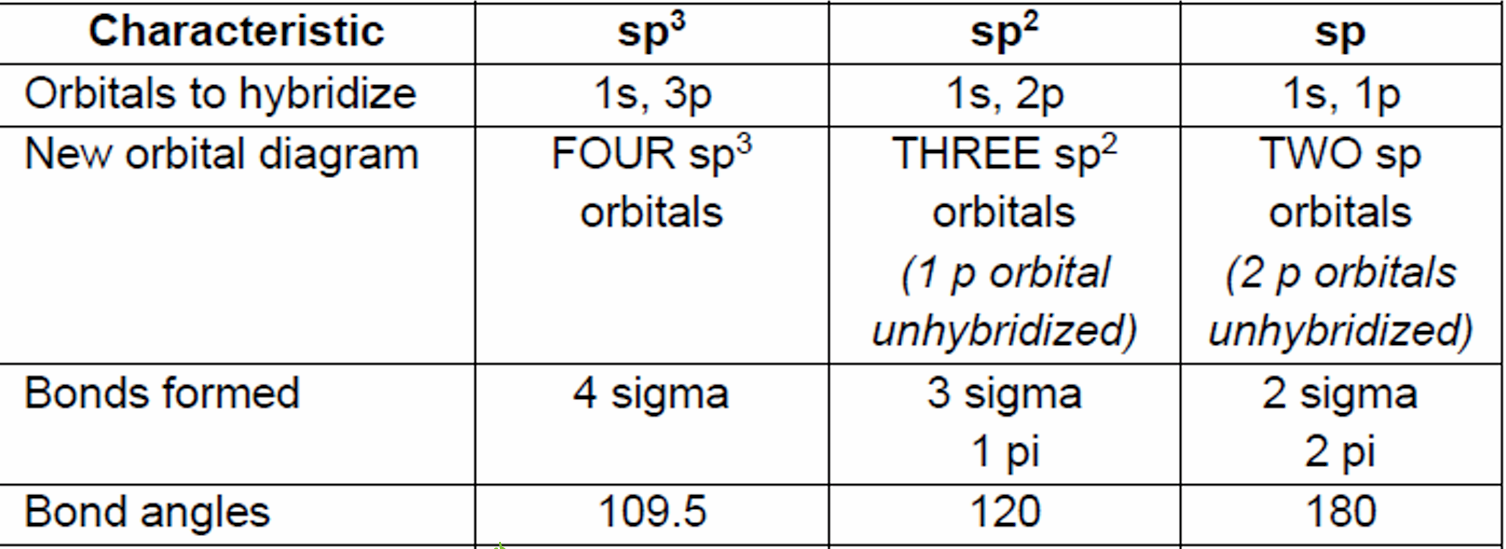
[BONDING & HYBRIDIZATION]
sp3 or sp2 or sp?
3 sigma; 1 pi =____
1s, 3p =____
THREE sp2 orbitals (1 p orbital unhybridized) =____
TWO sp orbitals (2 p orbitals unhybridized) =____
FOUR sp3 orbitals =____
4 sigma =____
180 =____
109.5 =____
1s, 2p =____
120 =____
1s, 1p =____
2 sigma; 2 pi =____
a. sp3
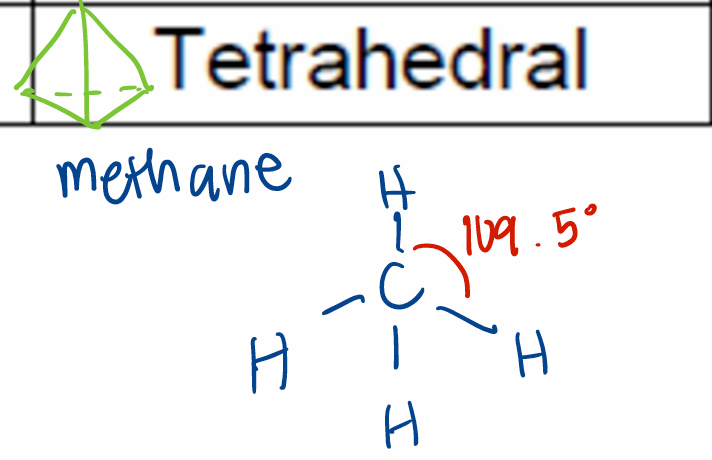
[BONDING & HYBRIDIZATION]
Tetrahedral shape is seen in
a. sp3
b. sp2
c. sp
b. sp2
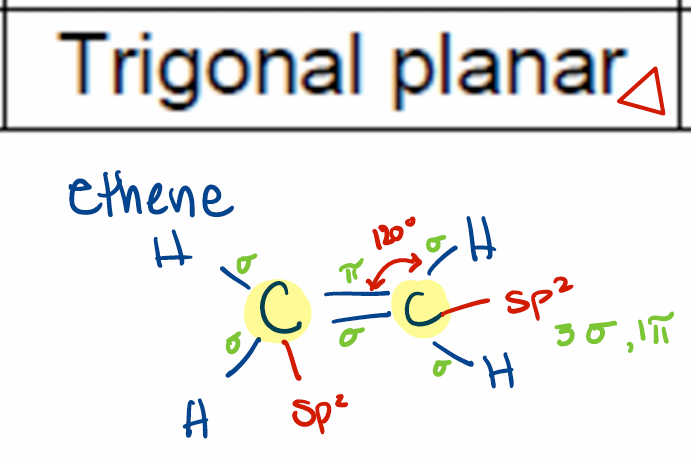
[BONDING & HYBRIDIZATION]
Trigonal Planar shape is seen in
a. sp3
b. sp2
c. sp
c. sp
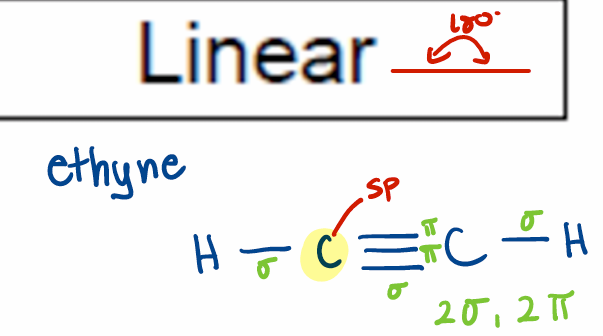
[BONDING & HYBRIDIZATION]
Linear shape is seen in
a. sp3
b. sp2
c. sp
Type of IMFA – direct relationship
Number of carbons – direct relationship
Branching of carbons – inverse relationship
FACTORS AFFECTING COMPACTNESS
London dispersion
Dipole-dipole
Hydrogen bond
INTERMOLECULAR FORCES
a. London dispersion
c. Hydrogen bond
b. Dipole-dipole
[INTERMOLECULAR FORCES]
Requirement:
Nothing (Universal); No + or - charges
Same D-D, but requires partially (+) hydrogen
Permanent partial charges (dipoles); EN atoms (X,O,N,S)
Choices:
a. London dispersion
b. Dipole-dipole
c. Hydrogen bond
c. Hydrogen bond
b. Dipole-dipole
a. London dispersion
[INTERMOLECULAR FORCES]
Strength:
Strong
Moderate
Very Weak
Choices:
a. London dispersion
b. Dipole-dipole
c. Hydrogen bond
a. London dispersion
[INTERMOLECULAR FORCES]
aka Van der Waals
a. London dispersion
b. Dipole-dipole
c. Hydrogen bond
c. Hydrogen bond
a. London dispersion
b. Dipole-dipole
[INTERMOLECULAR FORCES]
Highly significant in biological systems and biochemistry, such as proteins and DNA
Exists in all organic compounds
Present in all compounds with electronegative atoms
Choices:
a. London dispersion
b. Dipole-dipole
c. Hydrogen bond
b. Dipole-dipole
b. Dipole-dipole
a. London dispersion
c. Hydrogen bond
a. London dispersion
c. Hydrogen bond
[INTERMOLECULAR FORCES]
Examples:
Carbonyl groups
Alkyl halides (R-X)
Nonpolar substances
OH, NH groups
Alkanes, alkenes, alkynes
O,N,F containing
Choices:
a. London dispersion
b. Dipole-dipole
c. Hydrogen bond
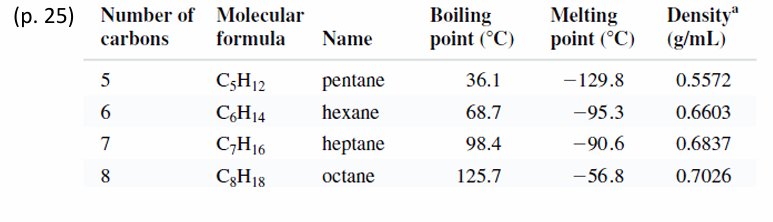
Number of carbons – direct relationship
↑C = ↑BP, ↑MP, ↑Density
[INTERMOLECULAR FORCES]
Arrange increasing BP, MP, Density
C6H14
C8H18
C5H12
C7H16
↑ BP, MP, Density = a>b>c
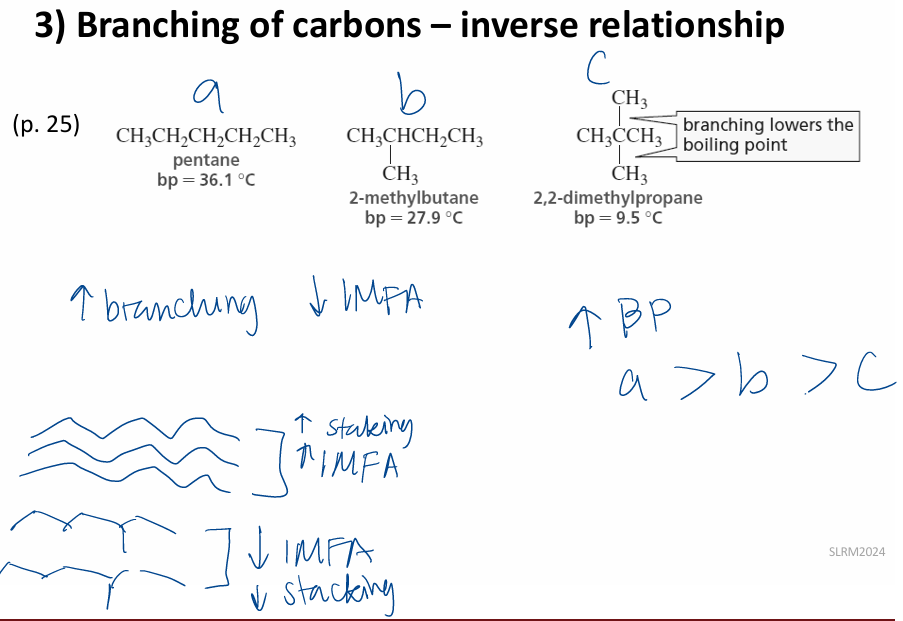
↑Branching = ↓BP, ↓MP, ↓Density
[INTERMOLECULAR FORCES]
Arrange increasing BP, MP, Density

1.Strength of IMF (direct relationship)
2.Number of carbons (inverse relationship)
3.Branching of carbons (direct relationship)
[INTERMOLECULAR FORCES]
Factors affecting polarity (i.e. water-solubility)
HB» DD »» LD
Strength of IMF (direct relationship)
[INTERMOLECULAR FORCES]
Effect of strength of IMF on water solubility
↑C= ↑Lipophilicity= ↓H2O Solubility
Number of carbons (inverse relationship)
[INTERMOLECULAR FORCES]
Effect of number of carbons on water solubility
↑Branching= ↑H2O Solubility
Branching of carbons (direct relationship)
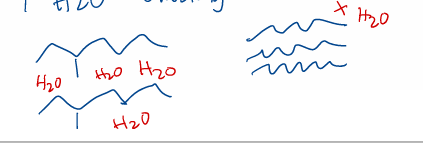
[INTERMOLECULAR FORCES]
Effect of branching of carbons on water solubility
↑C= ↑Lipophilicity= ↓H2O Solubility
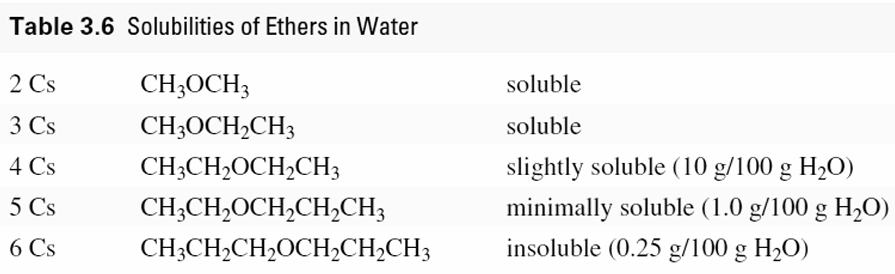
[INTERMOLECULAR FORCES]
Water solubility of ethers
[INTERMOLECULAR FORCES]
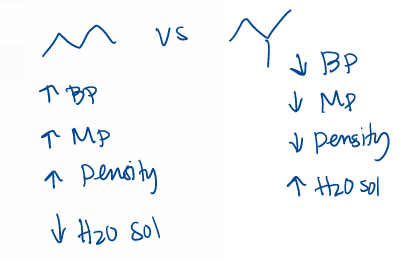
Branched vs Unbranched effects on compactness (e.g. mp, bp, density) and polarity

[INTERMOLECULAR FORCES]
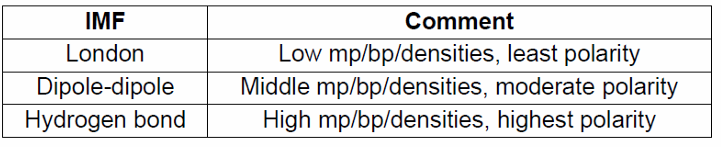
Carbon count and branching amount have opposite effects on compactness (e.g. mp, bp, density) and polarity (water-solubility)
[INTERMOLECULAR FORCES]
Strength of IMF relationship on physical properties
b. Destabilizing effect
[STRUCTURAL EFFECTS]
Strain generally has what effect on a compound?
a. Stabilizing effect
b. Destabilizing effect
b. Decreased reactivity
[STRUCTURAL EFFECTS]
Increased strain results in:
a. Increased stability
b. Decreased reactivity
b. Unreactive
[STRUCTURAL EFFECTS]
A highly stable compound is generally:
a. Highly reactive
b. Unreactive
c. ↓ Stability = ↑ Reactivity
[STRUCTURAL EFFECTS]
Which relationship is correct?
a. ↑ Stability = ↑ Reactivity
b. ↑ Strain = ↑ Stability
c. ↓ Stability = ↑ Reactivity
d. ↓ Reactivity = ↓ Stability
a. Ring strain
[STRUCTURAL EFFECTS]
aka angle strain
a. Ring strain
b. Steric effect/ hindrance
c. Torsional Strain
a. Ring strain
[STRUCTURAL EFFECTS]
Twisting of angles away from the expected due to ring closures due to deviation from the ideal bond angle
a. Ring strain
b. Steric effect/ hindrance
c. Torsional Strain
b. Steric effect/ hindrance
[STRUCTURAL EFFECTS]
Competition for space due to bulky groups, pushing bonds away from expected angles
a. Ring strain
b. Steric effect/ hindrance
c. Torsional Strain
c. Torsional Strain
[STRUCTURAL EFFECTS]
Steric strain in rotatable bonds due to small dihedral angles between them
a. Ring strain
b. Steric effect/ hindrance
c. Torsional Strain
c. Torsional Strain
[STRUCTURAL EFFECTS]
Occurs due to eclipsing of bonds → ring flipping
a. Ring strain
b. Steric effect/ hindrance
c. Torsional Strain
a. 109.5
<109.5 = strain
[STRUCTURAL EFFECTS]
ideal angle to avoid strain
a. 109.5
b. 120
c. 180
a. Ring strain
[STRUCTURAL EFFECTS]
Instability observed in cyclopropane
a. Ring strain
b. Steric effect/ hindrance
c. Torsional Strain
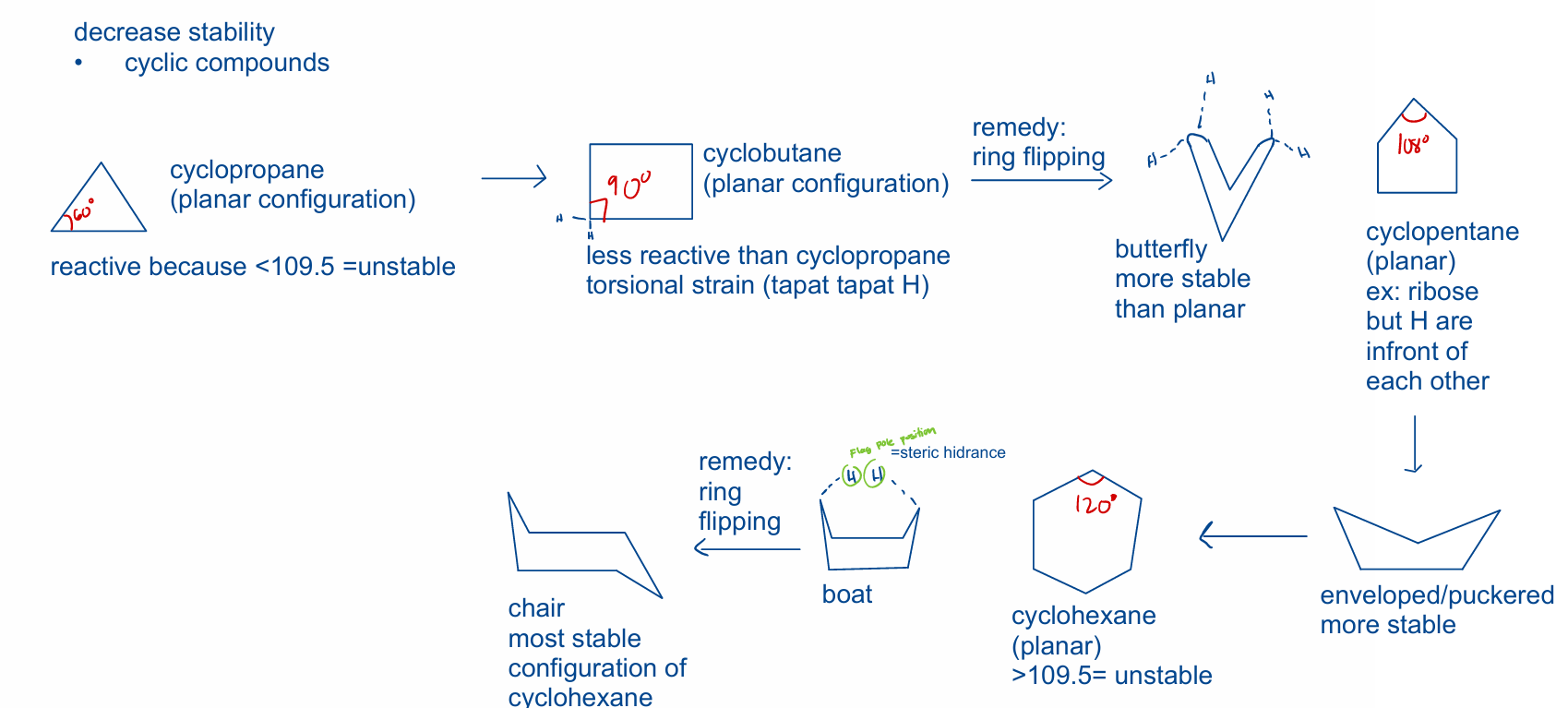
c. chair
[STRUCTURAL EFFECTS]
Most stable configuration of cyclohexane
a. butterfly
b. boat
c. chair
d. enveloped
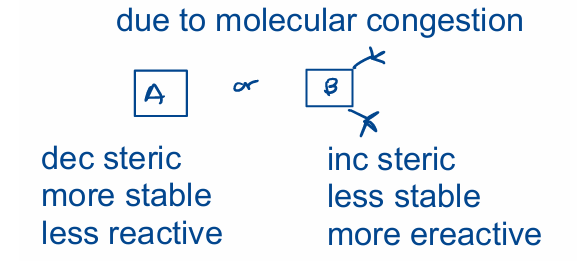
b. Steric effect/ hindrance
[STRUCTURAL EFFECTS]
Instability observed in:
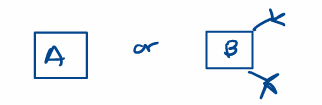
a. Ring strain
b. Steric effect/ hindrance
c. Torsional Strain
INDUCTIVE EFFECTS
[STRUCTURAL EFFECTS]
____ effect is the push (EDG: Alkyl groups) or pull (EWG: EN atoms) of electrons

[STRUCTURAL EFFECTS]
Effects of EWG and EDG on stability
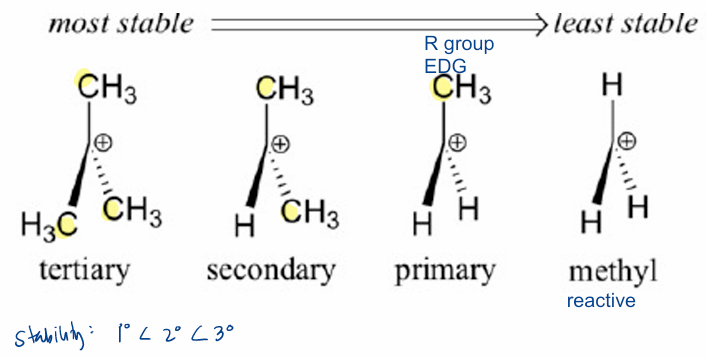
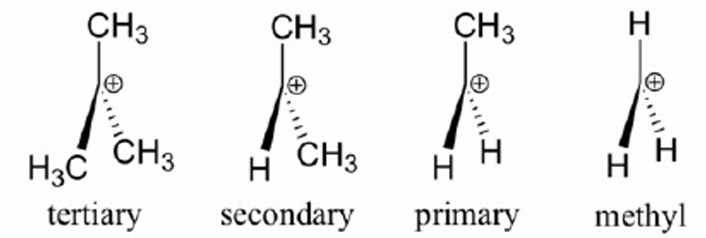
[STRUCTURAL EFFECTS]
Arrange based on stability
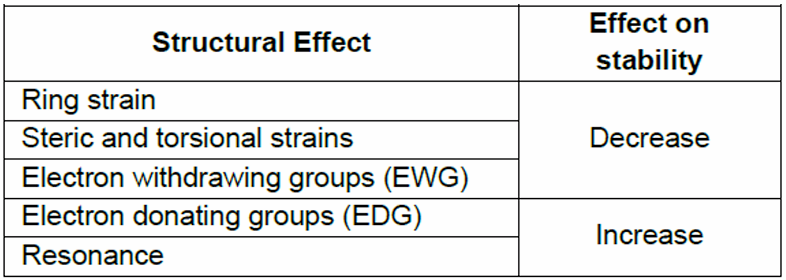
[STRUCTURAL EFFECTS]
Effects on stability: Increase or Decrease?
Resonance =____
Ring strain =____
Electron donating groups (EDG) =____
Steric and torsional strains =____
Electron withdrawing groups (EWG) =____
b. Resonance
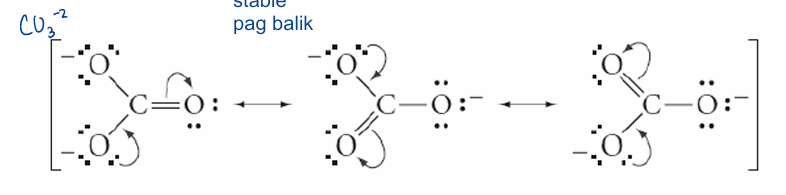
[STRUCTURAL EFFECTS]
Electron delocalization is also known as:
a. Induction
b. Resonance
c. Hybridization
d. Strain
c. Pi or lone pair electrons
[STRUCTURAL EFFECTS]
Resonance involves the movement of:
a. Sigma electrons
b. Neutrons
c. Pi or lone pair electrons
d. Protons
b. sp²-hybridized atom
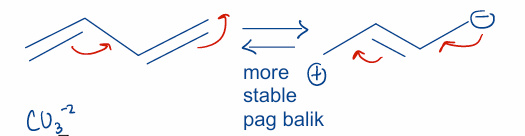
[STRUCTURAL EFFECTS]
For resonance to occur, the electrons must be adjacent to a(n):
a. sp³ carbon
b. sp²-hybridized atom
c. alkane carbon
d. tetrahedral carbon
b. Resonance
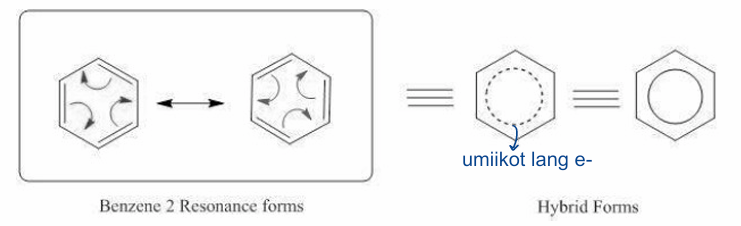
[STRUCTURAL EFFECTS]
What can be seen in Benzene ring?
a. Induction
b. Resonance
c. Hybridization
d. Strain
Being cyclic
Being Planar
Flat Configuration
Follows Huckel’s rule
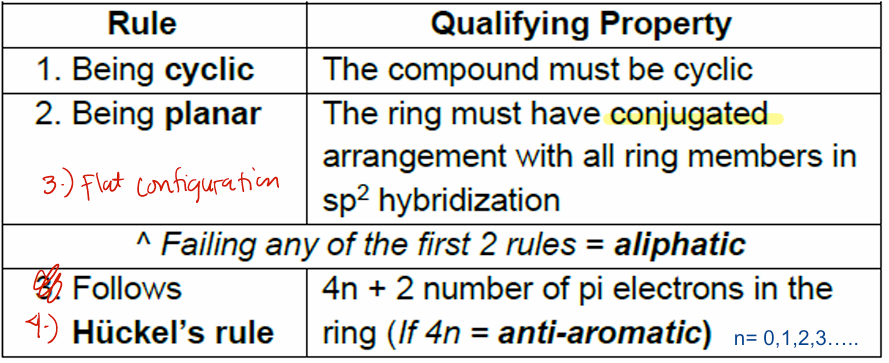
CRITERIA FOR AROMATICITY
aromatic
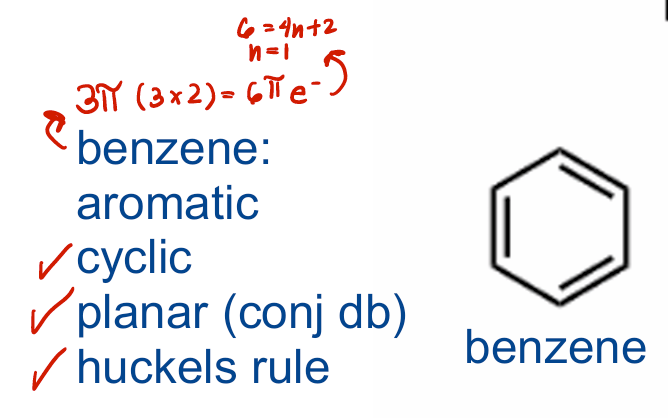
[CRITERIA FOR AROMATICITY]
Identify if aromatic or anti aromatic
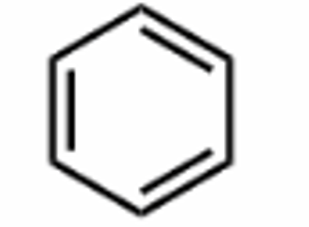
aromatic
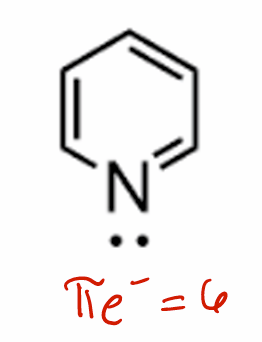
[CRITERIA FOR AROMATICITY]
Identify if aromatic or anti aromatic
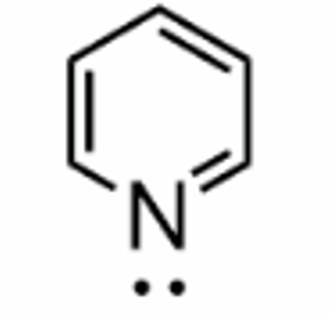
aromatic
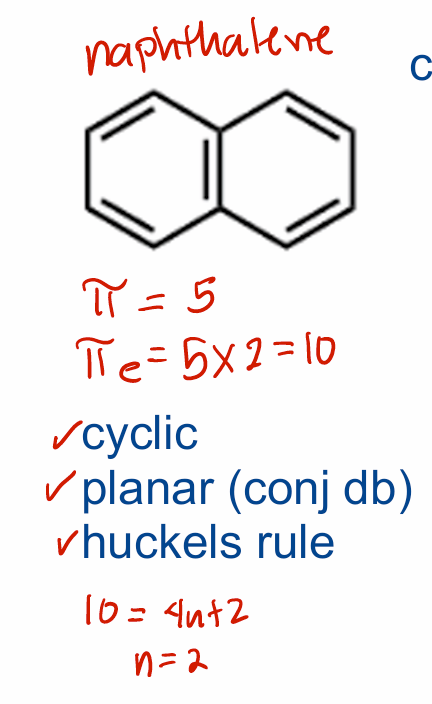
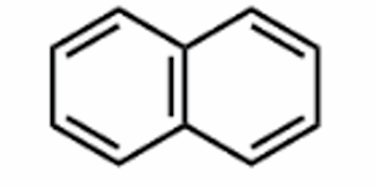
[CRITERIA FOR AROMATICITY]
Identify if aromatic or anti aromatic
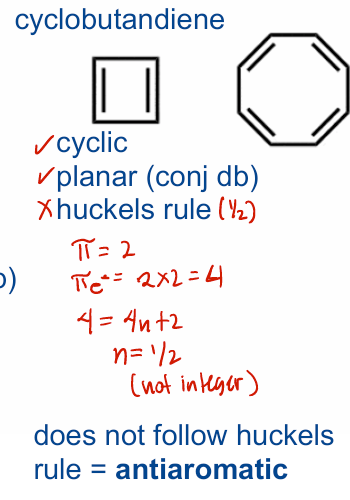
[CRITERIA FOR AROMATICITY]
Identify if aromatic or anti aromatic

antiaromatic
not conjugated
[CRITERIA FOR AROMATICITY]
Identify if aromatic or anti aromatic
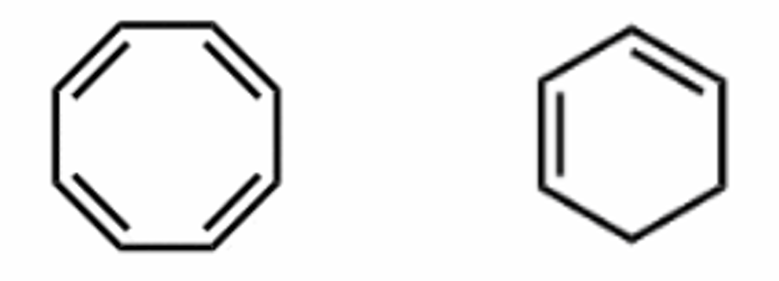
Neither. This is aliphatic
[CRITERIA FOR AROMATICITY]
Identify if aromatic or anti aromatic