Sumer, Akkad, Babylon, Hettites
 Call Kai
 Learn
Learn Practice Test
 Spaced Repetition
 Match
Match Flashcards
 Knowt Play
1/14

There's no tags or description
Looks like no tags are added yet.
Name | Mastery | Learn | Test | Matching | Spaced | Call with Kai | Chat |
|---|
No analytics yet
Send a link to your students to track their progress
15 Terms
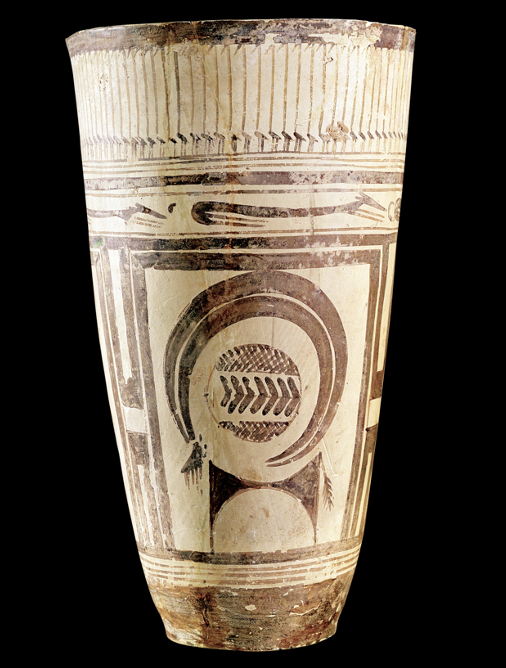
Who: Unknown
What: Beaker with animal decoration, painted ceramic
Where: Susa, Elam (Modern day Iran)
When: 4000 BCE
Why: Animals represented were domestic (goats and dogs), not hunting animals (shows the shift from Paleolithic hunting murals)
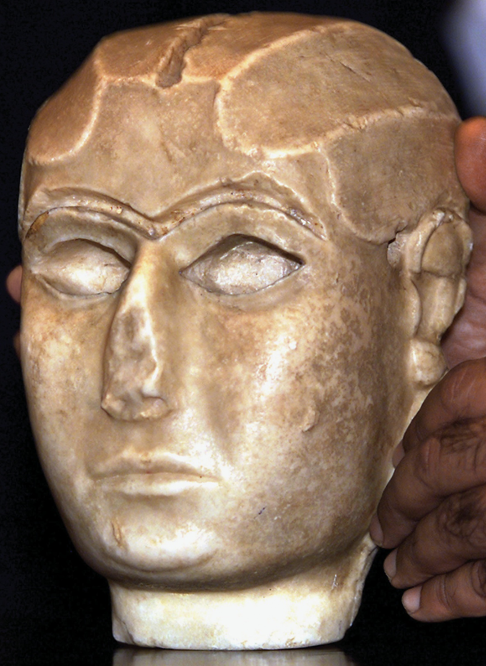
Who: Unknown
What: Female Head made of Marble
Where: Uruk, Iraq (modern day Warka)
When: 3200-3000 BCE
Why: Likely a sculpture of Inanna, the goddess of fertility, love and war one of the most complex deities in Mesopotamia.
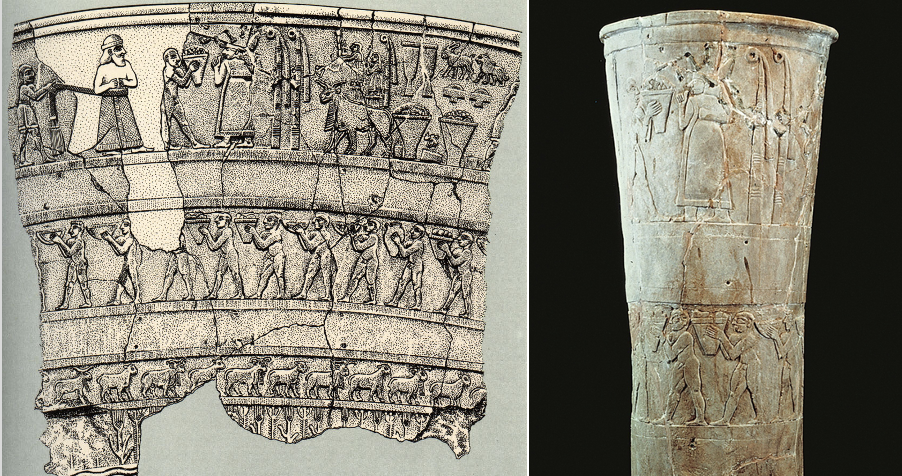
Who: Unknown
What: Warka Vase
Where": Uruk, Iraq (modern day Warka)
When: 3200-3000 BCE
Why: Depicts the offerings to the goddess Inanna, shows the religious rituals performed at the time
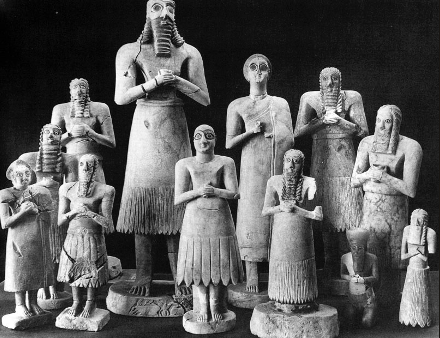
Who: Unknown
What: Statues of worshipers made of shell and limestone
Where: Square Temple at Eshnunna, Iraq (modern day Tell Asmar)
When: 2700 BCE
Why: Again telling of the religous practices and worship at the time. Also depicts the clothing and styles worn by the population at the time
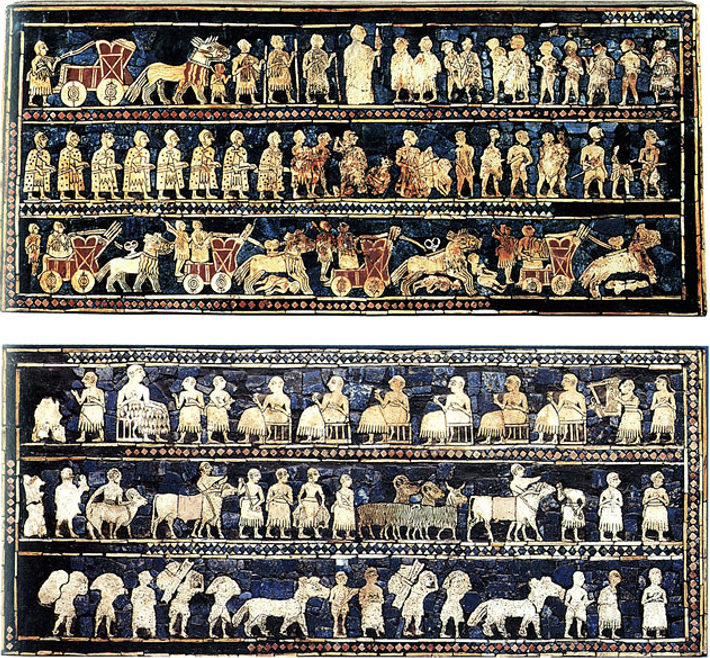
Who: Unknown
What: Standard of Ur (Wood inlaid with shell, lapis lazuli, and red limestone)
Where: Royal Cemetery, Ur, Iraq (modern Tell Maqayyar)
When: 2600 BCE
Why: Appears to tell two stories one of war, and one with an aftermath of peace and cultivation. Additionally provides information of Near East Kingship during this time.
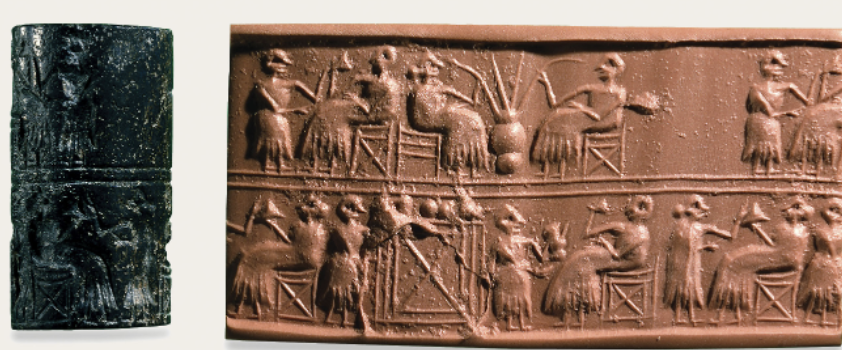
Who: Unknown
What: Cylinder seal (banquet scene) and modern impression
Where: On the Tomb of Pu-abi, Royal Cemetery, Ur, Iraq (Modern day Tell Muqayyar)
When: 2600 BCE
Why: Found in the tomb of Queen Puabi. Seal was used to roll onto wet clay and create an indentation. Streamlines cuneiform (almost like a typewriter)
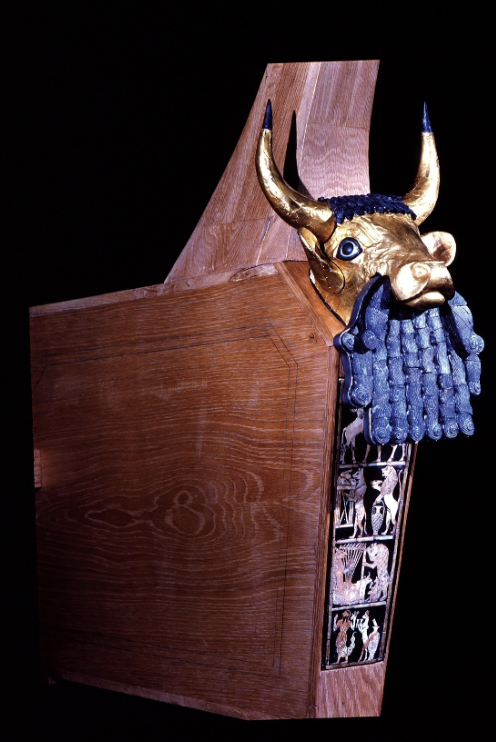
Who: Unknown
What: Bull-headed lyre with gold leaf and lapis lazuli
Where: Tomb 789, Royal Cemetery, Ur, Iraq (Modern Tell Muqayyar)
When: 2600 BCE
Why: One of the oldest string instruments ever discovered. Places emphasis on music
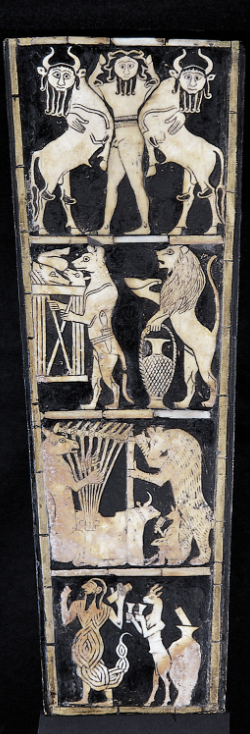
Who: Unknown
What: Sound box (part of the Bull headed lyre)
Where: Tomb 789 Royal Cemetery, Ur, Iraq (modern Day Tell Muqayyar)
When: 2600 BCE
Why: Inscribed mural on the sound box, depicting Gods and animals (anthropomorphized) , inlcuding the Scoprion man, who is the gatekeeper to the underworld.
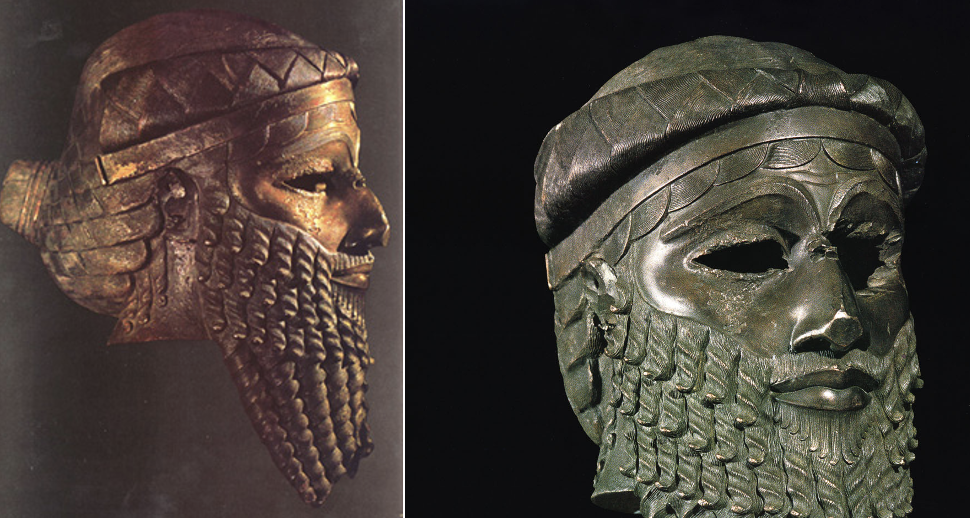
Who: Unknown
What: Head of Akkadian ruler
Where: Nineveh, Iraq (Modern day Kuyunjik)
When: 2250-2200 BCE
Why: Made of copper, showed metalworking was an artistic style, showed the looks of people and rulers at the time
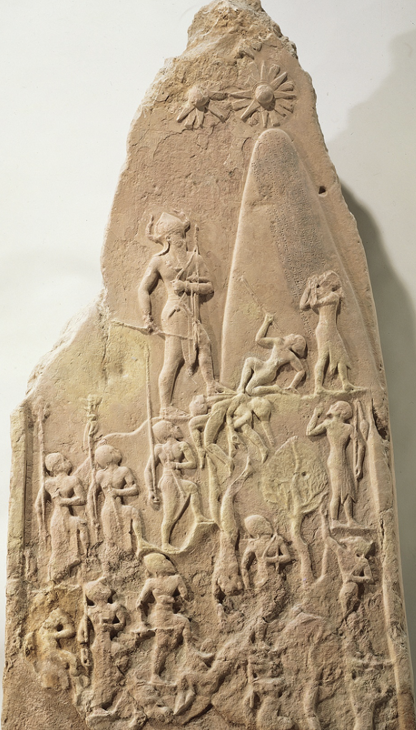
Who: Unknown
What: Victory Stele of Naram- Sin
Where: Susa, Iran
When: 2254-2218 BCE
Why: Shows that Naram Sin is a king which was militarily successful in defeating the Lullubi people
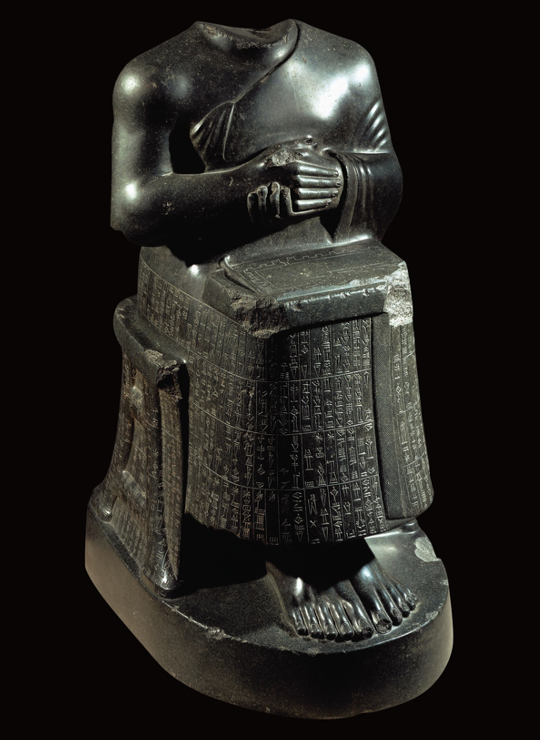
Who: Unknown
What: Seated statue of Gudea holding temple plan
Where: Girsu, Iraq (modern Telloh)
When: 2100 BCE
Why: Shows the Sumerian literacy and beliefs, Gudea the king in seated prayer position
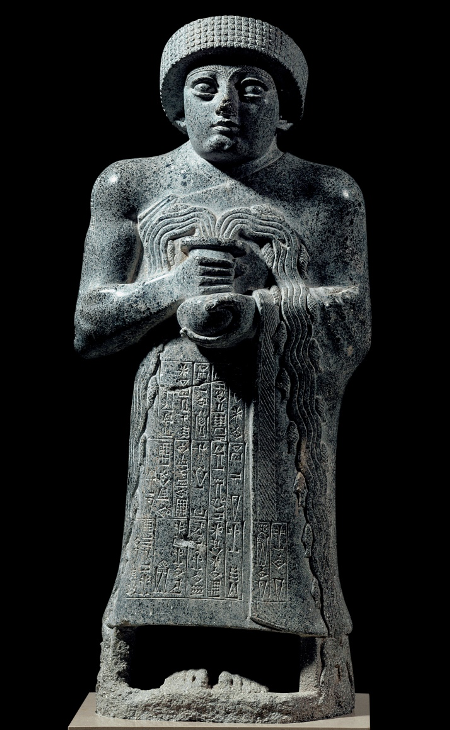
Who: Unknown
What: Gudea holding an overflowing water jar
Where: Temple of Geshtinanna, Girsu, Iraq (modern Telloh)
When: 2100 BCE
Why: Overflowing water with fish coming out represents the prosperity that Gudea brought the Mesopotamian people
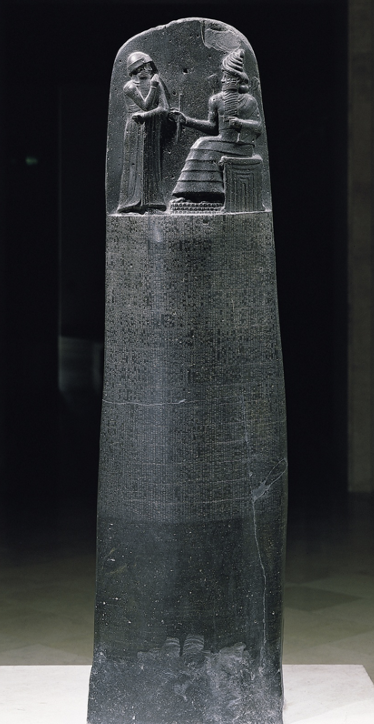
Who: Unknown
What: Stele with law code of Hammurabi, Hammurabi and Shamash at the top
Where: Susa, Iran
When: 1780 BCE
Why: Showed Hammurabis code, the legal code of the time which was used as a legal basis for law codes for many centuries
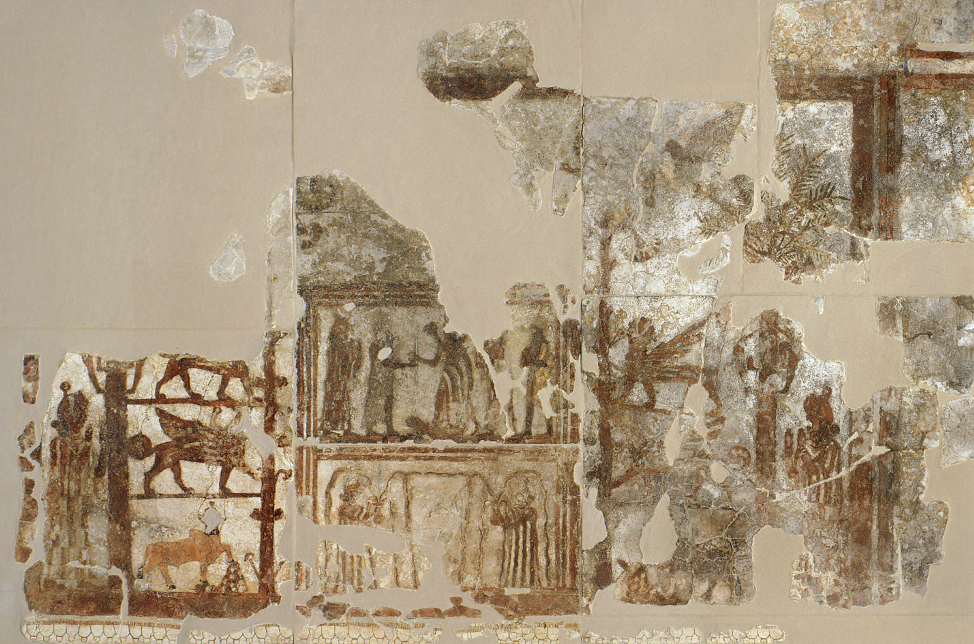
Who: Unknown
What: Mural painting of the Investiture of Zimri- Lim
Where: Mari, Syria (Modern Tell Hariri)
When: 1779-1757 BCE
Why: Depicts the king Zimri- Lim recieving a gift from god in order to rule (shows that rulers believed they were chosen by the gods ot rule)
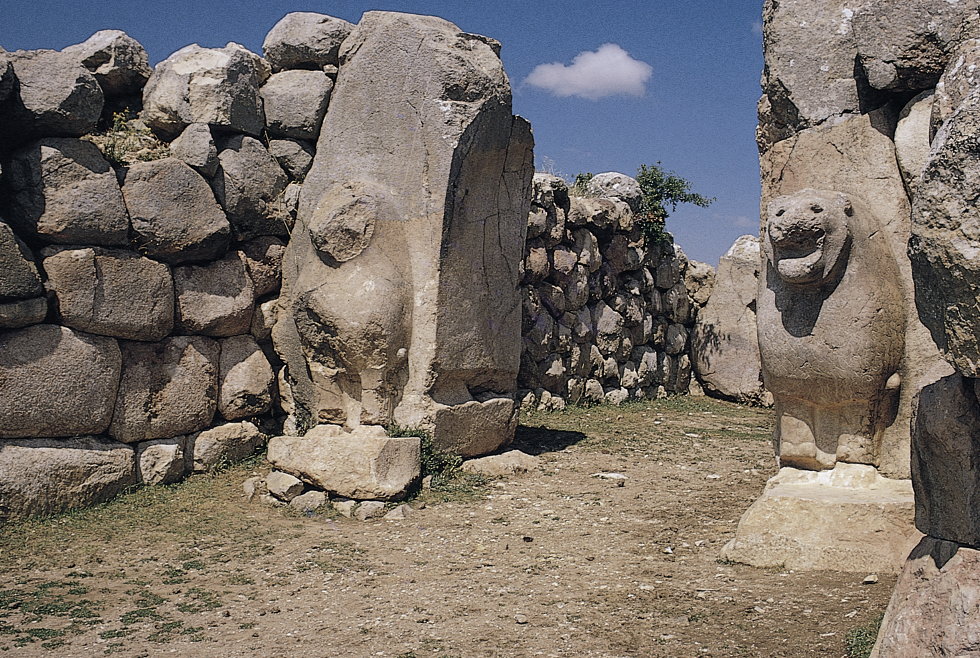
Who: Unknown
What: Lion Gate
Where: Hattusa, Turkey (modern day Boghazkoy)
When: 1400 BCE
Why: Lions likely scared evil spirits away from the city