Equine cardiac exam refresher & murmurs
 Call Kai
 Learn
Learn Practice Test
 Spaced Repetition
 Match
Match Flashcards
 Knowt Play
1/22

There's no tags or description
Looks like no tags are added yet.
Name | Mastery | Learn | Test | Matching | Spaced | Call with Kai | Chat |
|---|
No analytics yet
Send a link to your students to track their progress
23 Terms
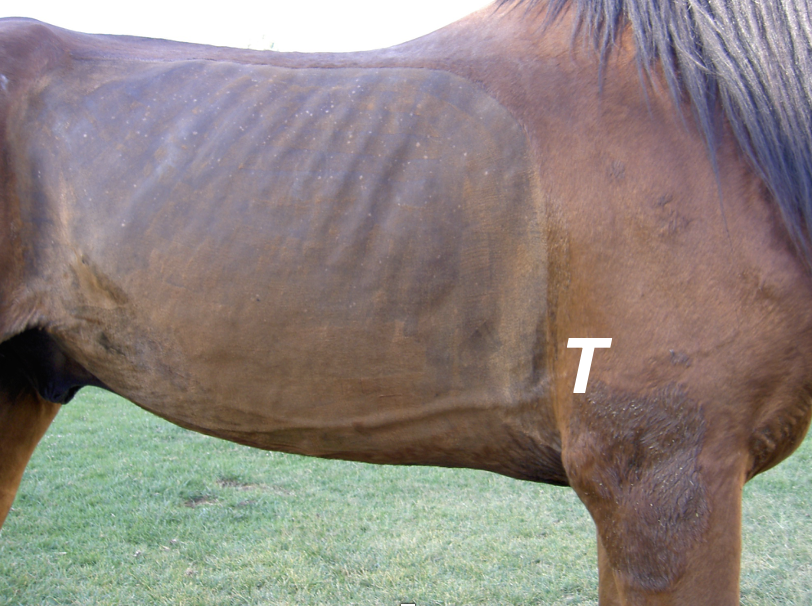
Where should you auscultate a horse?
Feel apex beat (mitral valve)
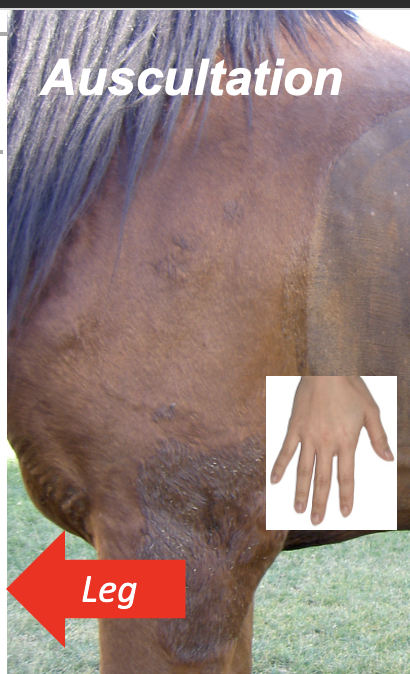
Pull leg forward to get triceps out the way
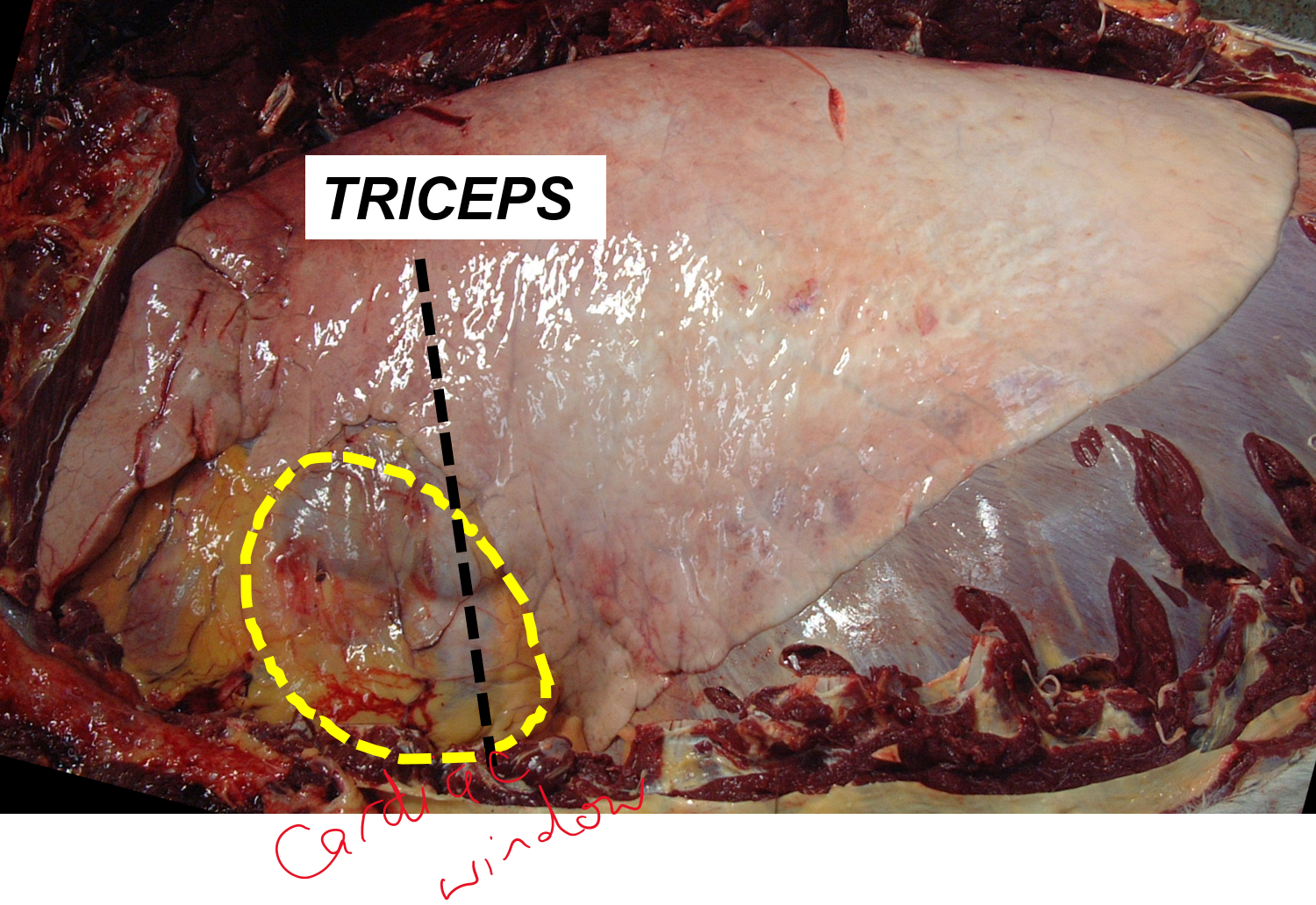
On right place stethoscope bell right under triceps just dorsal to point of elbow
Why do you need to cover all the cardiac window?
To auscultate all three valves on left
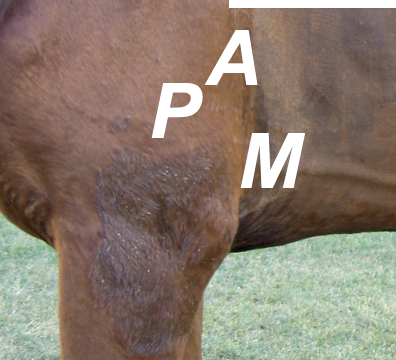
And tricuspid on right
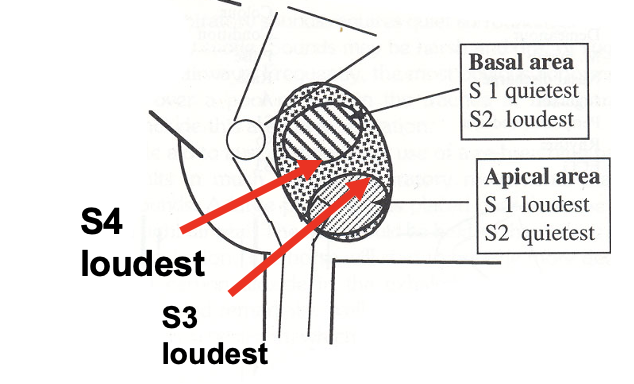
S4 loudest @ base & S3 loudest at apex (normal and abnormal vary in intensity)
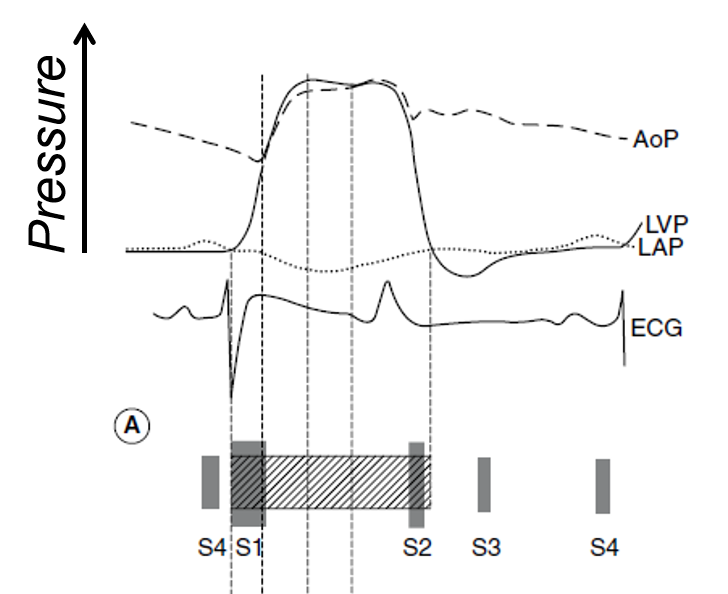
Desribe the basic heart sounds
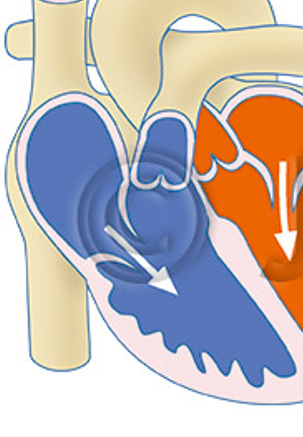
Ventricles contract —> S1: shutting of AV valves (mitral & tricuspid)
LUB
Ventricls relax —> S2: shutting of semilunar valves (aortic & pulmonic)
DUP
Which valve murmur may be heard on both left and right side?
Aortic regurgitation
Recall the basic heart sounds of a horse
S1 : Shutting of AV valves
S2 : Shutting of Semilunar valves
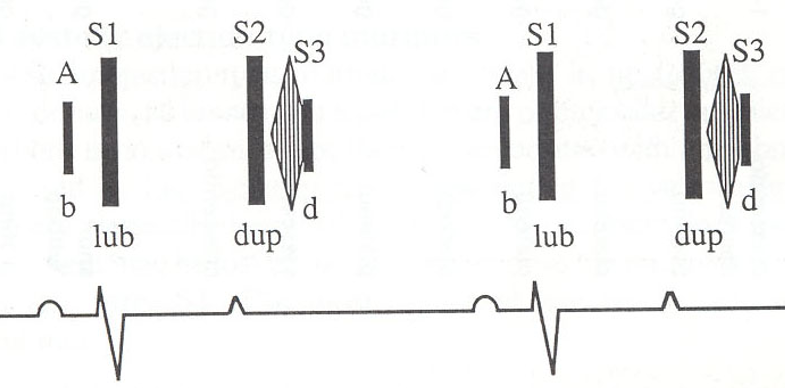
S3 End of rapid ventricular filling (Just after S2)
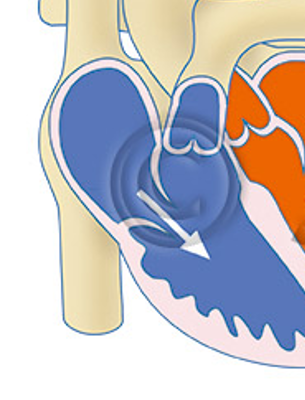
S4: Atrial contraction (Just before S1)
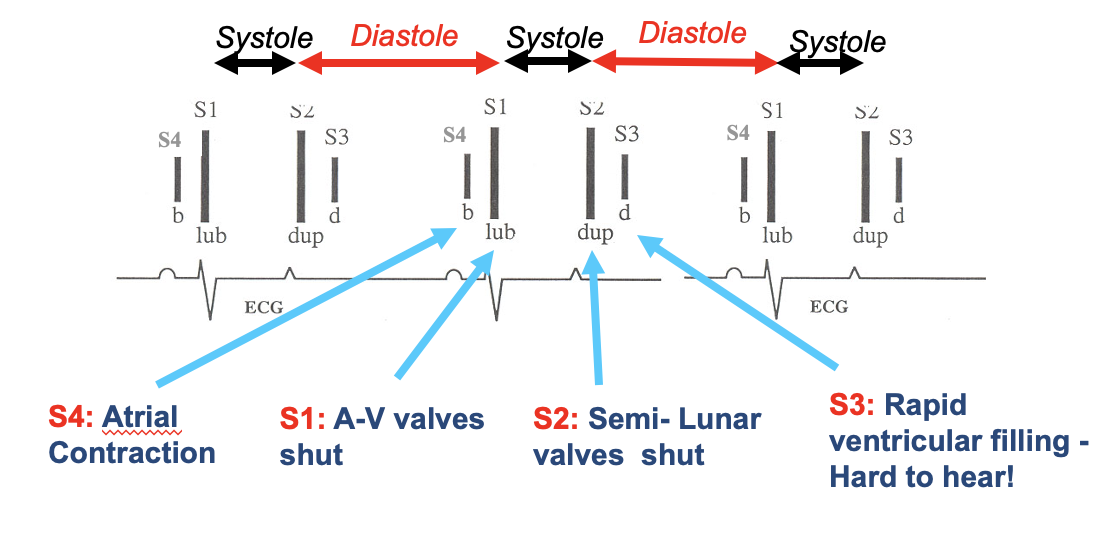
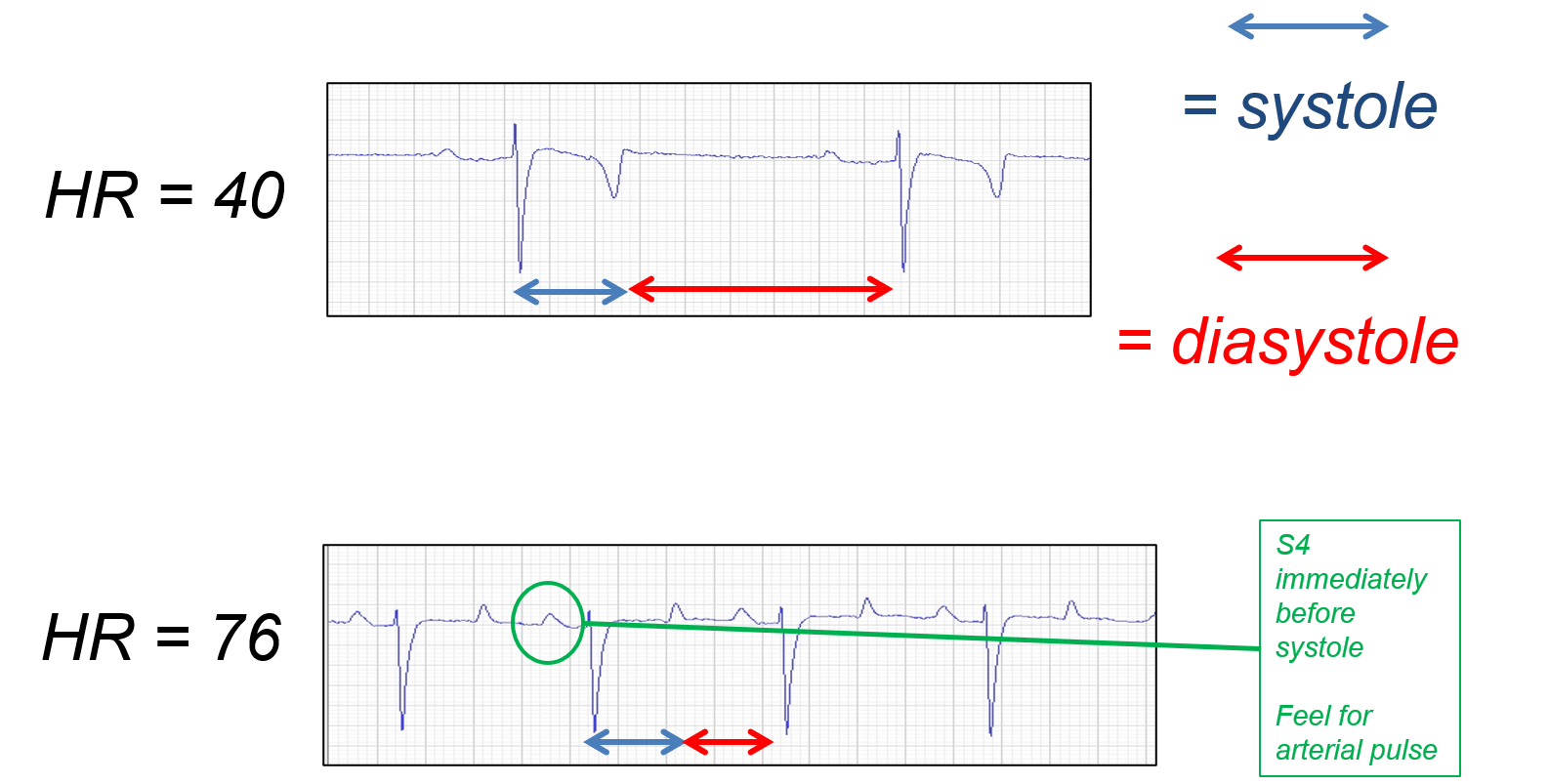
How can you tell when systole or diastole is?
At normal heart rates systole much shorter than diastole
short gap between beat = systole
long gap between beat = diastole
At a higher heart rate - S4,S1 (double heart sound) is at start of systole
duration of systole = duration of diastole
What factors cause turbulence? (Which in turn causes a murmur)
'Reynolds number'

Diameter
Velocity
Density / viscosity
For example:
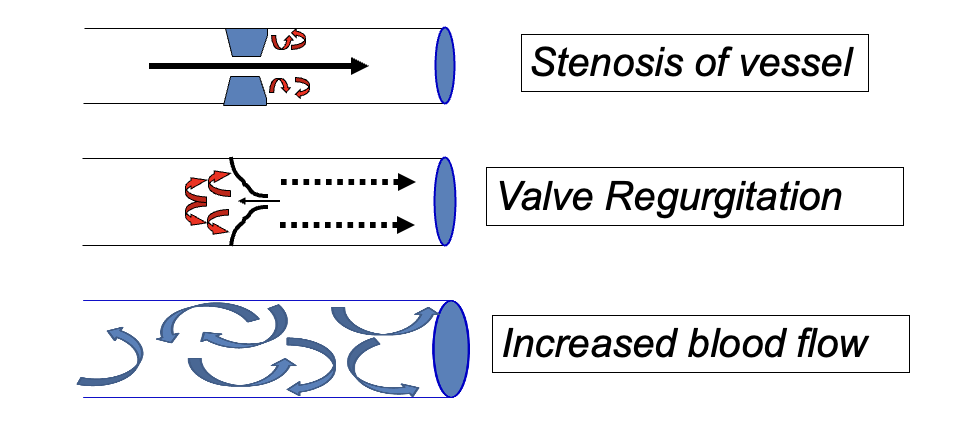
normal laminar flow = silent
What are the grades of heart murmur intensities?
Grade 1: Barely audible
Grade 2: Definite murmur quieter than S1&S2
Grade 3: Obvious loud murmur as loud as S1&S2
Grade 4: Very loud murmur louder than S1&S2
Grade 5: Very loud and has a palpable thrill
Grade 6: Audible with stethoscope just off chest wall
How can you describe a murmur?
Intensity (grade 1-6)
Timing: systolic/ diastolic/ continuous
Early, mid, late, 'pan' (covers whole time between heart sounds i.e. cannot hear S1 & 2), 'holo' (same as pan but can hear other heart sounds)
PMI
Radiation (away from PMI)
Shape of murmur (Plateau, crescendo, descres, cres/decres)
Quality of murmurs
Harsh/ Coarse/ Blowing/Honking? Buzzing
Pitch
How does aortic regurg murmur present on ausc?
Holodiastolic
Between aorta & LV
Decrescendo

How does mitral valve regurg murmur present on ausc?
Holosystolic
Between LA & LV
Plateau
What are the two types of physiological/ functional murmurs?
Flow murmur
FIlling murmur
Give an example of a flow murmur and explain its features
Aortic flow murmur
Early-mid systole
Localised over heart base
Cres/Decres
Occurs immediately after S1, always finish before S2
May change intensity w/ HR / exercise

What are the features of a filling murmur?
Early diastole, L or R
Fit, young animals
Squeak/whoop/click
Short duration between S2 & S3
Localised over base / apex
May change intensity w/ HR
How common are pathological murmurs?
Valvular regurg / congen 1° defects usually
Hardly ever valvular stenosis
List the features of a mitral/ tricuspid regurg murmur
holo/pansystolic
leaky valve throughout systole
plateau / crescendo
PMI @ heart apex
may radiate dorsal & cranial
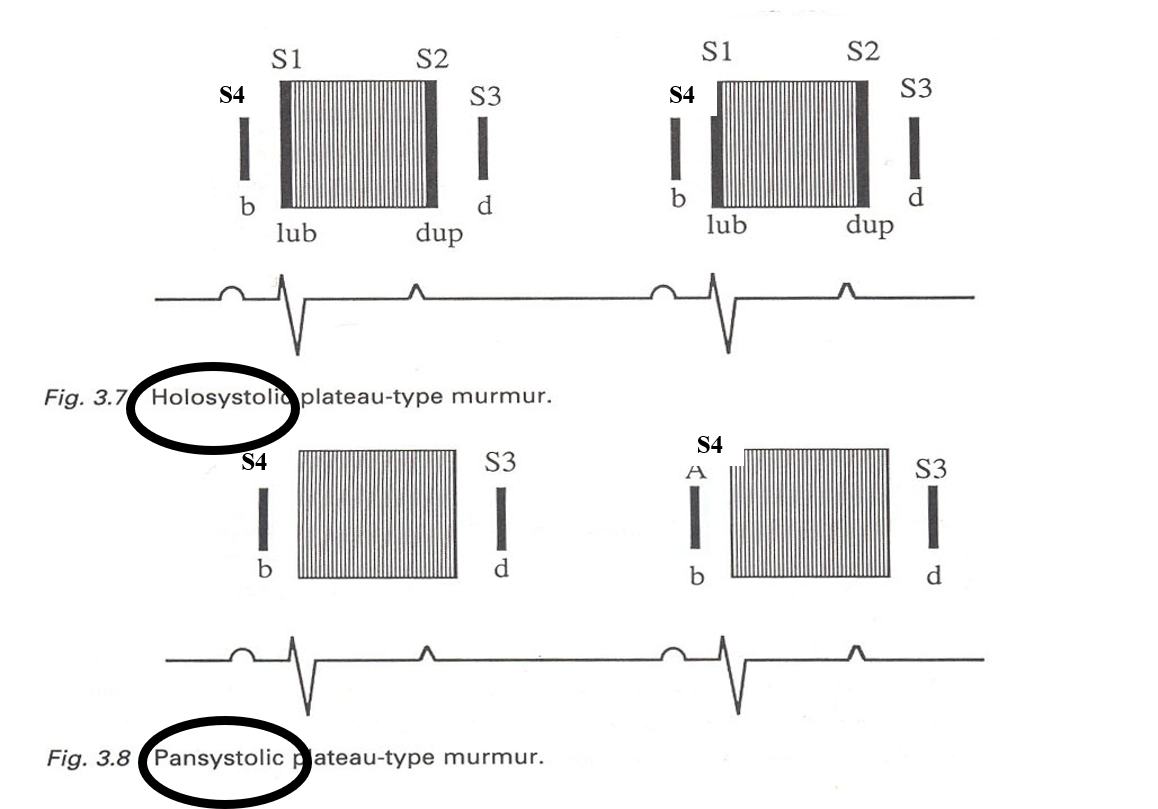
“LUB shh DUB”
When should you advise further investigation in MV/TV murmurs?
Mitral Valve: Grade 3-6
Tricuspid Valve Regurgitation: Grade 4-6
What are the features of a ventricular septal defect (VSD) murmur?
Loudest on R (occ. left)
Loud → thrill
Radiate cranial/ventral
Pansystolic (can’t hear heart sounds at all)
Normally young horses
Sometimes 2° L sided pulmonary a. flow murmur
What a ddx for VSD murmur?
Tricuspid insufficiency
What is this echo showing?

Ventricular septal defect → dextrapositioning of aorta (displaced over ventricular septum)
Can measure size & velocity of jet through defect
What are the features of an aortic insufficiency murmur?
Common older horses
Descrescendo, buzzing / cooing
Holodiastolic
PMI left heart base
May radiate ventrally
'Teenager murmur' because most common in older horses teens + and bc of sound
Incr. resting HR to maintain CO

“UHHH”
What are the features of a patent ductus artierosus murmur?
Cont.
Between aorta & pulmonay a.
Normal in neonates up to 5 days
Should disappear within first few days of life
PMI L heart base, also loud R heart base
Waxes & wanes in intensity during cardiac cycle

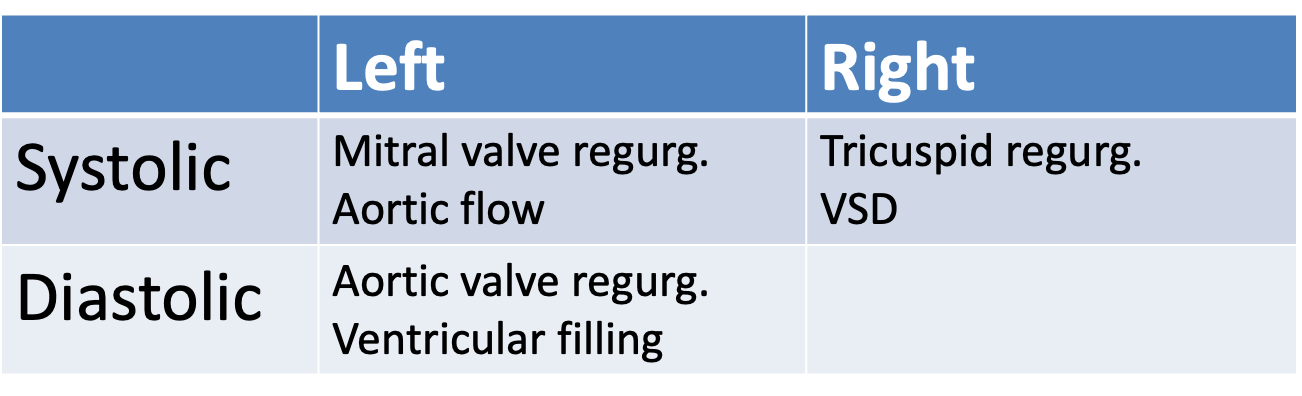
Summary of the main murmurs and their locations
Physiologic
Aortic flow murmurs
Ventricular filling murmurs
Pathologic
Mitral/tricuspid valve regurgitation
Aortic regurgitation
Ventricular septal defect
(Patent Ductus arteriosus)