anaerobic respiration
 Call Kai
 Learn
Learn Practice Test
 Spaced Repetition
 Match
Match Flashcards
 Knowt Play
1/12

There's no tags or description
Looks like no tags are added yet.
Name | Mastery | Learn | Test | Matching | Spaced | Call with Kai | Chat |
|---|
No analytics yet
Send a link to your students to track their progress
13 Terms
why cant anaerobic respiration take place for a long time?
only produces 2x ATP her ATP,
which is a low energy yield, so doesn’t release enough energy to continue these cell processes for very long
when does anaerobic respiration take place?
when there is no O2 available/ in anaerobic conditions
without NAD, what happens ?
glycolysis is halted as TP can’t be oxidised
what is the purpose of anaerobic respiration/ fermentation?
to regenerate NAD- extra step at end of glycolysis. allows synthesis of 2ATP per glucose, prevents pyruvate from moving on to link reaction as its converted to something else
why do we need to regenerate NAD
limited supply of NAD in cytoplasm and without NAD, glycolysis stops
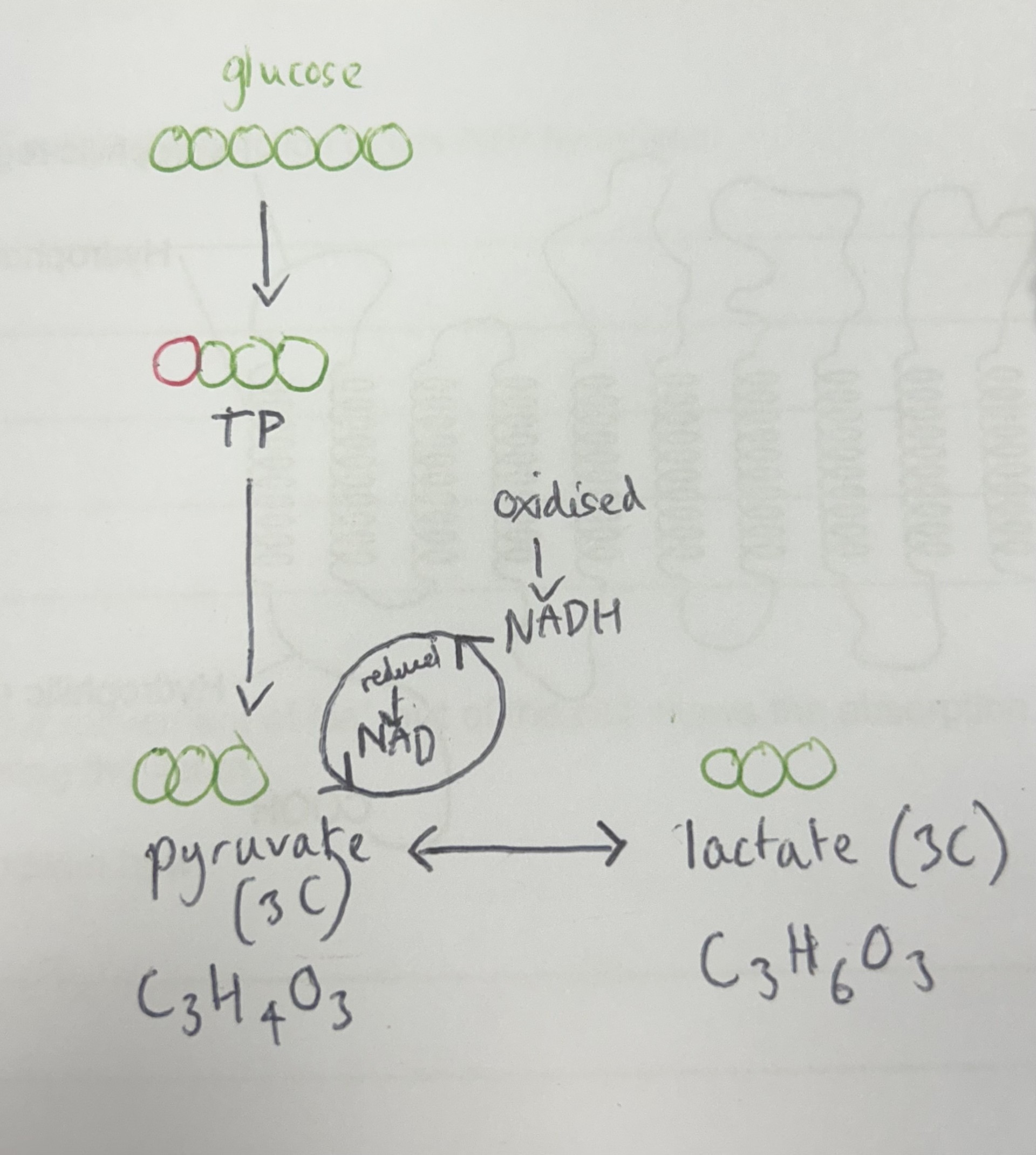
what does this image show
anaerobic respiration of animals and bacteria
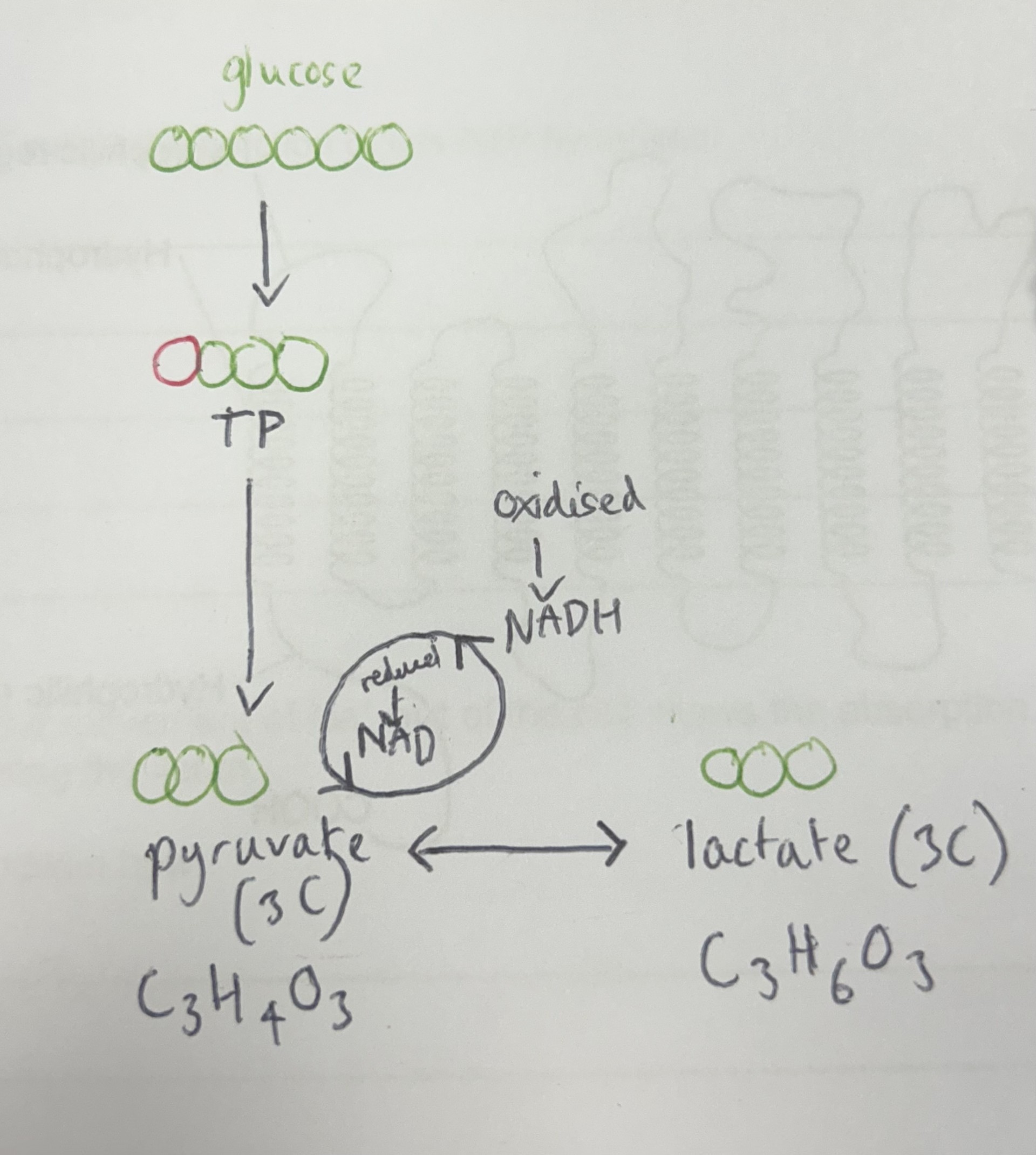
explain this process of anaerobic respiration of animals and bacteria
pyruvate reduced to become lactate
takes 2 hydrogen atoms from NADH
NADH is oxidised
reversible reaction- energy from lactate molecule can be retrieved when oxygen is available
what does anaerobic respiration cause
oxygen debt
what can too much lactate cause?
toxic/muscle fatigue/muscle cramp/PH decrease which affects enzyme
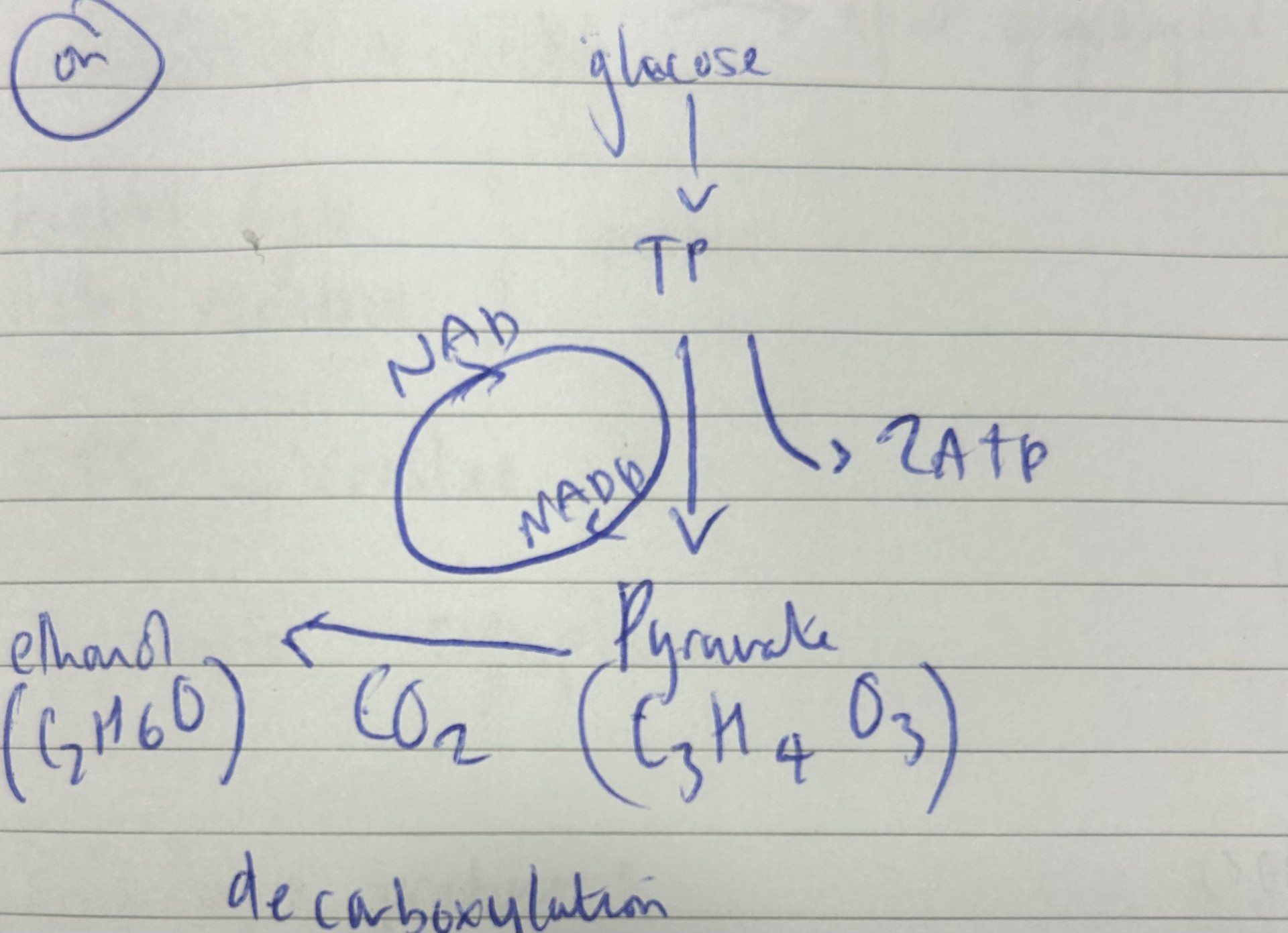
what does this image show?
anaerobic respiration in plants and fungi
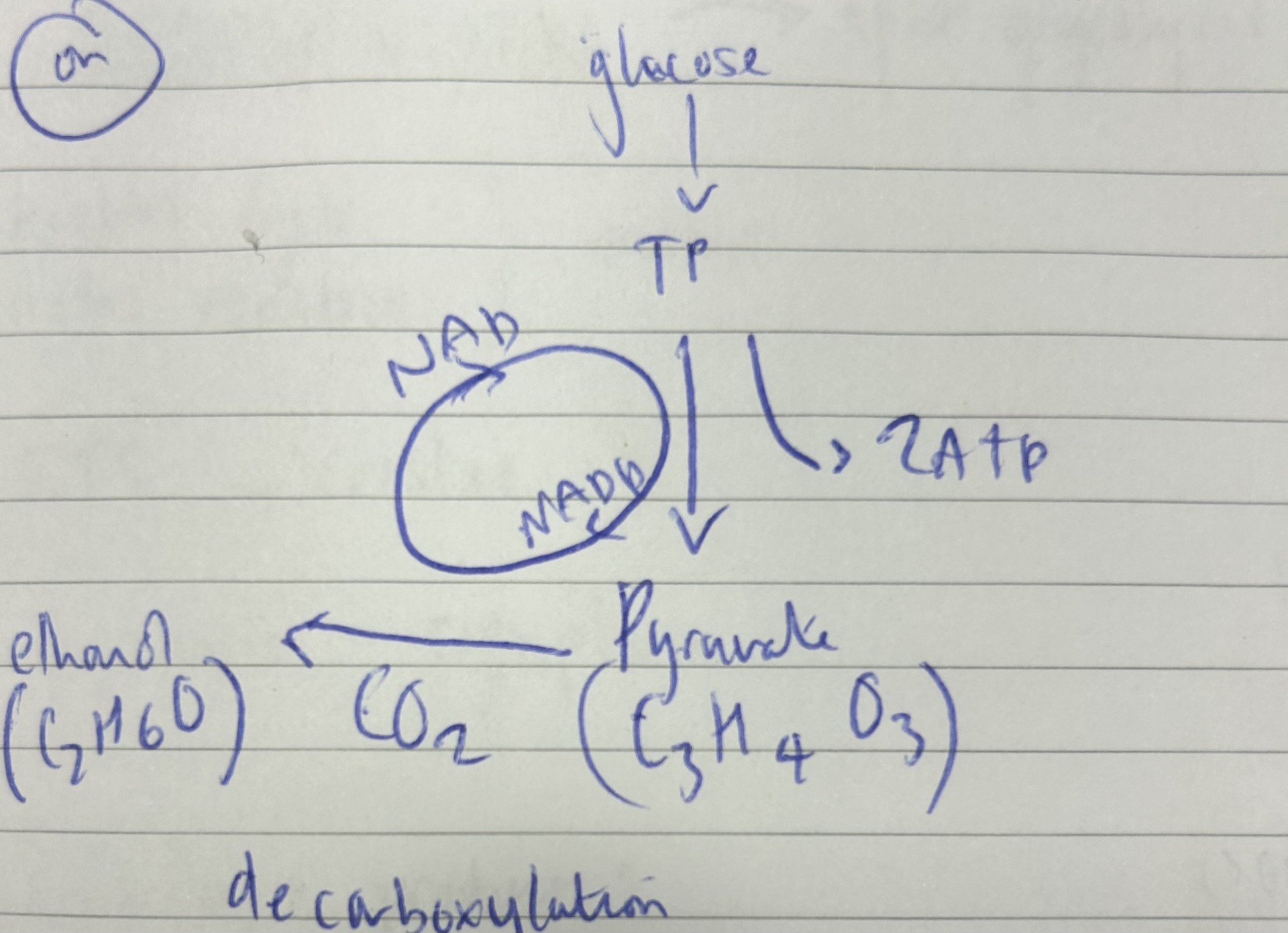
explain the process of anaerobic respiration in plants and fungi (ethanol fermentation)
Pyruvate decarboxylated + reduced to form ethanol.
NADH oxidised and releases 2 hydrogens, forming NAD.
energy lost. irreversible
is energy lost or gained in ethanol fermentation
lost
is ethanol fermentation a reversible reaction
no