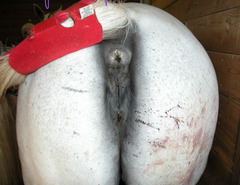
23 Disorders of the Gravid Uterus
 Call Kai
 Learn
Learn Practice Test
 Spaced Repetition
 Match
Match Flashcards
 Knowt Play
1/34

There's no tags or description
Looks like no tags are added yet.
Name | Mastery | Learn | Test | Matching | Spaced | Call with Kai | Chat |
|---|
No analytics yet
Send a link to your students to track their progress
35 Terms
Abortion storm
What is it called when an individual farm has a ton of abortions?
Placental insufficiency (twinning, uterine body pregnancy, endometrial atrophy), twisted umbilical cord, trauma, poor nutrition
Name some causes of non-infectious abortions in mares
1. bacterial: streptococcus zooepidemicus, CEM, lepto, Nocardioform actinomycetes
2. viral: EHV-1, EVA
3. protozoal: trypanosoma equine, babesia
Name some causes of infectious abortions in mares
Transcervical, hematogenous, previous intrauterine infection
What are the three routes of infection for bacterial causes of equine abortion?
Based on where infection is = if you see pus at cervical star, then infection was thru the cervix
How can you tell if abortion is from a transcervical infection in horses?
Placentits
A mare presenting with inappropriate lactation and vulvar discharge around 8 months of gestation may put what at the top of your differentials list?
1. Ascending
2. nocardioform
3. hematogenous
What are the 3 types of placentitis?
Ascending placentitis caused by Streptococcus equi zooepidemicus
What is the most common type of placentitis and what causes it?
Crossiella equi
What typically causes nocardioform infectious infertility (placentitis) in mares? What organism?
Base of gravid uterus and non-gravid horns or between the body/horn
Where does nocardioform placentitis occur?
Cervical star (this is ascending placentitis)
What is this red arrow pointing to?
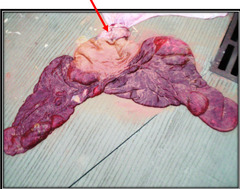
Ascending
What type of placentitis is this?
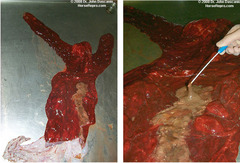
Nocardioform actinomycetes
What type of placentitis is this?
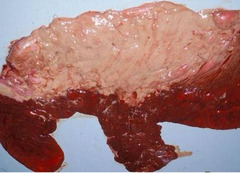
nocardioform actinomycetes
What type of placentitis causes late term abortion, stillbirths, and premature births in horses, ascending placentitis or nocardioform actinomycetes
Barren mares (a mare who did not conceive or carry her pregnancy out to term last breeding season)
Which mares are more prone to abortion, barren mares or maiden mares
Older
Abortion in horses is more often in younger or older mares
Placentitis
What problem is diagnosed thru combined measurement of thickness of the uterus and placenta in horses?
GIVING ALL:
1. altrenogest (progesterone)
2. broad spectrum antibiotics: potassium penicillin, trimethoprim sulfamethoxazole
3. banamine
4. pentoxifylline
What is the gold standard for treating placentitis in horses?
EHV 1
What is the most IMPORTANT CAUSE of equine herpes abortion?
EHV1, EHV3, and EHV4
What are the equine herpes viruses?
EHV3
Which equine herpes viruses causes coital exanthema and vesicles, but NOT abortion?
EHV4
Which equine herpes virus causes rhinopneumonitis and sporadic abortion?
EHV1
A broodmare is housed with yearlings. You find she is stressed due to the large herd. She has no clinical signs, but late term aborts at 7 months. Thoughts?
EHV1
What should be your NUMBER 1 DIFFERENTIAL on a farm when mares are aborting?
EHV1
On a horse farm, foals and yearlings have a respiratory disease outbreak in march. In may, the broodmares have late term abortions. You see intranuclear eosinophilic inclusion bodies in white foci spots on the liver. Thoughts?
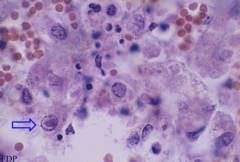
At 3, 5, 7, and 9 months of gestation
You can vaccinate mares with pneumabort to prevent EHV. When do you vaccinate them?
Mummification
This is the death of a fetus in the absence of bacterial infection, so there is loss of fetal fluid but the tissue is still on them
Maceration
This is the death of a fetus with bacterial contamination, so only the bones will remain
Mummy
Mummy or macerated?
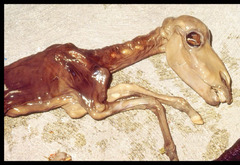
Macerated
Mummy or macerated?
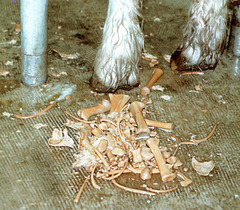
No, you just need to remove the fetus and do uterine therapy
Are mares systemically ill if their babies are macerated?
Dorsal uterine attachment of the broad ligament
Why is uterine torsion considered rare in horses?
MORE THAN
More than or less than 180 degree uterine torsion in horses is known to be painful and create low grade colic that doesn't respond well to analgesics?
Vaginal Varicose veins
What is the most common cause of slight recurrent vaginal bleeding in horses?
Vaginal varicose veins
This problem is more common in older, multiparous mares near the end of gestation