Lab 2 Tissues
 Call Kai
 Learn
Learn Practice Test
 Spaced Repetition
 Match
Match Flashcards
 Knowt Play
1/33

There's no tags or description
Looks like no tags are added yet.
Name | Mastery | Learn | Test | Matching | Spaced | Call with Kai | Chat |
|---|
No analytics yet
Send a link to your students to track their progress
34 Terms
Hierarchy in the Human Body
Cell
Tissue
Organ
Organ system
Organism
Epithelial Tissue Characteristic
Cellualrity and Specialized contacts
Polarity - apical(top) or basal(bottom)
Supported by connective tissue (attached to basement membrane)
Avascularity (no blood vessels/ nutrients need to diffuse to epithelial tissue)
Regeneration (replacement of cells lost due to friction)
Classification of Epithelia
Basis of Arrangement(or number of layers), such as simple 1 layer of stratified multiple layers
Cell Shape such as squamous(flat), cuboidal(cube-shaped), or columnar(column-shaped)
glands formed by epithelial cells
Exocrine glands vs Endocrine Glands
Exocrine glands secrete substances through ducts to the outside of the body or into body cavities, while endocrine glands release hormones directly into the bloodstream to regulate various bodily functions.

What Tissue?
Simple squamous epithelium
Function: allows material to pass diffusion and filtration in sites where protection isn’t important and secretes lubricating substances.
Location: air sacs of lungs, lining of heart and blood vessels, and ventral body cavity

What Tissue?
Simple Cuboidal epithelium
Function: secretion and absorption
Location: kidney tubules and ovary surface
What Tissue?
Simple columnar epithelium
Function: absorption and secretion of mucus, enzymes, and other substances
Location: Nonciliated digestive tract, gallbladder, excretory ducts, uterine tubes, some parts of uterus


What Tissue?
Pseudostratified columnar epithelium
Function: secretes substances particualry mucus and propels mucus by ciliary action.
Location: Nonciliated in males sperm carrying ducts, ciliated lines in trachea, upper respiratory tract
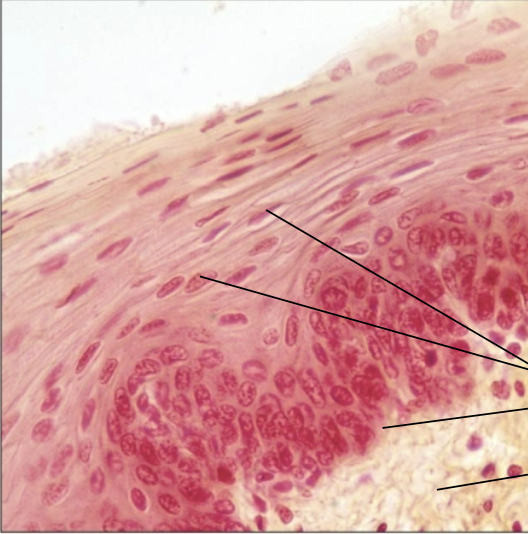
What Tissue?
Stratified squamous epithelium
Function: protects underlying tissues in areas subjected to abrasion
Location: nonkeratinized type forms moist linings of esophagus, mouth, and vagina, keratinized type forms the epidermis of the skin, a dry membrane.

What Tissue?
Stratified cuboidal epithelium
Function: protection
Location: largest ducts of sweat glands, mammary glands, and salivary glands

What Tissue?
Stratified Columnar epithelium
Function: protection and secretion
Location: rare in body, small amounts in male urethra and large ducts of some glands
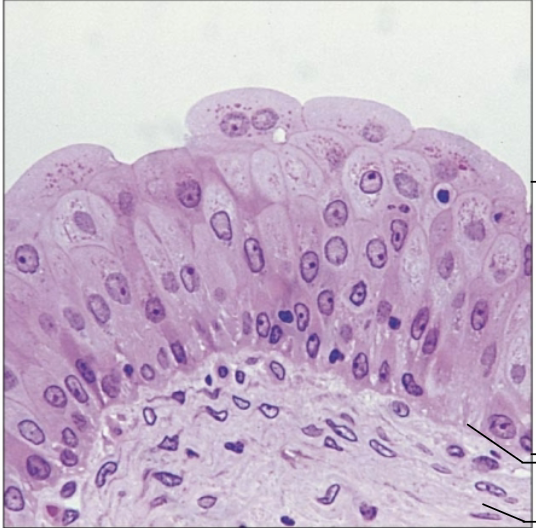
What Tissue?
Transitional epithelium
Function: Stretches readily and permits distention of urinary organ by contained urine
Location: Lines ureters, urinary bladder, and part of urethra
Connective Tissue Characteristics
rich blood supply
composed of many cell types
has nonliving material(extracellular matrix) found between cells; matrix produced by cells and composed of
Ground substance: interstitial fluid, cell adhesion proteins, and proteoglycans
Fibers: collagen, elastic, and reticular fibers
Connective tissue functions to
protect tissues/organs
support tissues/organs
bind together other tissues
Loose connective tissue, areolar vs adipose vs reticular
Areolar: cushions/protects body
Adipose: insulates body and food storage
Reticular: fine collagen fibers
Dense Connective Tissue, elastic vs normal
Elastic: bronchial tubes, large arteries
Normal: in ligaments and tendons
regular: in tendons/ligaments
irregular - in dermis of skin, submucosa of digestive tract

What Tissue?
Embryonic Connective Tissue: Mesenchyme
Function: gives rise to other connective tissue
Location: primary embryo
What tissue?
Connective Tissue Proper: Loose connective tissue, areolar
Function: Wraps and cushions organs; important role in inflammation; holds and conveys tissue fluid
Location: epithelia of body, mucous membranes, surrounds capillaries, packages organs

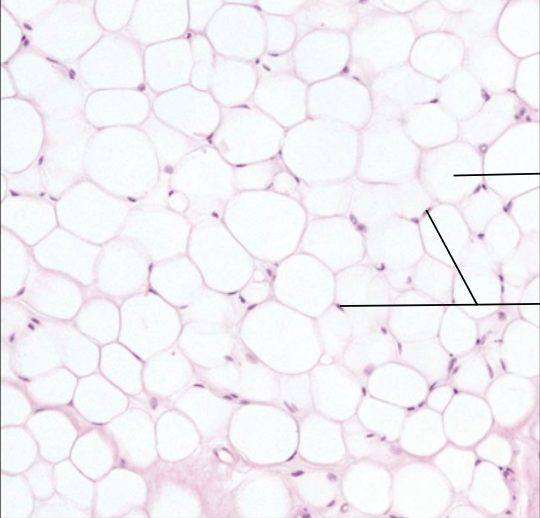
What tissue?
Connective Proper Tissue: loose connective tissue, adipose
Function: provides reserve fuel; insulates against heat loss; supports and protects organs
Location: under skin; around kidneys and eyeballs; within abdomen; in breast

What tissue?
Connective tissue proper: loose connective tissue, reticular
Function: Fibers form soft internal Skelton (stroma) that supports other cell types like white blood cells, mast cells, and macrophages
Location: Lymphoid organs

What tissue?
Connective tissue proper: dense connective tissue, dense regular
Function: attaches muscles to bone or other muscles, attaches bones to bones, withstands great stress
Location: tendons, most ligaments, aponeuroses
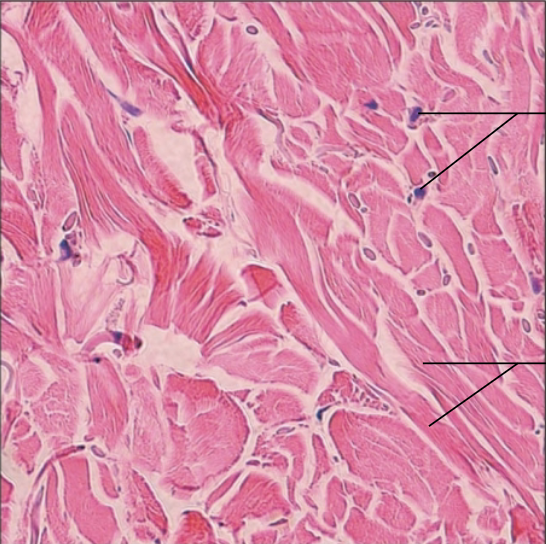
What tissue?
Connective tissue proper: dense connective tissue, dense irregular
Function: able to withstand tension exerted in many directions, provides structural strength
Location: Fibrous capsules of organs and joints, dermis of skin
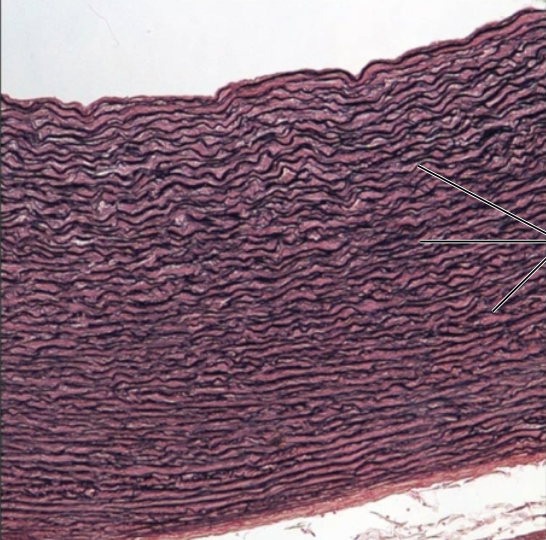
What tissue?
Connective tissue proper: dense connective tissue, elastic
Function: allows recoil of tissue following stretching, maintains pulsatile flow of blood through arteries
Location: Walls of large arteries, certain ligaments associated with the vertebral column
Three Types of Cartilage
A. Hyaline
B. Elastic
C. Fibrocartilage
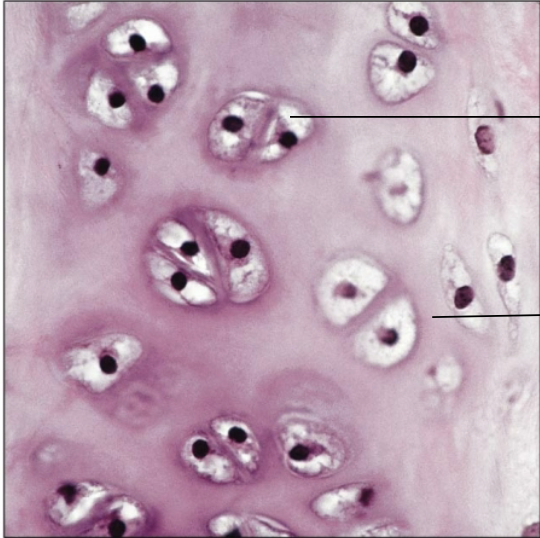
What type of cartilage?
Hyaline
Function: supports and reinforces, serves as resilient cushion, resist stress
Location: most of the embryonic skeleton, covers the ends of long bones in joint cavities, nose

What cartilage?
Elastic
Function: maintains shape of structure while allowing flexibility
Location: supports external ear, epiglottis
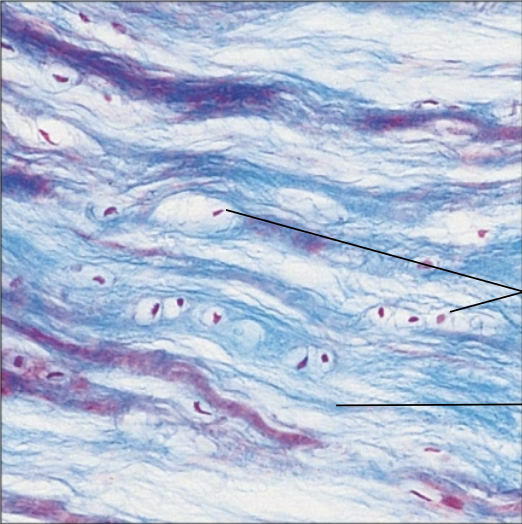
What cartilage?
Fibrocartilage
Function: Tensile strength with ability to absorb compressive shock
Location: intervertebral discs, disc of knee joints

What is it?
Bone
Function: supports and protects, provides levers for muscles to act on, stores calcium and other minerals
Location: Bone
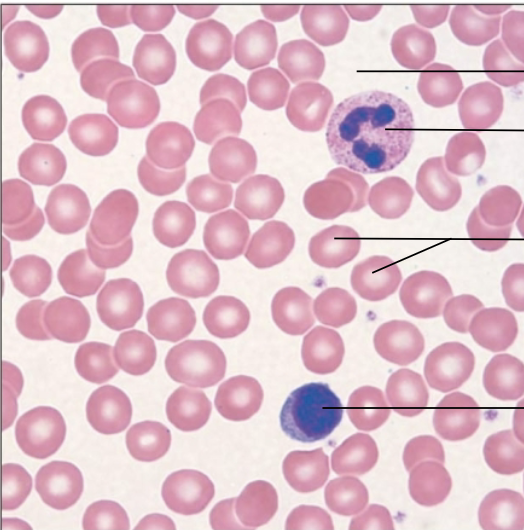
What is it?
Blood
Function: Transport of respiratory gases, nutrients, waste, and other substances
Location: blood vessels
Three types of muscle tissue?
Skeletal: voluntary muscle that is striated
Cardiac Muscle: involuntary muscle found in heart
Smooth Muscle: involuntary visceral muscle that lines the walls of hollow organs

What type of muscle?
Skeletal Muscle
Function: voluntary movement, locomotion, facial expressions
Location: attached to bones or occasionally to skin

What type of muscle?
Cardiac Muscle
Function: as it contracts, it propels blood into circulation, involuntary control
Location: Walls of heart

What muscle?
Smooth Muscle
Function: propels substances or objects along internal pathways, involuntary control
Location: mostly in the walls of hollow organs
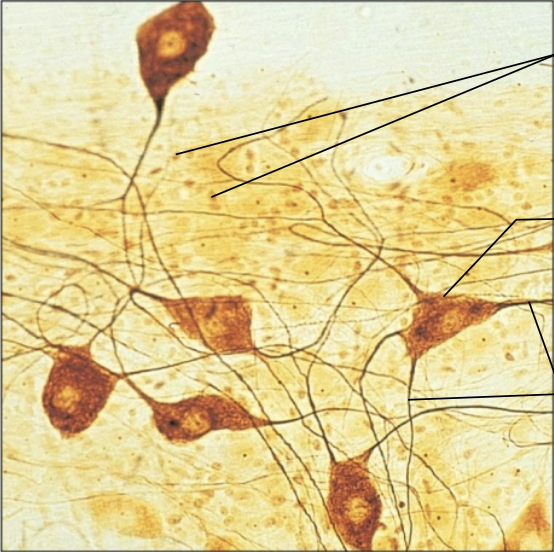
What type of tissue?
Nervous tissue
Function: neurons transmit electrical signals from sensory receptors and to effectors, supporting cell support and neuron protection
Location: Brain, spinal cord, nerves