Final CHEM8B Reactions
 Call Kai
 Learn
Learn Practice Test
 Spaced Repetition
 Match
Match Flashcards
 Knowt Play
1/20

There's no tags or description
Looks like no tags are added yet.
Name | Mastery | Learn | Test | Matching | Spaced | Call with Kai | Chat |
|---|
No analytics yet
Send a link to your students to track their progress
21 Terms
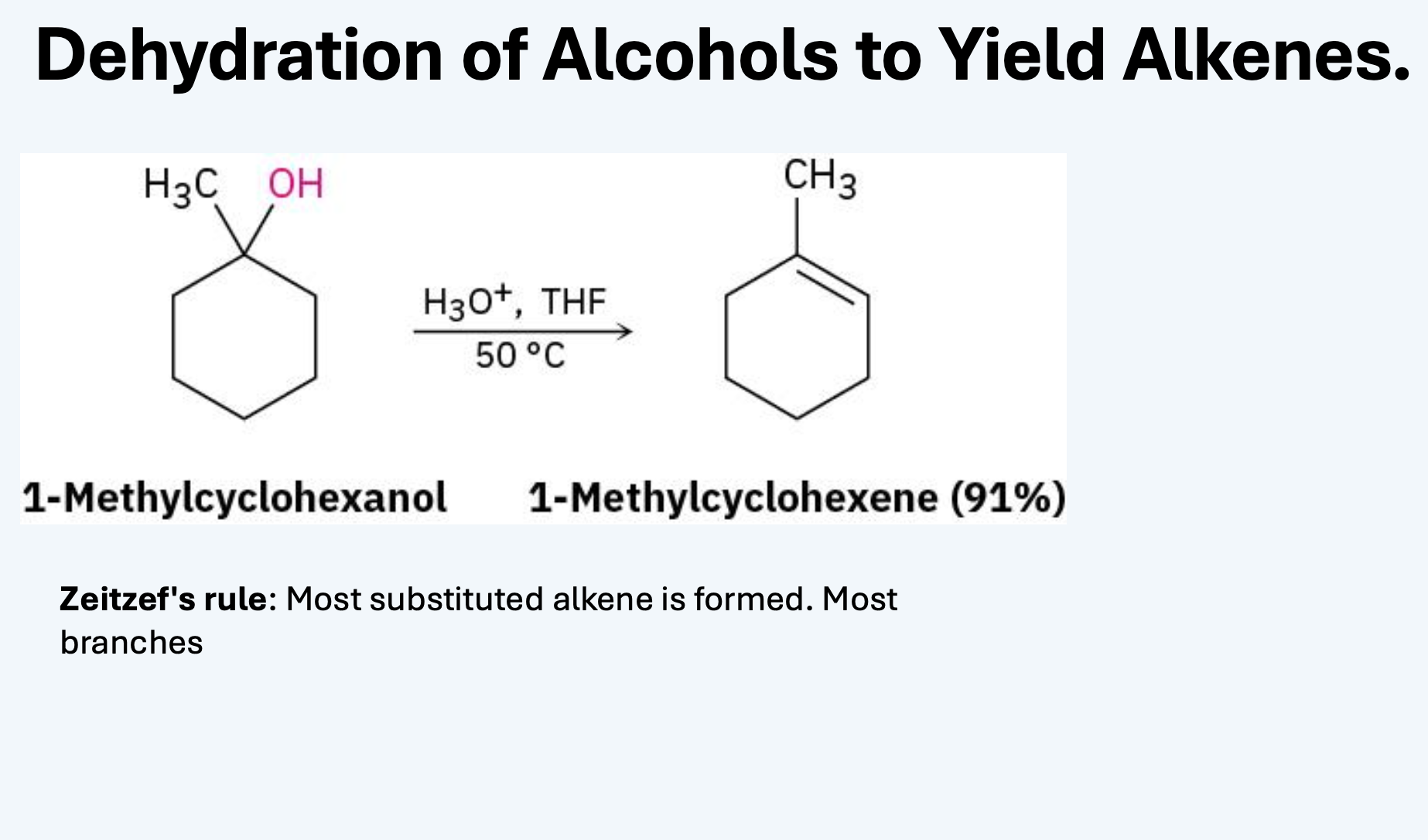
Reaction: Alcohol Dehydration
Starting Material | Reagent(s) | What Happens? | Why Does It Happen? | Product | Key Idea ⭐ |
Alcohol | H₂SO₄, heat | Water leaves and H is removed | Forms the more stable alkene | Alkene | Elimination reaction (E1/E2 depending on substrate) |
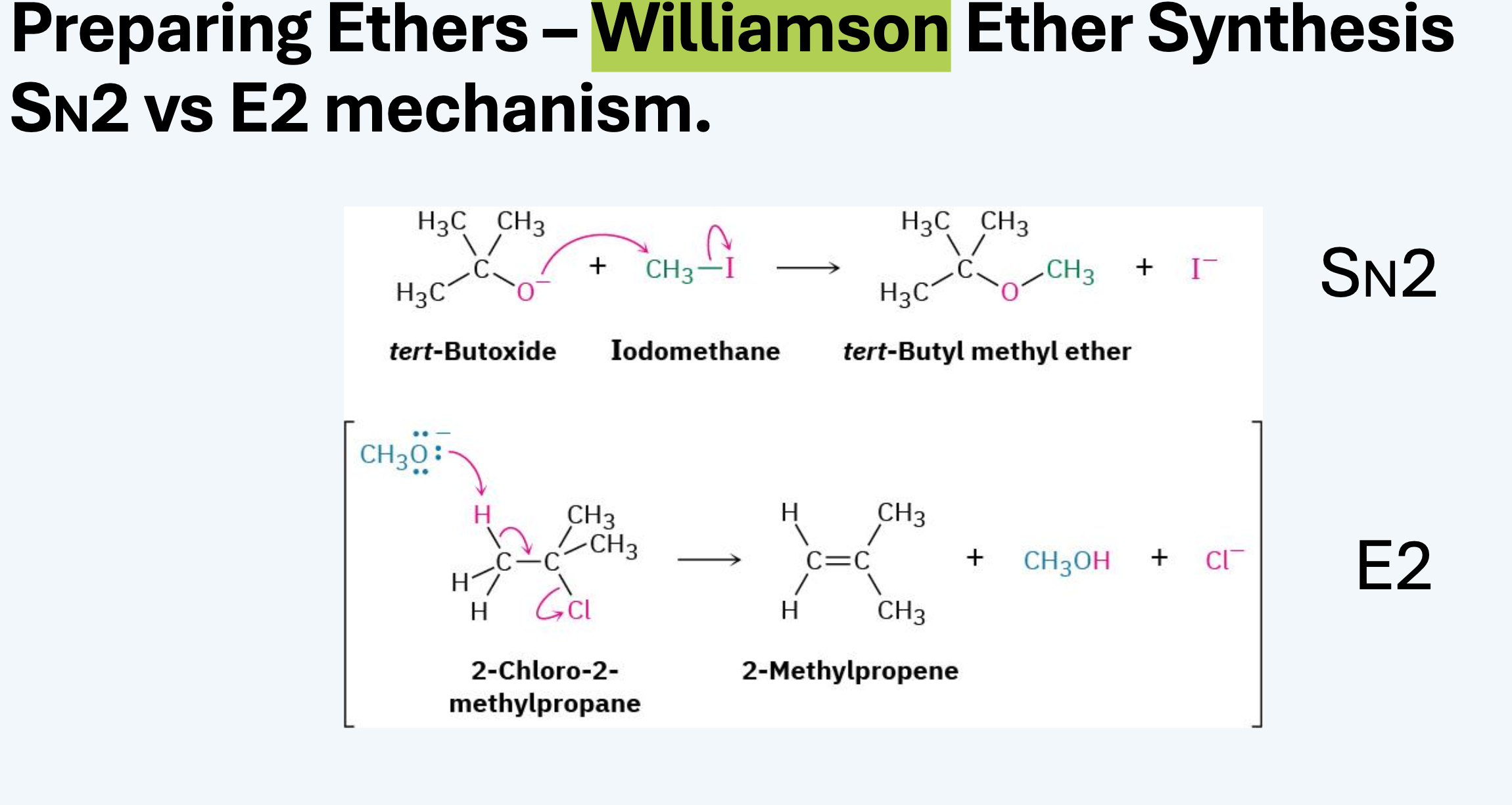
Reaction: Williamson Ether Synthesis
Starting Material | Reagent(s) | What Happens? | Why Does It Happen? | Product | Key Idea ⭐ |
Alkoxide + Methyl/1° Alkyl Halide | R–X | Alkoxide attacks carbon by SN2 | Alkoxide is a strong nucleophile; methyl/1° carbons allow SN2 | Ether | Best way to make ethers |
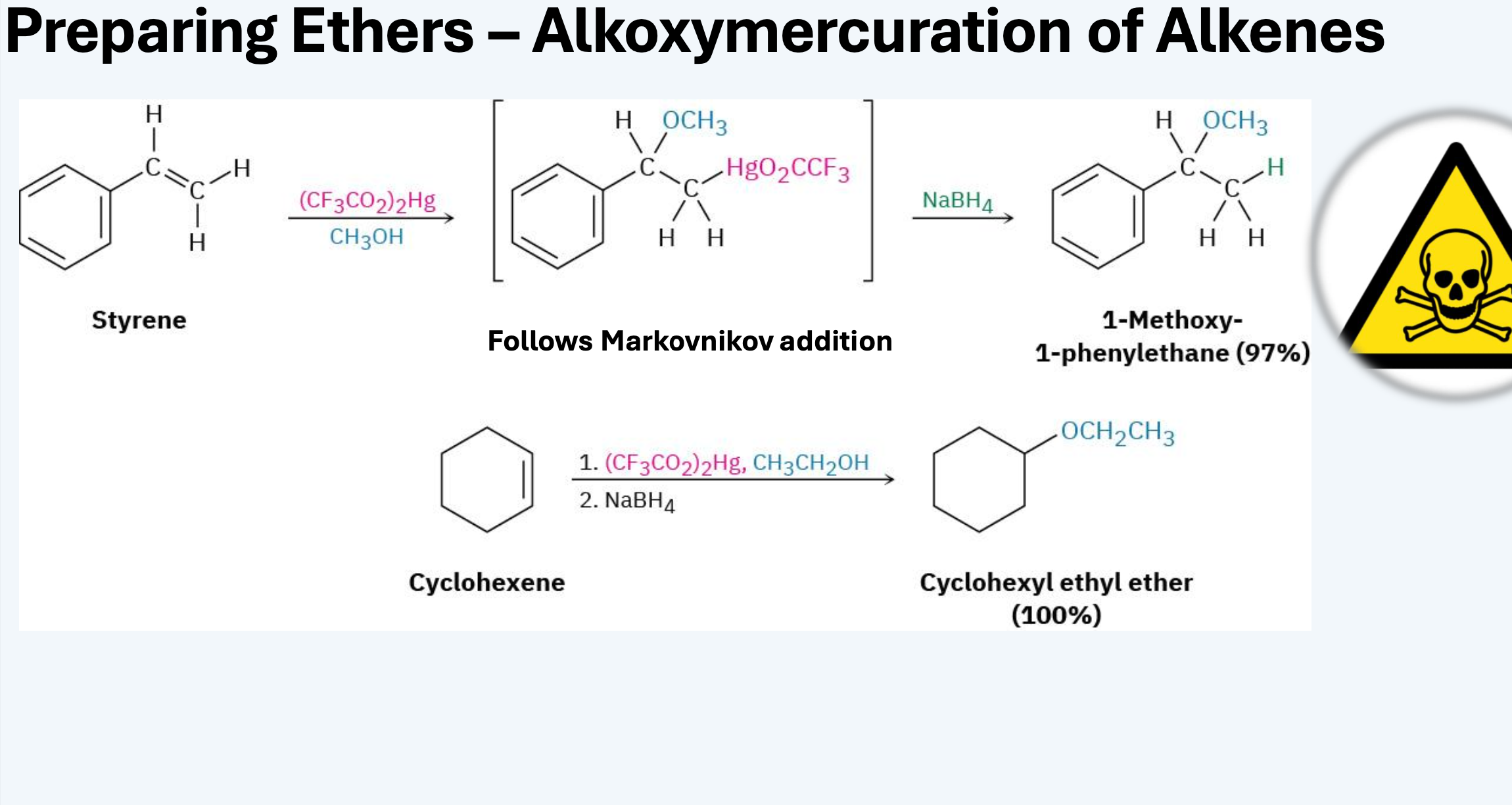
Reaction: Alkoxymercuration
Starting Material | Reagent(s) | What Happens? | Why Does It Happen? | Product | Key Idea ⭐ |
Alkene | Hg(OAc)₂, ROH; NaBH₄ | Alcohol adds across the double bond | Avoids carbocation rearrangements | Ether | Markovnikov addition without rearrangement |
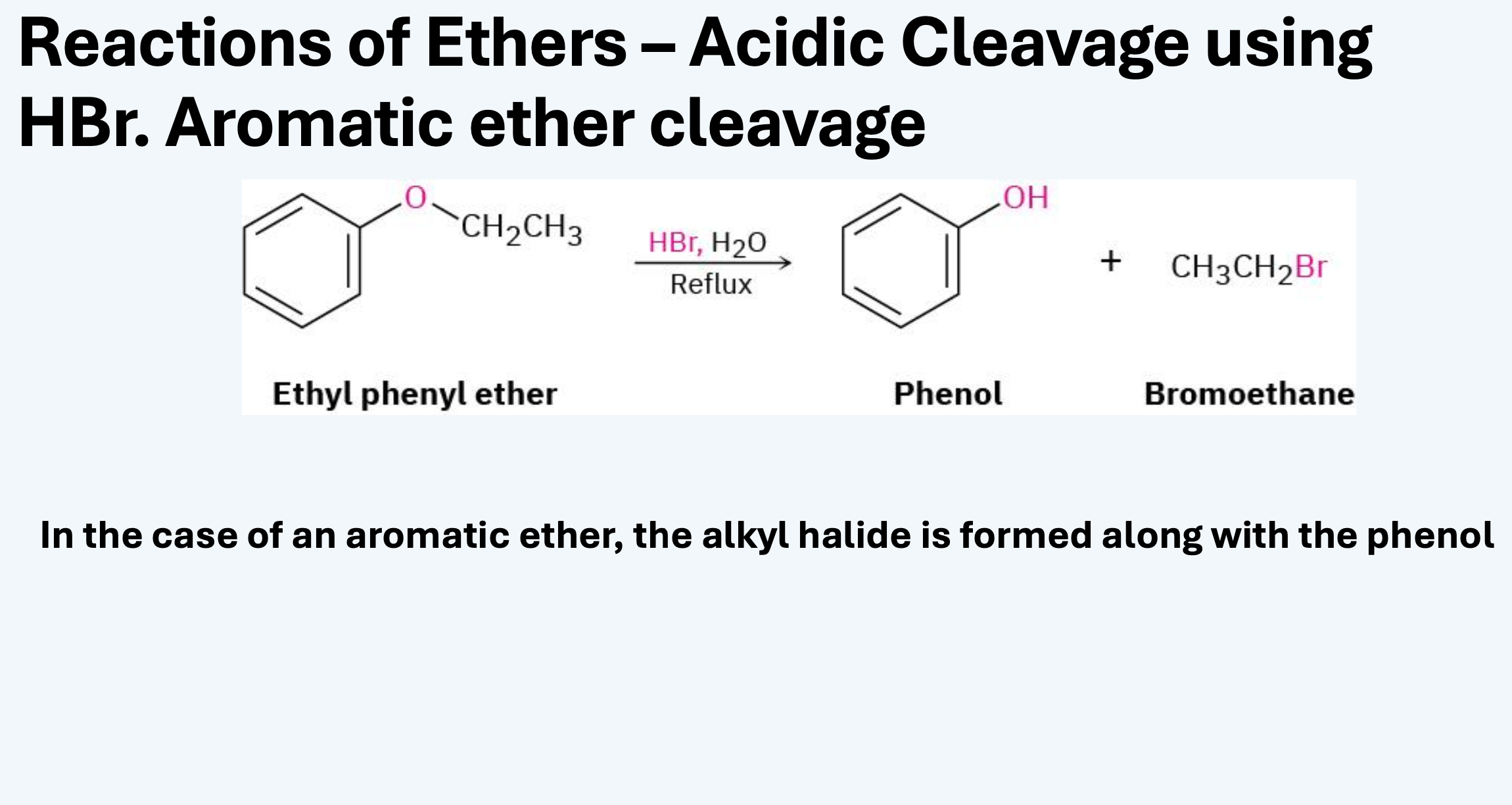
Reaction:
Ether Cleavage |
Starting Material | Reagent(s) | What Happens? | Why Does It Happen? | Product | Key Idea ⭐ |
Ether | HI or HBr | Protonate O, then C–O bond breaks | Protonation makes oxygen a good leaving group | Alcohol + Alkyl Halide | Breaks ethers apart |
Reaction: Epoxidation
Starting Material | Reagent(s) | What Happens? | Why Does It Happen? | Product | Key Idea ⭐ |
Alkene | mCPBA | Oxygen adds across double bond | Weak O–O bond transfers oxygen | Epoxide | Alkene → Epoxide |
Reaction: Halohydrin Cyclization
Starting Material | Reagent(s) | What Happens? | Why Does It Happen? | Product | Key Idea ⭐ |
Halohydrin | NaOH | Alkoxide attacks neighboring carbon | Intramolecular SN2 closes the ring | Epoxide | Forms an epoxide ring |
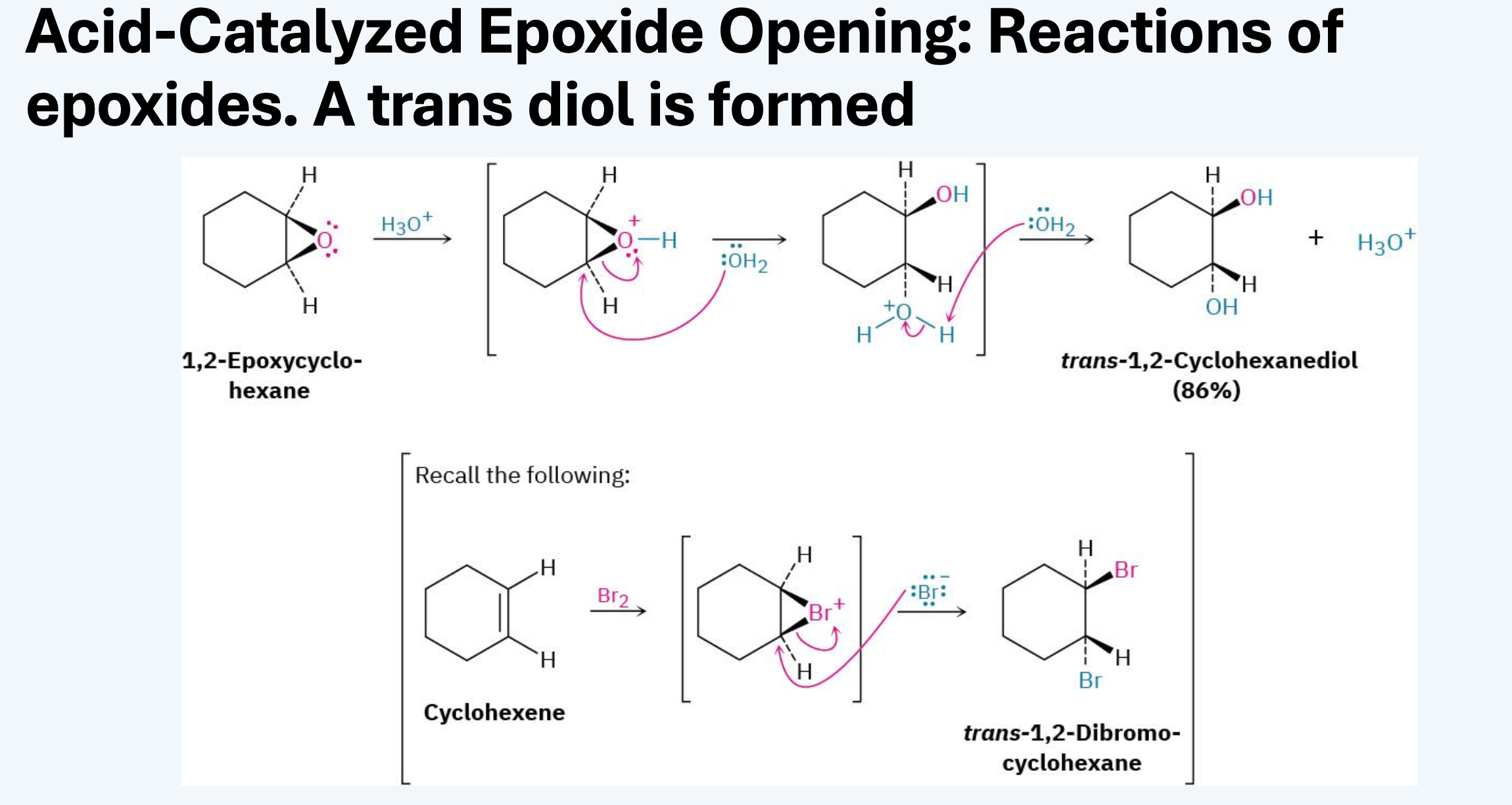
Reaction: Acidic Epoxide Opening
Starting Material | Reagent(s) | What Happens? | Why Does It Happen? | Product | Key Idea ⭐ |
Epoxide | H₃O⁺ | Ring opens; nucleophile attacks more substituted carbon | Protonated epoxide has more positive character on the more substituted carbon | Alcohol | Acid → More substituted attack |
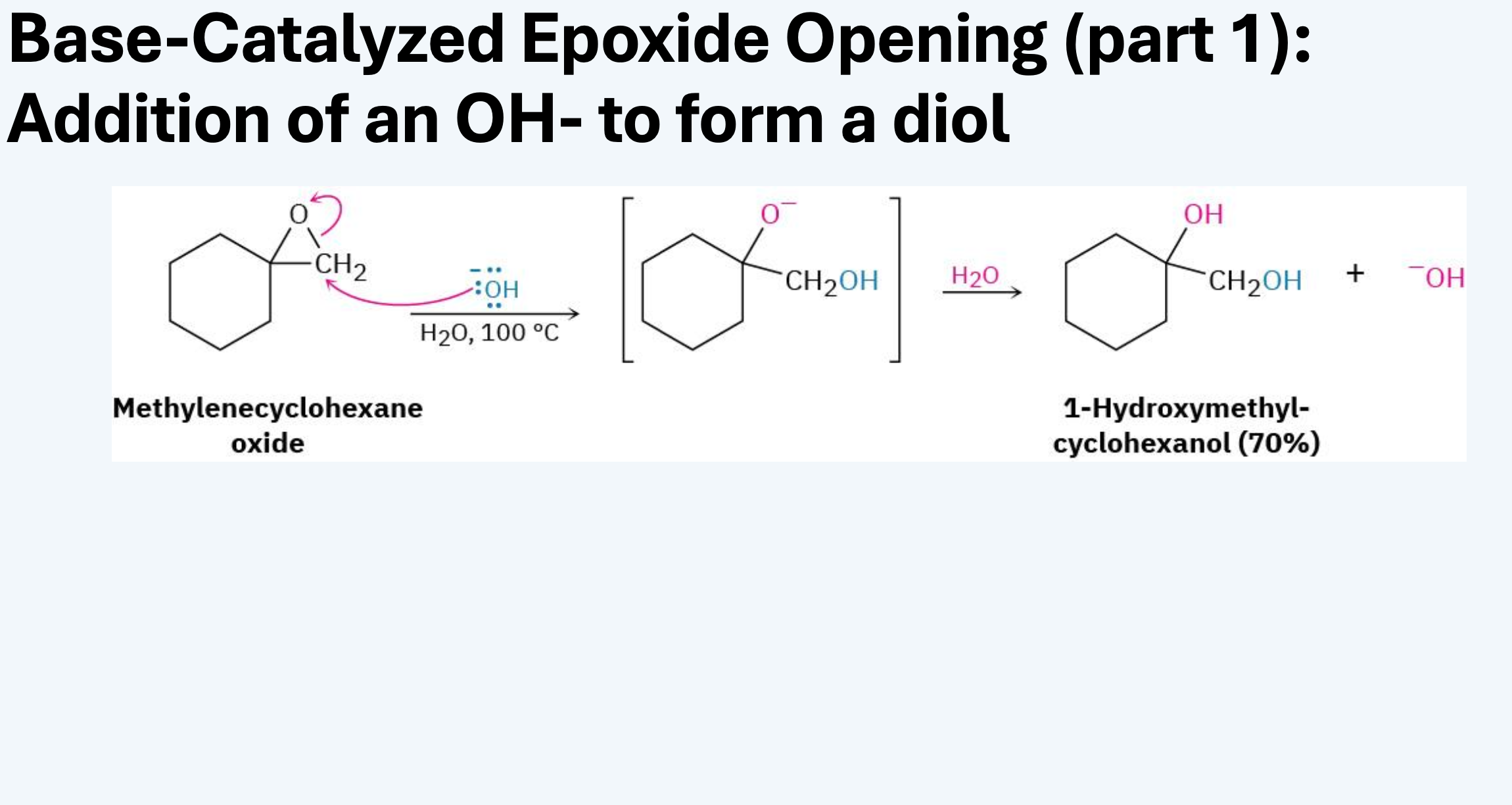
Reaction: Basic Epoxide Opening
Starting Material | Reagent(s) | What Happens? | Why Does It Happen? | Product | Key Idea ⭐ |
Epoxide | OH⁻, RO⁻, CN⁻ | Ring opens by SN2 | Strong nucleophile attacks least hindered carbon | Alcohol | Base → Less substituted attack |
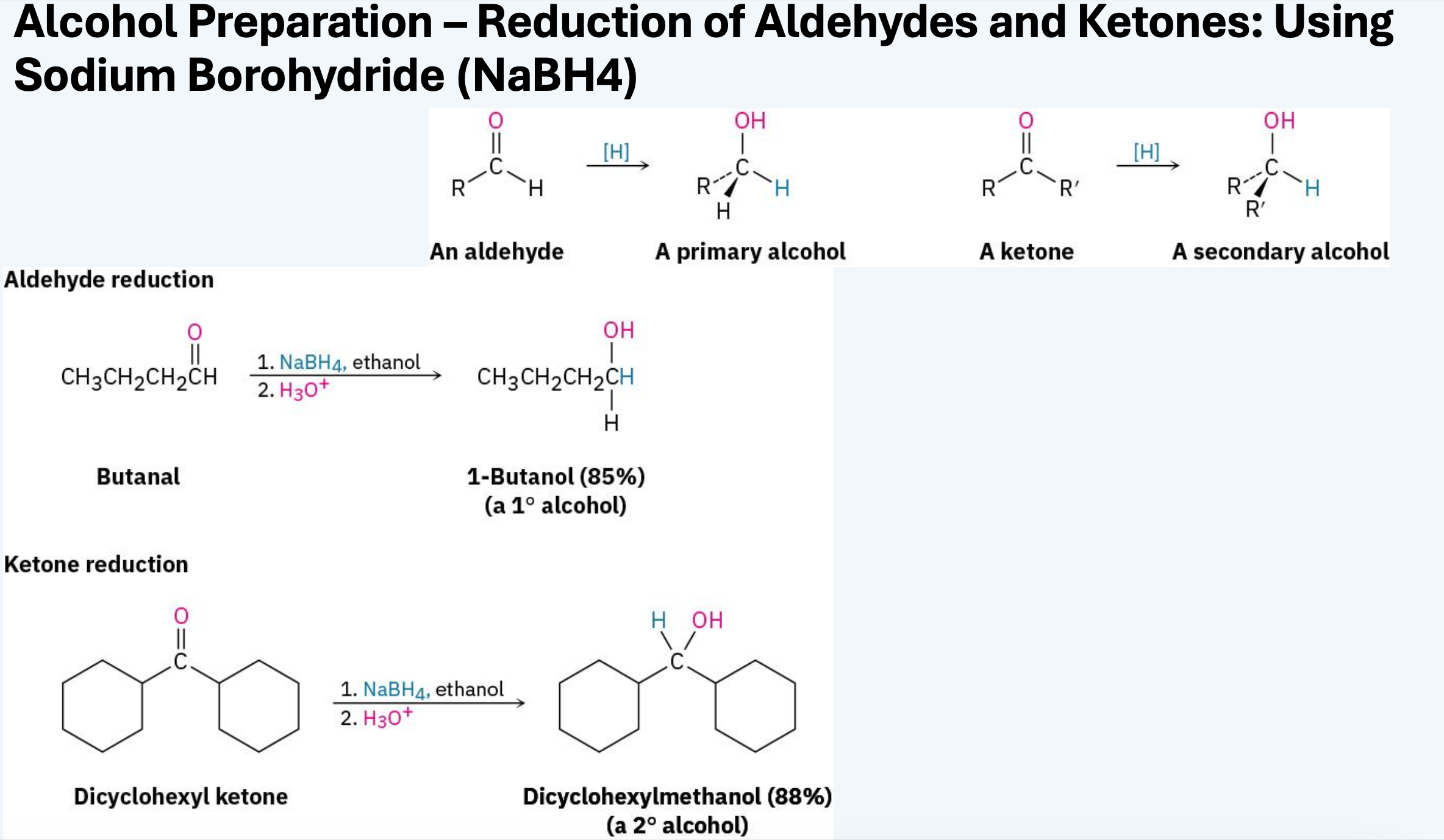
Reaction: NaBH₄ Reduction
Starting Material | Reagent(s) | What Happens? | Why Does It Happen? | Product | Key Idea ⭐ |
Aldehyde or Ketone | NaBH₄ | Hydride attacks carbonyl carbon | Carbonyl carbon is electrophilic | Alcohol | Adds H⁻ |
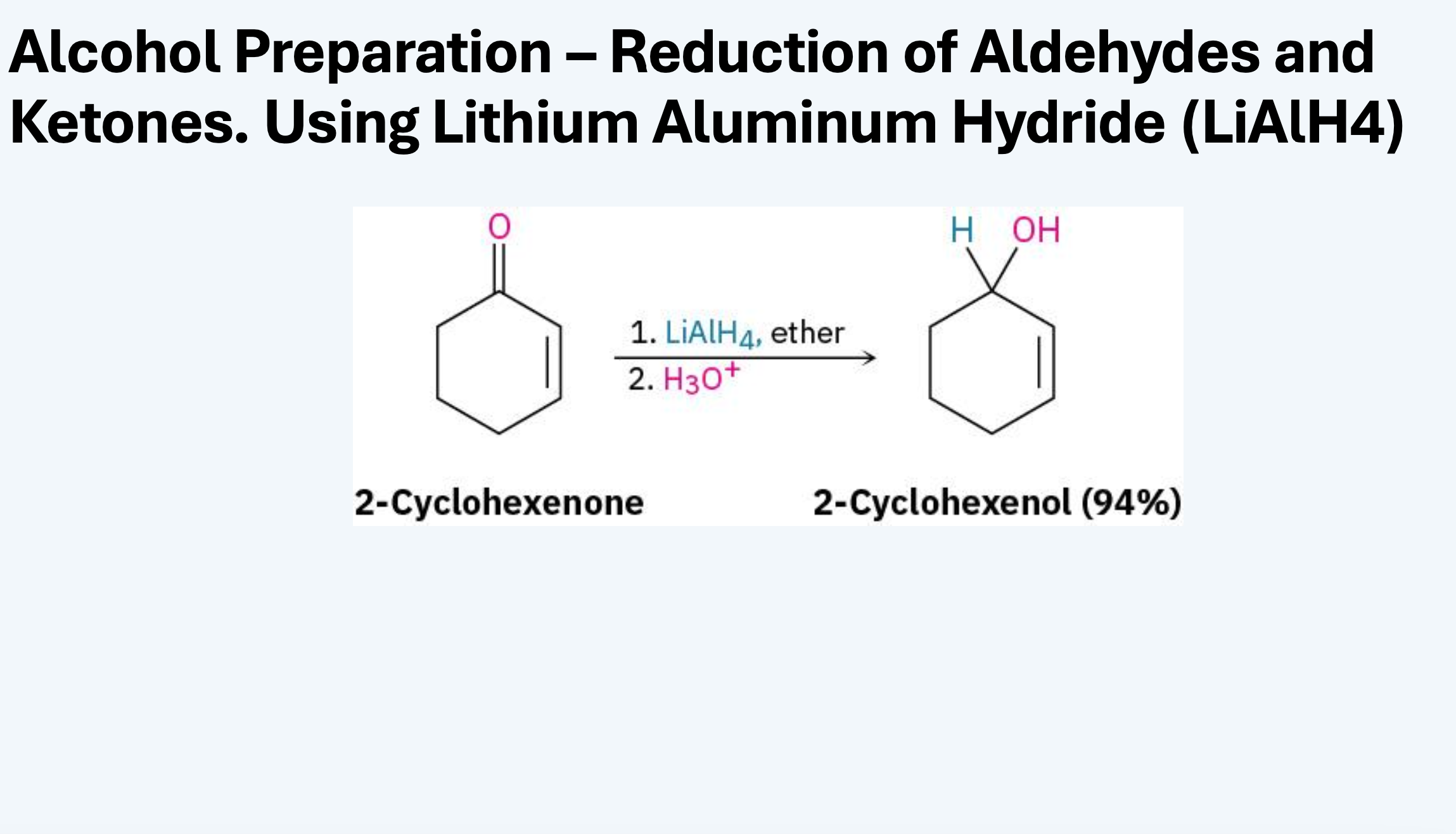
Reaction: LiAlH₄ Reduction
Starting Material | Reagent(s) | What Happens? | Why Does It Happen? | Product | Key Idea ⭐ |
Aldehyde, Ketone (also esters, acids, etc.) | LiAlH₄ then H₃O⁺ | Hydride attacks carbonyl carbon | Strong reducing agent | Alcohol | Stronger than NaBH₄ |
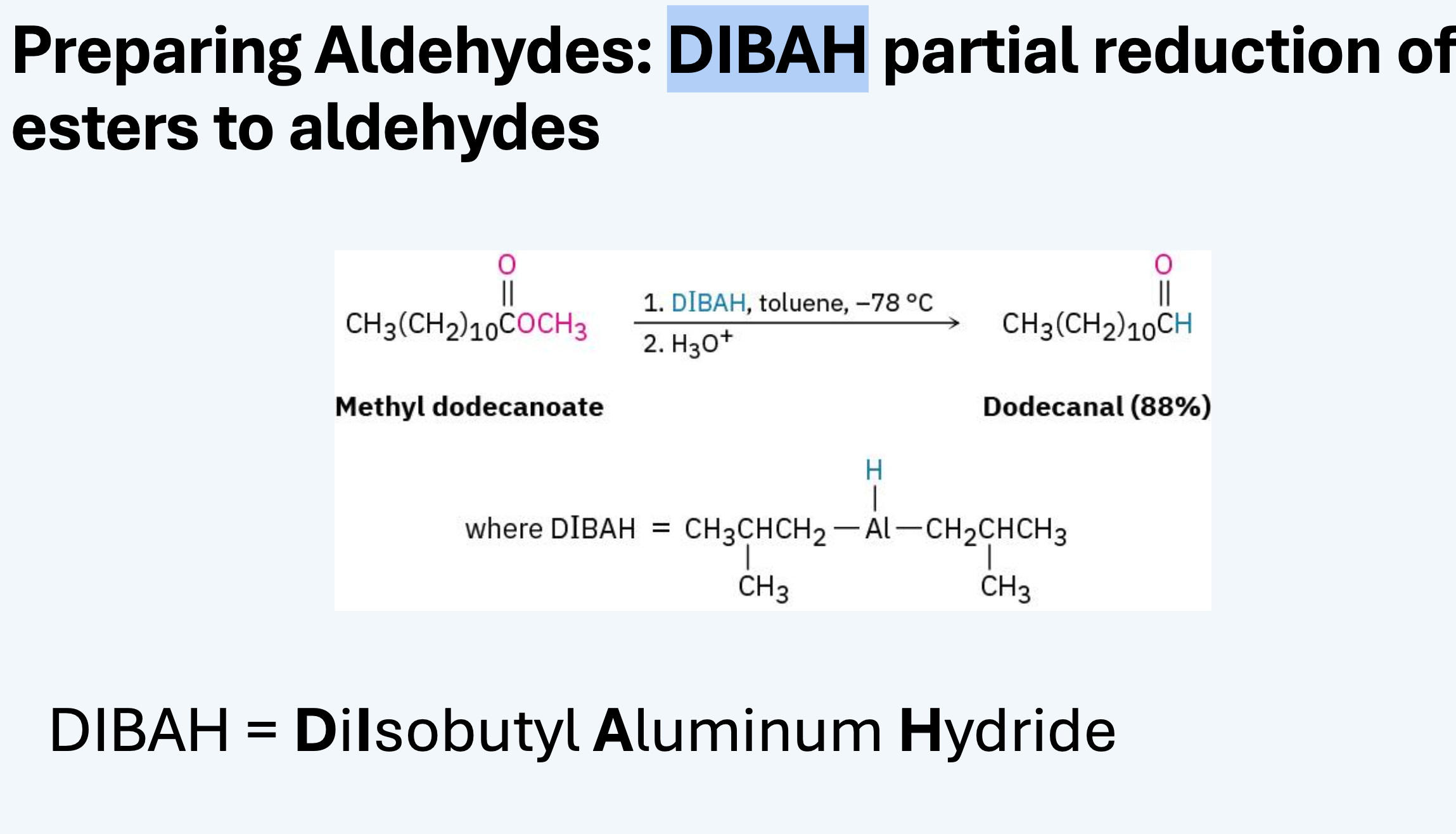
Reaction: DIBAL-H Reduction
Starting Material | Reagent(s) | What Happens? | Why Does It Happen? | Product | Key Idea ⭐ |
Ester or Nitrile | DIBAL-H | Partial reduction | Stops before full reduction under controlled conditions | Aldehyde | Partial reduction |
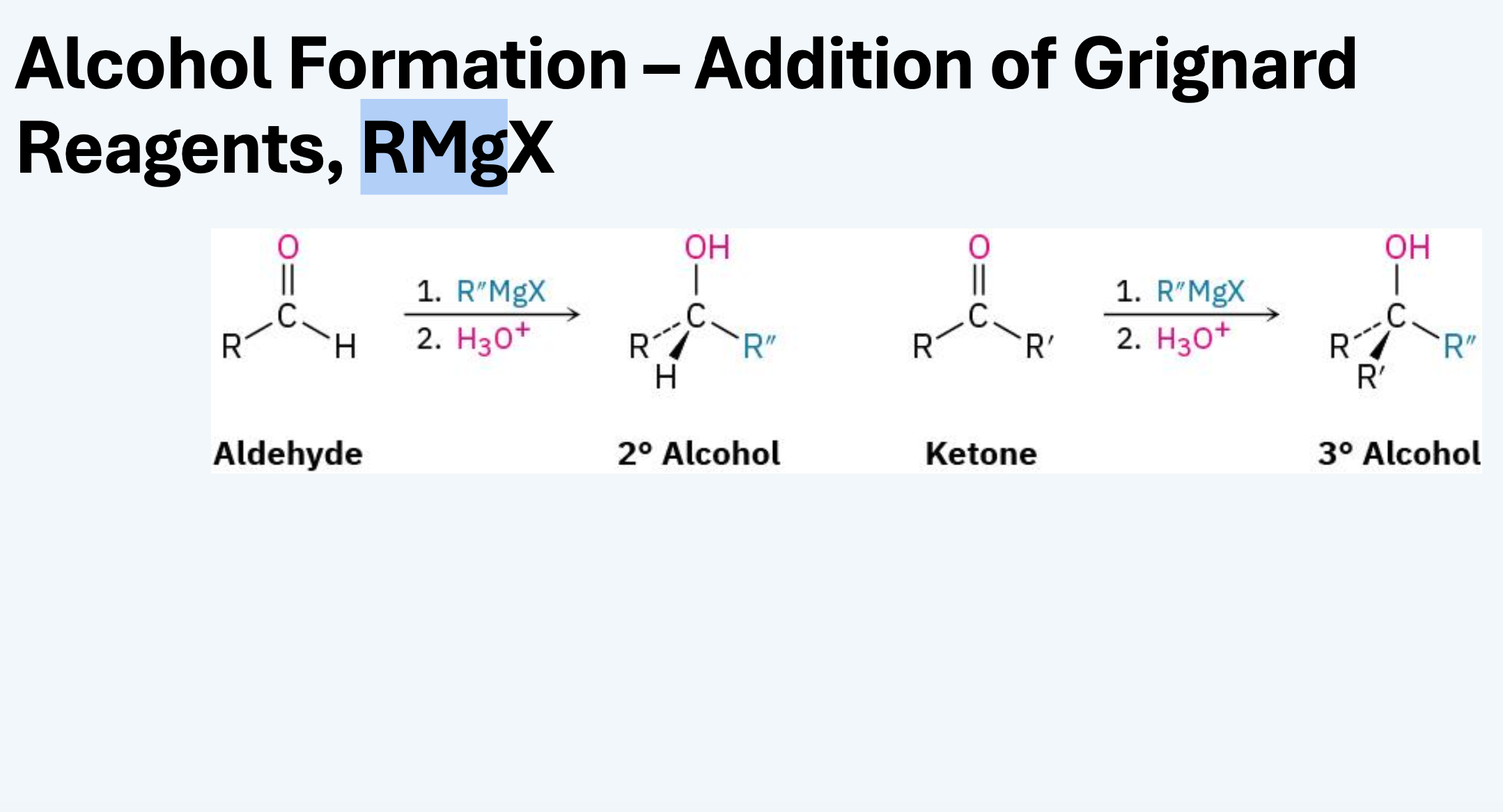
Reaction: Grignard Reaction
Starting Material | Reagent(s) | What Happens? | Why Does It Happen? | Product | Key Idea ⭐ |
Aldehyde or Ketone | RMgBr then H₃O⁺ | Carbon nucleophile attacks carbonyl | Carbon attached to Mg behaves like C⁻ | Larger Alcohol | Forms a new C–C bond |
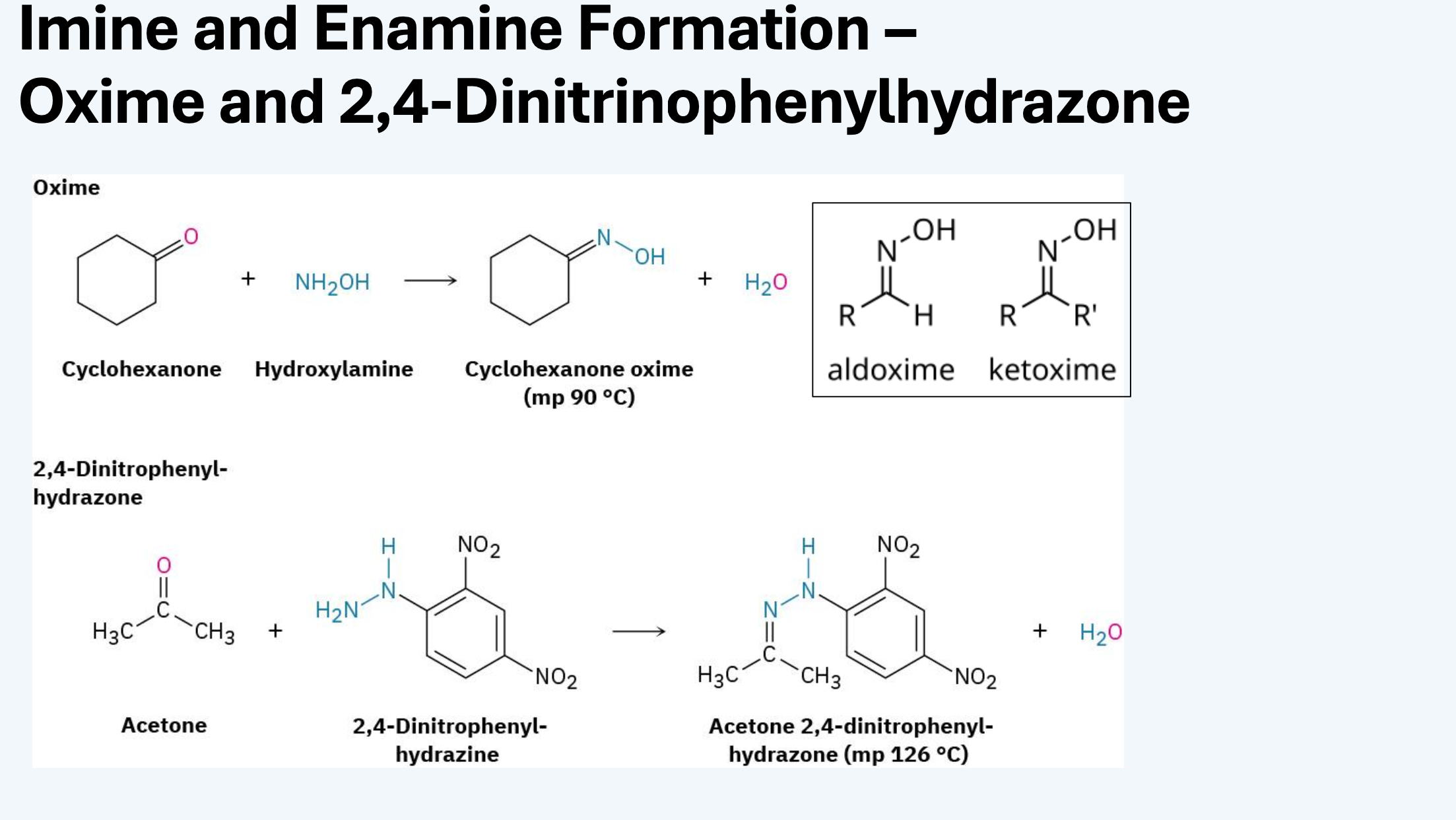
Reaction: Oxime Formation
Starting Material | Reagent(s) | What Happens? | Why Does It Happen? | Product | Key Idea ⭐ |
Aldehyde or Ketone | NH₂OH or 2,4 DNP | Nitrogen attacks carbonyl; water leaves | Stable C=N bond forms | Oxime | NH₂OH → Oxime |
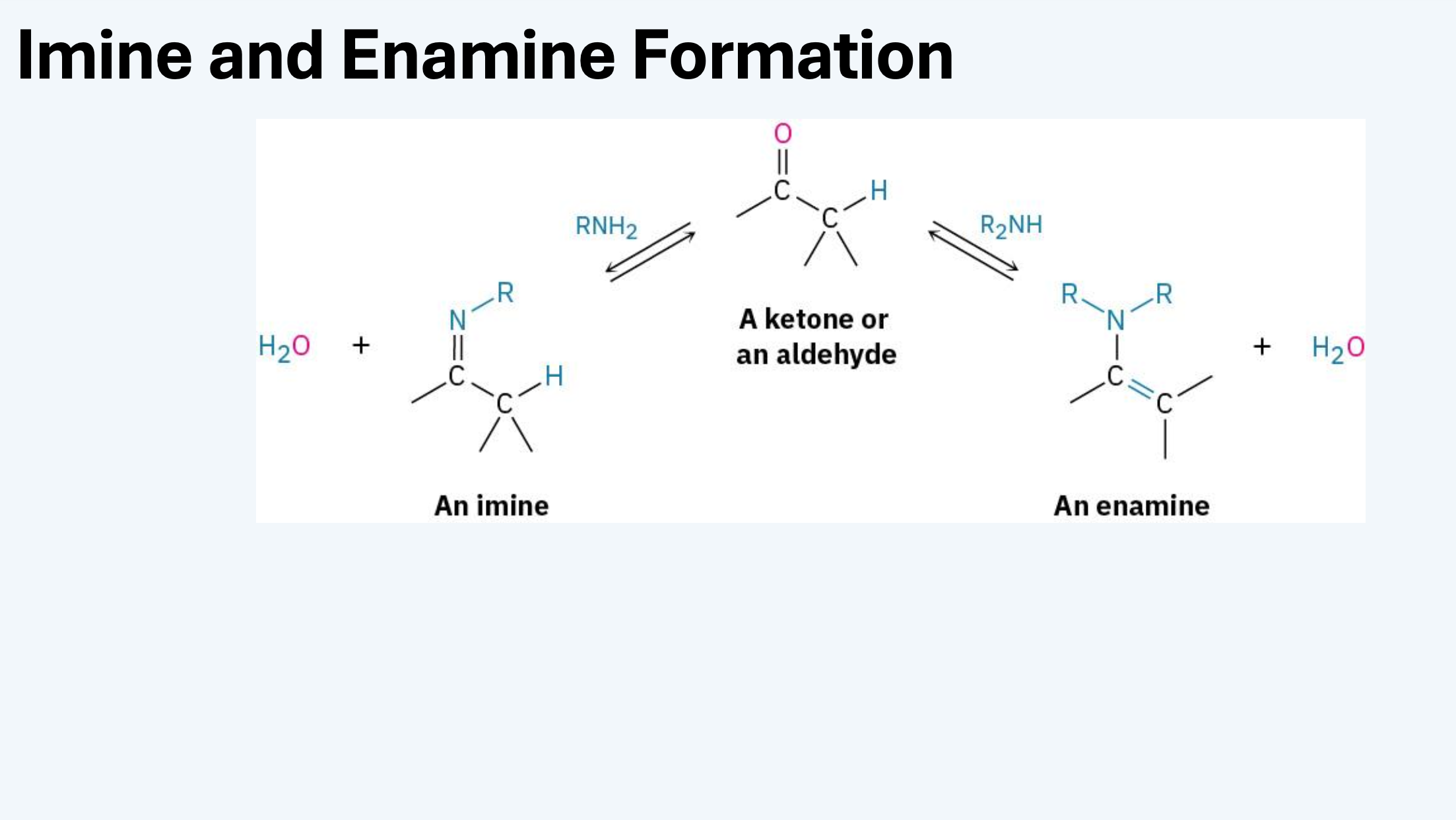
Reaction: Imine Formation
Starting Material | Reagent(s) | What Happens? | Why Does It Happen? | Product | Key Idea ⭐ |
Aldehyde or Ketone | RNH₂, H⁺ | Primary amine attacks carbonyl; water leaves | Forms stable C=N bond | Imine | 1° amine → Imine |
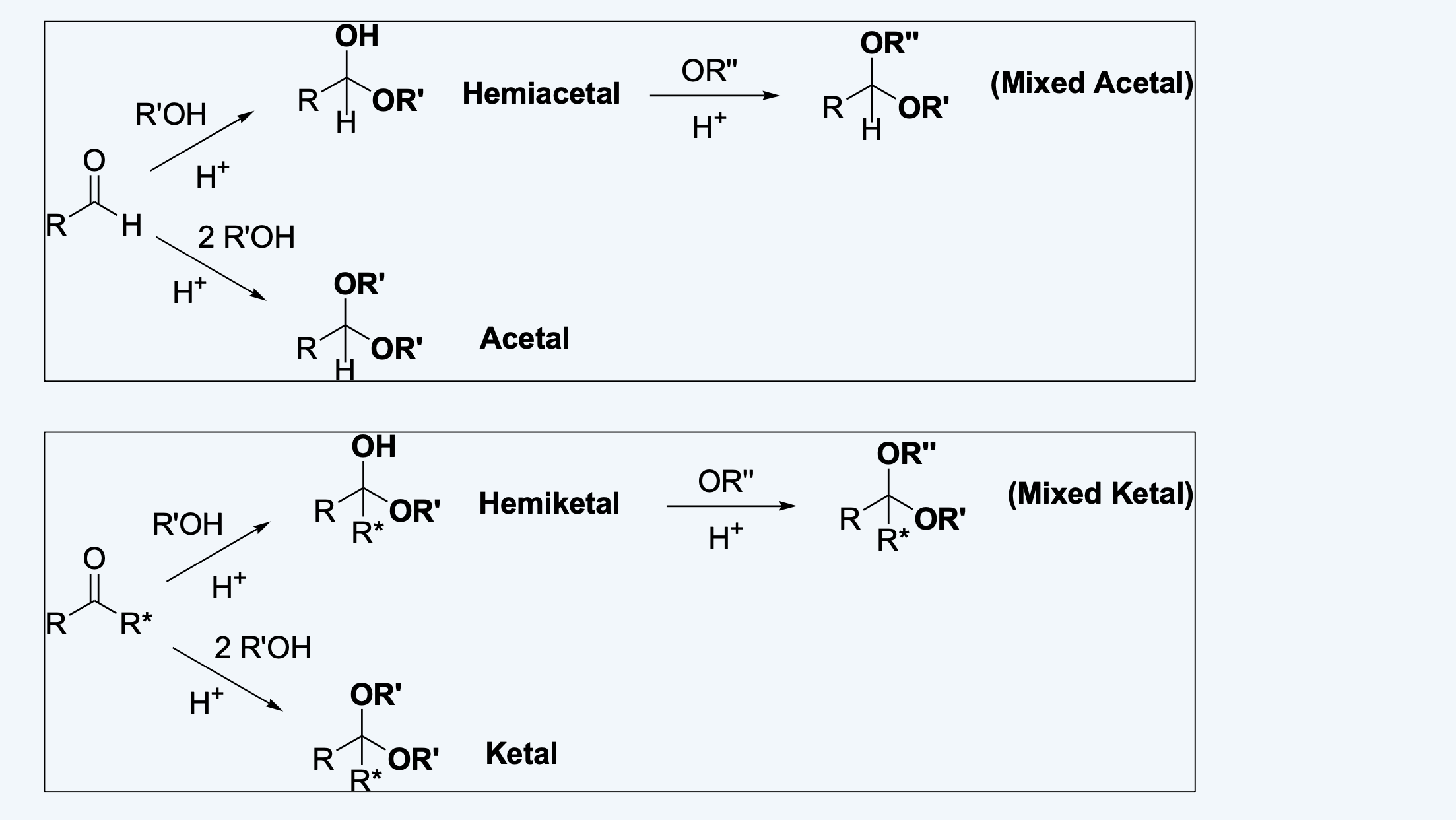
Reaction: Acetal Formation
Starting Material | Reagent(s) | What Happens? | Why Does It Happen? | Product | Key Idea ⭐ |
Aldehyde | ROH, H⁺ | Two OR groups replace carbonyl oxygen | Protects aldehyde from further reactions | Acetal | Protecting group |
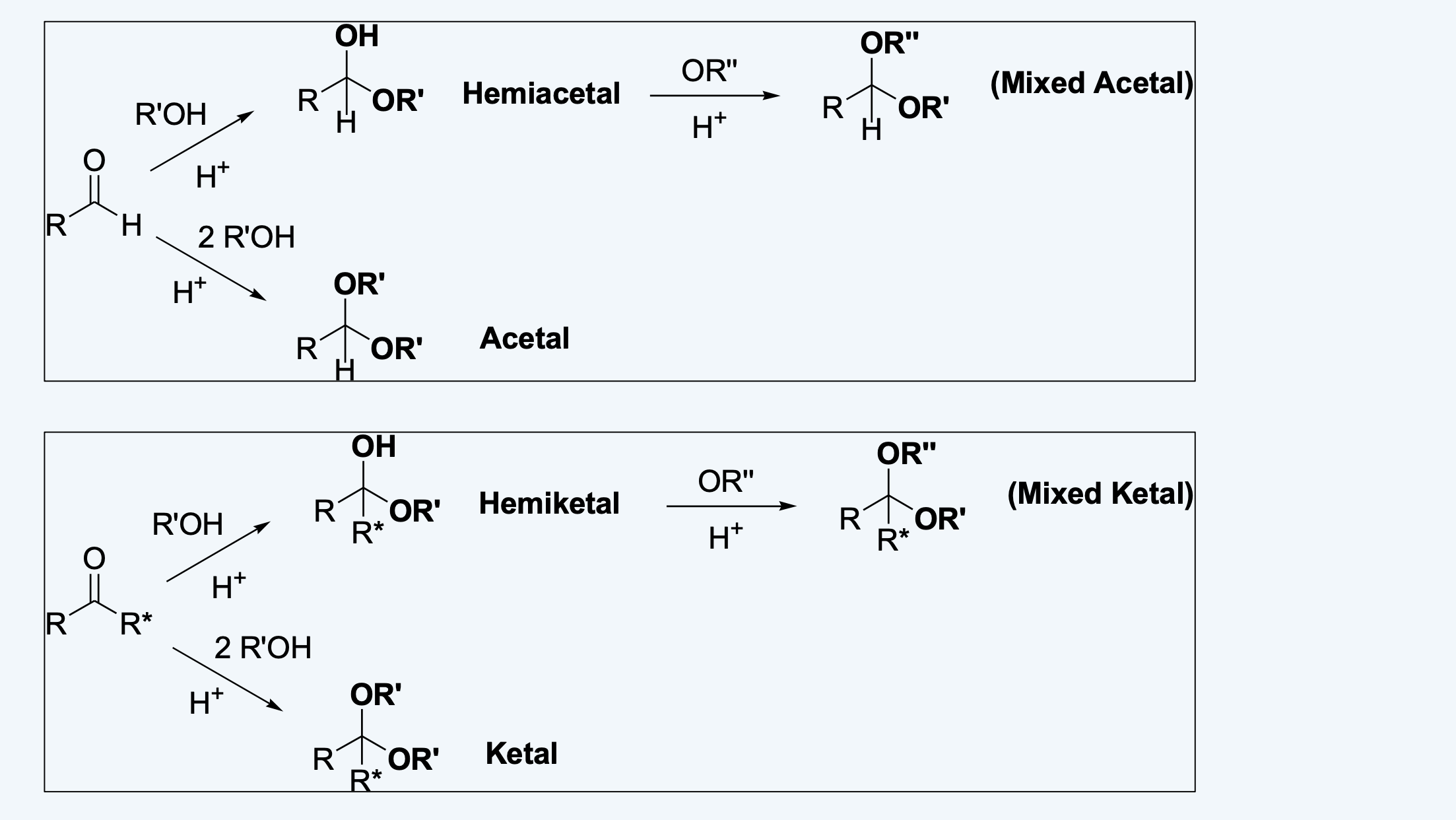
Reaction: Ketal Formation
Starting Material | Reagent(s) | What Happens? | Why Does It Happen? | Product | Key Idea ⭐ |
Ketone | ROH, H⁺ | Two OR groups replace carbonyl oxygen | Protects ketone | Ketal | Protecting group |
Reaction: Acetal/Ketal Hydrolysis
Starting Material | Reagent(s) | What Happens? | Why Does It Happen? | Product | Key Idea ⭐ |
Acetal or Ketal | H₃O⁺ | Removes protecting group | Acid reverses acetal formation | Aldehyde or Ketone | Deprotection |
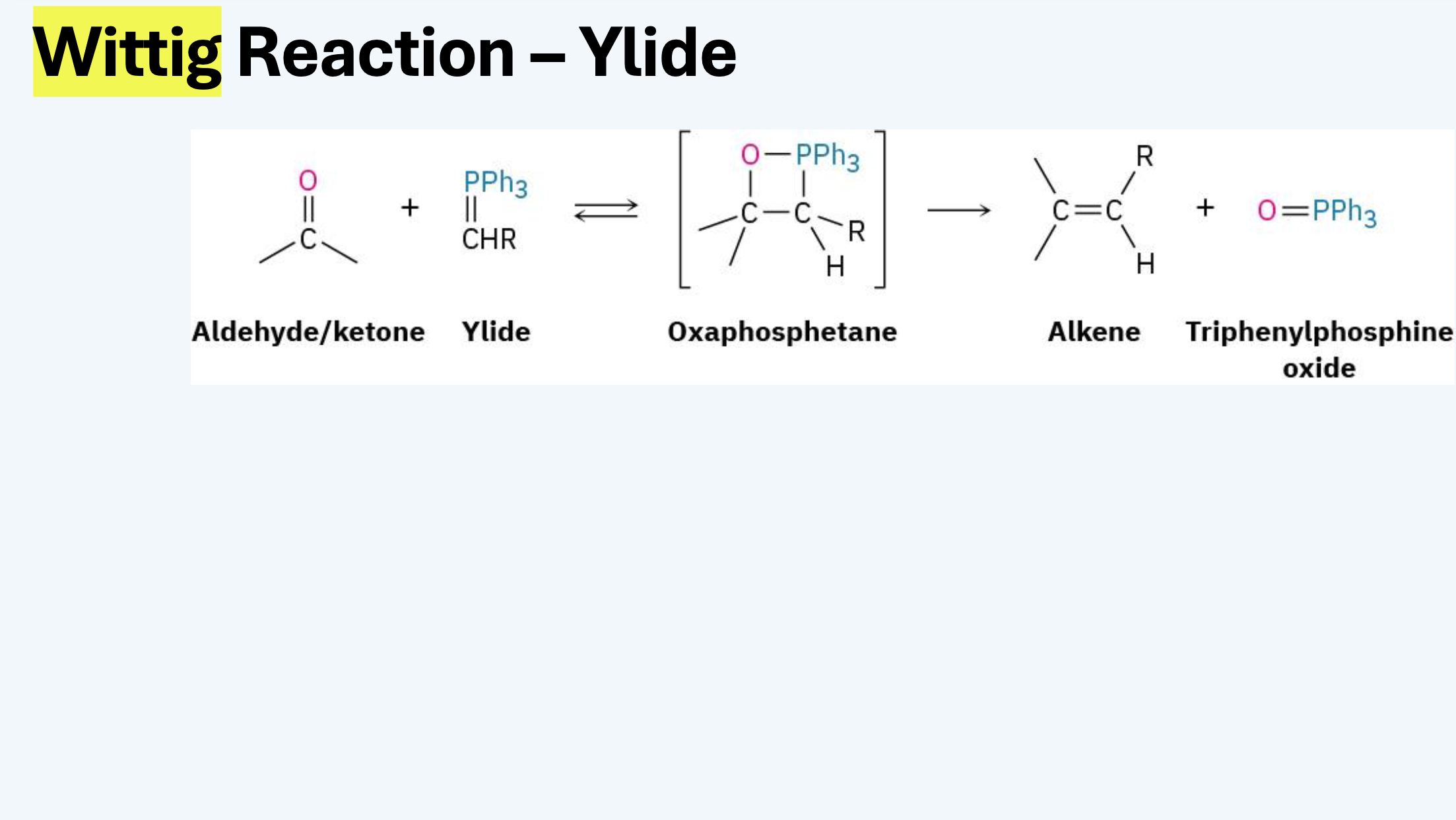
Reaction: Wittig Reaction
Starting Material | Reagent(s) | What Happens? | Why Does It Happen? | Product | Key Idea ⭐ |
Aldehyde or Ketone | Ph₃P=CHR | Ylide replaces oxygen with carbon | Strong P=O bond drives reaction | Alkene | Carbonyl → Alkene |
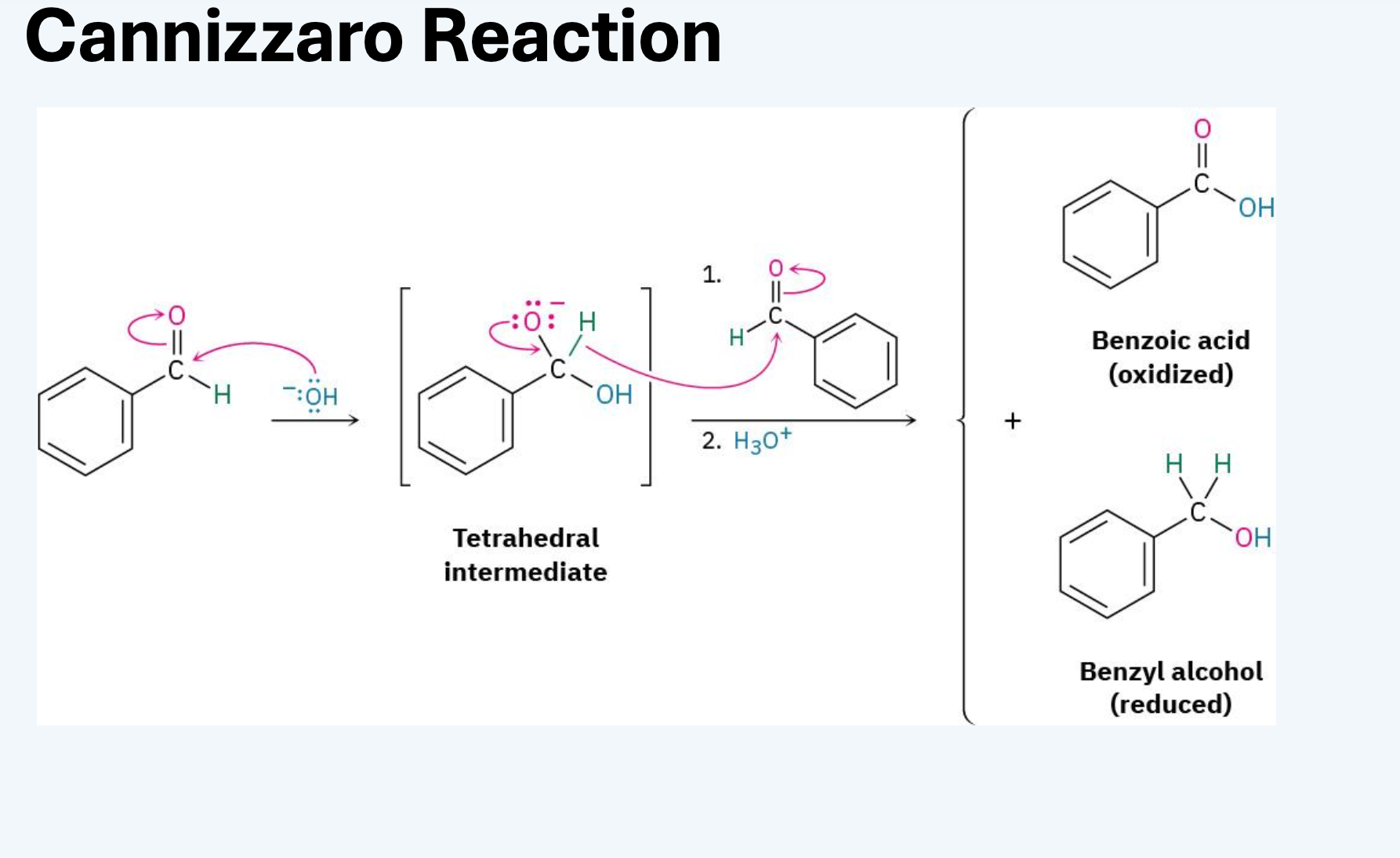
Reaction: Cannizzaro Reaction
Starting Material | Reagent(s) | What Happens? | Why Does It Happen? | Product | Key Idea ⭐ |
Aldehyde (no α-H) | OH⁻ | One aldehyde oxidized, another reduced | Hydride transfer between aldehydes | Alcohol + Carboxylate | Requires NO α-hydrogens |
Reaction: Radical Halogenation
Starting Material | Reagent(s) | What Happens? | Why Does It Happen? | Product | Key Idea ⭐ |
Alkane | Cl₂ or Br₂, hν | H replaced by halogen | UV light forms radicals | Alkyl Halide | Initiation → Propagation → Termination |
Reaction: Radical HBr Addition
Starting Material | Reagent(s) | What Happens? | Why Does It Happen? | Product | Key Idea ⭐ |
Alkene | HBr, ROOR | Br adds across double bond | Radical mechanism favors more stable radical intermediate | Alkyl Bromide | Anti-Markovnikov addition |