Barry BMS 528 - Biochemistry II - Comp Exam
 Call Kai
 Learn
Learn Practice Test
 Spaced Repetition
 Match
Match Flashcards
 Knowt Play
1/64

There's no tags or description
Looks like no tags are added yet.
Name | Mastery | Learn | Test | Matching | Spaced | Call with Kai | Chat |
|---|
No analytics yet
Send a link to your students to track their progress
65 Terms
D. All of the above
Histamine is an agonist of the G protein-coupled receptor Histamine H1-receptor (H1R). As a GPCR, H1R has a range of activities, including a basal "low/background" level of activity even in the absence of histamine. However, in the presence of histamine, the receptor undergoes conformational changes to increase the activation of intracellular G proteins, leading to allergic responses.
Antihistamines, first introduced to the clinic over 60 years ago, were originally thought to be antagonists of the histamine-H1R interaction, blocking histamine activation of allergic reactions. However, it is now known that many antihistamines act as inverse agonists of H1R. Which of the following observations might have led to the conclusion that some H1R antihistamines were inverse agonists?
A. The antihistamine alone had an observable biological effect on the receptor
B. In the presence of antihistamines, H1R activity decreased below basal levels
C. In the presence of antihistamines, H1R underwent a conformational change and adopted an inactive conformation
D. All of the above
A. Treatment with negatively charged lipids enriches cells with these molecules that then assist with proper membrane protein folding due to the "positive-in" effect
The amyloid-β peptide is a transmembrane protein important for growth and repair of neuronal cells. However, in Alzheimer's disease (AD), amyloid-β does not insert into the membrane and is instead observed to misfold and aggregate into neurotoxic plaques. Some pre-clinical studies have suggested that the lipid composition of cells may be disturbed in AD, and in animal models of AD, treatment with specific lipids to restore the correct lipid composition of cells may alleviate the misfolding of amyloid-β.
Given what you know about membrane protein folding, which of the following options is a reasonable hypothesis for why this might occur?
A. Treatment with negatively charged lipids enriches cells with these molecules that then assist with proper membrane protein folding due to the "positive-in" effect
B. Treatment with positively charged lipids enriches cells with these molecules that then assist with proper membrane protein folding due to the "positive-in" effect
C. Treatment with neutral lipids enriches cells with these molecules that then assist with proper membrane protein folding due to the "positive-in" effect
D. Treatment with lipids increased the size of cell membranes to allow for proper insertion of transmembrane proteins
C. 300
A human gene encodes for a protein that is 100 amino acids in length. The gene itself has a 5' untranslated region consisting of 50 nucleotides, an intron in the middle of the gene containing 50 nucleotides, and a 3' untranslated region of 50 nucleotides. After transcription of the gene, in the final, mature mRNA, approximately how many nucleotides are there between the start AUG codon and the last stop codon?
A. 100
B. 150
C. 300
D. 450
C. Add a 5' 7-methylguanosine cap via a 5' to 5' triphosphate linkage
mRNA vaccines represent a promising alternative to conventional vaccine approaches partly due to their capacity for rapid development. However, for a long-time progress in the development of mRNA vaccines was restricted by the instability of mRNA. If you were hired as a consultant for a company making mRNA vaccines, which of the following would you recommend to enhance the stability of the mRNA in their vaccines?
A. Keep the 3' poly-A tail of the mRNA short
B. Design the mRNA to contain hairpin structures
C. Add a 5' 7-methylguanosine cap via a 5' to 5' triphosphate linkage
D. Make the mRNA double stranded
D. Take a glutamine tRNA and modify its anti-codon loop
Dravet syndrome is an incurable form of genetic epilepsy. It is caused by a mutation in the gene that encodes for a sodium ion channel. This mutation inserts a premature stop codon (UAA) in place of a Glutamine codon (CAA) leading to a truncated and non-functional protein.
Now, many start-up companies are hypothesizing that a modified tRNA molecule, made in a lab and injected into patients’ cells, might be a therapeutic option for treating this disease. Their strategy is to supply cells with a modified tRNA, one that carries glutamine on its acceptor arm and recognizes the UAA stop codon via a complementary anticodon. This tRNA would then allow the Ribosome to insert Glutamine into the polypeptide chain at the site of the UAA stop codon instead of terminating translation. The hope is this would allow the full sodium ion channel protein to be made and cure the disease.
Which of the following modifications would you make to a tRNA to allow it to perform this therapeutic function?
A. Take a stop codon tRNA and modify its 3' end to ensure it attaches to glutamine
B. Take a stop codon tRNA and modify its D arm to ensure it interacts with the Glutamine amino acyl tRNA synthetase
C. Take a glutamine tRNA and modify its D arm
D. Take a glutamine tRNA and modify its anti-codon loop
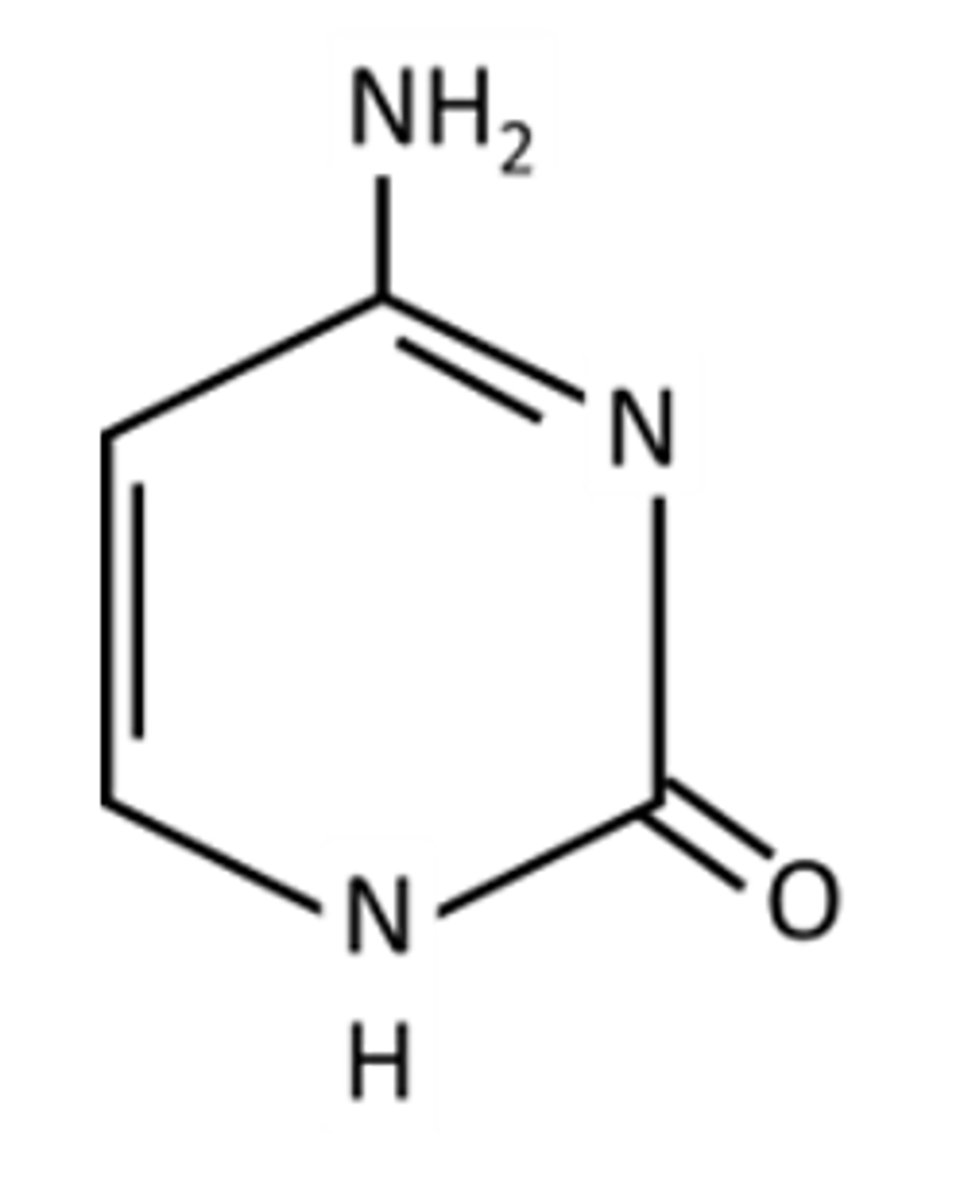
C. Cytosine
Identify the following base:
A. Adenine
B. Thymine
C. Cytosine
D. Guanine
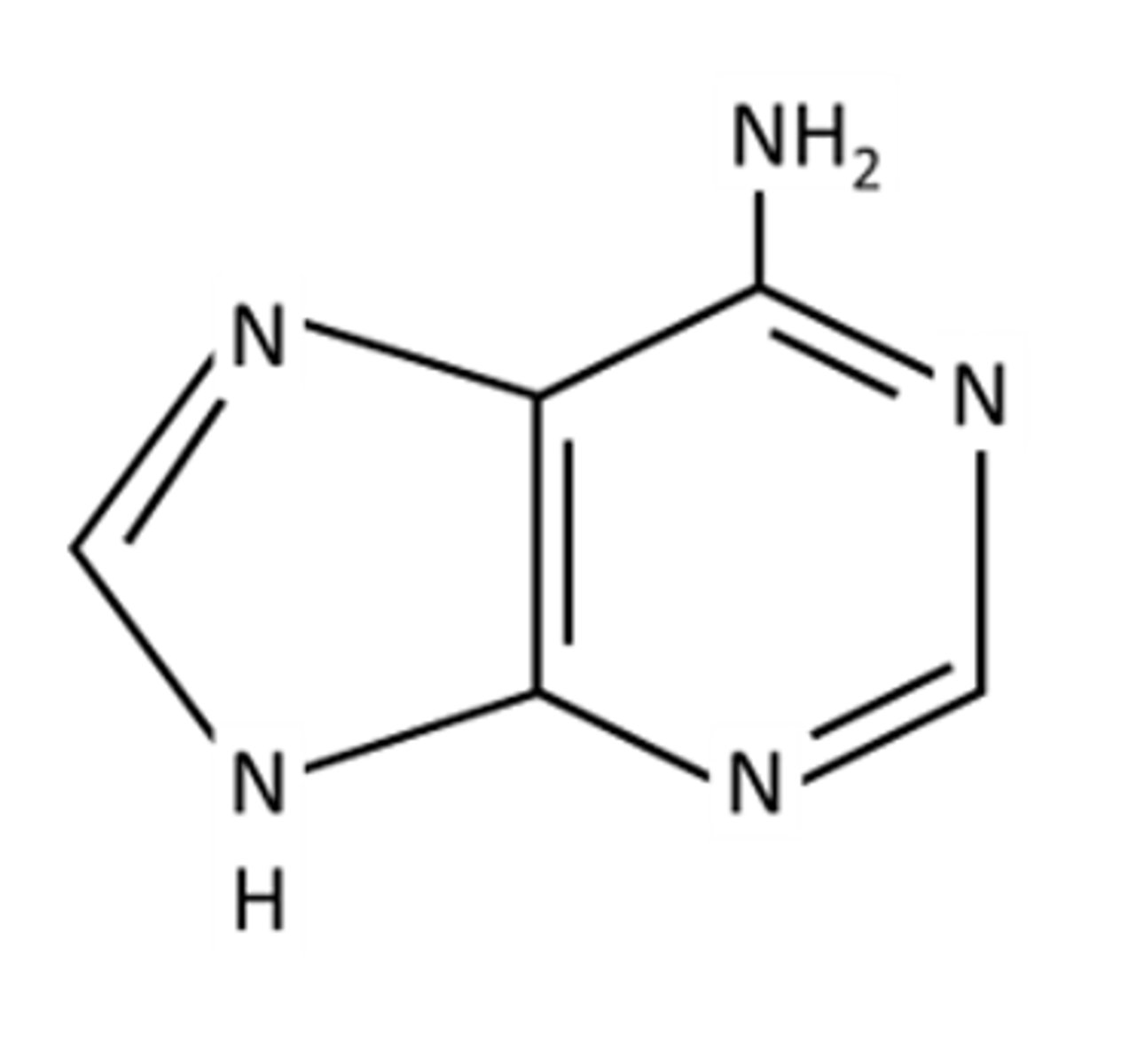
D. Adenine
Identify the following base:
A. Thymine
B. Guanine
C. Cytosine
D. Adenine
D. The 3' OH group of one nucleotide sugar to the 5' carbon of another nucleotide sugar via a phosphate group
A phosphodiester bond connects:
A. The 1' carbon of a nucleotide sugar to the base of that nucleotide
B. The 2' OH group of RNA to another RNA molecule
C. The 5' OH group of a nucleotide to the base of that nucleotide
D. The 3' OH group of one nucleotide sugar to the 5' carbon of another nucleotide sugar via a phosphate group
A. hydrophobic
Select the answer that fits the following sentence: Base stacking is a __________ interaction crucial for the stability of the DNA double helix
A. hydrophobic
B. hydrophilic
C. covalent
D. hydrogen bonding
A. Nucleophilic attack on incoming nucleoside triphosphates facilitated by DNA polymerase
The 3' OH group of a growing strand of DNA is crucial to what process?
A. Nucleophilic attack on incoming nucleoside triphosphates facilitated by DNA polymerase
B. Demethylation of methylguanine by alkyl transferases
C. Hydrolysis of glycosidic bonds by Uracil DNA glycosylase
D. All of the above
B. B-DNA
The most stable form of DNA present in human cells is:
A. A-DNA
B. B-DNA
C. Z-DNA
D. All equal
A. TC-NER
You have discovered a new enzyme that you name Barryzyme. In a test tube, you have purified DNA alone. You expose it to UV radiation. When you add Barryzyme into the tube, it performs NER on all damaged DNA sites. However, in living cells you observe that Barryzyme doesn't repair every damaged DNA site. Instead, in cells Barryzyme only repairs DNA damage within euchromatin. What process is Barryzyme likely participating in?
A. TC-NER
B. GG-NER
C. MMR
D. Double strand break repair
C. Hydrogen bonds
Across two anti-parallel DNA strands, what type of bonding connects the two strands?
A. Covalent bonds
B. Phosphodiester bonds
C. Hydrogen bonds
D. Glycosidic bonds
B. Hydrogen
What type of bonds are crucial for base pairing in stem loop stems?
A. Covalent
B. Hydrogen
C. Ionic
D. Phosphoanhydride
C. Tryptophan
Mutations in the wobble position of codons are usually silent i.e. they are not observed in the amino acids sequence of proteins. For which of the following amino acids would a wobble mutation in its codon not be silent?
A. Serine
B. Proline
C. Tryptophan
D. Arginine
A. Adenylation
Select the option that best fits the blank in the statement below: The first step of tRNA charging is the __________ of Amino acids.
A. Adenylation
B. Prenylation
C. Phosphorylation
D. Methylation
B. False
True or False?
Proteins sample every possible thermodynamic conformation before finding the lowest energy state.
A. True
B. False
D. Phosphatidylcholine
Which of the following lipid head groups is uncharged at physiological pH?
A. Phosphatidylinositol
B. Phosphatidic acid
C. Phosphatidylserine
D. Phosphatidylcholine
C. The bind the ligand CXCL12
A G protein-coupled receptor named CXCR4 binds to its ligand named CXCL12 with a Kd of approximately 2 nM. When the N terminus of the receptor is removed (referred to here as CXCR4ΔN-term), the Kd of CXCR4ΔN-term is approximately 500 nM. Which of the following options is a likely function of the CXCR4 N-terminus?
A. To bind to heterotrimeric G proteins
B. To activate the receptor
C. The bind the ligand CXCL12
D. To facilitate CXCR4 degradation
A. True
True or false:
Alkaline lysis disrupts DNA base pair hydrogen bonds.
A. True
B. False
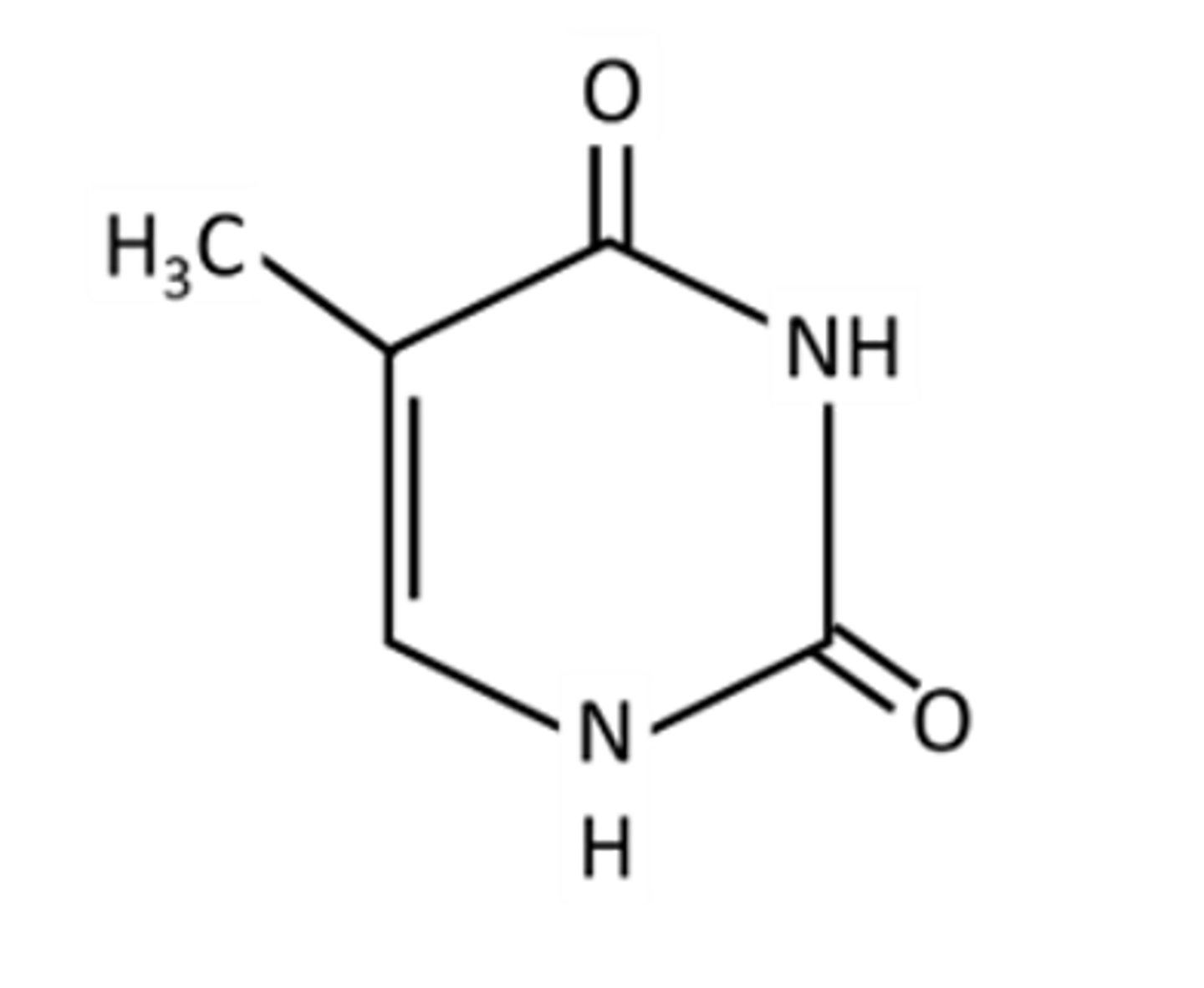
C. Thymine
Identify the following base:
A. Uracil
B. Adenine
C. Thymine
D. Cytosine
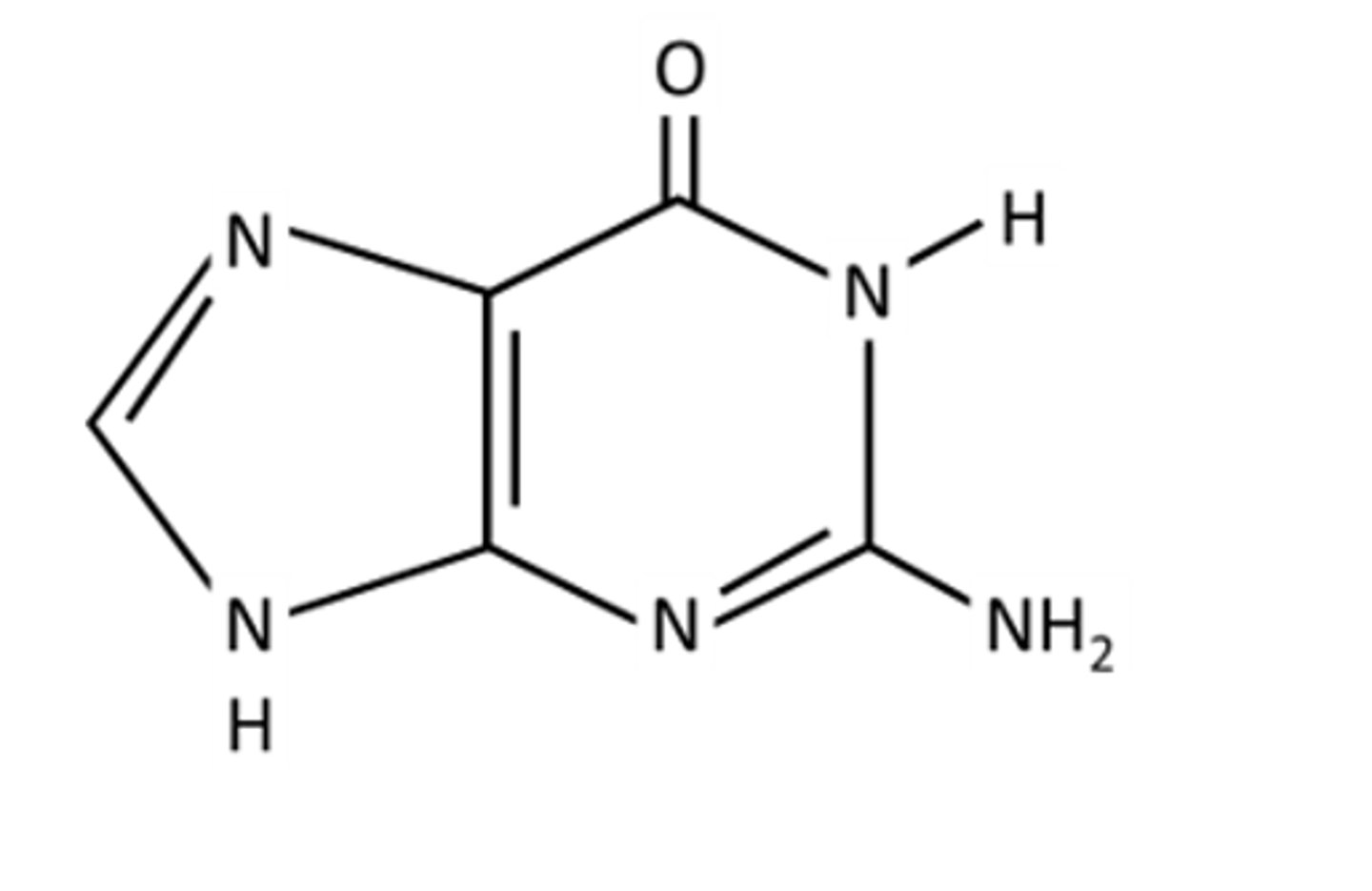
A. Guanine
Identify the following base:
A. Guanine
B. Cytosine
C. Adenine
D. Thymine
D. Glycosidic
In a nucleoside, the nitrogenous base is connected to the pentose sugar by what type of linkage/bond?
A. Phosphodiester
B. Ester
C. Nitrogen-Nitrogen
D. Glycosidic
B. 3.4 angstroms
The pitch of the DNA helix (how far the helix rises up with every full turn of the helix) is 34 angstroms. How far does the helix rise with every nucleotide base?
A. 3.0 angstroms
B. 3.4 angstroms
C. 6 angstroms
D. 6.8 angstroms
A. condense DNA
Select the option that best fits the following sentence:
The function of histones is to ___________?
A. condense DNA
B. degrade DNA
C. synthesize DNA
D. perform transcription
A. True
DNA strands can reanneal (come back together) after being denatured by heat?
A. True
B. False
D. DNA exists in the nucleus and cytoplasm while RNA is only in the nucleus
Which of the following statements is not true about the differences between DNA and RNA?
A. DNA contains 2-deoxyribose while RNA contains ribose
B. DNA is usually double stranded while RNA is single stranded
C. DNA contains thymine while RNA contains Uracil
D. DNA exists in the nucleus and cytoplasm while RNA is only in the nucleus
B. False
True or False: Histones are present in both prokaryotes and eukaryotes?
A. True
B. False
B. protect DNA and stop single strands from reannealing
The role of ssDNA binding proteins during DNA replication is to:
A. unwind DNA
B. protect DNA and stop single strands from reannealing
C. help DNA polymerase identify the leading and lagging strand
D. ligate Okazaki fragments together
C. 3' to 5' direction
During DNA replication, DNA polymerase reads the sequence of the template for the lagging strand in a:
A. random order
B. 5' to 3' direction
C. 3' to 5' direction
D. direction toward the replication fork
A. At sites distant from the transcription start site
Enhancers of DNA transcription are usually found where in the genome?
A. At sites distant from the transcription start site
B. Very close to the transcription start site
C. Within the transcribed gene
D. Within introns
B. transferring a methyl group from damaged bases to a cysteine residue in the enzyme active site
Alkyl transferase enzymes function as part of direct DNA repair by doing what?
A. making an incision in the phosphodiester bond
B. transferring a methyl group from damaged bases to a cysteine residue in the enzyme active site
C. hydrolyzing cytosine into uracil
D. cleaving the glycosidic bond between a base and the ribose sugar
D. ORC
A protein complex you are studying binds DNA at short, A-T rich DNA sequences. Which of the following options best describes what this protein complex might be?
A. ssDNA binding proteins
B. DNA Ligase
C. Topoisomerase
D. ORC
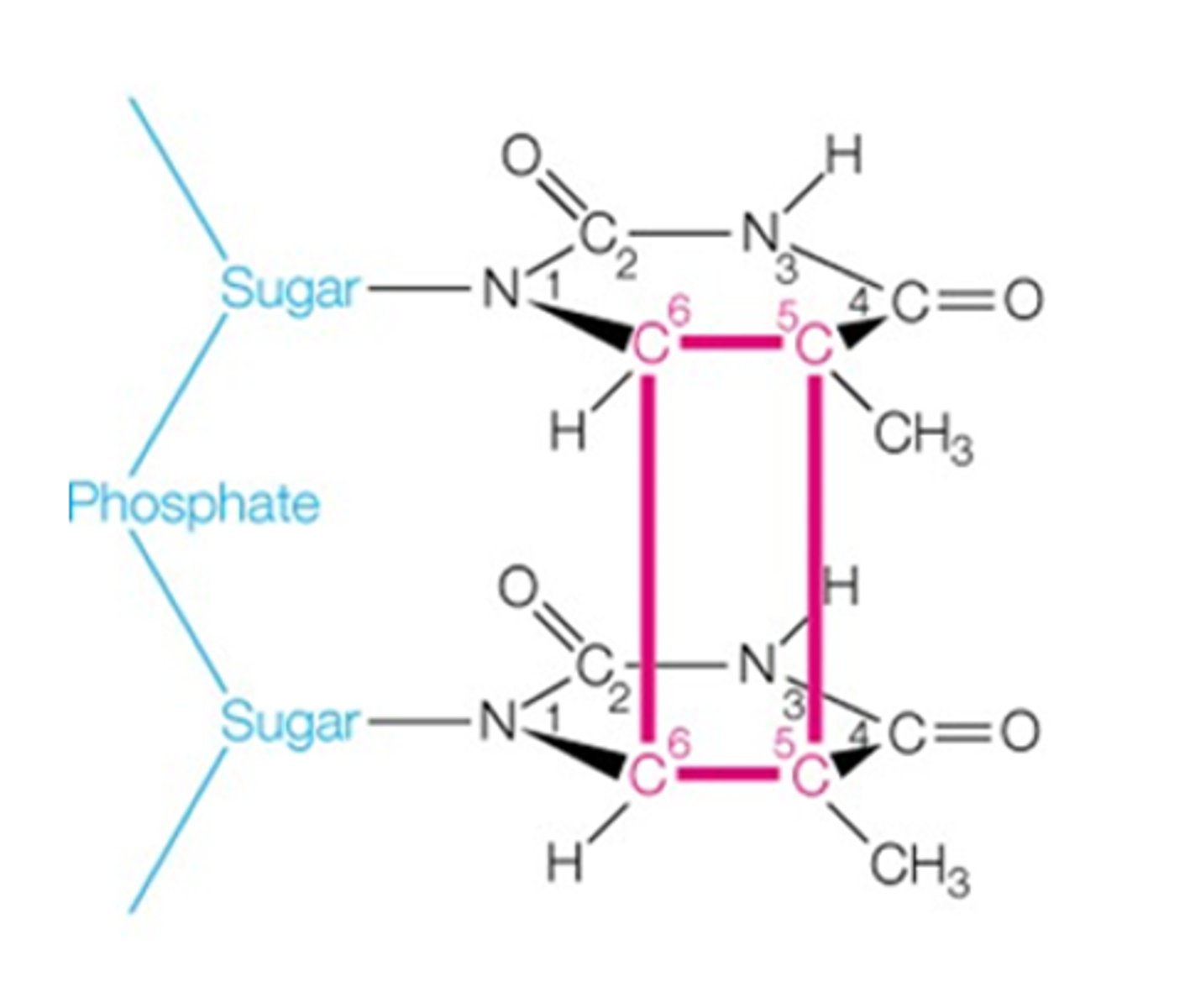
A. Nucleotide excision repair
The following image depicts a type of DNA damage that would be repaired by what process?
A. Nucleotide excision repair
B. Base excision repair
C. Homologous repair
D. Direct repair
B. Homologous recombination
BRCA2 is a tumor suppressor protein. When BRCA2 is mutated, it becomes non-functional which can allow for the development of numerous types of cancer. The normal function of BRCA2 is to bind ssDNA and find sequences of DNA complementary to the bound strand. What process is BRCA2 part of?
A. DNA replication
B. Homologous recombination
C. Nucleotide excision repair
D. Mismatch repair
D. a 2' OH group
Splicing of introns during maturation of mRNA is only possible because RNA contains which of the following?
A. Uracil bases
B. Single strands of nucleic acids
C. a 3' OH group
D. a 2' OH group
A. Histone acetyltransferases (HATs)
Euchromatin is dispersed, transcriptionally active DNA. You are studying an enzyme that when expressed in cells, increases the amount of euchromatin observed. Of the following options, which could be a possible function for the enzyme?
A. Histone acetyltransferases (HATs)
B. Histone deacetylase (HDACs)
C. DNA polymerase
D. Topoisomerase
D. Nitrogen
You design an experiment to prove that DNA replicates in a semi-conservative manner. You plan to label DNA with an isotope while doing experiments to follow DNA replication in bacteria. Which of the following elements will use an isotope of?
A. Sulfur
B. Magnesium
C. Zinc
D. Nitrogen
C. Missing Mg2+ ions
You set up a DNA polymerase reaction in a test tube. In the tube you have DNA polymerase, a single stranded DNA template, RNA primers and deoxynucleoside triphosphates. The reaction does not proceed. Why?
A. Missing DNA ligase
B. Missing alkyl transferases
C. Missing Mg2+ ions
D. Missing mRNA
D. Strand D
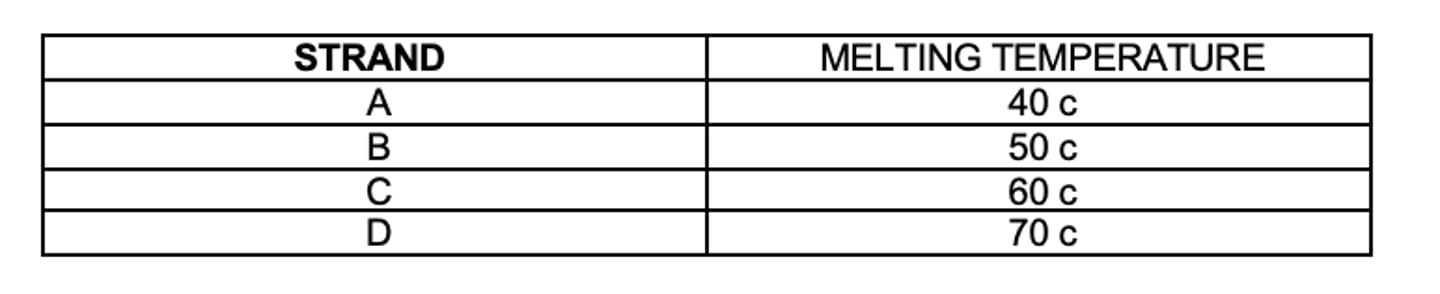
You have four strands of DNA, each of equal length. Information about each strand is provided in the table below:
Which strand likely contains the most G-C bonds?
A. Strand A
B. Strand B
C. Strand C
D. Strand D
B. More flexible loops
Two RNA molecules you are studying have an almost identical cloverleaf structure, containing three hairpins. One difference, however, is that RNA molecule X has fewer nucleotides in the loops of its hairpins than RNA molecule Y does. Which of the following properties would this likely confer upon RNA molecule Y?
A. More rigid loops
B. More flexible loops
C. Helix structures in the loop
D. None of the above
B. The presence of free 2' and 3' hydroxyl groups
Amino acids are attached to the acceptor arm of the tRNA. What property of the acceptor arms makes this possible?
A. Free phosphate groups
B. The presence of free 2' and 3' hydroxyl groups
C. A stable helix
D. None of the above
A. They can aggregate and become toxic to cells
Why is it important to degrade misfolded proteins?
A. They can aggregate and become toxic to cells
B. All misfolded proteins are contagious
C. Misfolded proteins promote cell cycle acceleration
D. None of the above
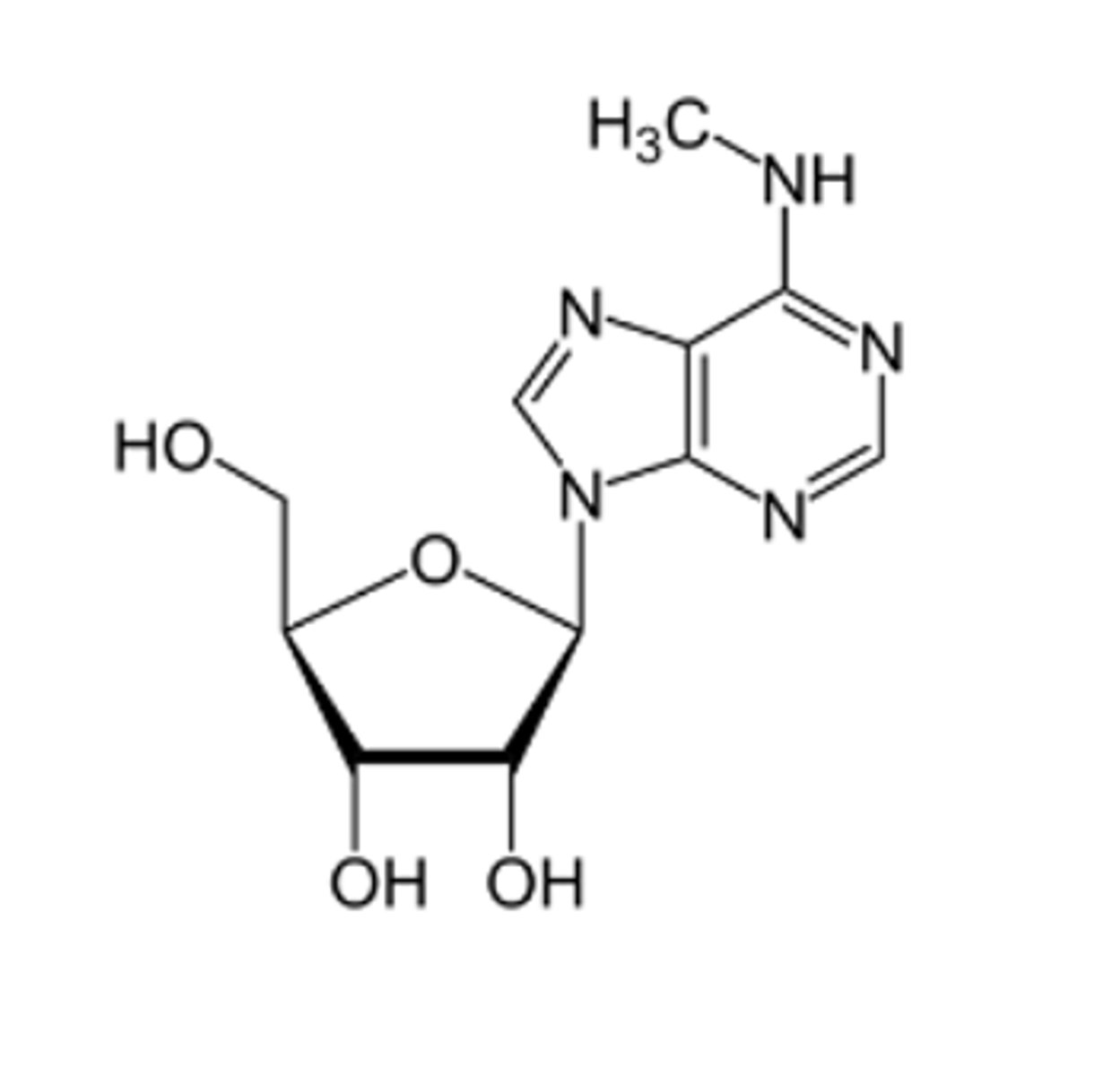
A. N6-methyladenosine
Identify the following modified ribonucleoside:
A. N6-methyladenosine
B. 5-methylcytosine
C. O6-methylguanine
D. Pseudouracil
B. Methionine
The start codon also encodes for what amino acid?
A. Cysteine
B. Methionine
C. Alanine
D. Tryptophan
C. Third
The wobble hypothesis refers to the variability of which nucleotide within the 3-letter codon?
A. First
B. Second
C. Third
D. Any
A. silent
Changes in the wobble position are often:
A. silent
B. pathogenic
C. toxic
D. deleterious
A. 5' to 3'
The ribosome reads mRNA in what direction?
A. 5' to 3'
B. 3' to 5'
C. Both directions
B. The molecule will likely contain B helix structures
You discover a new RNA molecule inside cells. The new molecule has a cloverleaf structure containing 3 stem loops. Which of the following is false?
A. The molecular will likely contain A helix structures
B. The molecule will likely contain B helix structures
C. The molecule will contain Watson and Crick base pairs
D. The molecule will contain unpairs nucleotides
C. 3' end
Amino acids are attached where on a charged tRNA molecule?
A. 5' end
B. Unpaired nucleotides
C. 3' end
D. on the A helix
C. 5'-CCA-3'
You have discovered a brand-new amino acid. Of course, the amino acid has its own unique tRNA molecule. The acceptor stem of this new tRNA will contain what sequence?
A. 5'-AAC-3'
B. 3'-AAC-5'
C. 5'-CCA-3'
D. 3'-CCA-5'
D. modification of the 5' end of tRNA
Initiation of translation involves all of the following processes except:
A. adenylation of an amino acid
B. production of an aminoacyl tRNA
C. charged methionine tRNA binding to the Ribosome P site
D. modification of the 5' end of tRNA
A. Aminoacyl tRNA synthetases
The D arm of tRNA is responsible for identification of tRNAs by what enzyme?
A. Aminoacyl tRNA synthetases
B. Ribosome
C. DNA polymerase
D. RNA polymerase
D. peptidyl transferase
The ribosome catalyzes peptide bond formation via what type of enzymatic activity?
A. ribonuclease
B. endonuclease
C. aminoacyl transferase
D. peptidyl transferase
B. 5' cap
The ribosome binds to mRNA through what mRNA modification?
A. 3' poly-A tail
B. 5' cap
C. 3' cap
D. spliced introns
C. Anticodon
Choose the option that best completes the following sentence: A charged tRNA binds to the AUG start codon through base pairing via its _________?
A. Acceptor arm
B. D arm
C. Anticodon
D. T arm
A. The carboxyl group of one amino acid and the amino group of the next
A peptide bond is formed between the which amino acid functional groups?
A. The carboxyl group of one amino acid and the amino group of the next
B. The amino group of one amino acid and the carboxyl group of the next
C. The side chain of one amino acid and the amino group of the next
D. The side chain of one amino acid and the carboxyl group of the next
D. All of the above
Which of the following is true about the differences between A and B helices?
A. A-form of helix forms a wider and flatter right-handed helix than does B-helix
B. A-form of helix contains ~11 nucleotides per helical turn while B-form has 10
C. Position of phosphate groups is closer together in A-form than B-form
D. All of the above
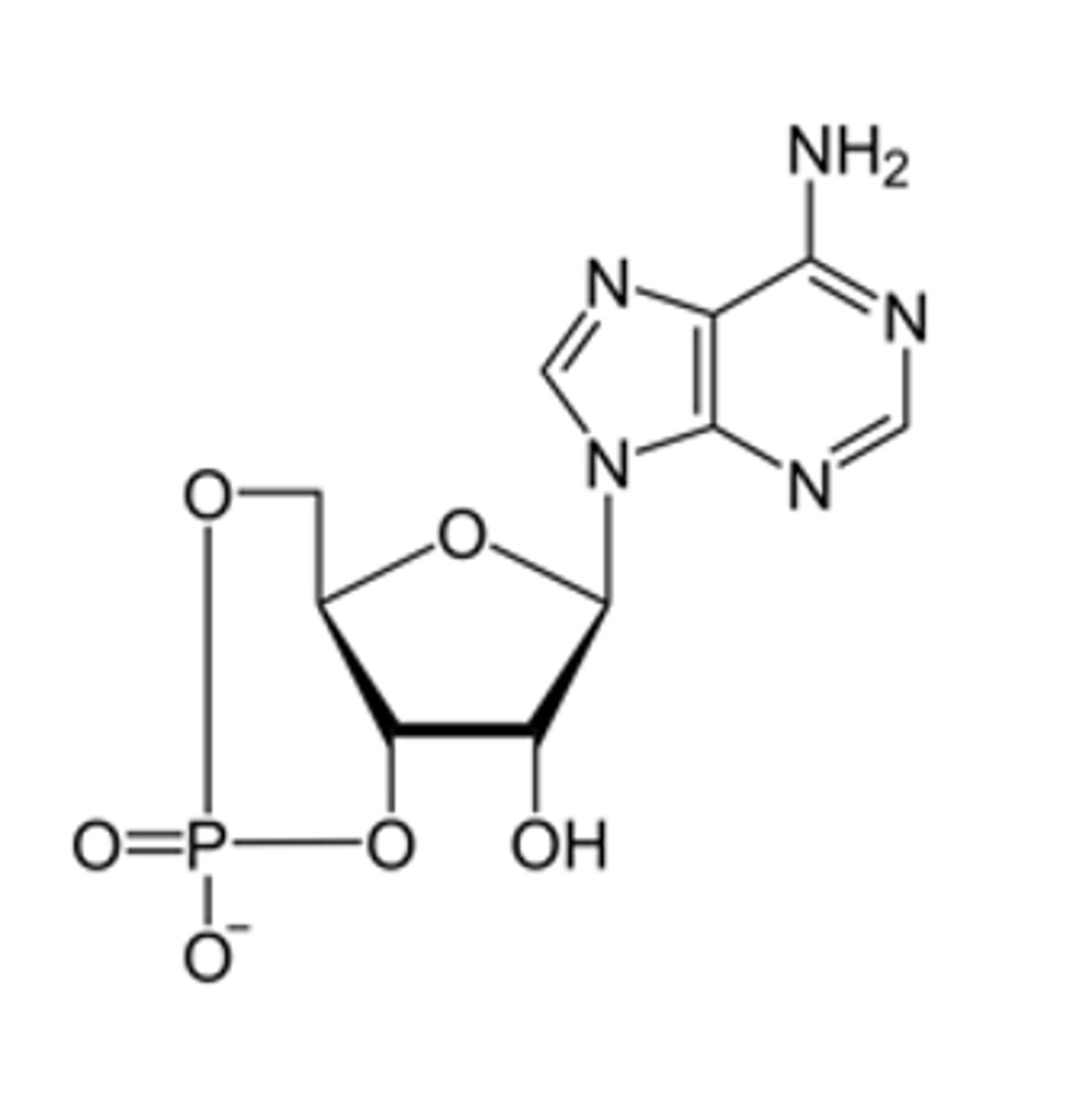
A. True
The following image shows cAMP.
True or False: cAMP is a nucleotide?
A. True
B. False
A. After cell fusion, mixing of the human and mouse proteins was observed proving membranes are fluid
An experiment was performed in 1970 that involved the following:
• labelling a mouse cell with red-fluorescent antibodies specific to mouse proteins
• labelling a human cell with green-fluorescent antibodies specific to human proteins
• Fusing the two labelled cells together
The result showed what?
A. After cell fusion, mixing of the human and mouse proteins was observed proving membranes are fluid
B. After cell fusion, mouse and human proteins did not mix
C. After cell fusion, cells died proving proteins from other species are toxic to cells
D. None of the above
B. False
True or False:
All cells e.g. erythrocytes and hepatocytes, contain the same ratio of lipids, proteins and sugars.
A. True
B. False
C. Antiport
The sodium/potassium ATPase is an example of what type of membrane transporter?
A. Uniport
B. Symport
C. Antiport
D. None of the above
D. DNA ligase
Which of the following is not an essential component of a PCR reaction?
A. Magnesium
B. Heat stable DNA polymerase
C. Primers
D. DNA ligase
C. cis double bonds decrease
Which of the following statements is true:
The fluidity of fatty acids decreases as...
A. carbon tail length decreases
B. cis double bonds increase
C. cis double bonds decrease
C. Unequal
Select the answer that best fills the blank below: The distribution of different types of lipids is _________ between the outer and inner leaflets of the plasma membrane?
A. Even
B. Equal
C. Unequal
D. None of the above