Biomechanics Introduction Week 2.1
 Call Kai
 Learn
Learn Practice Test
 Spaced Repetition
 Match
Match Flashcards
 Knowt Play
1/78

There's no tags or description
Looks like no tags are added yet.
Name | Mastery | Learn | Test | Matching | Spaced | Call with Kai | Chat |
|---|
No analytics yet
Send a link to your students to track their progress
79 Terms
Biomechanics definition
mechanical concepts applied to human body/function
application of anatomy & kinesiology to produce movement
Break down the word Biomechanics
Forces and mechanisms. Movement related to function, forces and physics
Arthrokinematic motion
Manner in which joints move in relation to each other
Osteokinematics
Manner in which bones move in space (flexion, extension)
Arthro- prefix definition
joints
Osteo- prefix definition
Bones
Force equation
F = mass x acceleration
Force definition
magnitude of push or pull action
Mass definition
the amount of matter a body contains
How big?
Scalar
Describes only magnitude, and NOT direction, will be a single number of units
has no direction
Example of scalar things
Mass
Temperature
Distance
Time
Vector definition
Measure of magnitude or direction
Example of vector things
Velocity
Force
Acceleration
Inertia
A resistance to a change in motion
Kinetics
forces causing movement in a system
Torque
Force that produces rotation around axis
Friction definition
Force developed by 2 surfaces rubbing, sliding, or rolling against one another
works to prevent motion
Does Friction exist when 2 objects are in contact?
Potentially
Does Friction exist when 2 objects are rubbing together?
Yes, Always!
Give an example of Vector vs. Scalar as it pertains to speed.
60mph is scalar, but 60mph North is a vector because it includes direction as well
Velocity definition
the speed of an object combined with a certain direction
When is movement created with force?
When one force becomes greater than another
Types of Force
Compression or Push
Tension/Distraction or Pull
Shear
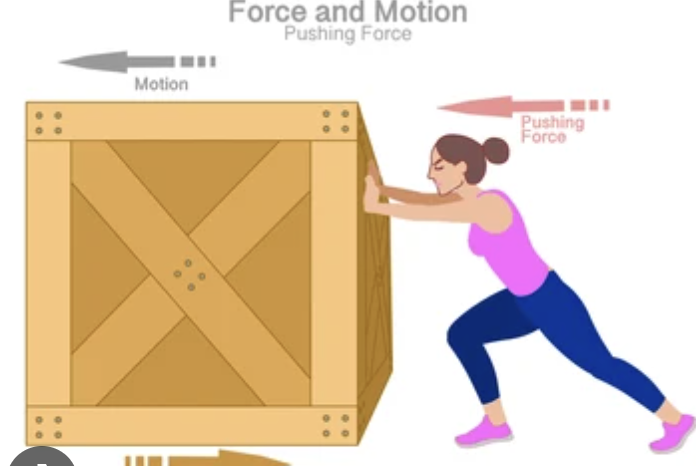
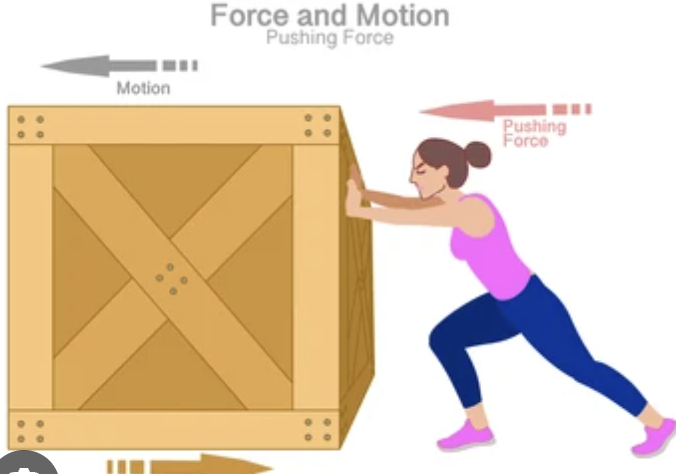
Linear force definition
Can push or pull along a straight line on an object. Forces act along the same linear path.
Push and pull line
Examples of Linear force
Pulling a rope
Pushing a box
muscles pulling on a bone
What does linear force result in?
Causes an object to move, stretch, or compress in one direction
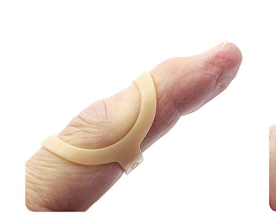
Parallel force definition
Occur in the same plane in same or opposite directions
NOT on the same line/level
In a parallel force, where is the opposite force located?
Between the two parallel forces
Example of parallel force
3 point splint

Concurrent forces definition
Act on a common point, but in different directions
Resultant force definition
Overall effect of the 2 concurrent forces
Examples of biomechanics/concurrent forces
Two people pulling a boat from different points in order to achieve the same action
2 person transfer
Using two hands to turn while sitting in a wheelchair
Force Couple
Two or more forces acting in different directions
resulting in a turning effect
What type of movement does a force couple result in?
turning effect
Give an example of a force couple
Raising the shoulder
movement of upper trapezius, lower trapezius and serratus anterior
Vector composition
2 or more forces can be added together
What does the amount of torque depend on?
Torque = distance x force
The more distance, will require more force. The same vice versa.
Stability
When all torque is even, and gives you a state of equilibrium
Center of Gravity
a point at which all planes of the body intersect.
Currently is at your waist when standing up.
What are the 4 types of Equilibrium
Stable equilibrium
Unstable equilibrium
Neutral equilibrium
Static equilibrium
Stable equilibrium
When an object is in a position where disturbing it would require it’s Center of Gravity to be raised
ex: a brick
Unstable equilibrium
Only a slight force is needed to disturb an object
ex: pushing over a phone that is balanced upright
Neutral equilibrium
an object’s Center of Gravity is neither raised nor lowered when it’s disturbed
ex: a ball rolling on a flat surface
Static equilibrium
The object is not moving
the additive of all forces acting on a mess is equal to ZERO
BOS definition
Base of support
part of the body that is in contact with supporting surface
LOG definition
Line of gravity
imaginary vertical line through the center of gravity toward the earth
What can you do to improve stability?
Lower COG
Keep COG and LOG over BOS
Make BOS wider
Increase mass
Increase friction
Focus on stationary object
Do smooth surfaces or rough surfaces make more friction?
Rough surfaces make more friction
The greater the friction between two surfaces the greater the _____ .
Stability
Law of Inertia - Newton’s First Law
A body at rest will remain at rest, and a body in motion will remain in motion in a straight line with constant velocity unless acted on by an outside force
net force acting on the object should be 0
How do you move an object out of its state of inertia?
Need to generate force that is a greater mass than inertia
The greater a body’s inertia the ______ it is to change its velocity
harder
Force equation
F = mass x acceleration
Law of Acceleration - Newton’s Second Law
an object with a force acting on it will accelerate in the direction of that force
magnitude of acceleration is directly proportional to the force applied, and in the exact direction of the applied force
Law of Action - Newton’s Third Law
For every force there is an equal and opposite reaction force
equal in magnitude (strength), and opposite in direction
6 types of Simple Machines
Incline plane
Wedge
Screw
Wheel and Axle
Pulley
Lever
What are the components of a Lever?
A (axis) > Joint
R (resistance) > Weight
F (force) > Muscle
What is the lever?
Bone in the body
First Class Lever
Axis is in the middle
Like a seesaw
Fulcrum : middle
Effort: one end
Load: other end
Real Example of First Class Lever
Neck extension
Balancing the weight of your head. The fulcrum is in the middle, head weight is going back one one end, the effort is pulling down tilting your head up
Force arm (FA)
Distance between the axis and force
Resistance arm
Distance between the Resistance (R) and Axis (F)
How can you use splinting to reduce pressure?
Make a longer splint, this will increase the area of force application
How can you use splinting to increase the mechanical advantage?
Control parallel force systems
Short term stretch is _____
elastic - return to pre-morbid state
Long term stretch is ______
plastic - deformation retains some degree of stretch position
Too much force on tissue can do what?
May tear tissue, stimulate inflammation, increase edema, increase fibrosis
Second class Lever
Resistance is between axis and Force
From left to right
Fulcrum > Resistance pushing down > Effort lifting up
Wheelbarrow
Which lever is found the most in the body?
Third Class Lever
Example of the Second Class Lever
Wheelbarrow
Tweezers, Chopsticks
Ankle joint when going into plantar flexion
Gastrocnemius is the effort
Resistance is the weight going down onto the toe
Third Class Lever
Force is between axis and resistance
From left to right
Fulcrum/axis (Joint) > Effort (Muscle) > Load (Resistance)
Third Class Lever Example
Hammer curls
Bicep Curls
Hamstring curls
Mechanical Advantage (MA)
Ratio between force arm and resistance
Shorter arm requires more force
Longer arm requires less force
Pulley definition
a spool or wheel that turns around the axis. Pulley amplifies the muscle movement
Pulleys increase force, as in hoisting or pulling heavy weights
Example of a Pulley
Patella is a pulley for the quads
amplifies the muscle movement
Wheel and Axle
Central axle, and wheel revolves around the axle
Force magnified when applied farther from axle
Example of Wheel and Axle
Pirate ship steering wheel
Car driving wheel
Inclined Plane
Surface with one end higher than other
Provides a way to lift a weight that is too heavy to lift directly
less force but the object must be moved over a longer distance
Inclined plane examples
Slide board for transfer
Using a ramp to load a piano onto a truck