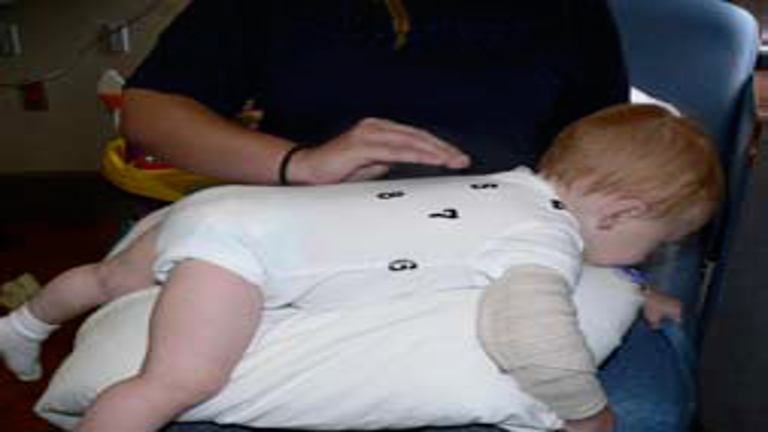
CH II: chest physiotherapy [discussion]
 Call Kai
 Learn
Learn Practice Test
 Spaced Repetition
 Match
Match Flashcards
 Knowt Play
1/83

There's no tags or description
Looks like no tags are added yet.
Name | Mastery | Learn | Test | Matching | Spaced | Call with Kai | Chat |
|---|
No analytics yet
Send a link to your students to track their progress
84 Terms
chest percussion; tracheobronchial tree
_____ refers to a series of manipulative techniques designed to assist with bronchial hygiene: the mobilization of secretions from the _____
Prophylaxis to prevent retained secretions
Improve mobilization of secretions
Improve distribution of ventilation
Promote more efficient breathing patterns
Promote effective cough
goals of chest percussion include:
Acute pulmonary disease with copious secretions
Acute lobar atelectasis
Acute conditions that are indications to chest percussion include:
Exacerbation of COPD w/ scant secretions <25 ml per day
Pneumonia w/o sputum production, e.g., viral
Status asthmaticus
Status Post (S/P) coronary artery bypass graft surgery (CABG)
Acute conditions of questionable benefits that are indications to chest percussion include:
Chronic production of large amounts (>30 ml/day) of secretions
Cystic fibrosis
Bronchiectasis
Chronic bronchitis
Lung abscess
Chronic conditions that are indications to chest percussion include:
lung abscess
pus within the lungs is termed as what?
empyema
pus within pleural space is termed as what?
Chest tube drainage
what intervention is required for empyema?
Hypoxemia when affected side is dependent
Cardiovascular instability
Internal hemorrhage post surgery
Hemoptysis after lung surgery
Fractured ribs, e.g., osteoporosis
Increased ICP
Dyspnea
Pain
Vomiting
Wheezing
Bronchospasm
Acute hypotension
Aggravate lung contusion
Hazards/complications of chest percussion include:
Hemoptysis after lung resection
Uncontrolled hypertension
ICP > 20 mm Hg
Status: Post neurosurgery, aneurysm, eye surgery
Suspected TB
Osteomyelitis
Osteoporosis
Chest pain
Resected tumors of the thorax or neck
Contraindications of chest percussion include:
trap air; popping
When using the hand percussion technique, cupped hand will _____ to cause a _____ sound on contact
cover sheet
patient gown
Before using the hand percussion technique, use 1 of 2 things over px’s skin. These 2 things are:
extended; tensed
When using the vibes percussion technique, arms are _____ and _____ when pushed firmly.
chest; exhalation
When using the vibes percussion technique, arms are tensed when pushed firmly against px’s _____ during _____.
chest; exhalation
When using the shaking percussion technique, shake hands on px’s _____ during _____.
hand
vibes
shaking
Percussion techniques include:
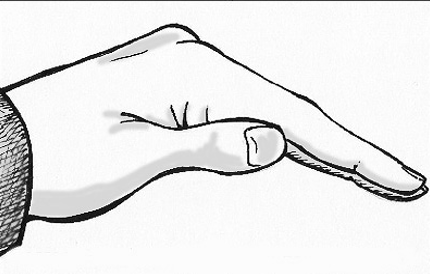
false. this is for CHEST PERCUSSION
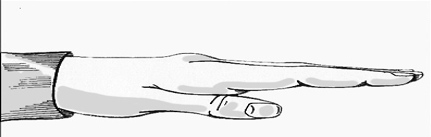
this is the correct hand position for vibration. true or false?
before meals
at least 1-2 hours after eating
early morning
at bed time
When is it best to do CPT?
makes it less likely that a patient will feel sick to the stomach/throw up
rationale for doing CPT before meals/at least 1-2 hours after eating?
helps remove the mucus that built up overnight
rationale for doing CPT at early morning?
takes out the mucus of the day
helps the child cough less at night
rationale for doing CPT at bed time?
take off all of it
person doing the CPT should do what on the jewelry on their hands or wrists?
it is tight
it has thick seams
it has buttons
remove clothes of px ONLY if?
wear a t-shirt
put a soft cloth over the spot that will be percussed
after removal of clothing of px as appropriate, what is done to px prior to percussion?
false. this is for VIBRATION
this is the correct hand position for chest percussion. true or false?
vibration
this process helps to gently shake mucus and secretions into the large airways, making them easier to cough up.
flat; chest wall; lung segment
arm; shoulder
light
shaking
vibration is done by:
place your _____ hand firmly against the _____, atop the appropriate _____ to be drained
stiffen your _____ and _____
apply _____ pressure
create _____ movement
postural drainage; tracheobronchial tree; gravity
_____ is method of removing pooled secretions in the _____ by positioning the patient to allow _____ to assist in the movement of secretions.
Facilitate mobilization of secretions in the bronchial tree
Improve distribution of ventilation
Improve gas exchange by improving V/Q mismatch
goals of postural drainage include:
eurt
Indications of postural drainage are same as for chest percussion. true or false?
eurt
postural drainage is indicated for those who do not tolerate percussion. true or false?
Unstable hemodynamics
Untreated hypertension
Internal and external head injuries
Gross obesity
Empyema
Severe dyspnea at rest in high Fowlers or supine
Recent meals or tube feedings
Spinal cord injuries
contraindications of postural drainage include:
allow ≥ 30 mins after meals/tube feedings
for recent meals/tube feedings to not be a contraindication to postural drainage, what is done prior?
near vertical position
in postural drainage, patient is positioned so that the diseased area are in _____.
location of mucus obstruction
severity of mucus obstruction
duration of mucus obstruction
in postural drainage, position assumed is determined by:
tachycardia
palpitations
dyspnea
chest pain
postural drainage is discontinued if the following symptoms occur:
explain to patient
unconscious; large
Trendelenburg position
in terms of moving px into position in postural drainage procedure, nurse must:
_____ what you will be doing
ask for help if patient is _____ and _____
move patient into position prior to placing bed into _____
alert; SOB
move into position; assist
in terms of explaining to patient what you will be doing prior to postural drainage, nurse must consider:
If patient is _____, let him or her know to let you know if he or she experiences:
_____
Headache
Pain
If patient is ambulatory, ask him or her to _____; _____ if necessary
turned; you [nurse]
pain; breathing distress
between knees; bone to bone contact
pillow
in terms of positioning patient for safety and comfort in postural drainage procedure, nurse must: [1st-4th step]
Patient should always be _____ and face _____
Monitor patient’s facial expressions for _____, discomfort, and signs of _____
Adjust patient’s arms and legs using pillows placed _____; avoid _____
Support the head with a _____
back and abdomen
IV lines; urinary catheter
your [nurse’s]
up; opposite
in terms of positioning patient for safety and comfort in postural drainage procedure, nurse must: [5th-8th step]
Tuck pillow behind _____ and _____ for stability
Watch for _____ and _____
Urinary catheter should be placed on _____ side
Make sure side rails are _____ at side _____ you [nurse]
diaphragmatic
prescribed
cupped; 1-2
slowly and deeply; pursed lip
steps for postural drainage include:
Instruct the client to use _____ breathing
Position the patient in _____ postural drainage position
Percuss with _____ hands over the chest wall for _____ minutes
Instruct the patient to inhale _____. Vibrate the chest wall as the patient exhale slowly through _____ breathing.
spine
liver
kidneys
spleen
breast
scapula
clavicle
sternum
when doing postural drainage, avoid clapping over what organs?
top; rib cage
moderate; downward
thorax; inhales
cough; 3-4
in context of instructing the patient to inhale slowly and deeply & vibrating the chest wall as the patient exhale slowly through pursed lip breathing, several steps are done:
Place one hand on:
_____ of the other over affected area
Each side of the _____
Tense muscles of the hands and arms while applying _____ pressure ______ and vibrate arms and hands
Relieve patient’s _____ as the patient _____
Encourage to _____ after _____ vibrations.
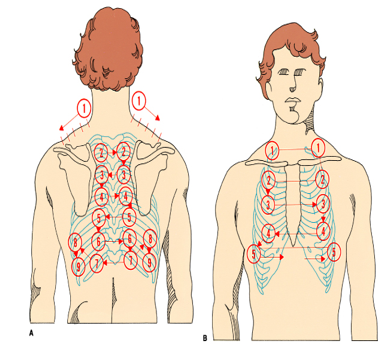
false, this is used for chest palpation, percussion, AND auscultation too
the pattern in the image is used for chest palpation and percussion ONLY. true or false?
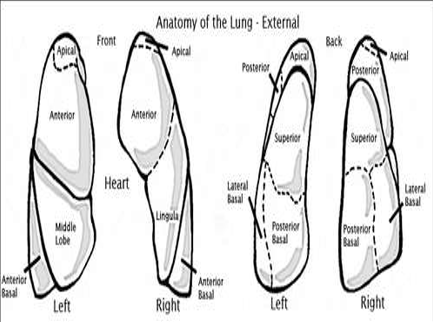
rest station to—walang need sagutan, for now
appreciate your lungs challenge
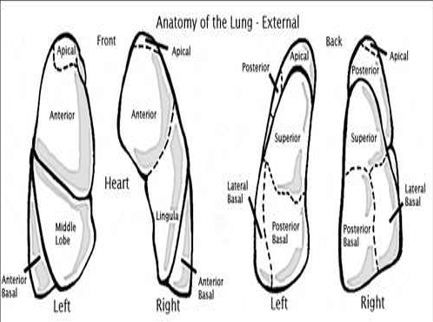
both upper lobes apical
what position is this?
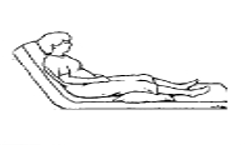
left upper lobe anterior
what position is this?
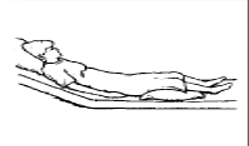
left upper lobe posterior
what position is this?
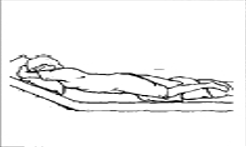
left upper lobe lingula
what position is this?
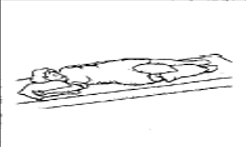
right upper lobe anterior
what position is this?
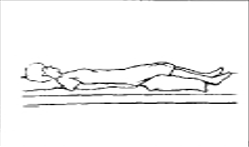
right upper lobe posterior
what position is this?
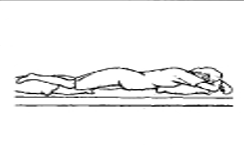
right middle lobe
what position is this?
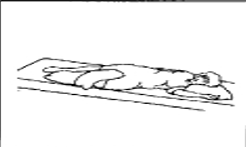
both lower lobes superior
what position is this?
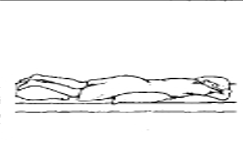
both lower lobes anterior
what position is this
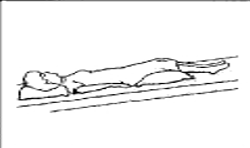
both lower lobes posterior
what position is this?
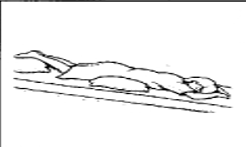
left lower lobe lateral segment
what position is this?
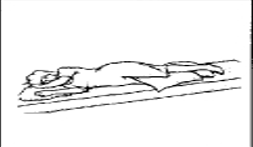
right lower lobe lateral segment
what position is this?
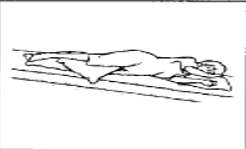
upper lobes apical segments
what part of lungs is shaded in the image?
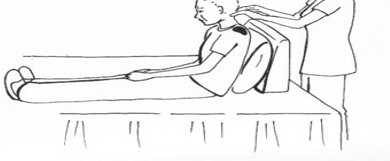
bed/flat surface
headboard of bed/caregiver
To drain mucus from the upper lobe apical segments, the patient sits in a comfortable position on _____/_____ and leans on a pillow against _____/_____.
collar bone and very top of shoulder blades; 3-5
deep breath; during percussion
percuss
After px is positioned to drain mucus from the upper lobe apical segment, nurse:
Percusses and vibrates over muscular area between _____ and _____ on both sides for _____ minutes
Encourages the patient to take a _____ and cough _____ in order to help clear the airways
Does not _____ over bare skin
upper lobes posterior segments
what part of lungs is shaded in the image?
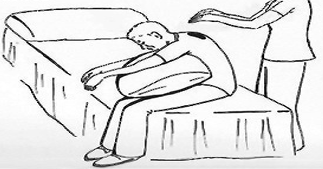
chair/side of bed; dangling
both; upper back
To drain mucus from the upper lobe posterior segments,
Patient sits comfortably in _____/_____ and leans over, arms _____ against pillow
Caregiver percusses and vibrates using _____ hand/s over _____ on both right and left sides
upper lobes anterior segments
what part of lungs is shaded in the image?
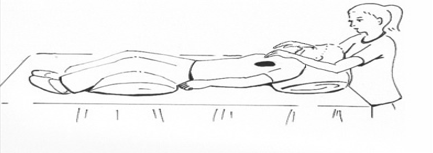
flat; head and legs
front of chest; collar bone and nipple
To drain mucus from the upper lobe anterior segments,
patient lies _____ on the bed or table with a pillow for comfort under their _____ and _____
caregiver percusses and vibrates the right and left sides of the _____, between the _____ and _____
lingula
what part of lungs is shaded in the image?
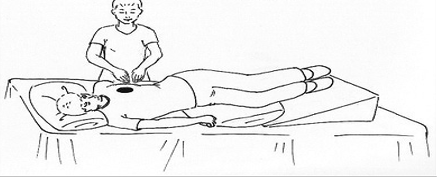
down; right; quarter-turn towards back; behind; bent
just outside nipple area
To drain mucus from the lingula,
Patient lies with their head _____ toward the foot of the bed on the _____ side, hips and legs up on pillows. The body should be rotated about a _____ towards _____. A pillow can also be placed _____ the patient and their legs slightly _____ with another pillow between the knees.
Caregiver percusses and vibrates _____.
middle lobe
what part of lungs is shaded in the image?
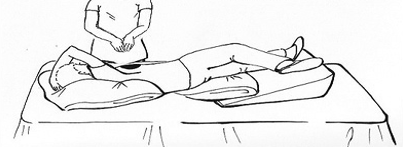
head-down; right; as high as possible; slightly bent
just outside right nipple area
To drain mucus from the middle lobe,
Patient lies _____ on his side, a quarter-turn toward back with the _____ arm up and out of the way. The legs and hips should be elevated _____. A pillow may be placed in back of the patient and between _____ legs.
Caregiver percusses and vibrates _____.
lower lobes anterior basal segments
what part of lungs is shaded in the image?
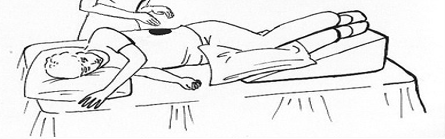
right; foot; as high as possible on pillows; slightly bent
To drain mucus from the lower lobes anterior basal segments,
Patient lies on his _____ side with his head facing the _____ of the bed and a pillow behind his back. The hips and legs should be elevated _____ on _____. The knees should be _____ and a pillow should be placed between them for comfort.
lower lobes posterior basal segments
what part of lungs is shaded in the image?
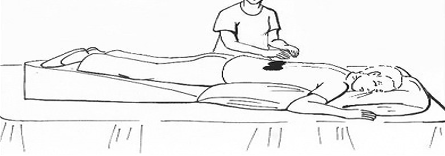
stomach; elevated
lower part; spine; spine and lower ribs
To drain mucus from the lower lobes posterior basal segments,
Patient lies on their ______, with the hips and legs _____ by pillows
Caregiver percusses and vibrates at the _____ of the back, over the left and right sides of the _____, careful to avoid the _____ and _____.
lower lobes lateral base segments
what part of lungs is shaded in the image?
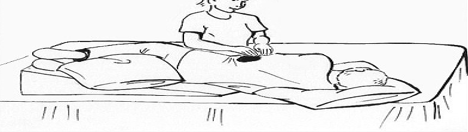
right/left; one-quarter of a turn; top
uppermost; lower; left/right; opposite
To drain mucus from the lower lobes lateral base segments,
Patient lies on his _____ side, leaning forward about _____ with hips and legs elevated on pillows. The _____ leg may be flexed over a pillow for support and comfort.
Caregiver percusses and vibrates over the _____ portion of the _____ part of the _____ ribs. This should then be repeated on the _____ side, with percussion and vibration over the uppermost portion of the right side of the lower ribs.
lower lobes superior segments
what part of lungs is shaded in the image?
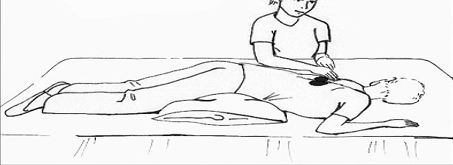
stomach; 2; under hips
bottom; shoulder blades; spine itself
To drain mucus from the lower lobes superior segments,
Patient lies on his _____ on a flat bed or table. _____ pillows should be placed _____.
Caregiver percusses and vibrates over the _____ part of the _____, on both the right and left sides of the spine, avoiding direct percussion or vibration over the _____.
Upper lobe; anterior segment (sitting, leaning back slightly)
what position is this?
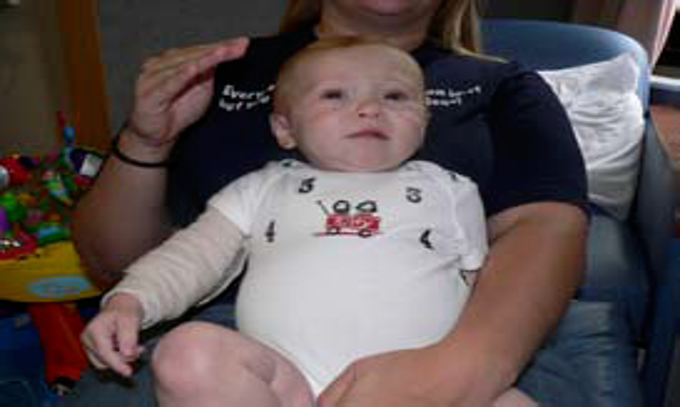
Upper lobe; apical segment (sitting, leaning forward slightly)
what position is this?
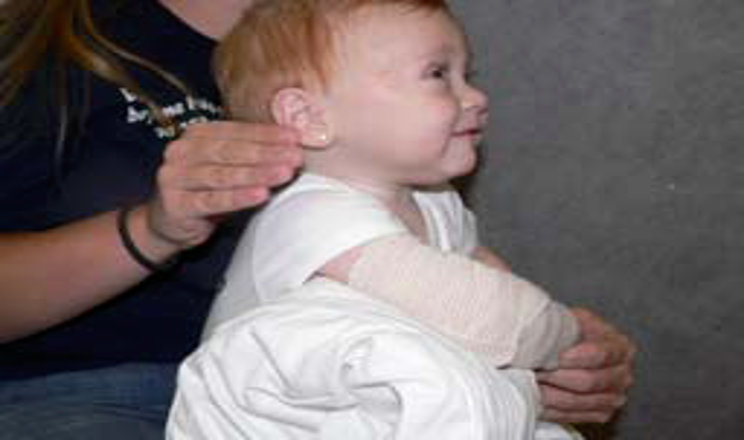
Upper lobe; anterior segment (lying flat on back)
what position is this?
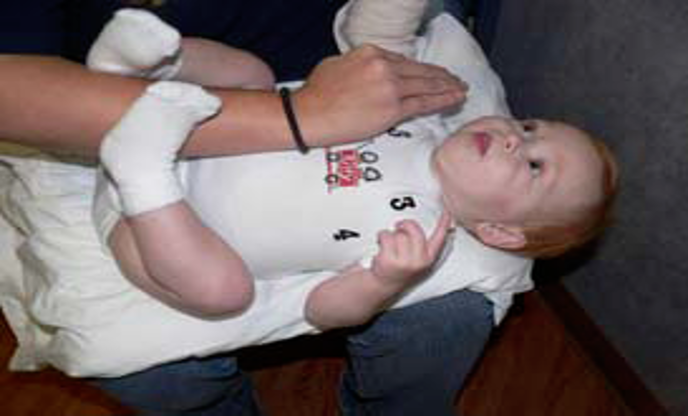
Middle lobe (on side, tilted back slightly)
what position is this?
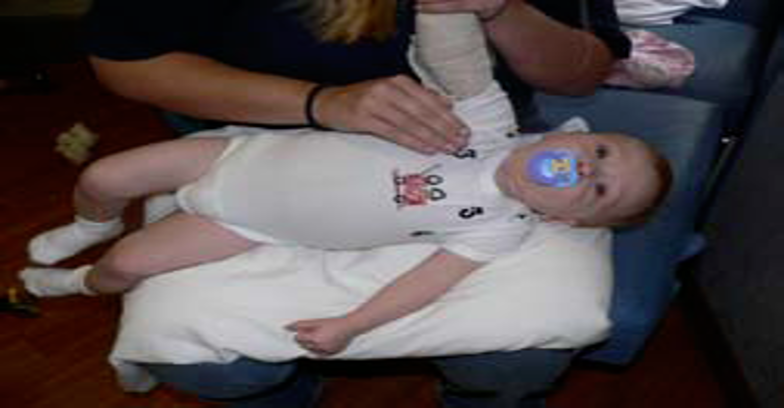
Posterior lobe (lying on stomach)
what position is this?
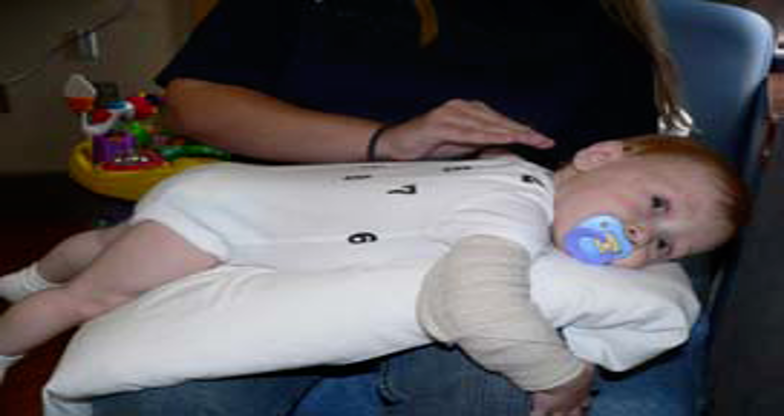
Lingula (lying on side)
what position is this?
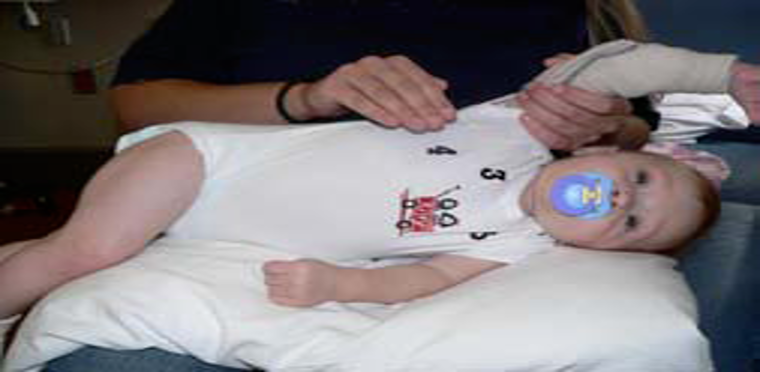
Lower right lobe (lying on side, tilted forward)
what position is this?
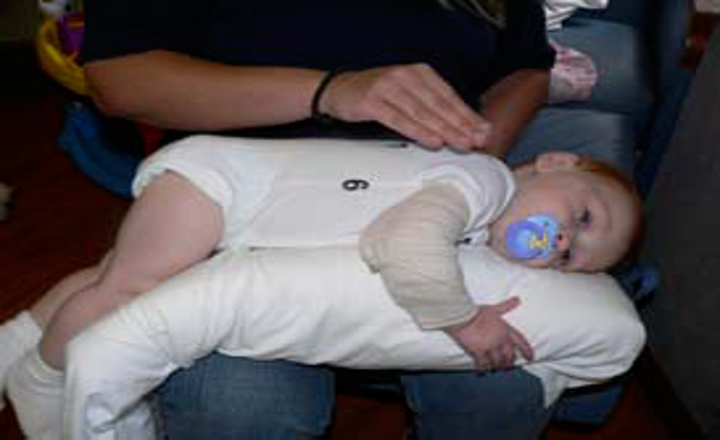
Lower left lobe (lying on stomach)
what position is this?