5. Anesthesia
 Call Kai
 Learn
Learn Practice Test
 Spaced Repetition
 Match
Match Flashcards
 Knowt Play
1/69

There's no tags or description
Looks like no tags are added yet.
Name | Mastery | Learn | Test | Matching | Spaced | Call with Kai | Chat |
|---|
No analytics yet
Send a link to your students to track their progress
70 Terms
Difficult intubation?
Malignant hyperthermia?
PONV (post-op nausea/vomiting)
questions to ask on previous anesthesia history
anticoagulants
ACEi/ARBs (often held day of surgery)
Medication/class | Typical pre-op management | Why |
|---|---|---|
ACE inhibitors / ARBs (lisinopril, losartan) | Usually hold morning of surgery; some protocols hold ~24 hr | ↓ intra-op hypotension |
SGLT2 inhibitors (empagliflozin, dapagliflozin) | Hold 3 days; ertugliflozin 4 days | Euglycemic DKA |
Metformin | Often hold day of surgery | Fasting/renal concerns; practice varies |
Sulfonylureas (glipizide, glyburide) | Hold morning of surgery | Hypoglycemia |
Insulin | Don't simply stop; usually reduce basal dose and hold prandial while NPO | Prevent hypo/hyperglycemia & DKA |
GLP-1 drugs (semaglutide, tirzepatide) | Individualized; not routinely held in every patient | Delayed gastric emptying/aspiration concern |
Warfarin | Usually stop ~5 days before | Bleeding |
DOACs (apixaban, rivaroxaban) | Usually hold 1–2+ days, longer for high-bleeding-risk surgery/renal impairment | Bleeding |
Clopidogrel | Commonly hold ~5 days when safe | Bleeding |
NSAIDs | Often held before higher-bleeding-risk procedures; timing depends on drug | Platelet dysfunction/bleeding |
Herbal supplements | Often stop ~1–2 weeks beforehand | Bleeding/drug interactions |
Drugs commonly CONTINUED
Usually continue beta-blockers, statins, many antiarrhythmics, antiepileptics, and chronic steroids. Steroids are particularly important—don't abruptly discontinue chronic glucocorticoids.
🔥 Surgery-board pearls
ACEi/ARB → hold → hypotension
SGLT2 inhibitor → hold 3–4 days → euglycemic DKA
Sulfonylurea → hold → hypoglycemia
Anticoagulants/antiplatelets → bleeding risk, but timing depends on drug/procedure
Beta-blocker → CONTINUE
Chronic steroids → CONTINUE
typical medications to d/c before going under anesthesia
YES
Why continue?
Abruptly stopping them can cause rebound sympathetic activity → tachycardia, hypertension, angina, or MI.
Chronic β-blocker → CONTINUE perioperatively.
Don't routinely start a new beta-blocker immediately before surgery, because excessive bradycardia/hypotension can occur.
can you continue beta blockers under anesthesia
(Examples: metoprolol, atenolol, propranolol, carvedilol, labetalol)
≥4 METs = generally safe (e.g., climb stairs)
number of METs in which it is generally safe for anesthesia
Clear liquids: ≥2 hours
Breast milk: ≥4 hours
Light meal: ≥6 hours
Fatty meal: ≥8 hours
fasting guidelines for NPO

full uvula/tonsils
structures seen on Mallampati class I
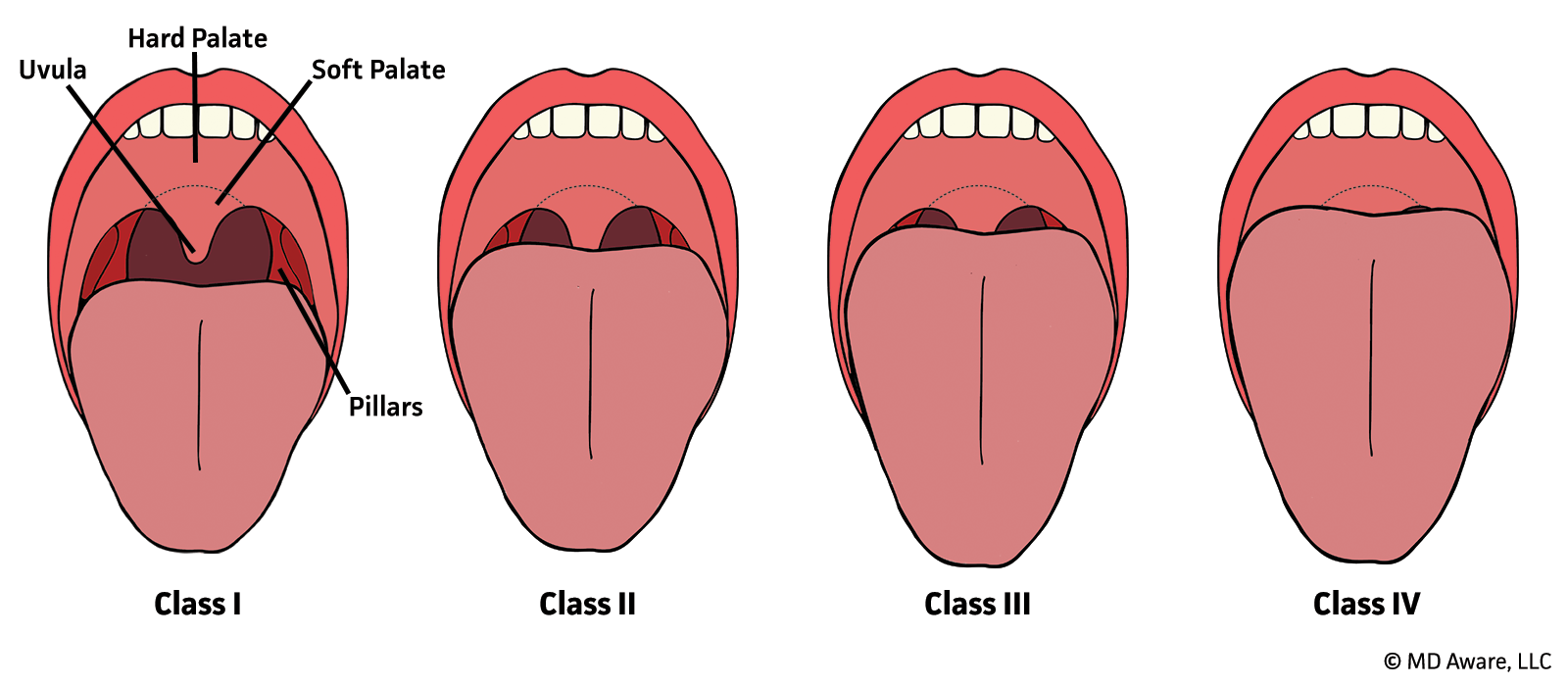
partial uvula
structures seen on Mallampati class II
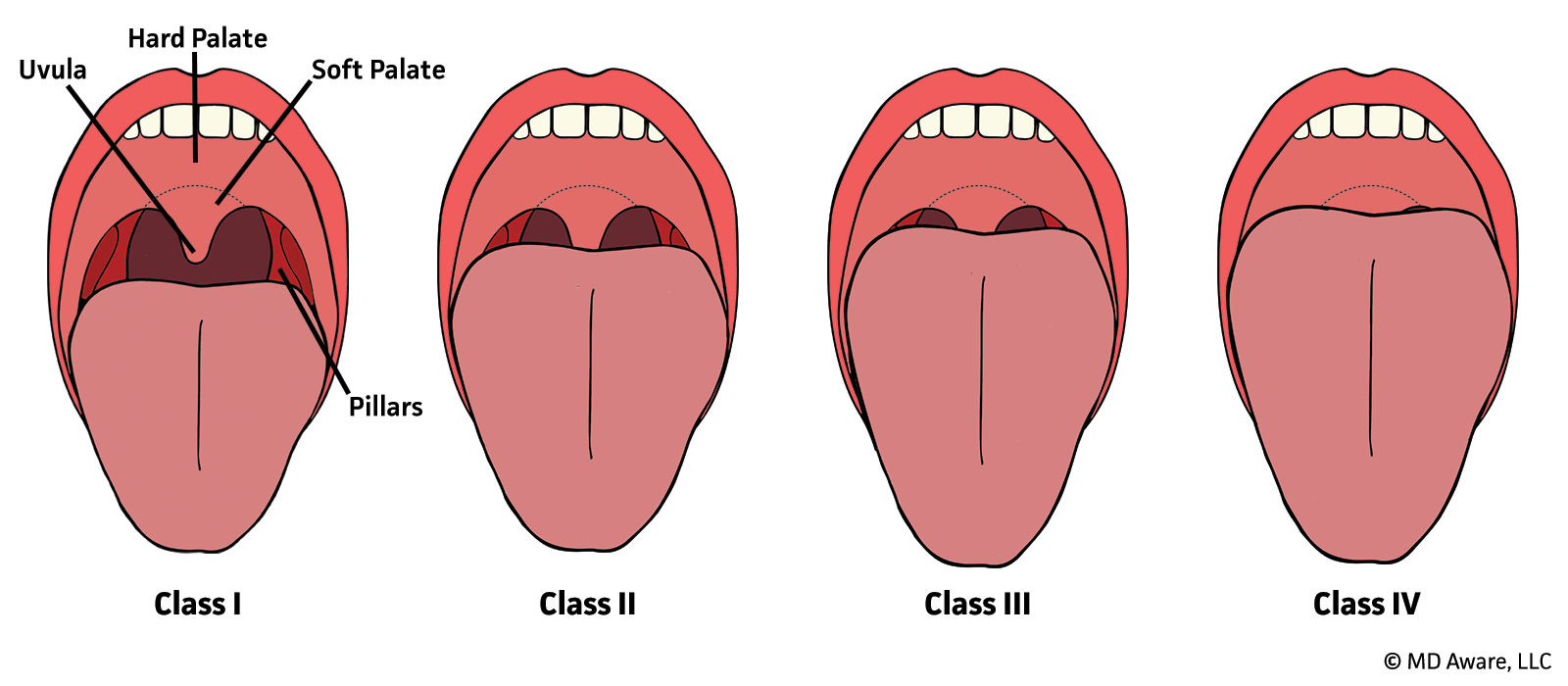
base of uvula
-difficult intubation
structures seen on Mallampati class III
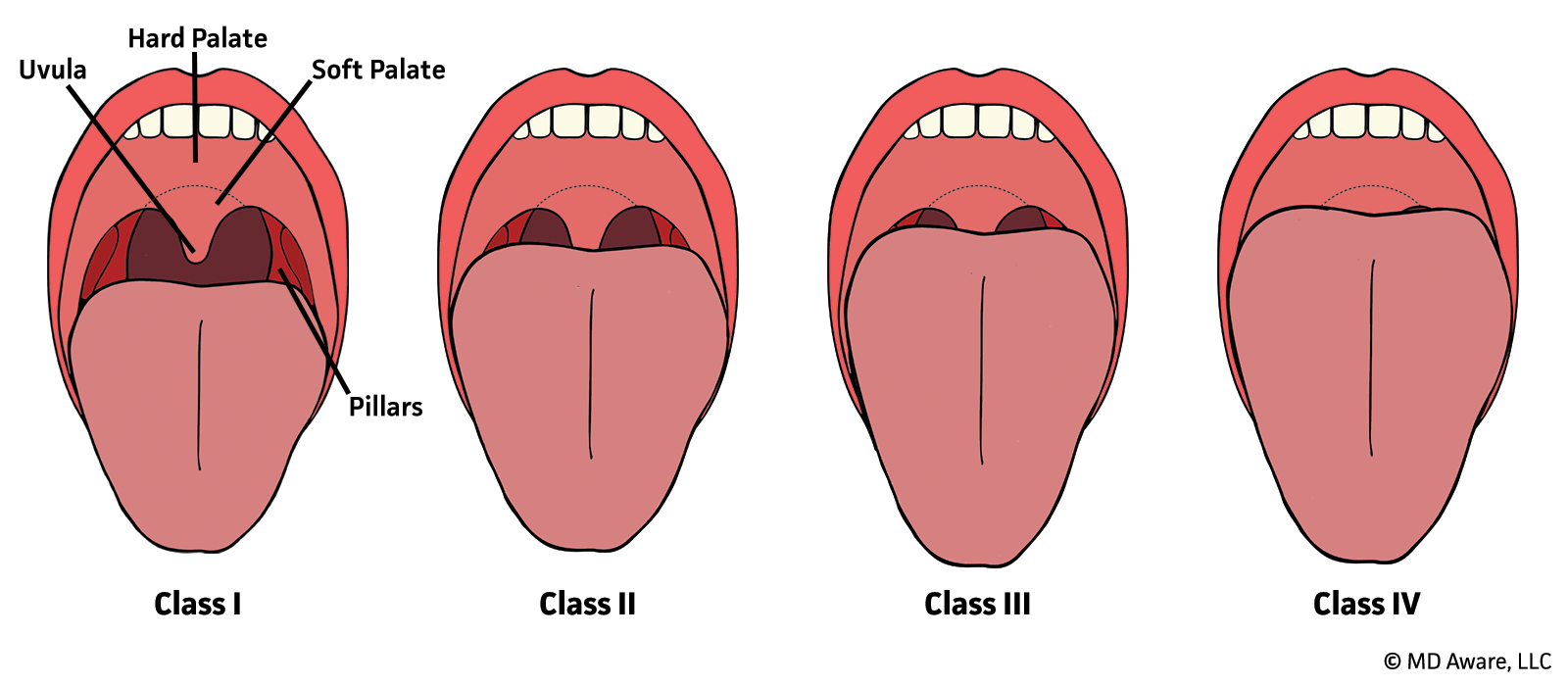
hard palate only
-very difficult intubation
structures seen on Mallampati class IV
Look externally (beard, obesity, trauma)
Evaluate (3-3-2) rule
3 fingers → mouth opening
3 fingers → chin to hyoid
2 fingers → hyoid to thyroid cartilage
Mallampati score
Obstruction
Neck mobility
LEMON mnemonic
Mouth opening ≥3 fingers
Chin-hyoid ≥3 fingers
Thyroid-mouth ≥2 fingers
What is the 3-3-2 rule?
healthy pt with no medical problems
describe a ASA class I
mild systemic disease
ex: HTN, well controlled DM
describe an ASA class II
severe systemic disease
ex: CHF, COPD
describe an ASA class III
severe disease, constant threat to life
ex: unstable angina
describe an ASA class IV
moribund, not expected to survive
ex: ruptured AAA
DEATH = V
describe an ASA class V
brain dead organ donor
describe an ASA class VI
Post-op patient with hypoxemia + decreased breath sounds
→ atelectasis
most common complication of anesthesia intubation
III-IV
mallampati scores with difficult intubation risk
aspiration
most dangerous complication of anesthesia
Block voltage-gated Na⁺ channels
→ Prevent depolarization → no nerve conduction
YES - but they are not equally lipophilic.
Lipophilic aromatic ring — linker (amide or ester) — hydrophilic amine
The lipophilic portion allows the drug to cross the nerve cell membrane, while the ionized form then binds the voltage-gated Na⁺ channel from the inside.
Why this matters:
Greater lipid solubility → generally greater potency.
MOA of local anesthetics?
& are all local anesthetics lipophillic?
(ester & amide classes)
(-caine)
Mnemonic: Amides have 2 i's in the name
→ e.g. lidocaine, bupivacaine.
“metabolized Amid the liver.”
how to tell the anesthetic type of amides??
Drug | Type | Duration |
|---|---|---|
Procaine | Ester | Short |
Chloroprocaine | Ester | Very short |
note: Esters → Esterases in plasma.
short acting local anesthetics
Lidocaine — amide, {classic intermediate-acting}
Mepivacaine — amide
Prilocaine — amide
intermediate acting local anesthetics
Bupivacaine ⭐ — amide, long acting; most cardiotoxic
Ropivacaine — amide, long acting; less cardiotoxic than bupivacaine
**Tetracaine — ester, long acting (most esters are short acting and this is the exception)
long acting local anesthetics
Bupivacaine (Marcaine)
long acting local anesthetic that poses the most:
cardiotoxic risk// cardiac arrest risk
Ropivacaine (Naropin)
less cardiotoxic long acting local anesthetic
“amid the LIVER”
e.g. lidocaine, bupivacaine, ropivacaine
(less likely to have allergy to amide’s,, concern with severe liver disease)
amide type of local anesthetics are metabolized
Think ESTER → PABA (para-aminobenzoic acid.) → allergy.
—> Procaine (Novocain)
short acting local anesthetic with increased allergy risk
CNS effects:
Tinnitus
Metallic taste
Perioral numbness
Seizures
early signs of local anesthetic toxicity
CV effects:
Arrhythmias
Hypotension
late signs of local anesthetic toxicity
early LAST
“Patient develops metallic taste and ringing in the ears shortly after local anesthetic injection” →
STOP the local anesthetic
Airway + 100% O₂ / ventilation
Seizures → benzodiazepine (e.g., midazolam)
20% IV lipid emulsion (Intralipid) ⭐ — specific rescue therapy
If cardiovascular collapse → modified ACLS + lipid emulsion
Why lipid? It acts as a “lipid sink,” drawing lipophilic local anesthetic away from critical tissues such as the heart and brain.
Avoid/limit in LAST: large epinephrine doses, vasopressin, and additional Na⁺-channel–blocking antiarrhythmics such as lidocaine/procainamide.
Local Anesthetic Systemic Toxicity (LAST) — Treatment
Classic toxicity: CNS symptoms → seizures → cardiovascular collapse/arrhythmias, especially with bupivacaine.
amides>esters
type of local anesthetic with lower risk of allergic reactions
Benzocaine ⭐⭐⭐
Prilocaine ⭐
Lidocaine — rare
Memory: “Benzo & Prilo → MetHgb”
example:
Benzocaine spray → cyanosis + low SpO₂ that does NOT improve with O₂ + chocolate-brown blood
→ methemoglobinemia
Treatment: Methylene blue
local anesthetics associated with risk of methemoglobinemia (2)
local infiltration
Injection of anesthetic agent directly into tissues at surgical site
Rapid onset
Dense anesthesia
Ideal for lower body surgery
benefits of spinal anesthesia

Hypotension (sympathetic blockade)
Post-dural puncture headache
Urinary retention
High spinal → respiratory compromise
risks associated spinal anesthesia
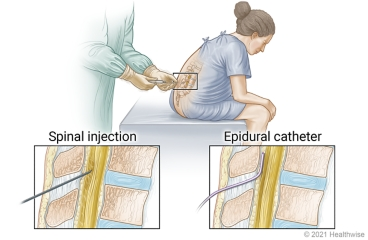
into CSF (subarachnoid space)
spinal anesthesia is injection into
Adjustable/continuous
Good for labor analgesia
benefits of epidural anesthesia

Hypotension
Epidural hematoma (esp. anticoagulated patients 🚨)
Infection
risks of epidural anesthesia

Feature | Spinal | Epidural |
|---|---|---|
Injection site | Subarachnoid space (CSF) | Epidural space |
Needle crosses dura? | Yes | No |
Levels used | L3–L4 or L4–L5 ⭐ | Cervical, thoracic, lumbar, or sacral |
Most common levels | Lumbar only | Lumbar: L2–L5; Thoracic: varies by surgery |
Obstetrics | L3–L4 or L4–L5 | Usually L2–L3, L3–L4, or L4–L5 |
Onset | Fast | Slower |
Dose | Small | Larger |
Catheter | Usually no | Yes → continuous dosing |
Classic use | C-section, lower-extremity surgery | Labor, thoracic/abdominal surgery, postop analgesia |
Spinal anesthesia → Bupivacaine
Epidural anesthesia → Bupivacaine or ropivacaine
adults spinal cord level L1/2
spinal vs epidural injections
Targeted analgesia & Less systemic effect
Drug | Duration | High-yield use |
|---|---|---|
Bupivacaine ⭐ | Long | Long-lasting nerve block/post-op analgesia |
Ropivacaine | Long | Long-lasting block; less cardiotoxic than bupivacaine |
Lidocaine | Intermediate | Faster onset, shorter procedures |
Mepivacaine | Intermediate | Faster onset, intermediate-duration block |
note:
Max lidocaine dose | |
|---|---|
Lidocaine alone | ~4.5 mg/kg (max ~300 mg) |
Lidocaine + epinephrine (longer lasting) | ~7 mg/kg (max ~500 mg) |
Epinephrine → α₁ vasoconstriction → ↓ local blood flow → ↓ systemic absorption of lidocaine
benefits & what meds are usually used for in
peripheral nerve blocks
——
classcially: Midazolam + fentanyl ⭐
Midazolam → sedates + causes amnesia
Fentanyl → treats pain
others:
Drug | Class | Main purpose | Key pearl |
|---|---|---|---|
Midazolam ⭐ | Benzodiazepine | Sedation + anxiolysis + amnesia | No analgesia |
Fentanyl ⭐ | Opioid | Analgesia | Respiratory depression |
Propofol *** | Sedative-hypnotic | Rapid sedation, short acting | No analgesia, hypotension/apnea |
Ketamine | NMDA antagonist | Sedation + analgesia | Preserves respiratory drive better; ↑ HR/BP |
Dexmedetomidine | α₂-agonist | Sedation | Minimal respiratory depression; bradycardia/hypotension |
conscious sedation
(Depressed consciousness, pt maintains airway reflexes + responds to stimuli)
what drugs are typically used?
Midazolam → flumazenil
Fentanyl → naloxone
Reversal agents:
Midazolam →
Fentanyl →
colonoscopy, biopsy, neuro
procedures in which conscious sedation is helpful
Respiratory depression
Hypoxia
Hypotension
Loss of airway (if oversedated)
risks associated with conscious sedation
Genetic defect in skeletal muscle Ca²⁺ regulation,
most commonly an RYR1 (ryanodine receptor) mutation
-
Triggering anesthetic → abnormal RYR1
→ massive Ca²⁺ release from sarcoplasmic reticulum
→ sustained muscle contraction + hypermetabolic state → heat production
what is the cause of malignant hyperthemia?
Succinylcholine
Volatile anesthetics (e.g., sevoflurane, -flurane)
triggers for malignant hyperthemia
Malignant Hyperthermia
↑ end-tidal CO₂ despite ventilation ⭐ EARLY
→ tachycardia
→ masseter/generalized muscle rigidity*
→ metabolic + respiratory acidosis
→ hyperkalemia
→ rhabdomyolysis / ↑ CK
→ rapidly rising body temperature ⭐ LATE
Patient becomes tachycardic and rigid during anesthesia, with a rapidly increasing ETCO₂ and later develops severe hyperthermia. —>
rapid increase in CO2
what is the earliest sign of malignant hyperthemia?
dantrolene
MOA: blocks the ryanodine receptor (RYR1) in skeletal muscle
→ ↓ Ca²⁺ release from the sarcoplasmic reticulum
immediate treatment malignant hyperthemia
Step | Treatment |
|---|---|
1. Stop triggers | Stop volatile anesthetic + succinylcholine |
2. Dantrolene | 2.5 mg/kg IV, repeat as needed |
3. 100% O₂ | Hyperventilate with high-flow 100% oxygen |
4. Cool patient | IV cold saline, ice/cooling measures if hyperthermic |
5. Treat hyperkalemia | IV calcium + insulin/dextrose as indicated |
6. Correct acidosis | Hyperventilation ± sodium bicarbonate if severe |
7. Monitor | CK, K⁺, ABG, renal function, urine output, ECG; ICU monitoring |
complete treatment of malignant hyperthemia?
Post-op + shallow breathing → atelectasis → incentive spirometry
Immediately after extubation + can't ventilate/stridor → laryngospasm → positive pressure → succinylcholine
Post-op + RR 6/min after morphine → naloxone
Wheezing + ↑ peak airway pressure → bronchospasm → albuterol
HY resp complications
Obesity, OSA
Smoking
Abdominal/thoracic surgery
Poor pain control → shallow breathing
— anything that affects airways/lungs
risk factors for respiratory complications of anesthesia
Incentive spirometry
Early ambulation
Oxygen supplementation
CPAP if needed
Reverse opioids if severe (naloxone)
mgmt of respiratory complications of anesthesia
Female
Non-smoker
History of motion sickness/PONV
Opioid use
risk factors for post-operative nausea/vomiting
Ondansetron (Zofran) – first line
Dexamethasone
Scopolamine patch
concern’d for aspiration/dehydration so we treat this
first line treatments for postop nausaea and vomiting
Anesthetic-induced vasodilation
Cold OR environment
IV fluids
causes of post op hypothermia
(Temp <36°C, shivering, delayed drug metabolism)
Coagulopathy
Increased infection risk
Delayed drug metabolism
Shivering → ↑ O₂ demand
consequences of post-op hypothermia
hypotension
(tx: fluids ± vasopressor & make sure they aren’t bleeding)
most common circulatory complication post-op
-T2-7 dysfunction (lungs)
-inhalation dysfunction
osteopathic findings associated with atelectasis
Hemodynamic instability
Acute respiratory distress
Unstable fractures
Increased ICP
Severe hypoxia
absolute contraindications to post-op OMM
early ambulation
& incentive spirometry
first step prevention of post-op:
atelectasis & DVT/PE
Propofol ⭐ | Most common; rapid onset/ recovery ↓ BP, respiratory depression |
Etomidate | Hemodynamically stable → useful in hypotensive/cardiac patients |
Ketamine | ↑ HR/BP, provides analgesia; useful in hypotension/bronchospasm |
Drugs Used for General Anesthesia?
— INDUCTION (3)
Think induction → maintenance → analgesia → paralysis.
Sevoflurane ⭐ | Common volatile inhaled anesthetic |
Desflurane, isoflurane | Volatile anesthetics |
Propofol ⭐ | Can maintain anesthesia via IV infusion (TIVA) |
Drugs Used for General Anesthesia?
— MAINTENANCE
Think induction → maintenance → analgesia → paralysis.
Fentanyl ⭐ | Opioid; respiratory depression |
Morphine, hydromorphone | Opioids |
Drugs Used for General Anesthesia?
— ANALGESIA
Think induction → maintenance → analgesia → paralysis.
Succinylcholine ⭐ | Depolarizing; rapid onset/short duration; malignant hyperthermia + hyperK⁺ |
Rocuronium ⭐ | Nondepolarizing; common alternative |
Drugs Used for General Anesthesia?
— PARALYSIS
Think induction → maintenance → analgesia → paralysis.
Midazolam (optional premedication)
→ Propofol induction
→ Rocuronium or succinylcholine for intubation
→ Sevoflurane ± fentanyl for maintenance/analgesia
→ reverse neuromuscular blockade → extubate
Propofol = most common IV induction agent
Etomidate = cardiovascular instability
Ketamine = hypotension + bronchodilation
Succinylcholine = rapid-sequence intubation; malignant hyperthermia risk
Sevoflurane = common inhaled maintenance agent
classic Drugs Used for General Anesthesia?
Think induction → maintenance → analgesia → paralysis.
Propofol | Stop infusion → supportive care; no antidote |
Volatile anesthetics (sevoflurane, etc.) | Turn off anesthetic → ventilate with O₂; eliminated through lungs |
Opioids (fentanyl, morphine) | Naloxone ⭐ |
Benzodiazepines (midazolam) | Flumazenil ⭐ |
Rocuronium / vecuronium | Sugammadex ⭐ |
Other nondepolarizing paralytics | Neostigmine + glycopyrrolate |
Succinylcholine | No routine reversal → wears off via plasma butyrylcholinesterase |
reversal agents of general anesthesia