AIM block 1 math, physics,
 Call Kai
 Learn
Learn Practice Test
 Spaced Repetition
 Match
Match Flashcards
 Knowt Play
1/23

Earn XP
Description and Tags
week 2, day 1
Name | Mastery | Learn | Test | Matching | Spaced | Call with Kai | Chat |
|---|
No analytics yet
Send a link to your students to track their progress
24 Terms
mass
amount of “stuff” an object contains. It remains the same regardless of location.
mass = weight / acceleration due to gravity
weight
the FORCE extended on an object due to gravity. Changes depending on the gravitational force.
weight = mass x acceleration due to gravity
earth gravity = 32.2 ft/s²(9.81 m/s²)
density
how much stuff is PACKED into a space.
mass/volume
specific gravity
a way to compare the density of a substance to the density of water
specific gravity = density of substance/density of water
kinetic and potential energy
kinetic is energy in motion 1/2(mass x velocity)
potential is energy store weight x height
force
is a push or pull that cause a change in motion.
force = mass x acceleration
work
work to move an object by pushing or pulling
work = force x distance
power
how quickly you can do work
power = (force x distance) / time
watts
1 horsepower = 746 watts
hp = watts/746 or watts = hp x 746
torque
twisting force
torque = force x distance
first class lever
like a seesaw
L = effort arm
I = resistance arm
R = resistance
E = effort
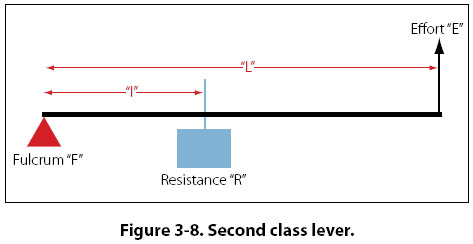
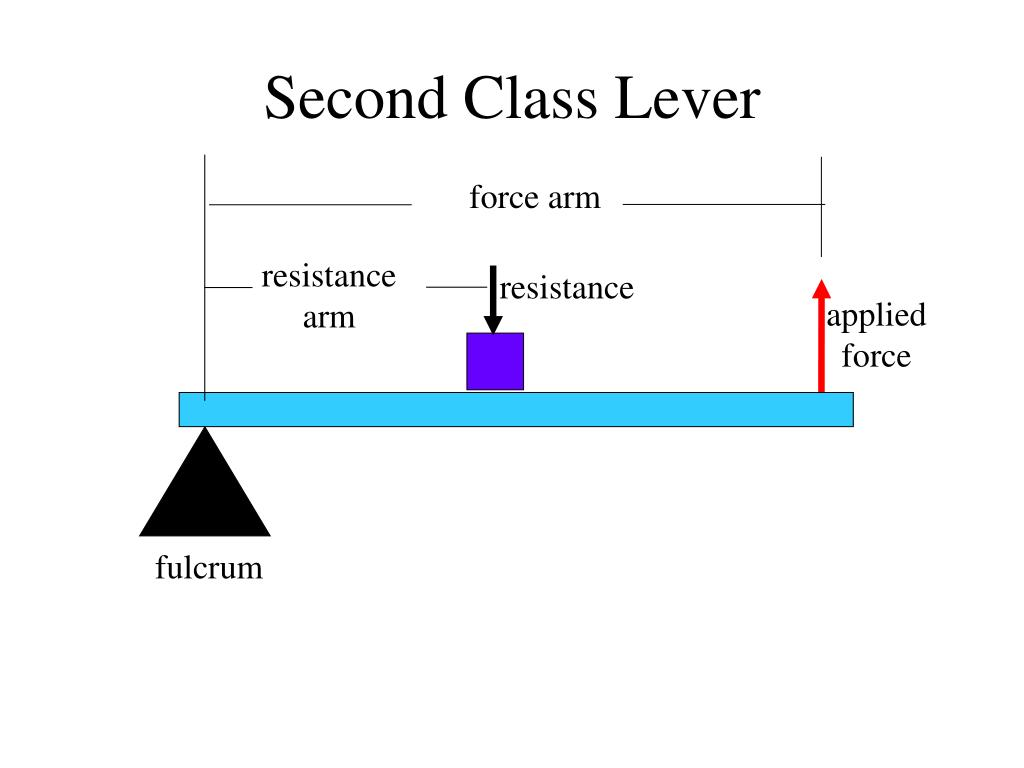
second class lever
like a wheelbarrel
L = effort arm
I = resistance arm
R = resistance
E = effort
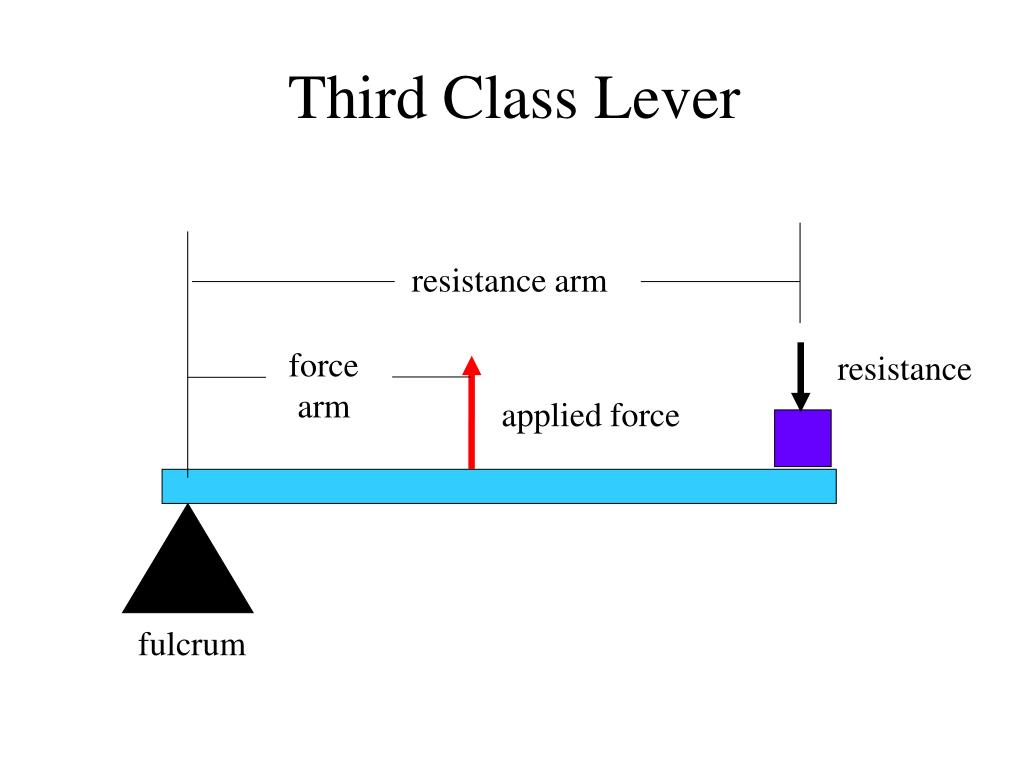
third class lever
like an elbow
L = effort arm
I = resistance arm
R = resistance
E = effort
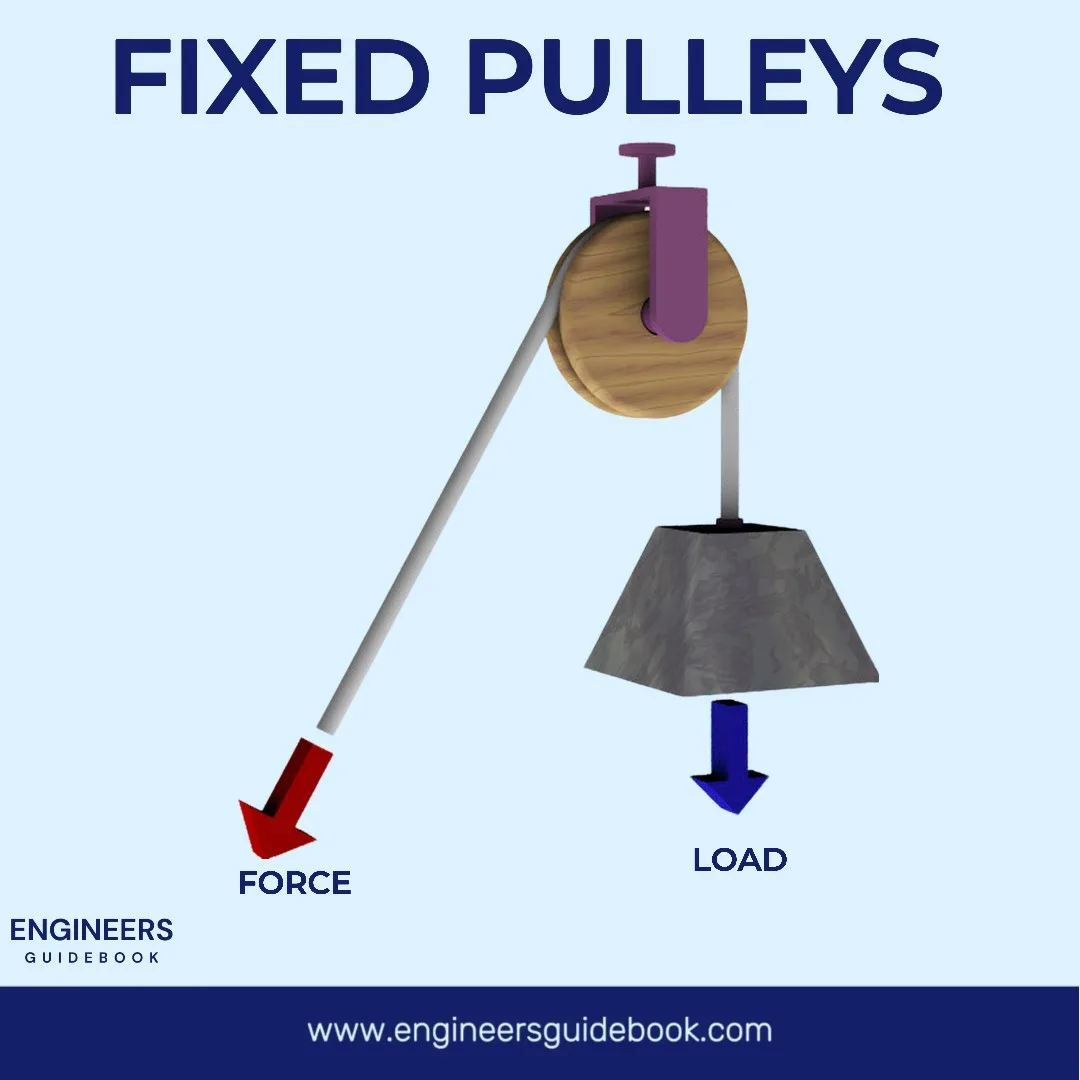
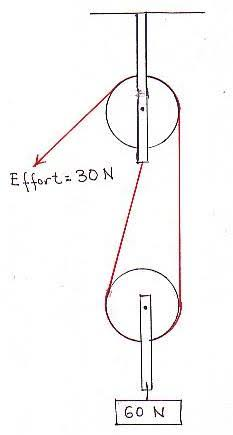
pulley
consist of a fixed wheel with rope(s) attach to a weight or object
force or effort = weight/mechanical advantage
fixed pulley
movable pulley
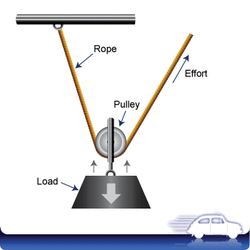
compound pulley
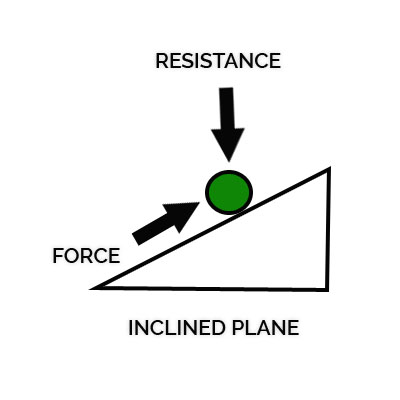
inclined plane
L = distance of the ramp
I = height of the ramp
R= resistance
E = effort
newton first law
object in motion; stay in motion
object at rest; stay at rest
newton second law
the harder you push(force), the faster something moves(accelerate)
newton third law
for ever push there’s a equal push back
ex: push off a wall; wall push you back
centripetal force
It is the pull or push that keeps an object moving in a circle instead of flying off in a straight line.
Ex: ball attach to a string spinning around your head; string pulls the ball towards your head. The pull is the centriple force.
centrifugal force
isn't actually a real, independent force—it is the feeling of being pushed outward when you are moving in a circle.
Ex: ball wants you go straight; centrifugal force pulls it back in.