Muscle Origins and Insertions
 Call Kai
 Learn
Learn Practice Test
 Spaced Repetition
 Match
Match Flashcards
 Knowt Play
1/109

There's no tags or description
Looks like no tags are added yet.
Name | Mastery | Learn | Test | Matching | Spaced | Call with Kai | Chat |
|---|
No analytics yet
Send a link to your students to track their progress
110 Terms
Trapezius Origin
Origin: superior nuchal line (on occipital bone), external occipital protuberance (EOP), ligamentum nuchae, C7-T12 spinous processes (SPs)
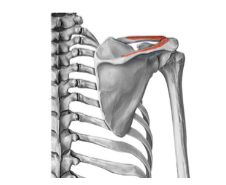
Trapezius Insertion
Insertion: Lateral 1/3 of clavicle, acromion, and spine of scapula.
Action: upper- elevate scapula, middle- retract scapula, lower- depress scapula
Latissimus Dorsi Origin
Origin: spinous processes from T7 to sacrum, iliac crest, lower ribs, posterior lamella of thoracolumbar fascia
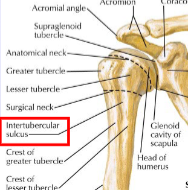
Latissimus Dorsi Insertion
Insertion: Floor of intertubercular sulcus on humerus
Action: extend, adduct, medially rotate humerus
Levator Scapulae Origin
Origin: C1-C4 Transverse processes (TPs)
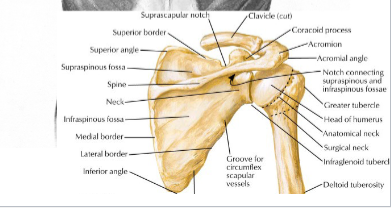
Levator Scapulae Insertion
Insertion: Vertebral border of scapula above scapula’s spine
Action: elevate scapula
Rhomboid Minor Origin
Origin: C7-T1 spinous processes (SPs), ligamentum nuchae
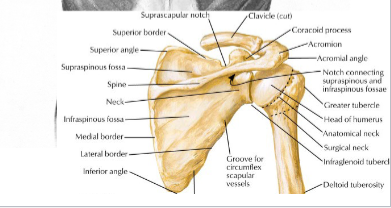
Rhomboid Minor Insertion
Insertion: Vertebral border of scapula at the root of the scapula’s spine
Action: retraction of scapula, movement of shoulder girdle (clavicle + scapula)
Rhomboid Major Origin
Origin: T2-T5 spinous processes (SPs)
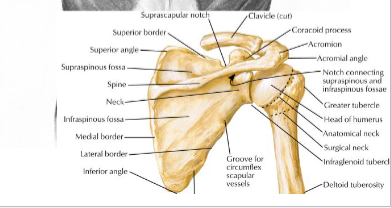
Rhomboid Major Insertion
Insertion: vertebral border of the scapula below the scapula’s spine
Action: retraction of scapula, movement of shoulder girdle (clavicle + scapula)
Serratus Posterior Superior Origin
Origin: Ligamentum nuchae, C7-T3 spinous processes (SPs)
Serratus Posterior Superior Insertion
Insertion: Ribs 2-5
Action: elevate ribs (inspiration)
Serratus Posterior Inferior Origin
Origin: T11-L3 spinous processes (SPs)
Serratus Posterior Inferior Insertion
Insertion: Ribs 9-12
Action: depress ribs (expiration)
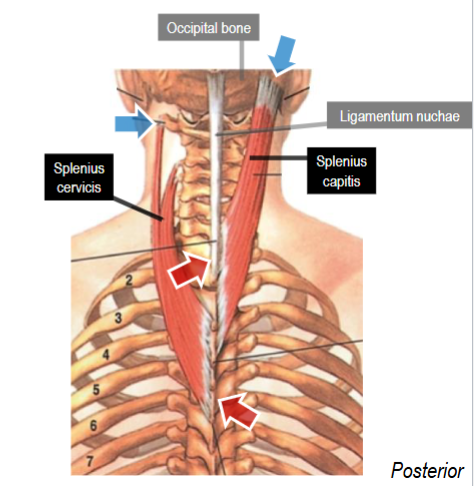
Splenius Capitis Origin (part of spinotransversales group)
Origin: spinous processes of CV7 vertebrae, upper thoracic vertebrae (TV), and ligamentum nuchae
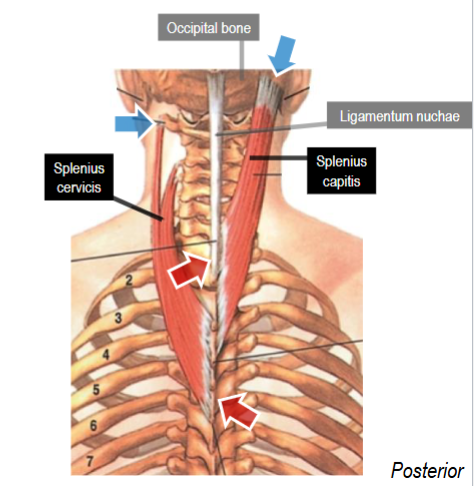
Splenius Capitis Insertion (part of spinotransversales group)
Insertion: superior nuchal line of occipital bone, mastoid process of temporal bone
Action: extend vertebral column bilaterally, laterally flex and rotate vertebral column to same side unilaterally (same as splenius cervicis)
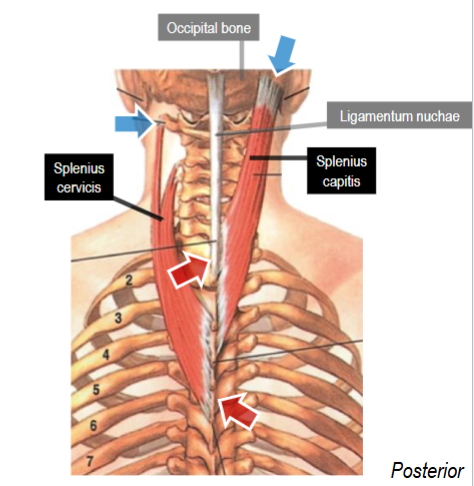
Splenius Cervicis Origin (part of spinotransversales group)
Origin: spinous processes of middle TVs
Splenius Cervicis Insertion (part of spinotransversales group)
Insertion: transverse processes of upper CVs
Action: extend vertebral column bilaterally, laterally flex and rotate vertebral column to same side unilaterally (same as splenius capitis)
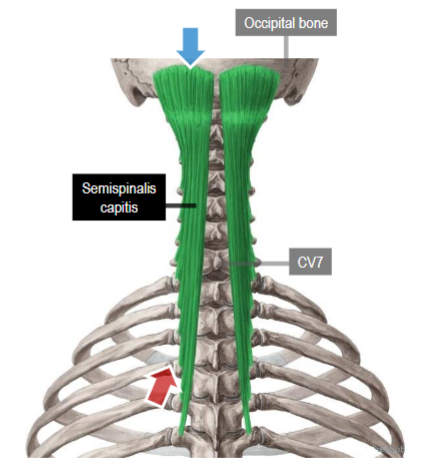
Semispinalis Capitis Origin (part of transversospinales muscles)
Origin: transverse processes of lower CVs and upper TVs
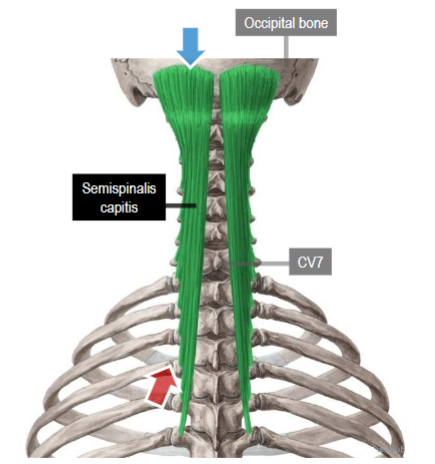
Semispinalis Capitis Insertion (part of transversospinales muscles)
Insertion: occipital bone
Action: extend vertebral column bilaterally, laterally flex and rotate vertebral column to opposite side unilaterally (same as semispinalis cervicis, multifidus, rotatores)
Semispinalis Cervicis Origin (part of transverseospinales muscles)
Origin: transverse processes of upper TVs
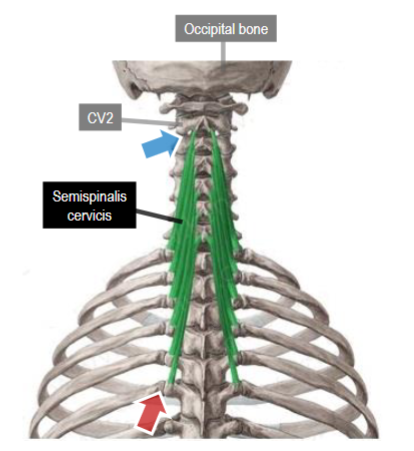
Semispinalis Cervicis Insertion (part of transverseospinales muscles)
Insertion: spinous processes of CVS up to CV2
Action: extend vertebral column bilaterally, laterally flex and rotate vertebral column to opposite side unilaterally (same as semispinalis capitis, multifidus, rotatores)
Obliquus Capitis Inferior Origin (part of suboccipital triangle)
Origin: CV2 spinous process
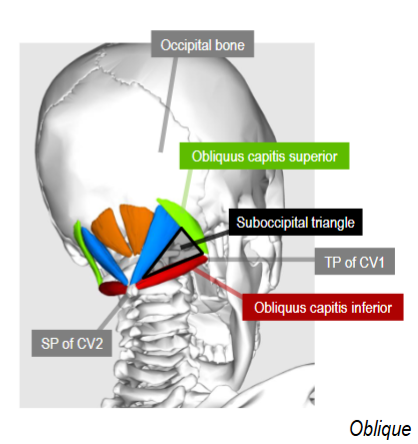
Obliquus Capitis Inferior Insertion (part of suboccipital triangle)
Insertion: CV1 transverse process
Action: extend head bilaterally, rotates head to same side at atlantoaxial joint unilaterally (all suboccipital triangle)
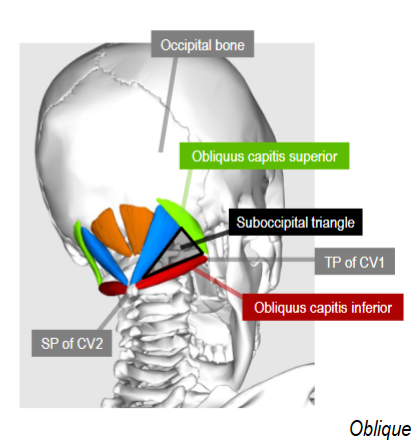
Obliquus Capitis Superior Origin (part of suboccipital triangle)
Origin: CV1 transverse process
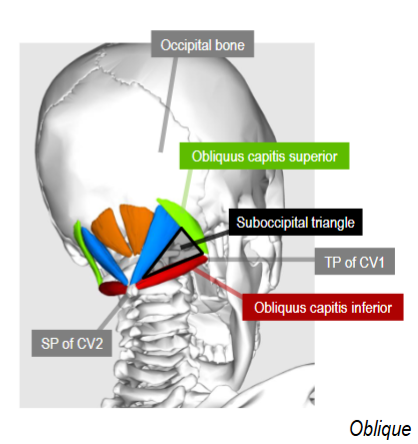
Obliquus Capitis Superior Insertion (part of suboccipital triangle)
Insertion: inferior nuchal line of occipital bone
Action: extend head bilaterally, rotates head to same side at atlantoaxial joint unilaterally (all suboccipital triangle)
Rectus Capitis Posterior Major Origin (part of suboccipital triangle)
Origin: CV2 spinous process
Rectus Capitis Posterior Major Insertion (part of suboccipital triangle)
Insertion: inferior nuchal line of occipital bone
Action: extend head bilaterally, rotates head to same side at atlantoaxial joint unilaterally (all suboccipital triangle)
Rectus Capitis Posterior Minor Origin (does not border suboccipital triangle)
Origin: CV1 posterior tubercle
Rectus Capitis Posterior Minor Insertion (does not border suboccipital triangle)
Insertion: inferior nuchal line of occipital bone
Action: extend head bilaterally, rotates head to same side at atlantoaxial joint unilaterally
Pectoralis Major Origin
Origin: medial part of clavicle, sternum, costal cartilages of ribs 2-5
Pectoralis Major Insertion
Insertion: crest of greater tubercle of humerus
Action: adduction, medial rotation, and flexion of arm at shoulder joint
Pectoralis Minor Origin
Origin: ribs 2-4 or ribs 3-5
Pectoralis Minor Insertion
Insertion: coracoid process of scapula
Action: protract and depress scapula
Subclavius Origin
Origin: junction of first rib and its cartilage
Subclavius Insertion
Insertion: inferior surface of clavicle
Action: depresses clavicle
Serratus Anterior Origin
Origin: upper 8 ribs
Serratus Anterior Insertion
Insertion: vertebral border of scapula
Teres Major Origin
Origin: inferior angle of scapula, axillary border of scapula
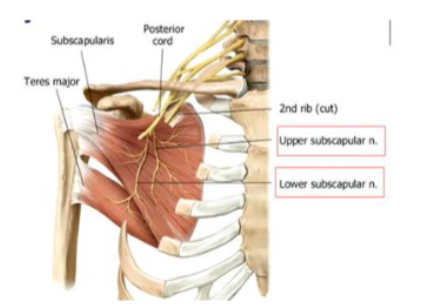
Teres Major Insertion
Insertion: crest of lesser tubercle of humerus
Action: medially rotate and adduct arm
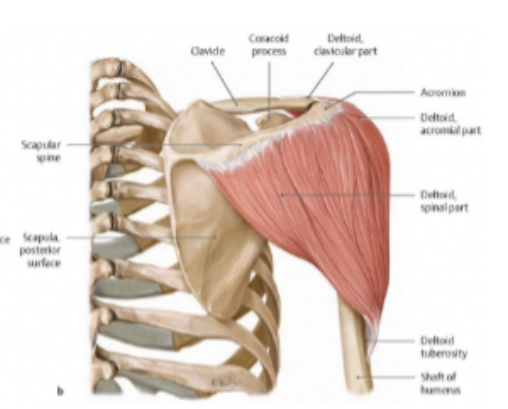
Deltoid Origin
Origin: lateral 1/3 of clavicle, acromion, spine of scapula (this is the same as the insertion of the trapezius)
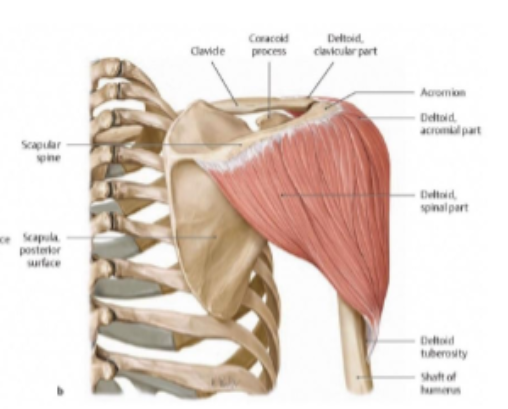
Deltoid Insertion
Insertion: deltoid tuberosity
Action: abducts the arm 15-90 degrees
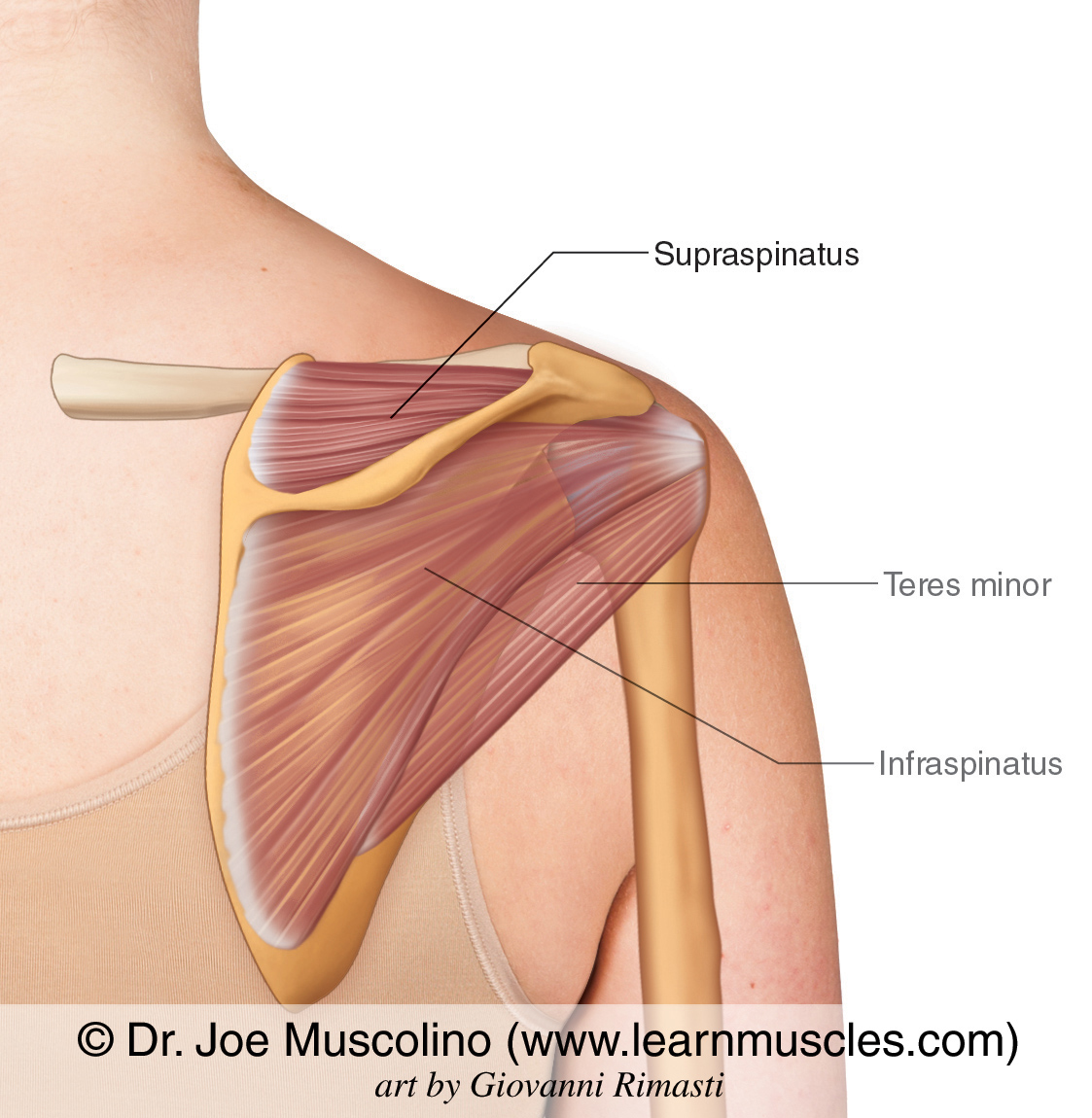
Supraspinatus (part of rotator cuff group) Origin
Origin: supraspinous fossa of scapula
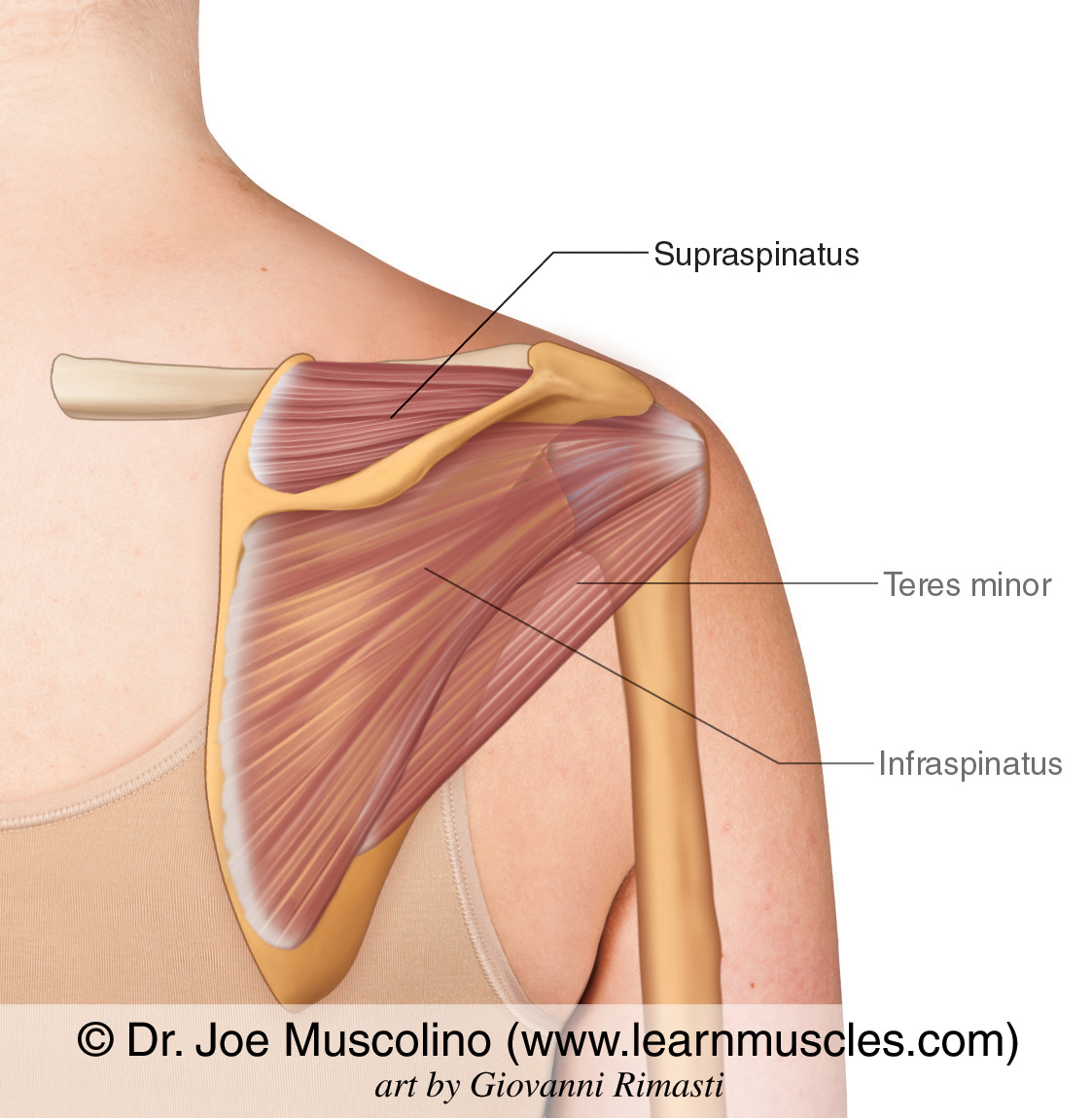
Supraspinatus (part of rotator cuff group) Insertion
Insertion: greater tubercle of humerus (same as infraspinatus and teres minor)
Action: abducts arm 15 degrees (assists deltoid)
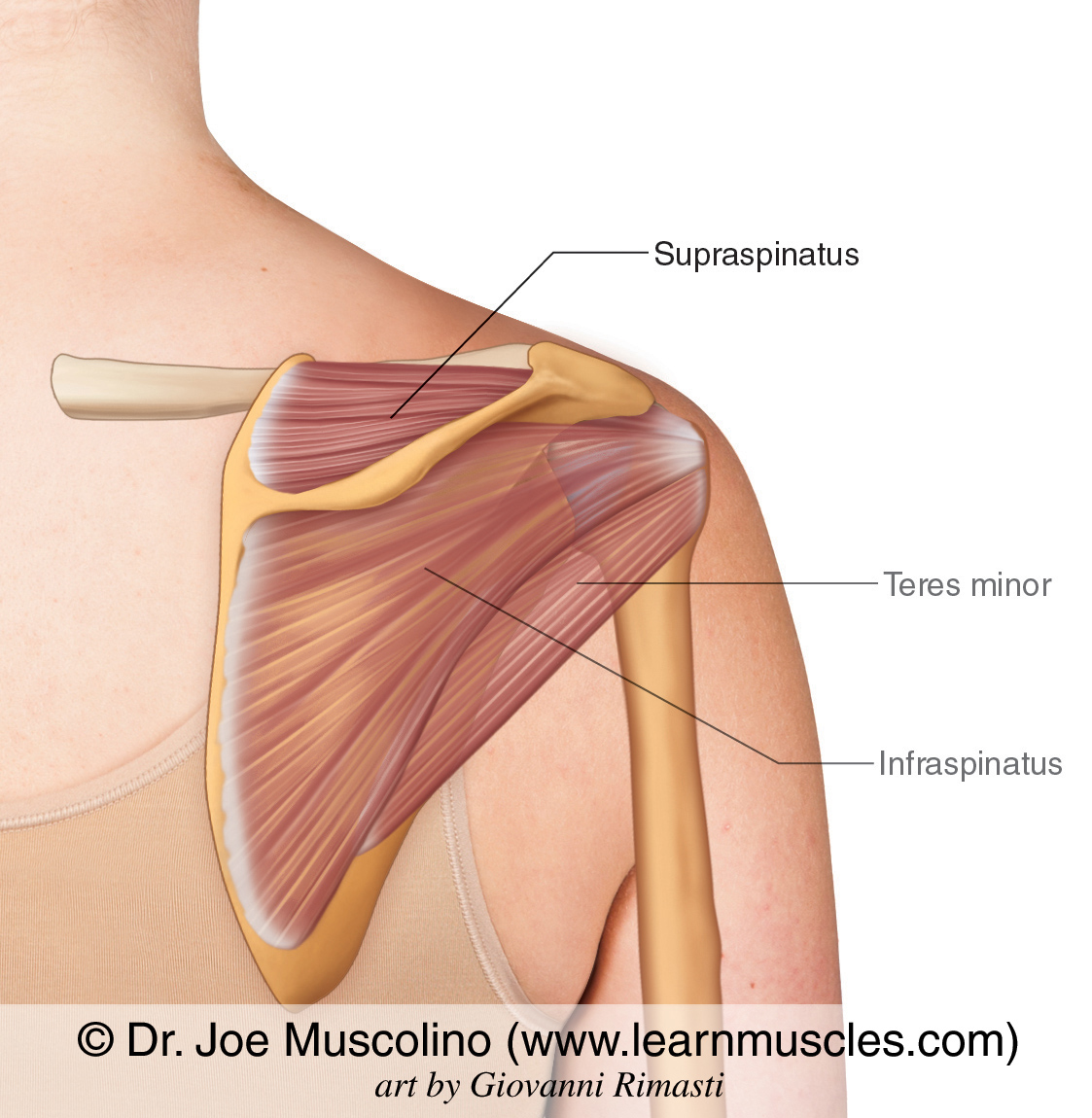
Infraspinatus (part of rotator cuff group) Origin
Origin: infraspinous fossa of scapula
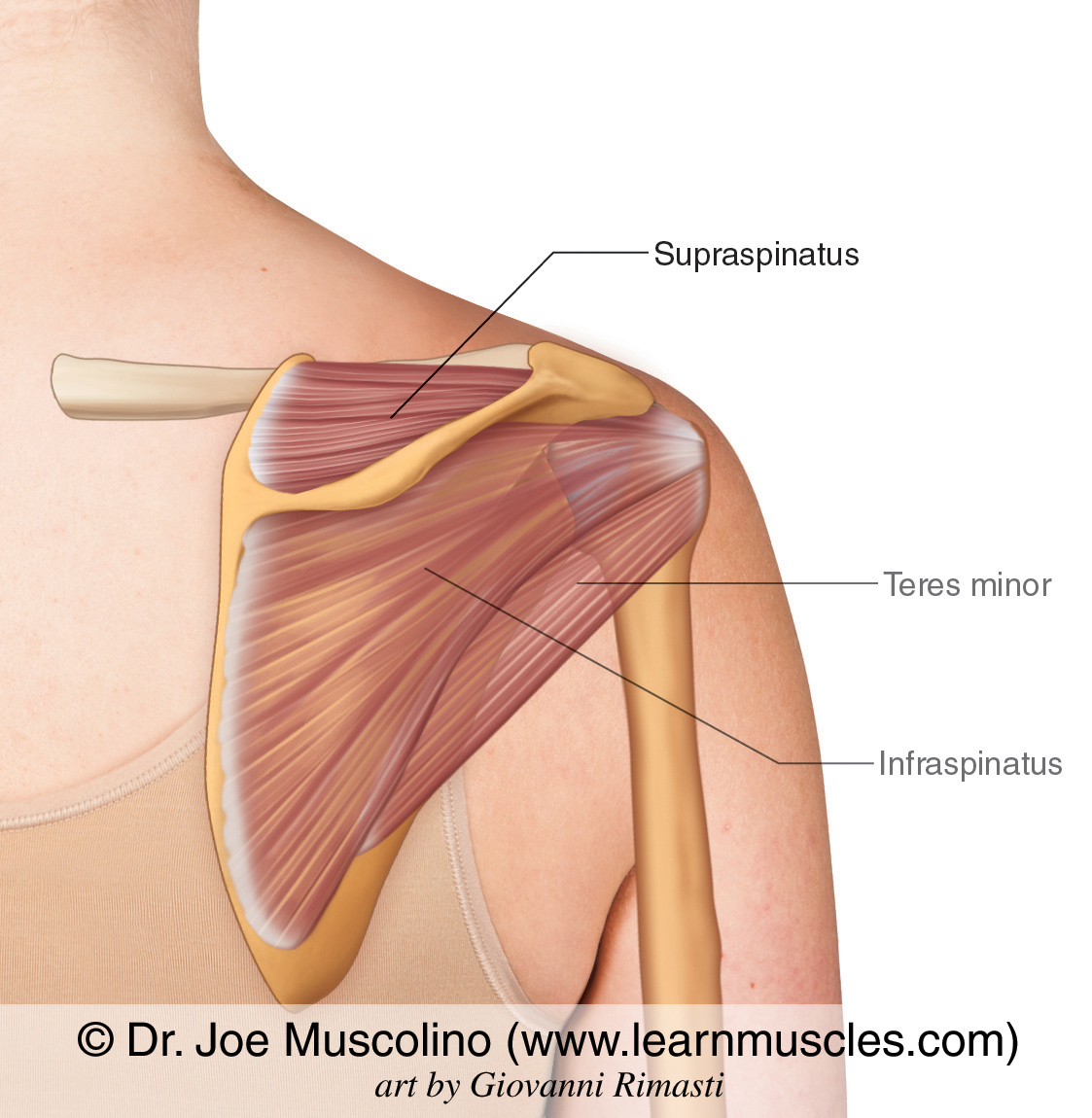
Infraspinatus (part of rotator cuff group) Insertion
Insertion: greater tubercle of humerus (same as supraspinatus and teres minor)
Action: laterally rotate arm at 0 degrees of abduction
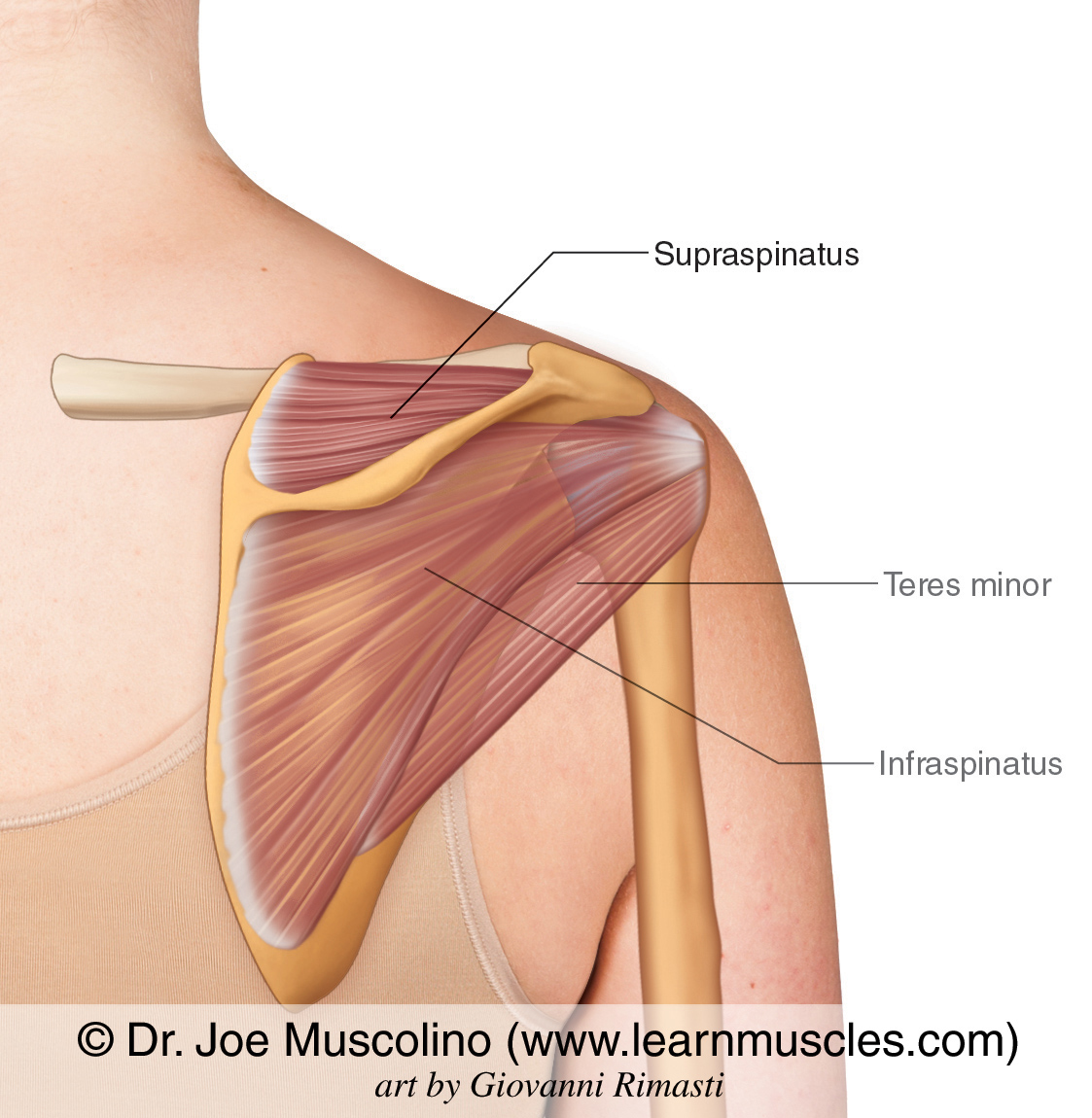
Teres Minor (part of rotator cuff group) Origin
Origin: lateral (axillary) border of scapula
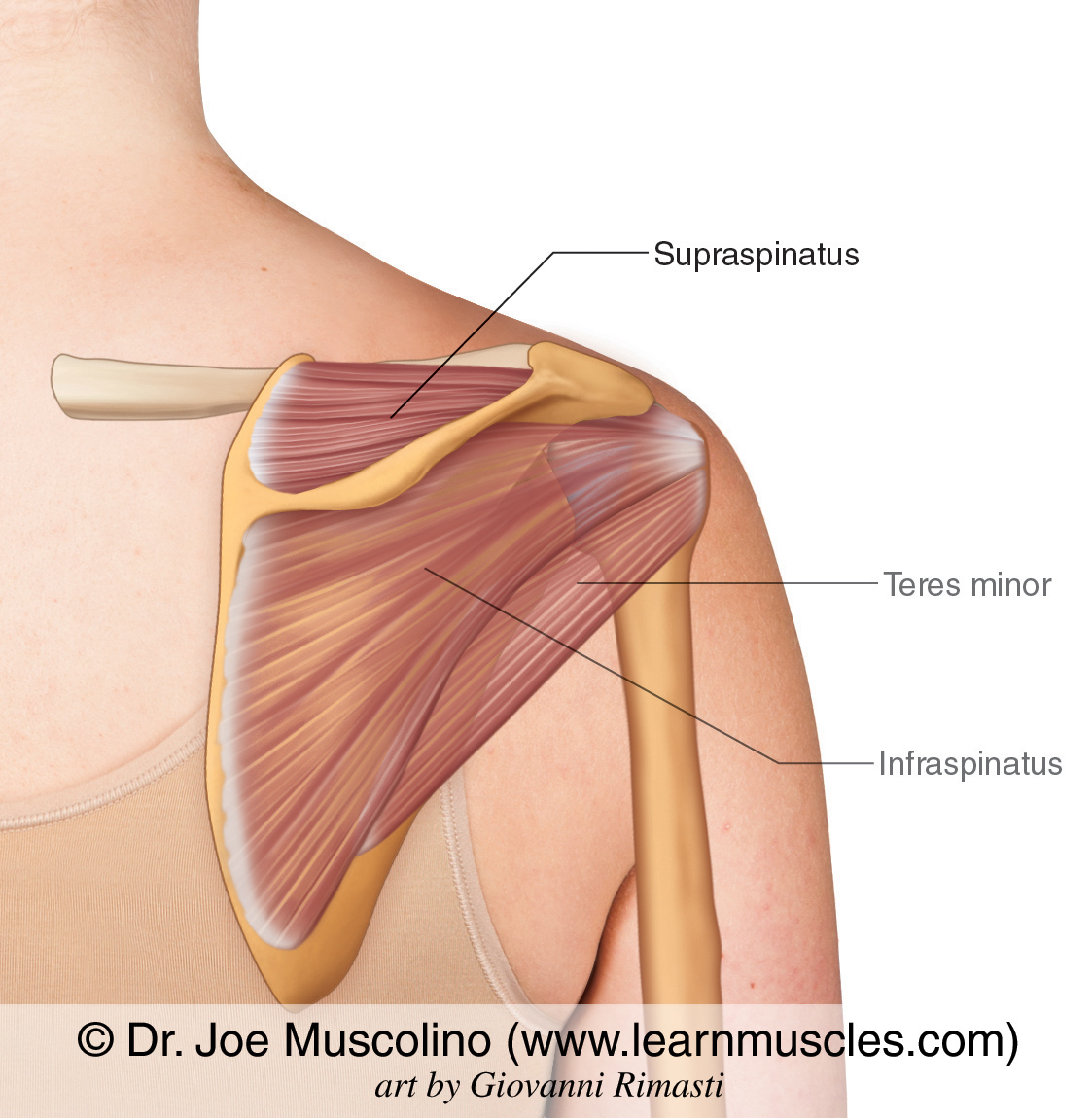
Teres Minor (part of rotator cuff group) Insertion
Insertion: greater tubercle of humerus (same as supra and infraspinatus)
Action: laterally rotates arm at 90 degrees of abduction
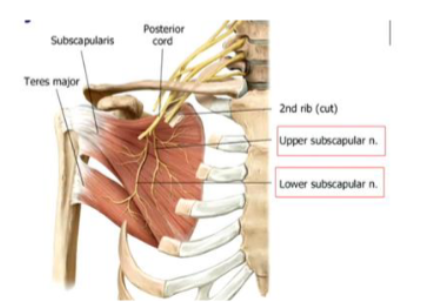
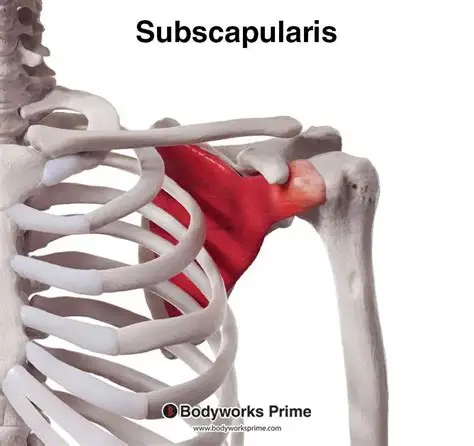
Subscapularis (part of rotator cuff group) Origin
Origin: subscapular fossa
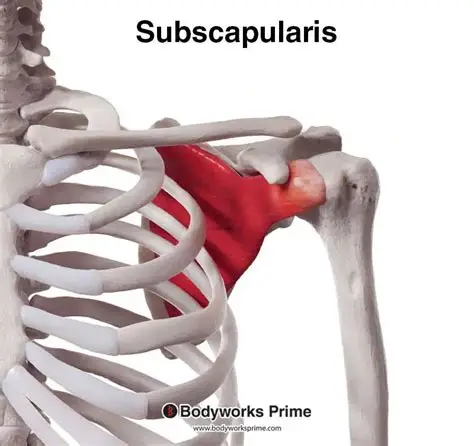
Subscapularis (part of rotator cuff group) Insertion
Insertion: lesser tubercle of humerus (only one in rotator group with this insertion)
Action: medially rotates and adducts arm
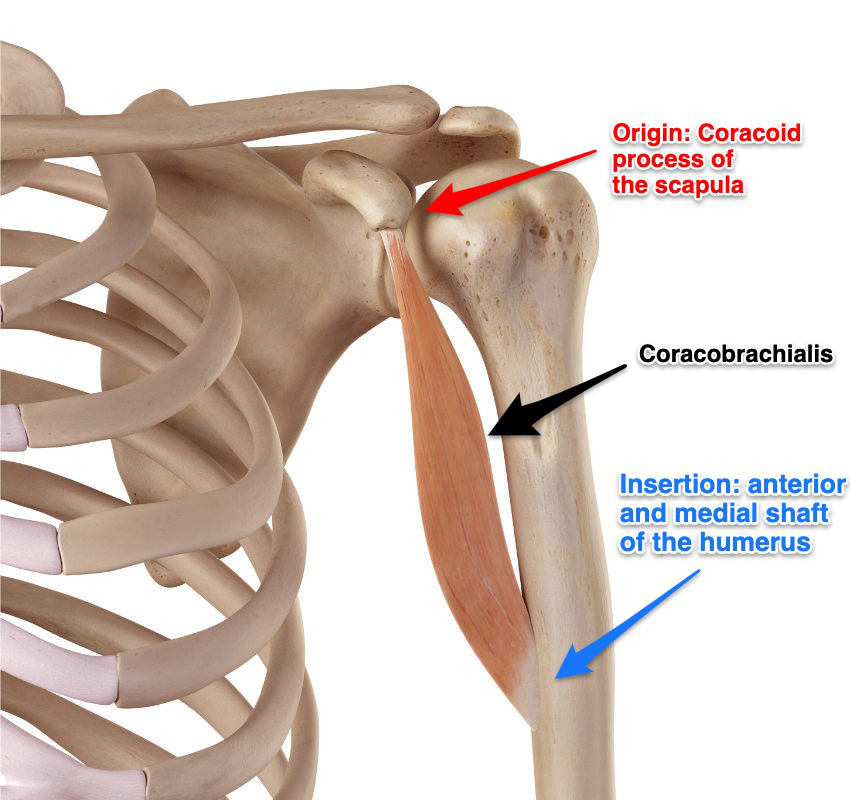
Coracobrachialis Origin
Origin: coracoid process of scapula
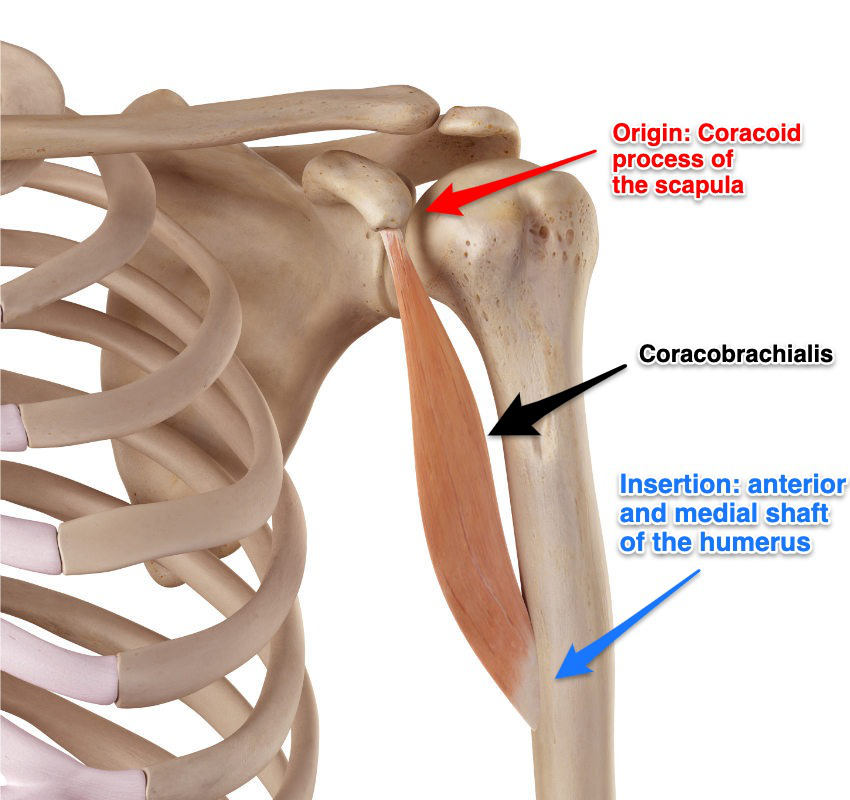
Coracobrachialis Insertion
Insertion: middle third medial aspect of humerus
Action: adducts and flexes arm
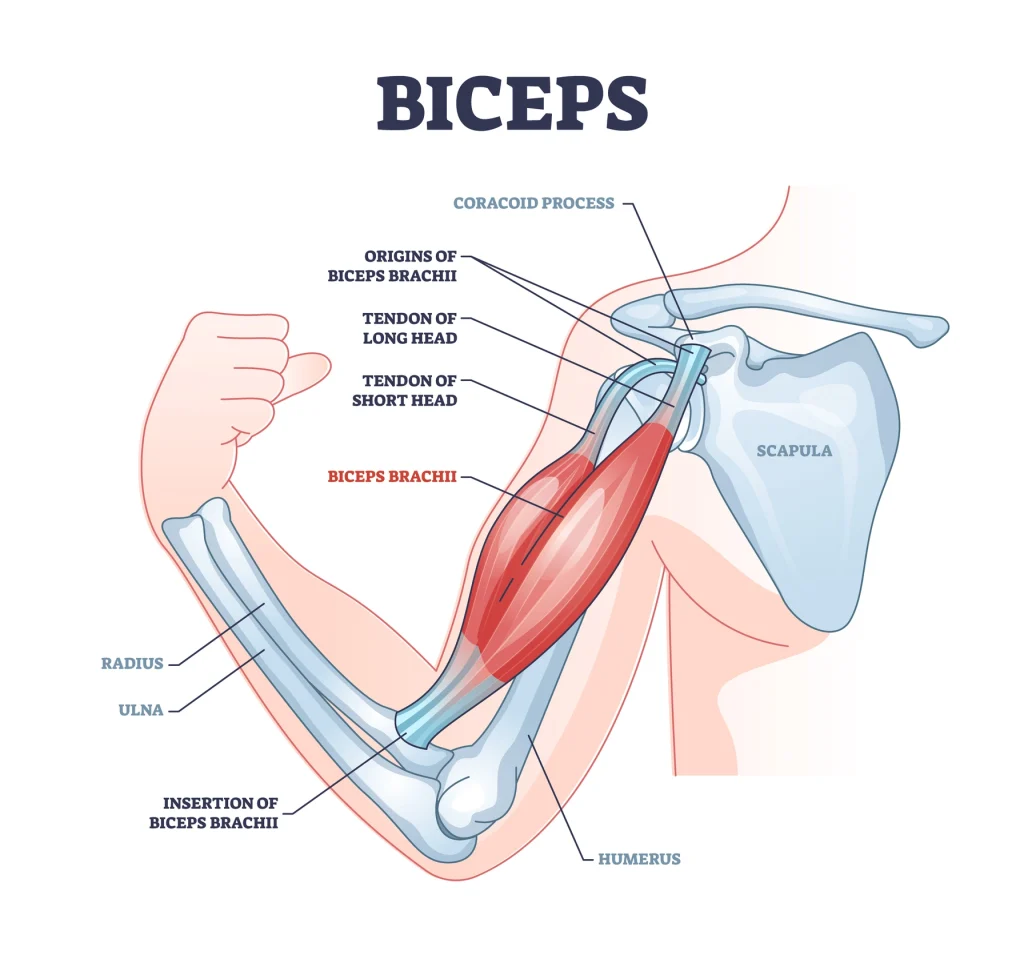
Biceps Brachii Origin
Origin: supraglenoid tubercle of scapula (long head), coracoid process of scapula (short head)
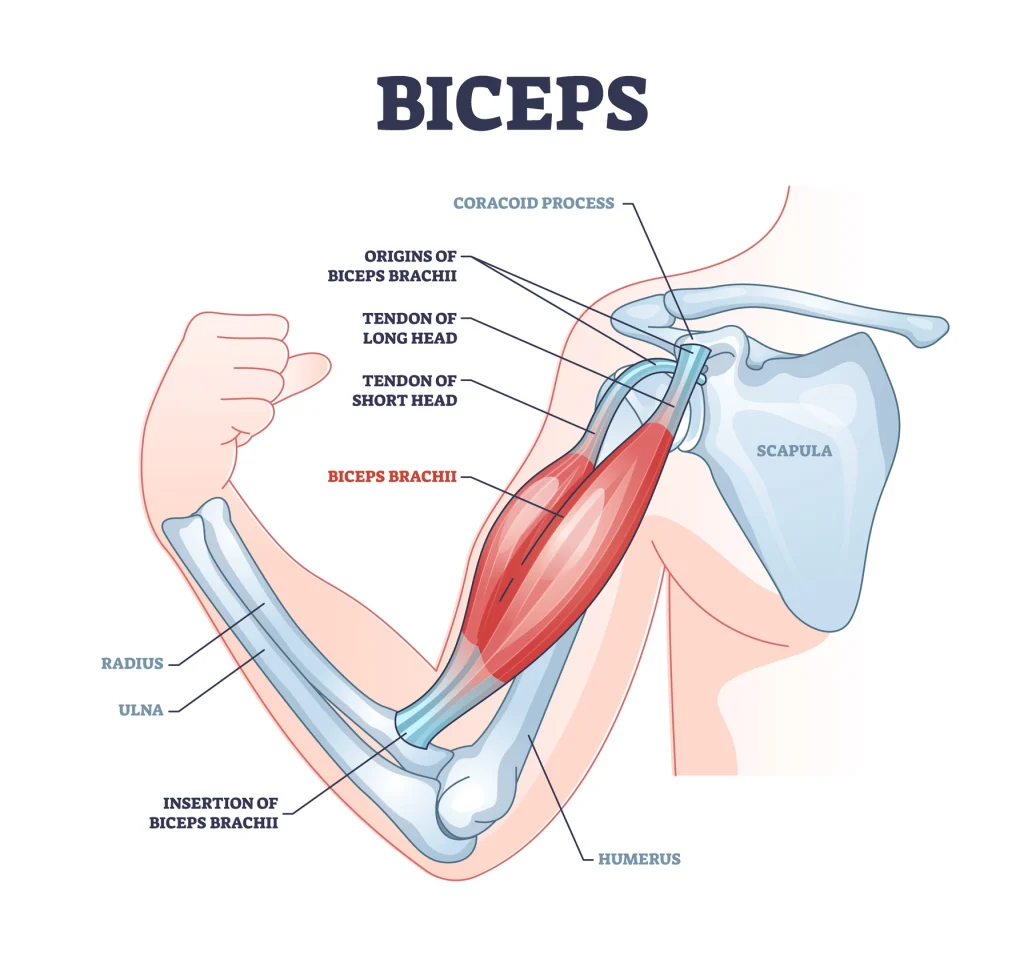
Biceps Brachii Insertion
Insertion: radial tuberosity of radius
Action: flex shoulder joint, flex forearm at elbow, supinate forearm
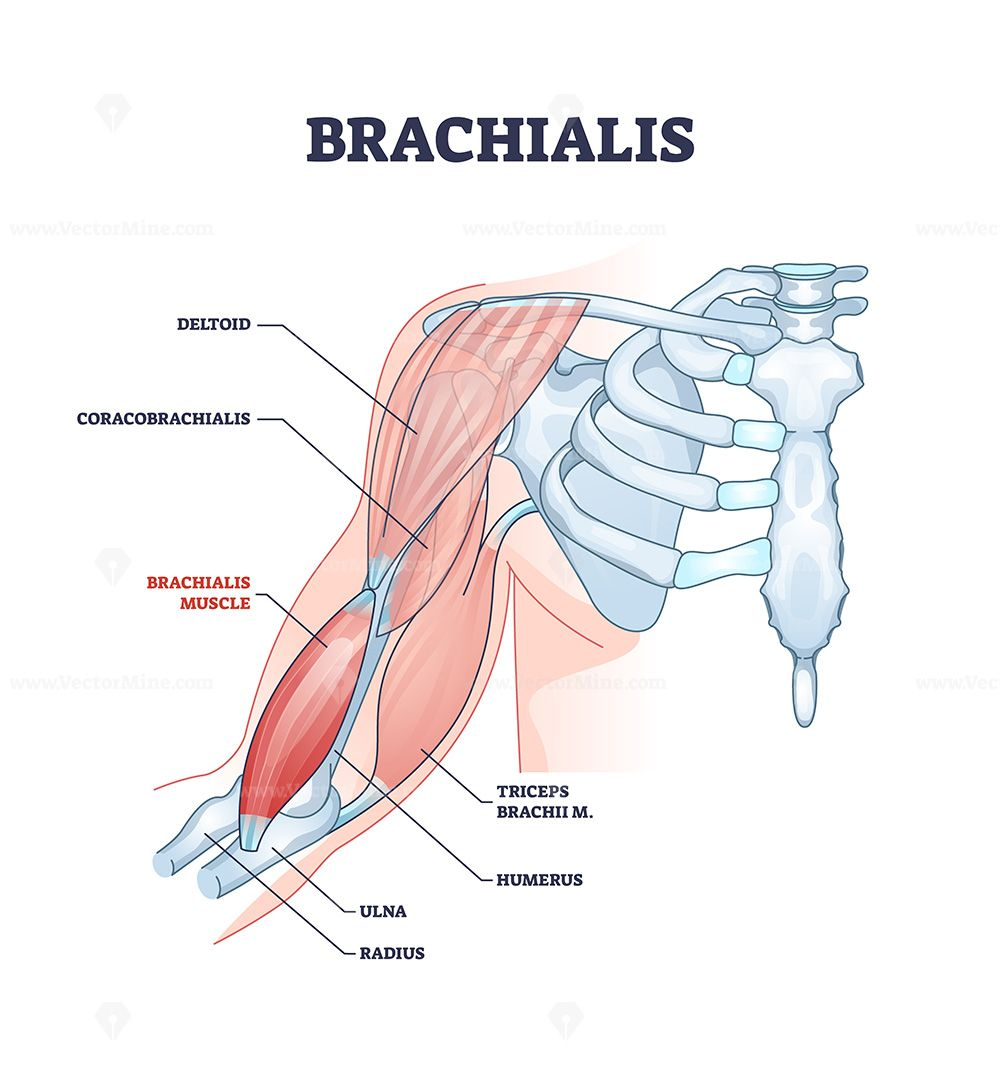
Brachialis Origin
Origin: distal anterior half of humerus
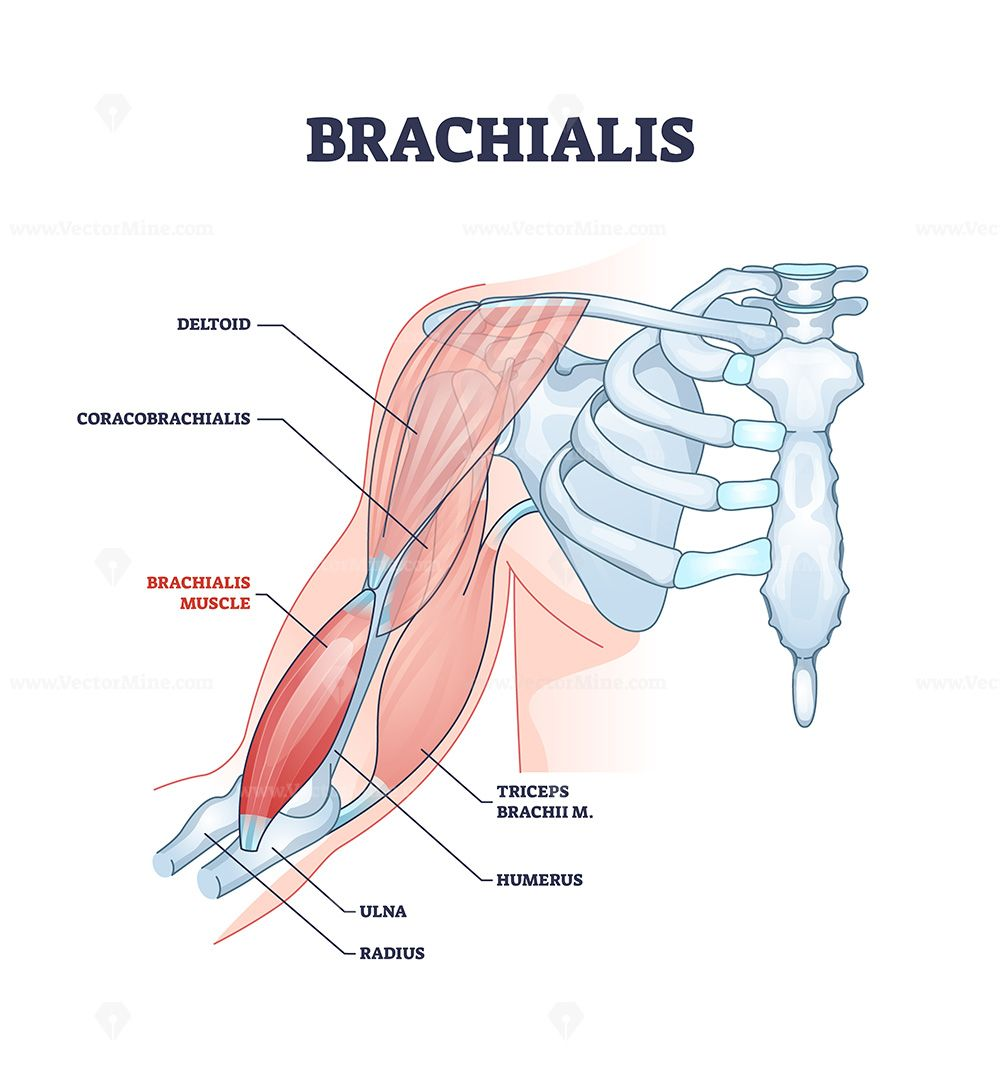
Brachialis Insertion
Insertion: ulnar tuberosity of ulna
Action: Flex forearm at elbow
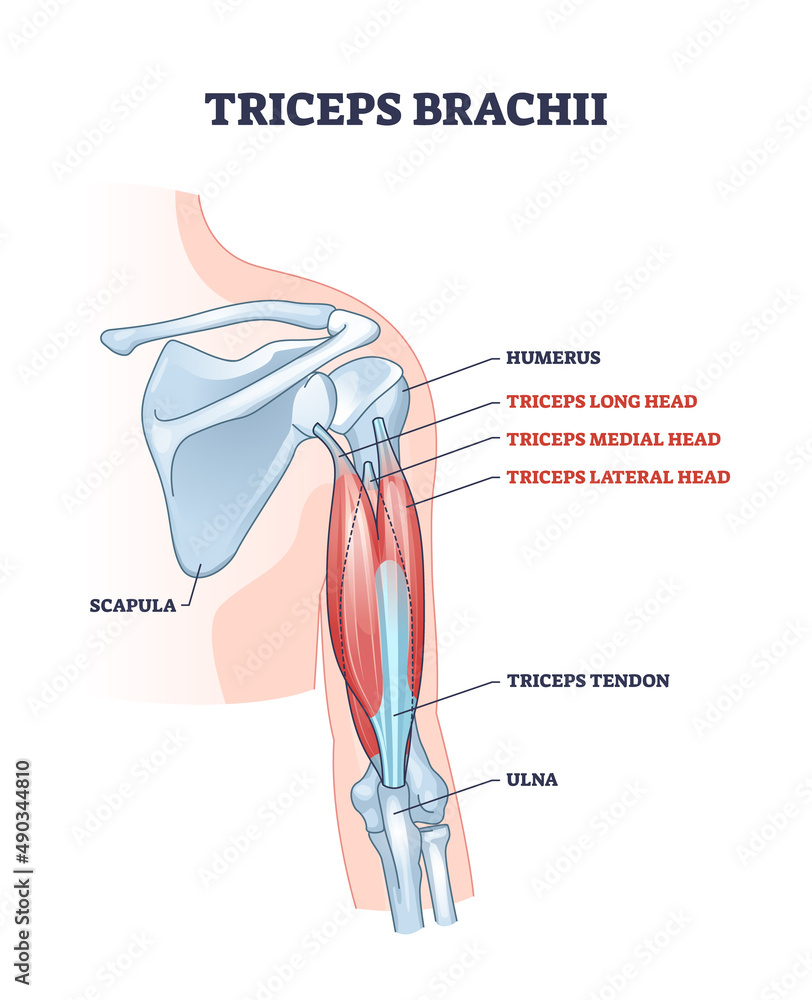
Triceps Brachii Origin
Origin: infraglenoid tubercle of scapula
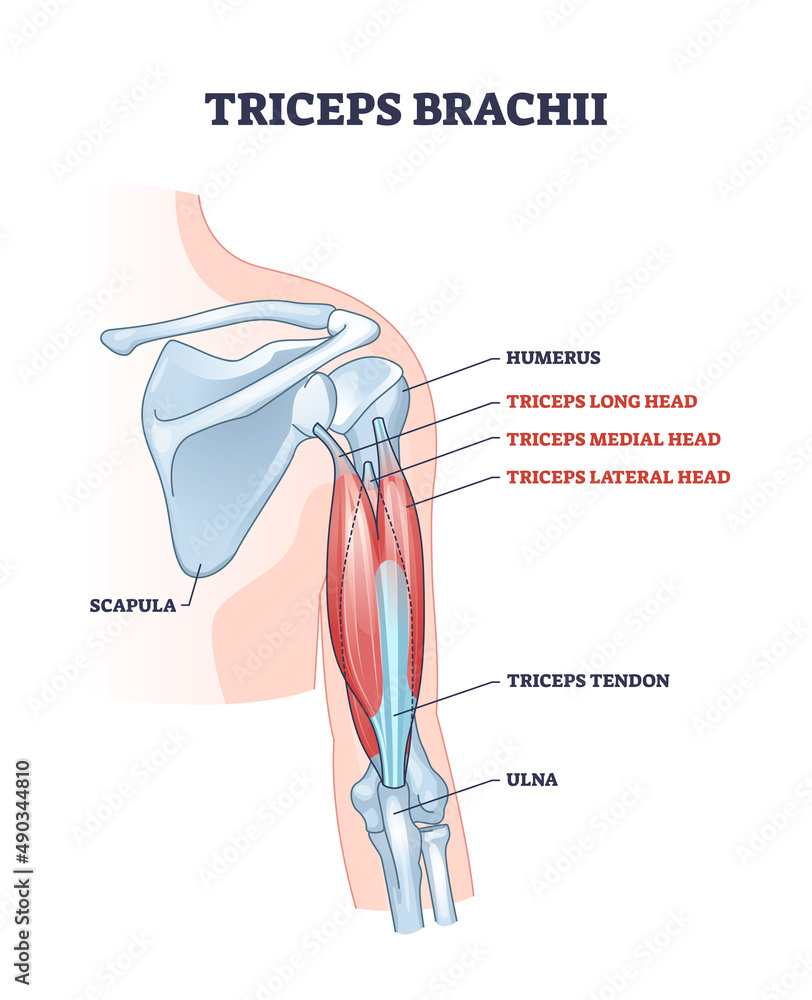
Triceps Brachii Insertion
Insertion: olecranon of ulna
Action: extend elbow and shoulder joints
Pronator teres (1st layer) Origin
Origin: medial epicondyle (superficial head) + coronoid process of ulna (deep head)
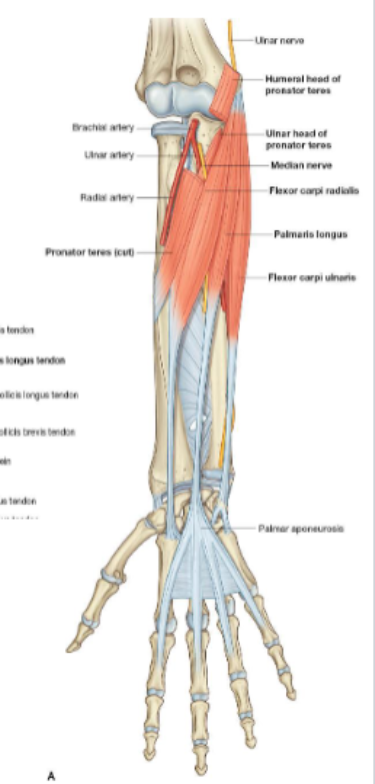
Pronator teres (1st layer) Insertion
Insertion: midway lateral surface of radius
Action: pronate hand
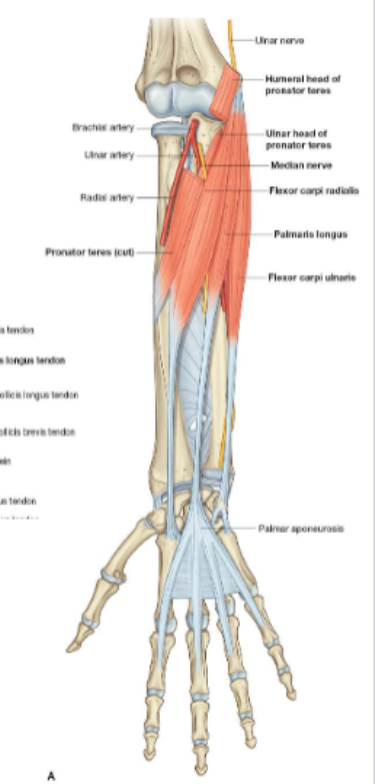
Flexor carpi radialis (1st layer) Origin
Origin: medial epicondyle of humerus
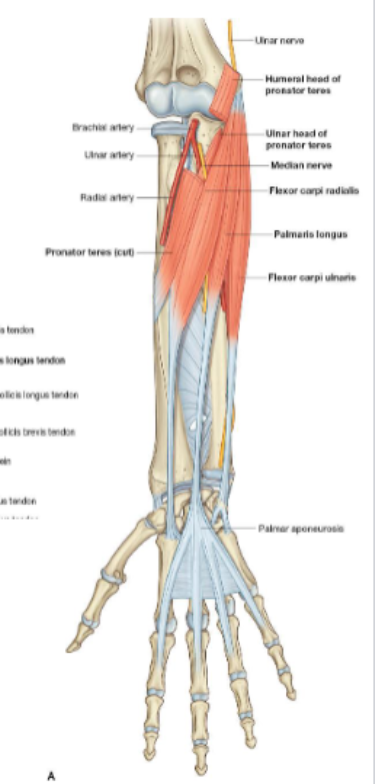
Flexor carpi radialis (1st layer) Insertion
Insertion: bases of 2nd and 3rd metacarpals
Action: flex, abduct wrist
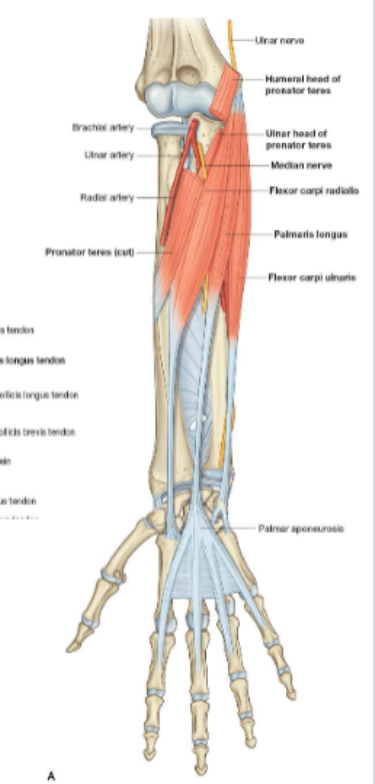
Palmaris Longus (1st layer) Origin
Origin: medial epicondyle of humerus
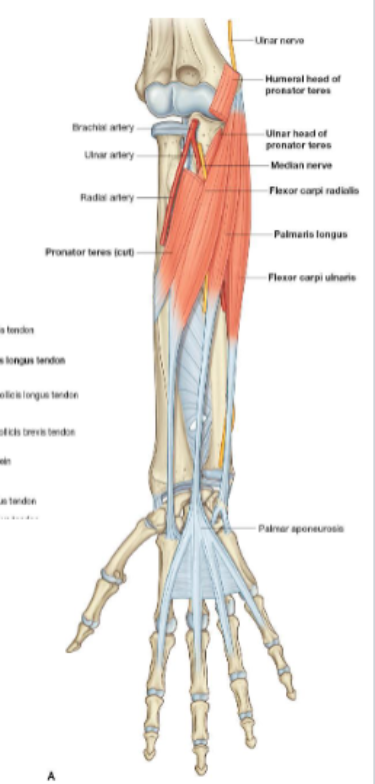
Palmaris longus (1st layer) Insertion
Insertion: flexor retinaculum + palmar aponeruosis
Action: flex hand
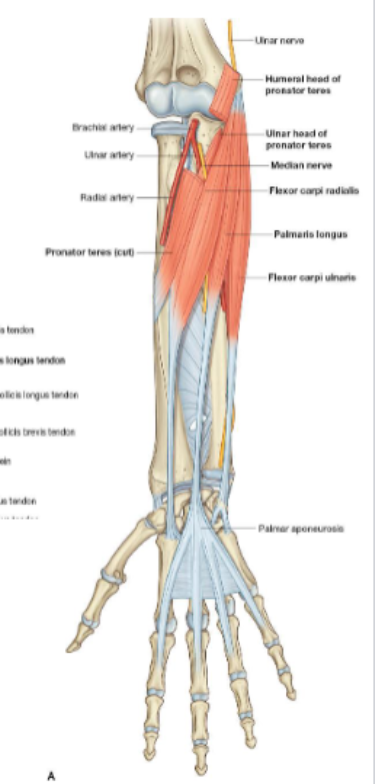
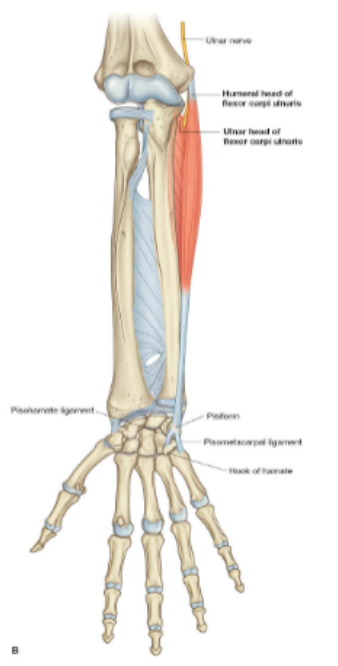
Flexor carpi ulnaris (1st layer) Origin
Origin: medial epicondyle + olecranon and posterior border of ulna
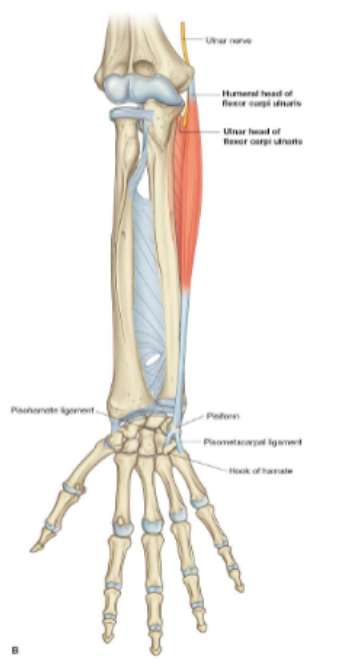
Flexor carpi ulnaris (1st layer) Insertion
Insertion: pisiform- through pisohamate and pisometacarpal ligaments, hamate, base of 5th metacarpal
Action: flex and adduct wrist
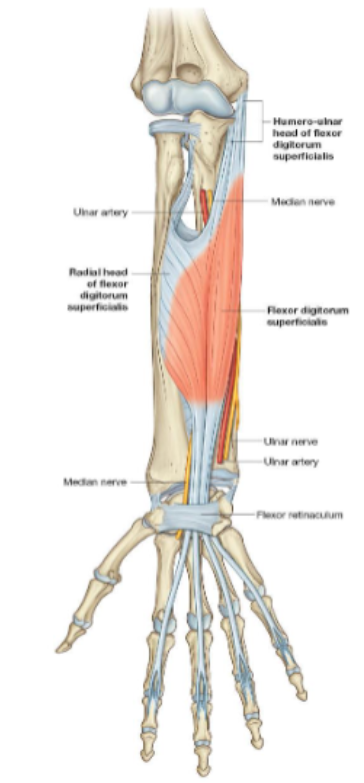
Flexor digitorum superficialis muscle (2nd layer) Origin
Origin: humero-ulnar head- medial epicondyle + coronoid process of ulna
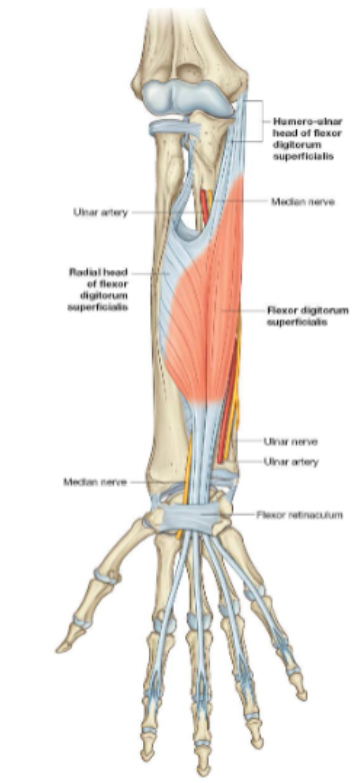
Flexor digitorum superficialis muscle (2nd layer) Insertion
Insertion: bases of middle phalanges of medial 4 fingers
Action: flex wrist joint, metacarpophalangeal joints, proximal interphalangeal joints (same as FDP)
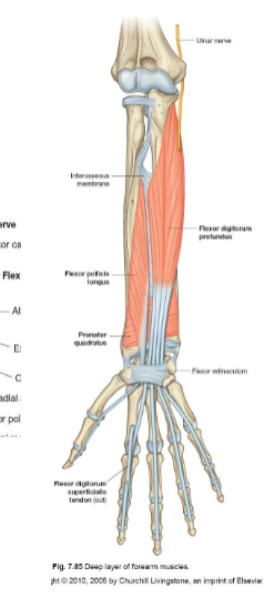
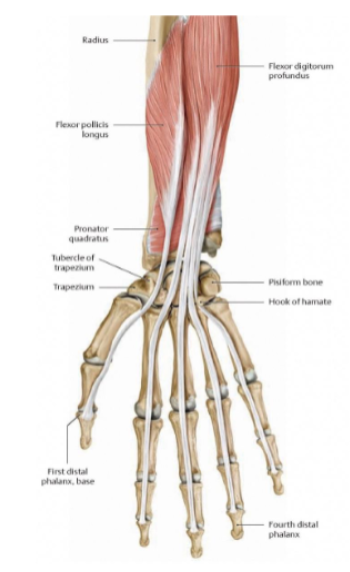
Flexor digitorum profundus (3rd layer) origin
Origin: medial + anterior surface of ulna, interosseous membrane
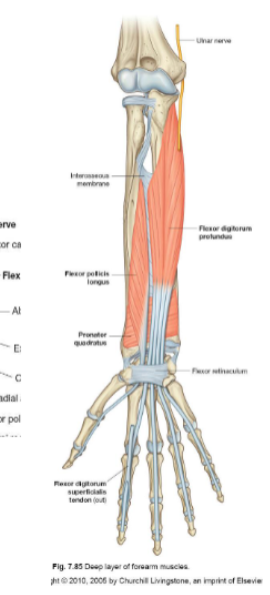
Flexor digitorum profundus (3rd layer) Insertion
Insertion: bases of distal phalanges of medial 4 fingers
Action: flex wrist joint, metacarpophalangeal joints, interphalangeal joints (PIPs and DIPs)
Flexor Pollicis Longus (3rd layer) origin
Origin: anterior surface of radius, interosseous membrane
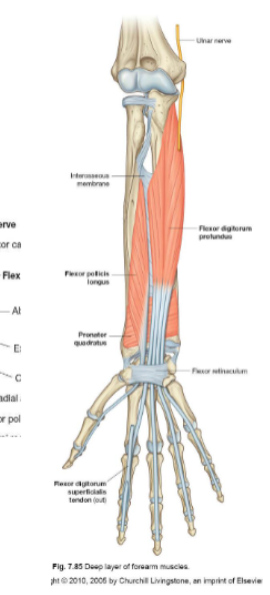
Flexor Pollicis Longus (3rd layer) Insertion
Insertion: base of distal phalanx of thumb
Action: flex metacarpophalangeal joint of 1st digit, flex interphalangeal joint of 1st digit, flex wrist (weak)
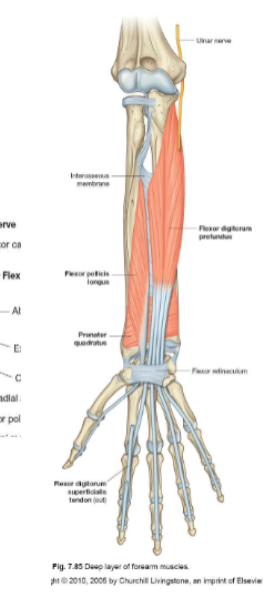
Pronator Quadratus (4th layer) Origin
Origin: distal anterior surface of ulna
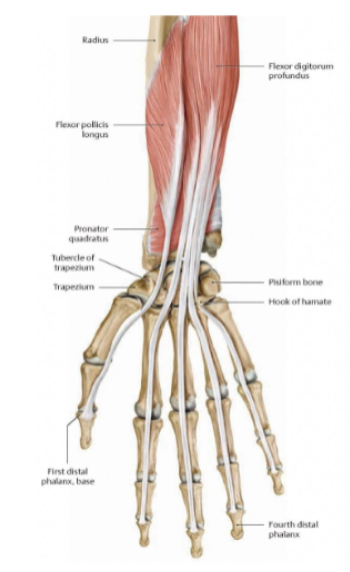
Pronator Quadratus (4th layer) Insertion
Insertion: distal anterior surface of radius
Action: pronation
Abductor Pollicis Brevis, Flexor Pollicis Brevis, Opponens Pollicis Origin (thenar compartment)
Origin: Lateral flexor retinaculum
Abductor Pollicis Brevis, Flexor Pollicis Brevis Insertion (thenar compartment)
Insertion: lateral side of base of proximal phalanx
Action: APB- abduct thumb, FPB- flex thumb
Opponens Pollicis Insertion (thenar compartment)
Insertion: shaft of 1st metacarpal
Action: oppose thumb
Abductor digiti minimi, flexor digiti minimi brevis, opponens digiti minimi Origin (hypothenar compartment)
Origin: medial end of flexor retinaculum
Abductor digiti minimi, flexor digiti minimi brevis Insertion (hypothenar compartment)
Insertion: medial side of base of proximal phalanx
Action: ADM- abduct, FDMB- flex
Opponens Digiti minimi Insertion (hypothenar compartment)
Insertion: medial side of 5th metacarpal
Action: oppose pinky
Lumbricals Origin (central compartment)
Origin: tendons of flexor digitorum profundus
Lumbricals Insertion (central compartment)
Insertion: tendon wraps to lateral side of digit to insert on extensor expansion
Action: Flex metacarpal phalangeal joint (MCP’s), Extend interphalangeal joints (IP’s)
Palmar interosseous Action (interosseous compartment)
3 muscles, adduction
Dorsal Interosseous muscles (interosseous compartment) Action
4 muscles, abduction
Adductor Pollicis Origin (interosseous compartment)
Origin: oblique head- capitate, transverse head- 3rd metacarpal
Adductor Pollicis Insertion (interosseous compartment)
Insertion: medial side of proximal phalanx of thumb
Action: adduct thumb
Brachioradialis (Superficial layer of posterior forearm) Origin
Origin- lateral supracondylar ridge of humerus
Brachioradialis (Superficial layer of posterior forearm) Insertion
Insertion: distal radius near styloid process
Action: flex forearm at elbow
Extensor Carpi radialis longus (ECRL) (Superifical layer of posterior forearm) (Compartment 2) Origin
Origin: lateral supracondylar ridge and lateral epicondyle
Extensor Carpi radialis longus (ECRL) (Superifical layer of posterior forearm) (Compartment 2) Insertion
Insertion: base of 2nd metacarpal
Action: extend forearm
Extensor carpi radialis brevis (ECRB) (Superifical layer of posterior forearm) (Compartment 2) Origin
Origin: lateral epicondyle
Extensor carpi radialis brevis (ECRB) (Superifical layer of posterior forearm) (Compartment 2) Insertion
Insertion: base of third metacarpal
Action: extend forearm
Extensor Digitorum (Superifical layer of posterior forearm) (Compartment 4) Origin
Origin: lateral epicondyle (all superficials except brachioradialis)
Extensor Digitorum (Superifical layer of posterior forearm) (Compartment 4) Insertion
Insertion: extensor hood of digits 2-5
Action: extend digits and wrist
Extensor Digiti Minimi (superficial layer of posterior forearm) (5th compartment) Origin
Origin: lateral epicondyle
Extensor Digiti Minimi (superficial layer of posterior forearm) (5th compartment) Insertion
Insertion: extensor hood of 5th digit (pinky)
Action: extend pinky
Extensor Carpi Ulnaris (superficial layer of forearm) (6th compartment) Origin
Origin: lateral epicondyle
Extensor Carpi Ulnaris (superficial layer of forearm) (6th compartment) Insertion
Insertion: base of 5th metacarpal
Action: extend wrist on ulnar side
Anconeus (superficial layer of forearm) Origin
Origin: lateral epicondyle
Anconeus (superficial layer of forearm) Insertion
Insertion: upper ulna
Action: extend elbow