Manifest Destiny and Settling the West 1820-1900
 Studied by 2 people
 Call Kai
 Learn
Learn Practice Test
 Spaced Repetition
 Match
Match Flashcards
 Knowt Play
1/87

Earn XP
Description and Tags
You do not need to focus on Texas or Mexican War (focus from 1877 on)
Name | Mastery | Learn | Test | Matching | Spaced | Call with Kai |
|---|
No study sessions yet.
88 Terms
Objective: Discuss and explain how Americans continued to move westward and gained new territory through diplomacy and war.
Objective: Discuss and explain how Americans continued to move westward and gained new territory through diplomacy and war.
(3:3) Settling the Frontier!
Why did Americans move west?
(3:3) Settling the Frontier!
Why did Americans move west?
God
Many American believed that THIS wanted the United States to expand across the continent.
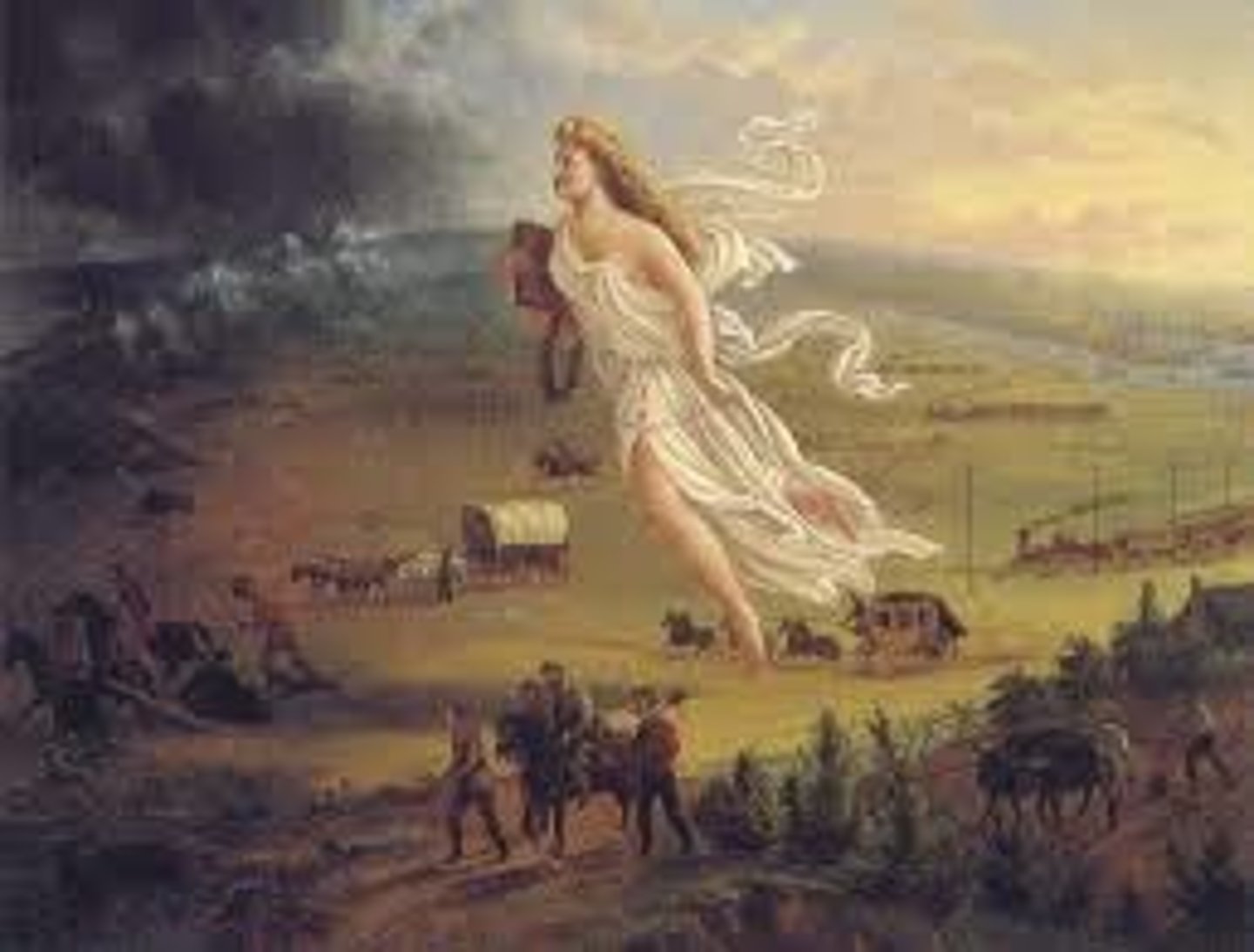
Manifest Destiny
Many Americans felt that Americans were meant to control the West. This belief was called THIS.
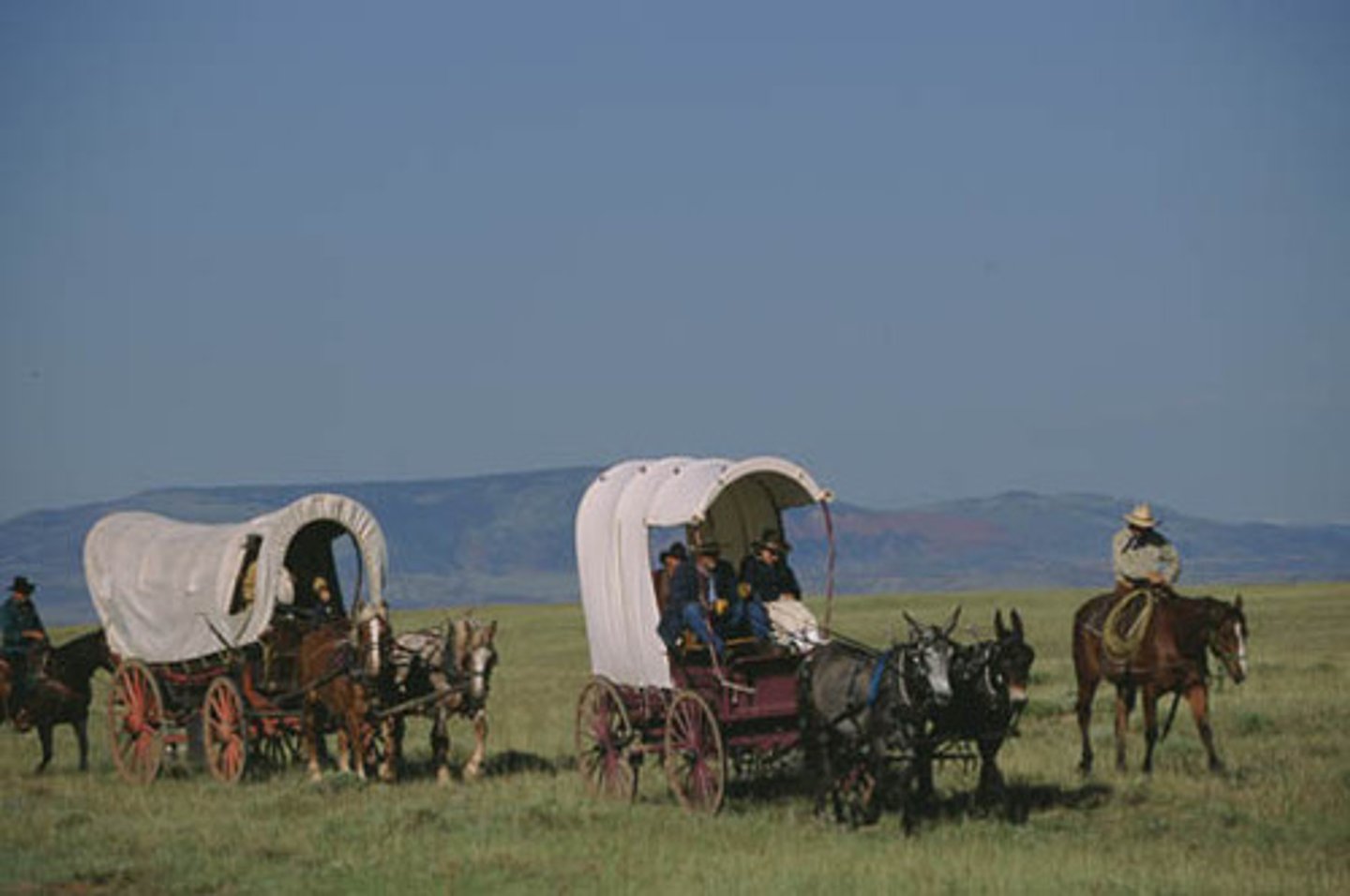
Panic of 1837
People went west for economic reasons. Many went in order to get cheap land. After THIS, many Americans wanted a fresh start on the frontier.
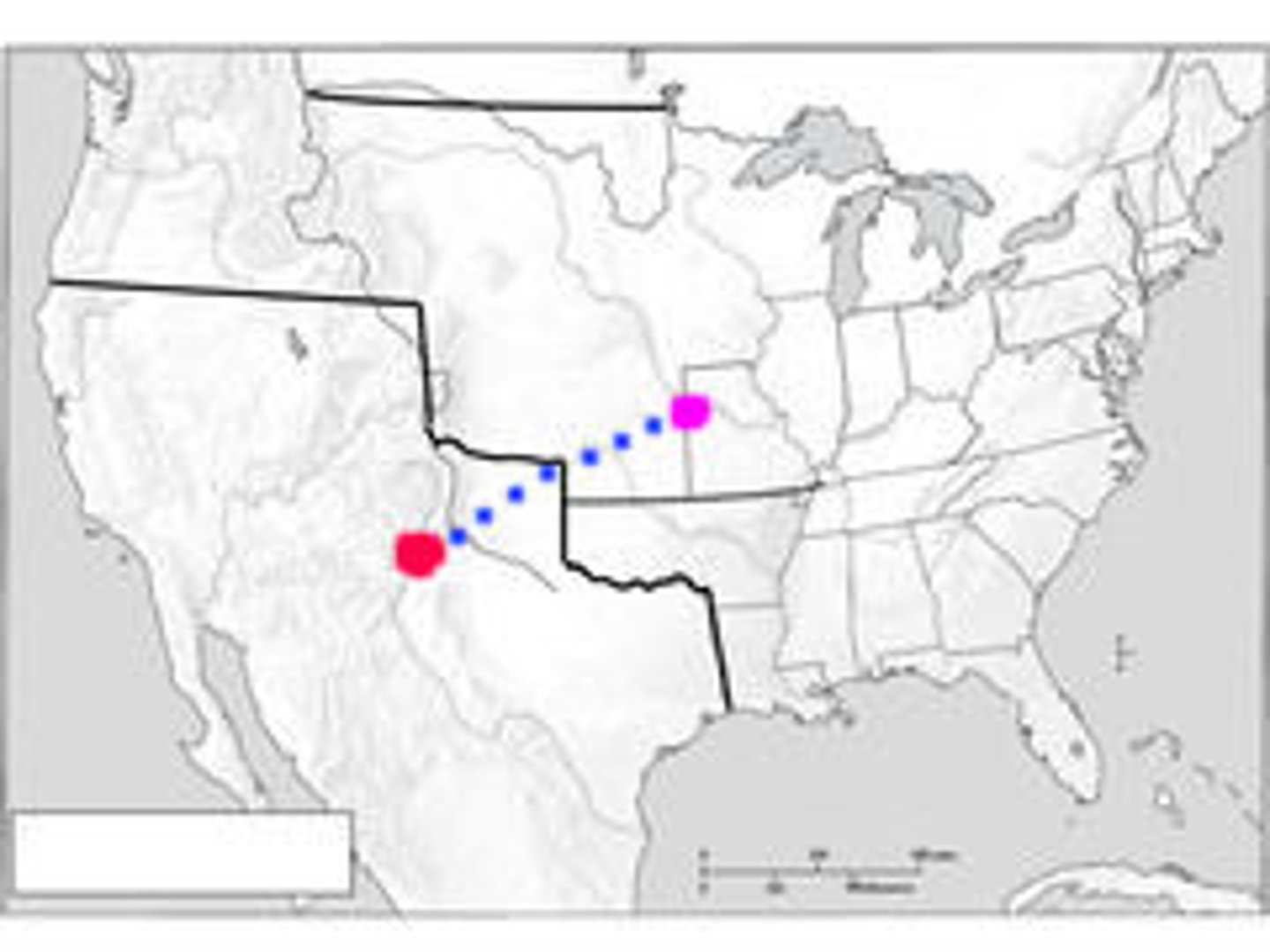
Santa Fe Trail
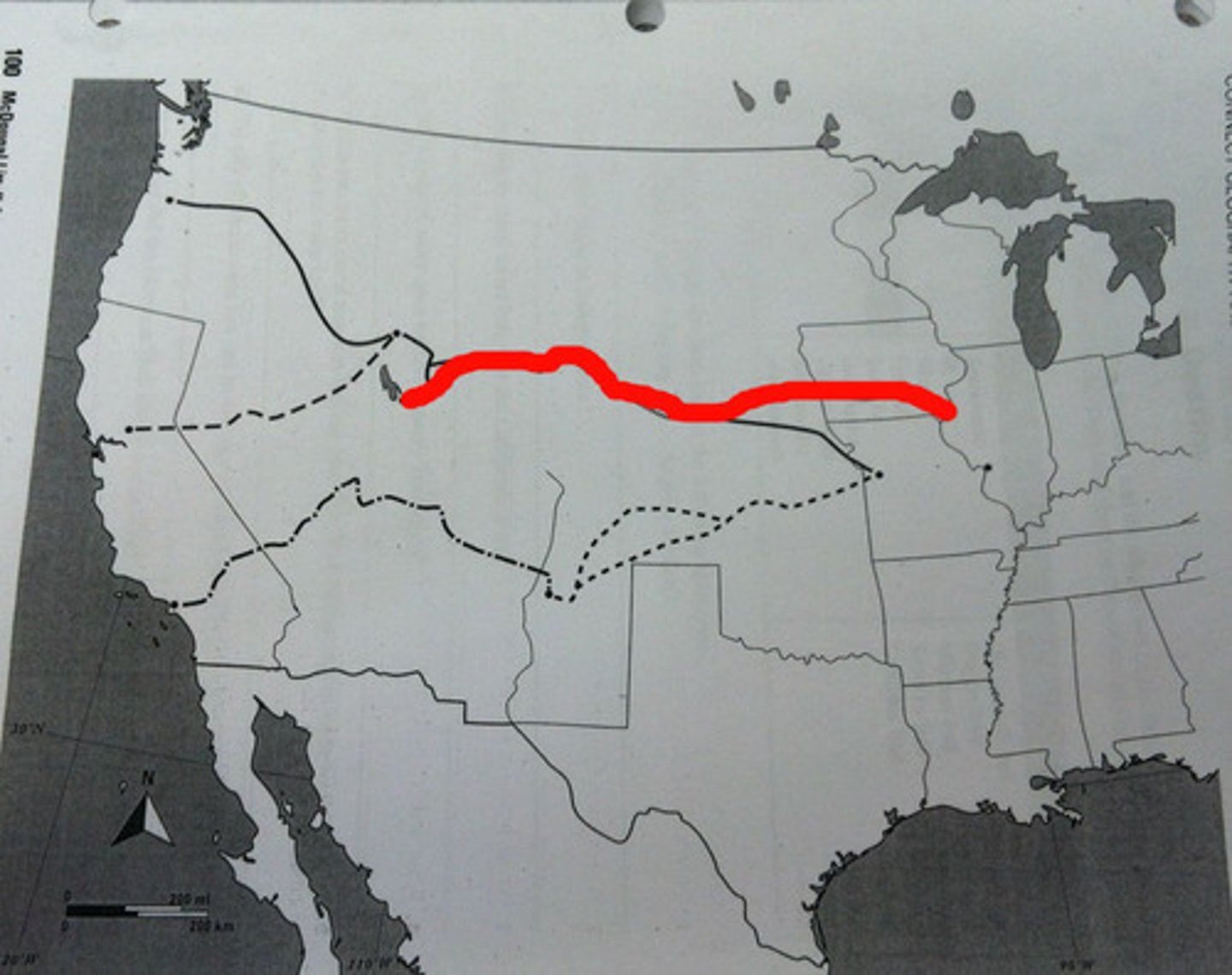
Americans took several trails to the West.THIS was a trade route between Independence, Missouri, and Santa Fe, New Mexico.
Oregon Trail
THIS stretched from Independence to Portland, Oregon.
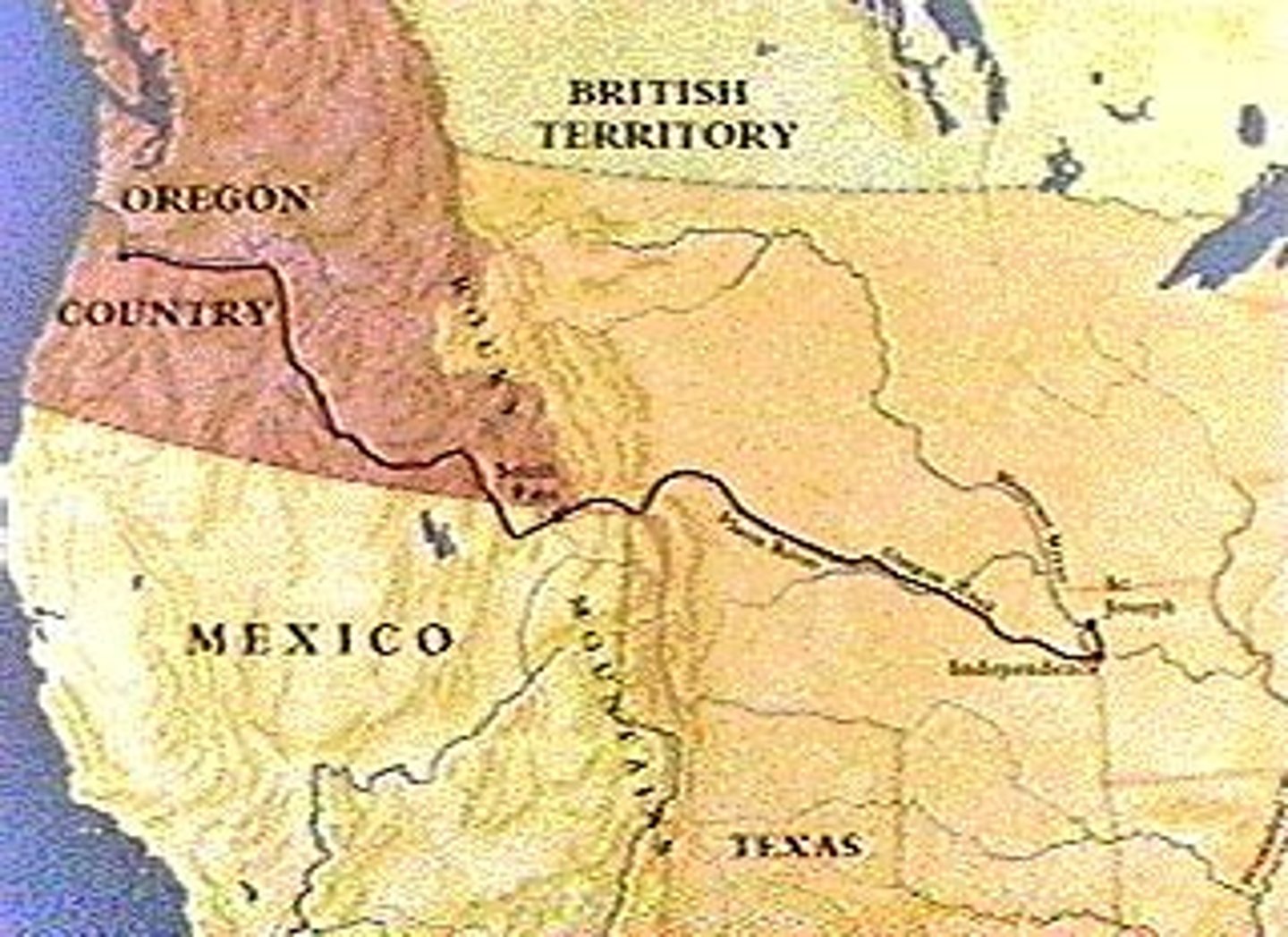
Utah
The Mormons followed the Oregon Trail to HERE. This religious group had been persecuted in the East. They settled on the edge of the Great Salt Lake.
TEXAN INDEPENDENCE!
What caused the Revolution in Texas?
TEXAN INDEPENDENCE!
What caused the Revolution in Texas?
Texas
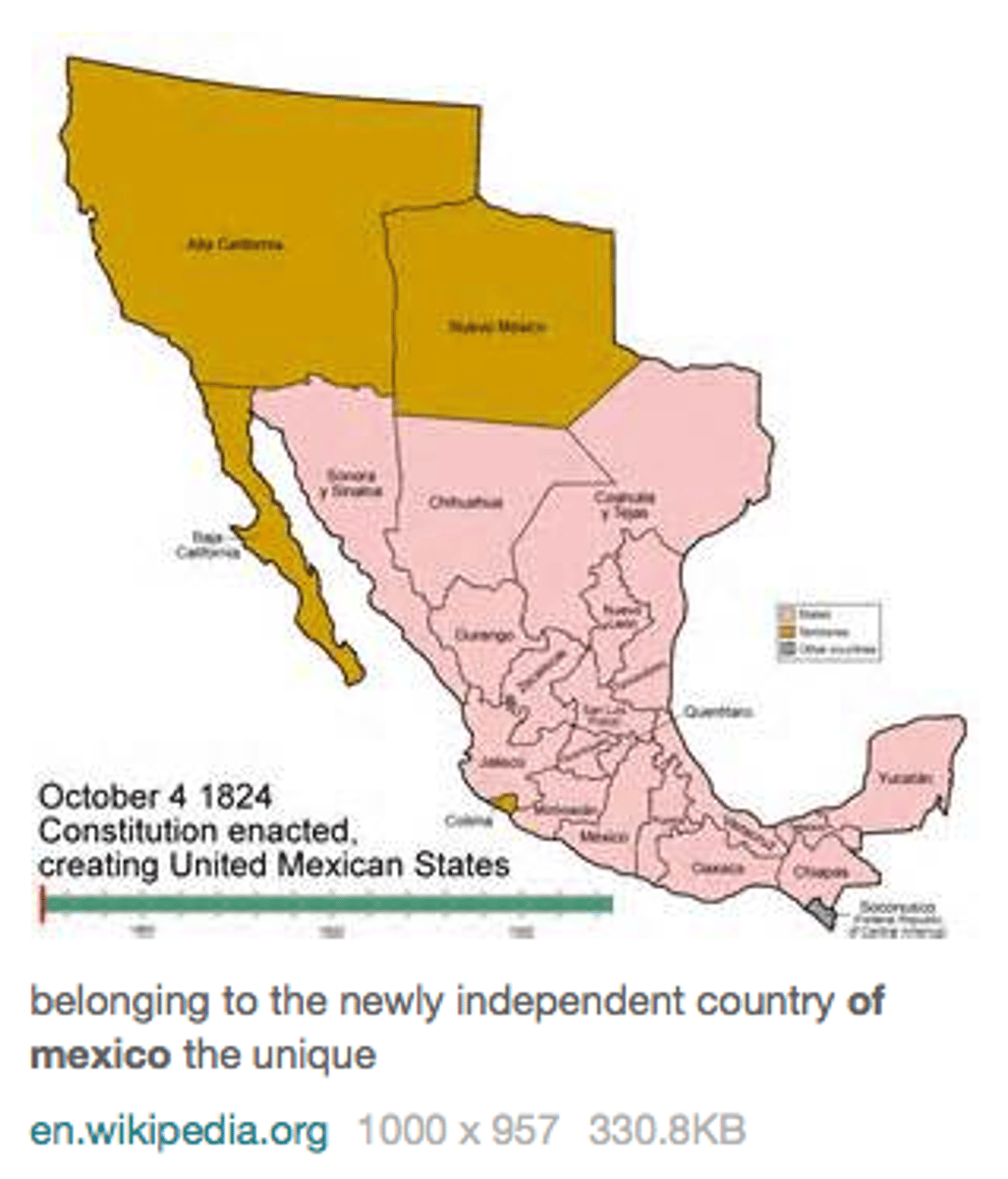
In the 1820s Mexico encouraged Americans to settle HERE. They offered land to settlers. They hoped these settlers would make the area more stable.
Stephen F. Austin
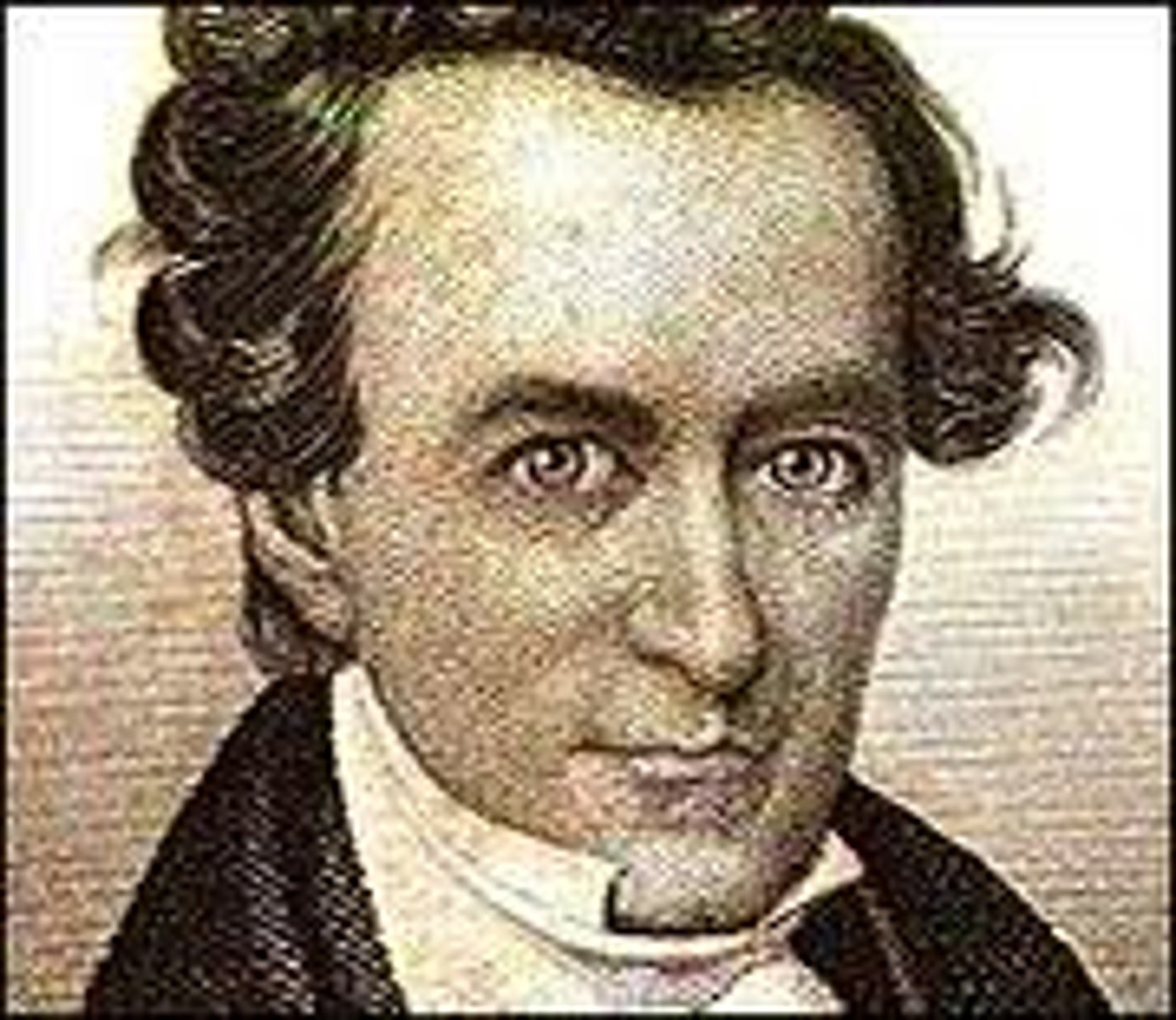
THIS land agent set up a colony of American settlers in Texas. Soon Anglos, or English-speaking settlers, outnumbered Spanish-speaking Texans.
Protestant
Catholic
There was conflict over cultural issues. First, the Anglo settlers spoke English instead of Spanish. Second, the Anglos tended to be THIS religion instead of THIS religion.

slaves
slavery
Another cultural conflict regarding Texas was that many of the settlers were southerners who who brought THIS with them. Mexico had outlawed THIS in 1829. They unsuccessfully tried to get the Texans to end this practice.
Stephen F. Austin
Mexico tried to prevent more American settlers from coming to Texas, but the settlers came anyway. HE asked Mexico for more self-government for Texas.
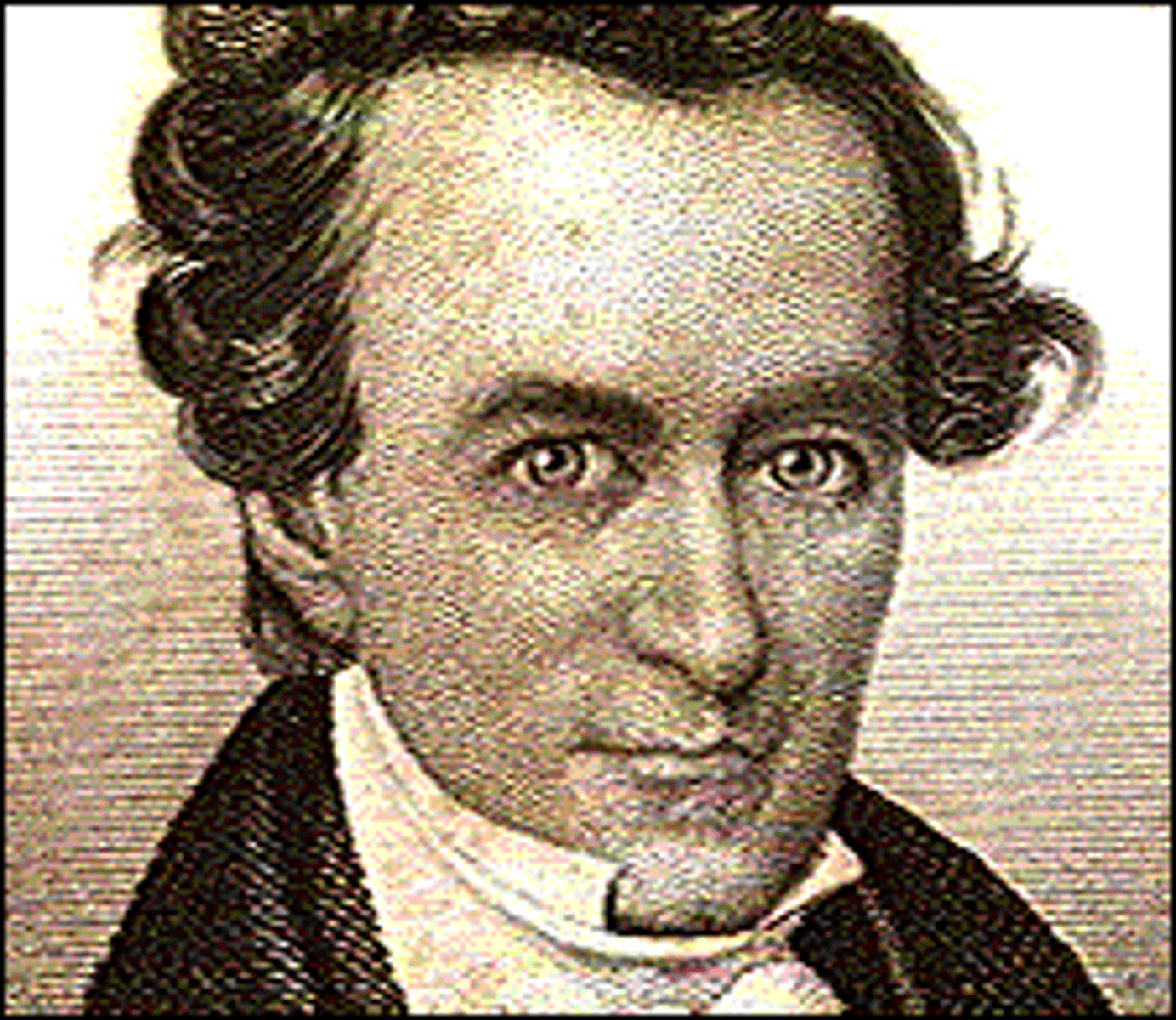
the Texas Revolution
In 1836 a war broke out that became known as THIS.
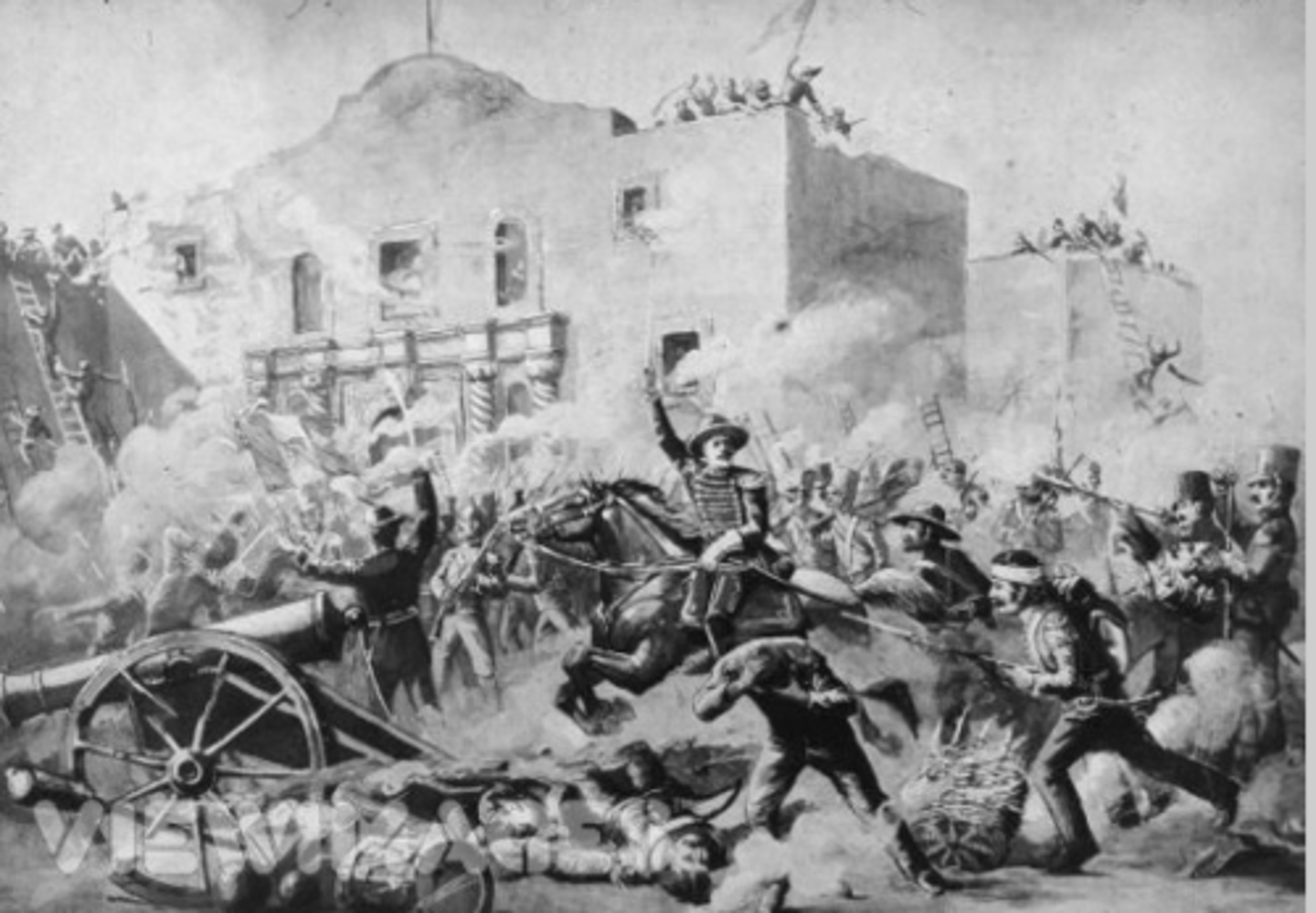
the Alamo
A small Texan force tried to defend THIS, a mission in San Antonio. When the Mexicans captured it, they killed all 187 of the Americans.
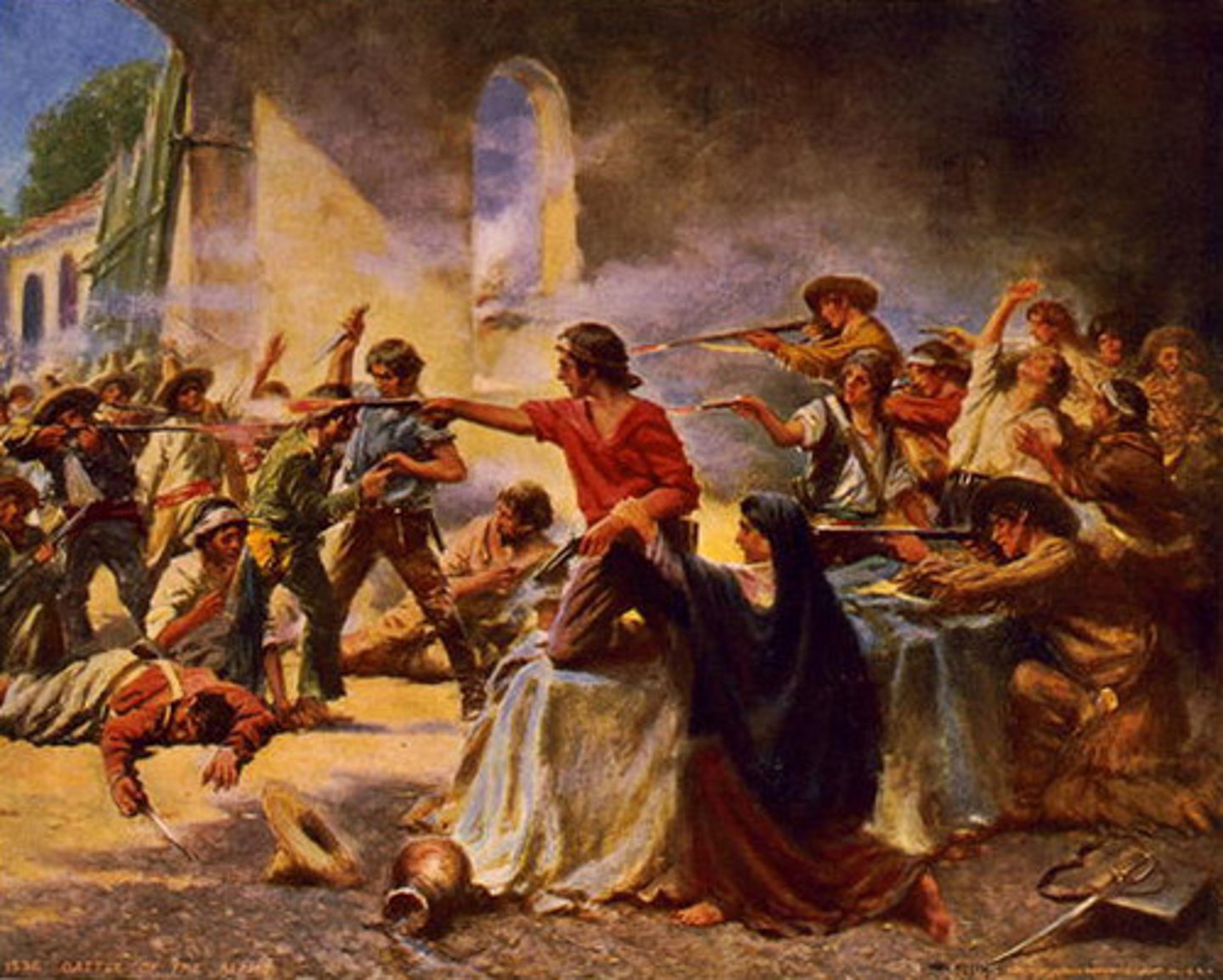
Sam Houston
"Remember the Alamo" became a rallying cry for Texas rebels. Under THIS commander, the Texans captured Santa Anna and won their independence.
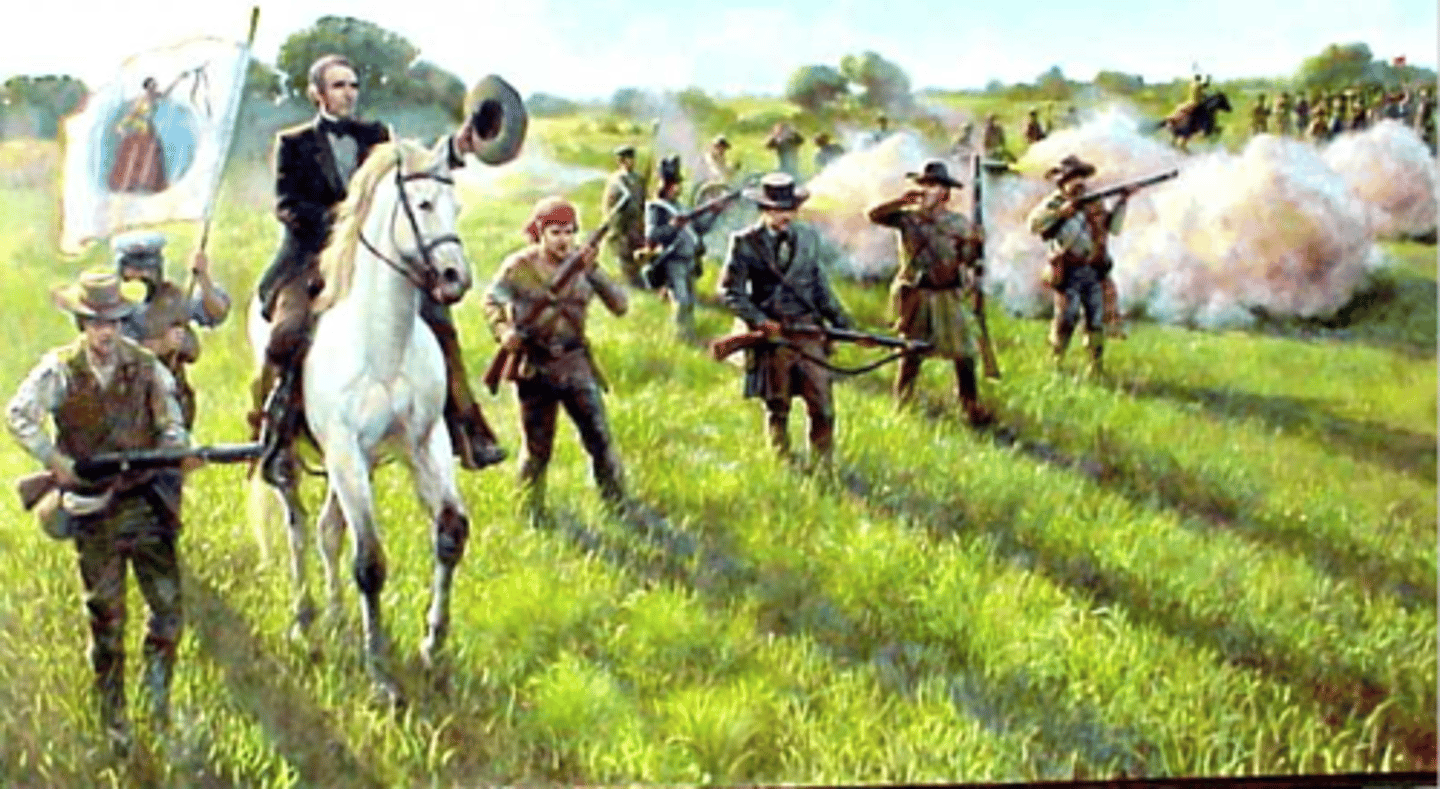
James K. Polk
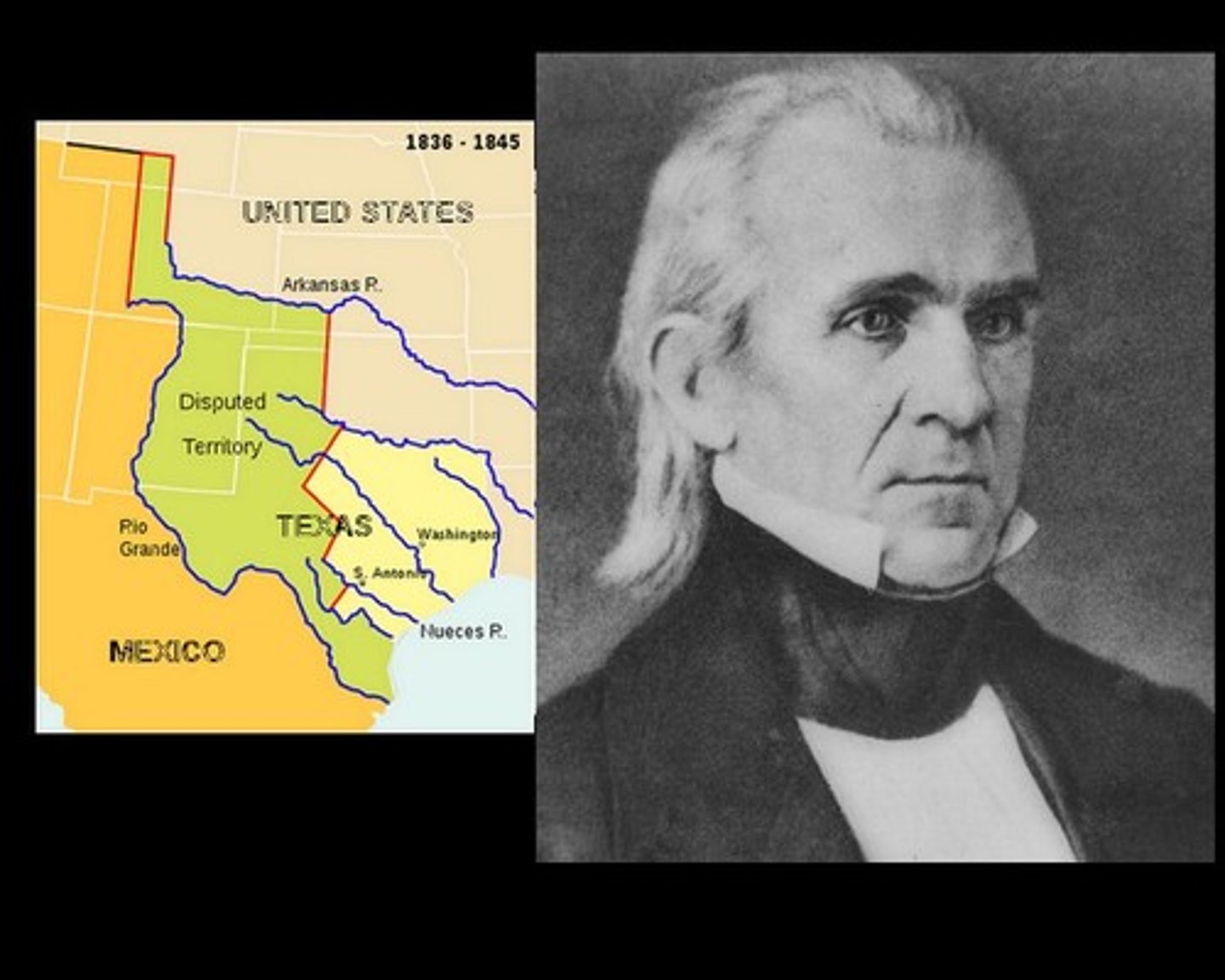
THIS slaveholder was elected president in 1844 and he favored westward expansion.
1845
Texas was admitted to the union in THIS year.
THE WAR WITH MEXICO!
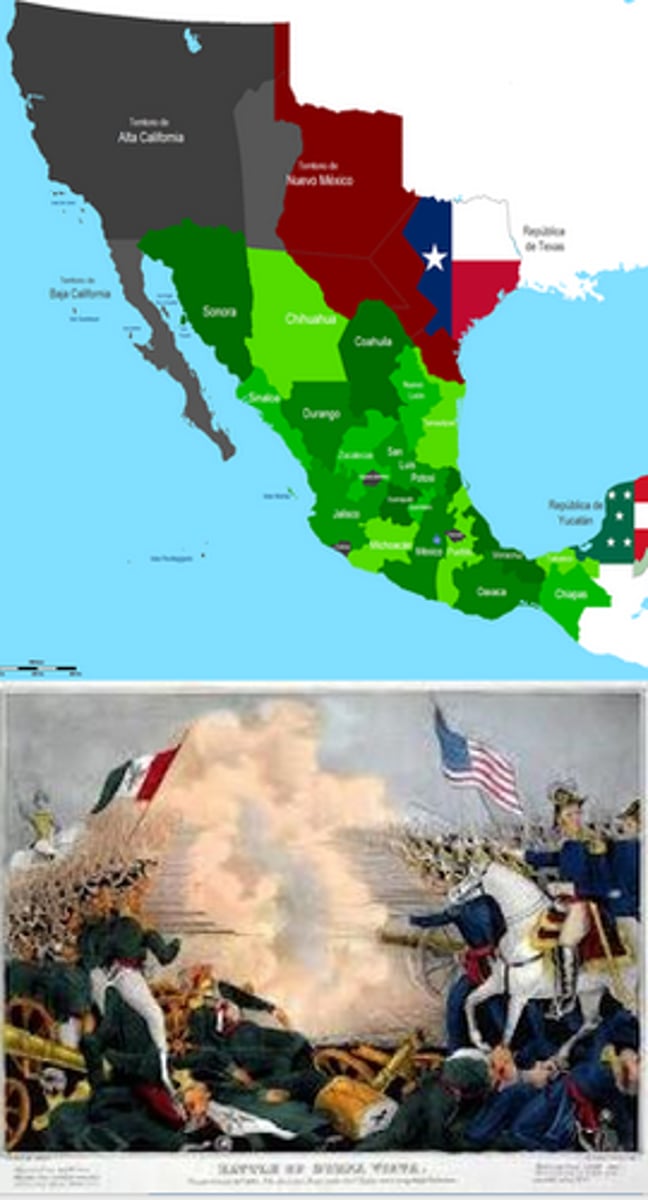
What did the United States gain in the Mexican War?
THE WAR WITH MEXICO!
What did the United States gain in the Mexican War?
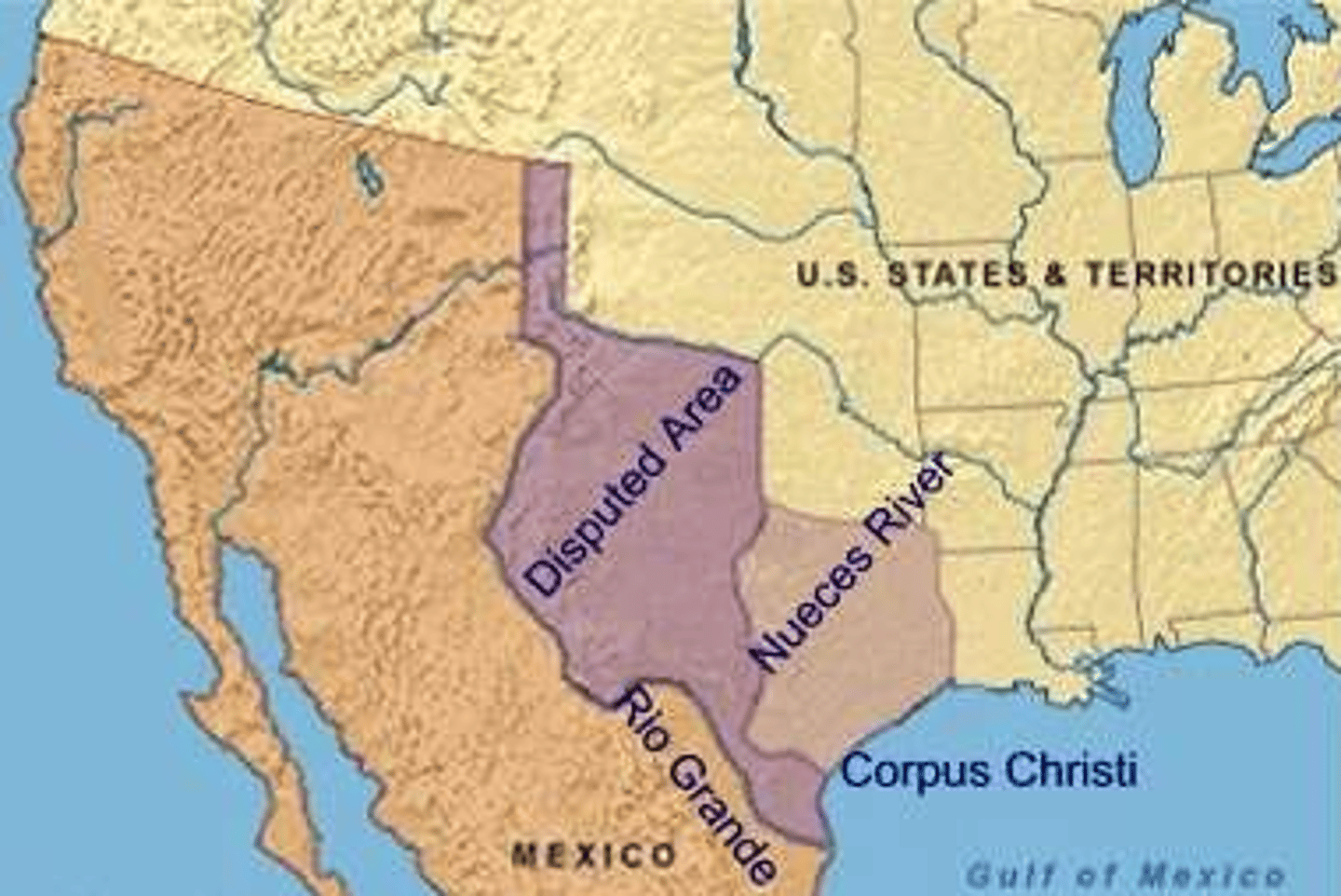
the Rio Grand River
The United States and Mexico had a dispute over the northern region of Mexico. President Polk sent the U.S. army to blockade THIS.
New Mexico
War broke out between the United States and Mexico. THIS immediately asked to join the United States.
the Republic of California
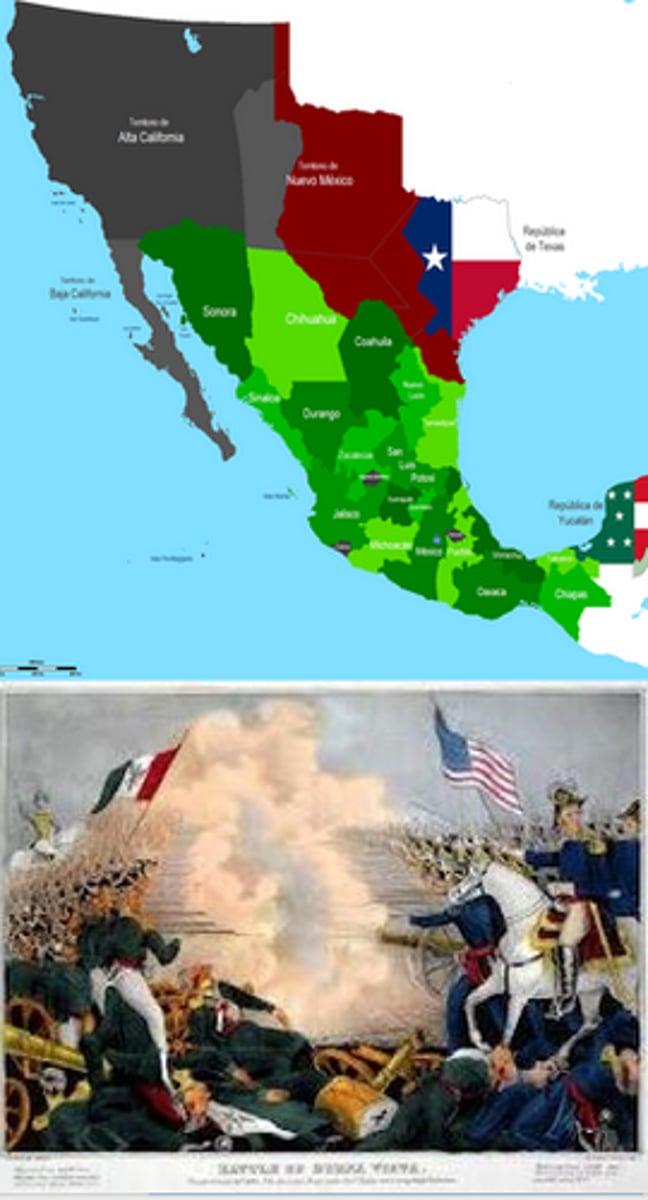
American settlers in California declared their independence. They set up THIS
the Treaty of Guadalupe Hidalgo
THIS gave almost half of Mexico's land to the United States.
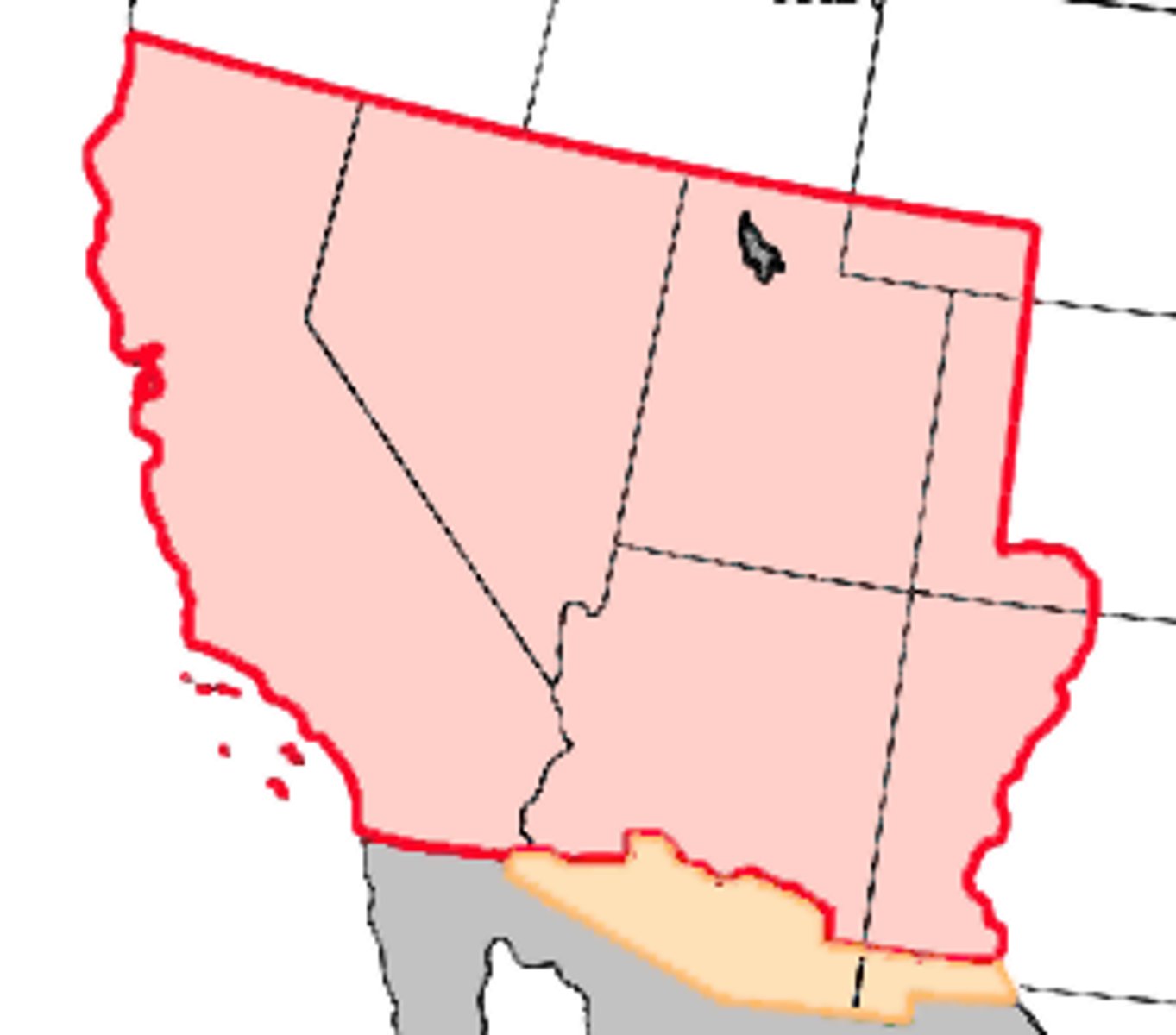
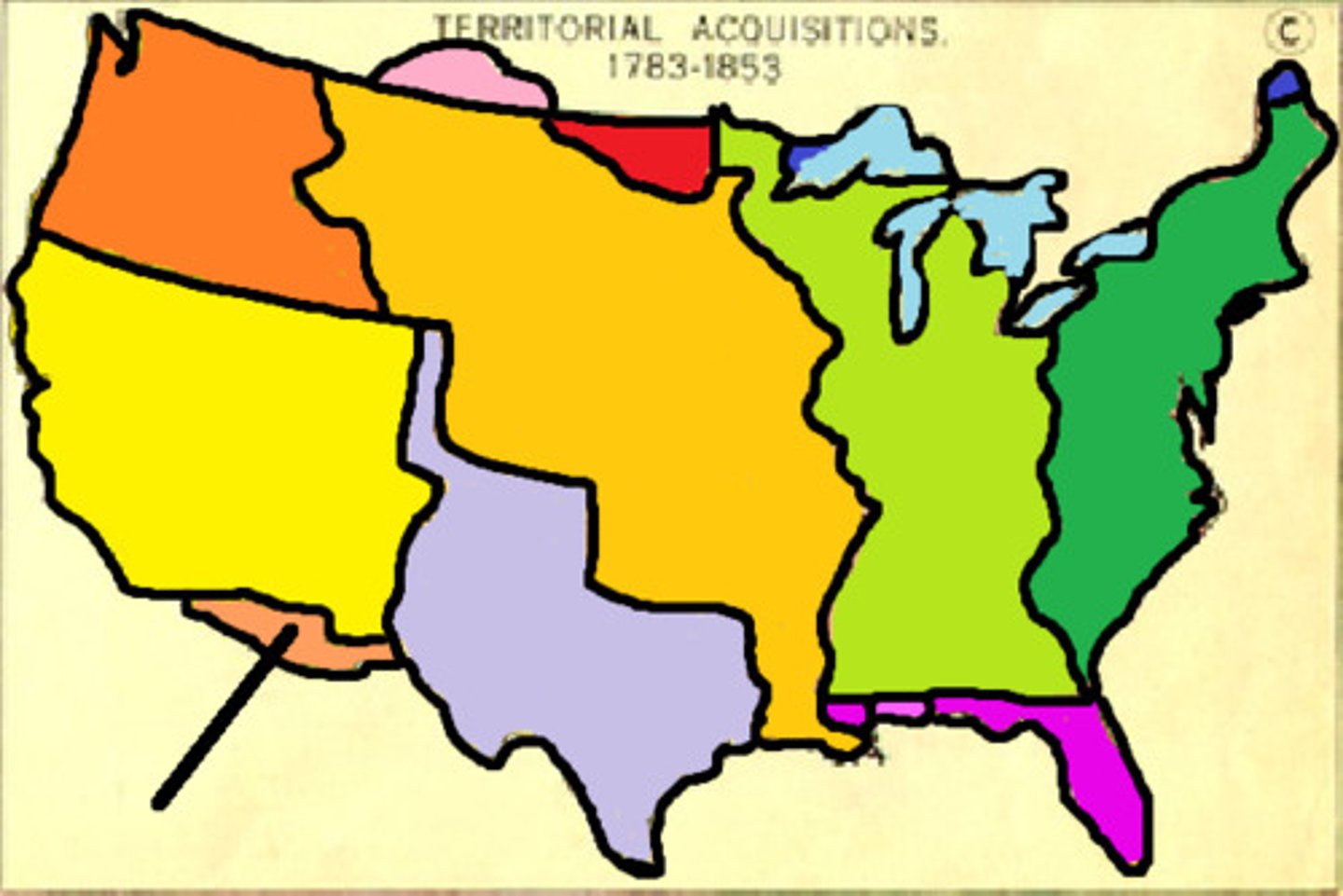
the Gadsden Purchase of 1853
The United States purchased even more land from Mexico with THIS. This set the current borders of the lower 48 states.
THE CALIFORNIA GOLD RUSH!
How did the Gold Rush change California?
THE CALIFORNIA GOLD RUSH!
How did the Gold Rush change California?
1848
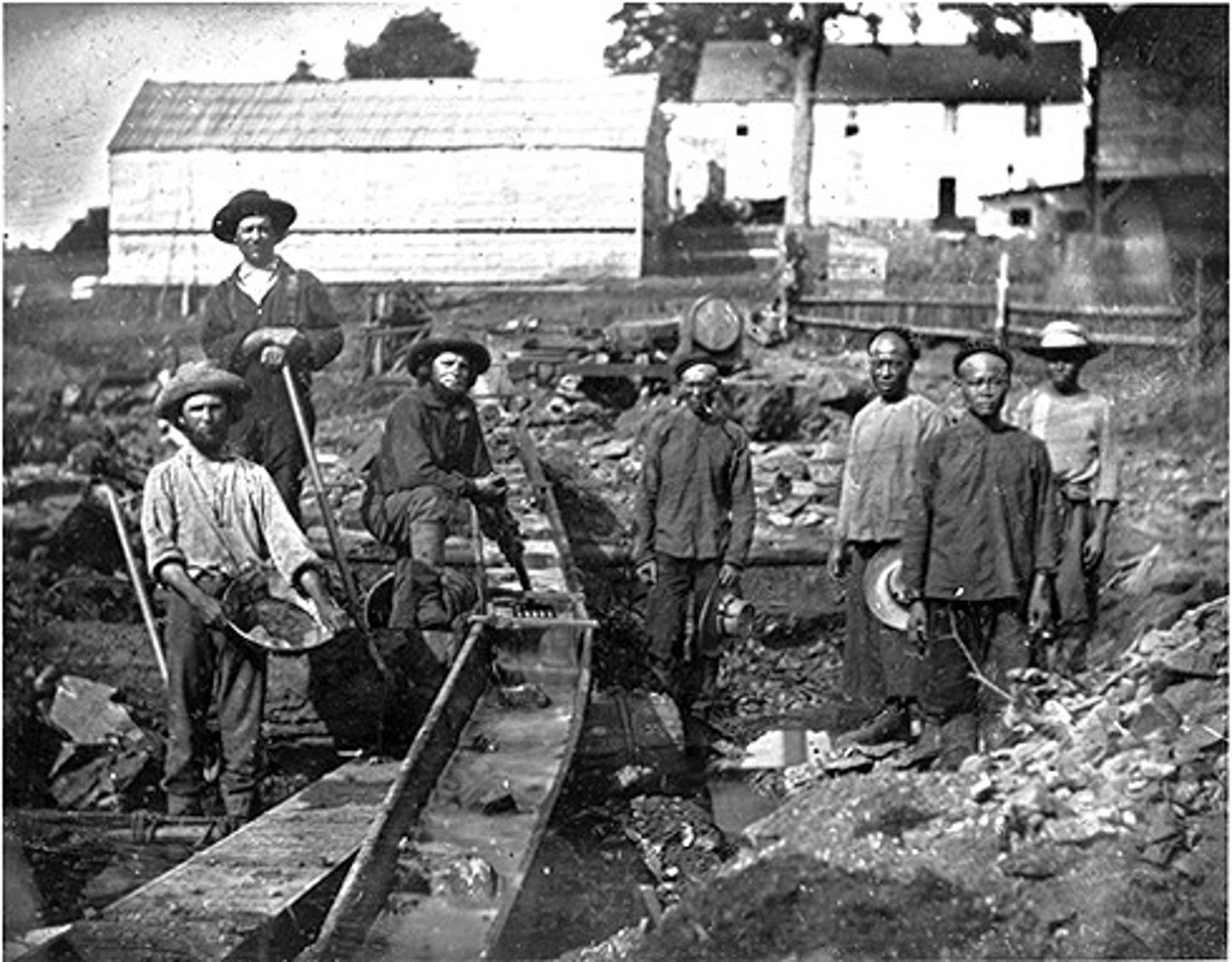
In ???? gold was discovered in California. People steamed into California for the rush for gold.
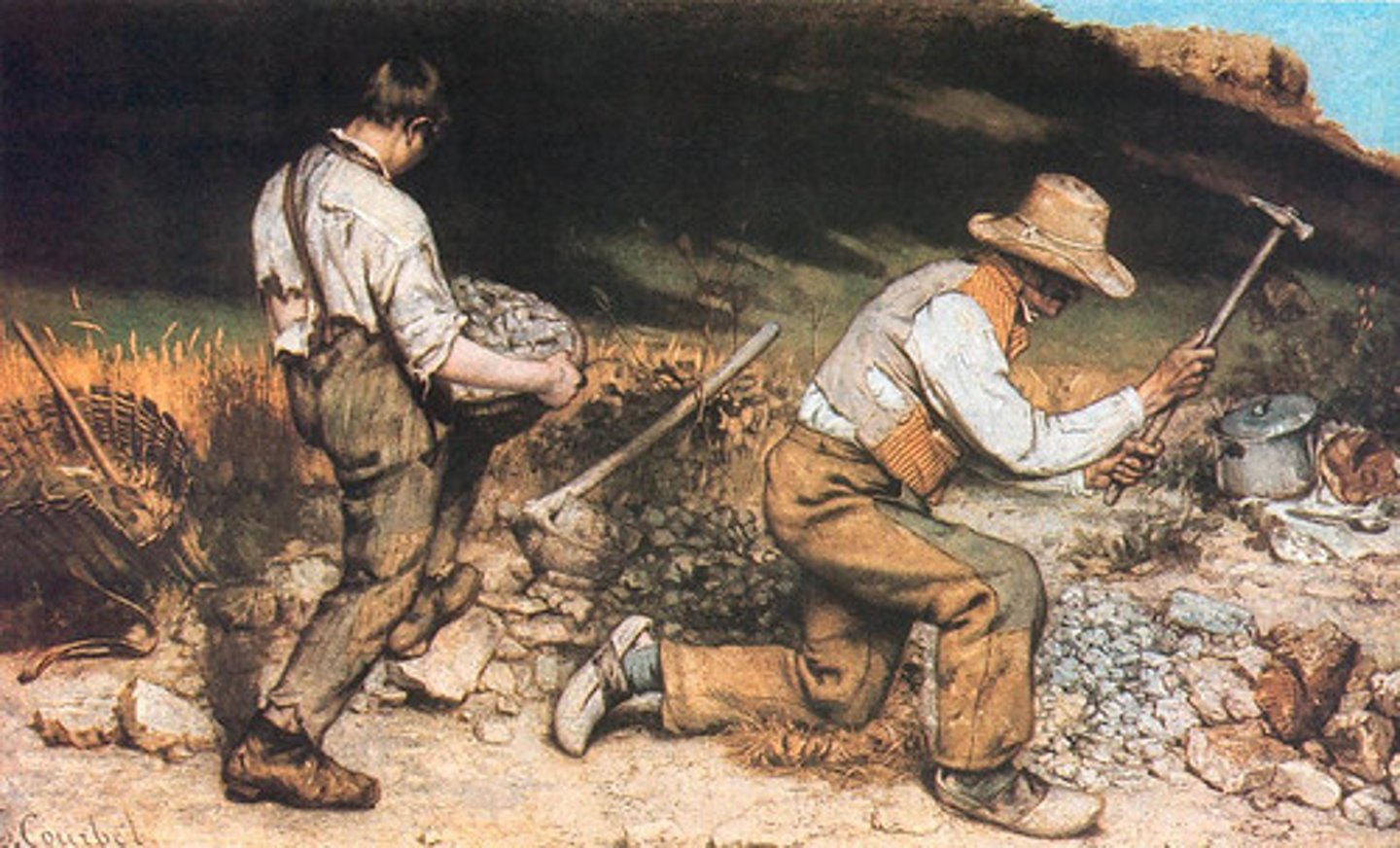
"forty-niners"
These gold rushers were called "THIS" and they came from all over the United States as well as from foreign countries.
San Francisco
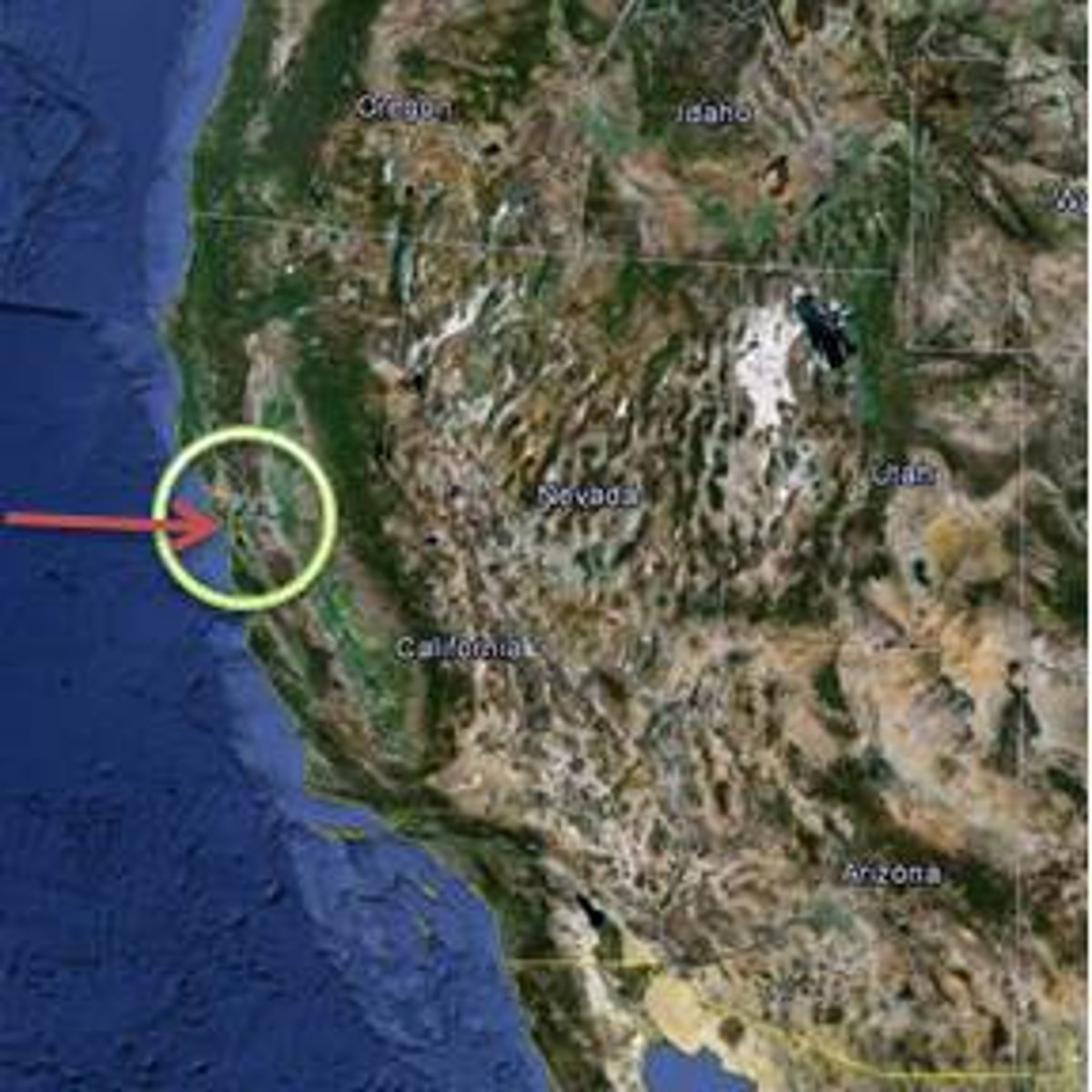
California's population exploded. THIS city became a boom town. The gold rush brought thousands of people to California and spurred the development of farming, manufacturing, shipping, and banking.
(5:1) CULTURES CLASH ON THE PRAIRIE!
(5:1) CULTURES CLASH ON THE PRAIRIE!
Objective: Discuss and explain how Americans began settling the West in the years following Reconstruction. This spelled disaster for Native Americans.
Objective: Discuss and explain how Americans began settling the West in the years following Reconstruction. This spelled disaster for Native Americans.
THE CULTURE OF THE PLAINS INDIANS; SETTLERS PUSH WESTWARD!
How did the Plains Indians Live?
THE CULTURE OF THE PLAINS INDIANS; SETTLERS PUSH WESTWARD!
How did the Plains Indians Live?
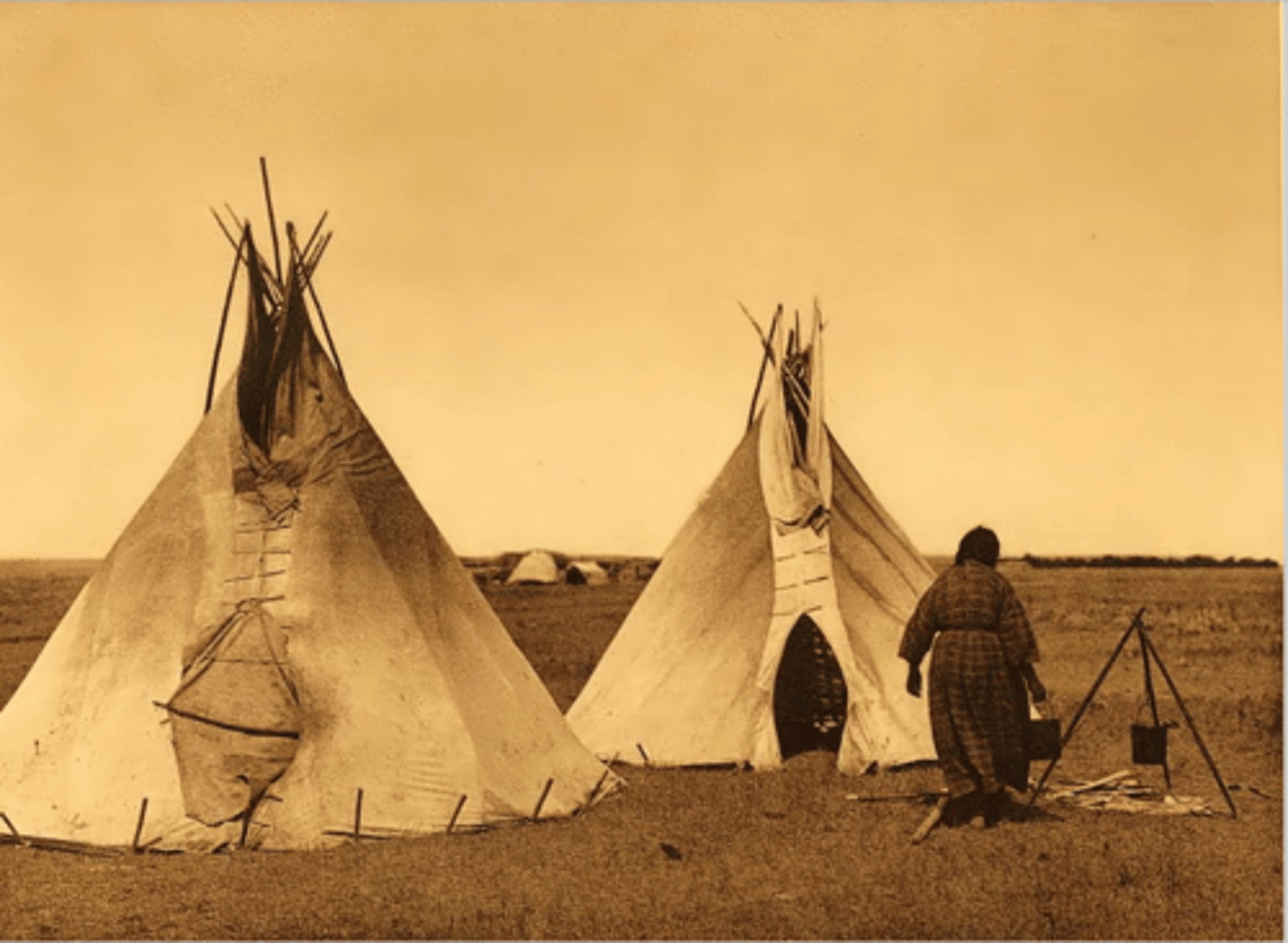
the Great Plains
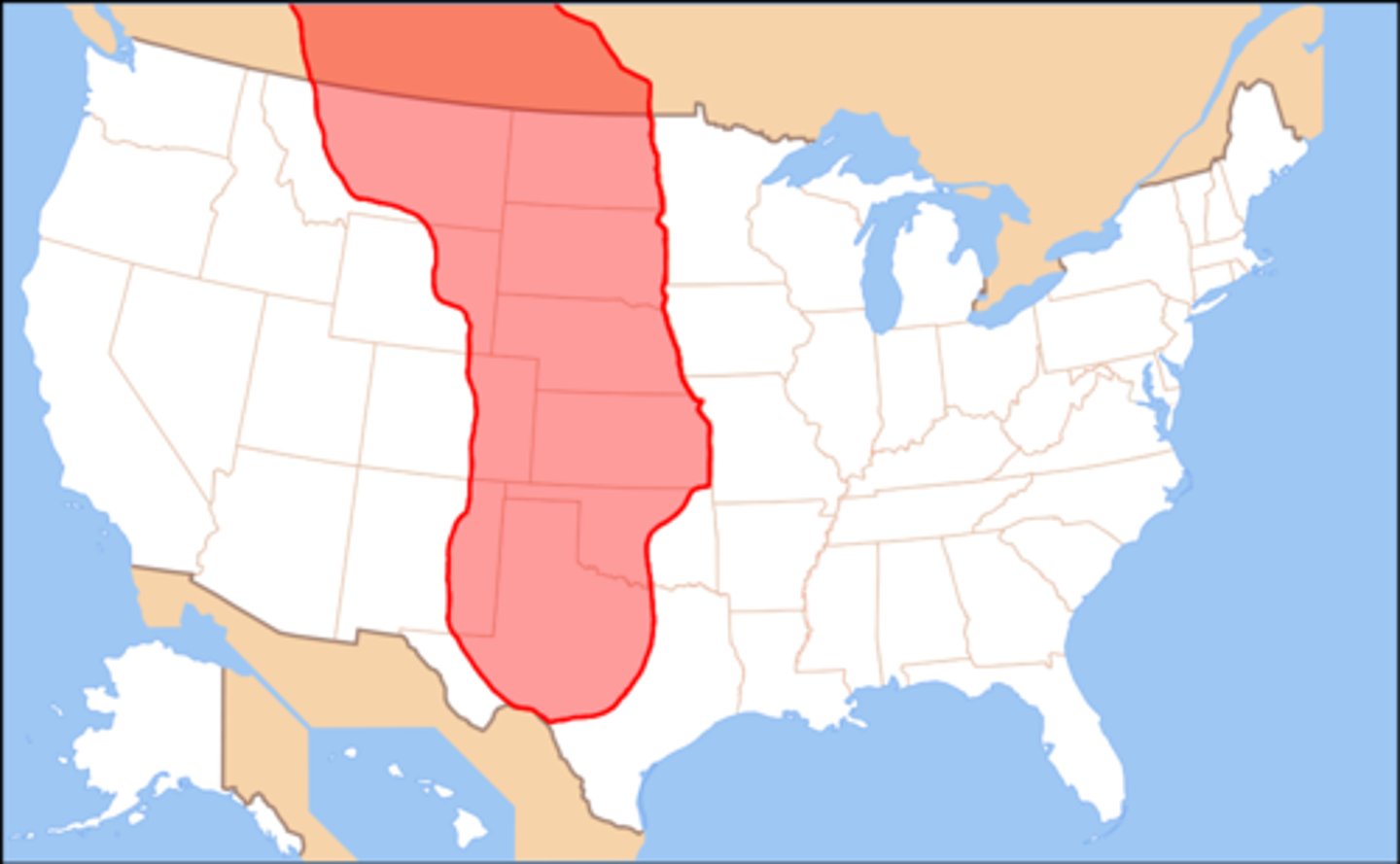
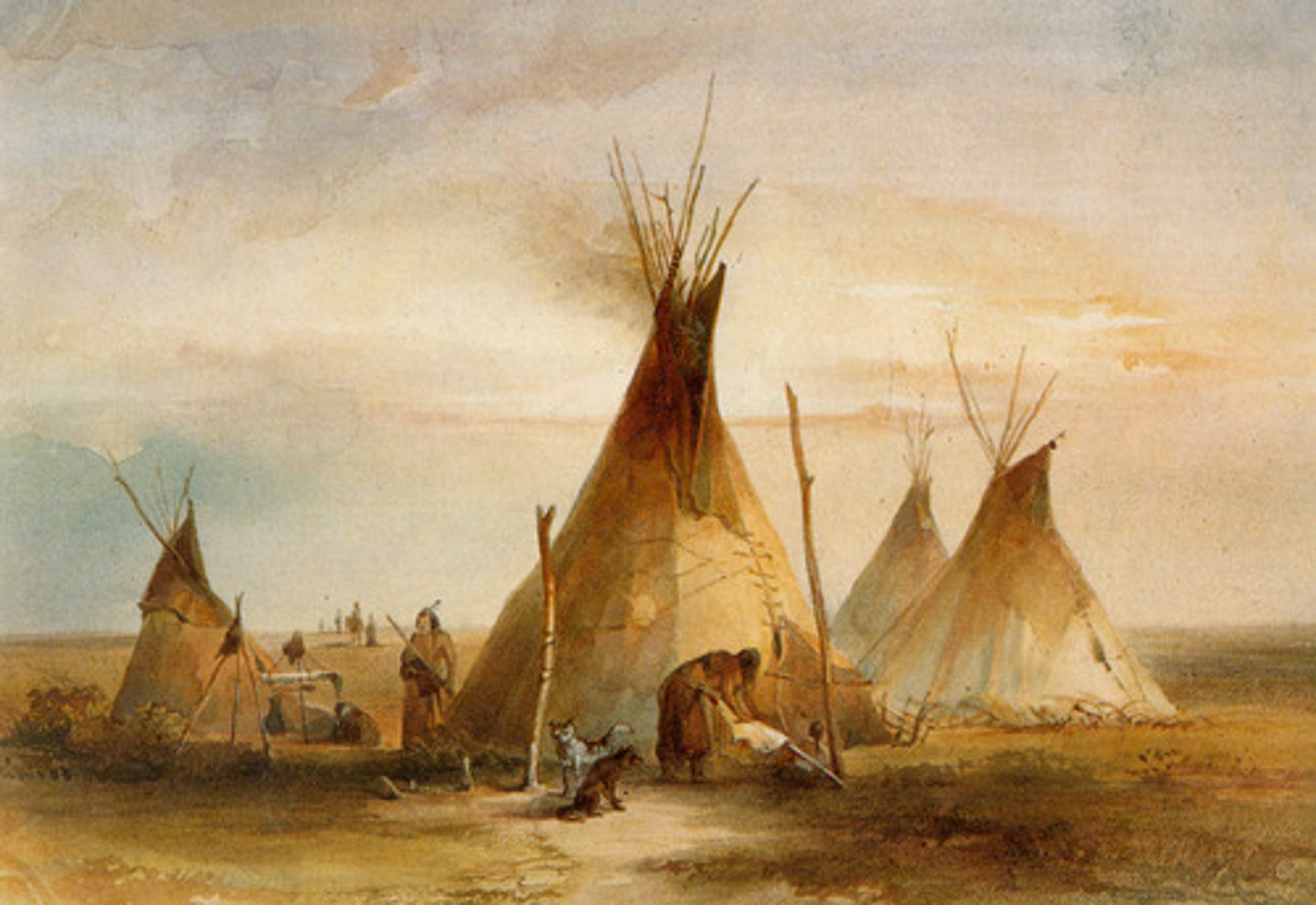
Native Americans lived on THIS, the grasslands in the west-central portion of the United States.
horse
and
Buffalo
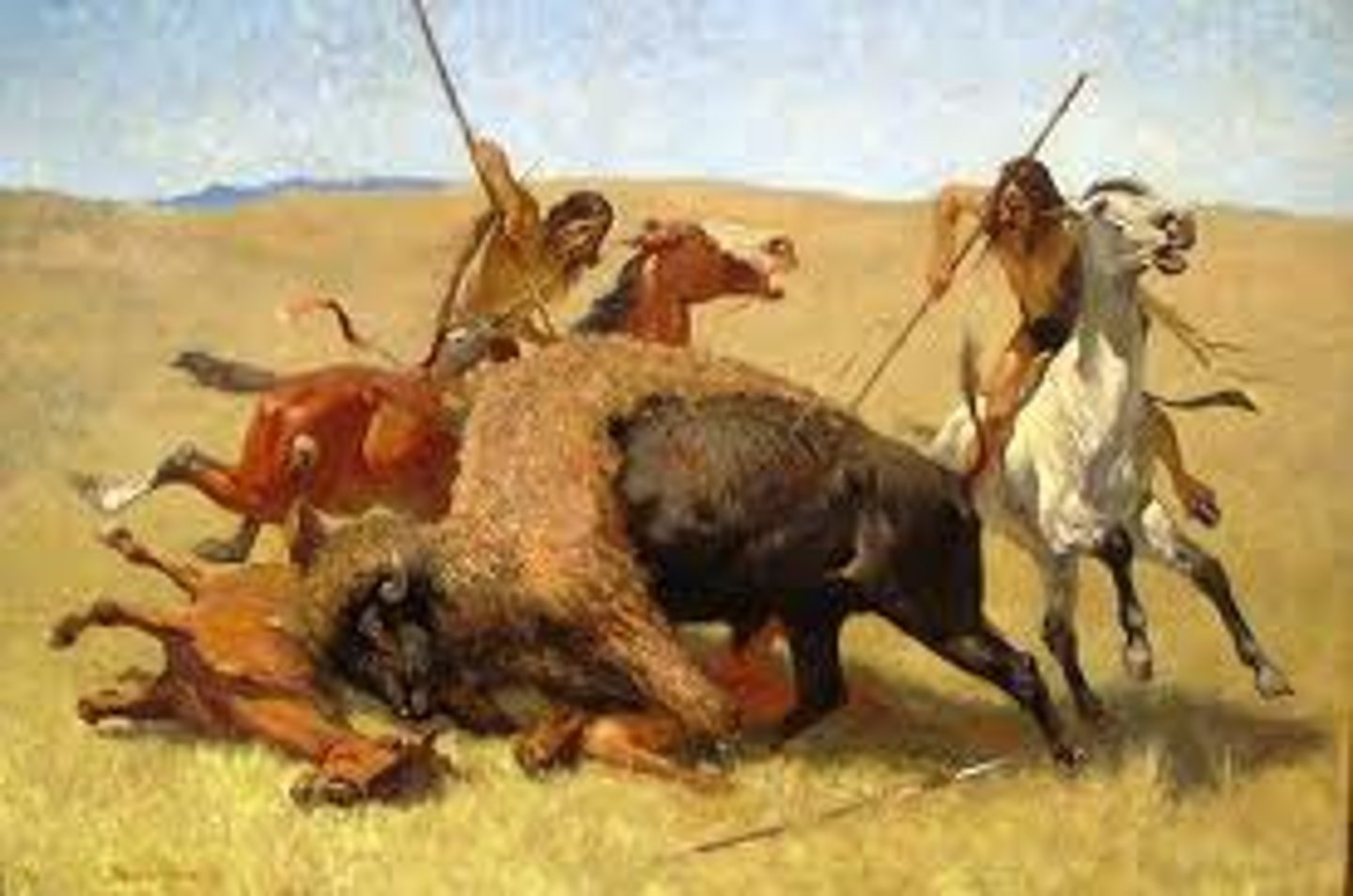
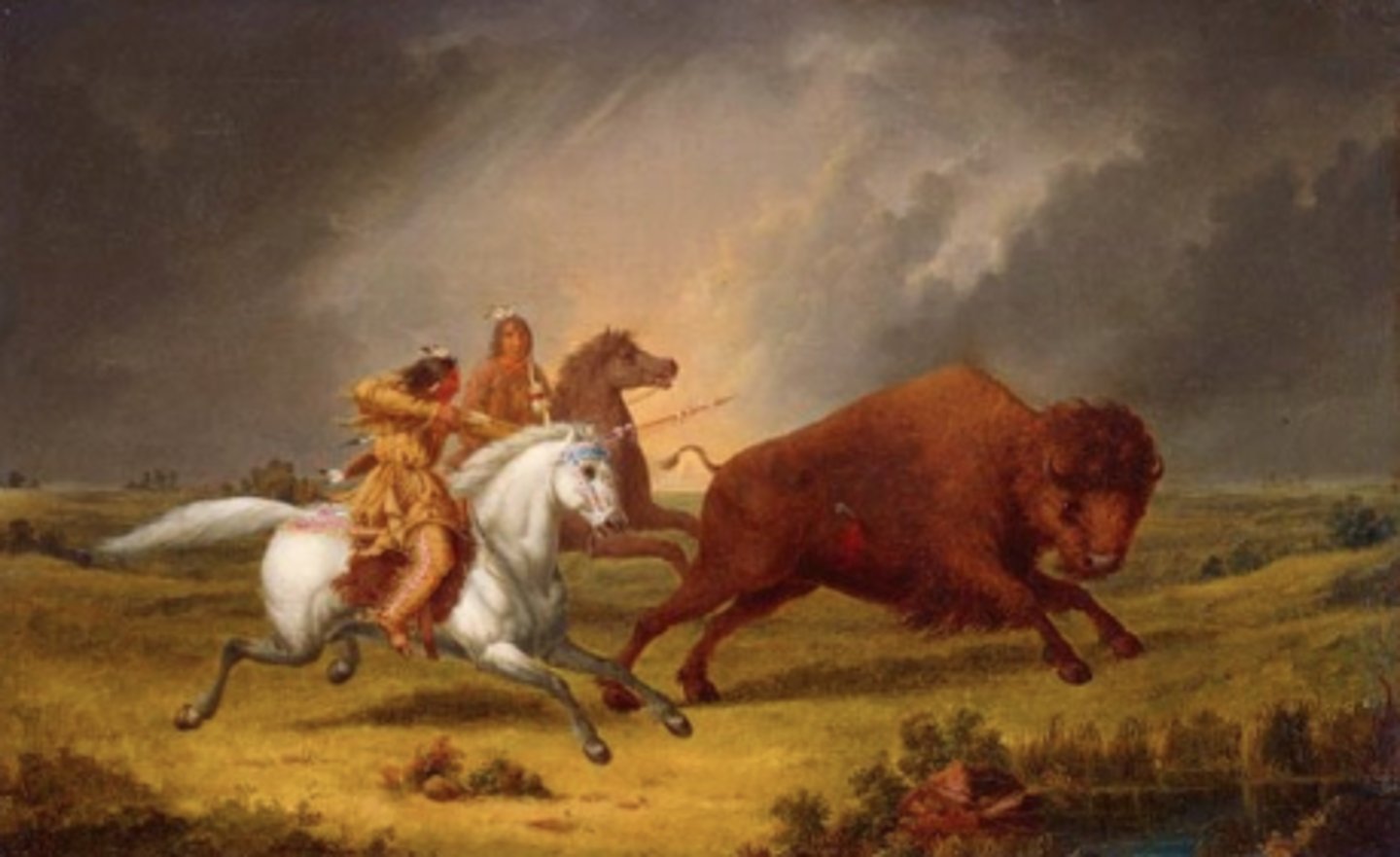
They followed a way of life centered on THESE two animals. THIS allowed Native Americans to hunt more easily and to travel farther. THIS provided food, clothing, shelter, and other important items.
men
The Indians of the Great Plains lived in small extended family groups. THEY hunted for the food.
women
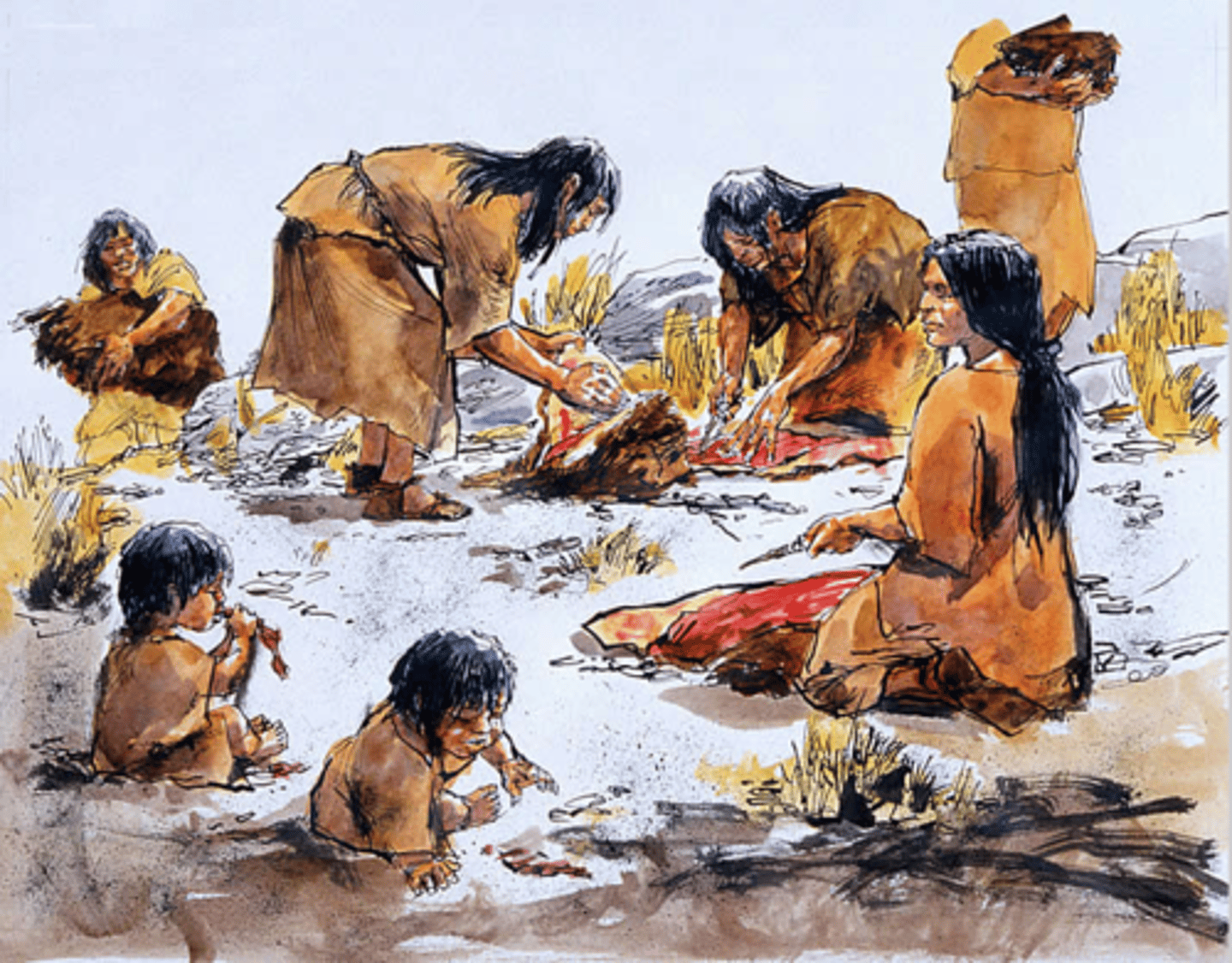
THEY helped butcher the game and prepare the Buffalo hides that the men brought back to camp. Children learned their skills they would need as adults.
searching for gold
own land
After the Civil War, thousands of white settlers moved to the Great Plains. Some traveled there searching for THIS. Others wanted to to own THIS.
settled or improved
White settlers argued that because the Indians had not done THIS, they could stake their claims to it.
THE GOVERNMENT RESTRICTS NATIVE AMERICANS; BLOODY BATTLES CONTINUE!
Why did Indians and settlers fight each other?
THE GOVERNMENT RESTRICTS NATIVE AMERICANS; BLOODY BATTLES CONTINUE!
Why did Indians and settlers fight each other?
land
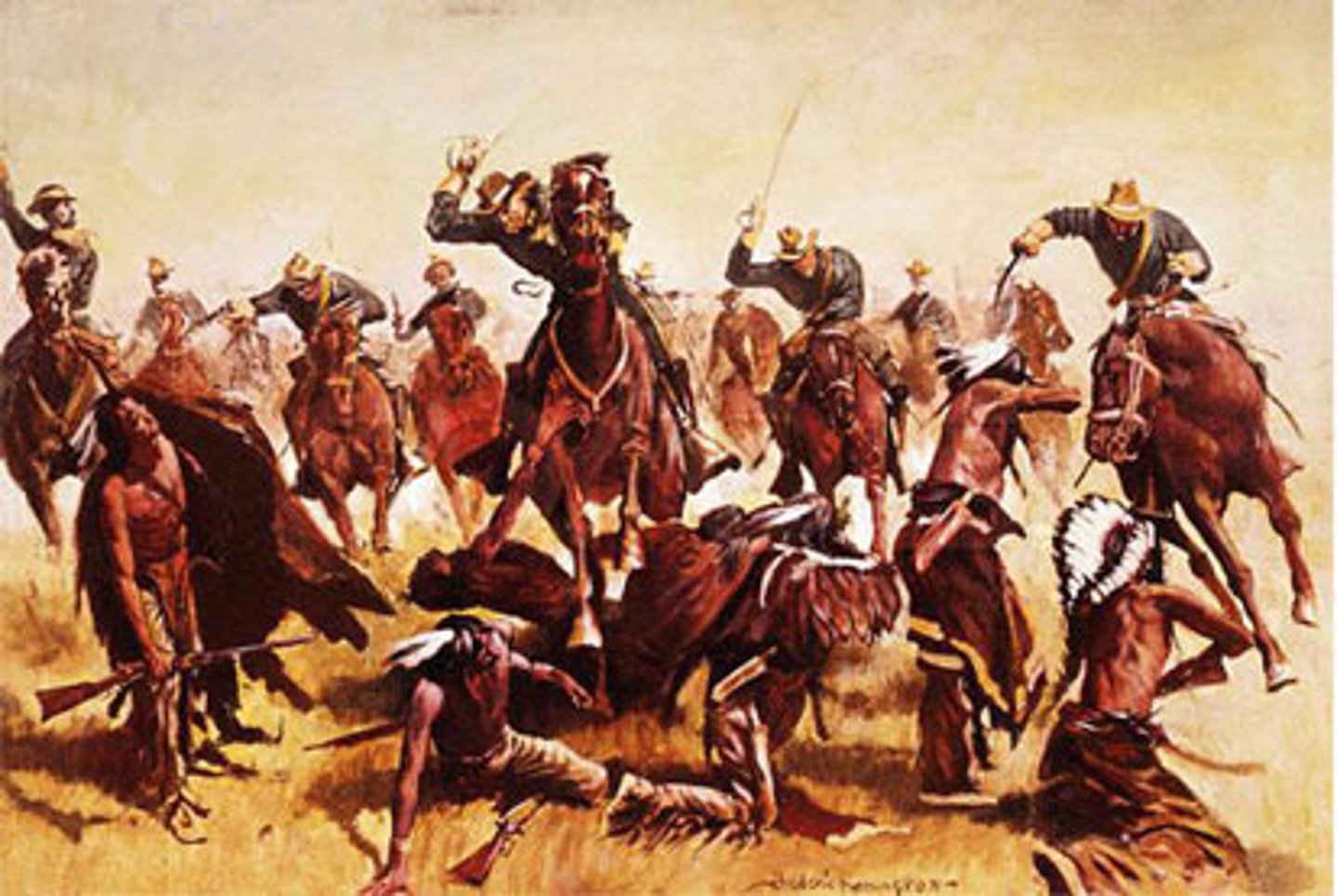
Along the Great Plains, Native Americans and white settlers often clashed-mainly over THIS and resources.
Sand Creek
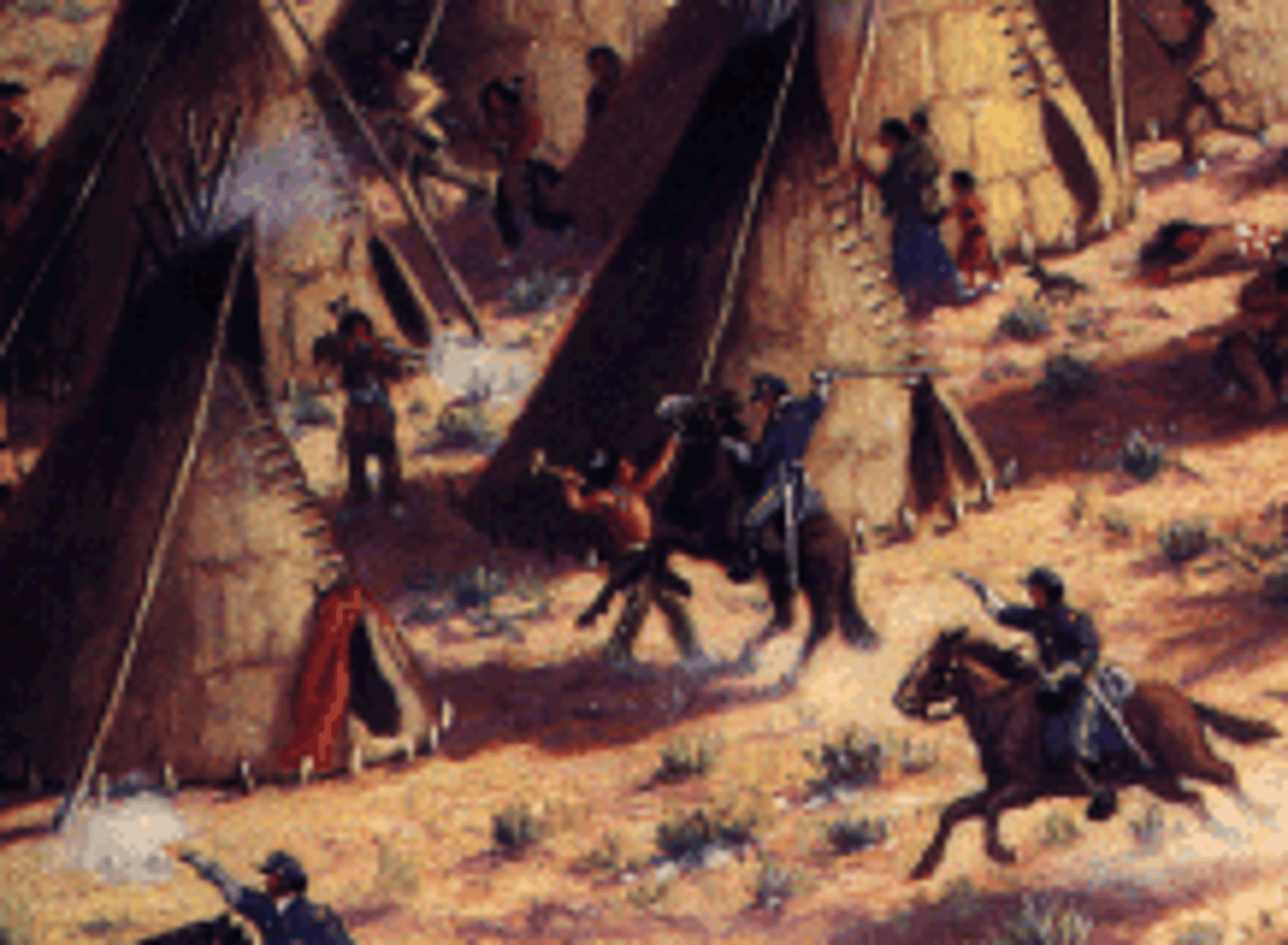
One of the more tragic events occurred in 1864. The army was on the side of the settlers. The Cheyenne, living in the area of the Colorado Territory known as THIS, had attacked settlers.
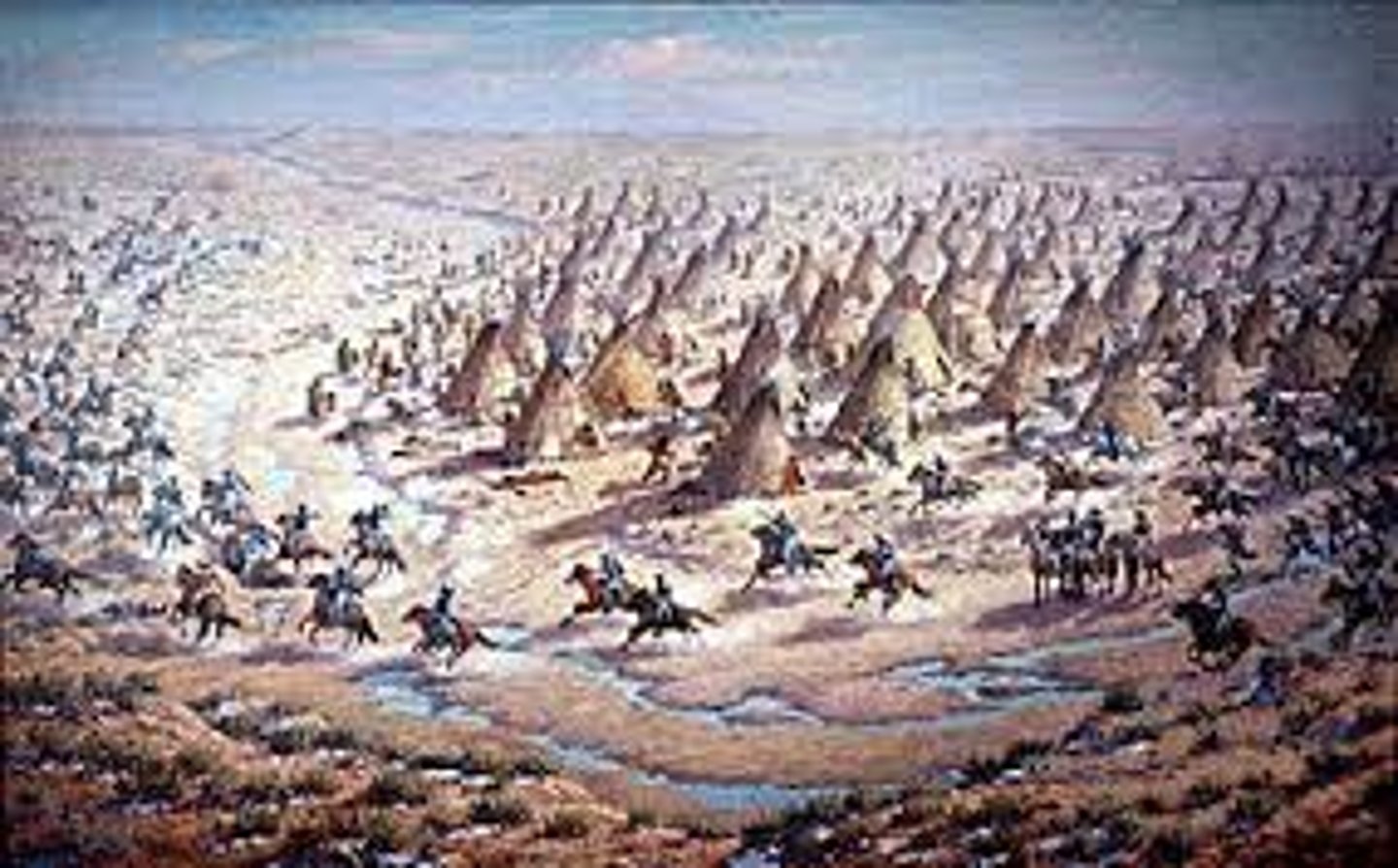
Sand Creek Massacre
In response to the Indian attacks at Sand Creek, the army attacked and killed about 200 Cheyenne in an incident known as THIS.
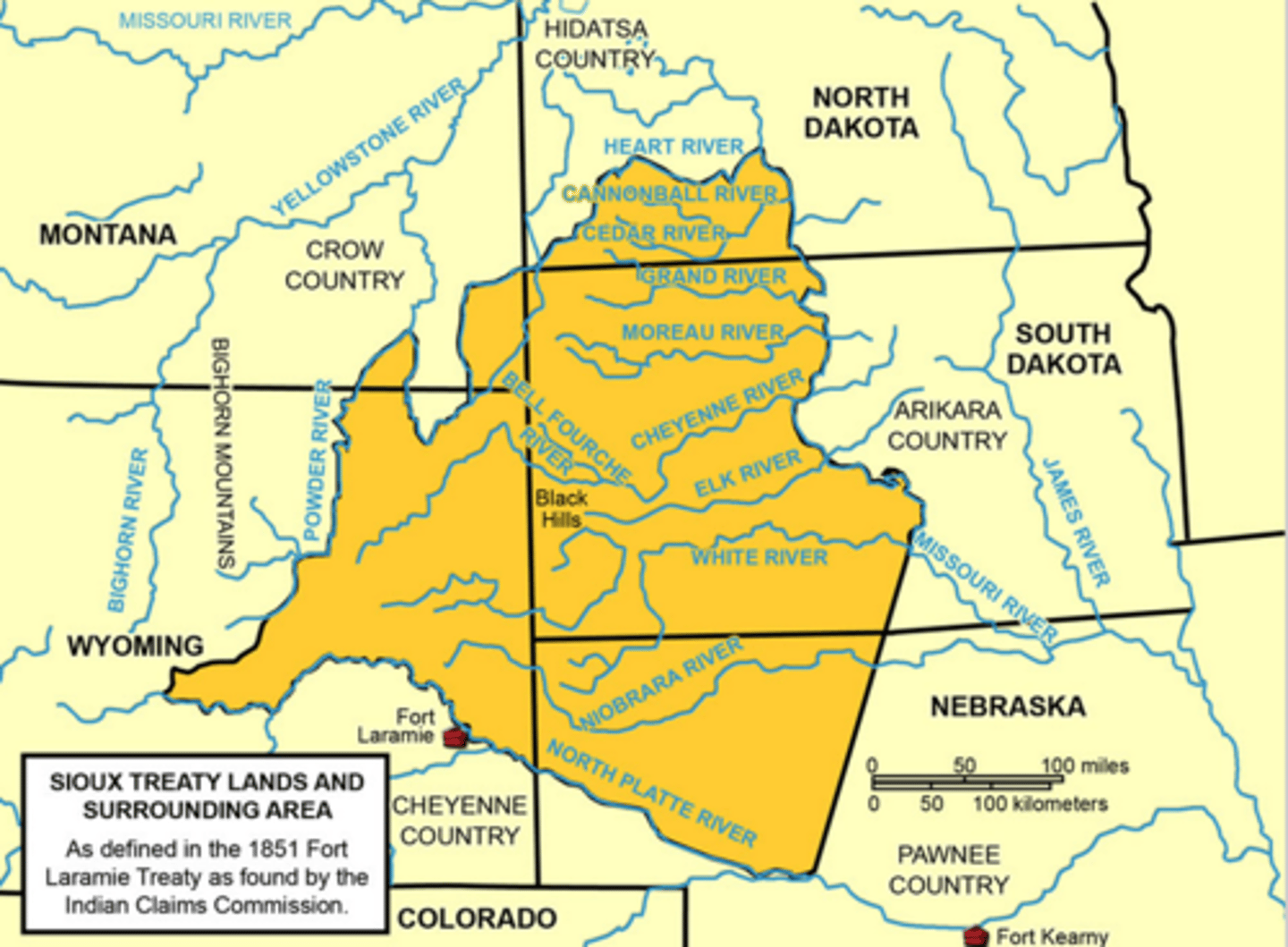
Treaty of Fort Laramie
In THIS treaty, most Sioux agreed to live on a reservation.
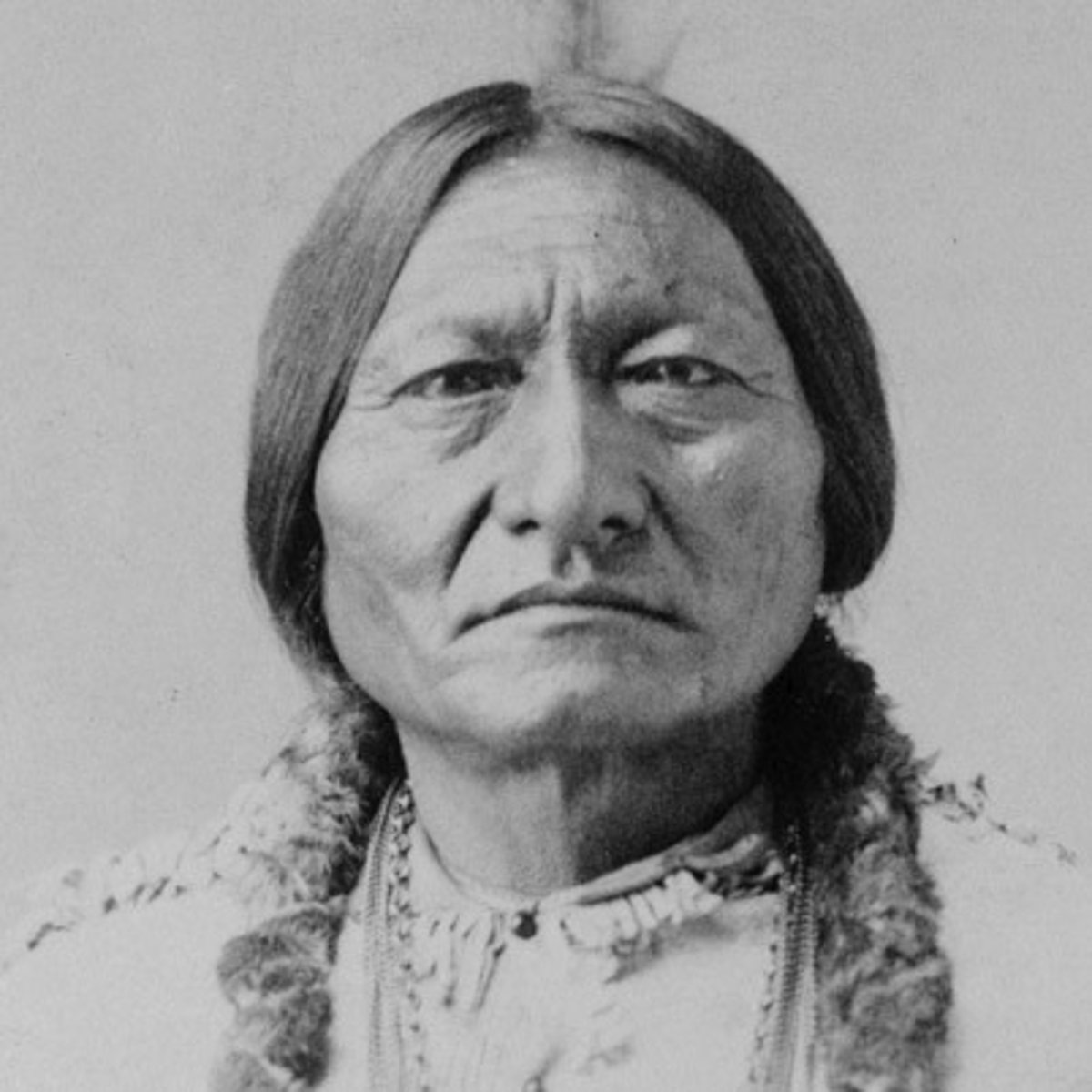
Sitting Bull
THIS important Sioux leader never signed the treaty.
Lt. Colonel George Armstrong Custer
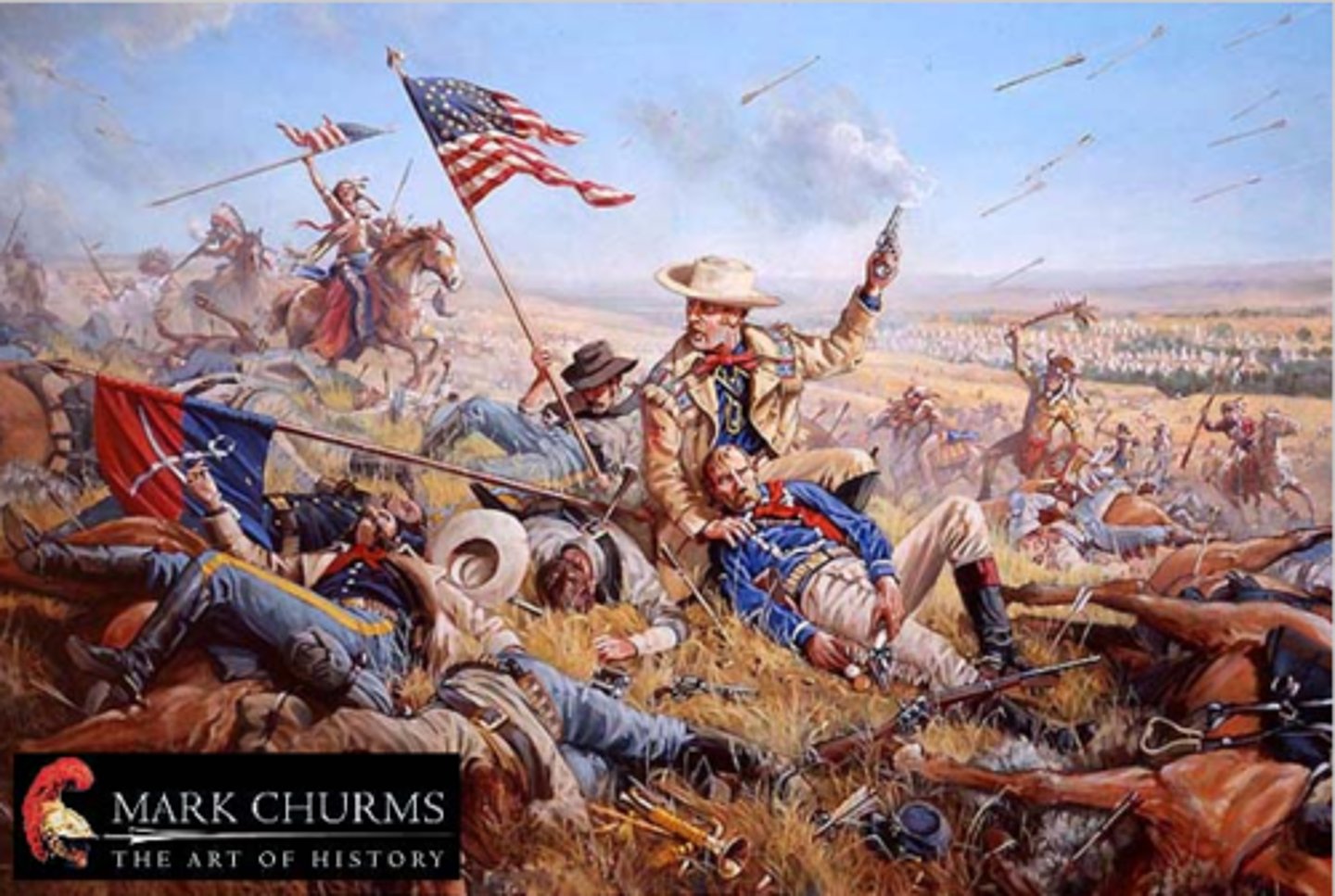
On June 25, 1876, Sitting Bull defeated army troops led by THIS Lt. Colonel at the Battle of the Little Big Horn.
Crazy Horse
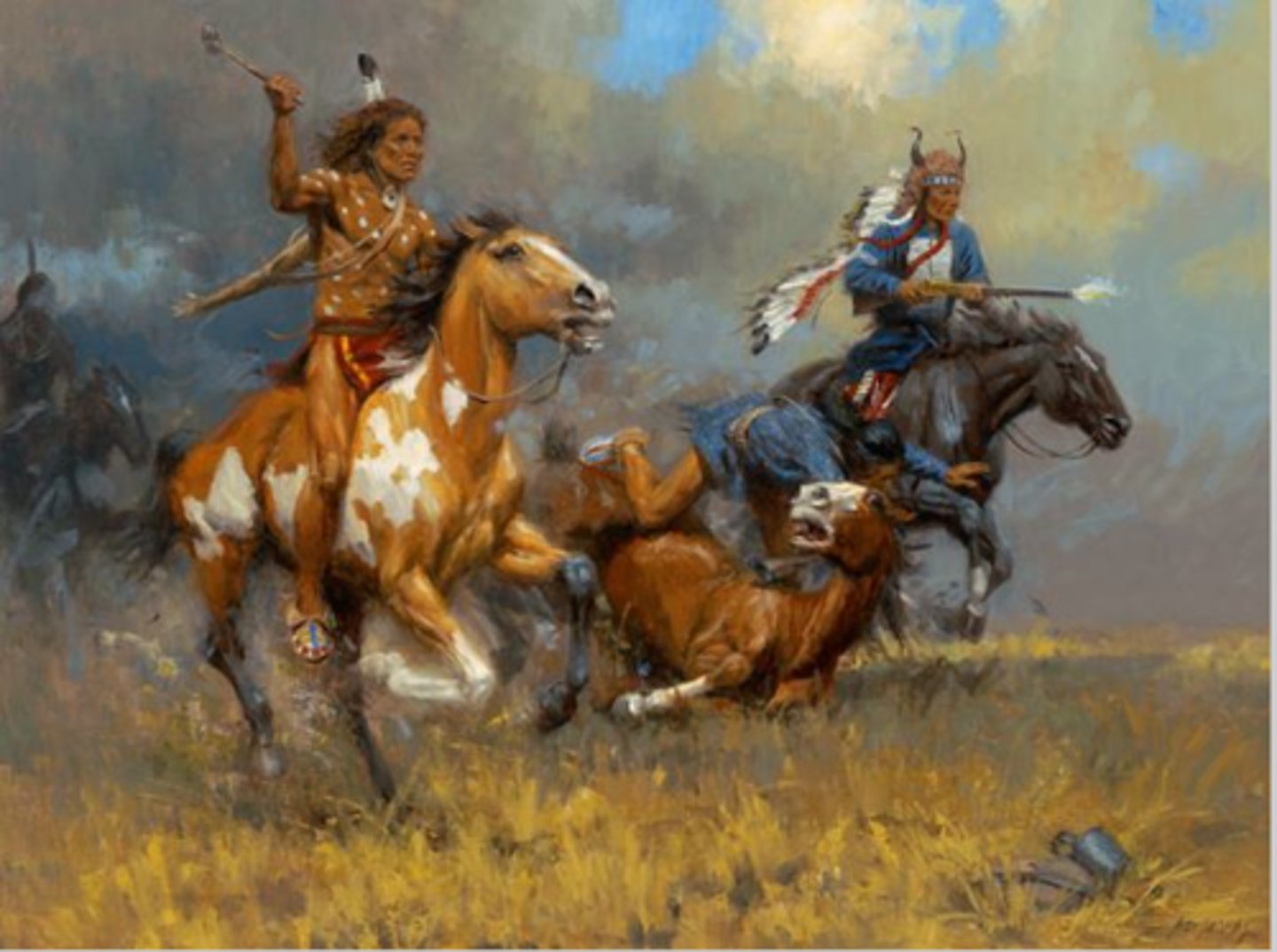
Determined to resist the efforts of the U.S. Army to force them onto reservations, Indians under the leadership of Sitting Bull and THIS Lakota/Sioux leader wiped out Lieutenant Colonel George Custer and much of his 7th Cavalry at the Battle of the Little Big Horn.
THE GOVERNMENT SUPPORTS ASSIMILATION; THE "BATTLE OF WOUNDED KNEE"!
Why did assimilation fail?
THE GOVERNMENT SUPPORTS ASSIMILATION; THE "BATTLE OF WOUNDED KNEE"!
Why did assimilation fail?
assimilation
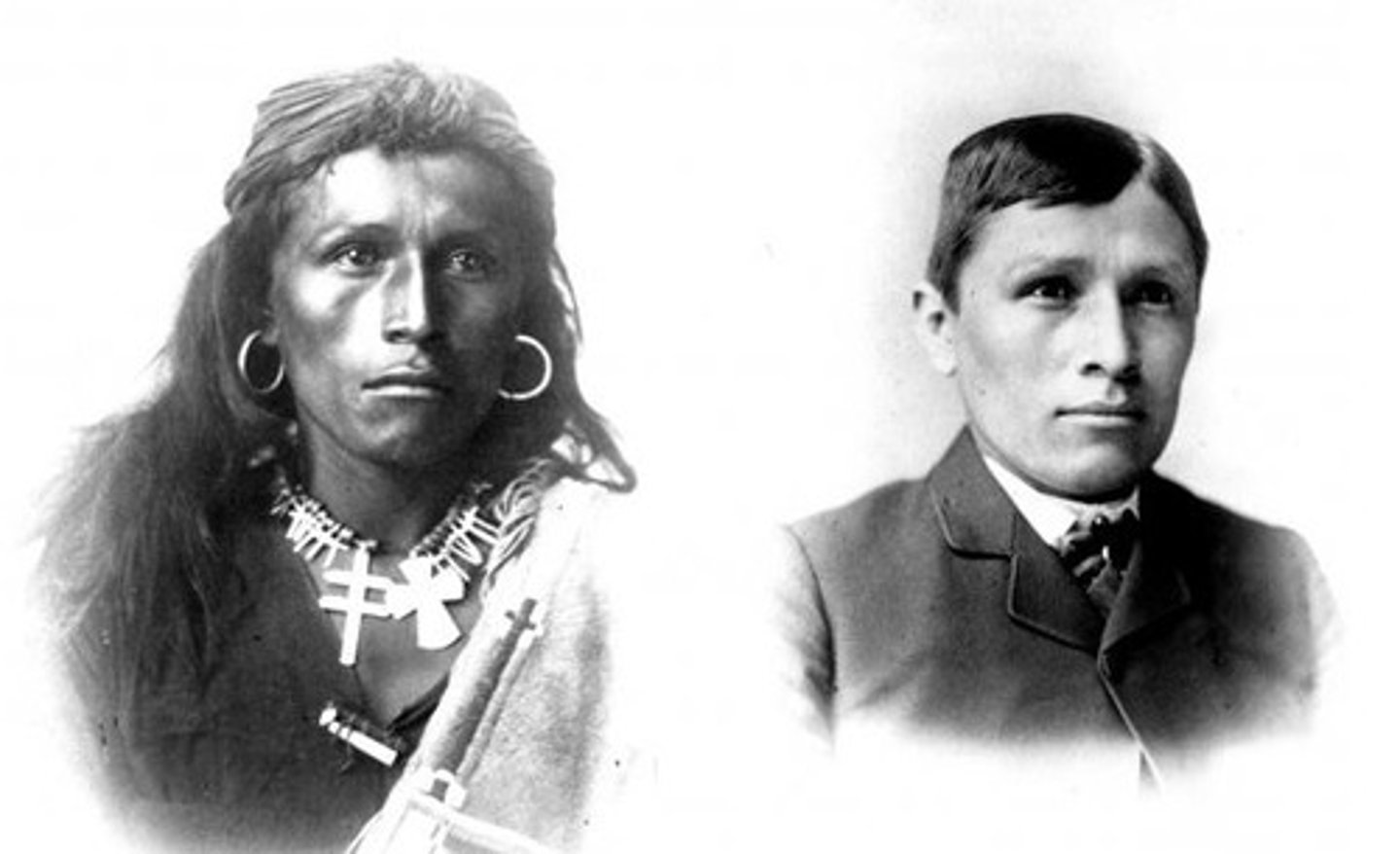
To deal with the Native American problem, the U.S. government adopted THIS plan. In this plan, Native Americans would give up theur beliefs and culture to become part of white culture.
Dawes Act of 1887
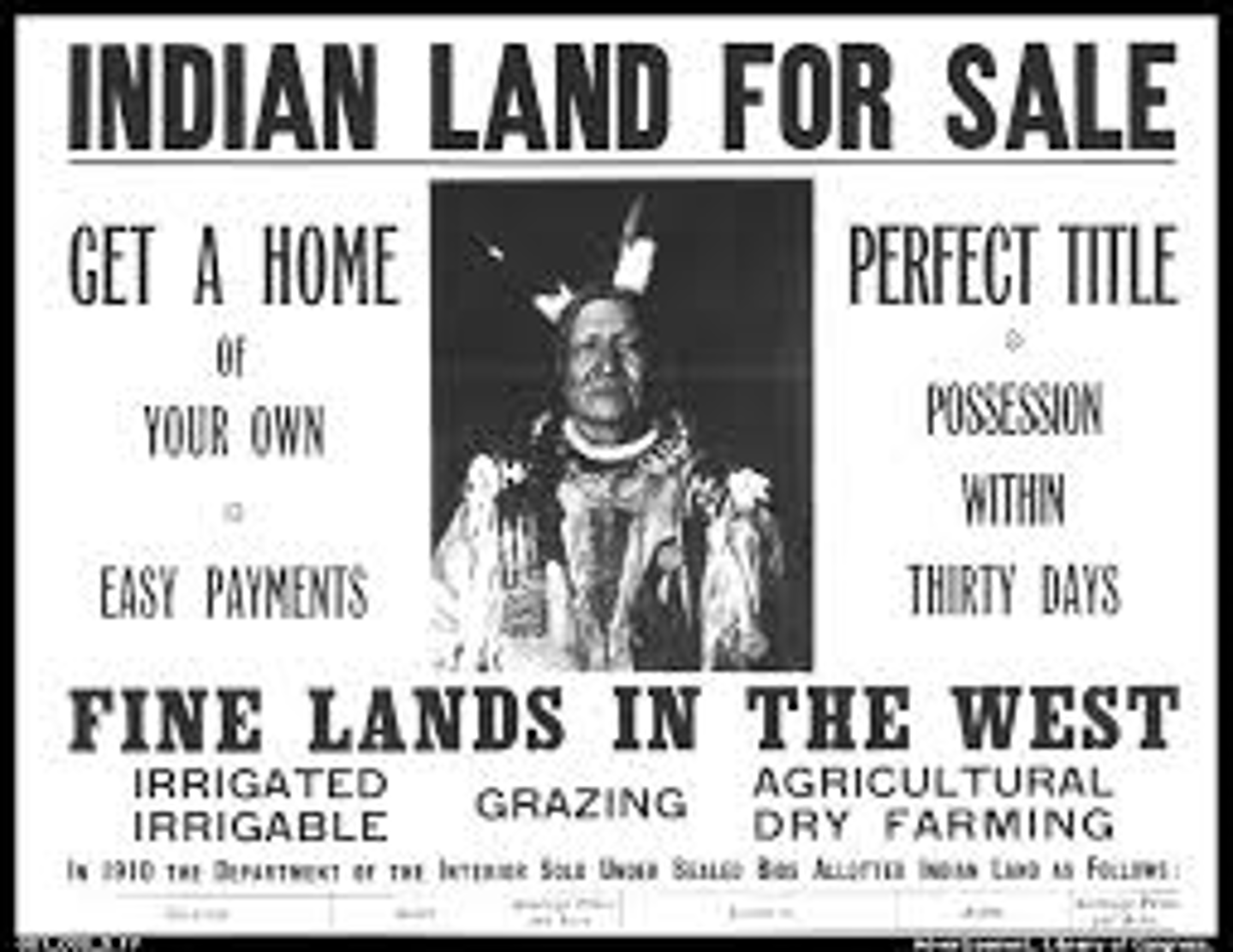
To push assimilation, Congress passed THIS in 1887. The act broke up reservations but and gave some of the land to each Native American family for farming. The plan, however, failed. Native American were cheated out of the best land. As a result, they had little success farming.
Buffalo
Before 1800s - more than 50 million
by 1900 - less than 700
today 250,000 in Canada
today 250,000 in U.S.
In addition to the Dawes Act, by 1900, whites killed nearly all of THESE. Native American depended on them for their food, clothing, and shelter.
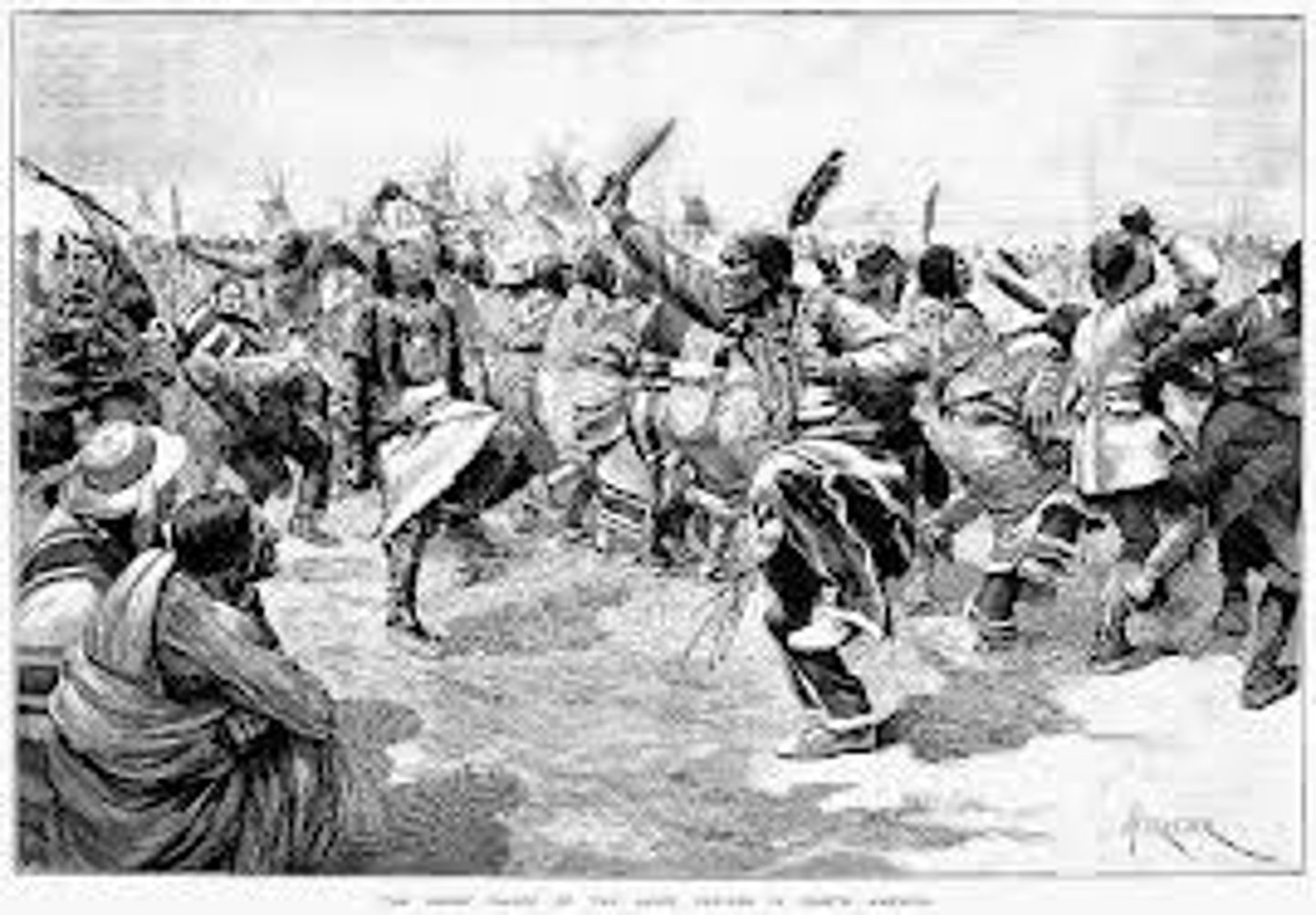
the Ghost Dance
The Sioux adopted a ritual called THIS which they hoped would bring the Buffalo back and make the white man go away.
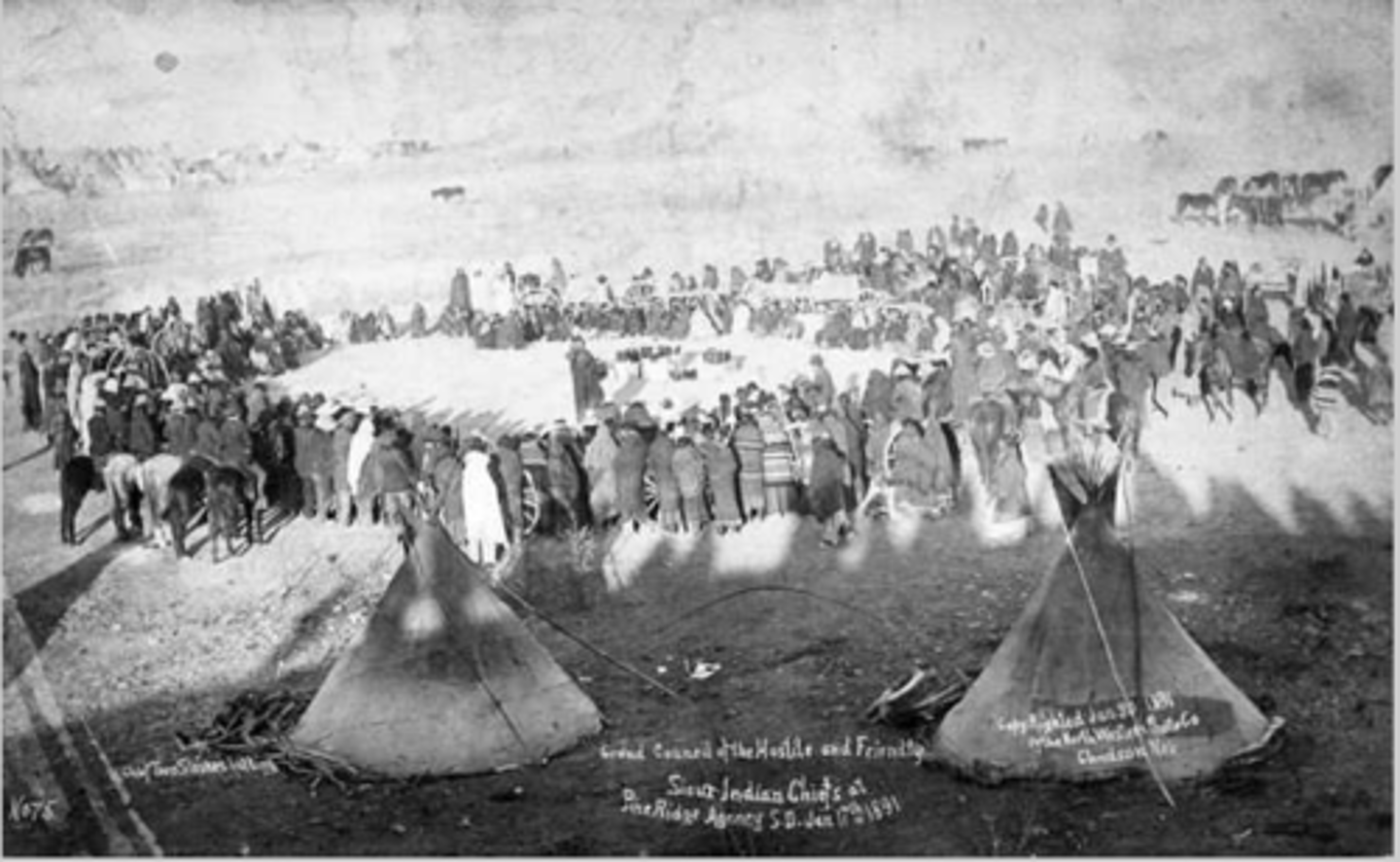
Battle of Wounded Knee
The Ghost Dance made the army nervous. In 1890 rounded up a group of Sioux including Sitting Bull. When they tried to take the Sioux's weapons a fight broke out. Army troops of the 7th Calvary killed more than 300 unarmed Sioux at AKA THIS.
CATTLE BECOMES BIG BUSINESS; A DAY IN THE LIFE OF A COWBOY; THE END OF THE OPEN RANGE!
What caused the cattle business to grow?
CATTLE BECOMES BIG BUSINESS; A DAY IN THE LIFE OF A COWBOY; THE END OF THE OPEN RANGE!
What caused the cattle business to grow?
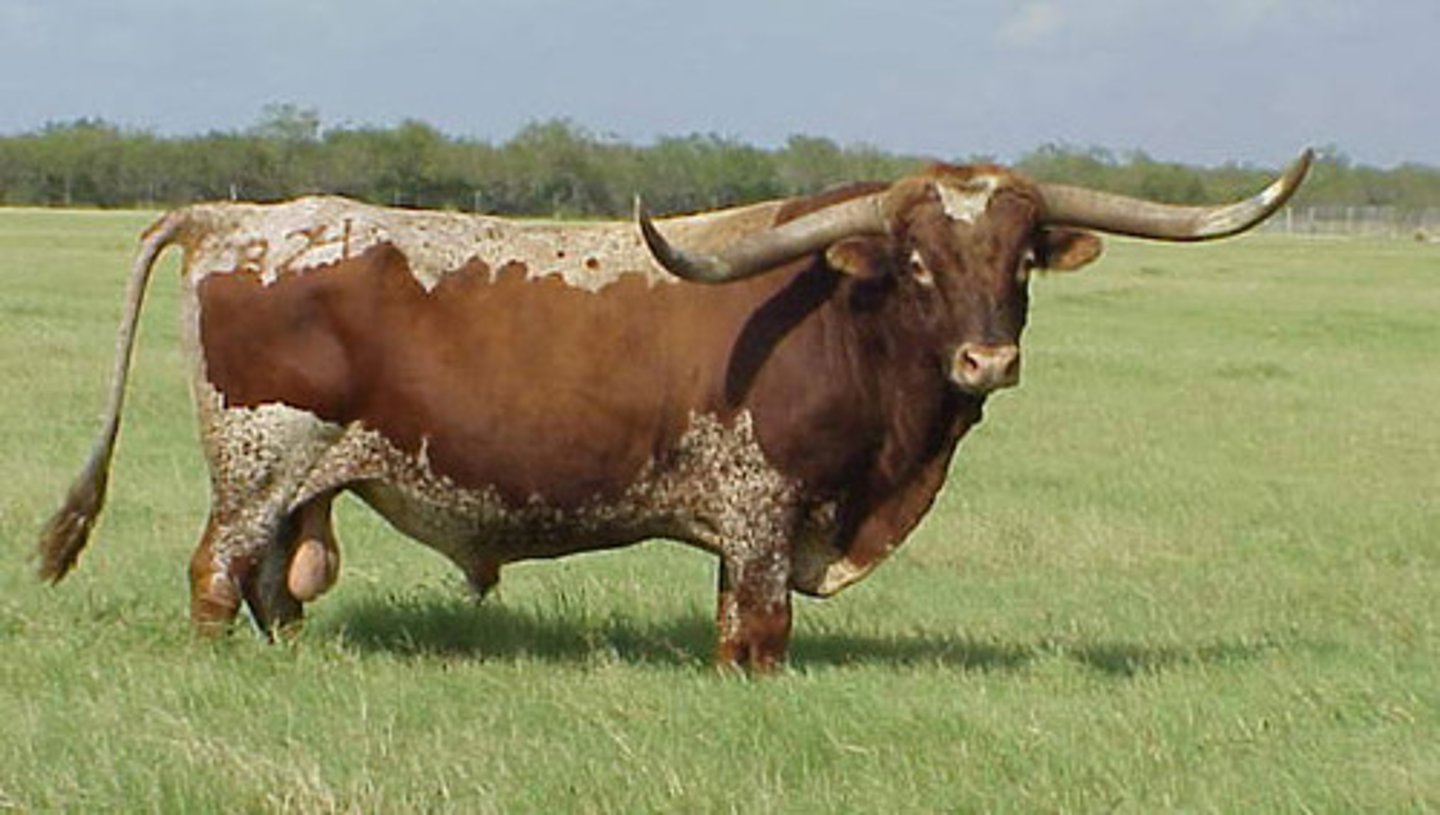
longhorns
Cattle ranching became a big business after the Civil War. Ranchers raised THESE, a sturdy breed first brought to the Americas by the Spanish.
Vaqueros
American cowboys learned from THESE, the first cowboys who worked on Spanish ranches in Mexico.
Chisholm Trail
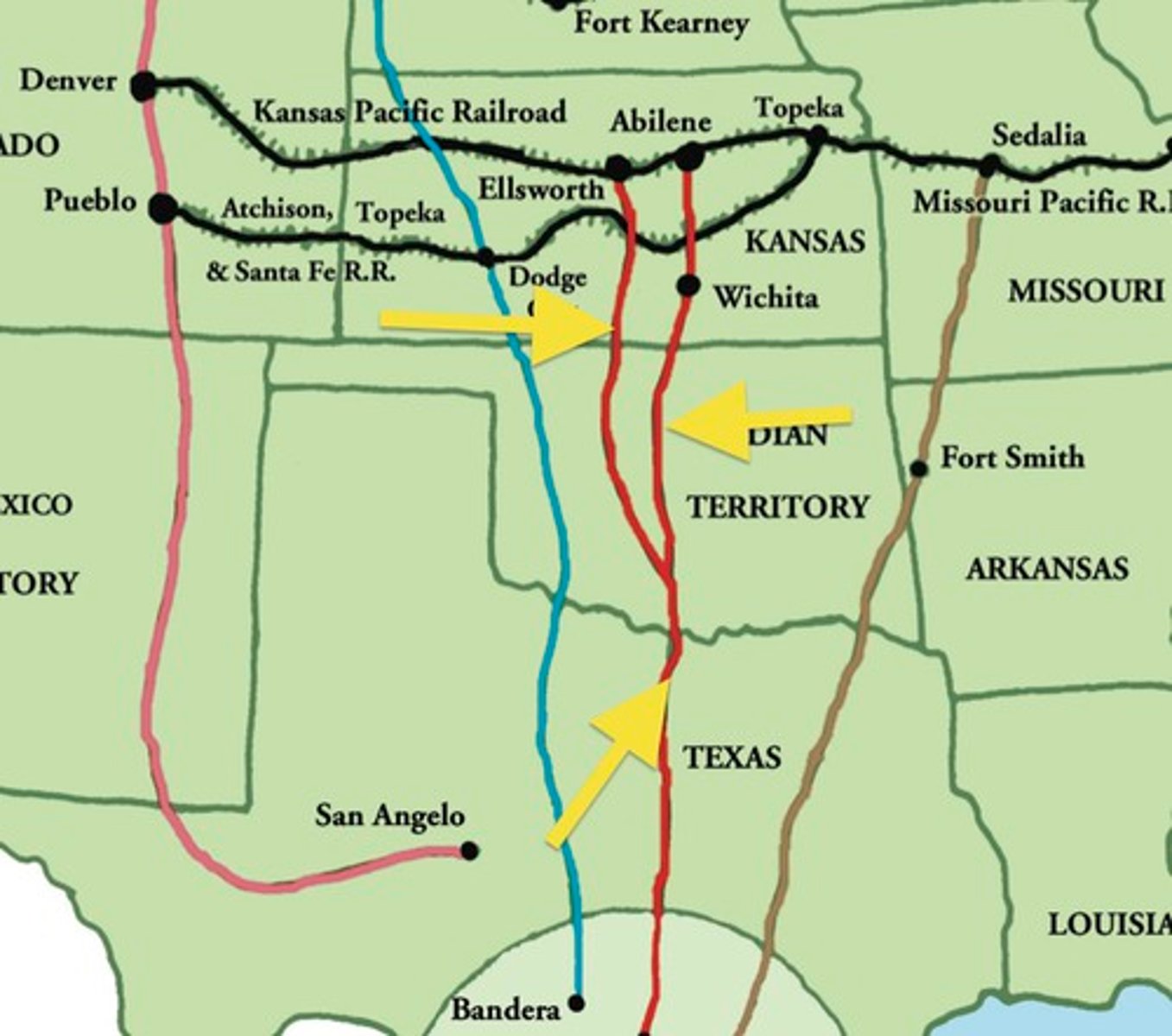
Growing cities spurred the demand for beef. Cattle ranchers drove their cattle over THIS from San Antonio, Texas, to Kansas where they shipped by rail to Chicago.
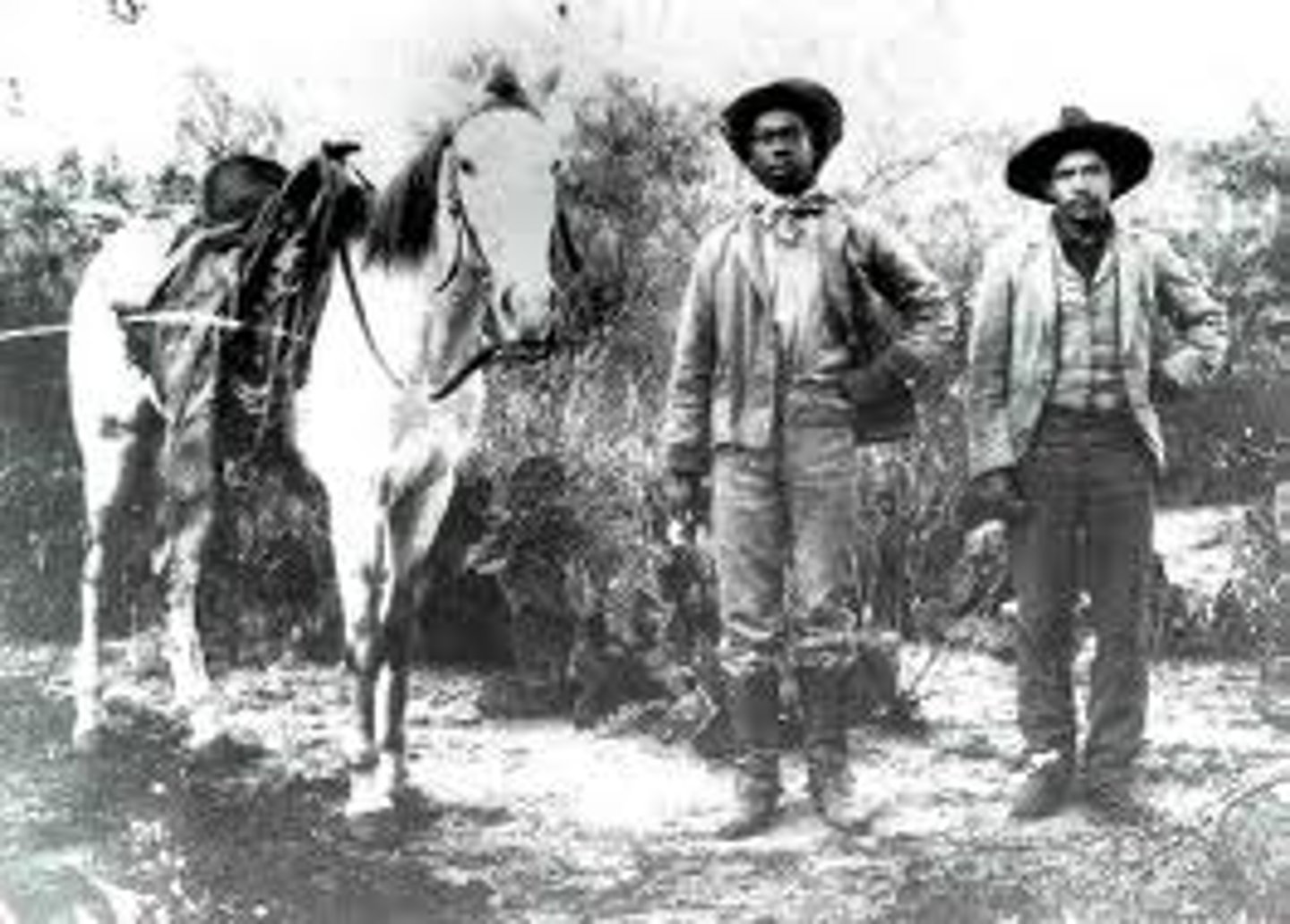
12% - Mexican
25% - African American
Between 1866 and 1885, about 55,000 cowboys worked on the plains. About 12% of these cowboys were THIS and bout 25% were THIS.
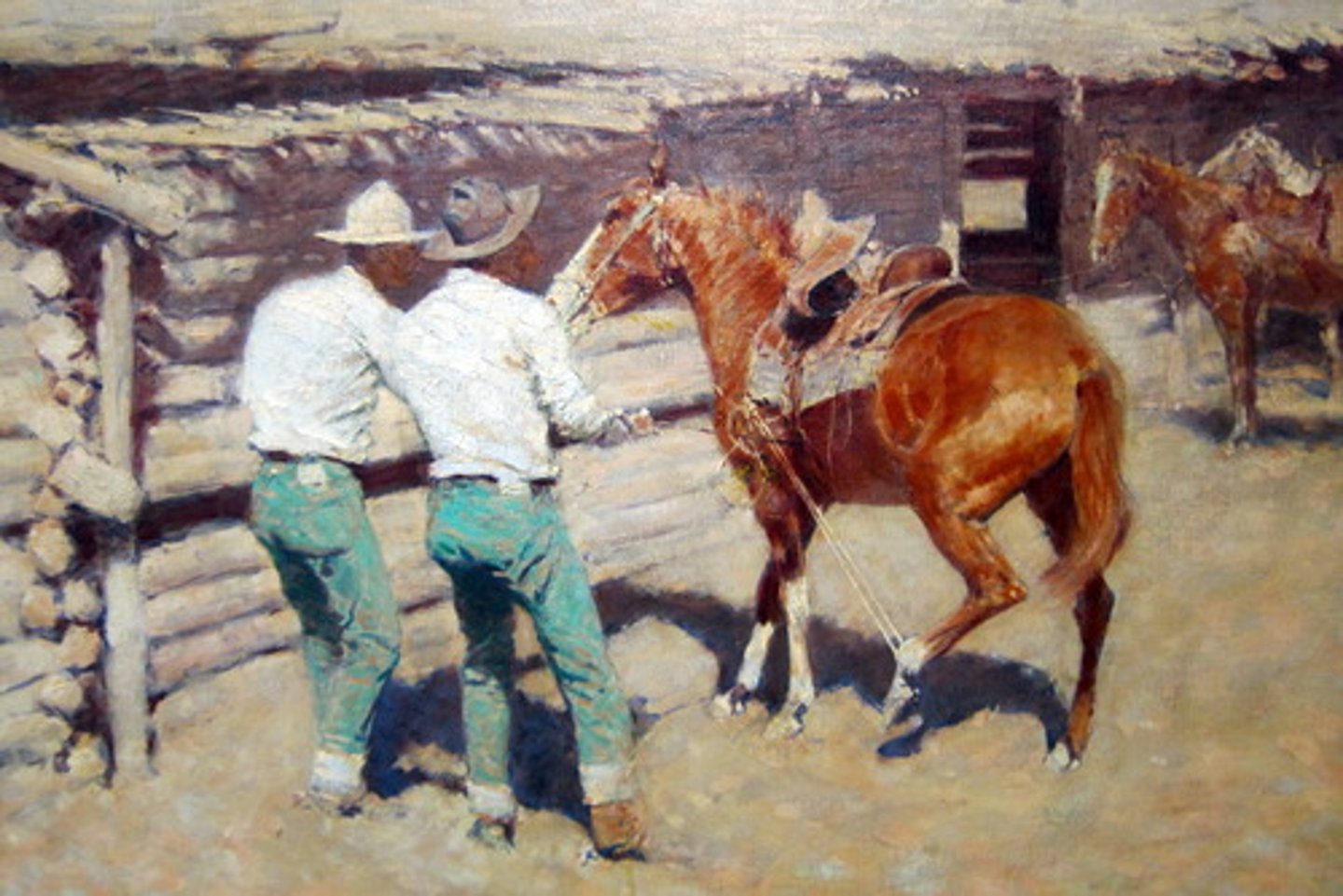
A cowboy's life was difficult. Cowboys worked between 10 and 14 hours a day in all kinds of weather. They worked hard all spring and summer. In the winter they lived off their savings or went from ranch to ranch looking for odd jobs. (NO QUESTION)
A cowboy's life was difficult. Cowboys worked between 10 and 14 hours a day in all kinds of weather. They worked hard all spring and summer. In the winter they lived off their savings or went from ranch to ranch looking for odd jobs. (NO QUESTION)
the long drive
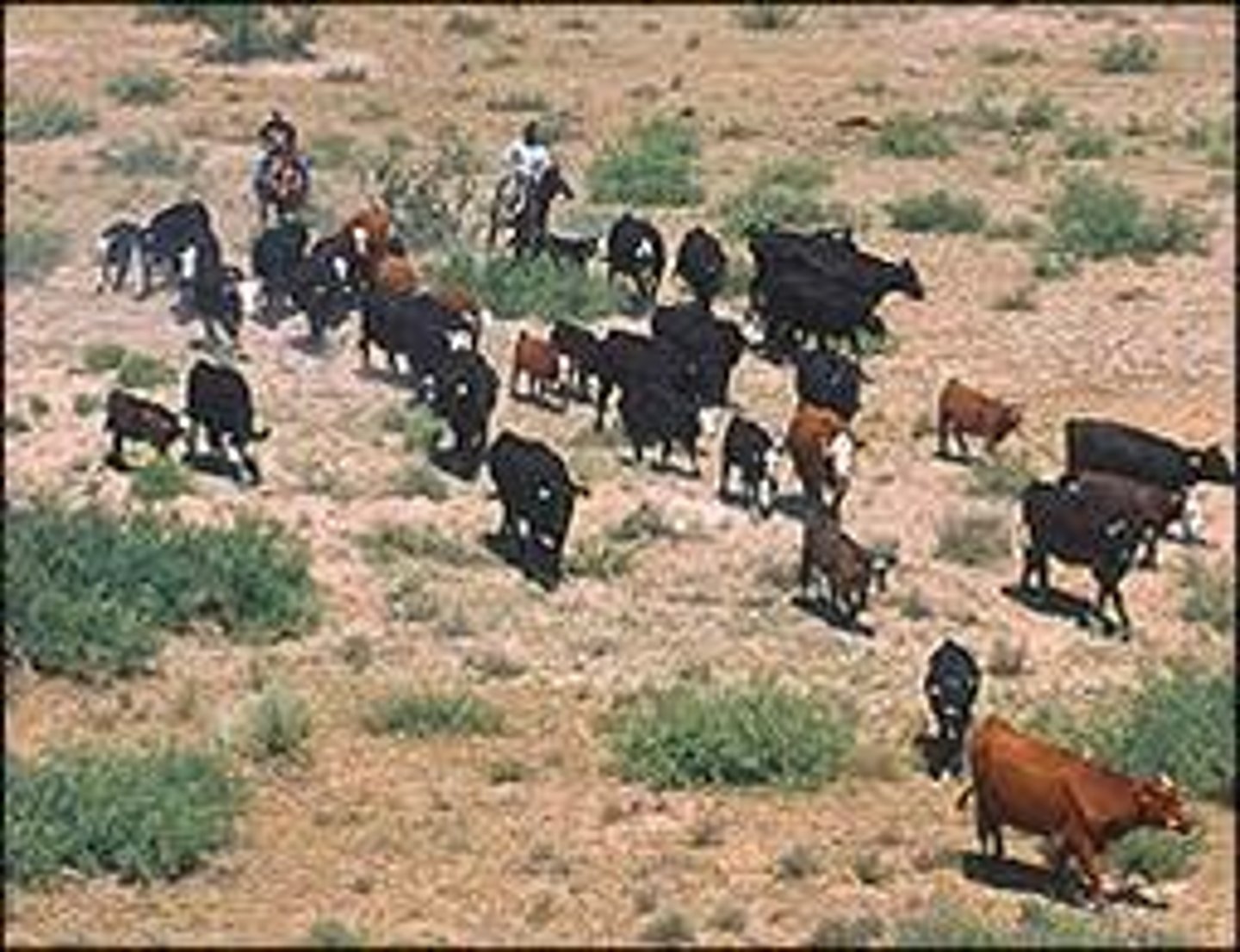
In the spring, cowboys rounded up their cattle and headed them out on THIS. This was the journey from the plains to the shipping yards in Abilene, Kansas.
barbed wire
The days of the open range and the cattle drive did not last long. Bad weather in the 1880s wiped out many ranchers. Others started using THIS to fence off their ranches.
(5:2) Settling on the Great Plains
(5:2) Settling on the Great Plains
Objective: Discuss and explain about life on the Great Plains for men and women who settled there in search of land and prosperity.
Objective: Discuss and explain about life on the Great Plains for men and women who settled there in search of land and prosperity.
SETTLERS MOVE WESTWARD TO FARM!
How did the U.S. get people to go west?
SETTLERS MOVE WESTWARD TO FARM!
How did the U.S. get people to go west?
transcontinental railroads
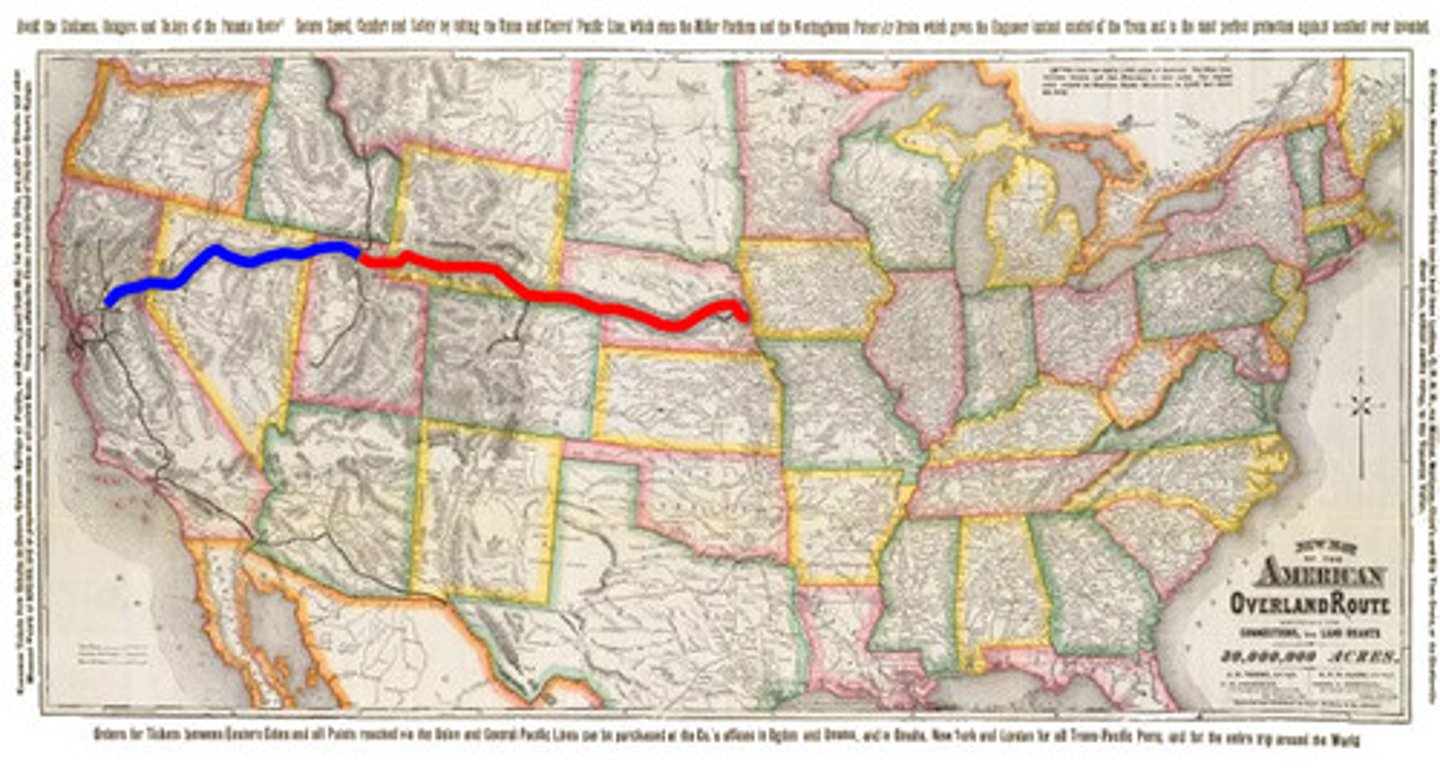
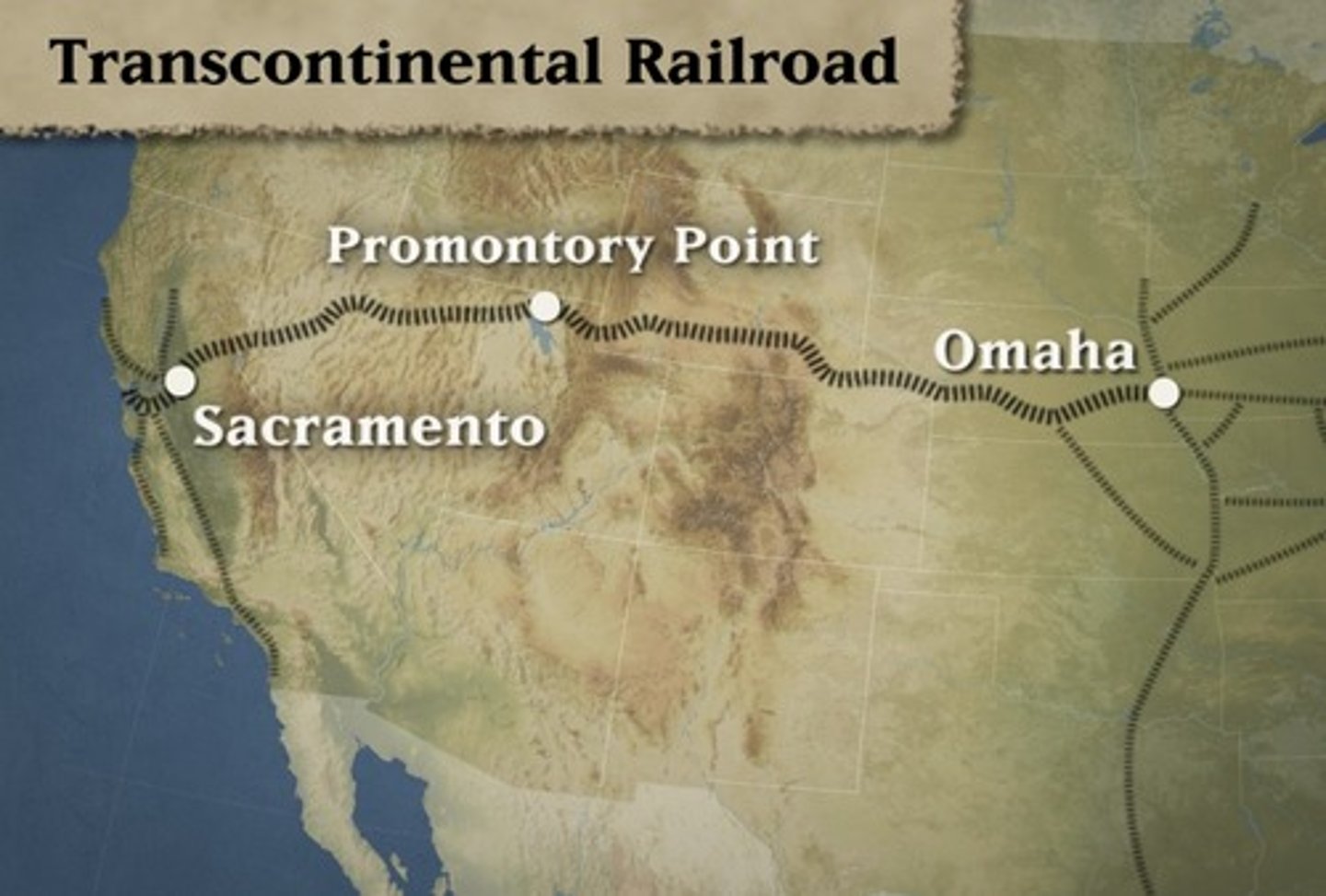
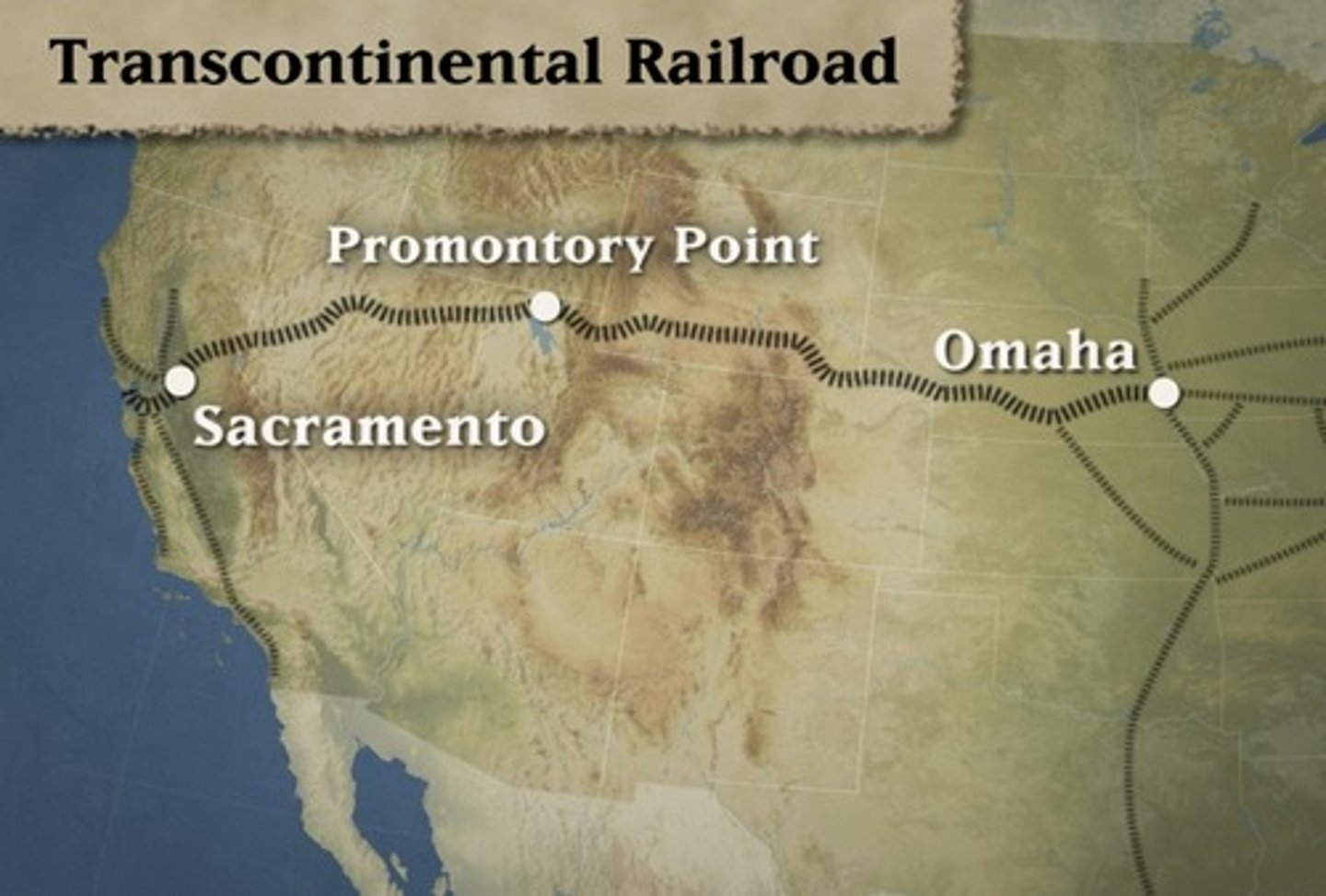
More and more people migrated to the Great Plains with the building of THIS. From 1850 to 1871, the federal government gave huge tracts of land to companies ready to lay lay tracks through the west.
Central Pacific company
In 1867, THIS company began by laying tracks from Sacramento, California.
Union Pacific
Another railroad company, the THIS company, began laying tracks from Omaha, Nebraska.
Irish - Union Pacific
and
Chinese - Central Pacific
Much of the work on the construction of the transcontinental railroad was done by THESE immigrant groups
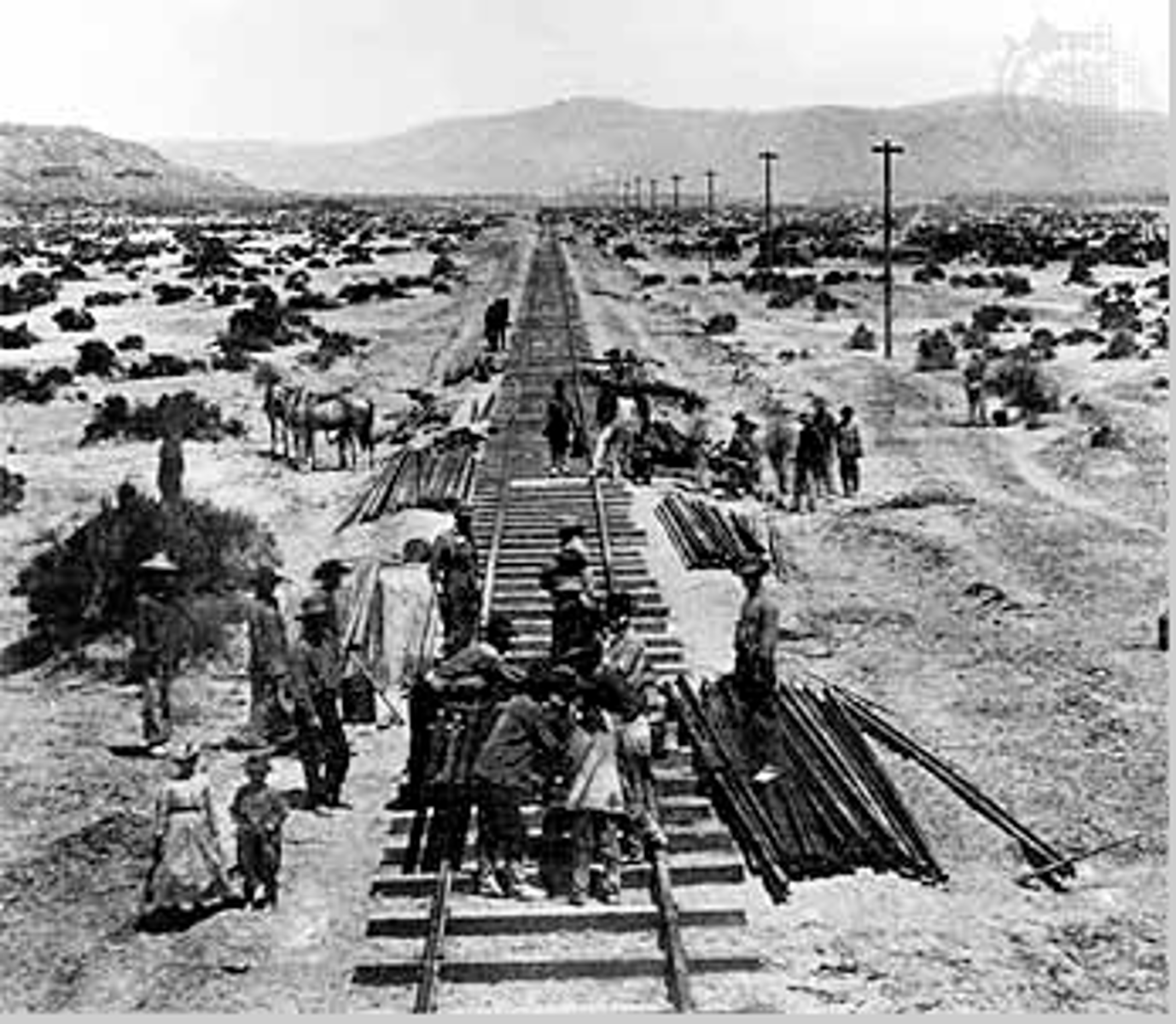
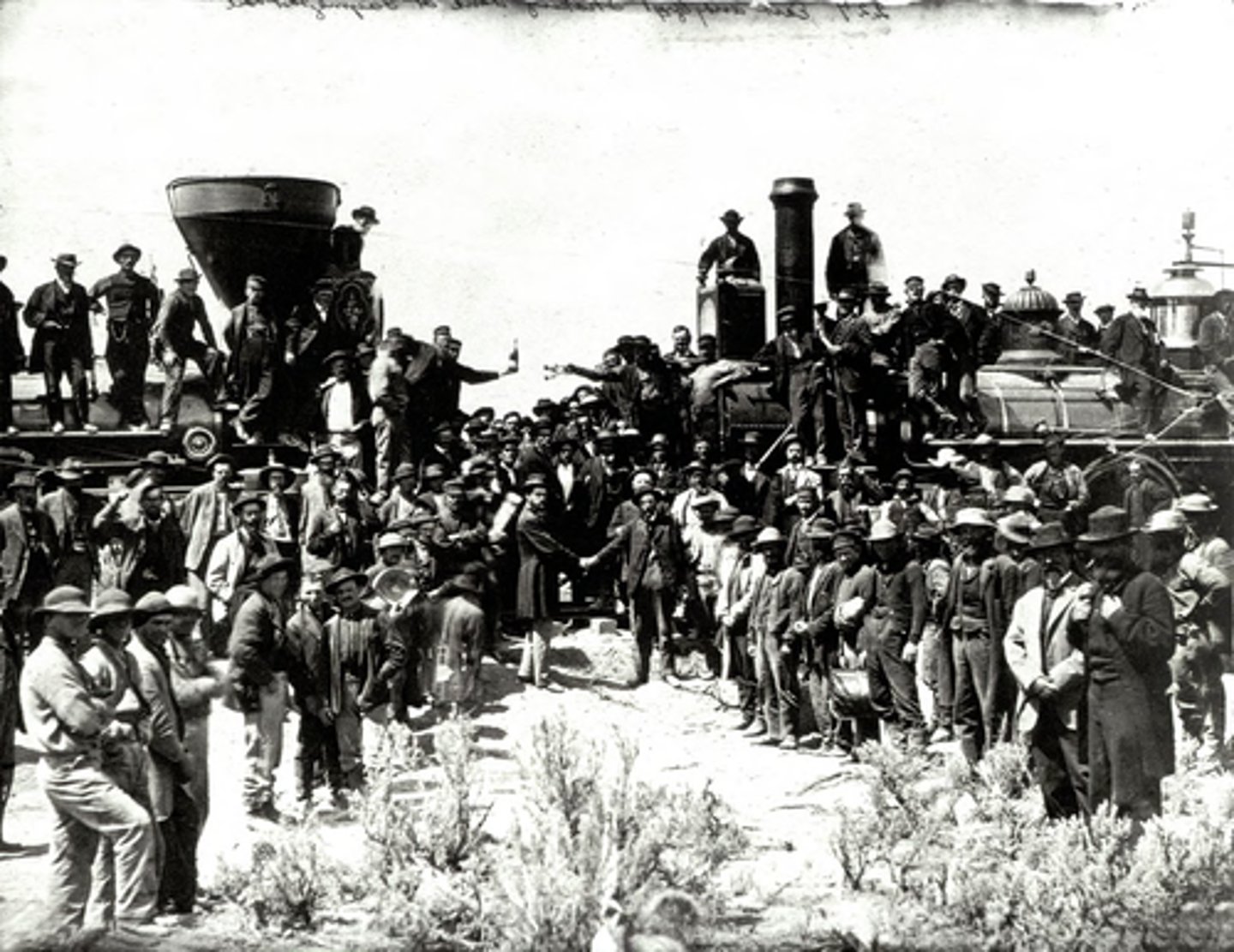
Promontory Point, Utah
African and Mexican-Americans also did much of the back-breaking working work. In 1869, the two routes met HERE. America's first transcontinental railroad was finished.
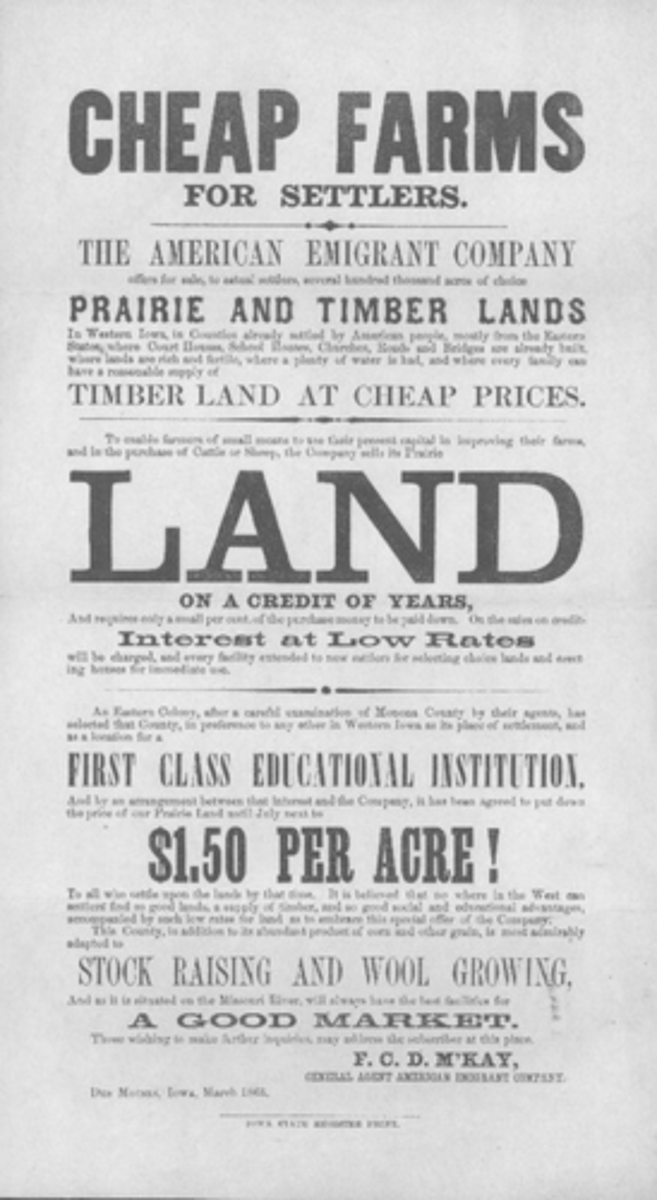
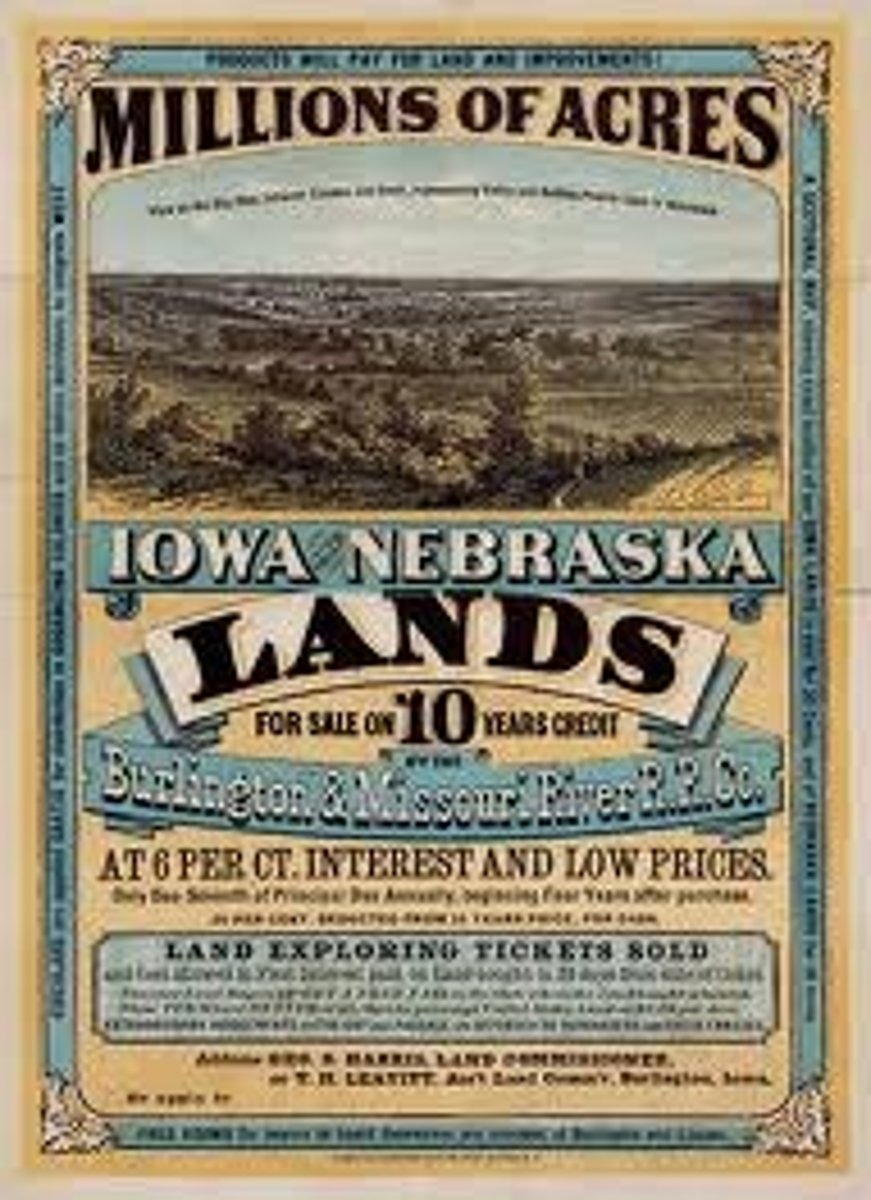
Europe
The railroad companies sold some of their land at low prices to settlers willing to farm it. Some companies even recruited people from HERE to settle on the land
Homestead Act of 1862
A growing number of people were responding to THIS of 1862. Under this law, the government offered 160 acres of free land to anyone who would farm it for 5 years.
homesteaders
By 1900, the Great Plains was filled with 400,000 AKA THESE, or settlers on this free land.
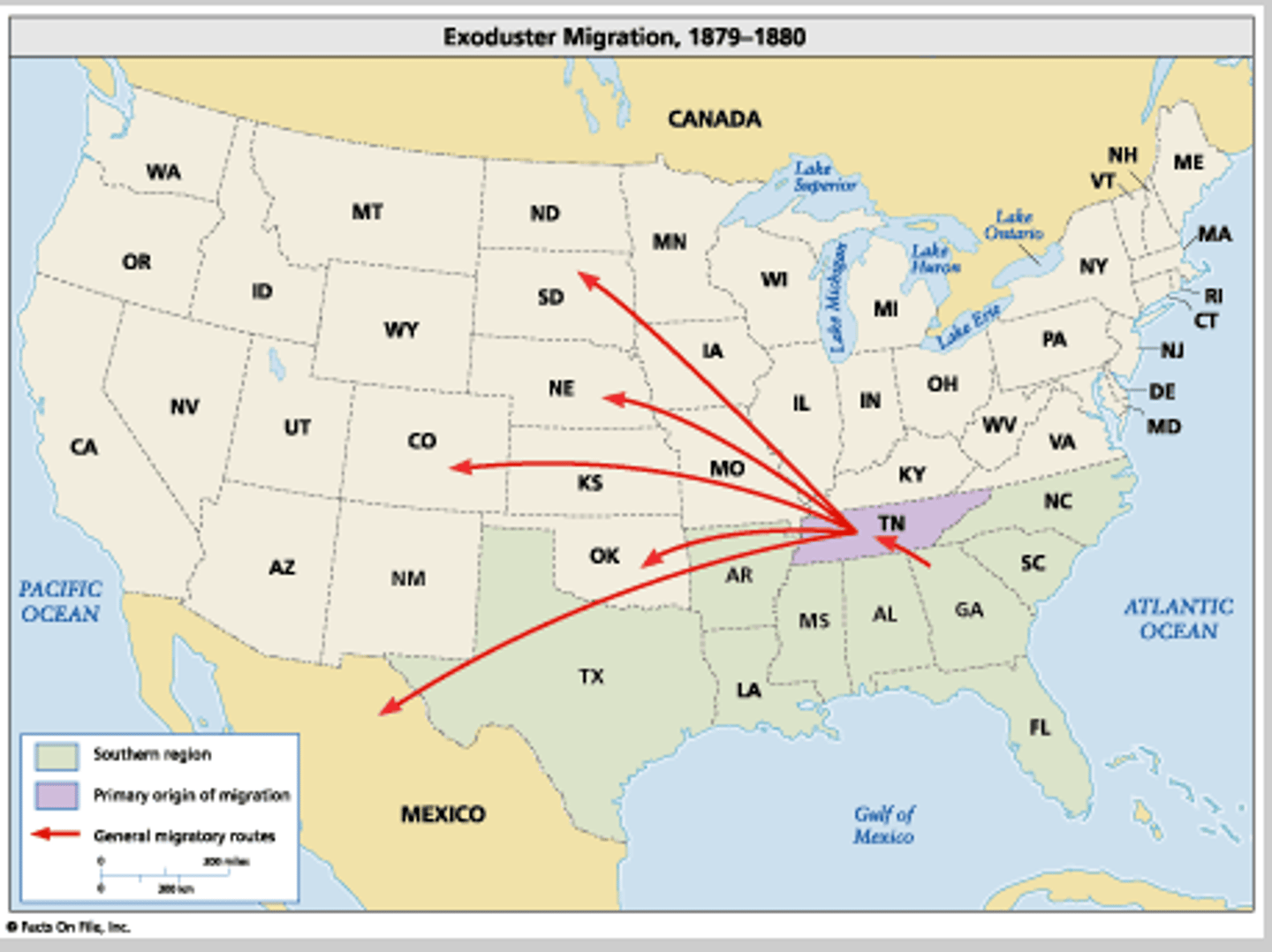
exodusters
Several thousand settlers were called THESE - African Americans who moved from the post-Reconstruction South to Kansas.
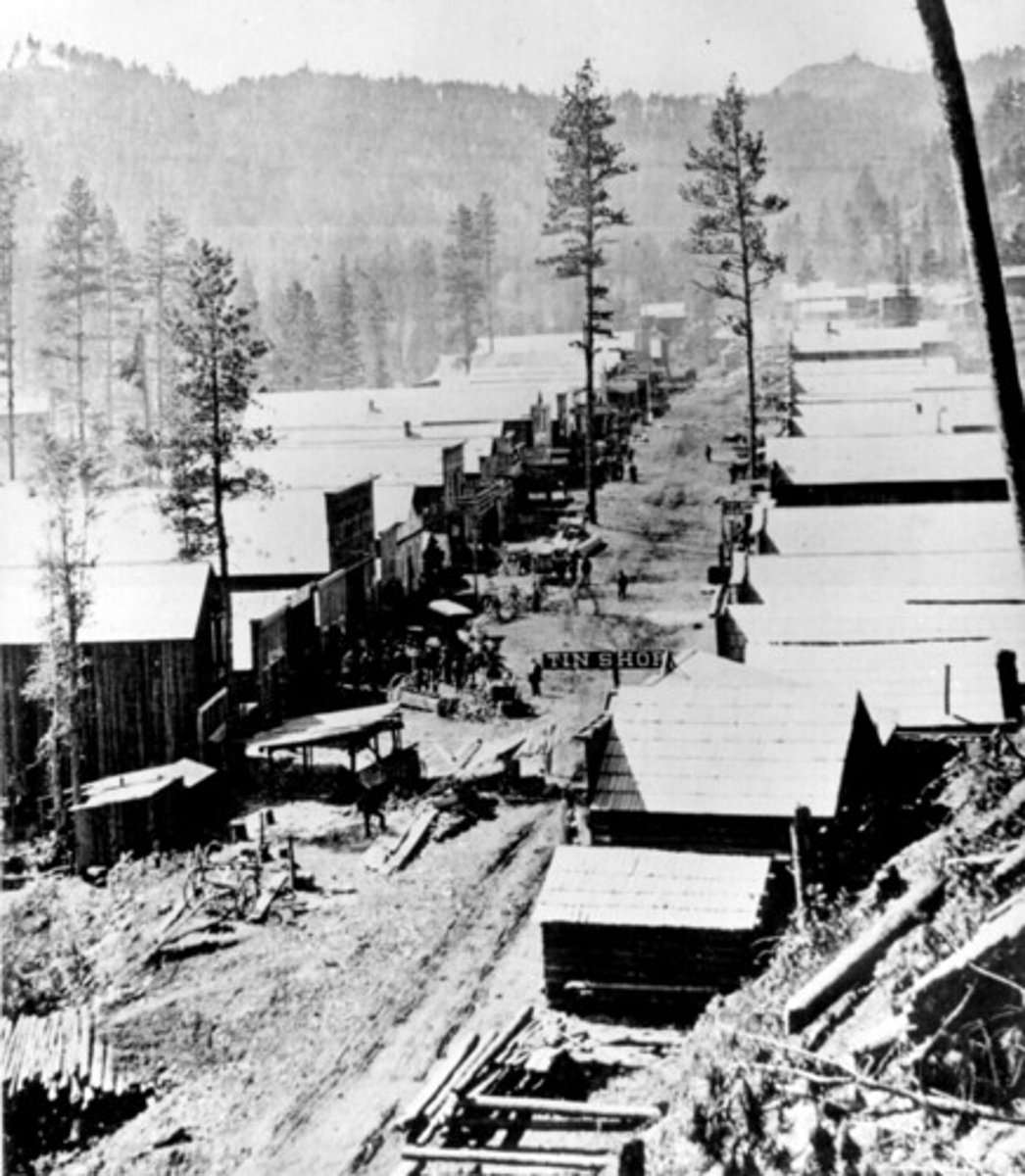
cattlemen
and
miners
The laws did not always work as the government had planned. Only about 10% of the land was settled by families whom it was intended. THEY claimed much of the rest.
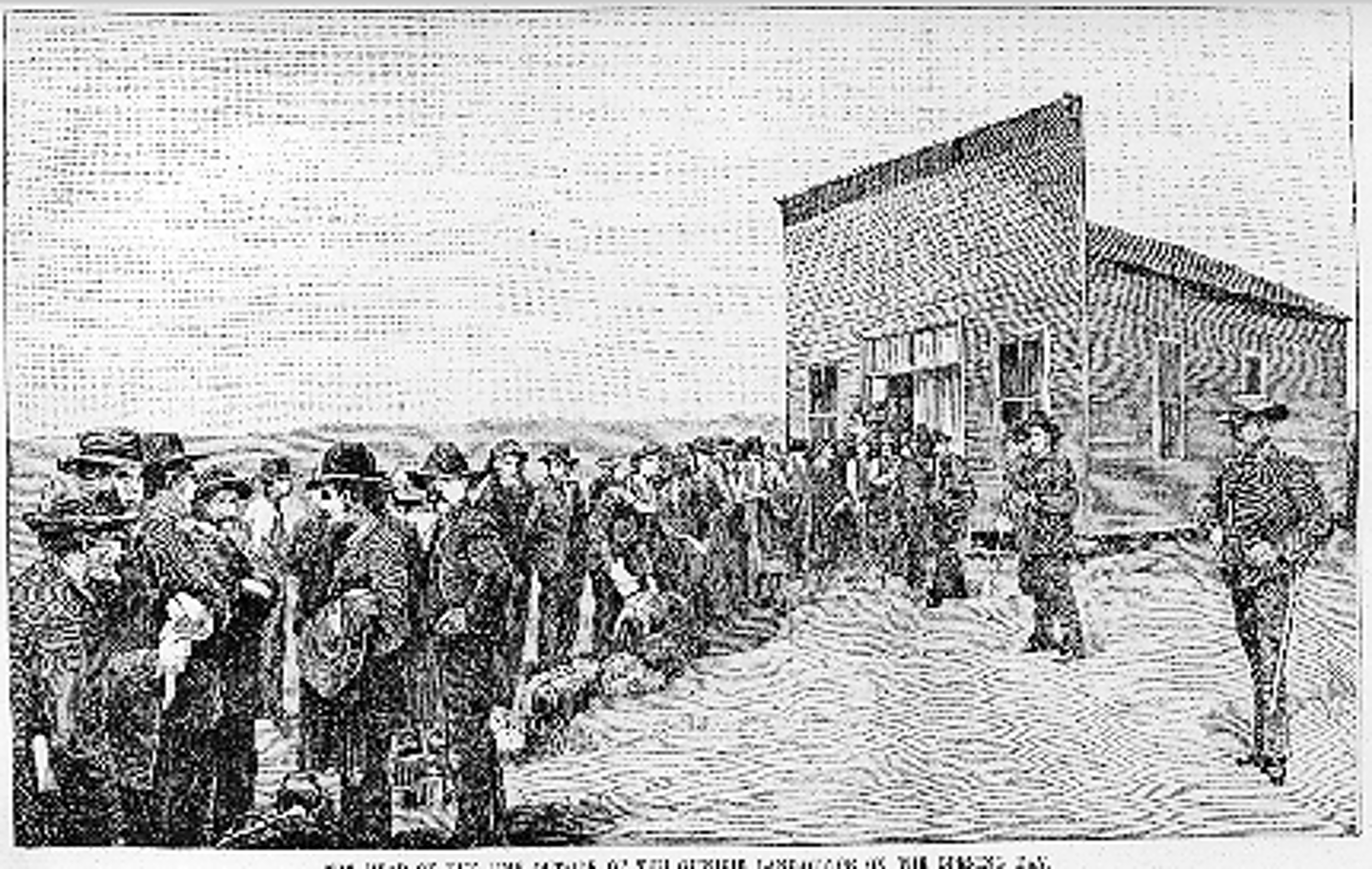
Oklahoma
The government continued to pass pass other laws to encourage people to settle to the West. In 1889, THIS offered a major land giveaway. This led thousands of settlers to claim 2 million acres in less than 24 hours.
Yellowstone National Park
As more and more settlers gobbled upland in the west, the government took action to preserve wilderness. In 1872, the government set aside land in Wyoming to create THIS. Millions of acres more were set aside later.
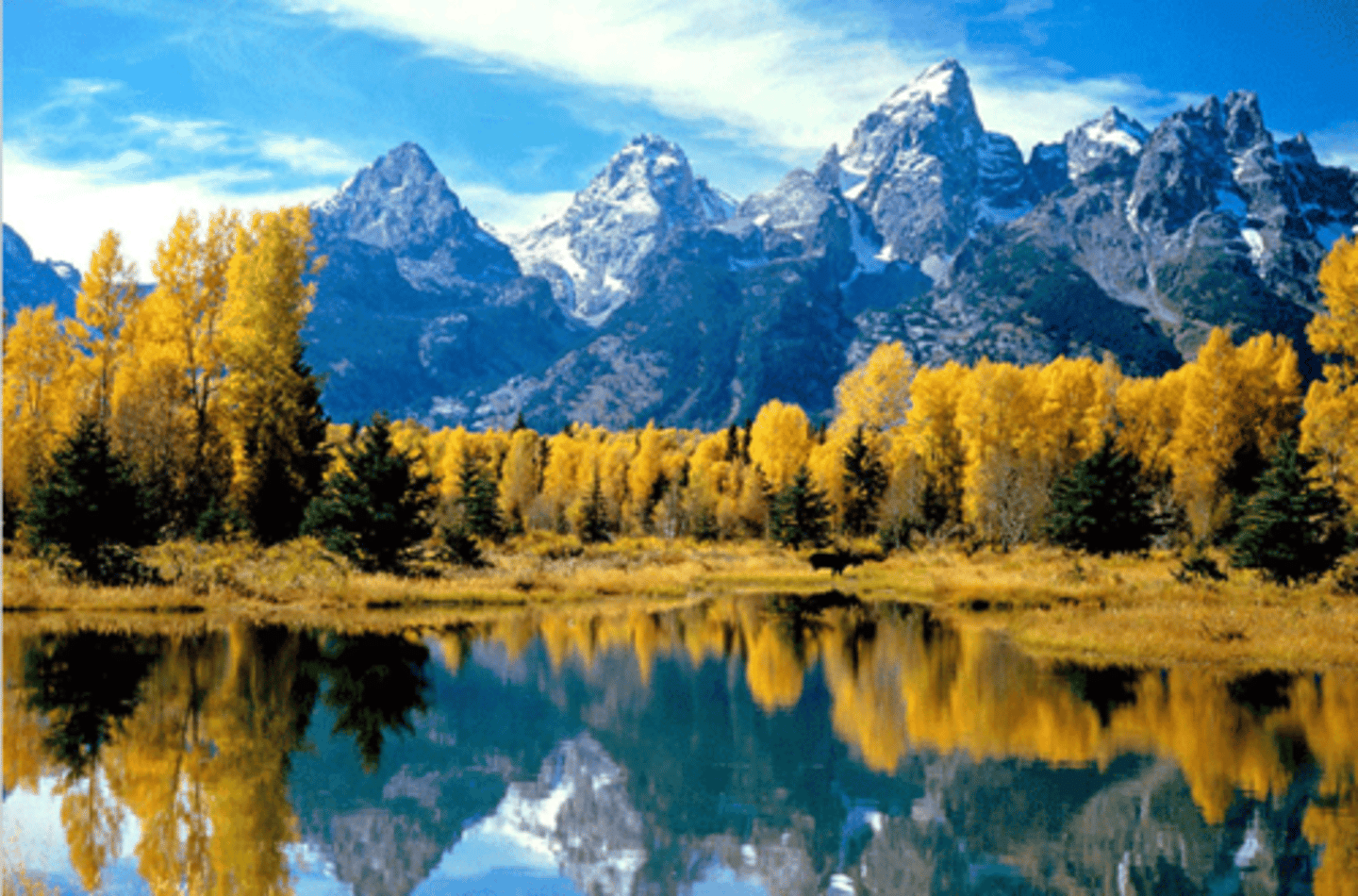
SETTLERS MEET THE CHALLENGES OF THE PLAINS!
What was life like for settlers of the west?
SETTLERS MEET THE CHALLENGES OF THE PLAINS!
What was life like for settlers of the west?
Mississippi
From 1850 to 1900, the number of people living west of the THIS River grew from 1% of the nation's population to 30%. These settlers had to endure many hardships.
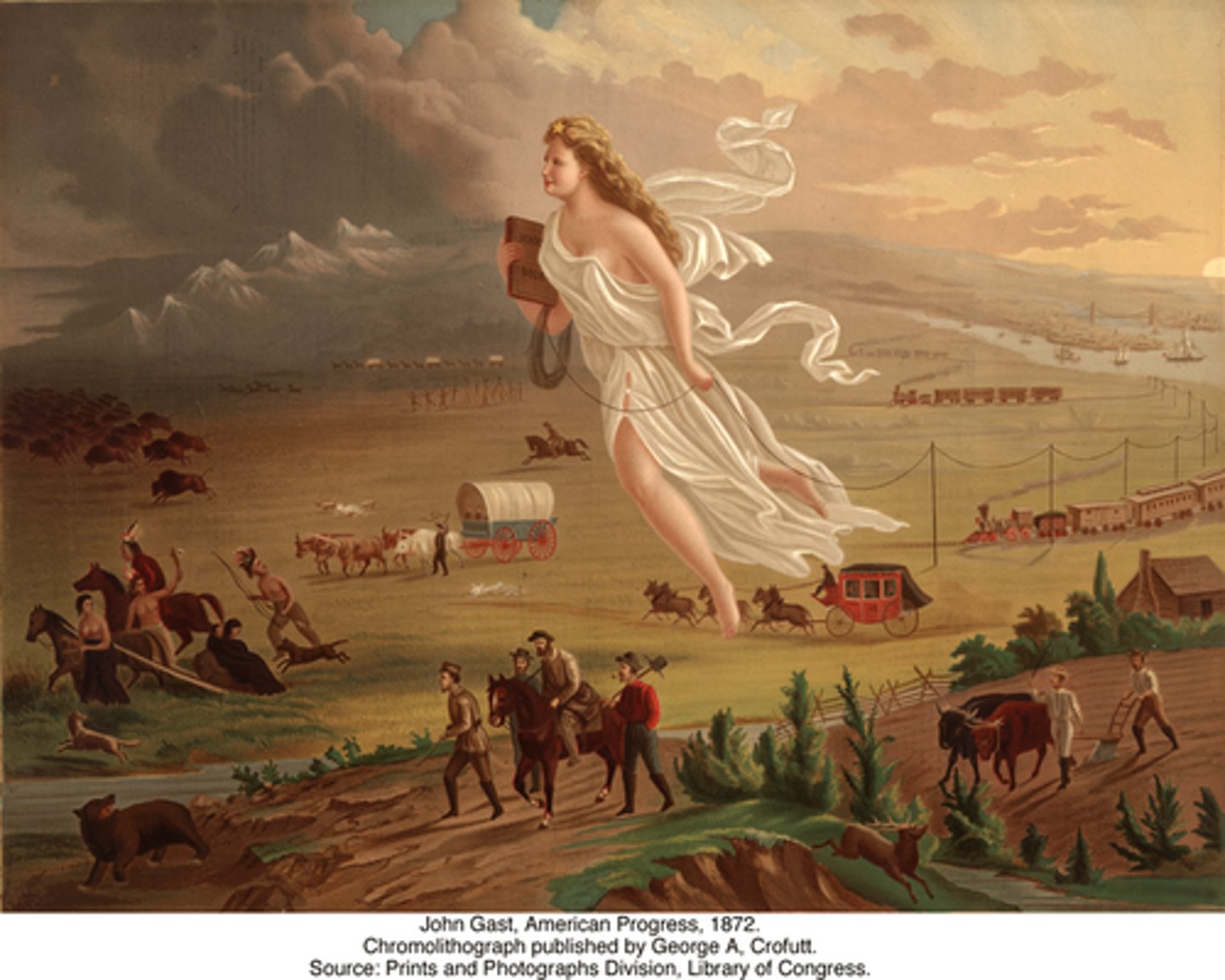
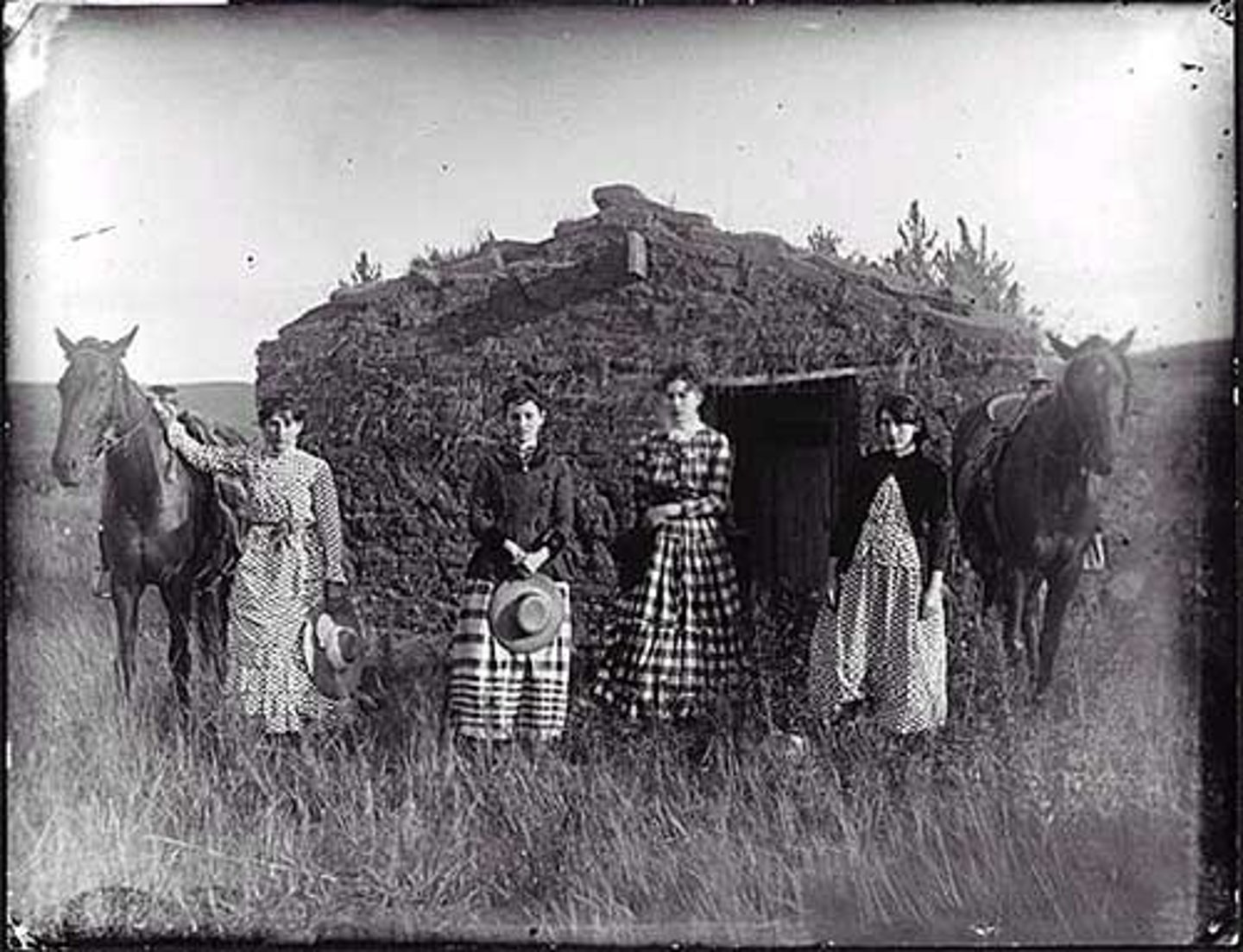
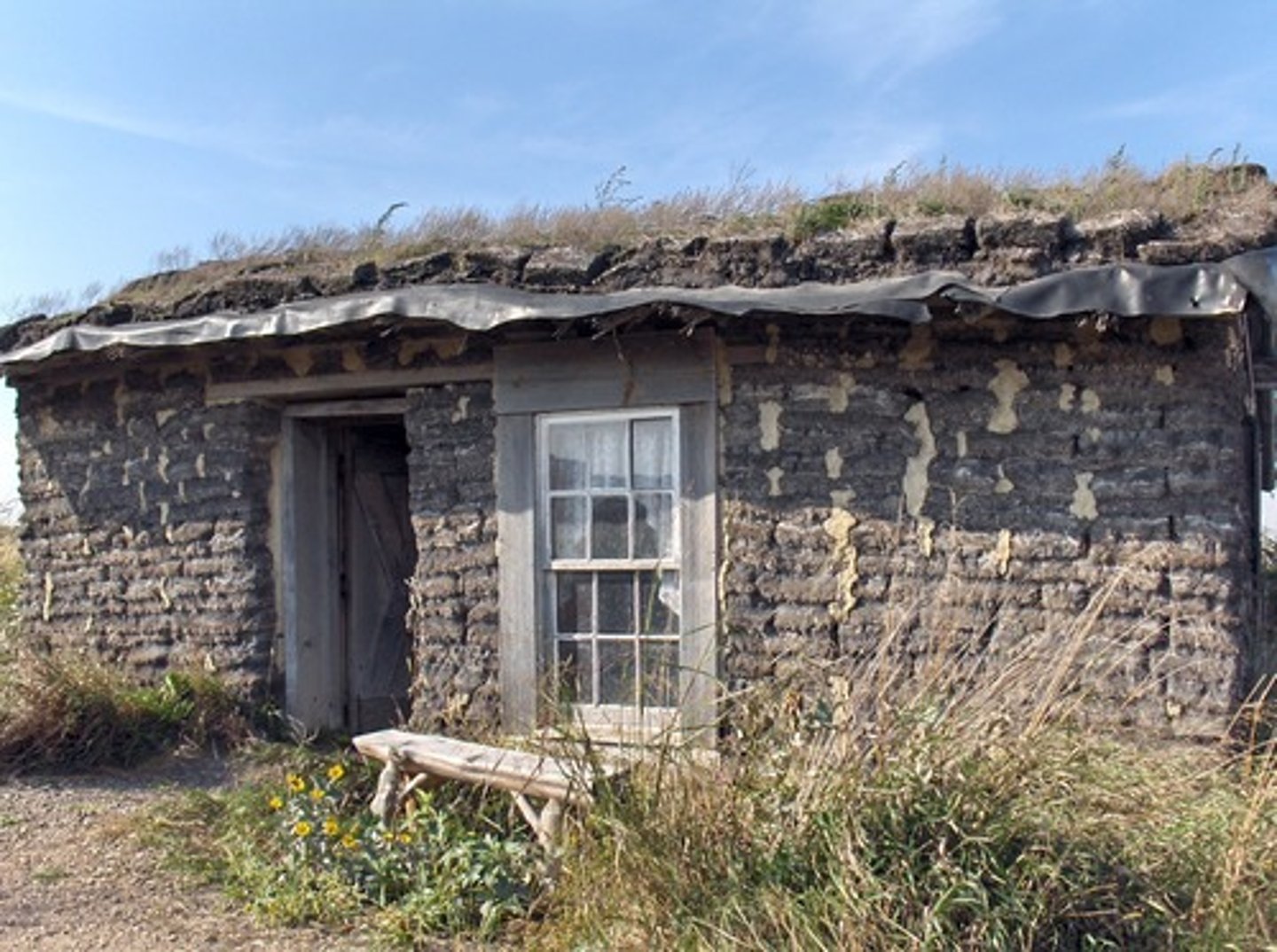
soddys
sod
The Great Plains did not have many trees. As a result, people built what came to be known as THESE. These homes were dug into the side of hills or made from THIS. They warm in the winter and and cool in the summer. However, it offered little light or air.
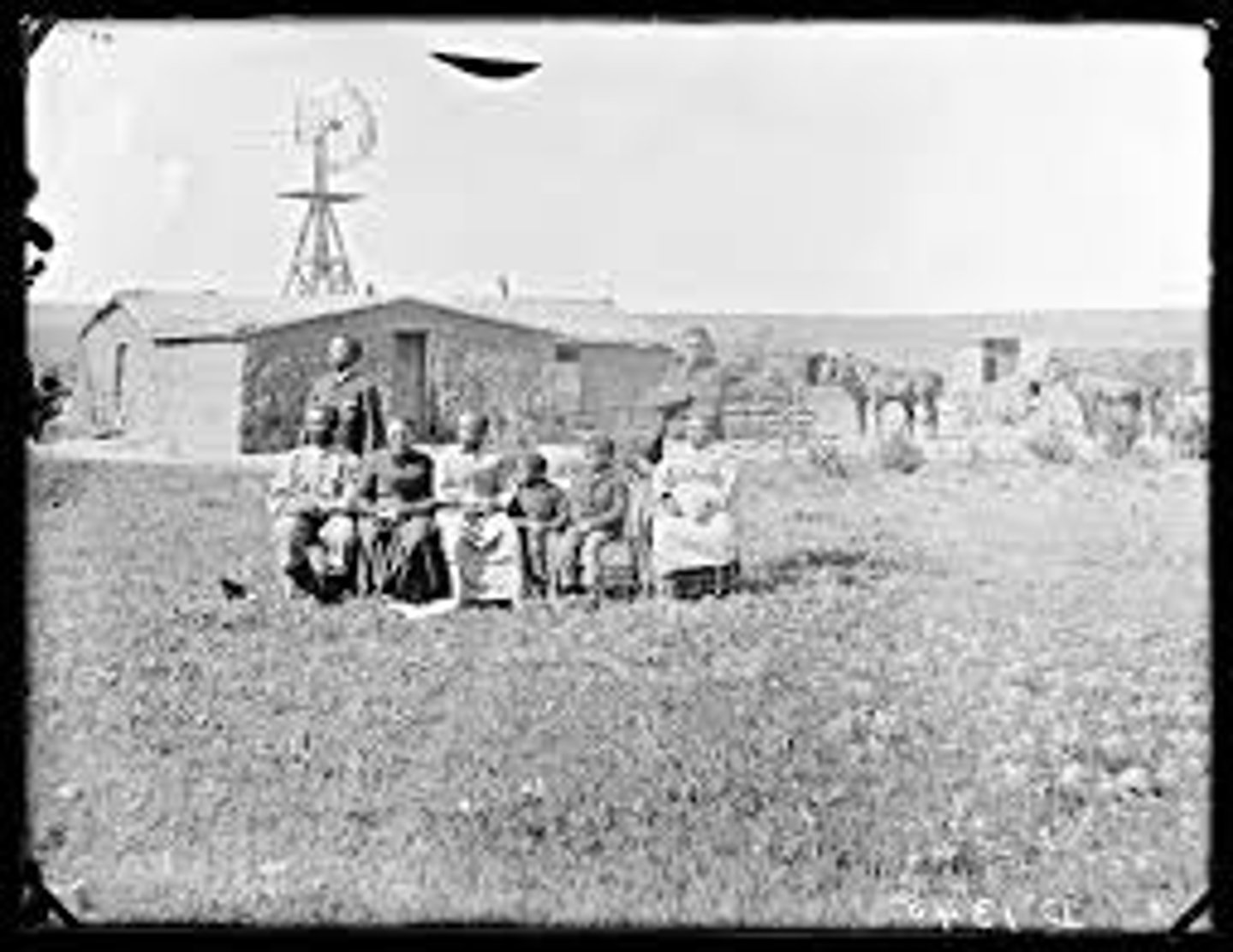
isolated
Homesteaders were largely THIS from one another. They had to make nearly everything they needed. women worked in the fields alongside men. They also took care of the children, ran the house, and did the cooking and laundry.
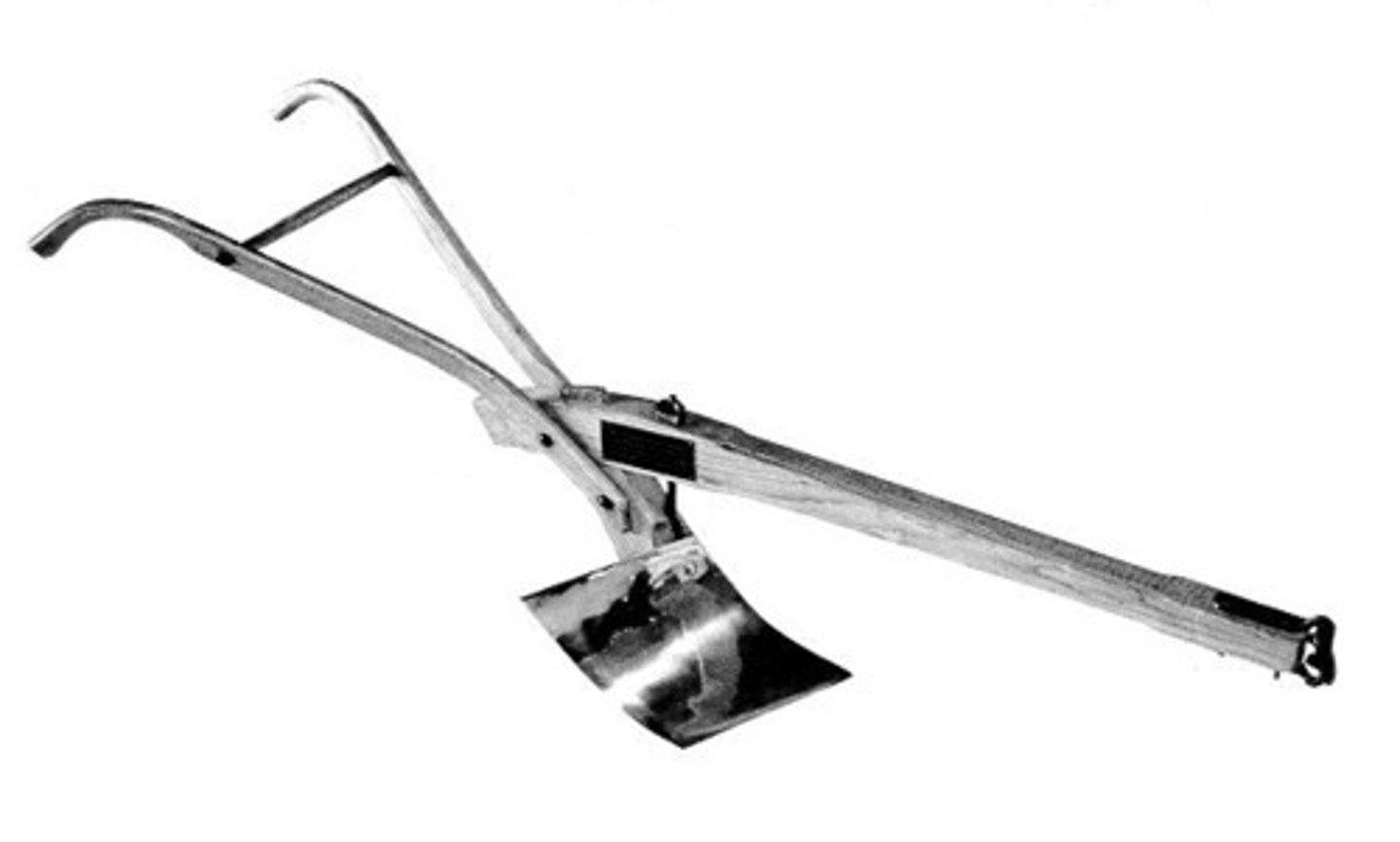
John Deere
Farming the Great Plains was difficult work. But several inventions helped make the task easier. HE invented the steel plow The steel plow to break up the prairie's tough soil.
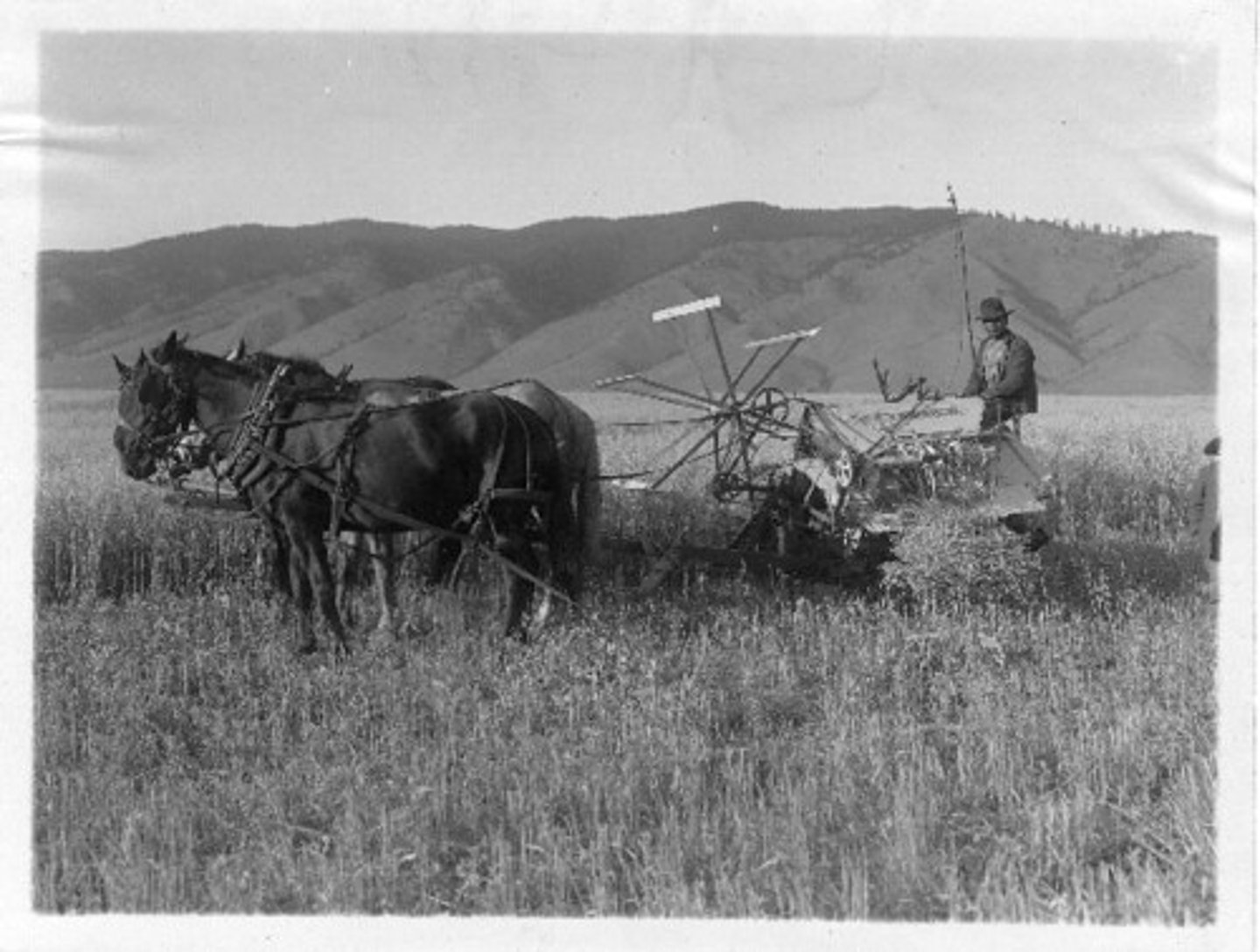
Cyrus McCormick
HE invented a new reaper to cut wheat even faster.
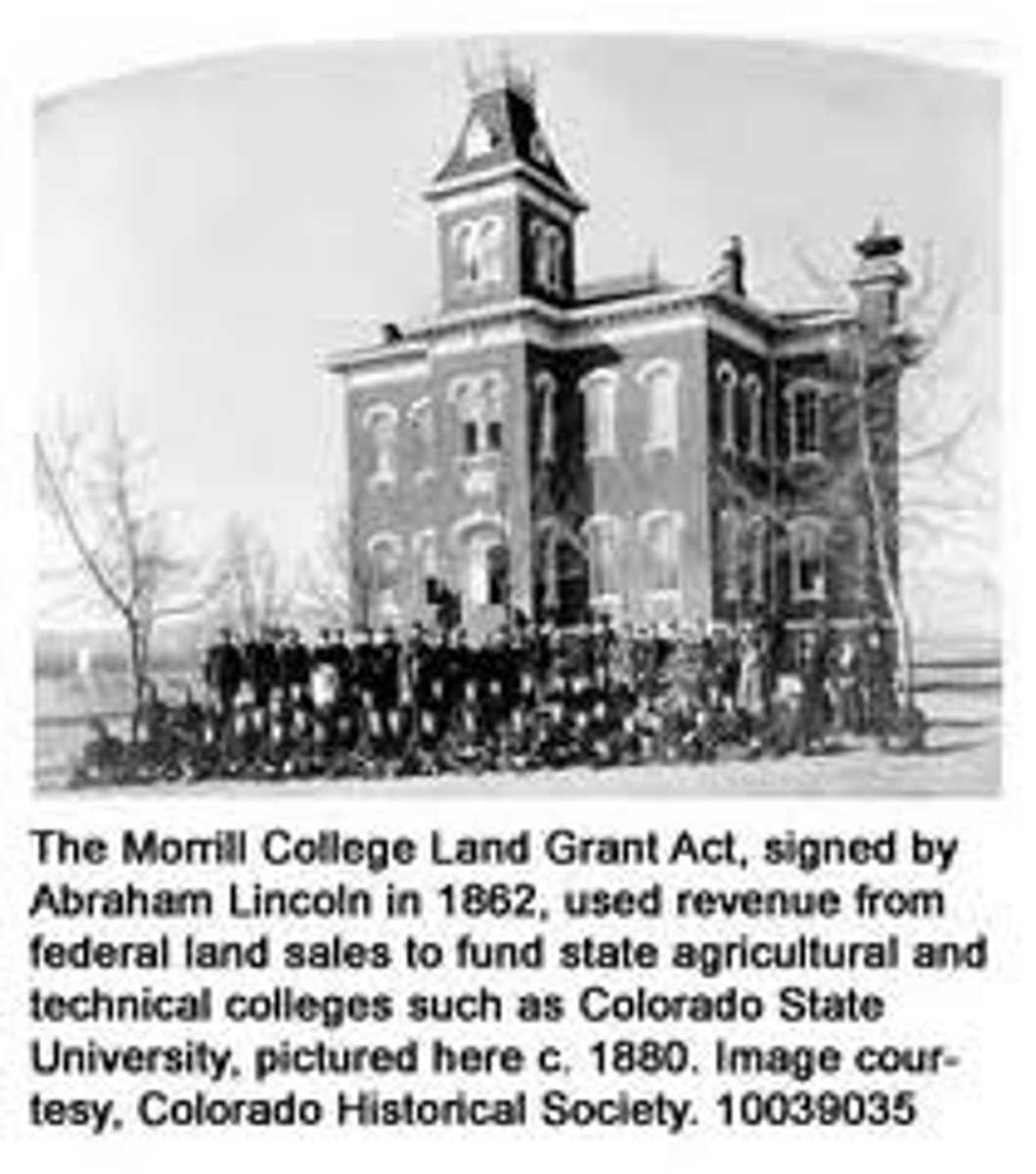
Morrill Act
The government also helped in the effort to improve farming techniques. THIS Act of 1862 and 1890 helped establish agricultural colleges.
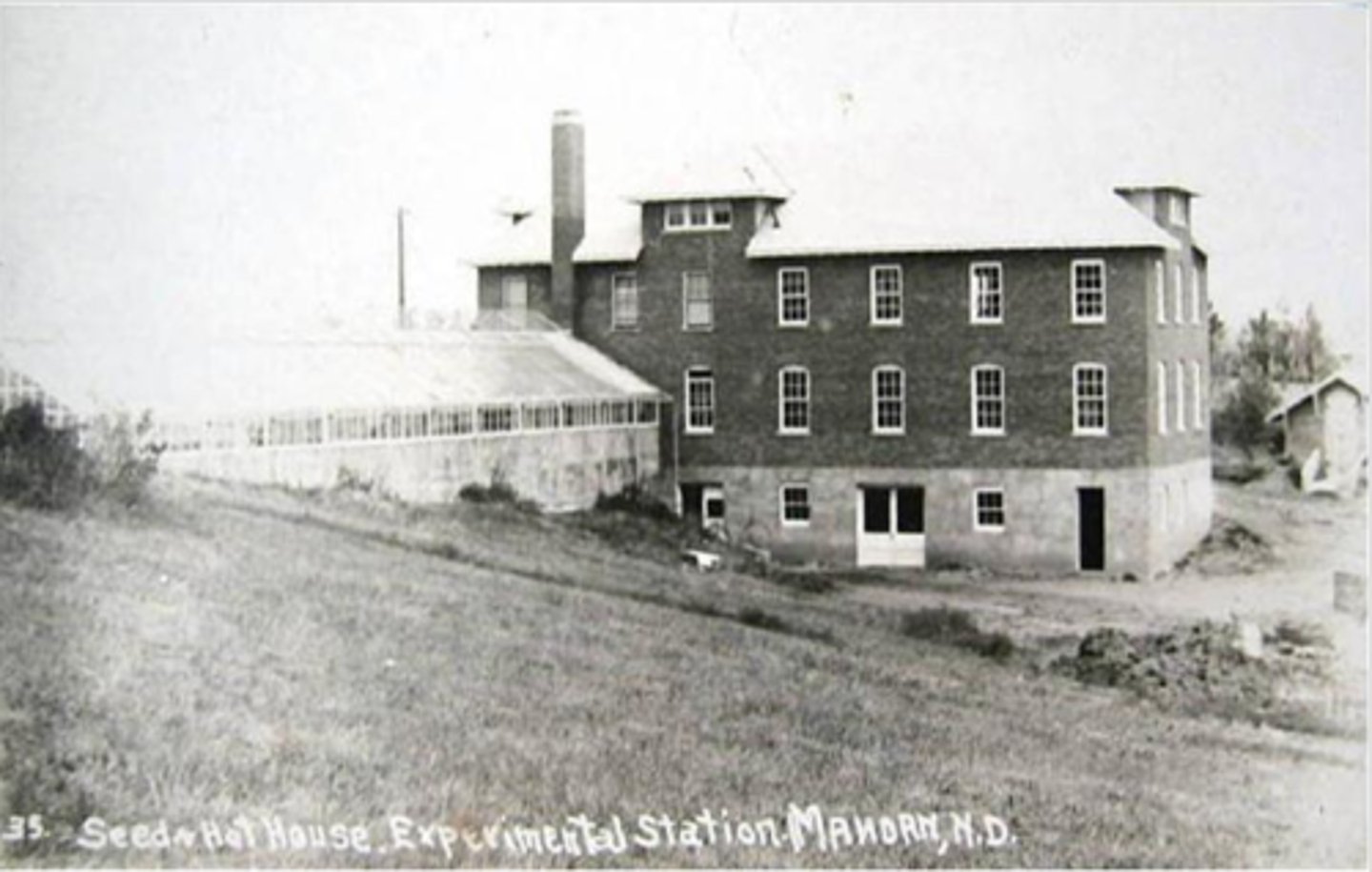
experiment stations
The government also established THESE on the Great Plains. Researchers there developed new types of crops as well as new growing techniques.
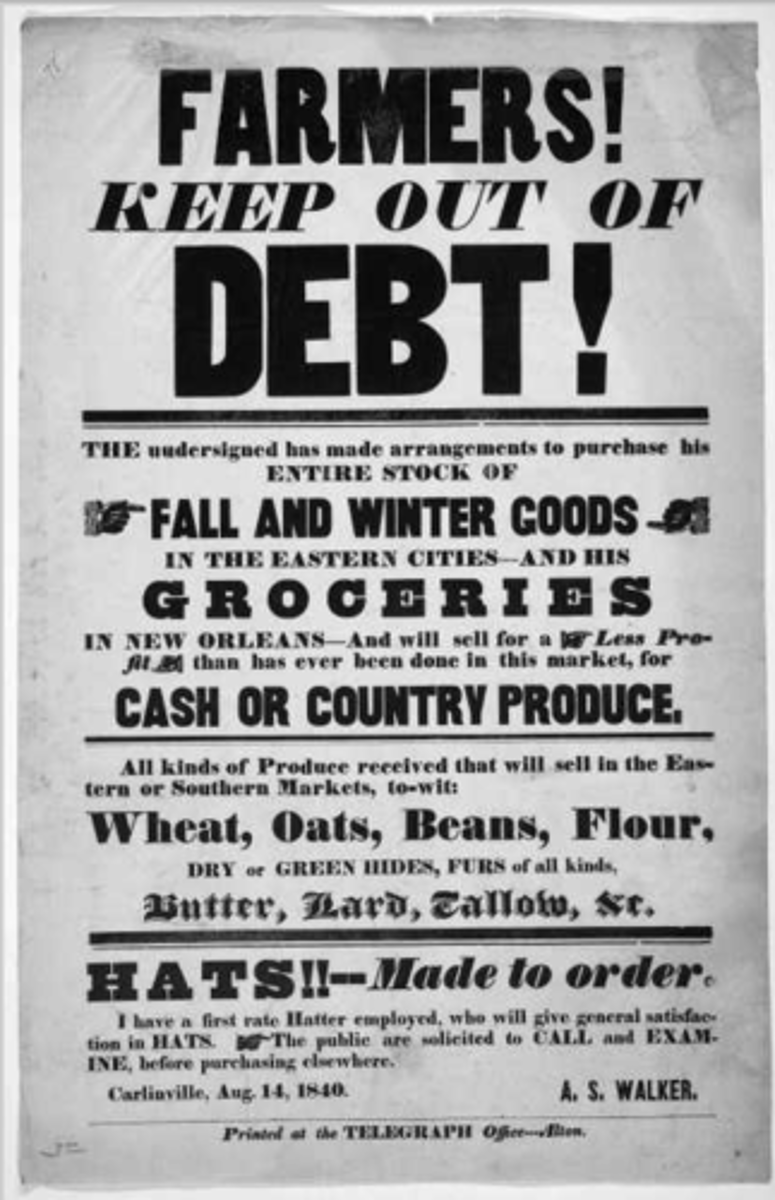
crop prices
To buy much of the new farming machinery, farmers often went into debt. When THESE fell, farmers ended up losing money. As a result, they had trouble repaying their loans.
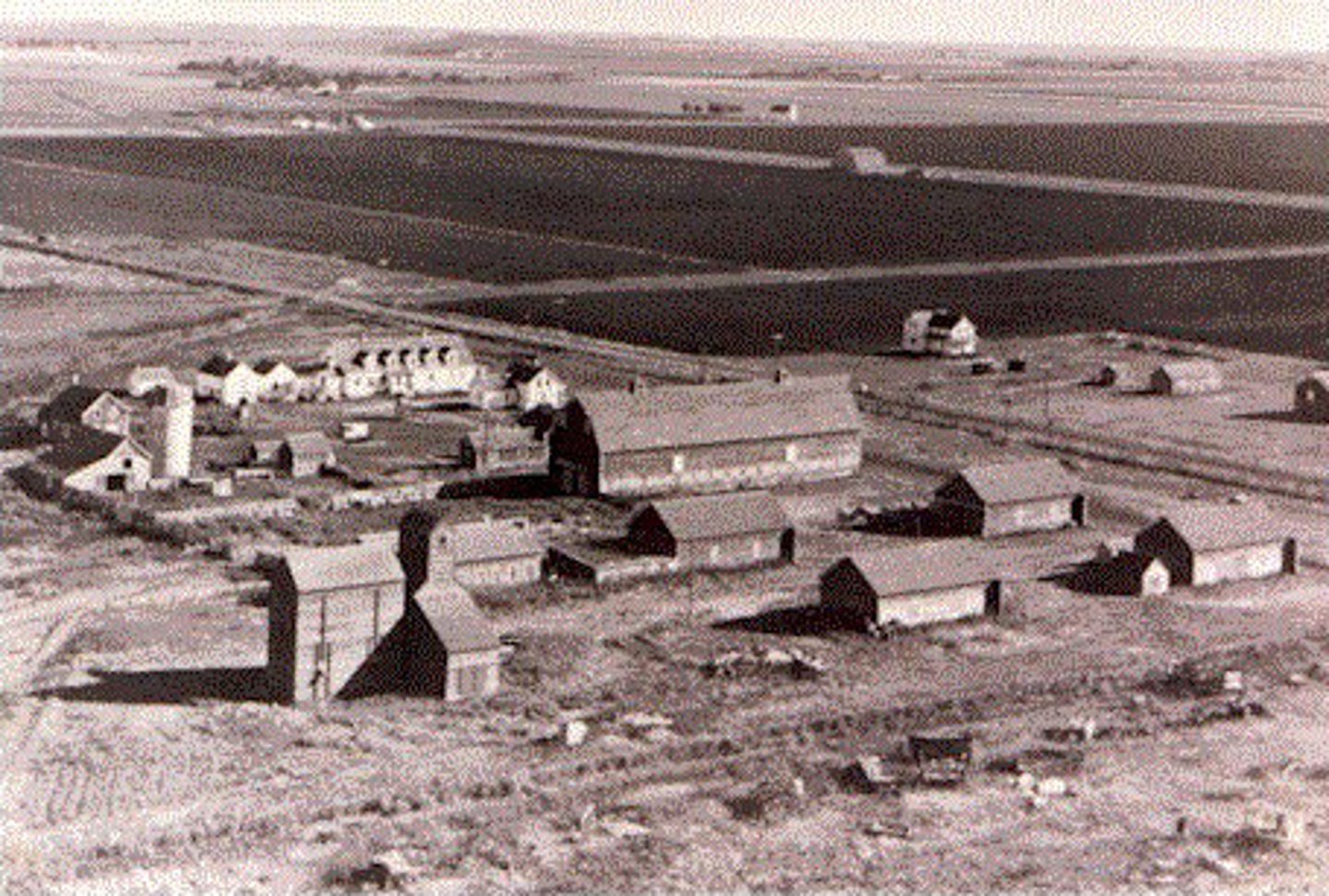
Bonanza Farms
To make more money, farmers often had to raise more crops. This in turn led to the growth of THESE single-crop farms.
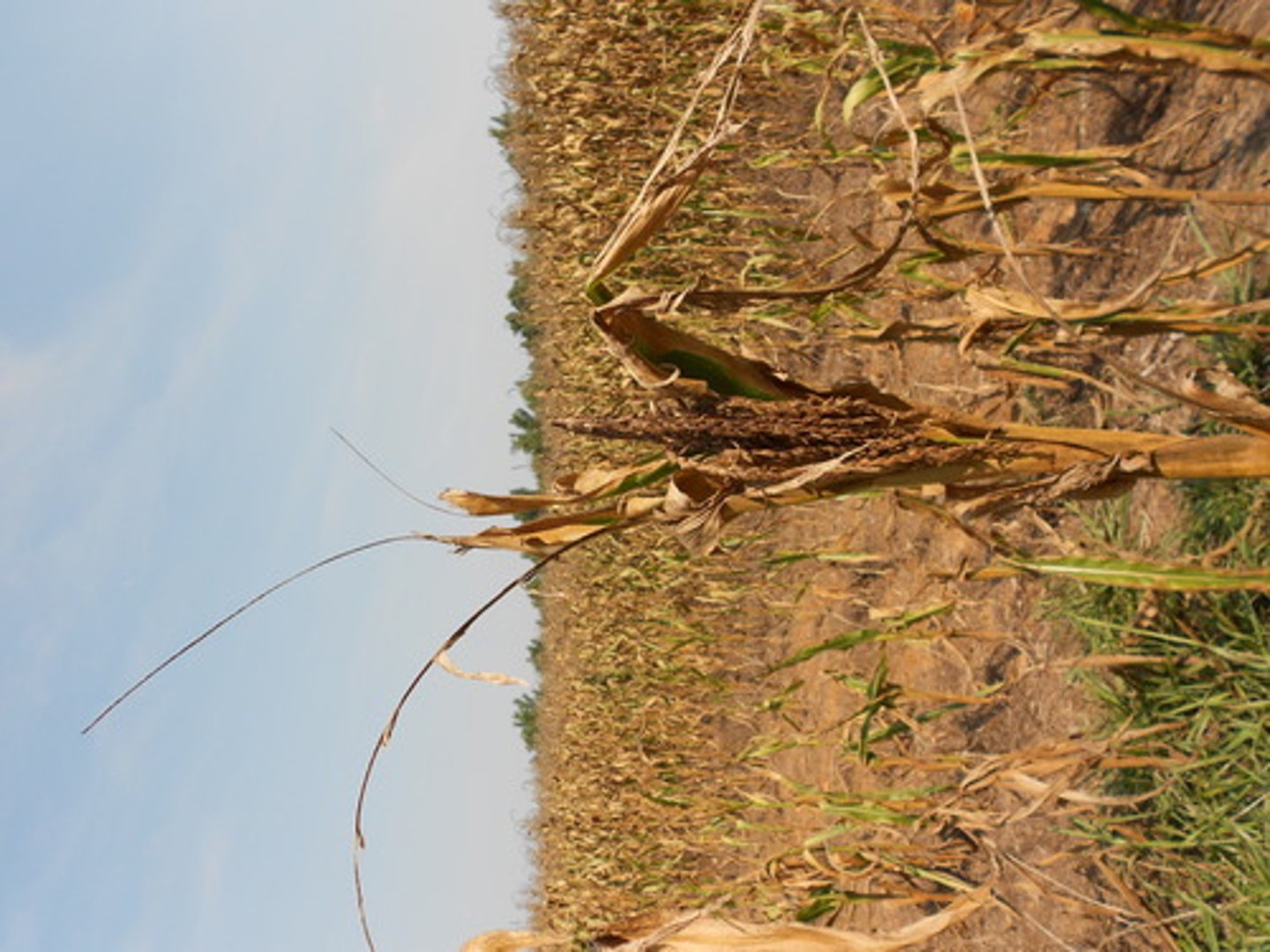
drought
By 1900, the average farmer had nearly 150 acres of land under cultivation. However, when THIS hit the Plains between 1885 and 1890, many bonanza farms folded.
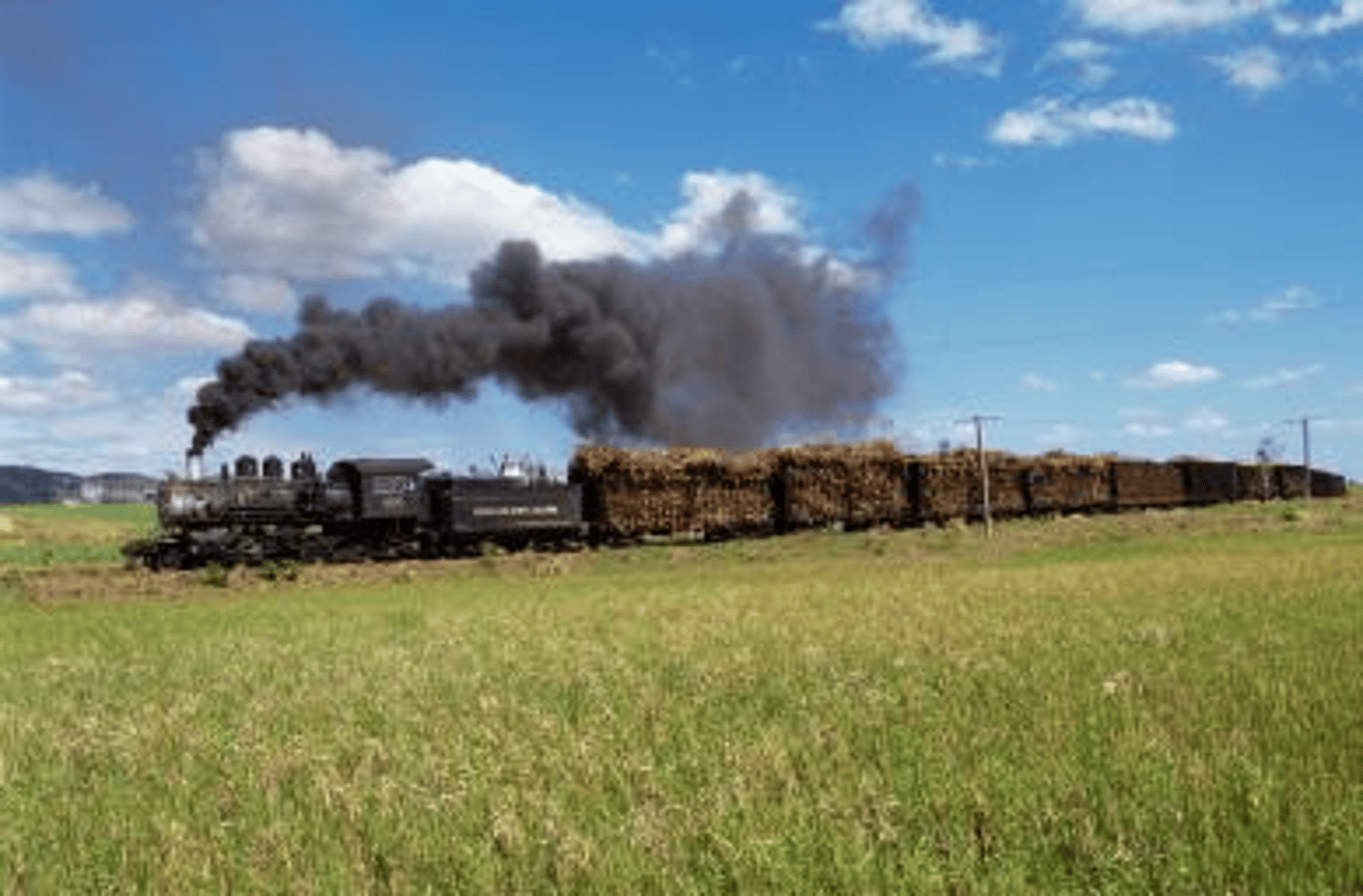
shipping
Bonanza farmers could not compete with the smaller farmers, who were more flexible in the crops they grew. The high price of THIS their crops also added to farmers debt.
THE END!!!!!!!!!!!!!!!!!!!!!!!!!!
THE END!!!!!!!!!!!!!!!!!!!!!!!!!!