Chemotherapy Pharmacology
 Call Kai
 Learn
Learn Practice Test
 Spaced Repetition
 Match
Match Flashcards
 Knowt Play
1/67

There's no tags or description
Looks like no tags are added yet.
Name | Mastery | Learn | Test | Matching | Spaced | Call with Kai | Chat |
|---|
No analytics yet
Send a link to your students to track their progress
68 Terms
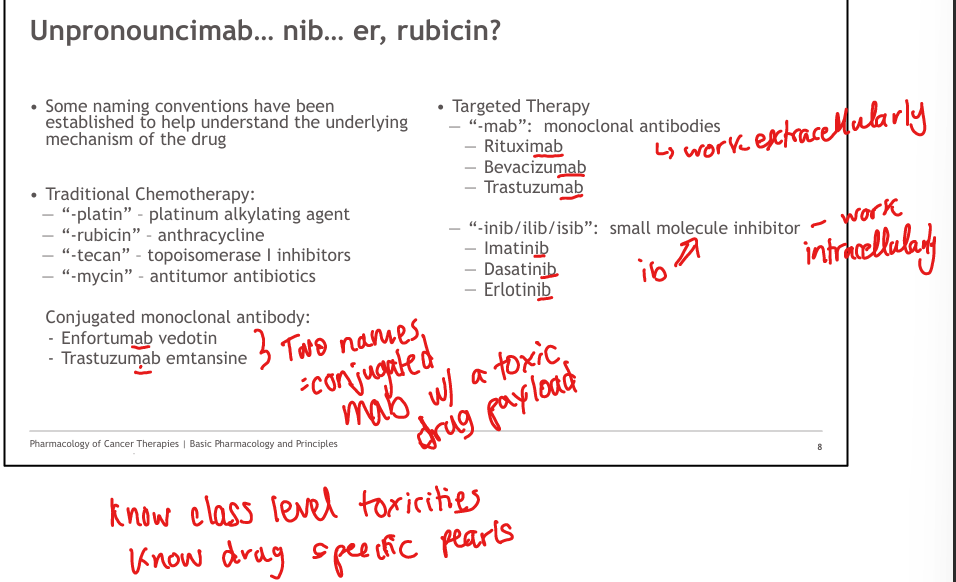
What naming suffix indicates a monoclonal antibody?
-mab
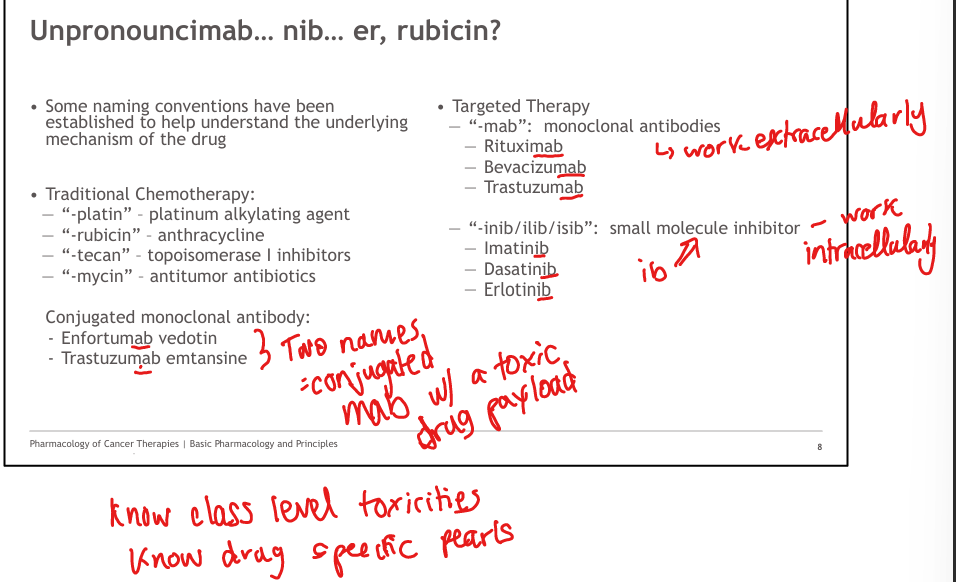
What naming suffix indicates a small‑molecule inhibitor?
-inib / -ilib / -isib
What naming suffix indicates a platinum alkylating agent?
-platin
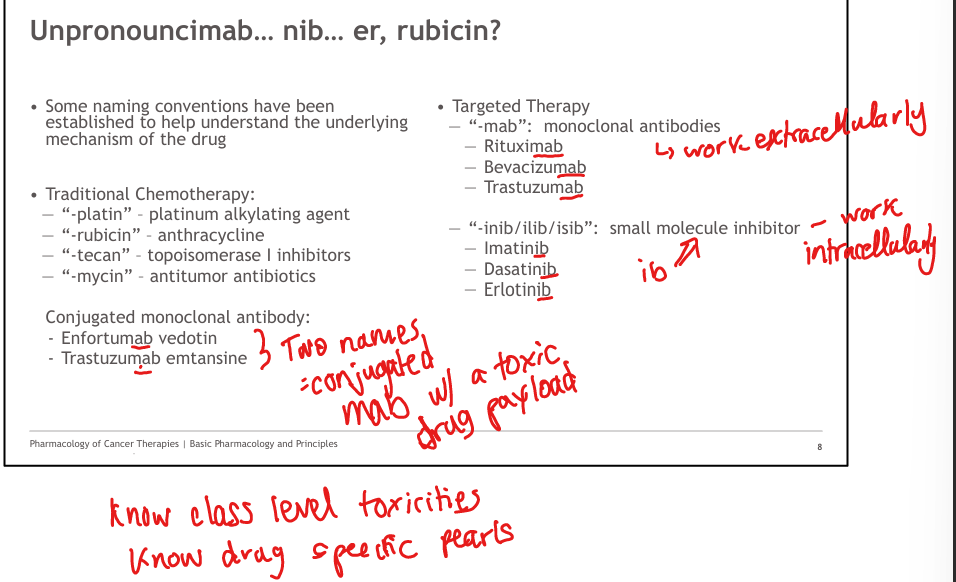
What naming suffix indicates an anthracycline?
-rubicin
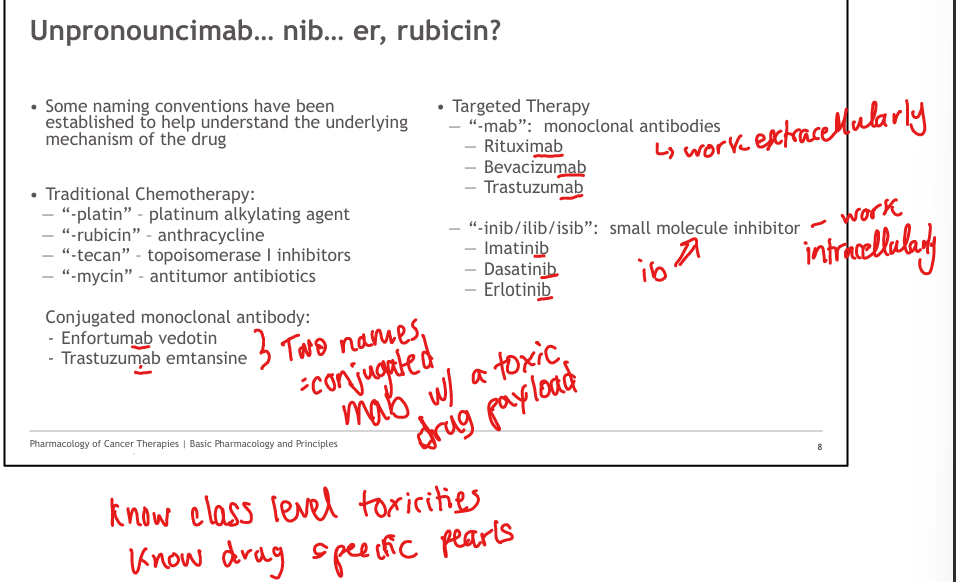
What naming suffix indicates a topoisomerase I inhibitor?
-tecan
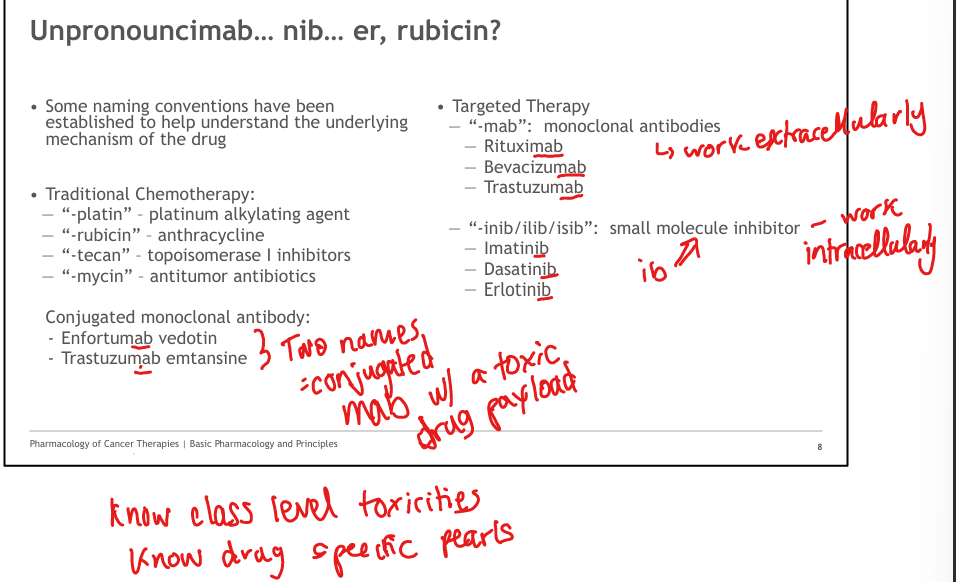
What naming suffix indicates an antitumor antibiotic?
-mycin
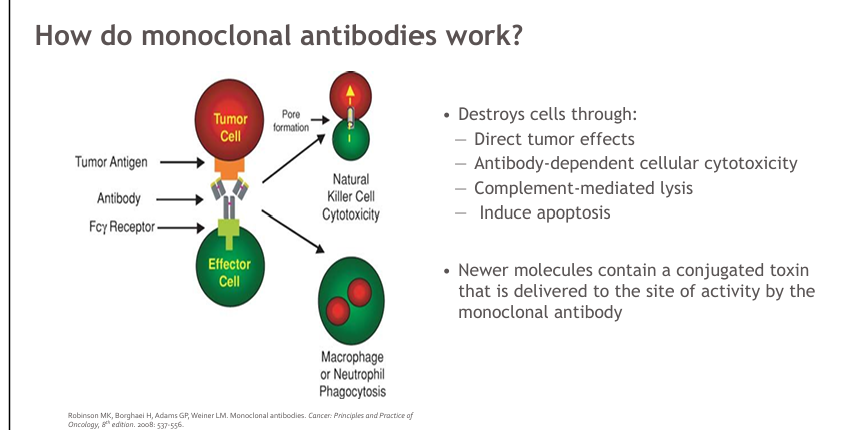
Mechanism of monoclonal antibodies
Direct tumor killing, Antibody dependent cellular cytotoxicity, complement mediated lysis, apoptosis
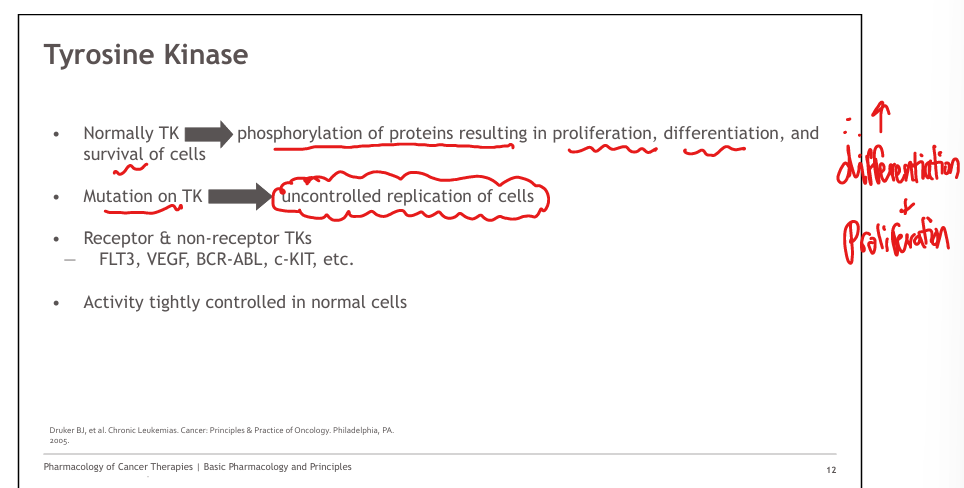
Mechanism of tyrosine kinase inhibitors
Block phosphorylation signaling → ↓ proliferation+differentiation, ↑ apoptosis
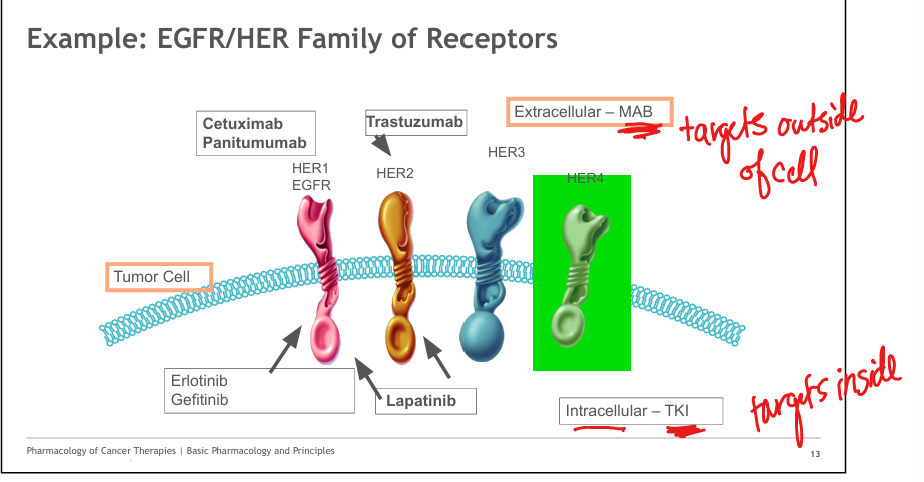
Example of Extracellular targeted therapy? Intracellular?
Mabs target outside of cell; TKIs target inside of cell
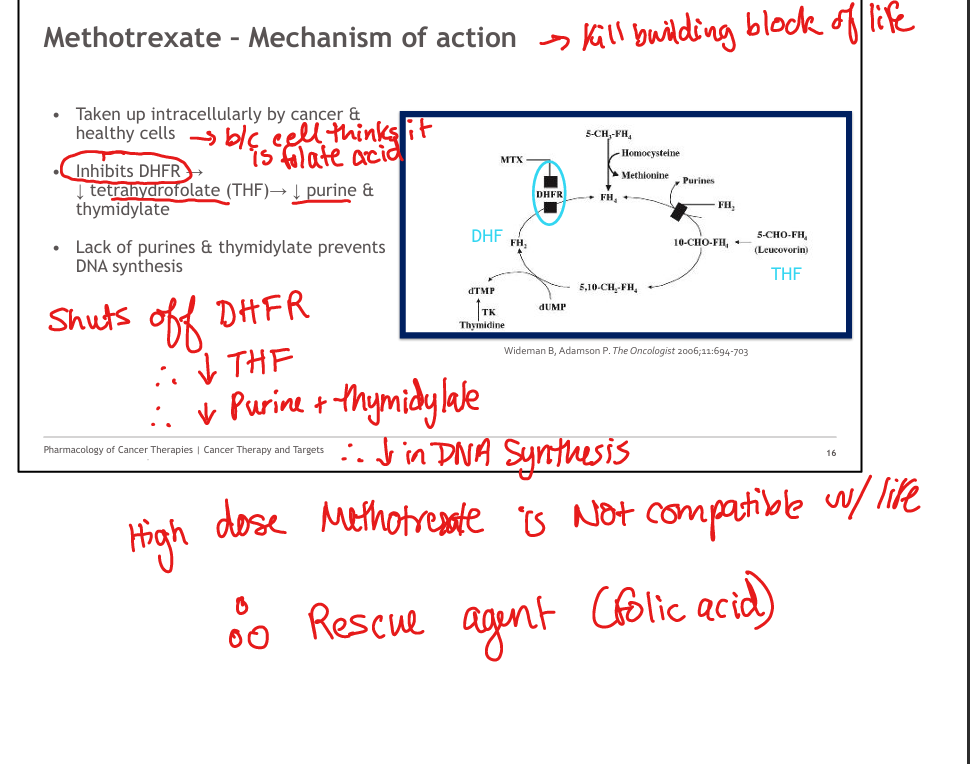
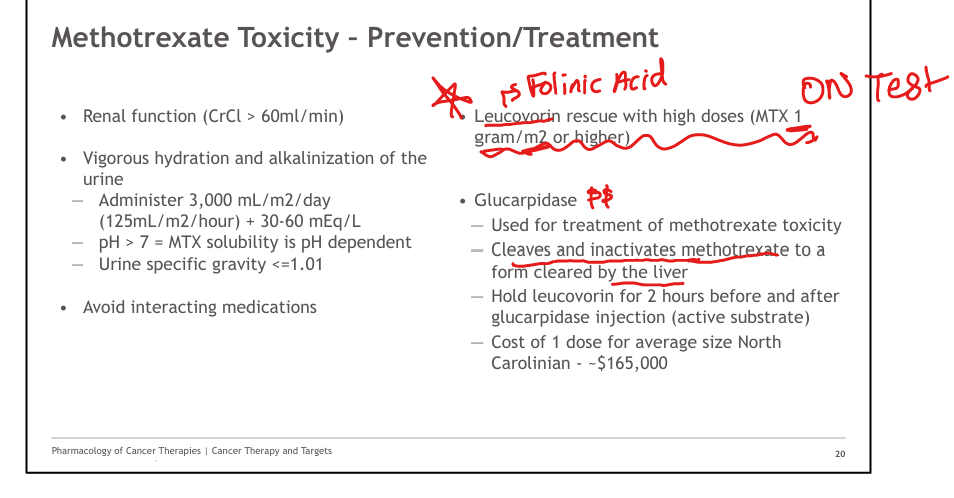
Methotrexate mechanism
Inhibits DHFR → ↓ THF → ↓ purine & thymidylate synthesis → ↓ DNA synthesis
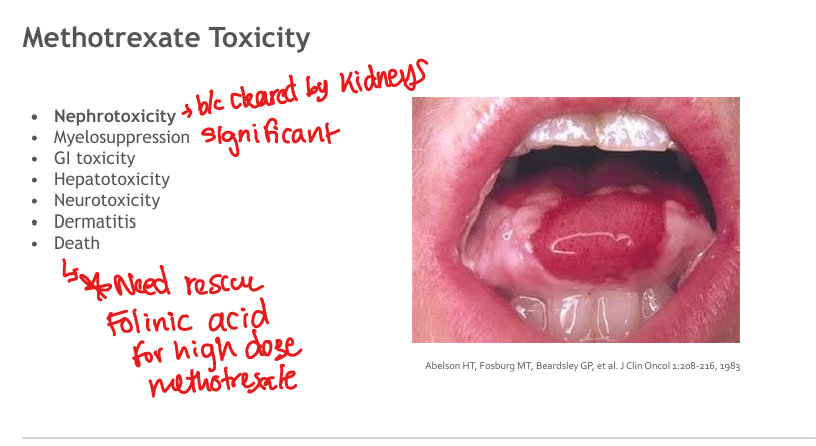
Methotrexate major toxicities
Nephrotoxicity, myelosuppression, mucositis, hepatotoxicity, neurotoxicity
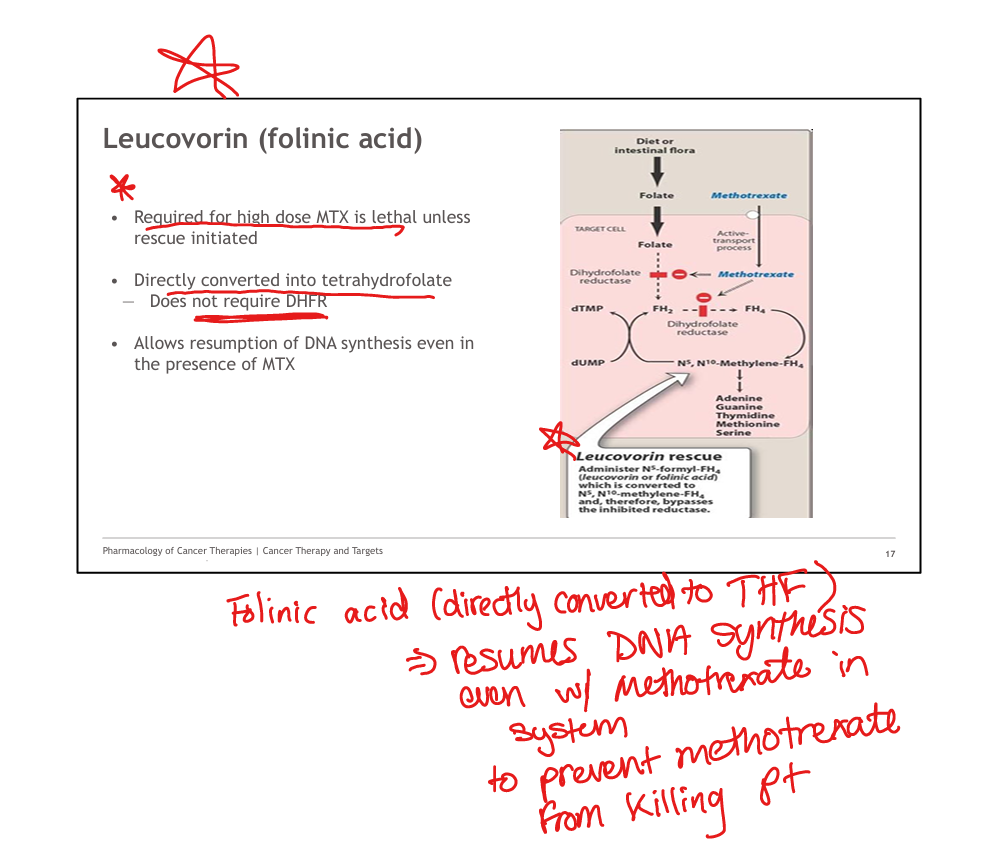
Methotrexate rescue agent
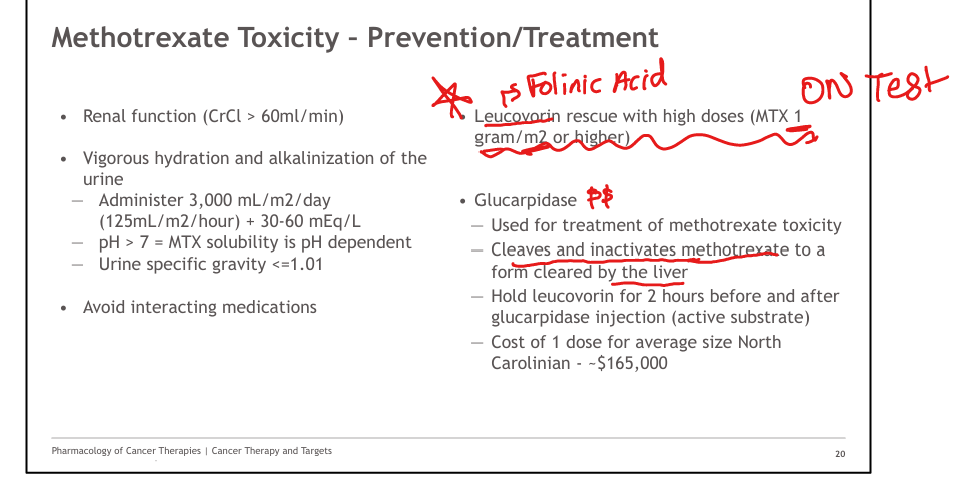
Leucovorin (folinic acid)»gets directly converted into THF(doesnt need DHFR) allowing for resumption of DNA synthesis. Used for >MTX 1gram/m²
Rapid rescue with glucarpidase which actively cleaves MTX
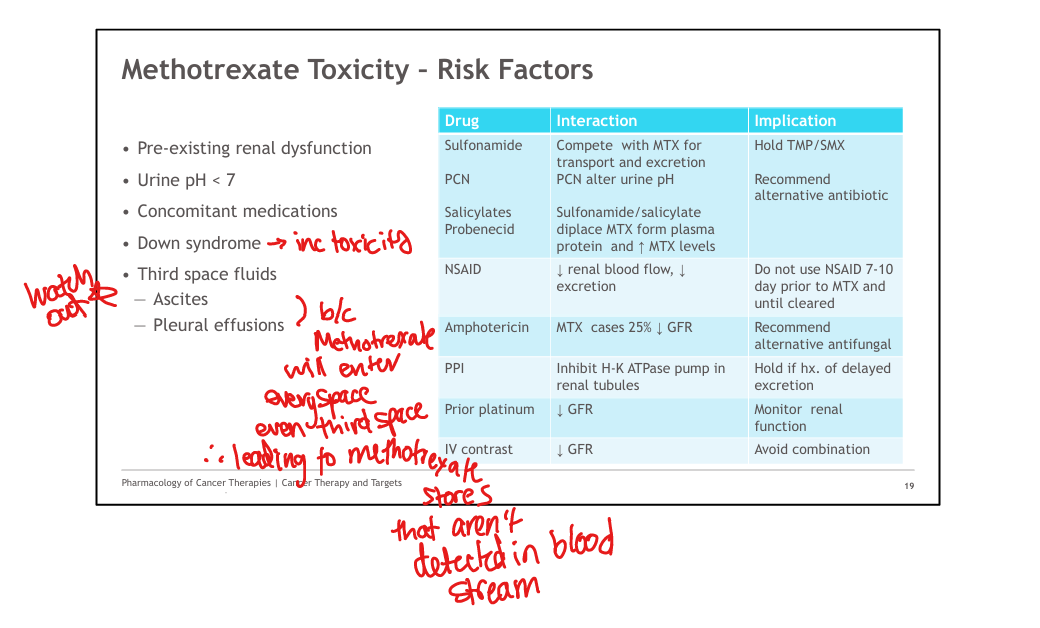
Methotrexate risk factors for toxicity
Renal dysfunction, acidic urine, NSAIDs, PPIs, sulfonamides, 3rd‑space fluids
Glucarpidase mechanism and use
Cleaves MTX → inactive metabolites cleared hepatically. Used for rapid MTX toxicity
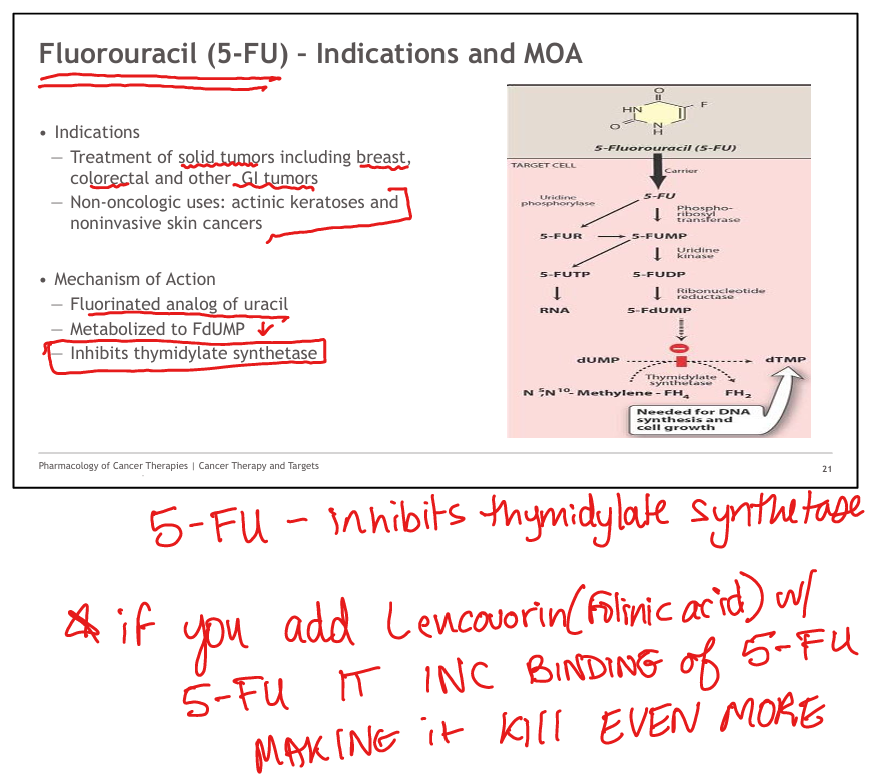
Fluorouracil (5‑FU) mechanism
Converted to FdUMP → inhibits thymidylate synthase → ↓ thymidine → ↓ DNA synthesis
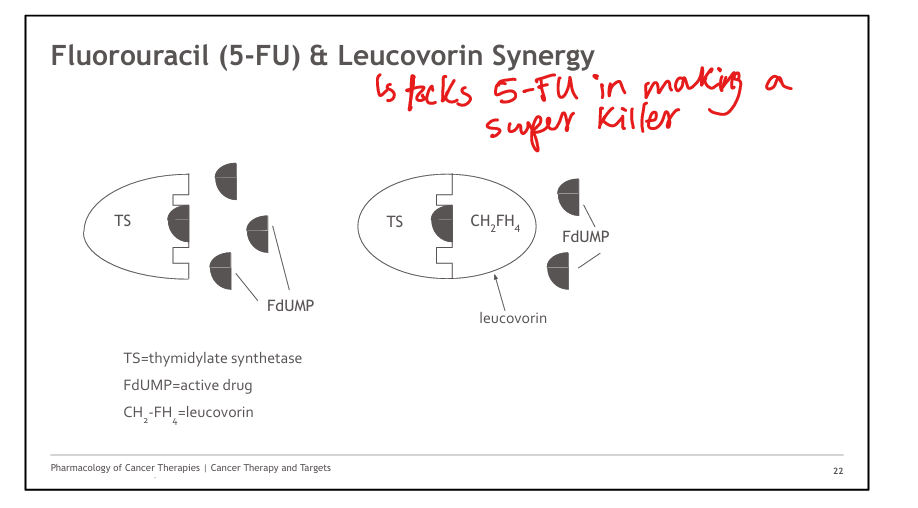
Why give leucovorin with 5‑FU?
Stabilizes FdUMP‑TS complex → ↑ cytotoxicity
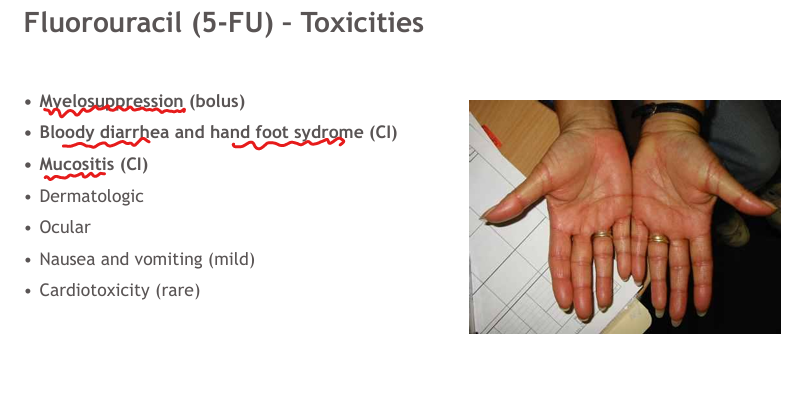
Flurouracil (5‑FU) major toxicities
Myelosuppression, mucositis, hand‑foot syndrome, diarrhea, cardiotoxicity (rare)
G‑CSF timing rule
Give ≥24h after chemo and ≥10 days before next cycle
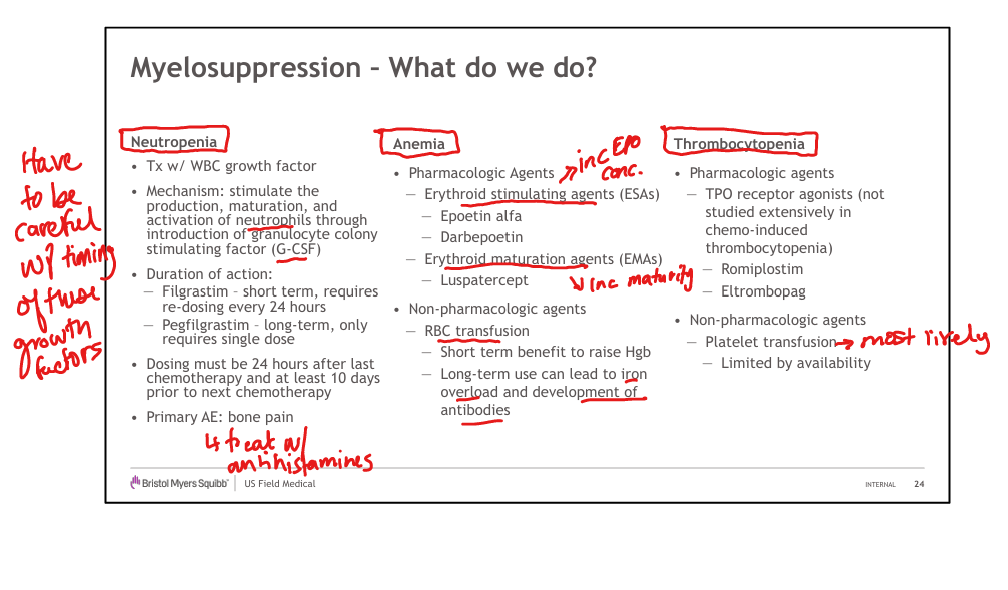
6‑MP mechanism
Inhibits de novo purine synthesis
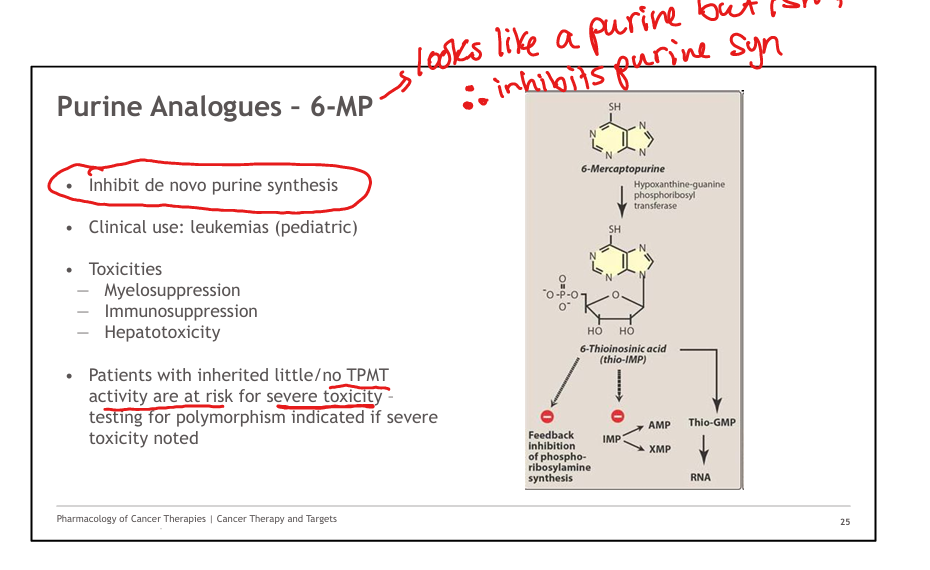
6‑MP toxicity
Myelosuppression, hepatotoxicity
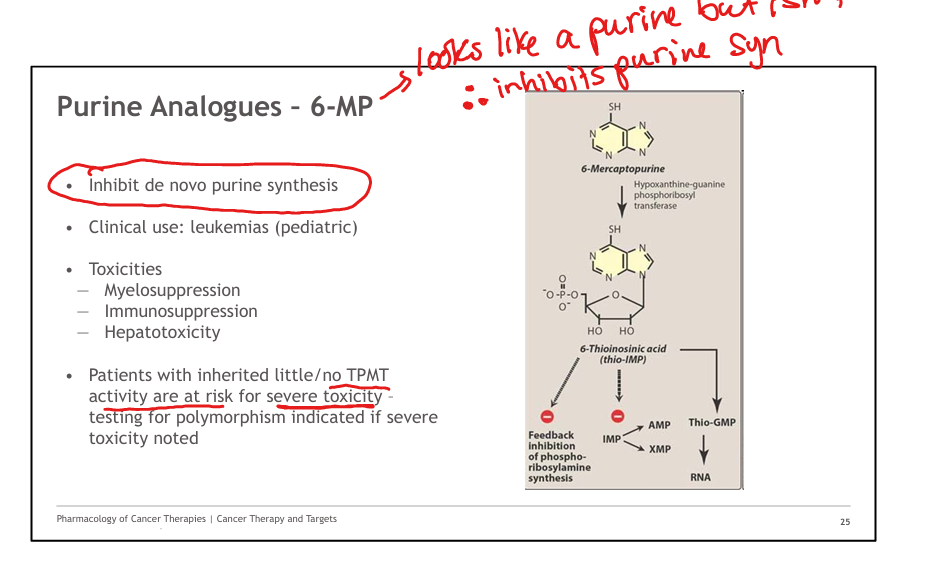
6‑MP pharmacogenomic warning
TPMT deficiency → severe toxicity
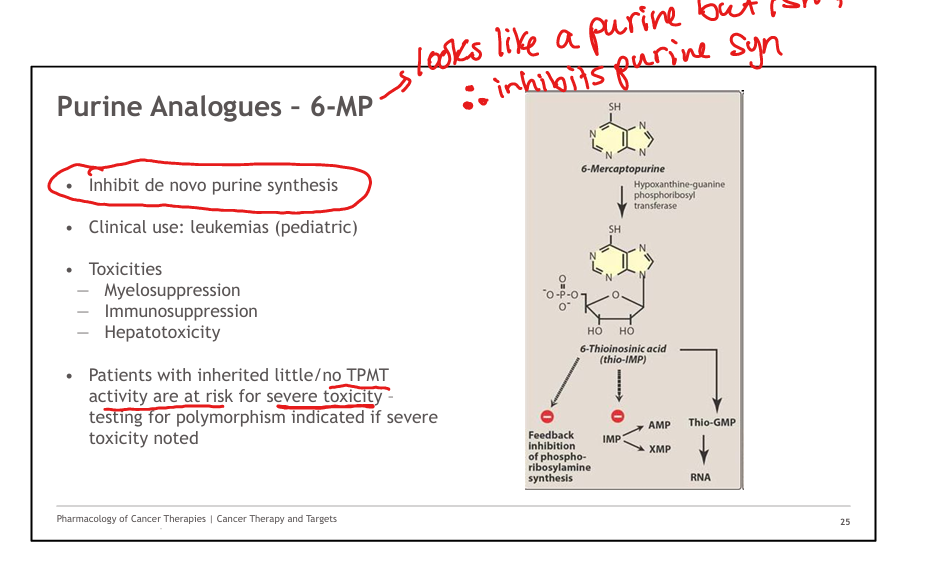
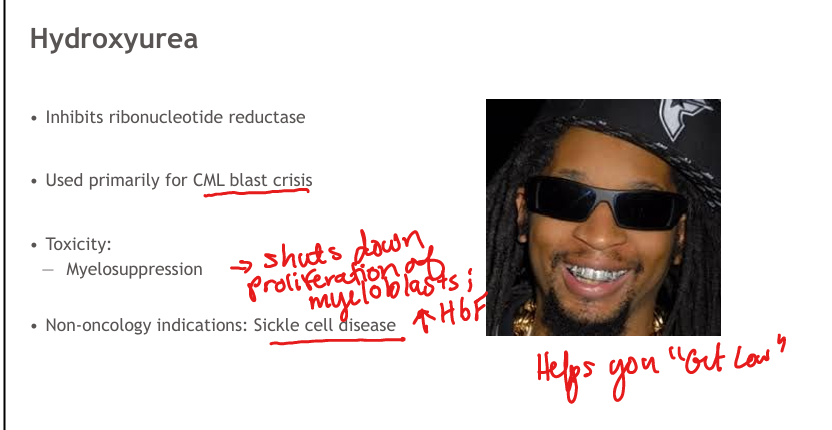
Hydroxyurea mechanism
Inhibits ribonucleotide reductase»dec hematopoesis, inc HbF
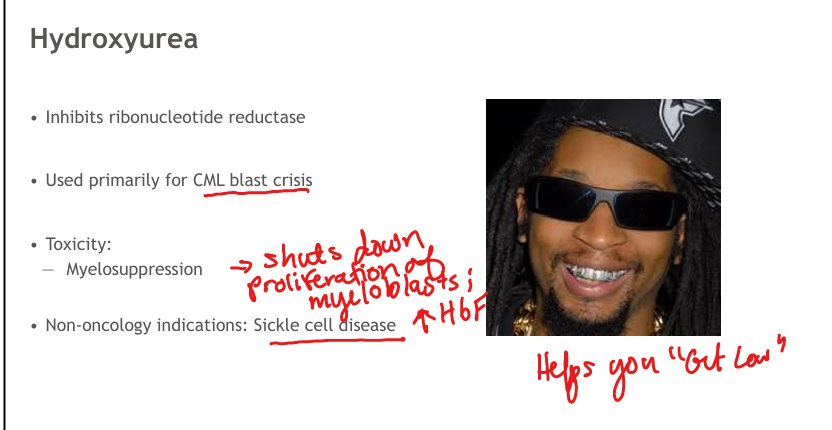
Hydroxyurea uses
CML blast crisis, sickle cell disease
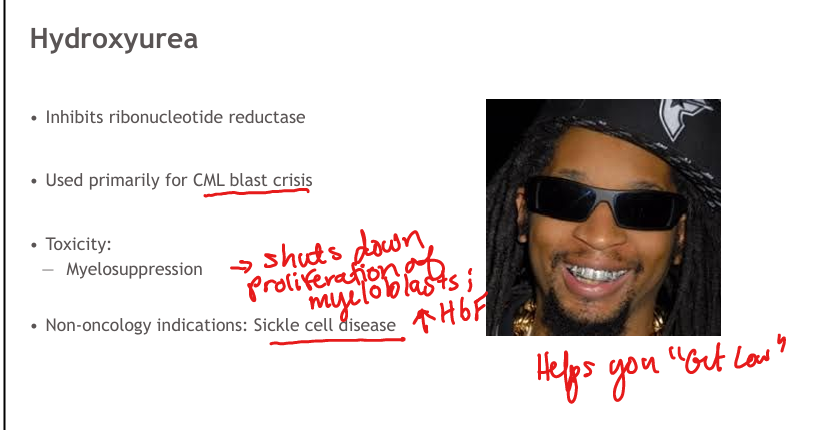
Hydroxyurea toxicity
Myelosuppression
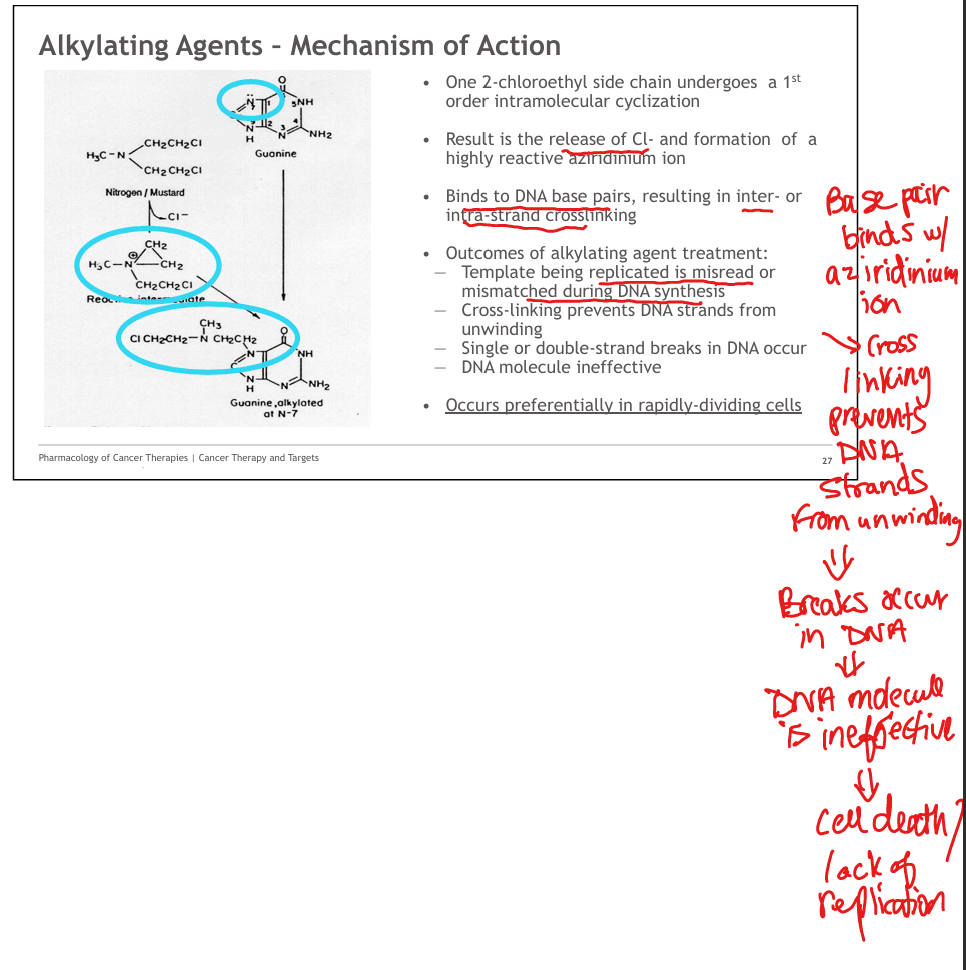
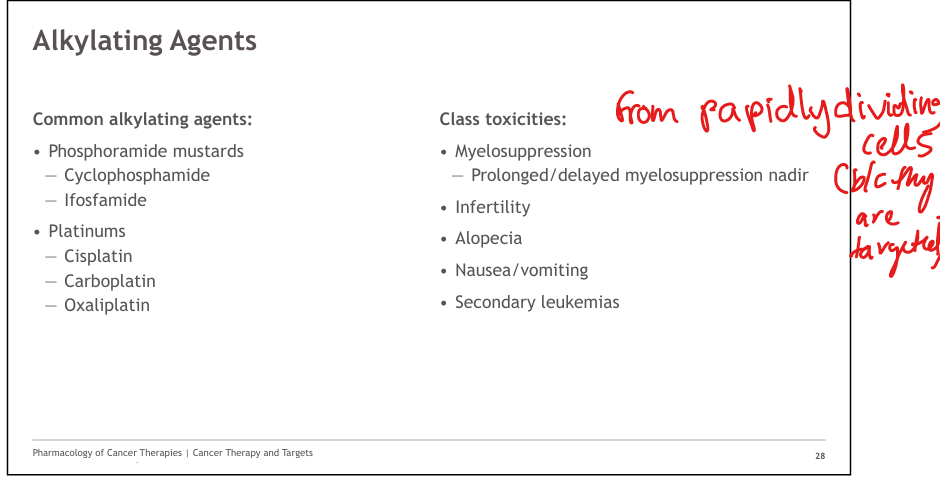
Alkylating agent mechanism
DNA crosslinking which prevents strands from unwinding → strand breaks → apoptosis
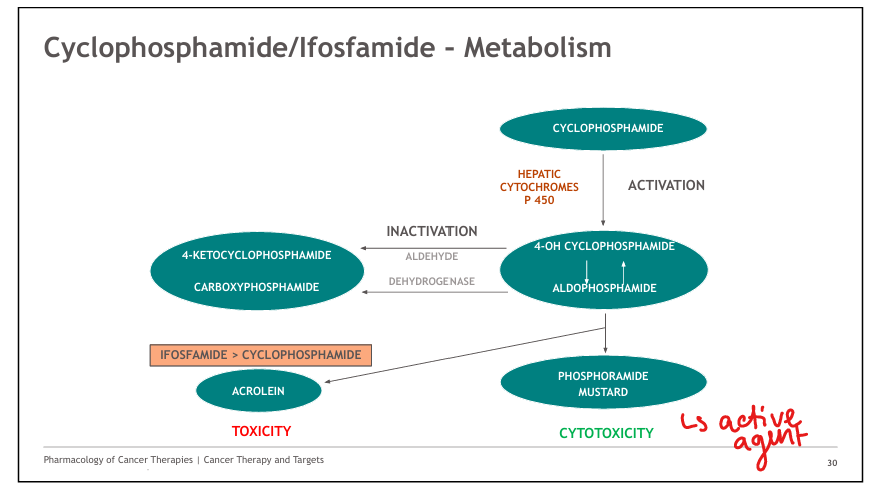
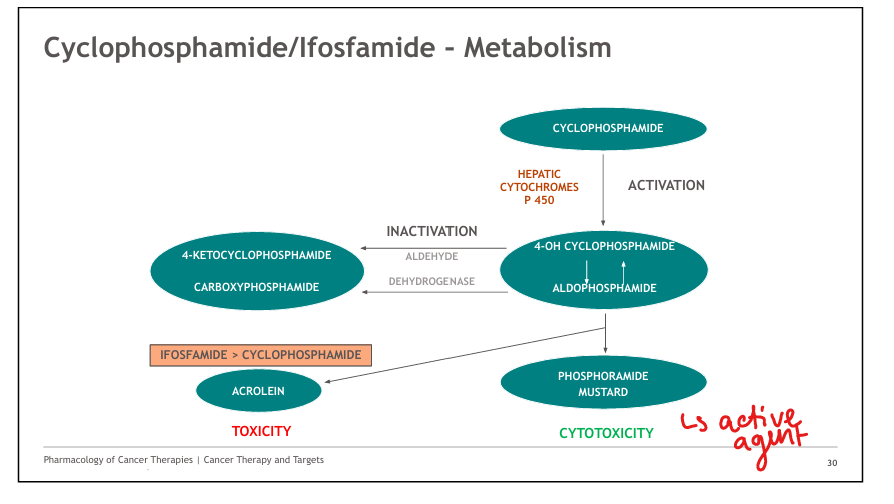
Cyclophosphamide/ifosfamide(alkylating agents) toxic metabolite
Acrolein
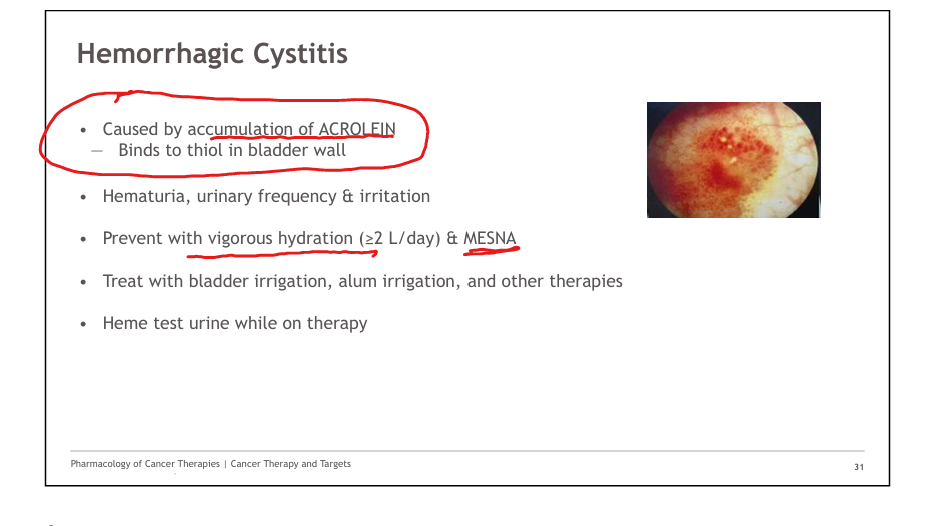
Acrolein (biproduct of alkylating agents) toxicity
Hemorrhagic cystitis
Hemorrhagic cystitis prevention
Vigorous hydration + MESNA
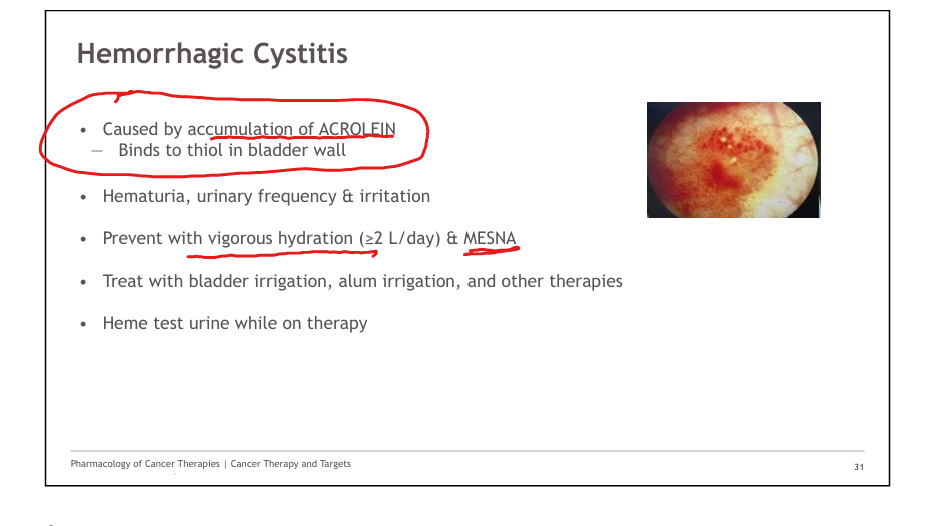
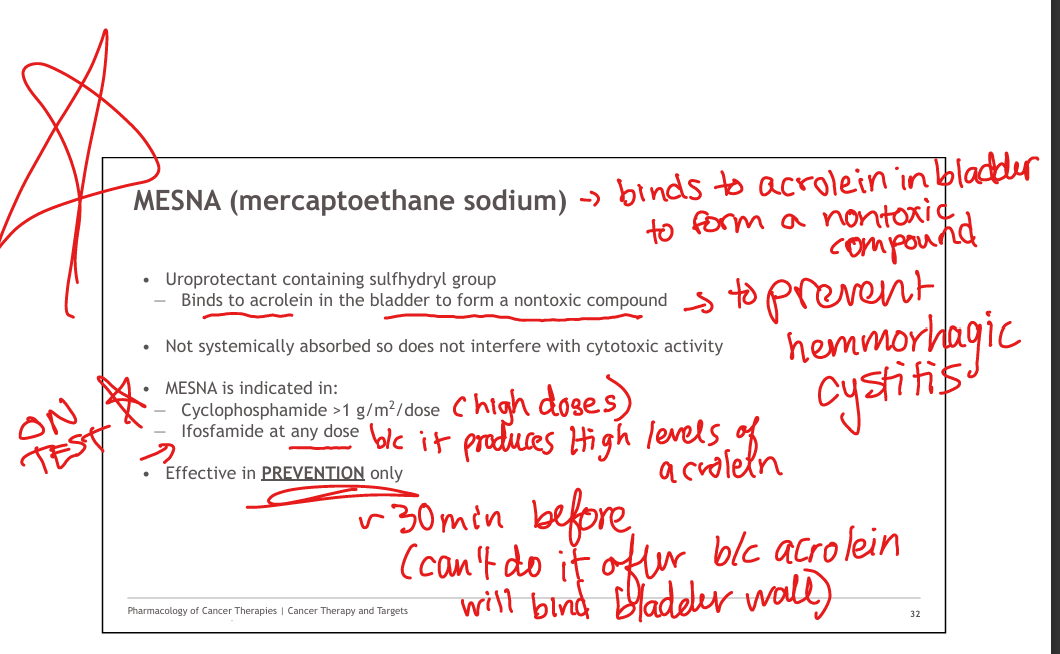
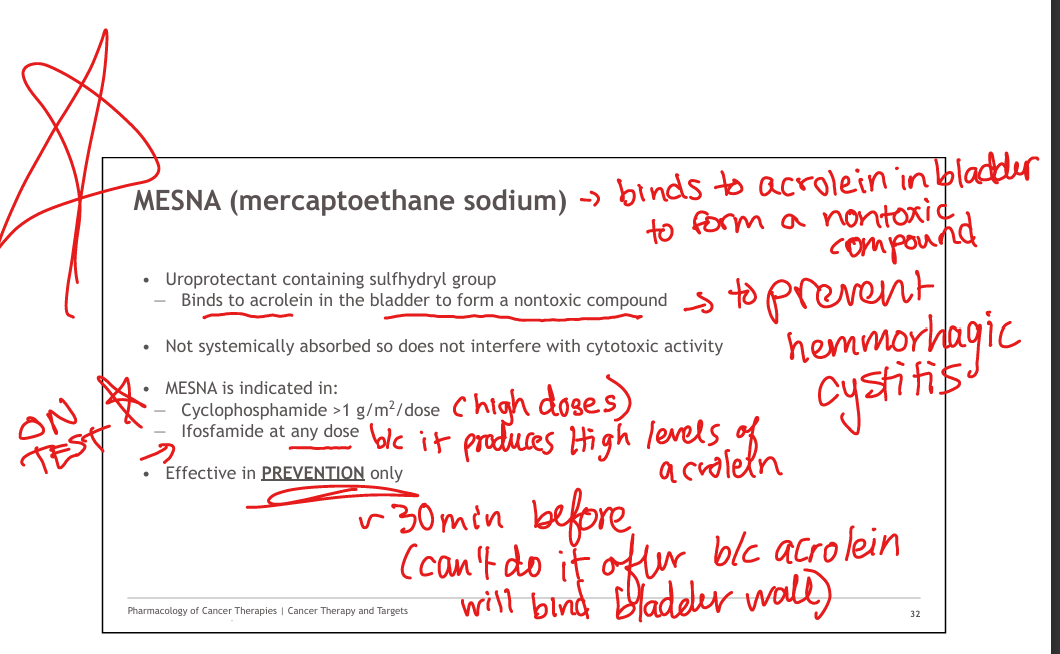
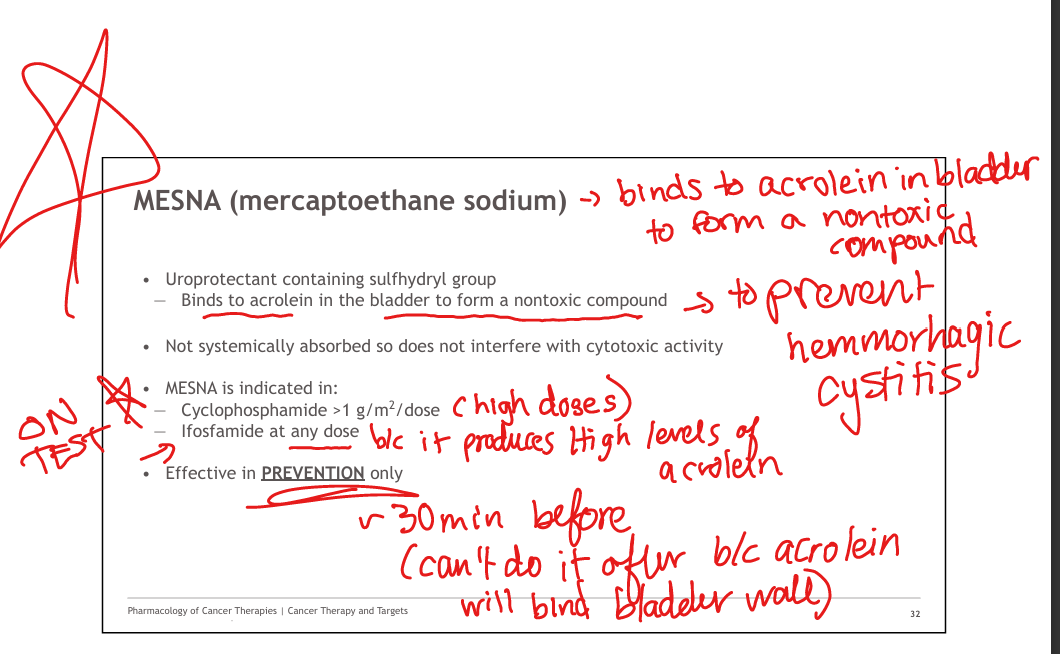
MESNA mechanism
Binds acrolein in bladder → forms nontoxic compound to prevent hemmorhagic cystitis
Cyclophosphamide/Ifosfamide toxicities
Hemorrhagic cystitis, SIADH, delayed N/V, Neurotoxicity, Fanconi syndrome
MESNA Indication (drugs)
Cyclophoshamide >1g/m² AND/OR Ifosfamide at ANY dose(bc it produces high levels of acrolein)
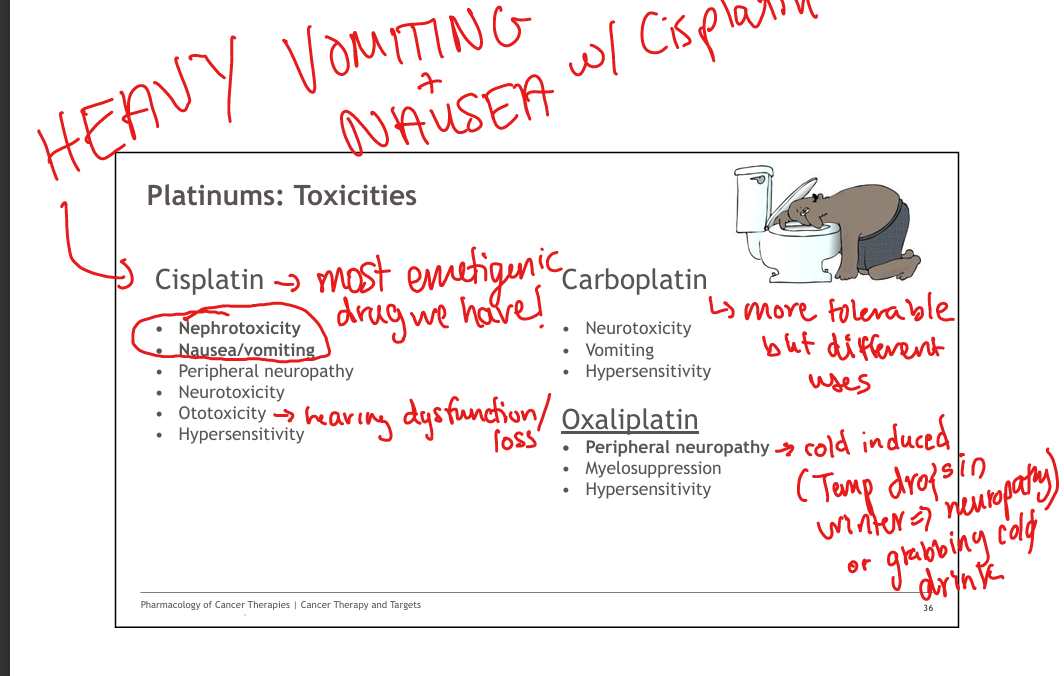
Cisplatin (Platinum) major toxicities + prevention
Nephrotoxicity, ototoxicity, neuropathy, severe N/V. Prevent with hydration (ciSPLATin=>bc N/V)
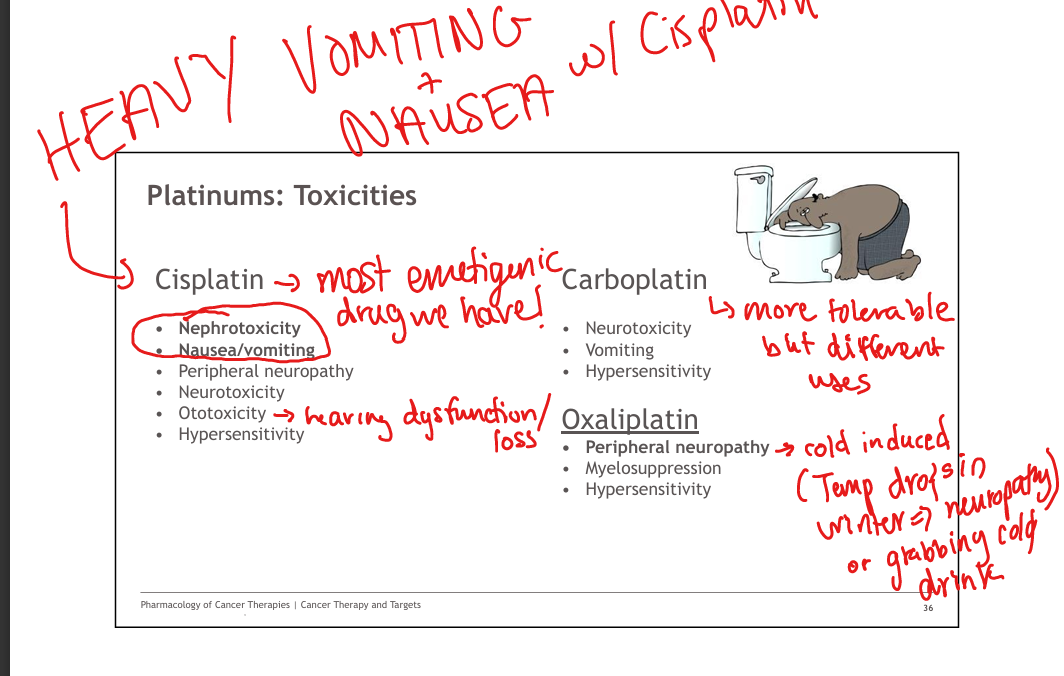
Oxaliplatin major toxicity
Cold‑induced peripheral neuropathy
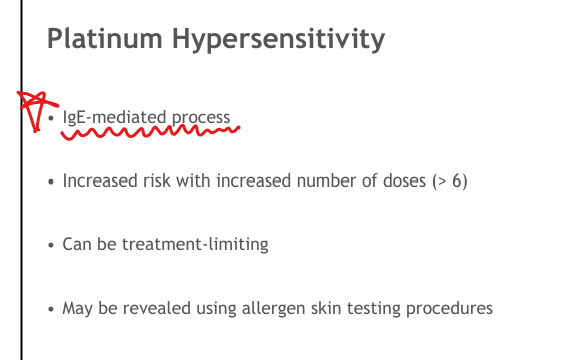
Platinum hypersensitivity mechanism
IgE‑mediated, ↑ risk after >6 doses
Alkylating agent categories
Phosphoramides mustards: Cyclophosphamide + Ifosfamide
Platinums: Cisplatin, Carboplatin, Oxaliplatin
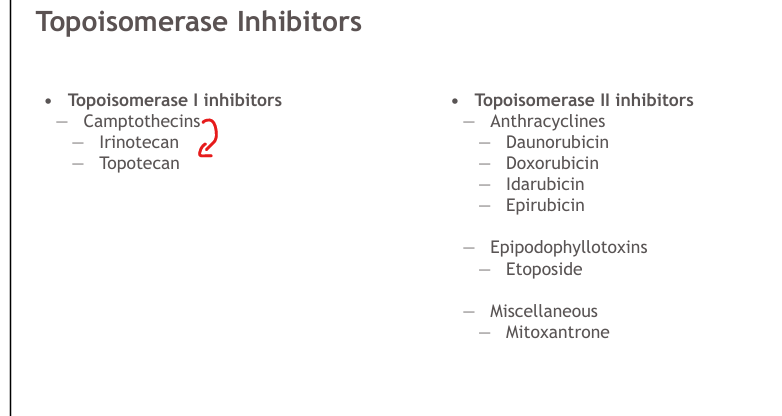
Topoisomerase I inhibitors Ex’s
Irinotecan, topotecan
Topoisomerase Inhibitors MOA
prevents DNA strand break repair after topoisomerases unwind the strand
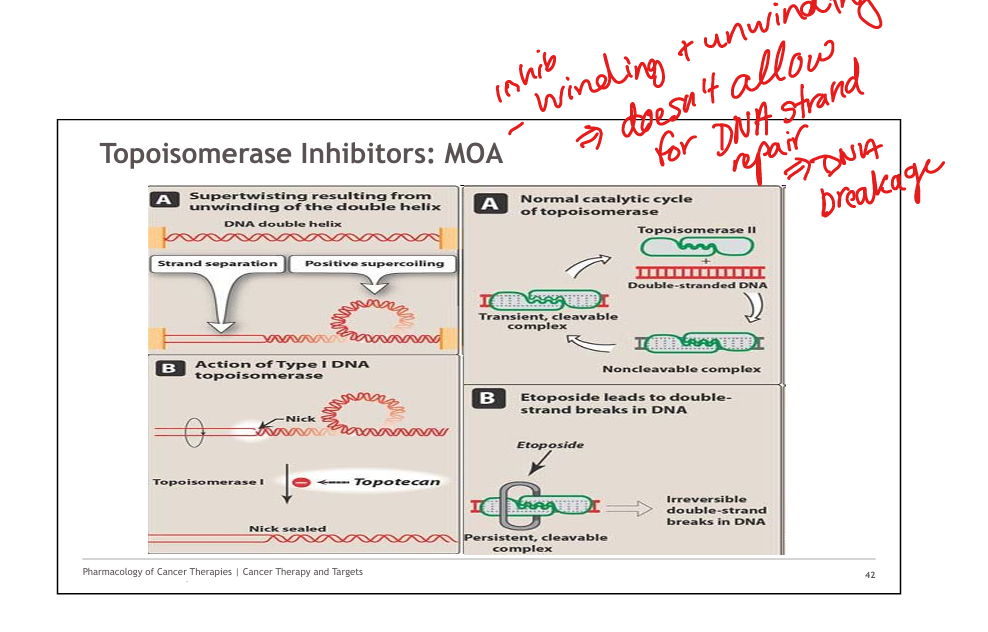
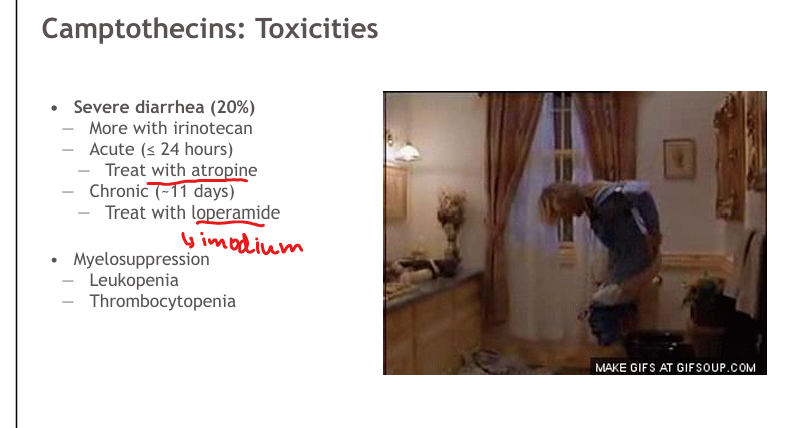
Camptothecins (Topoisomerase Inhibitor 1’s) acute diarrhea treatment
Atropine + loperamide for chronic
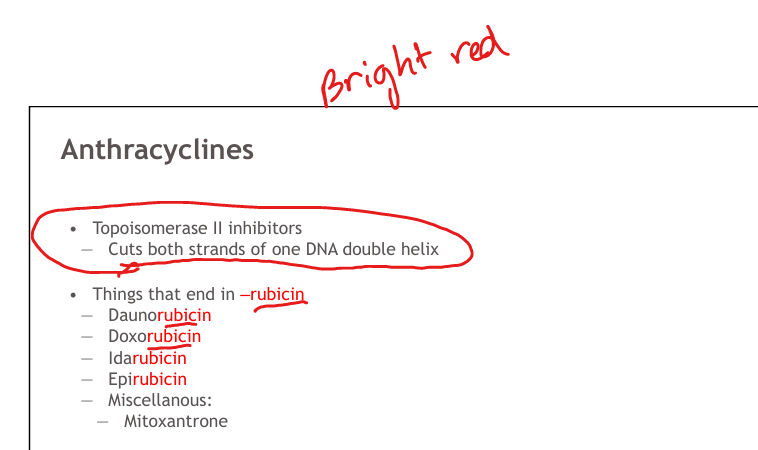
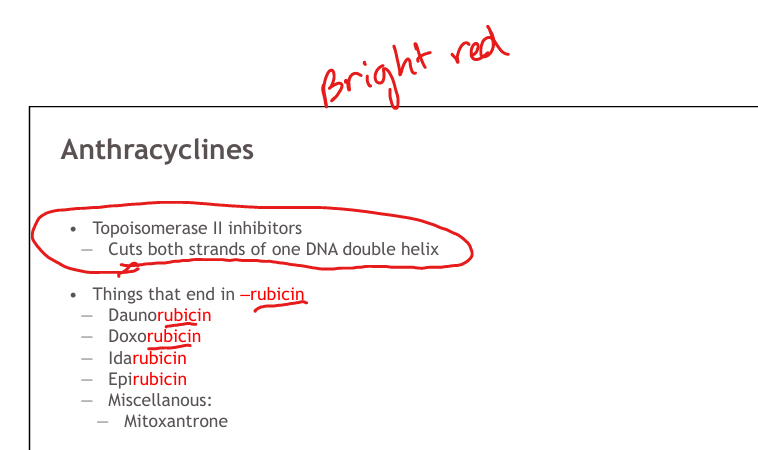
Topoisomerase II inhibitors»Anthracyclines (end in rubicin)
Anthracyclines (doxo, daunorubicin, idarubicin, epirubicin), etoposide
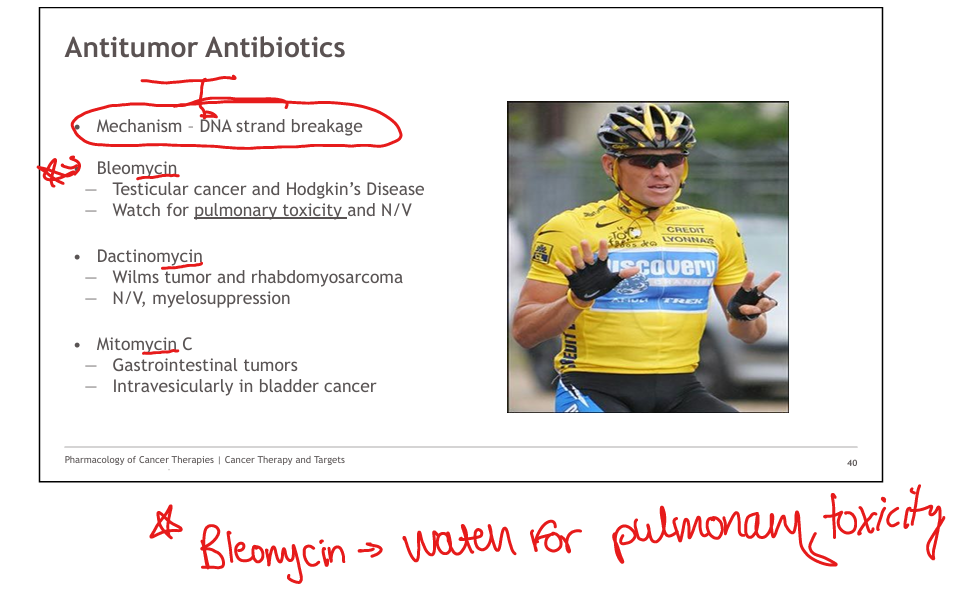
Antitumor Antibiotics MOA and Ex
DNA strand breakage. Ex: Bleomycin(watch for pulmonary toxicity), Dactinomycin, Mitomycin
Anthracycline mechanism
Inhibit topo II + generate free radicals → DNA damage
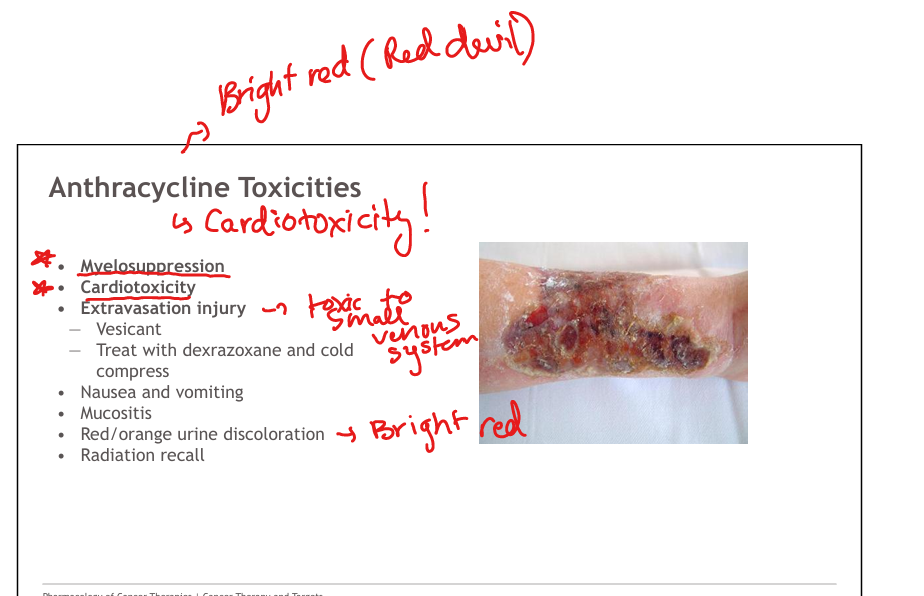
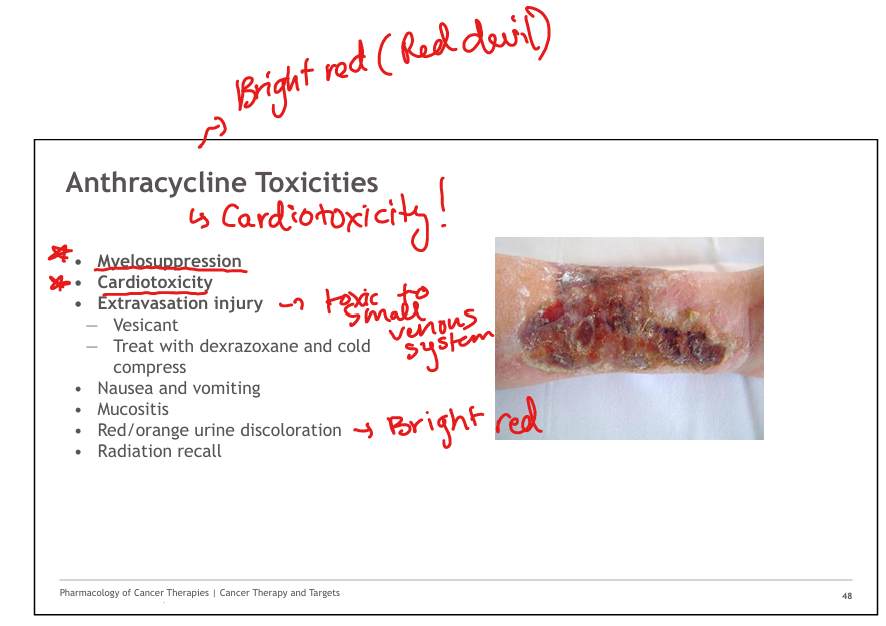
Anthracycline(topoisomerase 2 inhibitors) toxicities!!
Cardiotoxicity, extravasation injury, myelosuppression, red urine, mucositis
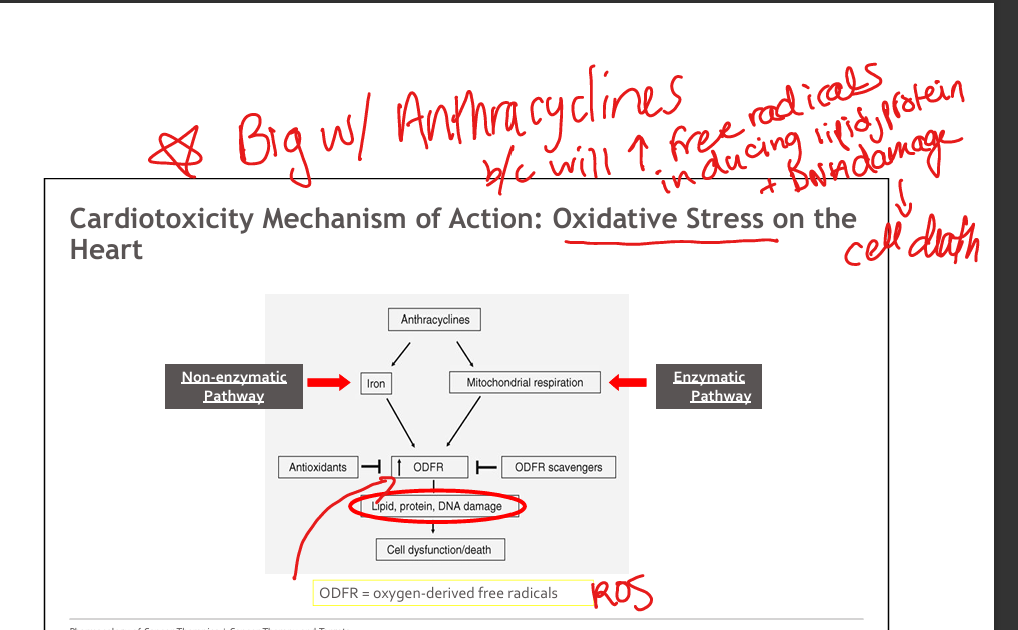
Anthracycline cardiotoxicity mechanism
Free radical formation → lipid, protein and DNA damge→myocyte damage/death
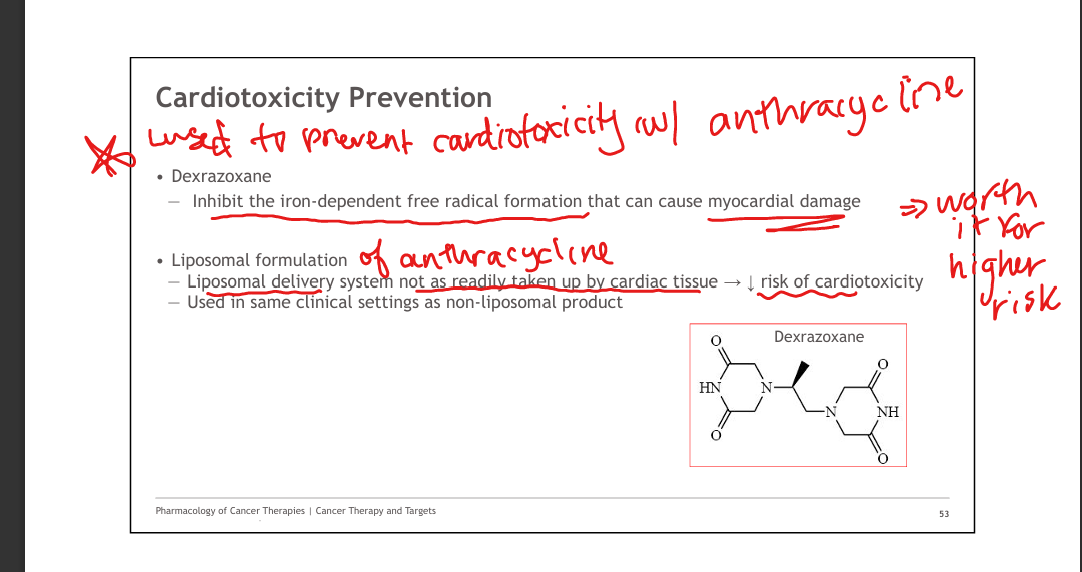
Anthracycline cardioprotective agent
Dexrazoxane- inhibits iron dependent free radical formation
or using liposomal delivery of anthracycline
Anthracycline extravasation treatment
Dexrazoxane + cold compress
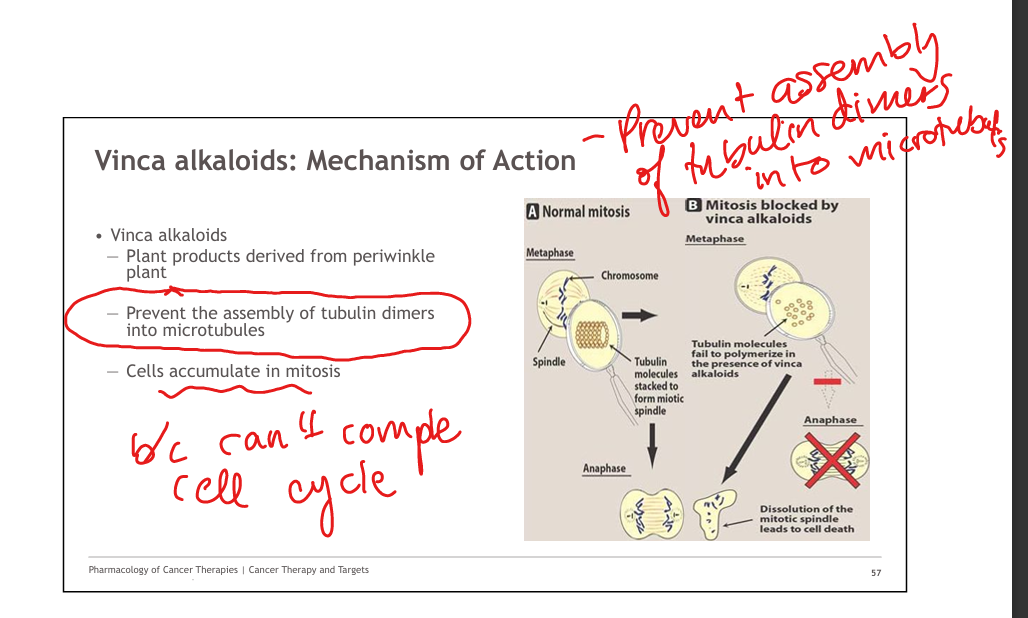
Vinca alkaloid mechanism
Prevent microtubule assembly → mitotic arrest
Vinca alkaloid fatal administration route!!!!!!
Intrathecal (fatal)
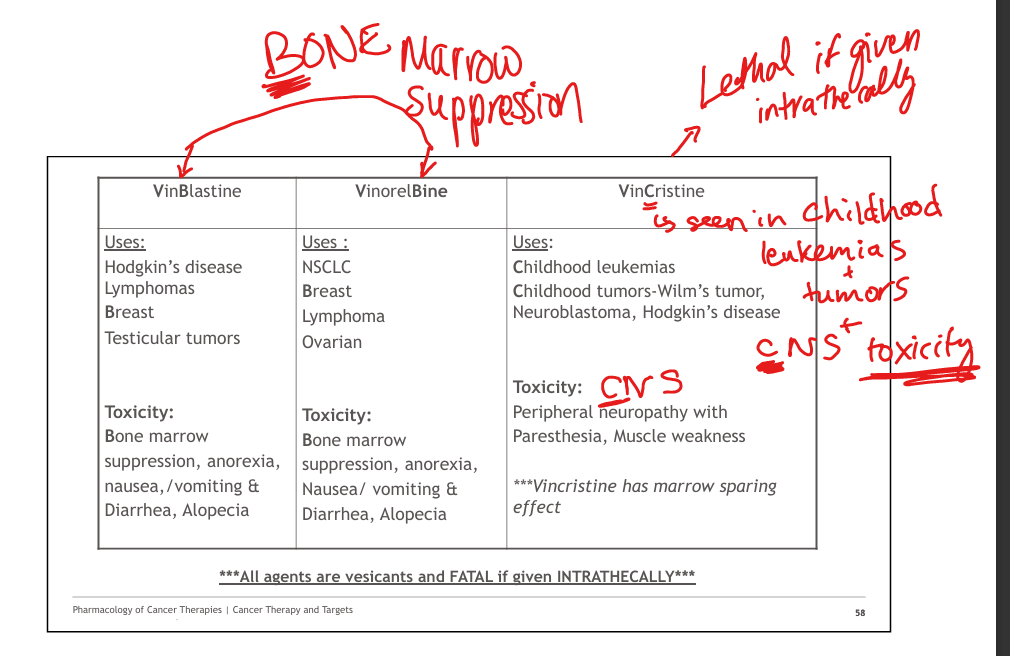
VinCristine Uses + major toxicity
Uses: Childhood leukemias, Childhood tumors, hodgkins
Toxicity: CNS toxicity (therefore dont’ do it intrathecally), Peripheral neuropathy (marrow‑sparing)
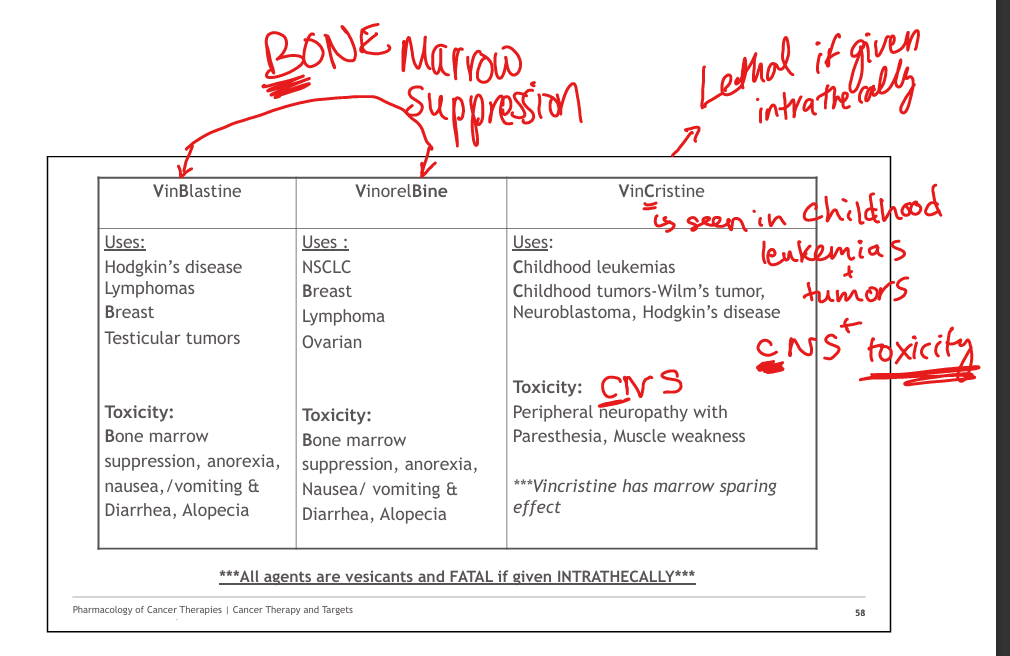
VinBlastine and VinorelBine uses and major toxicity
Uses: hodgkins, lymphomas, Breast, testicular
Toxicities: Bone marrow suppression
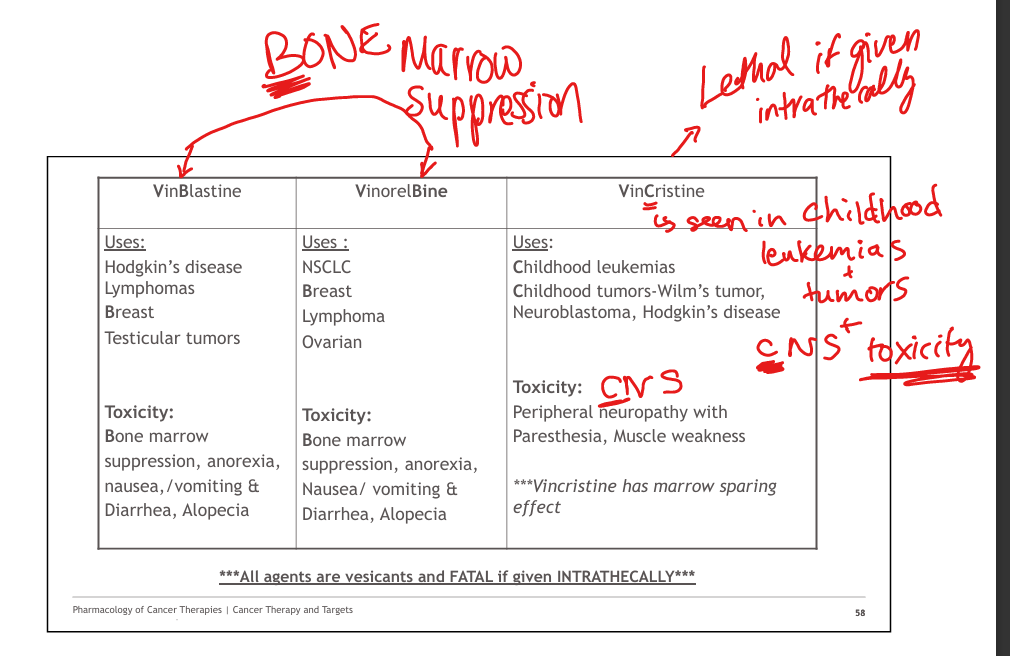
Taxane mechanism
Stabilize microtubules → prevent disassembly(act like concrete) → mitotic arrest
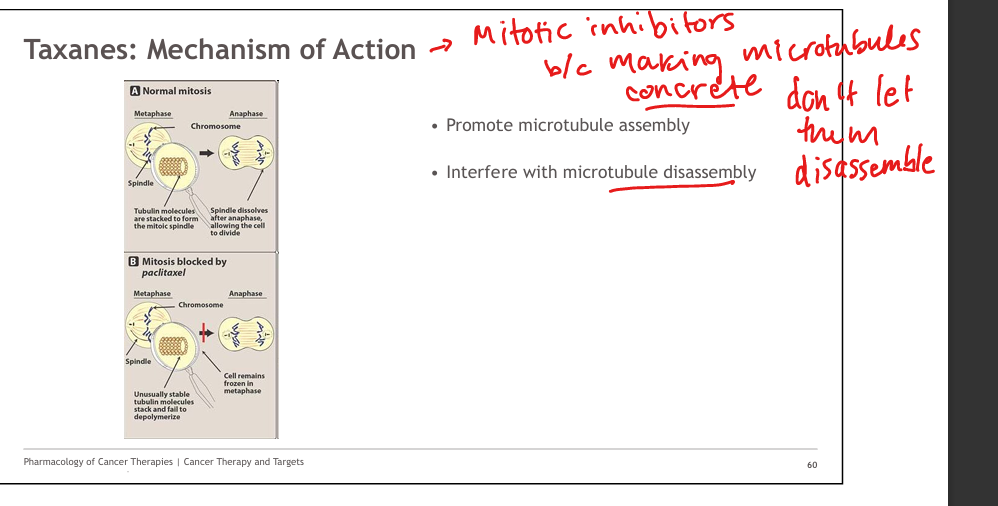
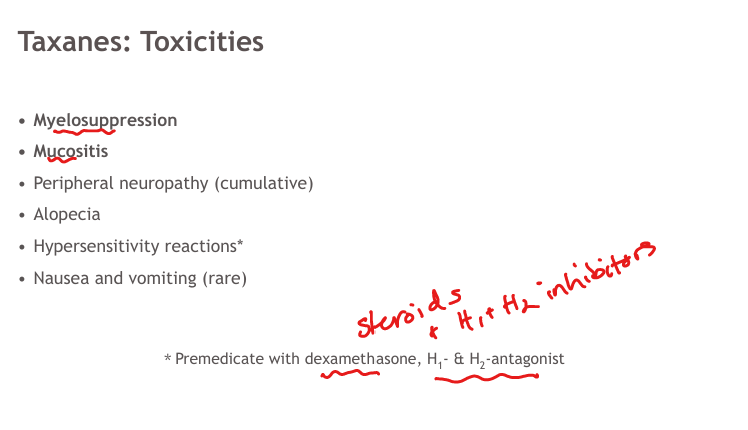
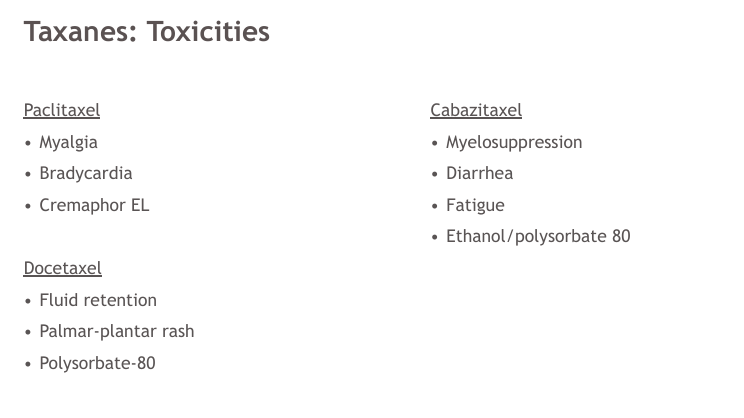
Taxane toxicities
Neuropathy, mucositis, myelosuppression, hypersensitivity, alopecia
Proteasome inhibitor examples
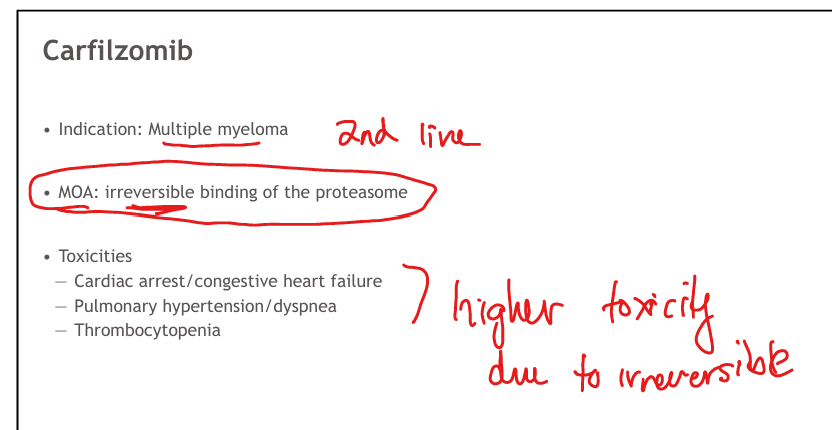
Bortezomib, carfilzomib
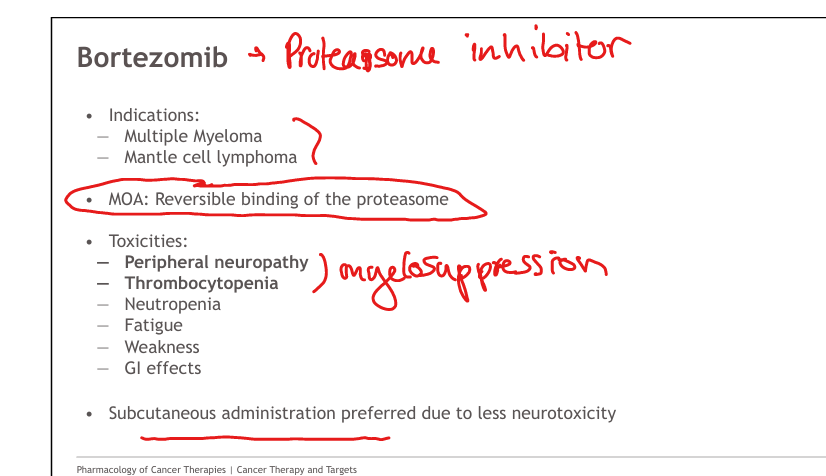
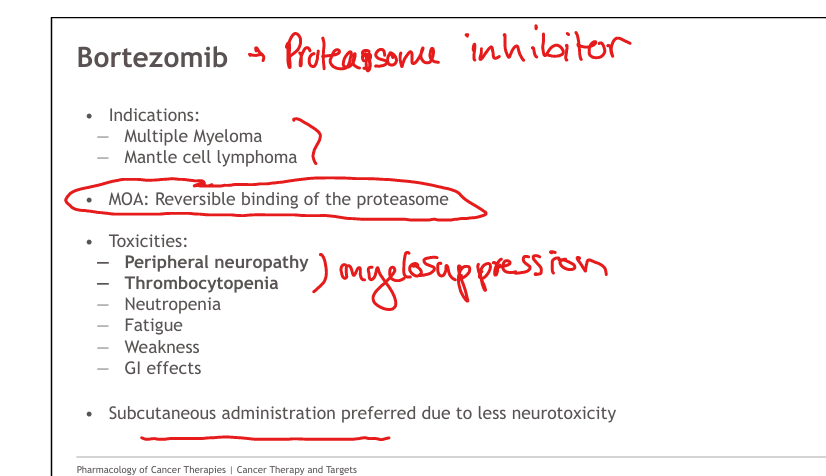
Bortezomib major toxicity
Peripheral neuropathy (less with SQ route)
Carfilzomib(proteasome inhibitor) major toxicity
Cardiac failure, pulmonary hypertension
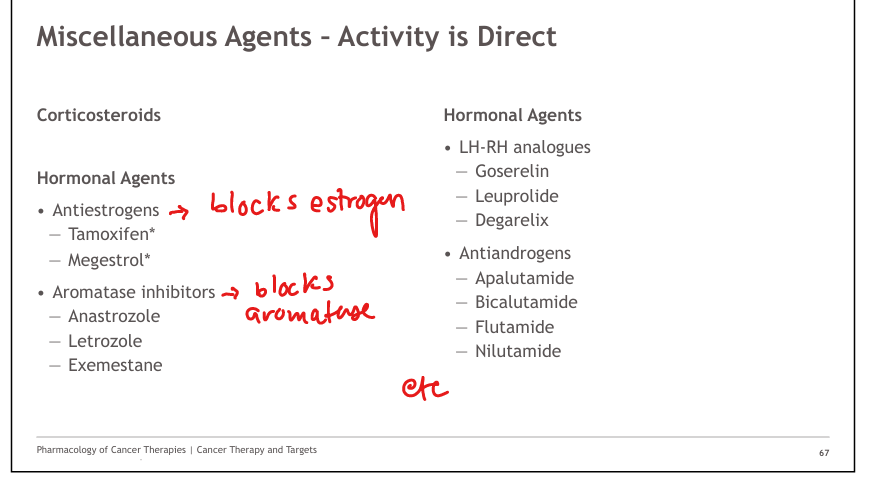
Tamoxifen mechanism
Anti‑estrogen in breast, pro‑estrogen in uterus
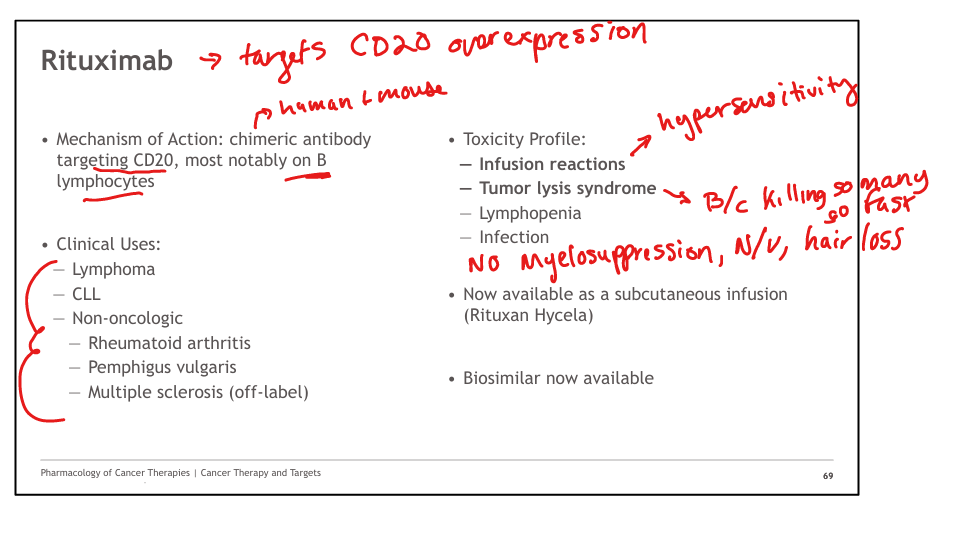
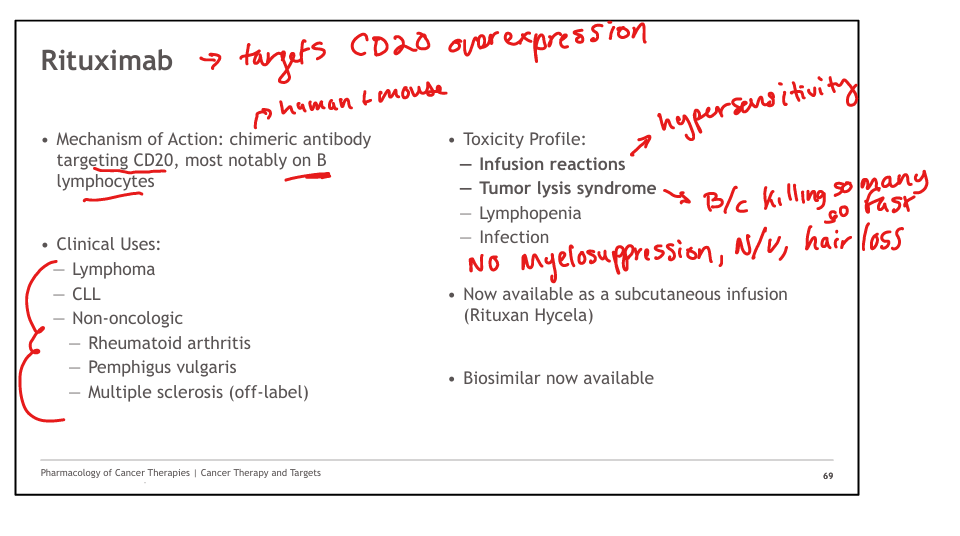
Rituximab target
CD20
Rituximab toxicities
Infusion reactions, Tumor Lysis Syndrome, infections
Tumor lysis syndrome lab abnormalities
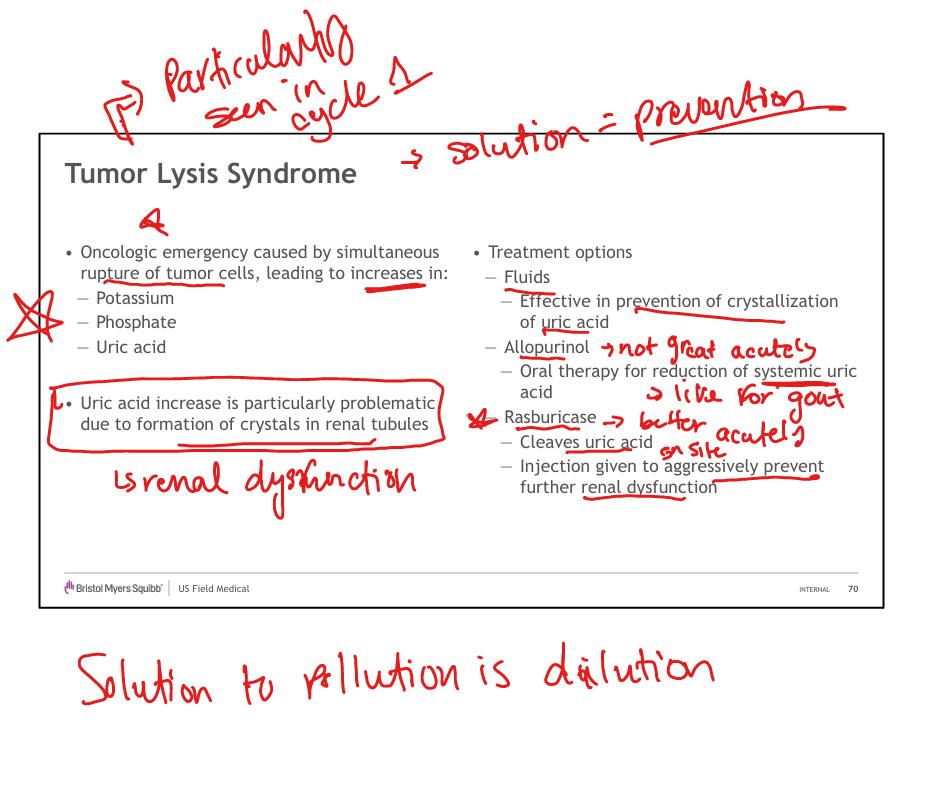
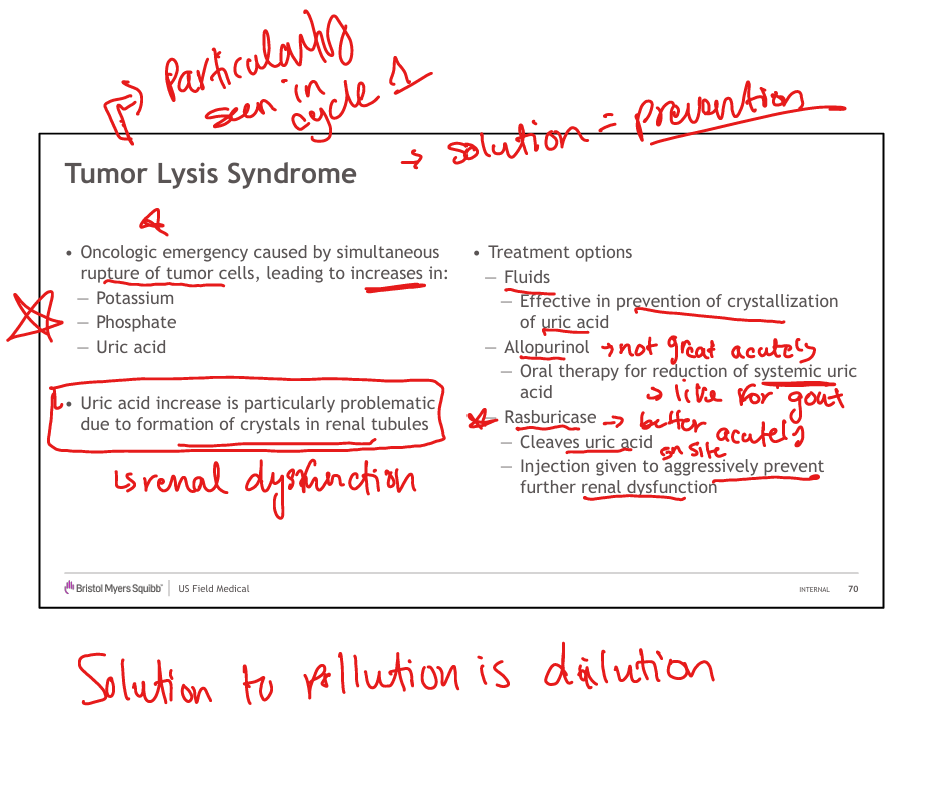
↑ K, ↑ phosphate, ↑ uric acid
Tumor Lysis Syndrome treatment
Fluids, allopurinol(reduces uric acid systemically), rasburicase(cleaves uric acid)
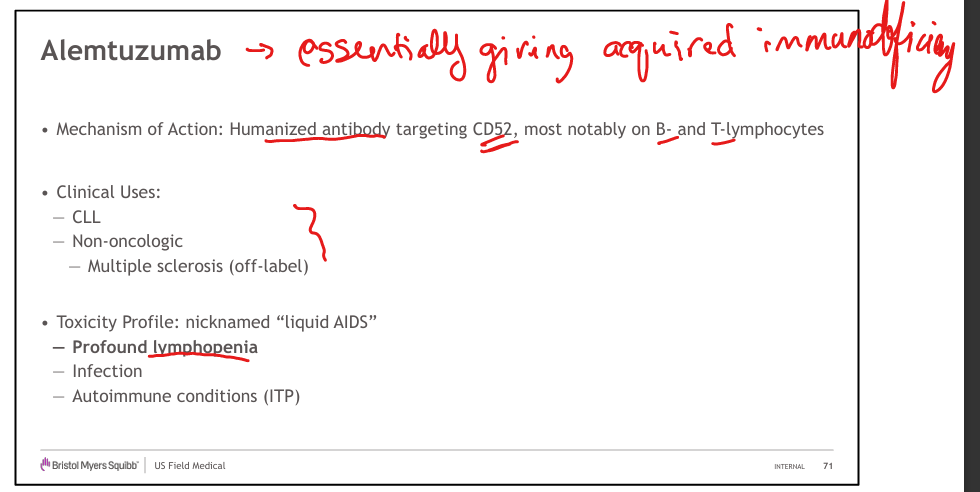
Alemtuzumab target
CD52»targets B and T lymphocytes
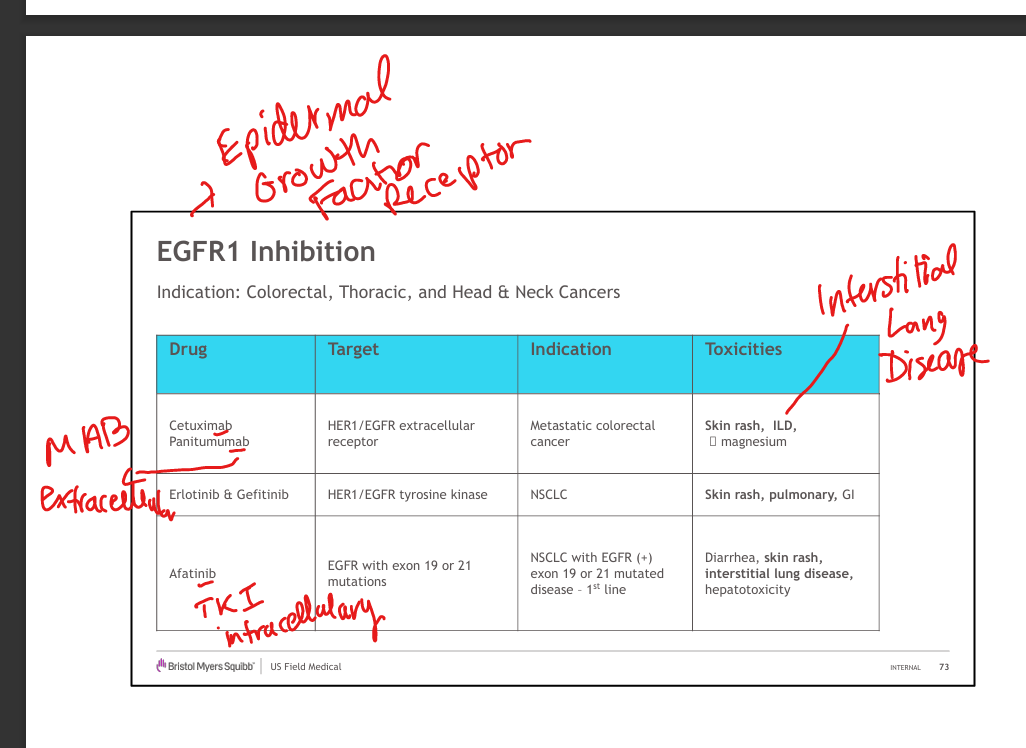
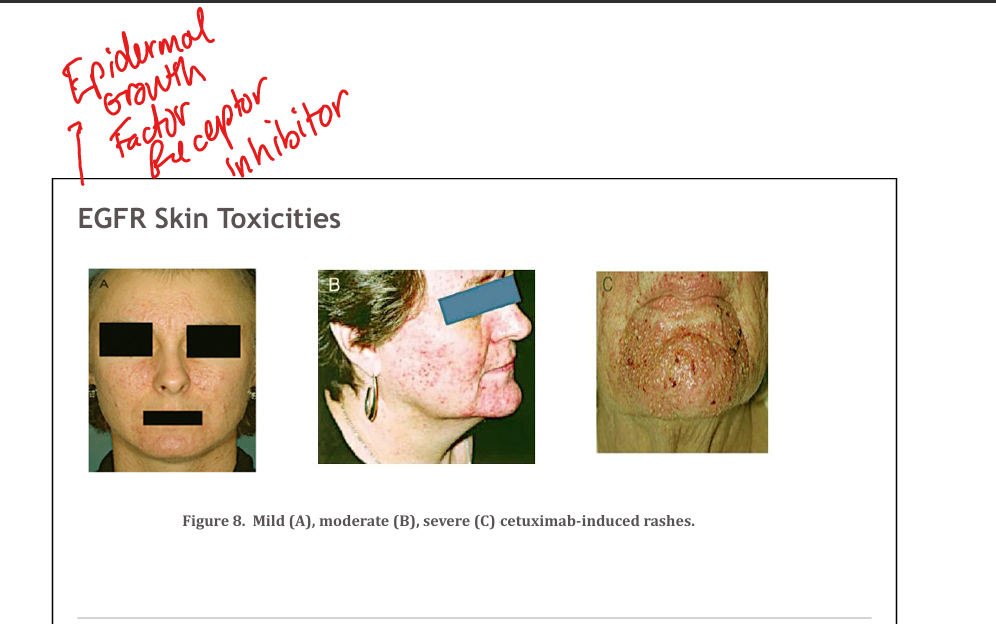
Epidermal Growth Factor receptor(EGFR-1) inhibitor toxicities
Skin rash, diarrhea, Interstitial Lung Disease, hypomagnesemia, GI
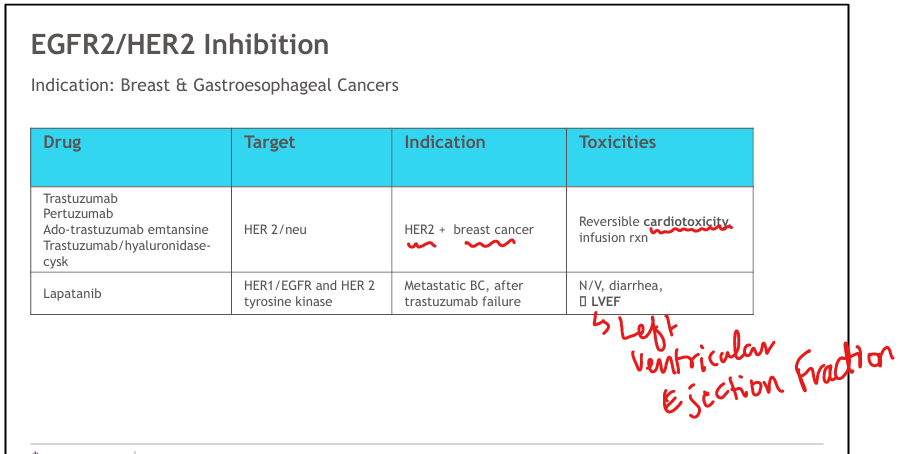
EGFR2/HER2 inhibitor toxicities
Reversible cardiotoxicity, infusion rxn
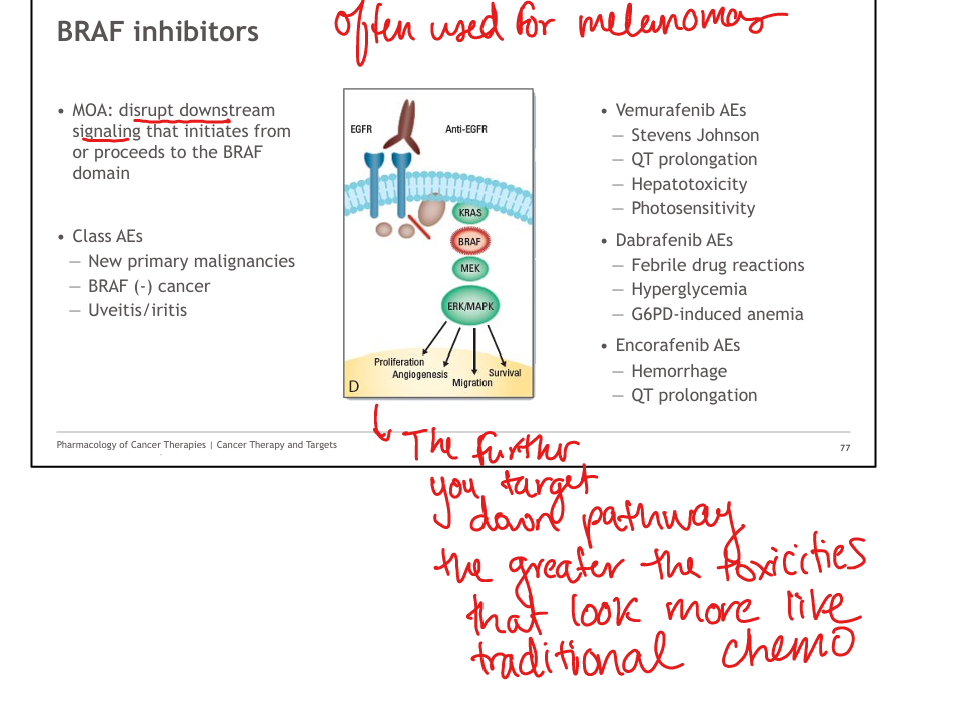
BRAF inhibitor class toxicities and used for
New malignancies, uveitis, photosensitivity, QT prolongation
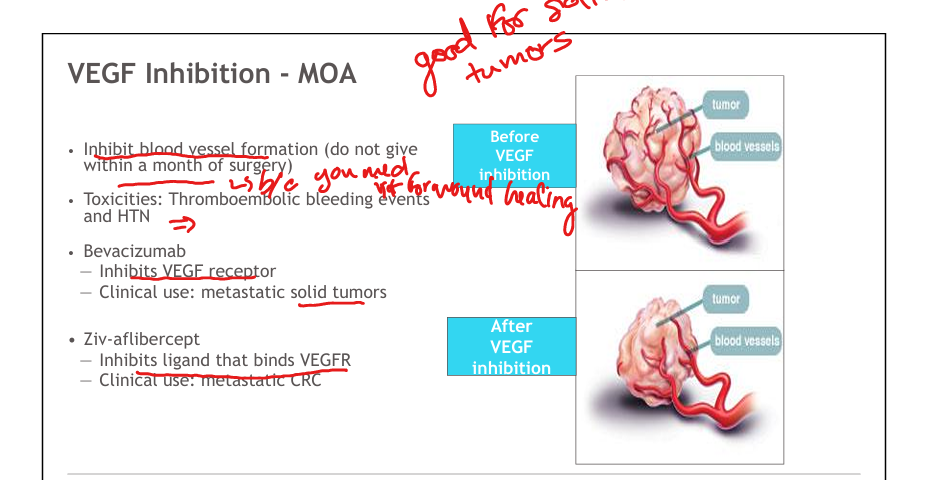
VEGF inhibitor mechanism + example
Blocks angiogenesis. Bevacizumab
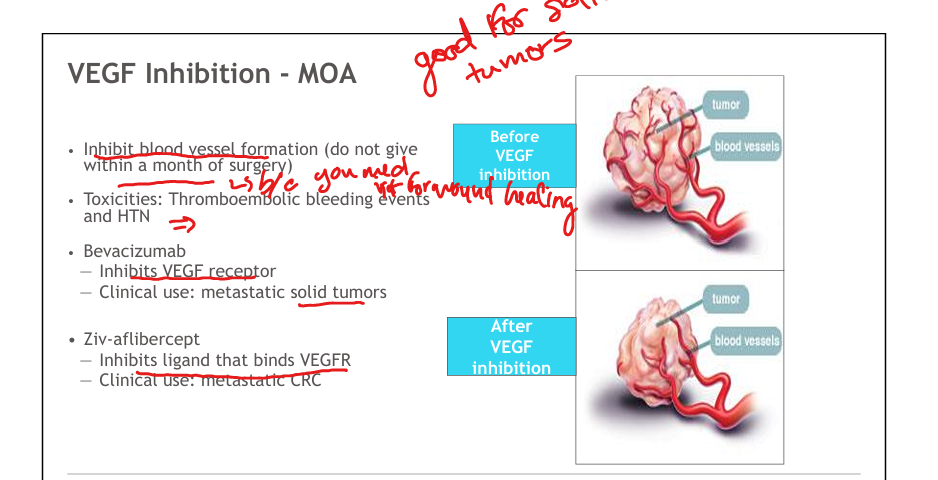
VEGF inhibitor toxicities
HTN, bleeding, thrombosis, impaired wound healing
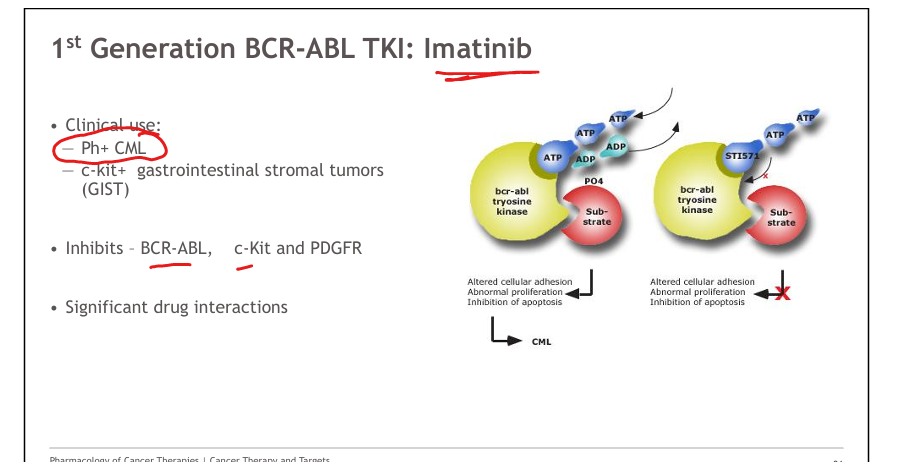
Imatinib targets
Philadelpia Chromosome: BCR‑ABL, c‑KIT, PDGFR. It is a TKI
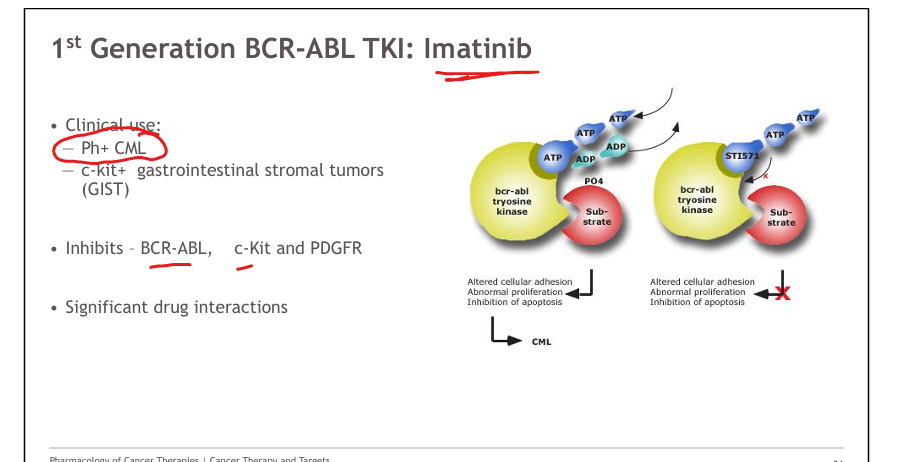
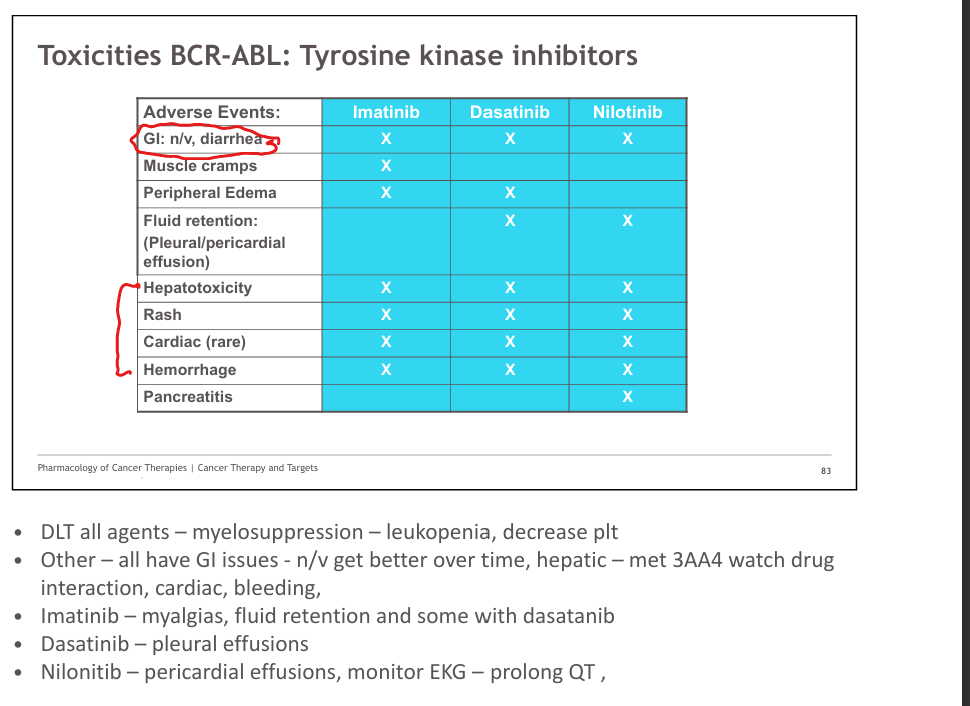
Imatinib uses + AE
CML, Gastrointestinal Stromal Tumors (GIST). AE: N/V/D, bleed, pancreatitis
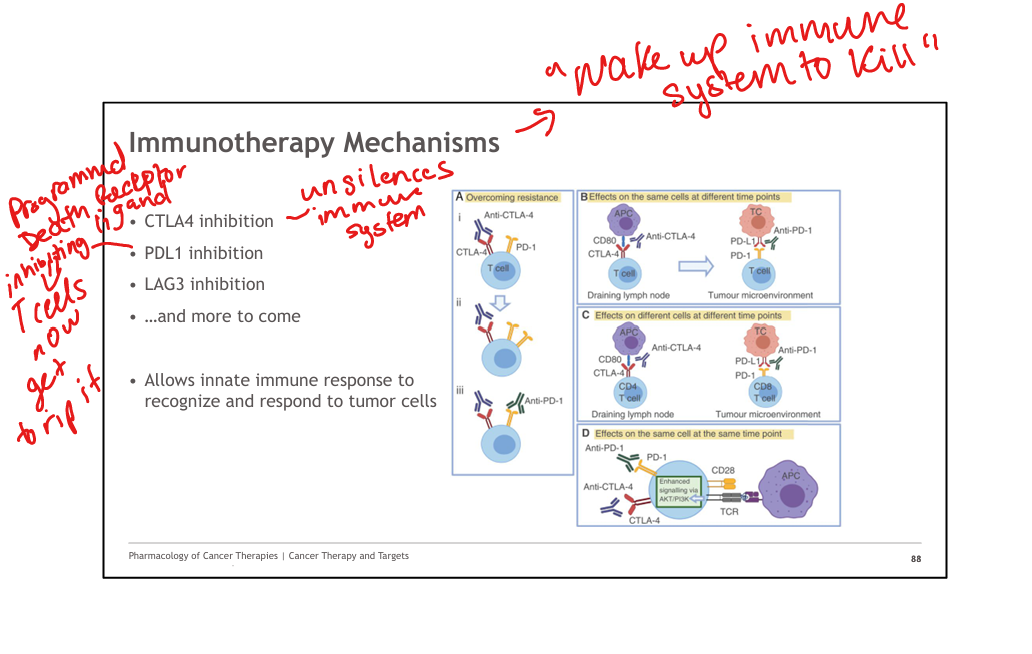
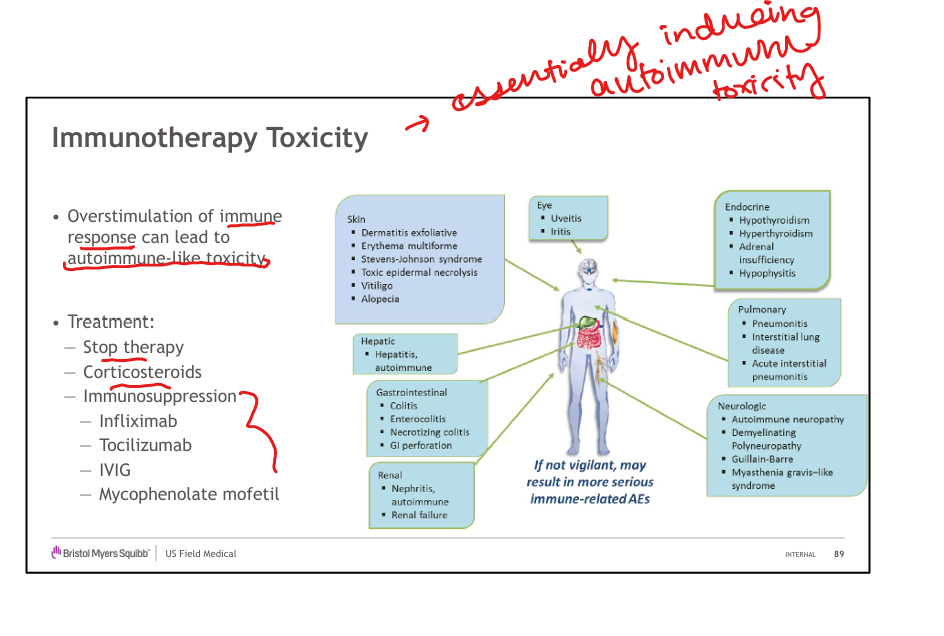
Immunotherapy Mechanism (2+) and Toxicity
CTLA4 inhibition(normally silences immune system but when inhibited T cells kill), PDL1 inhibition(normally inhibits programmed cell death, but once inhibited will let T cells kill)
Toxicity: Autoimmune like toxicity