Portage Microbiology Module 5
 Call Kai
 Learn
Learn Practice Test
 Spaced Repetition
 Match
Match Flashcards
 Knowt Play
1/77

There's no tags or description
Looks like no tags are added yet.
Name | Mastery | Learn | Test | Matching | Spaced | Call with Kai | Chat |
|---|
No analytics yet
Send a link to your students to track their progress
78 Terms
Define Pathogenicity
the ability of a microbe to cause disease (yes or no)
Define Virulence
Ease of pathogen to infect host and cause disease
Antigen masking
pathogen covered in host factors to avoid immune detection (hides its antigens)
Antigen mimicry
pathogen’s antigens resemble host molecule’s, helping it evade immune detection
Antigen variation
pathogen switches its antigens, thwarting the mounting immune response
Contact precautions
1) limit patient transport
2) special attention to hand washing
3) gloves at all times
4) gown at all times
5) single use patient equipment
wound/skin infection, resistant infection, infectious diarrhea
Droplet precautions
1) limit patient transport
2) procedural mask at all times
most respiratory infections, influenza, pertusis
Airborne precautions
1) limit patient transport
2) N95 or comparable respiratory
3) place patient in AIIR facility (airborne infection isolation room)
TB, Rubeola (measles), Varicella (chicken pox)
Streptococcus
Gram POSITIVE
Nonmotile
Cocci appearing in pairs or chains
Catalase NEGATIVE (facultative anaerobe)
(cannot breakdown peroxides, does not produce bubbles on slide for catalase test)
Cultured on BLOOD AGAR
Broken down into Lancefield groups (beta hemolytic ones)
Lancefield Groupings
Grouping of beta hemolytic strep that is based on the carbohydrate composition of bacterial antigens located in the cell wall
On a BAP, the strep that grows in an alpha hemolytic way are likely….
S pneumoniae
Lancefield - Group A (what strand we talkin’ and what the clinical conditions are)
S. pyogenes
(strep)
strep throat (streptococcal pharyngitis)
cellulitis
necrotizing fasciitis
Lancefield - Group B (what strand we talkin’ and what the clinical conditions are)
S. agalactiae
(strep)
blood infections
pneumonia
meningitis in newborns
Strep throat (S. pyogenes)
The main characteristics?
can be transmitted by asymptomatic carriers through resp droplets
inflamed throat, fever, swollen lymph nodes, exudate (pus)
primary cause of bacterial pharyngitis
Treatment: Antibiotics
Can have many complications such as otitis, sinusitis, pneumonia, and rheumatic fever
What is strep best cultured on?
Blood Agar Plate (BAP)
Explain the autoimmunity caused by S. pyogenes in rheumatic fever
1) S. pyogenes M proteins stimulate antibody production (to M proteins) in the host
2) Antibodies made are “cross-reactive,” meaning they bind to host tissues with proteins similar to M proteins.
3) This initiates an immune response to the host’s own cells
Can cause severe damage to heart valves and more! :0 rut roh
Sepsis or Streptococcal Septicemia or “Blood Poisoning”
Causes? What strains?
Causes: Group B Strep, E. coli, S. aureus, Pseudomonas, and Klebsiella
Sepsis or Streptococcal Septicemia or “Blood Poisoning”
What are the symptoms and treatment?
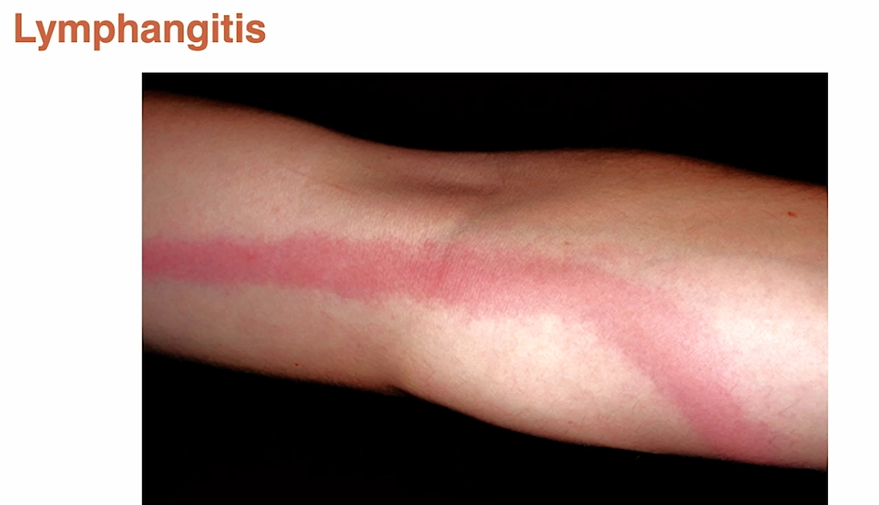
fever, chills, rapid breathing, increased HR, increased WBCs lymphangitis
Septic shock - tissue damage and organ failure due to decreased BP/perfusion
Treatment: antibiotics and support (IV fluids and oxygen)
Symptoms of Rheumatic fever
joint inflammation
involuntary jerking movements
development of pea-sized nodules beneath the skin
reddened areas with raised edges over the surface of the skin
heart valve damage (due to antibodies “crossreacting”)
Treatment: Penicillin
Staphylococcus
The main characteristics?
Shape: cocci appearing in clusters
Gram POSITIVE
Nonmotile
Catalase POSITIVE (facultative anaerobe)
Oxidase NEGATIVE
Coagulase POSITIVE
Culturing: Selective via bile salts
Hemolytic pattern: Beta hemolytic!
Commensal bacteria
Commensal bacteria
Doesn’t harm or hurt host usually/commonly found on humans
What sicknesses is staph associated with?
A lot, but for our purposes, mostly skin and eye infections.
Virulence factors of staph:
(buckle up, this is a long one. There are 8 mentioned)
1) Coagulase - clots blood to help hide bacteria from immune system
2) Catalase - breaks down reactive oxygen species → (breaks down hydrogen peroxide which immune cells need to destroy microbes)
3) Enzymes to break down blood clots (ex: staphylokinase spreads wound bacteria)
4) Pyrogenic Toxin - stimulates fever, rash, and shock
5) Exfoliative toxin - separate upper epidermis from the rest of the skin
6) Hyaluronidase - breaks down connective tissue
7) Hemolysins - lyse RBCs (beta hemolytic activity)
8) Lipases - digest lipids in tissues
S. aureus - what are clinical conditions caused by it?
(staph aureus)
S. aureus
1) Folliculitis
infected hair follicles that are red, swollen, and pus-filled (called sty if by eye)
Progression = furuncle (boil) → carbuncle (many together, can cause fever and chills)
2) Scalded Skin Syndrome
exfoliative toxin from the staph causes skin to redden, blister, and then peel off
very common in infants
skin loses its protective layer within 2 days
treated with erythromycin
3) Impetigo
reddened, itchy skin with pus-filled vesicles on the face or extremities
common in 2-5 year olds
highly contagious
treated with Penicillin
What’s a big difference between scalded skin syndrome and impetigo?
And while we’re at it, what type of bacteria are they caused by?
STAPH
Lesions in scalded skin syndrome have endotoxin with no bacteria whereas impetigo lesions have bacteria, which can spread if ruptured.

Let’s talk Conjunctivitis.
what’s it caused by and what happens
Caused by STAPH, STREP, or can be VIRAL.
infection of the conjunctiva, which is the transparent layer of tissue covering the white (sclera) of the eye
Red/pink color in eye(s); pain; burning; itching; crusting; pus
Ophthalmia neonatorum (explainnnnn)
Bacterial infection in newborns caused by chlamydia or gonorrhea type bacteria (newborns can be exposed while passing through birth canal)
can cause permanent eye damage which is why it is common to put ppx antibiotic eyedrops in for newborns
Mycobacterium
The main characteristics?
Shape: Bacillus (rod)
Gram POSITIVE (though notoriously hard to gram stain)
Nonmotile
Catalase POSITIVE
High G + C (guanine and cytosine
Some more random fun facts about mycobacterium
virulence = cord factors (tethers bacterial cells together and is toxic to human cells) and drug resistance
However, NOT a highly virulent disease as 5% of those infected actually develop disease; however, those that develop disease have a 50% chance of death if untreated
4th leading cause of death from infection
commonly used treatment drugs are no longer working
spread through air mucosal emissions (cough, sneeze)
must be inhaled to infect
Airborne precautions and standard precautions

Approximately 1/3 of the world’s population is infected with M. tuberculosis…

Say you Acid-Fast a mycobacterium, what will you see?
Bacteria stain RED, and the bacteria will be BLUE
Pathogenesis of Tuberculosis (a mycobacterium)
Transmission occurs from inhalation of infected respiratory droplets
Alveolar macrophages phagocytose (engulf) bacteria, but it is resistant to lysis
Bacteria survive and multiply within macrophages
Immune cells are alerted to the foreign antigen and produce a tubercle (a nodular lesion) around the infection
Collagen fibers form around tubercle (like scar tissue), and cells in the center die, releasing bacteria and causing caseous necrosis
Cells in the middle of the tubercle die; makes cheese-like substance (??)

What super ominous word is tuberculosis sometimes called?
The consumption
What does “latent tuberculosis” mean?
Considered latent TB if the infection stays but the bacteria is contained.
What does secondary or reactive TB mean?
This means the tubercle ruptures and bacteria spread
What does disseminated TB mean?
macrophages bring bacteria to distant organs or tissues
quite deadly
Explain how the Tuberculin skin test works?
**caveat - immunocompromised people can have a smaller enduration indicating a positive result

TB treatment
omg so long
multidrug resistant TB = MDR-TB
extensive drug resistant TB (XDR-TB)can have antibiotic treatment of 2 years
rifampin, osniazid, more.
BCG vaccine
Symptoms of TB
minor cough
fever
difficulty breathing
fatigue
weight loss
chest pain
wheezing
coughing up blood
What is the other name for Hansen’s Disease?
(remember it’s a mycobacterium)

What’s super clutch about Leprosy treatment?
All drug treatments for leprosy are provided for free by the WHO
Leprosy (Hansen’s Disease)
main characteristics?
Gram POSITIVE
Shape: Bacillus
Hard to culture, use acid-fast, 30 degrees C in lab
Transmission: direct contact via airborne droplets
can have a long incubation time and infected people can be asymptomatic for years
long term multi-drug therapy similar to TB
Two types: Tuberculoid Leprosy and Lepromatous Leprosy
Tuberculoid leprosy
nonprogressive (immune system does eliminate bacteria)
skin lesions
loss of sensation (but can cause permanent nerve damage)
Lepromatous Leprosy
facial disfigurement
loss of digits
skin lesions
Clostridium
main characteristics? What are the 4 main diseases of clostridium we learned about?
use Endospores as a survival mechanism
Botulism - C. botulinum (psst 3 types of this)
Tetanus - C. tetani
Gas gangrene - C. perfringens
Severe diarrhea - C. difficile
What are endospores?
dormant and metabolically inactive state triggered by environmental stressors
vegetative cells are when the spore reverts to a growing cell
difficult to remove from clinical areas
process of making endospores is called sporulation
What causes the symptoms associated with botulism?
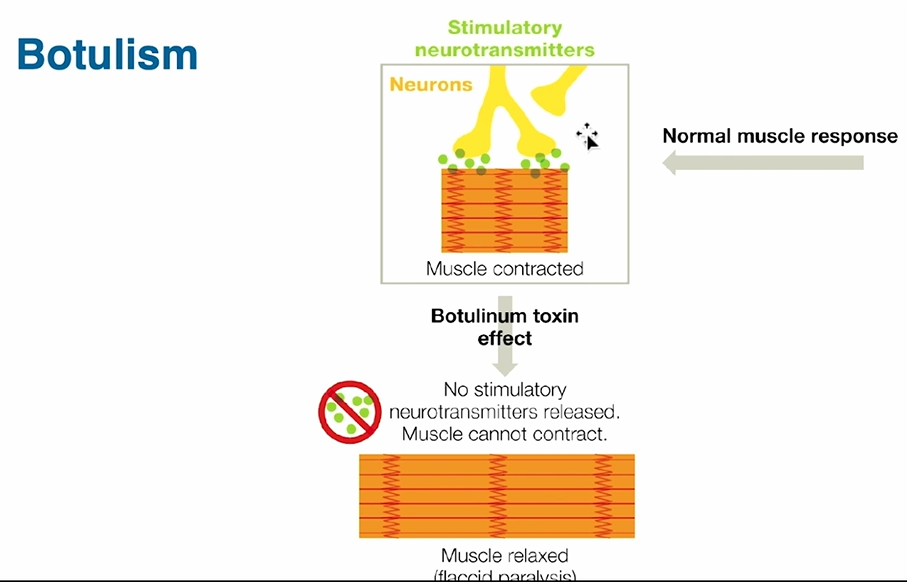
caused by C. botulinum’s paralyzing botulinum neurotoxin, which causes flacid paralysis
Infant botulism
(C. botulinum)
ingestion of endospores via air/dust or food (why infants shouldn’t eat honey
Symptoms: constipation, muscle weakness or paralysis, weak cry, drooping eyelids, tired, feeding difficulty
Foodborne botulism
(C. botulinum)
toxin is typically consumed from canned foods (usually vegetables)
Symptoms: difficulty swallowing, speaking, or breathing, altered vision, drooping eyelids, nausea/vomiting, paralysis
Wound botulism
(C. botulinum)
bacteria enter break in skin or from contaminated needle
common for street drug users
Symptoms: similar to Foodborne botulism, so difficulty swallowing, speaking, or breathing, altered vision, drooping eyelids, nausea/vomiting, paralysis
Tetanus
symptoms caused by?
C. tetani
caused by C. tetani that releases the neurotoxin tetanospasmin; which leads to “spastic paralysis” (aka muscles struggle to relax)
What did tetanus used to be called?
Lockjaw
Lockjaw
causes, symptoms
wounds contaminated by dirt, poop, or saliva or a contaminated object like a nail or needle
symptoms: muscle spasms, drooling, sweating, irritability, respiratory failure (muscles controlling breathing are affected)
preventable by vaccine !!
It’s a myth that rusty objects themselves cause tetanus
Explain how tetanospasmin works
the tetanospasmin neurotoxin is taken up into peripheral motor neurons and moves to spinal cord
this blocks inhibitory neurons from being able to release neurotransmitters that relax muscle cells

Gas Gangrene
(C. perfringens)
how does it work in the body and what are the symptoms
leads to tissue necrosis via the toxin perfringolysin
perfringolysin perforates or forms pores in cell membranes causing uncontrolled ion fluxes and cell lysis
Symptoms: pain, swelling, fever, darkening skin, odor, drainage, gas bubbles under skin
Risks: shock, coma, death
Gas Gangrene
(C. perfringens)
Treatments?
antibiotics, debridement or amputation, hyperbaric oxygen therapy
C. Difficile
Main characteristics?
Gram POSITIVE
Anaerobic
Spore-forming
Shape: Bacillus
Transmission: occurs via the fecal-oral route
difficult to remove as its spore form is resistant to antibiotic treatments and disinfecting measures
Standard Precautions and contact precautions
#1 healthcare-acquired infection (HAI)
causes antibiotic-associated infectious diarrhea and deadly colitis
opportunistic infection as antibiotic decreases normal flora
Treatment: rehydration, antibiotics, fecal transplants
Legionnaires’
main characteristics?
Legionella
90% of all Legionnaires’ infections are due to bacteria Legionella pneumophila
Gram NEGATIVE
Aerobic
Motile (single flagellum)
Shape: Coccobacilli
Treatment: antibiotics
Normally found in freshwater lakes and steams, but sometimes manmade water systems
can only be transmitted through droplets small enough to be breathed in (ex: hot tubs, AC cooling units, humidifiers)
Typically in warmer weather months
Signs and symptoms:
fever
headache
muscle aches
coughs
SOB
atypical pneumonia
If not treated, kills 20% of patients
What is unique about the legionella pneumophila bacteria?
It is a fastidious bacteria and needs iron salts and amino acid cystine; intracellular parasite; survives in places by living in a host like a protozoa or amoeba.
Plague
main characteristics?
(Yersinia pestis)
Gram NEGATIVE
Shape: bacillus
Facultative anaerobe
The black death por ejemplo.
Plague fun facts
still here, especially in the Southwest USA
Rodents, mice, and voles carry bacteria, and fleas act as vectors
airborne transmission is possible
all forms of plague have death rate of 50% if gone untreated
Treatment: antibiotics like streptomycin, tetracycline, fluoroquinolone, gentamicin, and doxycycline
3 Types:
Bubonic plague
Pneumonic plague
Septicemic plague
Bubonic plague
most common of 3 types
swollen lymph nodes (called Bubos), high fever
Pneumonic plague
affects resp system and is highly virulent (deadly; 100% death rate if untreated)
Septicemic plague
rarest of 3 types
can cause DIC (disseminated intravascular coagulation)
Explain DIC
DIC - disseminated intravascular coagulation
tiny clots form → they use up clotting factor → hemorrhaging can occur → then susceptible to Clostridium → can lead to gangrene → black death
Anthrax
main characteristics?
(Bacillus anthracis)
Gram POSITIVE
Aerobic
Shape: Bacillus rod-shaped
Endospore forming
Found in soil or can be zoonotic disease (grazing animals)
3 Types:
Cutaneous Anthrax
Gastrointestinal Anthrax
Pulmonary (inhalation) Anthrax
Cutaneous anthrax
blister or ulcer with black center (solid nodule of necrotic tissue which can be deadly from exotoxins produced by bacteria)
Gastrointestinal Anthrax
diarrhea, vomiting, acute inflammation, intestinal hemorrhage
Pulmonary (inhalation) anthrax
deadly resp infection from toxemia
fatigue, fevers, cough as early symptoms → progresses to high fever, resp distress because of swelling of resp tract, shock
mortality rate close to 100% because it is caught too late
antibiotics can eliminate the bacteria, but not the toxins released in the bloodstream
spores highly resistant to disinfectants
has been used as bioweapon
Lyme Disease
main characteristics?
(Borrelia burgdorferi)
Motile
Anaerobic
Spirochete (corkscrew shaped)
negative stain required
Deer tick is vector (white-footed mouse is reservoir)
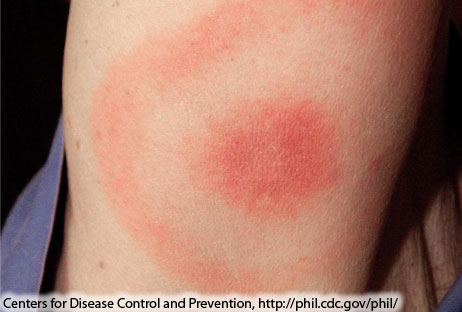
symptoms: fever, chills, headache, muscle/joint pain, erythema migrans (bullseye)

Complications of lyme disease?
irregular heartbeat
myocarditis
facial palsy
balance issues
mood disturbances
schizophrenia-like illness
bullseye
What percentage of Americans are infected with an STI right now?
1/5

Gonorrhea
main characteristics?
(Neisseria gonorrhoeae)
Gram NEGATIVE
Shape: diplococcic
fastidious bacteria (grows best on chocolate agar)
Virulence: pili (protein filament appendages) for adhesion, ciliated, intracellular (live in host cells to avoid immune system attack), and bacterial capsules to evade immune system
Treatment: antibioticsssssssssss per ushe
Female Symptoms:
asymptomatic, painful urination, increased vaginal discharge, bleeding/spotting between periods or after sex, complication of pelvic inflammatory disease (bacteria hitchhike on semen and go to the fallopian tubes)
Male Symptoms:
asymptomatic, painful urination, urethral discharge
Neonate Symptoms:
eye infections (ophthalmia neonatorum), sepsis

Syphilis
main characteristics?
(Treponema pallidium)
Gram NEGATIVE
Spirochete (corkscrew shape)
best visualized by dark field microscope
4 distinct stages
Treatment: Penicillin
What are the 4 stages of Syphilis?
1) Primary - sore (chancres) develop at initial infection site
2) Secondary - disseminated red/brown rash which may be accompanied by fever, rash, headache, swollen lymph nodes
3) Latent - symptoms disappear, and the patient is still asymptomatic
4) Late (Tertiary) - gumma lesions on skin and bones, organ damage, neurological symptoms
Chlamydia
main characteristics?
(C. trachomatis)
Gram NEGATIVE
Nonmotile
Shape: Bacillus rod
Obligate parasite! aka replicates inside the host cell
cannot grow in agar^^
Treatment: antibiotics
What percentage of people is staph found in and asymptomatic?
30%
Is there a cure for tetanus?
No, but there is a vaccine