1. Introduction to Complete Dentures ✅
 Call Kai
 Learn
Learn Practice Test
 Spaced Repetition
 Match
Match Flashcards
 Knowt Play
1/28

There's no tags or description
Looks like no tags are added yet.
Name | Mastery | Learn | Test | Matching | Spaced | Call with Kai | Chat |
|---|
No analytics yet
Send a link to your students to track their progress
29 Terms
What Is a Complete Denture?
a removable dental appliance that replaces all of the natural teeth in either the
upper (maxillary) or lower (mandibular) jaw — or both.
it restores a patient’s ability to chew and speak, and re-establishes the facial support lost when natural teeth are gone.
Two Arches, Two Appliances
Maxillary (upper) denture — replaces the upper arch
Mandibular (lower) denture — replaces the lower arch
Key Features & Retention
Full Arch Replacement
Used when no natural teeth remain in the jaw.
Acrylic Base
Typically made from acrylic resin that mimics the appearance of the gums.
PMMA
Artificial Teeth
Usually fabricated from acrylic resin or porcelain.
How Upper Dentures Stay in Place
Held in place primarily by suction against the roof of the mouth (palate), aided by the post dam seal.
How Lower Dentures Stay in Place
Rests on the gum tissue and is more prone to movement; often benefits from adhesives or implant support for extra stability
Purpose of Complete Dentures
Restore Function
Chewing and speaking are re-established as the dentition is rebuilt.Improve Esthetics
Smile and facial structure are supported, restoring a natural appearance
Types of Complete Dentures: Conventional Complete Denture
Made and placed after all teeth have been removed and the gums have fully healed — typically 8–12 weeks post-extraction.
Definitive fit
Types of Complete Dentures: Immediate Complete Denture
Inserted immediately after tooth extraction; serves as a temporary option while tissues heal, until a conventional denture is fabricated.
No edentulous period
Parts of a Complete Denture
1. Denture Base
The pink acrylic portion that rests on the oral tissues and supports the artificial teeth.
2. Artificial Teeth
Simulate the natural dentition; fabricated from acrylic resin or porcelain
Denture Anatomy — Upper vs. Lower

Flanges: extend into the cheeks/lips/tongue for retention (above teeth)
on mandible you will have buccal and lingual
Palate: covers the roof of the mouth for suction, maxillary only
Post Dam: raised posterior seal that boosts retention
Border: outer edge shaped for fit/comfort
Occlusal Surface: chewing surface that restores the bite
Polished Surface: visible outer surface
DO NOT TOUCH intaglio surface (inside where the gums sit)
Trends in Removable Prosthodontic Dentistry
1. Patient Demographics: we are living longer As the population ages, more patients
live long enough to experience significant tooth loss — sustaining, not shrinking, the need for complete denture care
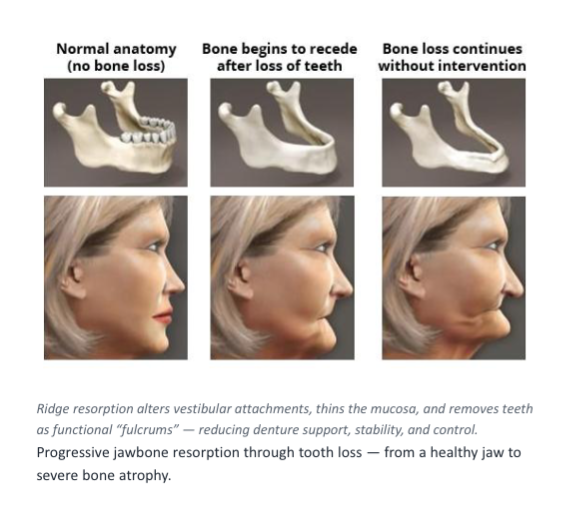
2. Esthetic Awareness: Increased esthetic awareness among patients has prompted greater demand for quality removable prosthodontic restorative treatment. Facial profile before and after treatment: restoring lip support reduces the sunken, aged appearance associated with untreated edentulism
Implant Treatment: Implant-supported dentures are becoming increasingly common in modern prosthodontic care
The Geriatric Patient: Elderly patients require special consideration due to compromised oral anatomy, medical and nutritional status, and
reduced physiologic reserve and adaptive capacity.
*DO NOT KNOW #s on slide
Why Older Adults Skip Routine Dental Care
Perceived Need
They don’t believe they need care.Transportation
Cannot get to the dental office.Affordability
Routine care is often not covered by Medicare or insurance.Awareness
Unaware of oral disease risk; early symptoms may be masked by age-related
changes.
maxilla resorbs
up + back
mandible resorbs
down + out
In geriatric pts, Clinicians should expect a decrease in:
Denture support area
Neuromuscular control
Chewing force
Salivary flow (often medication- related)
Healing capacity
Quality of denture-bearing tissues
Consequences of Tooth Loss
Residual Ridge Resorption (RRR)
Changes in intraoral structures
Decreased masticatory function
Loss of facial support and muscle tonus
Psycho-social effects
Denture wearers are, in a sense, “oral invalids” — they must relearn how to function without natural dentition
Residual Ridge Resorption: The Physiology
Physiologic Tension → Apposition
Normal levels of tension — such as that transmitted by loading the periodontal ligament (PDL) through natural dentition — result in bone apposition (growth).
Non-Physiologic Compression → Resorption
Non-physiologic compression, such as that which may occur under denture bases, instead results in bone resorption over time
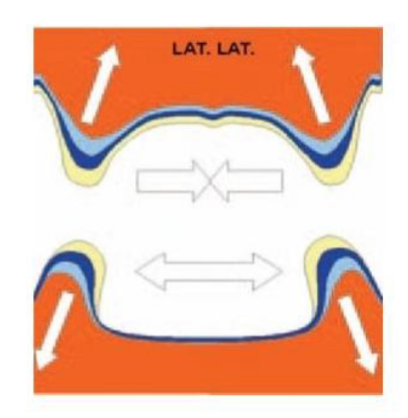
Patterns of Ridge Resorption: Maxilla
vertical & palatal direction, ~0.1 mm/year (sustained).
Initial-year loss is greater but variable.

Patterns of Ridge Resorption: Mandible
vertical, oriented along the cross-sectional shape of the mandible — resorption is roughly 4x the maxillary rate (varies)
can hit mental nerve
Atrophic Changes in the Edentulous Patient
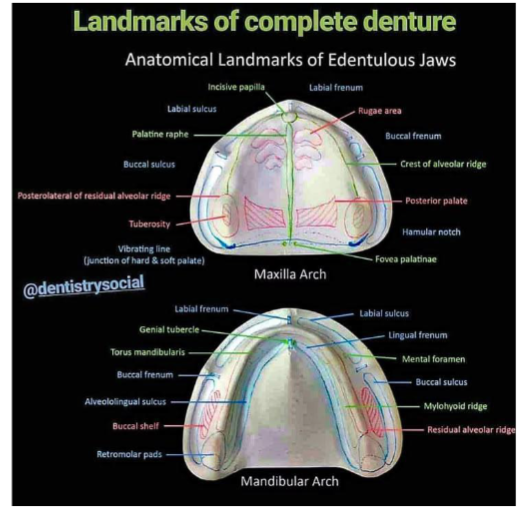
landmarks of CD *KNOW
Changes in Intraoral Structures
Atrophic changes in the residual ridge lead to unfavorable changes in vestibular attachments
Atrophic changes in the mucosa compromise the denture- bearing surface
Loss of teeth removes functional “fulcrums” for tissue support
Support, stability, and the patient's ability to manipulate the denture during function are all affected
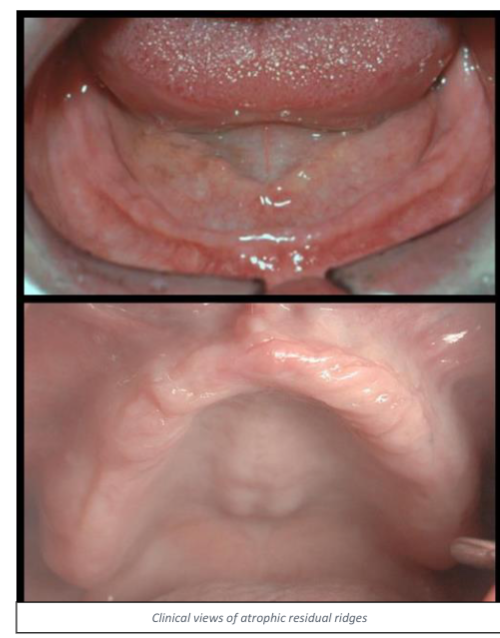
what is on the maxillary surface
maxillary tori/ exostosis
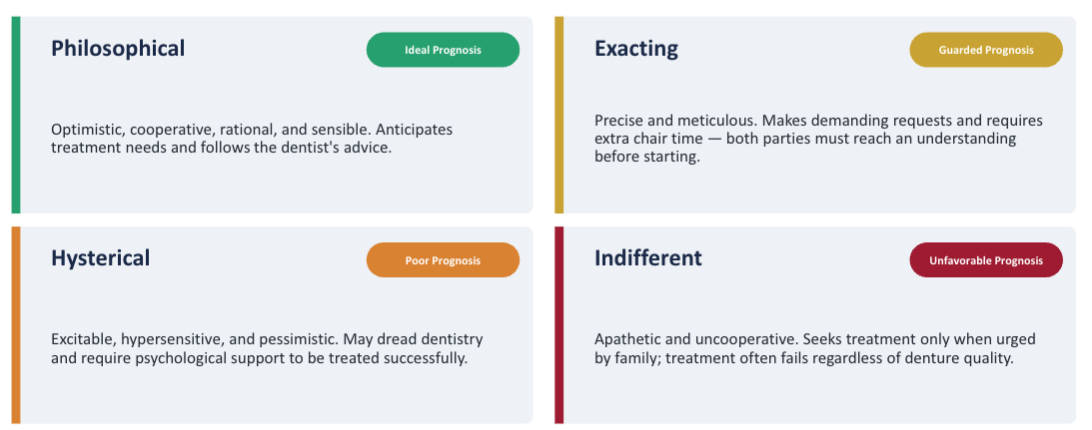
Psychosocial Effects: The House Classification
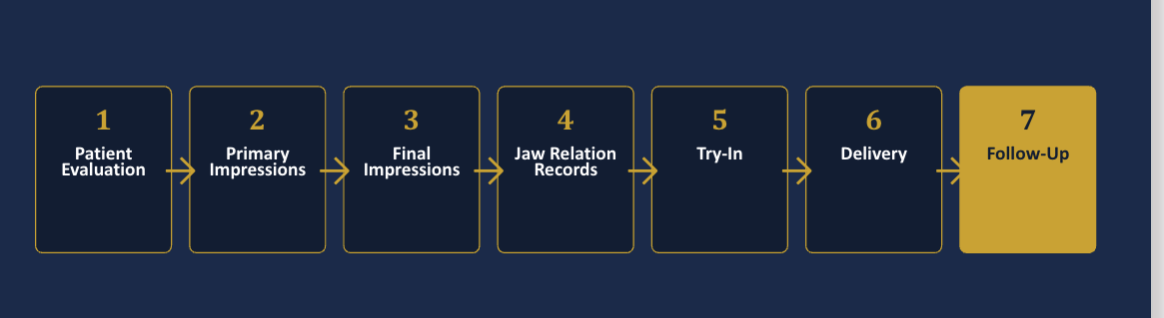
Clinical Sequence of Care *know
Materials used
Acrylic resins: for the denture base, PMMA
Artificial teeth: acrylic or porcelain types
Impression materials: for primary & final impressions
Common Issues & Troubleshooting
Sore spots: localized tissue irritation
Poor retention/stability: dentures shift during function
Speech & esthetic concerns: adaptation period for the patient
Maintenance & Patient Education
Cleaning Instructions
Daily brushing and soaking protocols to keep the prosthesis free of plaque and stain.
Follow-Up Schedule
Routine recall visits to monitor tissue health and denture fit over time.
Longevity & Replacement
Dentures typically need relining, rebasing, or replacement as the ridge continues to resorb
Key Takeaways
Complete dentures replace all teeth in one or both arches, restoring function and esthetics.
Demographic and clinical trends — an aging population, esthetic demand, and implant options — keep this treatment clinically relevant.
Tooth loss triggers ongoing residual ridge resorption, so anatomy and support must be reassessed at every stage.
A patient's psychosocial profile (House Classification) shapes the treatment prognosis as much as the clinical anatomy.
Success follows a defined clinical sequence: evaluation → impressions → records → try-in → delivery → follow-up