Can-Model MOP
 Call Kai
 Learn
Learn Practice Test
 Spaced Repetition
 Match
Match Flashcards
 Knowt Play
1/20

There's no tags or description
Looks like no tags are added yet.
Name | Mastery | Learn | Test | Matching | Spaced | Call with Kai | Chat |
|---|
No analytics yet
Send a link to your students to track their progress
21 Terms
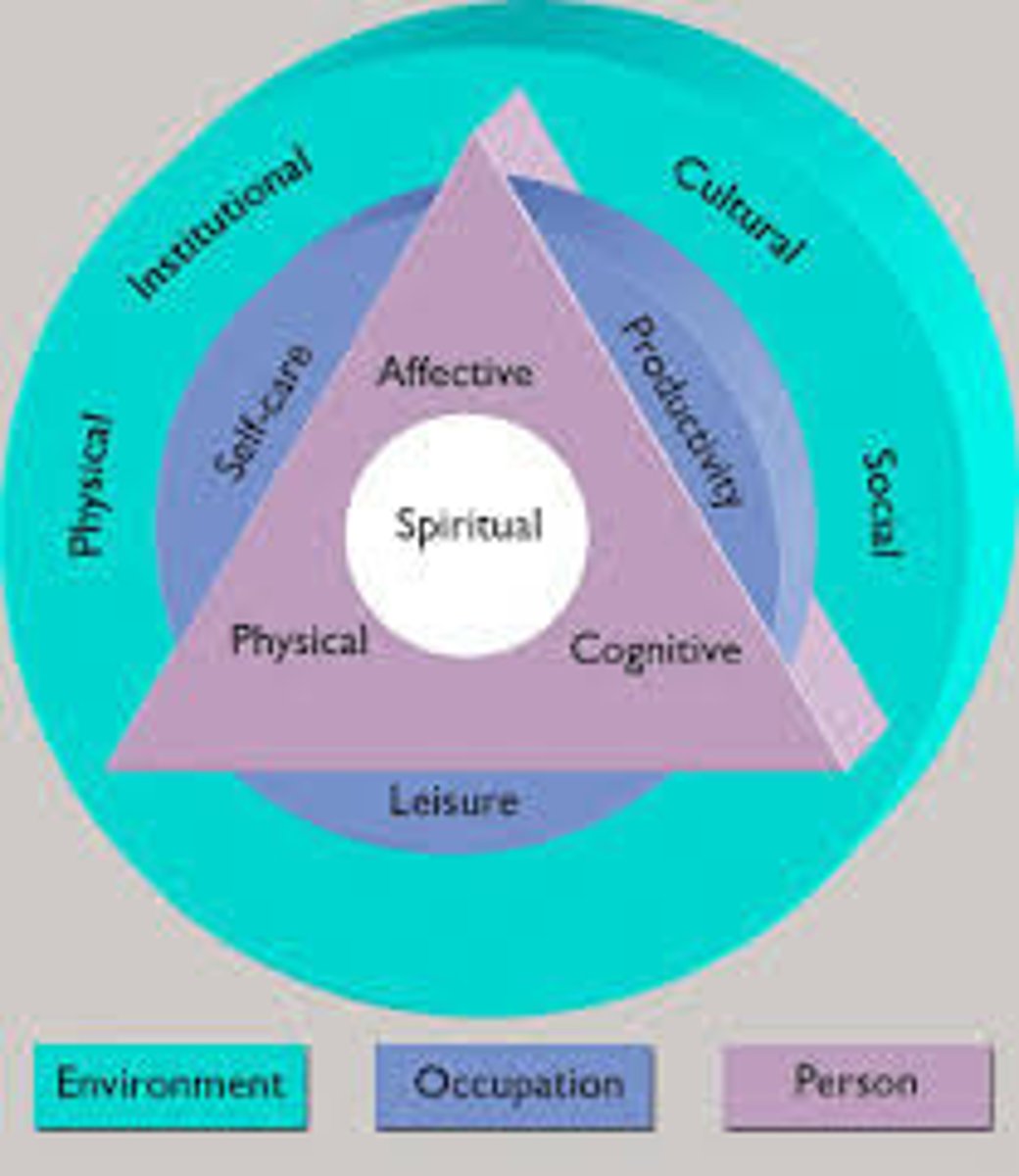
Canadian Model of Occupational Participation focus of model
purpose and meaning of specific occupational participation for an individual, and the possibilities offered by contextual factor to access, initiate, and sustain participation
OT's role in Can-Model
focus on an idnvidiaul's basic needs (autonomy, relatedness), their relationships (with others, environment, and culture) and their history (life course and community history)
key components of Can-model
model emphasizes collaboration between the therapist and the client to determine if the context supports the initiation of occupational participation
features of can-MOP
explicit focus on occupational participation
removal of categorization of occupations
advanced consideration of performance components, the environments, meaning, history, and occupational possibilites
theorists of Can-MOP
Helene Polatajko, Elizabeth Townsend, and Janet Craik
optimal functioning of Can-MOP
viewed as a solid, positive foundation between an individual's personal aspects, their occupation, and their environment
interconnectivity
when these three elements are interconnected positively, the individual can engage in occupations that are truly meaningful
dysfunction barriers
occurs when there is a barrier in any of these three aspects: person, occupation, or environment
client-centered approach
Change is promoted through a holistic mindset and techniques that prioritize the client's preferences
process of change
Therapists check in on physical health, ensure the occupation provides meaning, and verify that the environment has no physical barriers
motivation in Can-MOP
occupational participation itself is considered the primary driver of motivation
Canadian Occupational Performance Measure (COPM)
used to identify client-centered goals in self-care, productivity, and leisure, rating performance and satisfaction on a 10-point scale
evaluation process for Can-MOP
1. initial consult/screening
2. occupational profile
3. assessment of performance/satisfaction
4. Analyzing contextual factors
5. goal setting/intervention planning
6. re-evaluation
step 1: initial consult/screening
identifying concerns and areas for further evaluation
step 2: occupational profile
collecting history, values, and interests
step 3: assessments of performance/satisfaction
identifying strengths and limitations using specific tools
step 4: analyzing contextual factors
examining environmental and relationships
step 5: goal setting/intervention planning
developing a plan based on client priorities
step 6: re-evaluation
tracking progress and modifying goals throughout interventions
intervention guidelines for Can-MOP
individualization: interventions are highly specific to the client's context and meaningful occupations
specific strategies for Can-MOP
client-centered goal setting, occupational engagement, environmental modification, skill development and training, cognitive and psychological support, promotion of self-management and advoacy