Eco phys test 1
 Call Kai
 Learn
Learn Practice Test
 Spaced Repetition
 Match
Match Flashcards
 Knowt Play
1/73

There's no tags or description
Looks like no tags are added yet.
Name | Mastery | Learn | Test | Matching | Spaced | Call with Kai | Chat |
|---|
No analytics yet
Send a link to your students to track their progress
74 Terms
what is ecological Physiology
How do animals function and respond to their natural habitats at all stages of their life cycle?
what are some things we can find out about eco phys in a lab setting
Developmental Biology
Genetics
Physiology
Neuroscience/Animal Behavior
Immunology
Animal Nutrition
Gerontology (Aging)
Etc.
what are some things about eco phys can we find outside lab setting
Natural History
Ecology
◦ Population Ecology (competitors)
◦ Community Ecology (predators)
◦ Disease Ecology (vectors)
◦ Evolutionary Ecology (past conditions)
Climatology (abiotic factors)
Hydrology (water dynamics)
Plant Biology (food (direct or indirect)
Etc
Genotype examples
Genome
Sex Chromosomes
Epigenome
Random processes example
mutation
weather
enviorment examples
Predators,
Competitors, Disease, Food
Availability, Shelter Availability
phenotype examples
Immune state,
Nutrient reserves
development examples
Resource Availability,
Maternal Behavior,
Paternal Behavior
morphology examples
Size, color,
anatomy
Biochemestry examples
Steroid levels,
Glucose levels
behavior examples
Reproductive
decisions,
habitat choice,
antipredator
what is adaptation
he means by which natural selection adjusts the frequency of
genes that code for traits affecting fitness [across a population of animals,
or even across species
fitness definition
number of offspring surviving in the succeeding generations
plasticity definetion
traits are expressed in a variable manner depending on the
environment
what is acclimation
phenotypic change within an animal (an
example of plasticity)
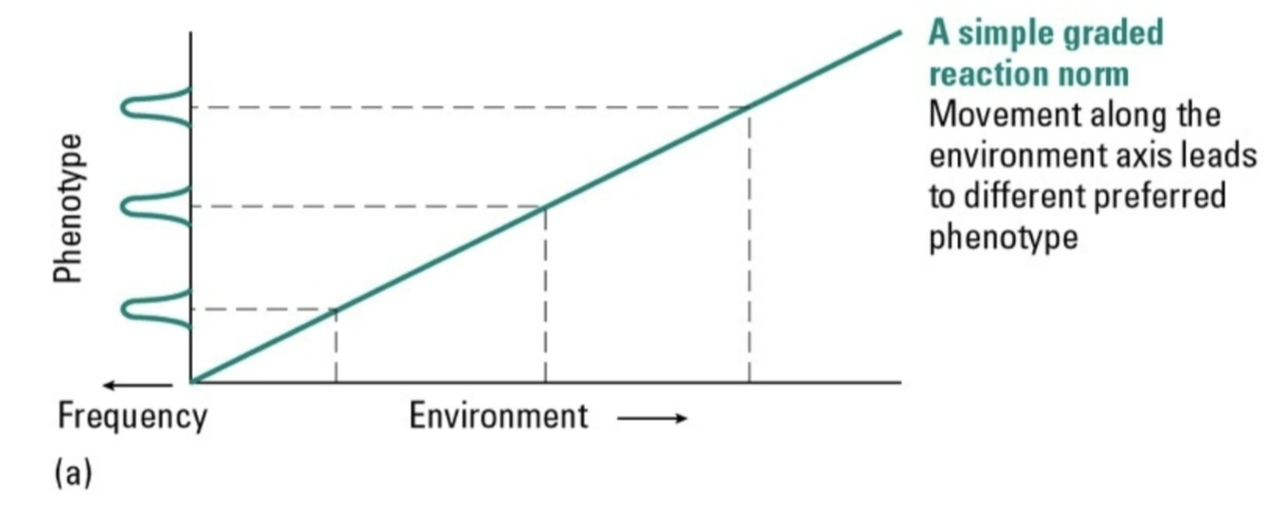
what is a reaction norm
• graphical/mathematical representation of how the phenotype of a single genotype changes across different
environmental conditions.
• maps the range of phenotypes that a single genotype can produce in response to varying environmental factors.
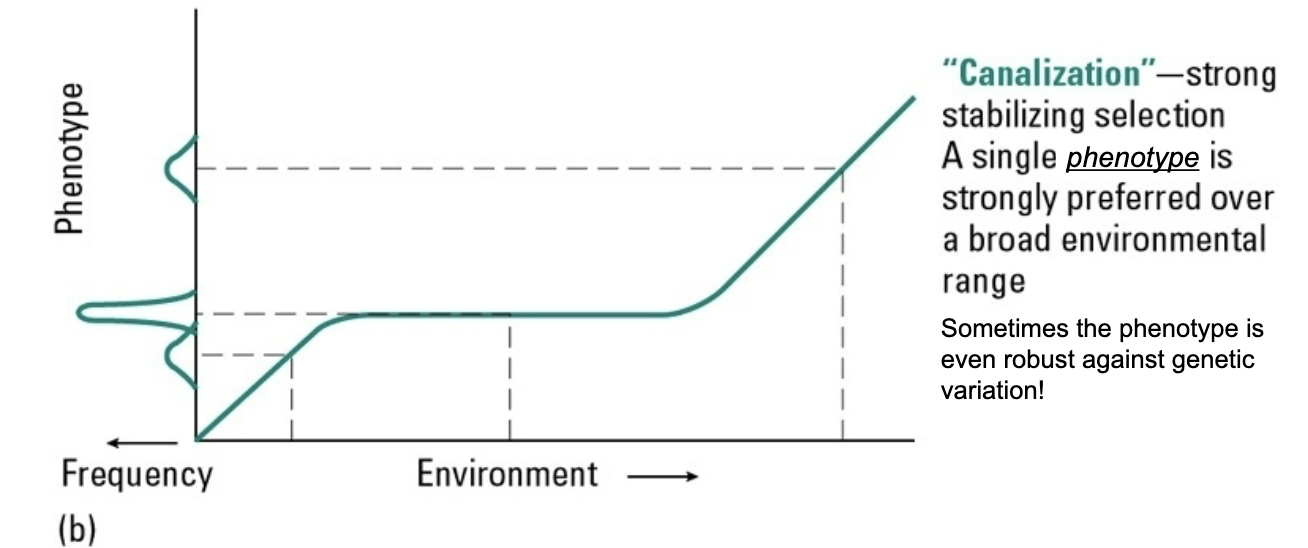
what is canalization
strong stabilizing selection. a single phenotype is strongly prefered over a broad enviormental range
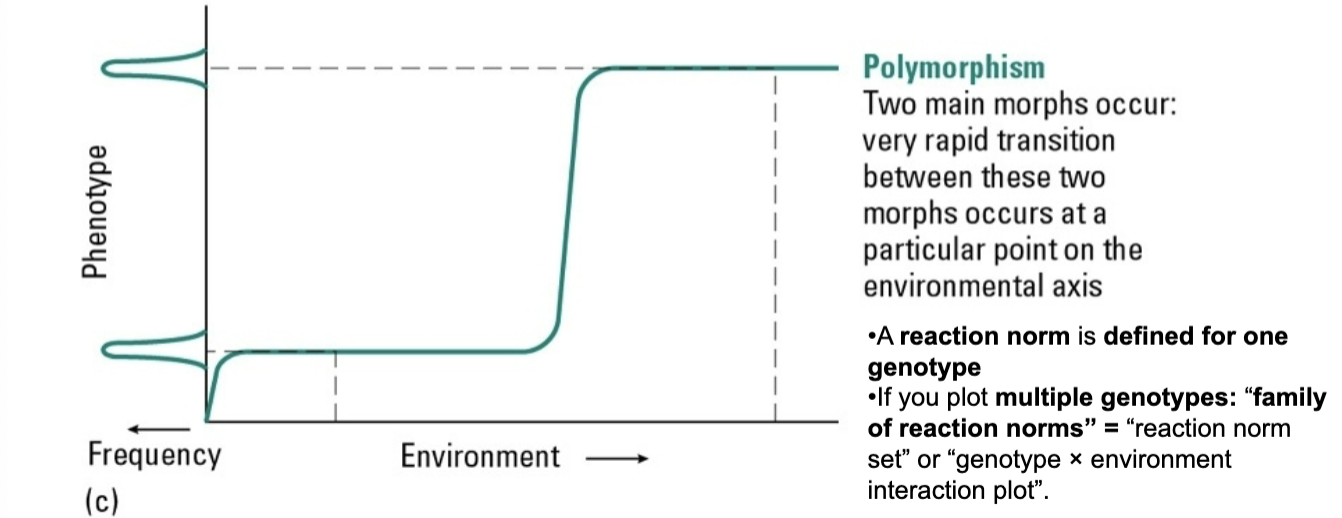
what is polymorphism
two main morphs occur: very rapid transitionbetween these two morphs occur at particular points on the enviormental axis
what is physiology
Physiology is about what proteins are present
what are the protiens working as parts of physiology
Enzymes
Transporters
Receptors
Structural components
Motor proteins
Hormones
what is included in adaptation
parent to offspring
Ecological and Environmental
variables:
• act as agents of natural
selection
• influence the frequency of
genes in the next generation
what comes in acclimation
offspring to gene expression to physiology
Transcription and Translation
Ecological and Environmental variables influence both
homologus chromosomes
One came from mom. One came from dad. THEY ARE NOT IDENTICAL
sister chromatids
Sister chromatids (when you see chromosomes in this
configuration, this means DNA replication is complete and cell
division is occurring). Sister chromatids are identical.
chromosome definition
a string of DNA wrapped around associated proteins that give the connected nucleic acid bases a structure (contains thousands of genes)
autosome definition
any chromosome other than the sex chromosome
sex chromosome
chromosome associated with sex determination
gene definition
the unit of heredity; a sequence of DNA that affects one or more traits in an organism, usually through an encoded protein produced based on the sequence of nucleotides
Allele definition
The different forms of a gene, corresponding to different DNA sequences in each different form. They arise as a result of mutation.
genome definition
The genetic material transmitted from a parental cell or organism to its offspring.
what kind of dna molecules do eukaryotic chromosomes have
linear DNA molecules associated with a large amount of protein (Histones)
Chromatin def inition
DNA is precisely combined with proteins in a complex
called chromatin
types of chromosome packing
Chromosomes fit into the nucleus through an elaborate, multilevel system ofpacking
◦ Heterochromatin-remains condensed through interphase
◦ Euchromatin-dispersed/unraveled chromatin (accessible by proteins)
what are the nitrogeonous bases
thymine, adenine, cytosine, guanine
Gene regulatory protiens job
• several % of all proteins manufactured
• determine cell fate etc (e.g., neurons vs glia)
• often affect polymerase affinity
• Many levels of control
• ‘enhancers’, master control genes

what do introns do
they are cut out and the exons are spliced together
why are there so few proteins
• typical protein has 300 amino acids.
• -> with 20 amino acids: 20300 = 10390 combinations possible
• Selected for reliable and stable folding
• Small conformational changes do not change in large changes in
activity and can therefore be ‘controlled’
how does DNA repair work
• each day, thousands of bases are randomly altered (radiation
etc)
• DNA nucleases recognize altered sequence, and cut it out
• DNA polymerase -> uses undamaged DNA strand to fill correct
base in
• DNA ligase seals the gap
• Overall: point mutations only lead to 1 heritable nucleotide
change in 200,000 every 1,000 years. -> more fine tuning of
processes. [but: frame shifts!]
• Instead: Recombination! Transposable elements!
what are the general Physiological processes
-Respiration
-Digestion
-Circulation
-Excretion
what are protien channels
where most substances enter and exit the cell
what does protein channel movement depend on
Substance gradient
• Electrochemical gradient
• Channel structure
what are transporters
another way substances exit and enter a cell
what does transporters movement depend on
Energy investment
what does Protein Facilitated Movement of Ions and Molecules look like
Key words:
• Inheritance
• Expression Levels
• Location

What is primary active transport
Driven by ATP hydrolysis and affinity changes

what are the three major types of channeles in cells
• Leak channels
not gated, but modifiable
• Voltage gated channel
Shape/function changes with charge
• Ligand gated channel
Shape/function changes upon binding another
substance (ligand)
Action Potential Propagation

other types of transport in a cell
Endocytosis
• example: receptor mediated
• requires GTPase
Exocytosis
Transcytosis
Intracellular receptors
• Bind lipophilic compounds (steroids, vitamin A, retinoids,
thyroid hormones)
• Hormone Response Elements-SEQUENCE OF DNA to which
receptors bind
Extracellular receptors
• Bind hydrophilic compounds outside of the cell (peptide
hormones, neurotransmitters)
• Relay message to the interior of the cell
• Enzyme linked receptor (kinases and integrin)
• Ion Channel-Linked receptor
• G-protein coupled receptor
Lipophilic Ligands
• Estrogen Receptor
• Androgen Receptor
• Glucocorticoid Receptor
• Thyroid hormone Receptor
• Retinoid X Receptor
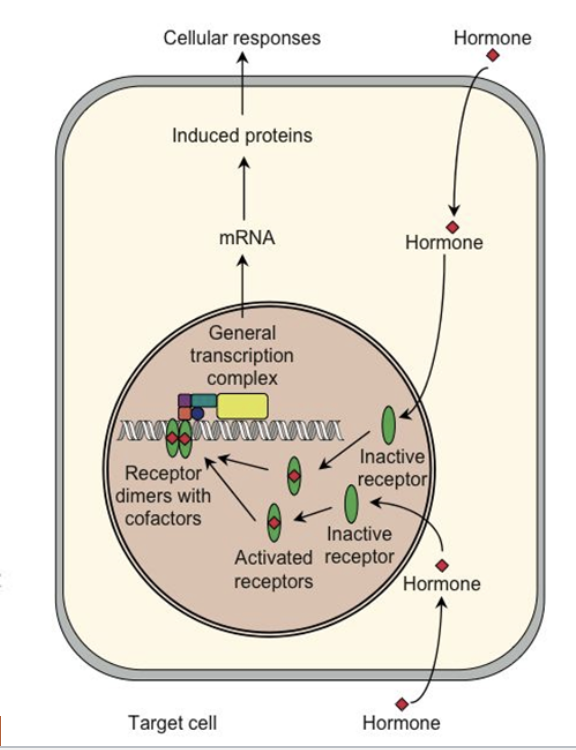
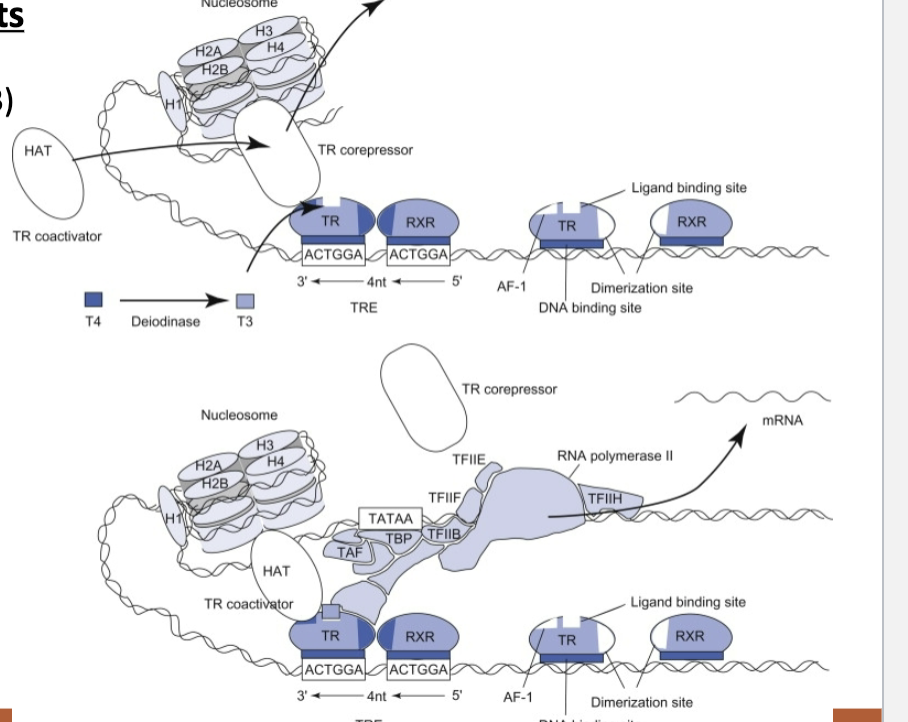
Hormone Response Elements without Thyroid hormone 3
1. Thyroid hormone receptor (TR): bound to DNA as heterodimer with the retinoid X receptor (RXR) at the thyroid hormone response elements (TREs).
2. The TR-RXR complex recruits a TR corepressor complex
3. The corepressor recruits histone deacetylases (HDACs)
4. HDACs remove acetyl groups from the histone proteins -> positive charge -> DNA coils around histones
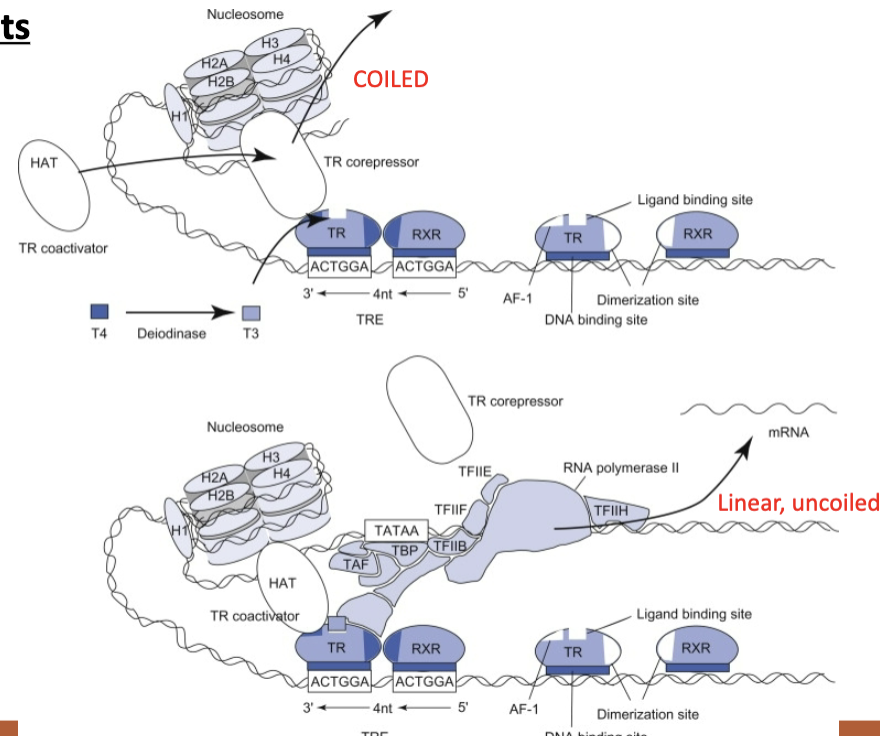
Hormone Response Elements with Thyroid hormone 3
1. T3 binds TR->conformational change.
2. -> Corepressor dissociates from the TR-DNA complex.
3. Coactivators are recruited, containing histone acetyltransferase (HAT).
4. Histones are acetylated -> removal of positive charge.
5. -> Chromatin is decondensed and transcription is enabled
Intracellular-Steroid hormone (estrogen) effects on egg related
gene expression
• Estrogen activates promotor regions of Ovalbumin
• Estrogen increases Thyroid- Binding Globulin -> more T3 transport to the proteins

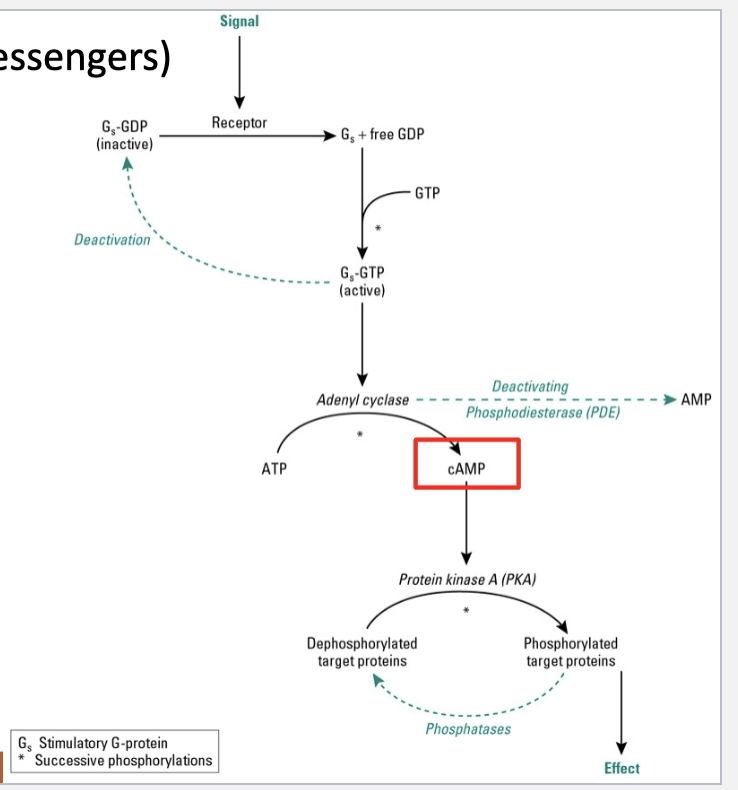
Intracellular mediators(second messangers)
• Serve to activate/deactivate proteins within the cell
• Cyclic AMP
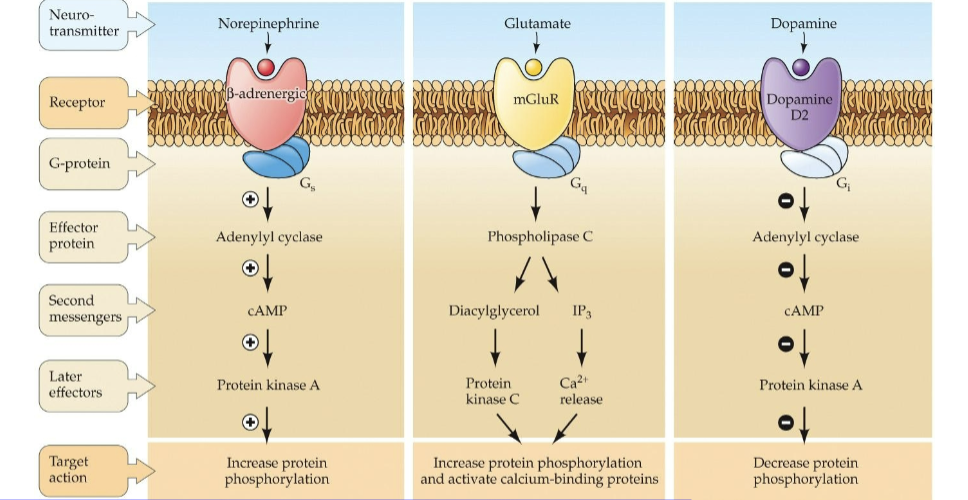
G-Protein-coupled Receptors
Serve to activate/deactivate proteins within the cell
• Calcium
• Inositol triphosphate (IP3)
• Diacylglycerol (DAG)
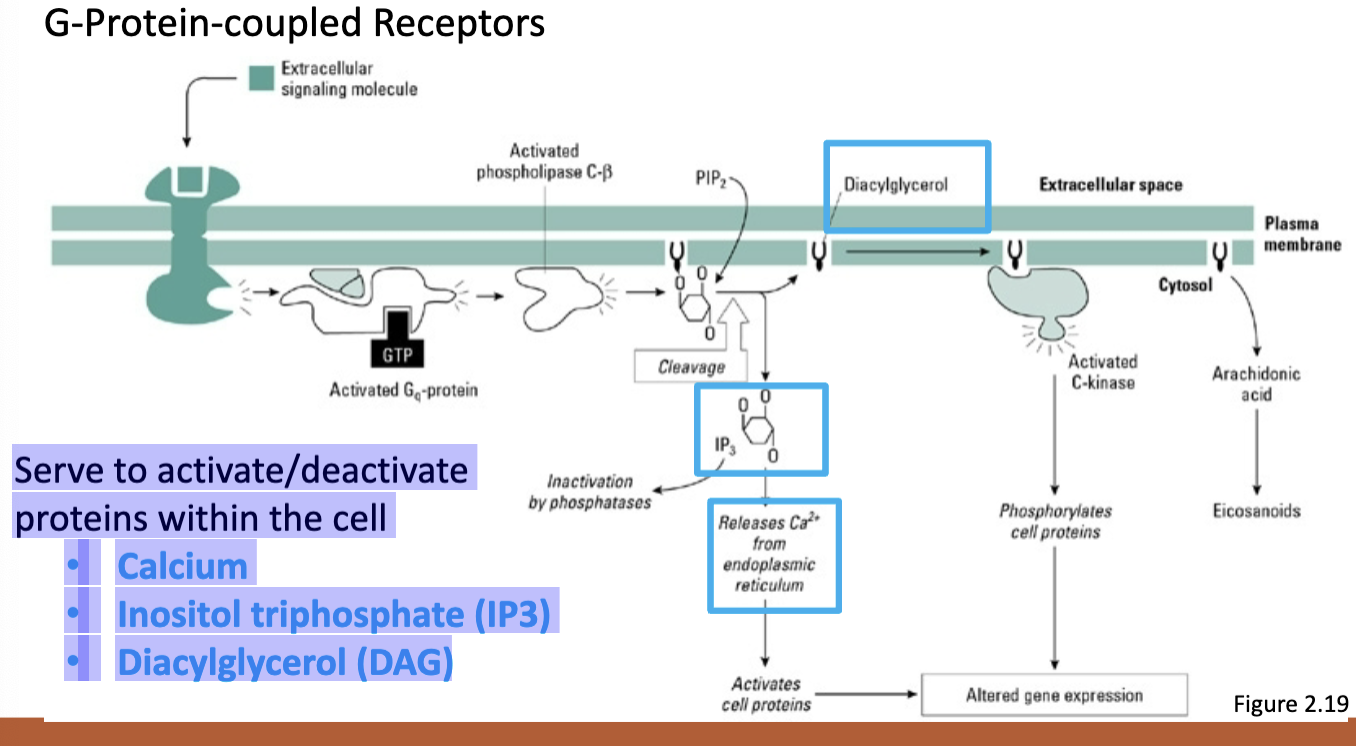
Effector Pathways of G-protein Coupled Receptors
Effector protein → second messenger → later effector protein
Gs: adenylyl cyclase → cAMP → protein kinase A (stimulatory)
Gq: phospholipase C → diacylglycerol and IP3 (second messengers) → protein kinase C and Ca2+ (second messenger)
Gi: ↓ adenylyl cyclase → ↓ cAMP → ↓ protein kinase A (inhibitory
Epigenetics
For this course, think of epigenetics as “On/OFF” Switches of
gene transcription
• Many epigenetic processes involve making DNA accessible to proteins-> Proteins can either access it or they can’t
• Caused by environmental factors
• Influence gene expression without altering the underlying DNA sequence.
• Can be passed down through generations (transgenerational epigenetic inheritance) via modifications to germ cells DNA
• Some epigenetic marks persisting beyond a few generations
Epigenetics Major processes
• Histone Acetylation
• Histone Methylation
• DNA Methylation
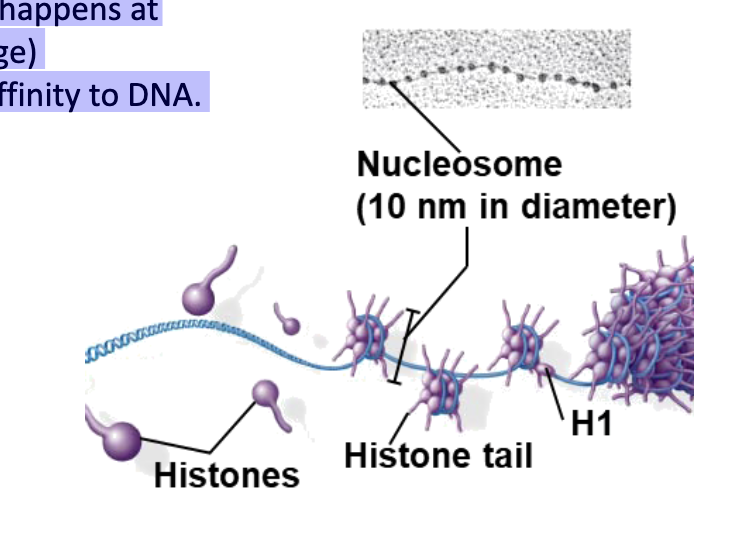
Histone Acetylation
• Occurs on histone tail, often the N-terminal which are rich in Lysine and Arginine. Acetylation happens at Lysine residues (-> lowers positive charge)
• -> lower positive charge -> decreased affinity to DNA.
• -> DNA uncoils
• Two enzymes:
• Histone Acetyl Transferase (HAT)
-adds acetyl group to histone
-facilitates gene expression (“on”)
• Histone Deacetylase (HDAC)
-Removes acetyl group
-Hinders gene expression (“off”)
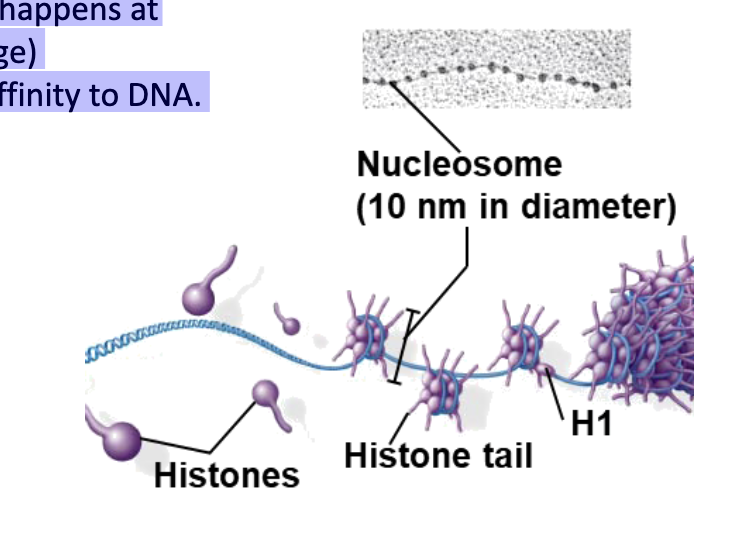
Histone Methylation
• Also occurs on histone tail (Lysine)
• Prevents acetylation
• Enzymes:
• Polycomb Repressive Complex II
(PRC2): adds methyl mark (“off”)
• “Jumonji” enzymes (JMJD3)
demethylate: (“on”)
Promiscuous repression
• by regulatory protein that inhibits the expression of multiple different genes
• by binding to various short and ubiquitous DNA or RNA sequences (but with specificity)
• Dysregulation of PRC2 (the ‘off’ switch’): linked to developmental disorders andcancer.
Temperature-dependent sex determination (TSD) and its underlying mechanisms
involves
• Alternative Splicing
• Histone Demethylation
• Transcription Factors
How does the Y chromosome induce the formation of testes?
• SRY gene on Y chromosome
• master gene -> triggers male development (testis formation)
• member of the SOX (Sry-type HMG box) gene family
• contains the high-mobility group (HMG) box domain -> binds & bends DNA
• HMG is highly conserved between species.
• activates transcription of downstream factors, including SOX9 transcription factor -> male
Histone demethylase KDM6B
activity is temperature dependent (removes repressive marks -> more expression)
KDM6B expression increases at cooler (male producing) temperature and
decreases at warmer (female producing) temperatures
How does temperature regulate gene expression?
• CDClike kinases (CLKs): highly responsive to temperature changes
• Lower body temperature activates CLKs -> increased phosphorylation of SR proteins
• -> temperature-dependent alternative splicing (exon inclusion at lower
temperature, exon skipping at higher temperature)
• -> KDM6B (demethylase, leads to males) remains functional at cold temperatures
How is temperature sensed to regulate alternative splicing?
Two hypotheses:
1. Temperature-sensitive TRP channels -> Calcium influx
2. Temperature-sensitive GPCR-> opening of CNG channel -> Calcium influx