ch4 tissues
 Call Kai
 Learn
Learn Practice Test
 Spaced Repetition
 Match
Match Flashcards
 Knowt Play
1/100

There's no tags or description
Looks like no tags are added yet.
Name | Mastery | Learn | Test | Matching | Spaced | Call with Kai | Chat |
|---|
No analytics yet
Send a link to your students to track their progress
101 Terms
Tissues
group of cells with a common embryonic origin
that function together to carry out specialized activity
Tissues include various types
ranging from hard (bone) to semisolid (fat) to liquid (blood)
Epithelial tissues
cover body surfaces, line hollow organs, body cavities, and ducts. They also form glands
Connective tissues (CT)
protect, support, and bind organs
Fat is a type of CT that stores energy
Blood is a fluid type of CT
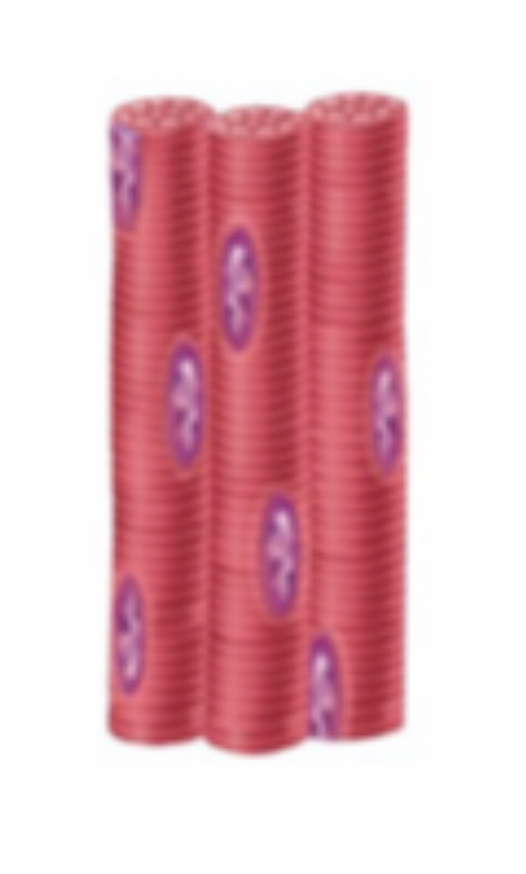
Muscular tissues
generate the physical force needed to make body structures move. They also generate heat used by the body
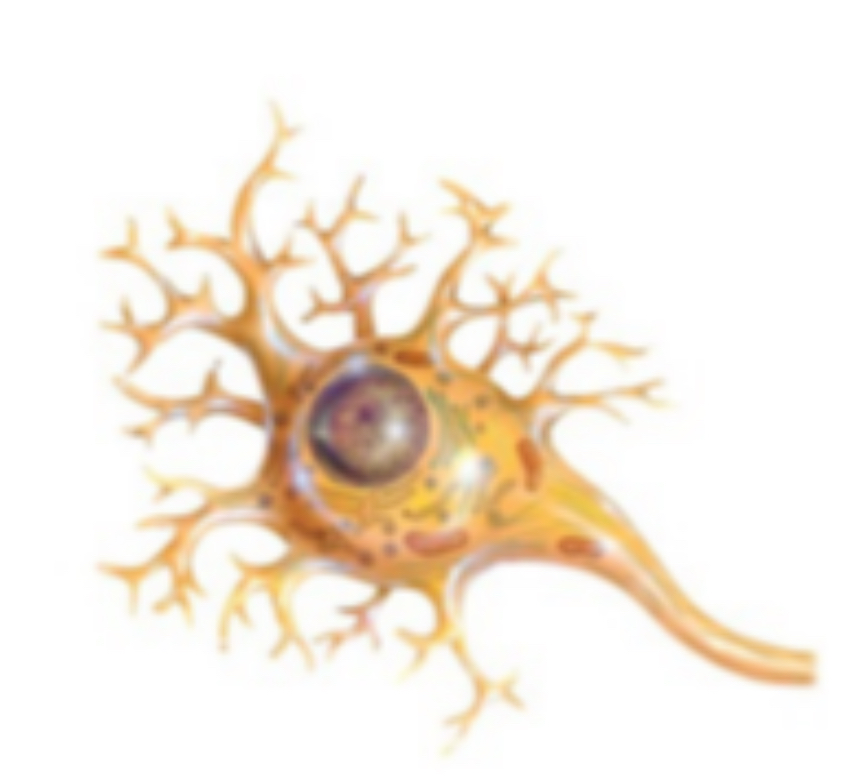
Nervous tissues
detect changes in the body and respond by generating nerve impulses
Cell Junctions
Tissues are formed by grouping cells together using a variety of cell junctions
The 5 most important kinds of cell junctions are
Tight junctions
Adherens junctions
Desmosomes
Hemidesmosomes
Gap junctions
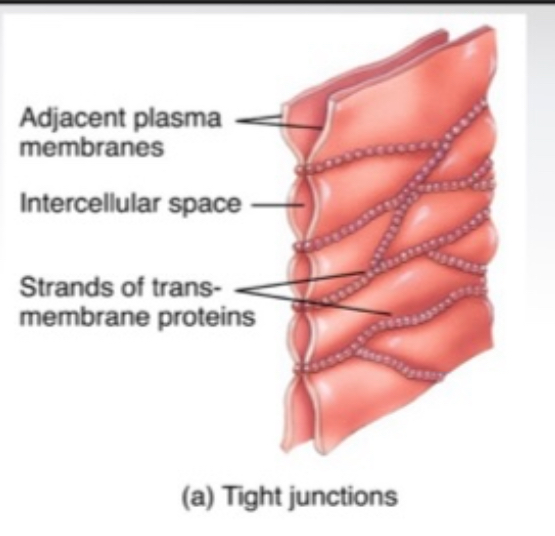
Tight junctions
are found where a leakproof seal is needed between cells
Keep materials from leaking out of organs like stomach and bladder.
Adhererns junctions
contain plaque-- a dense protein layer inside the plasma membrane
Help epithelial surfaces resist separation during various contractile activities. Ex. Food moving through intestine
Desmosomes
act as "spot welds"
Common among epidermal cells and cardiac muscle cells
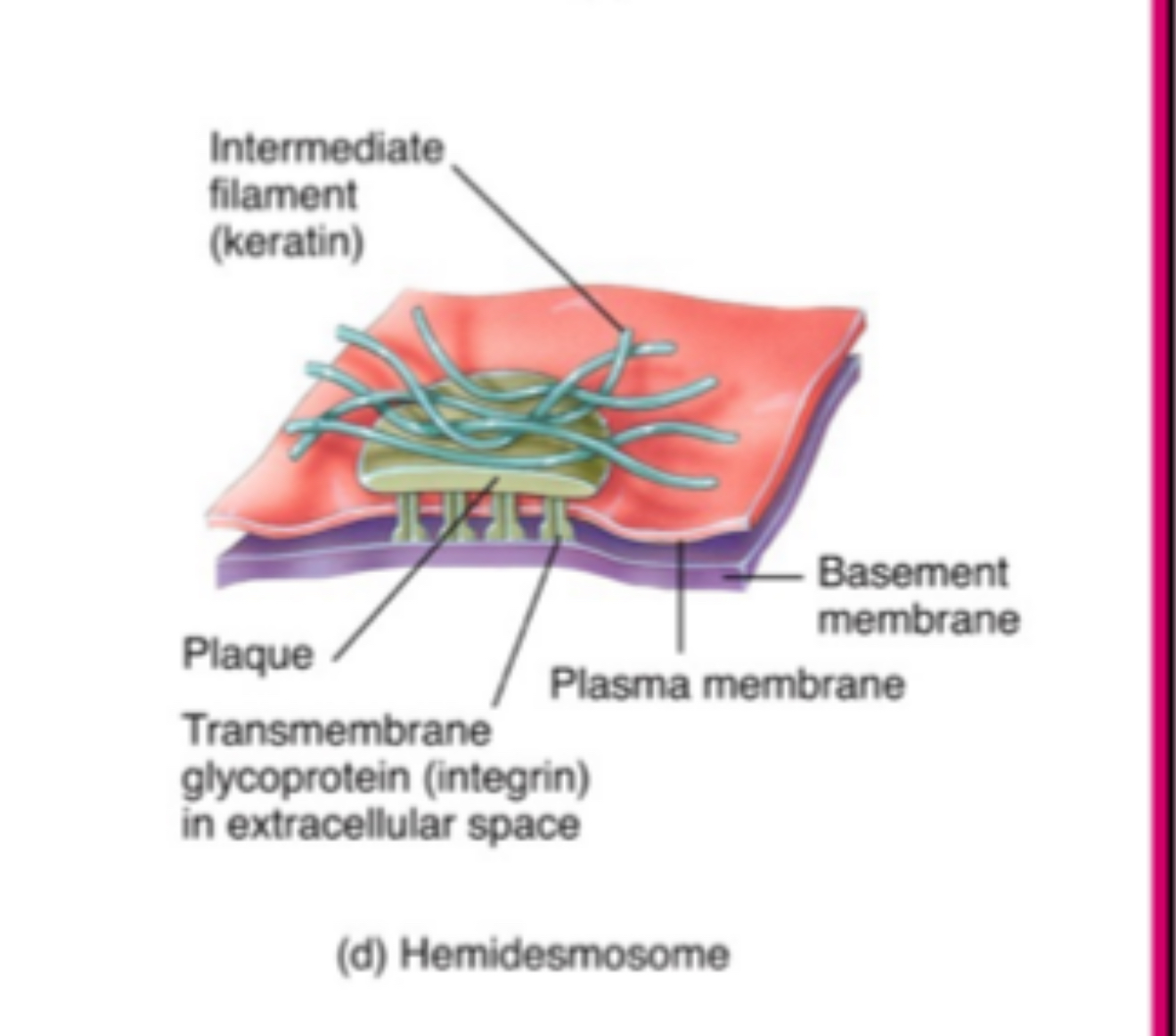
Hemidesmosomes
(look like half of a desmosome) are "half-welds" that join cells to the basement membrane
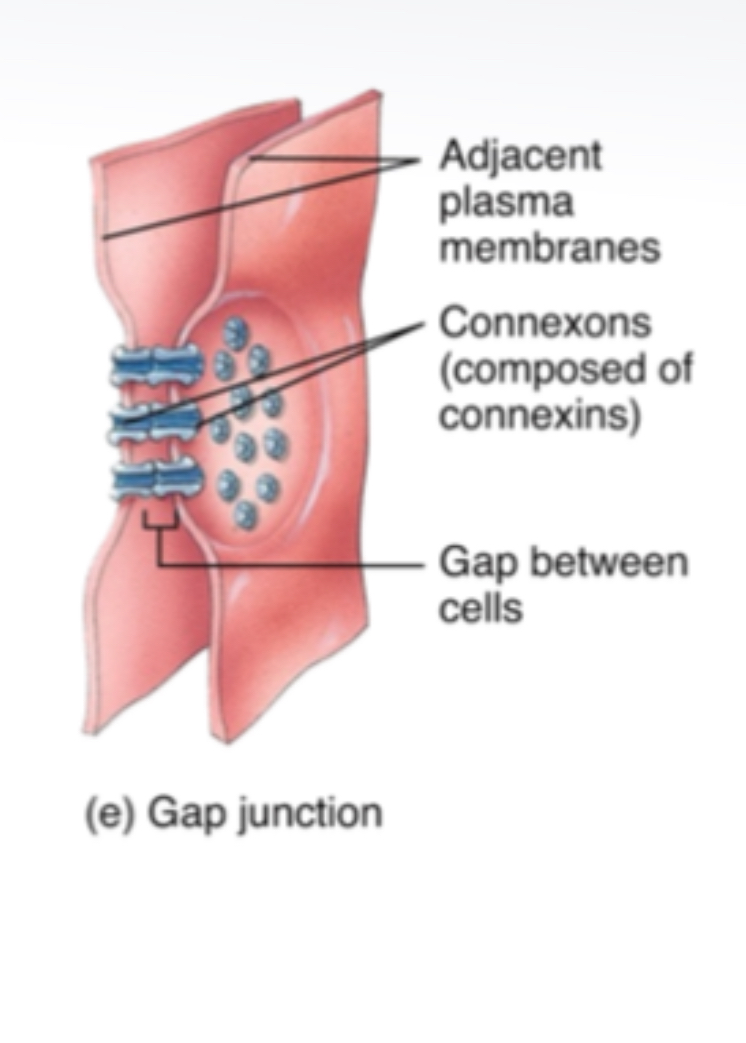
Gap junctions
are pores (connexons) that allow small substances like ions to pass between cells.
Seen between cardiac muscle cells and between some smooth muscle cells-allow electrical signals to pass very rapidly between the cells
Comparison: Epithelial vs.
Connective Tissue
Cell to extra cellular matrix ratio: EPITHELIAL
many tightly packed cells with little or no extracellular matrix.
Comparison: Epithelial vs.
Connective Tissue
Cell to extra cellular matrix ratio: CONNECTIVE
fewer cells with more matrix.
Comparison: Epithelial vs.
Connective Tissue
Blood vessels: epithelial
has no blood vessels.
Comparison: Epithelial vs.
Connective Tissue
Blood vessels: Connective tissues
have significant networks of blood vessels.
(Epithelial/Connective) tissues almost always form surface layers and are not covered by another tissue
epithelial
Epithelial tissue (aka "epithelium") is used to
cover and line structures and to make glands
Glands secrete things like mucous, hormones, and other substances
All epithelia have a ___ ___ surface and an attached __ surface
free apical
basal
Basal layer of epithelium secretes ____ ____, underlying connective tissue secretes reticular lamina.
Together these laminae form a non-cellular basement membrane on which the epithelium sits.
basal lamina
Basal layer of epithelium secretes basal lamina, underlying connective tissue secretes ____ ____.
Together these laminae form a non-cellular basement membrane on which the epithelium sits.
reticular lamina.
Basal layer of epithelium secretes basal lamina, underlying connective tissue secretes reticular lamina.
Together these laminae form a non-cellular ____ ____ on which the epithelium sits.
basement membrane
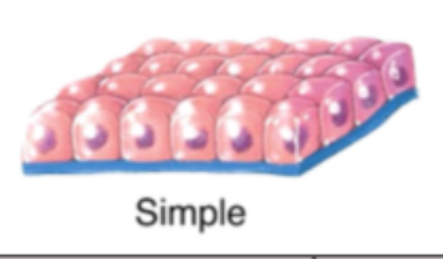
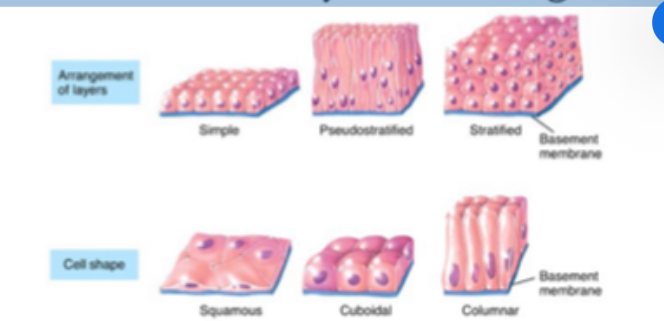
One layer. All cells touch B.M.
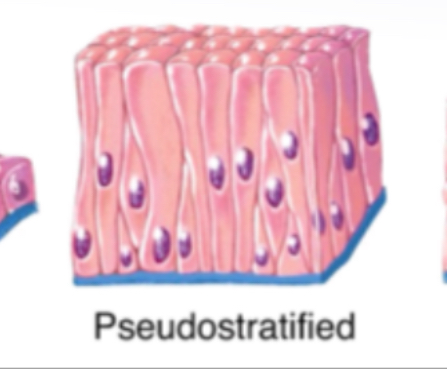
Really just one layer, all cells touch B. M.
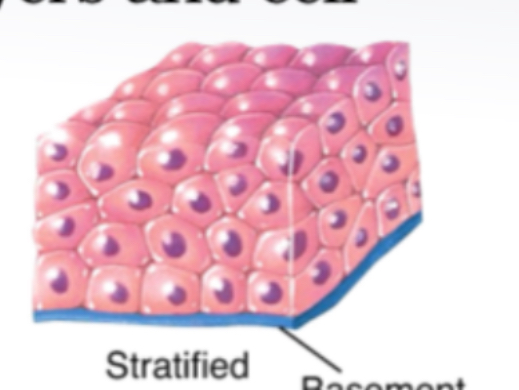
Two or more layers. Only basal layer touches B. M.
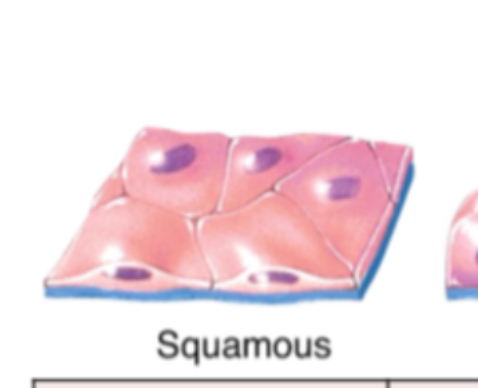
Flat, wide "paving stone" cells
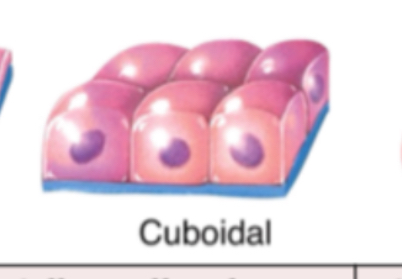
Cuboidal
Cells as tall as they are wide
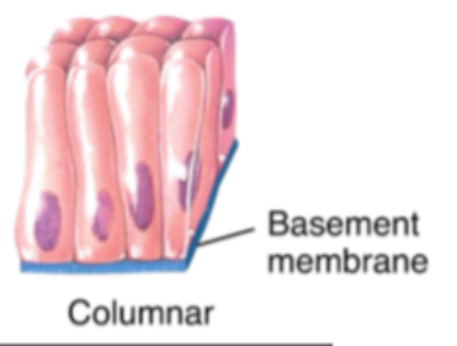
Cells taller than they are wide
There are 8 types of epithelium:
Simple squamous
• Stratified squamous
• Simple cuboidal
• Stratified cuboidal
• Simple columnar
• Stratified columnar
Pseudostratified columnar • Transitional
With stratified types, if different shapes are present in layers, the epithelium is always named by the…
shape of cells in the apical (outermost) layer
Simple squamous epithelium
single layer of flat cells
Found in air sacs of lungs, linings of blood vessels
(endothelium) / heart (endocardium) / lymphatic vessels, capillaries, and as epithelial part of serous membranes (mesothelium).
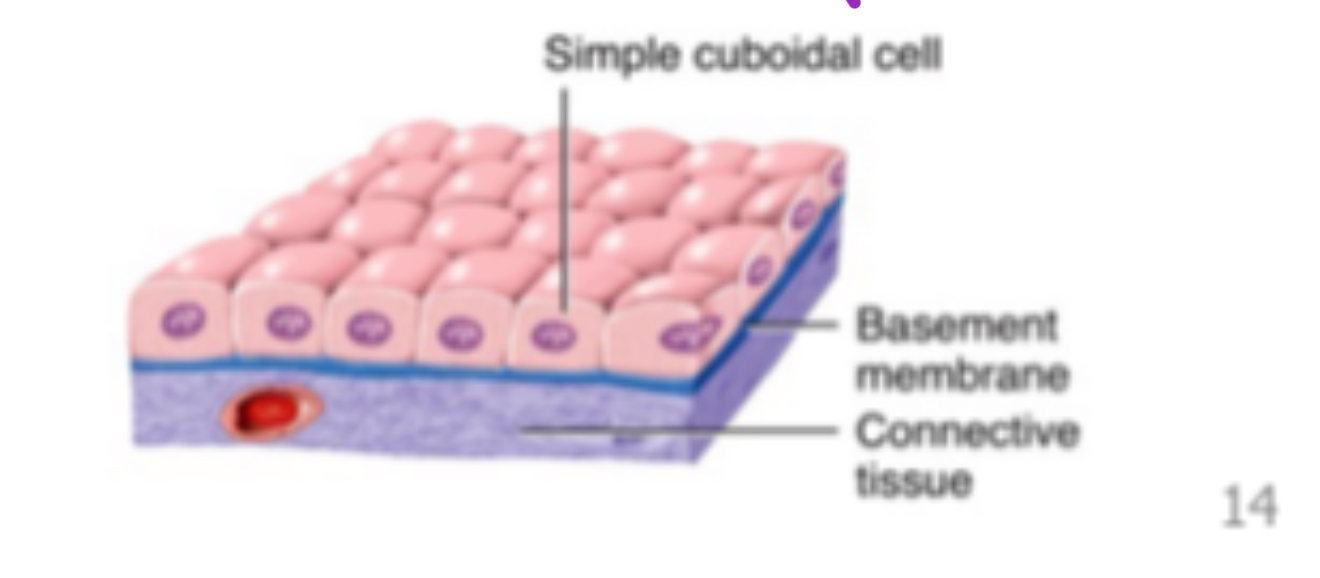
Simple Cuboidal Epithelium =
single layer of cube-shaped cells
• Found lining tubules of the kidneys.
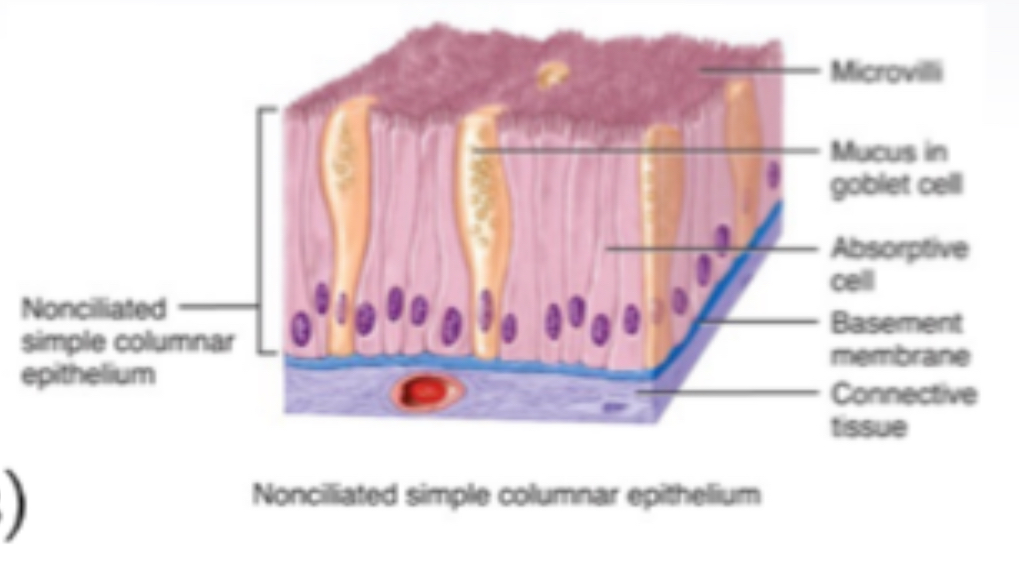
Simple columnar epithelium
single layer of column-shaped cells. 2 forms: nonciliated (ex. lines GI tract, note cells do have microvilli) and ciliated (ex. lines bronchioles).
Has goblet cells (mucous-secreting cells)
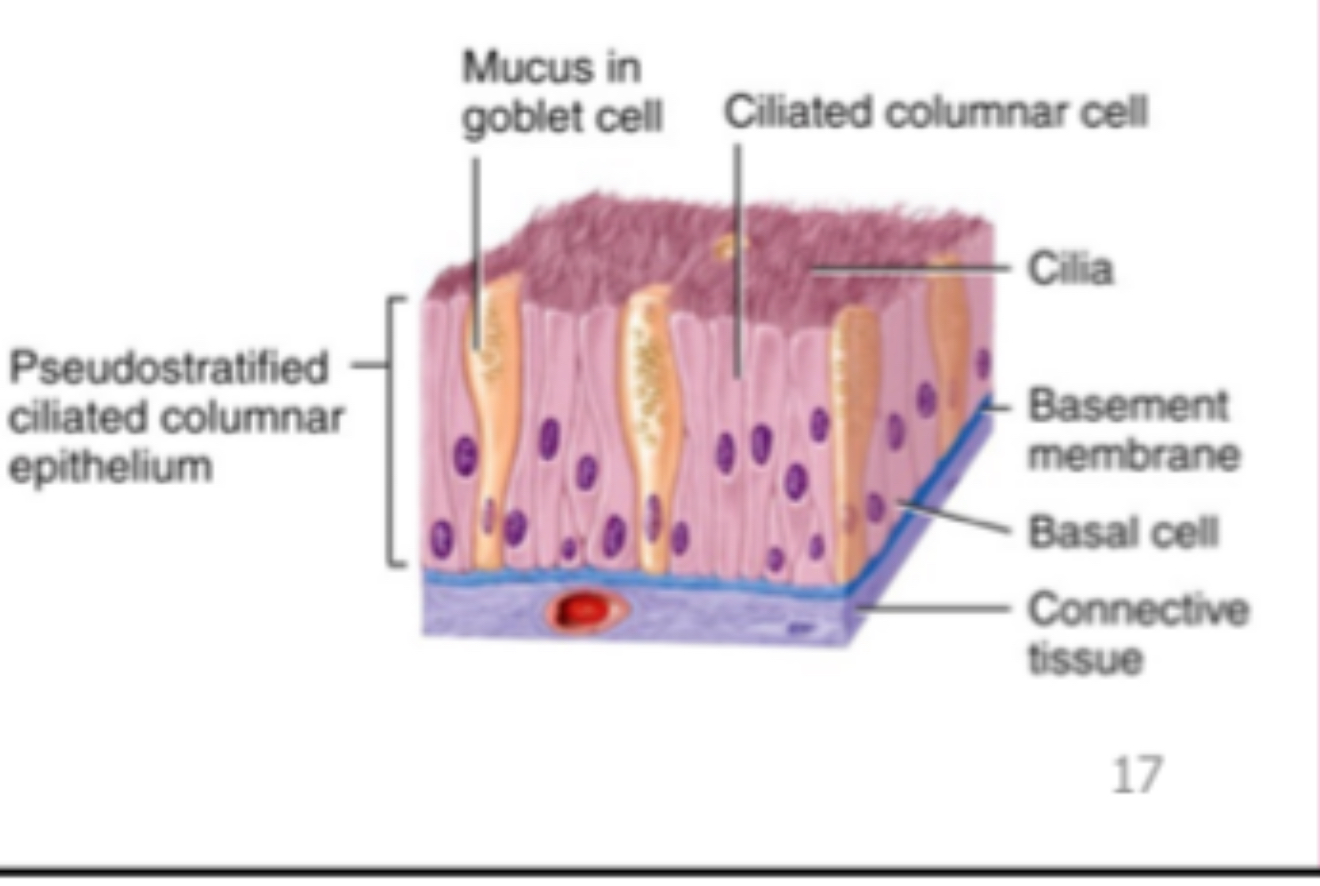
Pseudostratified columnar epithelium
nuclei at different depths makes it look stratified (all cells attached to basement membrane, but not all reach apical surface). 2 forms:
nonciliated (ex. epididymis) and ciliated (ex. upper airways).
• Only ciliated has goblet cells
Stratified Squamous Epithelium
has apical surface made up of flat cells
Other layers have different shapes, but name is based on apical layer
Many layers are ideal for protection against strong friction forces
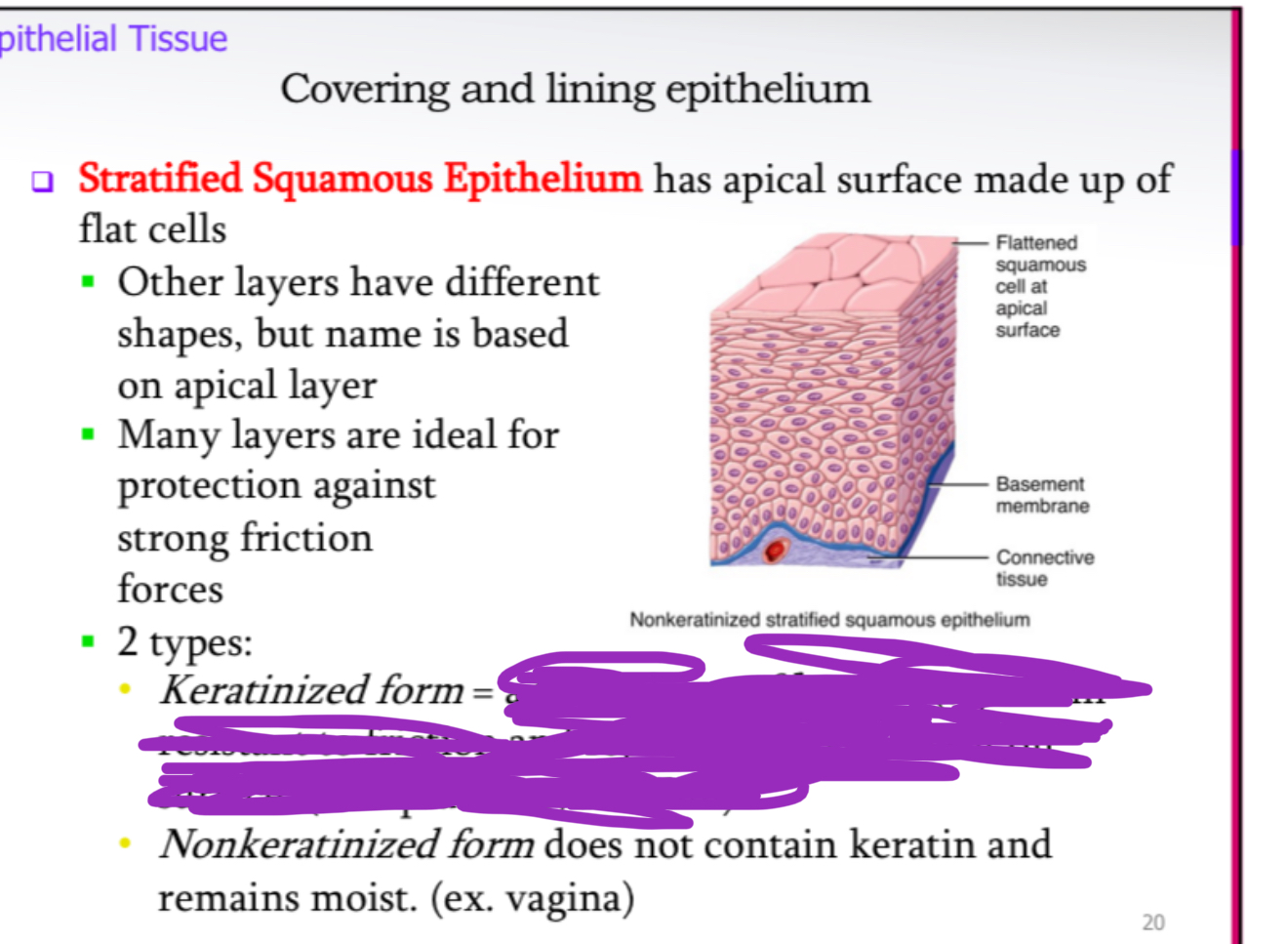
Keratinized form
a tough layer of keratin (a protein resistant to friction and repels bacteria) present on surface. (ex. epidermis, aka skin)
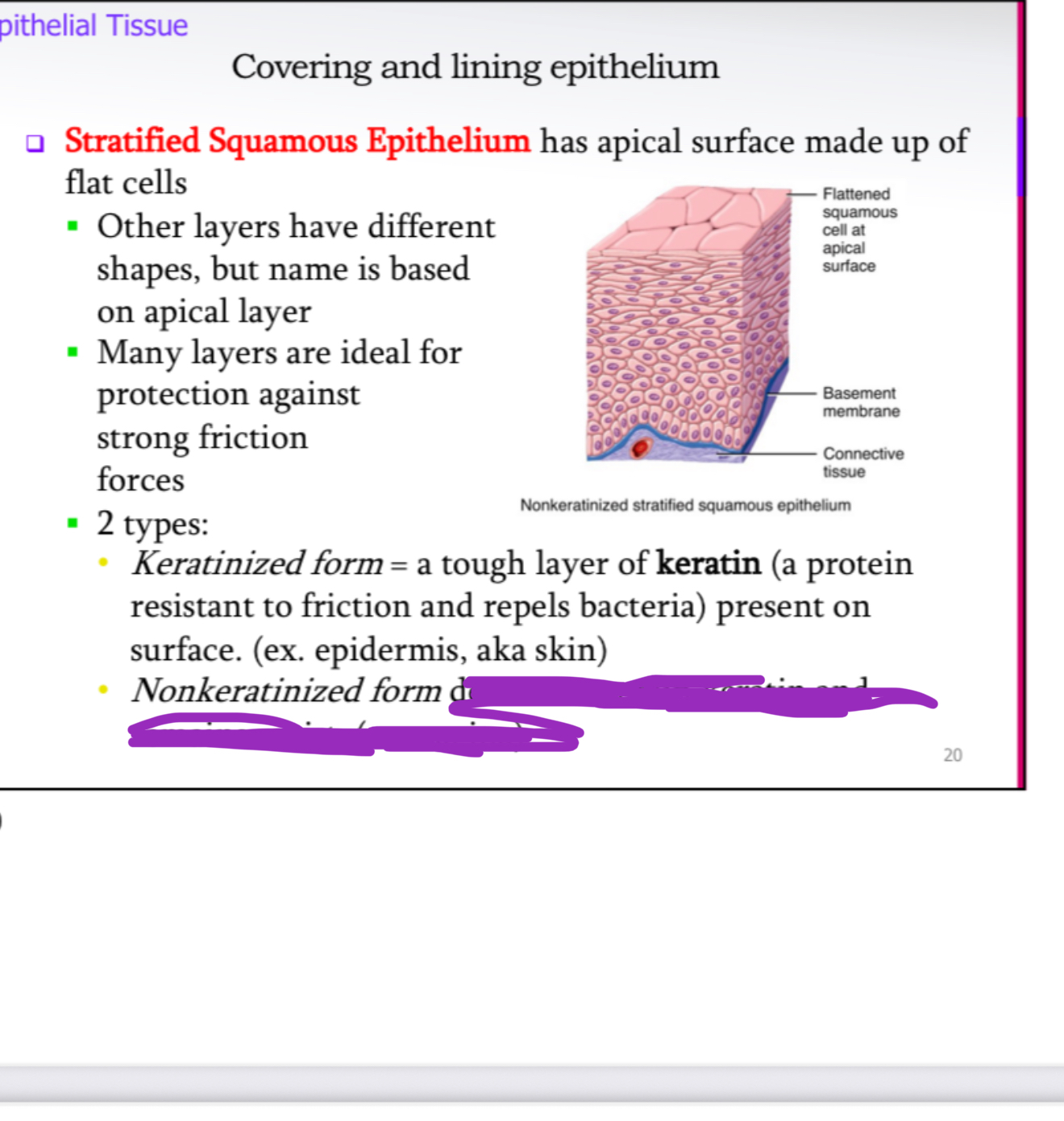
Nonkeratinized form
does not contain keratin and remains moist. (ex. vagina)
Stratified Cuboidal Epithelium
apical surface made of two or more layers of cube-shaped cells
Rare (ex. sweat glands, part of male urethra)
Stratified Columnar Epithelium
apical surface made of columnar cells
Uncommon (ex. parts of urethra)
Transitional Epithelium
cells change shape depending on the state of stretch in the tissue
Apical "dome cells" (seen here in relaxation) are an identifiable feature and signify an empty bladder.
• In full bladder, the cells are flattened.
Glandular Epithelium
endocrine glands
Glands that secrete their contents directly into the blood ("ductless glands"). Ex. pituitary gland, thyroid gland, and adrenal gland.
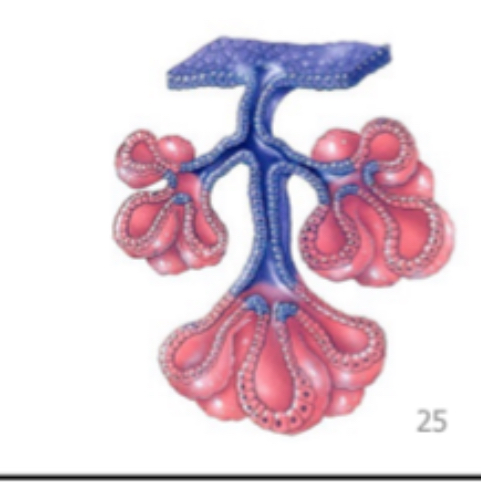
exocrine glands.
Glands that secrete their contents into a duct are calleds. Ex. sweat glands, gastric glands, salivary glands
glandular epithelium
Types of secretions of exocrine glands
mucus, sweat, oil, earwax, saliva, and digestive enzymes
Glandular Epithelium
• Some exocrine glands are
unicellular (ex. goblet cells), but most are multicellular.
Structurally, multicellular glands are classified by 2 criteria: (1/2)
Duct portion - is it branched or unbranched?
Simple= no branching
Compound = branching
Structurally, multicellular glands are classified by 2 criteria: (2/2)
Secretory portion
what is the shape?
Tubular
Acinar (berry-shaped, aka alveolar)
Tubuloacinar - combo of both
merocrine
most common type, secretion by exocytosis. Ex. salivary glands.
Apocrine
fluid builds up at apical end of cell and then the end just busts off--cell repairs itself later. Ex. mammary glands
Holocrine
whole cell just ruptures (and dies) releasing contents. Ex. sebaceous (oil) glands.
Connective Tissue functions
Numerous functions:
Bind tissues together
Support and strengthen tissue
Protect and insulate internal organs
Compartmentalize and transport
Energy reserves and immune responses
All CT tend to have ___ cells separated by ________
sparse
lots of extracellular matrix
collagen
main protein of CT and most abundant protein in the body--about 25% of total protein content
Connective Tissue Cells
Fibroblasts
usually most abundant cell type, secrete fibers and matrix.
Connective Tissue Cells
Macrophages
develop from monocytes (a type of white blood cell), they're phagocytic.
Connective Tissue Cells
Plasma cells
develop from antibody-producing B
lymphocytes (aka B cells)
Connective Tissue Cells
Mast cells
abundant alongside blood vessels, produce histamine
Connective Tissue Cells
Adipocytes(aka fat cells)
store energy in the form of fat
Connective Tissue Extracellular Matrix
a Consists of 2 major parts:
Ground substance
- supports, binds, and provides medium for exchange between blood and cells (hyaluronic acid, chondroitin sulfate, etc.)
Connective Tissue Extracellular Matrix
a Consists of 2 major parts:
Fibers- CT cells make 3 common fibers:
Collagen fibers
- very tough, stretch resistant, particularly important in bone, cartilage, tendons, and ligaments,
Connective Tissue Extracellular Matrix
a Consists of 2 major parts:
Fibers- CT cells make 3 common fibers:
Elastic fibers -
made of elastin, strong and stretchy, found in skin, blood vessels, and lungs
Connective Tissue Extracellular Matrix
a Consists of 2 major parts:
Fibers- CT cells make 3 common fibers:
Reticular fibers
— made of collagen and glycoprotein, strong supporting network
around fat cells, nerve fibers, and muscle fibers
Connective Tissue Classification
Embryonic connective tissue
Mesenchyme
Mucous connective tissue
Connective Tissue Classification
mature connective tissue
Loose connective tissue - subtypes: areolar, adipose, reticular
Dense connective tissue - subtypes: dense regular, dense irregular, elastic
Cartilage - subtypes: hyaline, fibrocartilage, elastic
Bone
Liquid connective tissue - subtypes: blood, lymph
Embryonic Connective Tissues
2 Embryonic Connective Tissues:
Mesenchyme
gives rise to all other connective tissues
Embryonic Connective Tissues
2 Embryonic Connective Tissues:
Mucous CT (aka Wharton's Jelly) -
gelatinous substance in the umbilical cord of fetus
Mature Connective Tissues
Loose Connective Tissues subtype
Areolar connective tissue
is most widely distributed CT in body. It. contains several types of cells and all three fiber types.
Used to attach skin and underlying
tissues, and as a packing between glands, muscles, and nerves
Mature Connective Tissues
Loose Connective Tissues subtype
Adipose tissue (aka fat tissue)
is located in subcutaneous layer deep to skin and around organs and joints
Reduces heat loss and serves as padding and energy source
Mature Connective Tissues
Loose Connective Tissues subtype
Reticular connective tissue
is network of reticular fibers and cells
Forms a scaffolding used by cells of lymphoid tissues, such as spleen and lymph nodes
Mature Connective Tissues
Dense Connective Tissues
Dense Regular Connective Tissue
consists of collagen fibers and comprise tendons and ligaments where the need for strength along one axis is mandatory (a muscle pulling on a bone).
Mature Connective Tissues
Dense Connective Tissues
Dense Irregular Connective Tissue
consists mostly of fibroblasts and collagen fibers randomly arranged
Provides strength when forces are pulling from many different directions
Mature Connective Tissues
Dense Connective Tissues
Elastic Connective Tissue
consists mostly of fibroblasts and freely branching elastic fibers
Allows stretching of certain tissues like the elastic arteries (ex. the aorta)
Cartilage
has a rubbery consistency. It has a poor blood supply and grows slowly.
When injured, repair is slow
Hyaline cartilage
is most common type, it covers ends of long bones and parts of ribs, nose, trachea, bronchi, and larynx.
Provides a smooth surface for joint movement
Fibrocartilage
has thick bundles of collagen fibers and is very strong
Fibrocartilage discs in the intervertebral spaces and the knee joints support the huge loads up and down the long axis of the body.
Elastic cartilage
consists of chondrocytes located in a threadlike network of elastic fibers, very flexible
Makes up the malleable part of the external ear and the epiglottis
Bone
has a calcified extracellular matrix that makes it very hard. Bone tissue is often derived from cartilage
Liquid connective tissues
- blood and lymph. Blood consists of cells (RBCs, WBCs, and platelets) in a liquid extracellular matrix called plasma
Membranes
are flat sheets of pliable tissue that cover or line a part of the body
Epithelial membranes
= epithelium + connective tissue
Mucous membranes (or mucosa)
Mucous membranes line "interior" body surfaces open to the outside: digestive tract, respiratory tract, reproductive tract.
Its connective tissue is called lamina propria.
Serous membranes (or serosa)
Serous membranes line some internal surfaces. Ex: pleura, pericardium, and peritoneum
Cutaneous membrane
skin
Synovial membranes
= connective tissue only; help form capsule around movable joints, such as elbow, hip, and knee
muscle tissue
consists of fibers that provide motion, maintain posture, and produce heat
3 types of muscle tissue
Skeletal muscle
Cardiac muscle
Smooth muscle
Nervous Tissue
Two kinds of cells:
Neurons
• Neuroglia
Most neurons have
a cell body, dendrites, and an axon
They carry sensory and motor information and perform integrative functions
Neuroglia
protect and support neurons
Neurons and muscle fibers are considered
excitable cells because they have electrical excitability, the ability to respond to certain stimuli by producing electrical signals such as action potentials
Action potentials can travel along the plasma membrane of a neuron or muscle fiber
tissue repair
Epithelial tissue capacity to renew cells
excellent at cell renewal
tissue repair
CT capacity to renew cells
okay at cell renewal; depends on specific type
Tissue Repair
Muscle tissue capacity to renew cells
is poor at cell renewal
Tissue Repair
nervous tissue capacity to renew cells
is the worst at cell renewal.
Repair by tissue types
Epithelial cells are replaced by the division of
undifferentiated stem cells or by mature, differentiated cells
Fibrosis
is the process of scar formation: fibroblasts make collagen fibers and other materials to fill in the damaged area (scar tissue). Function is often lost.
Granulation tissue
actively growing connective tissue that serves as a framework for epithelial cell migration during wound healing
Autoimmune disorders
are the most common CT disorders
Sjogren's syndrome
-many exocrine glands destroyed (lacrimal, salivary) - widespread dryness, fatigue, arthritis
Systemic lupus erythematosus
chronic inflammatory disease, painful joints, fever, fatigue range from mild to fatal
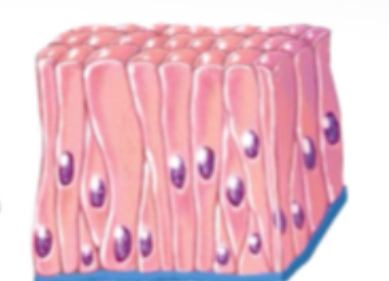
Pseudostratified
Really just one layer, all cells touch B. M.