AB1, L9: Hindlimb Blood Vessels & Nerves
 Call Kai
 Learn
Learn Practice Test
 Spaced Repetition
 Match
Match Flashcards
 Knowt Play
1/27

Earn XP
Description and Tags
Given def, answer w/ term
Name | Mastery | Learn | Test | Matching | Spaced | Call with Kai | Chat |
|---|
No analytics yet
Send a link to your students to track their progress
28 Terms
Aorta > subclavian > axillary > brachial > median
List the major arteries on the LEFT side of the canine thoracic limb:
_______ > _______ > _______ > _______ > _______
Aorta > brachiocephalic > subclavian > axillary > brachial > median
List the major arteries on the RIGHT side of the canine thoracic limb:
_______ > _______ > _______ > _______ > _______
brachial artery, median artery, and superficial palmar artery
list the 3 arteries used to find a palpable pulse on the canine forelimb
Cephalic, accessory cephalic, median cubital, brachial, axillary, and axillobrachial
List the 6 major veins of the canine thoracic limb:
Brachial and axillobrachial
2 of the 6 major veins of the canine thoracic limb:
Clinical Relevance: Important in amputations where they should be ligated
cephalic
1 of the 6 major veins of the canine thoracic limb:
Clinical Relevance: key for IV access
Median cubital
1 of the 6 major veins of the canine thoracic limb:
Clinical Relevance: branches from the cephalic at the cranial elbow region and drains the medial limb
Brachial plexus
Nerves located from C6 to T2 which go from the spinal cord to the forelimb. The nerves include:
Suprascapular
Subscapular
Axillary
Musculocutaeous
Radial
Median
Ulnar
Brachial plexus; lumobsacral plexus
The forelimb nerves originate from the _______ plexus, and the hindlimb nerves originate from the _______ plexus
8 cervical spinal nerves
Although there are only 7 cervical verterbrae, there are _______ cervical spinal nerves (which originate from spinal cord segments)
Brachial plexus
Damage to the _______ commonly leads to paralysis in dogs
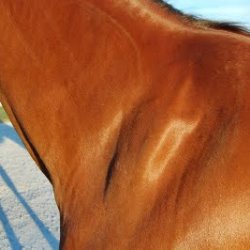
Suprascapular nerve
Damage to the _______ nerve leads to:
Lateral shoulder muscle atrophy
Scapula spine becomes more prominent
Animal can walk, but lateral “slip” of should may be visible
Called “Sweeney” in horses
Musculocutaneous nerve
Damage to the _______ nerve leads to:
Loss of medial sensation
Compensatory adaption using pronator teres & carpal extensors (may be a subtle effect on gait)
Proximal; radial nerve
_______ damage to the _______ nerve leads to:
Limb becoming useless; animal unable to bear weight or move limb
Loss of sensation on dorsum of paw, causing animal to drag it on ground
Amputation is necessary

Distal; radial nerve
_______ damage to the _______ nerve leads to:
Knuckling over
Animal may learn how to “flip” their paw (although they would still be unable to extend carpus)
Some ability to continue weight bearing
Amputation not always necessary
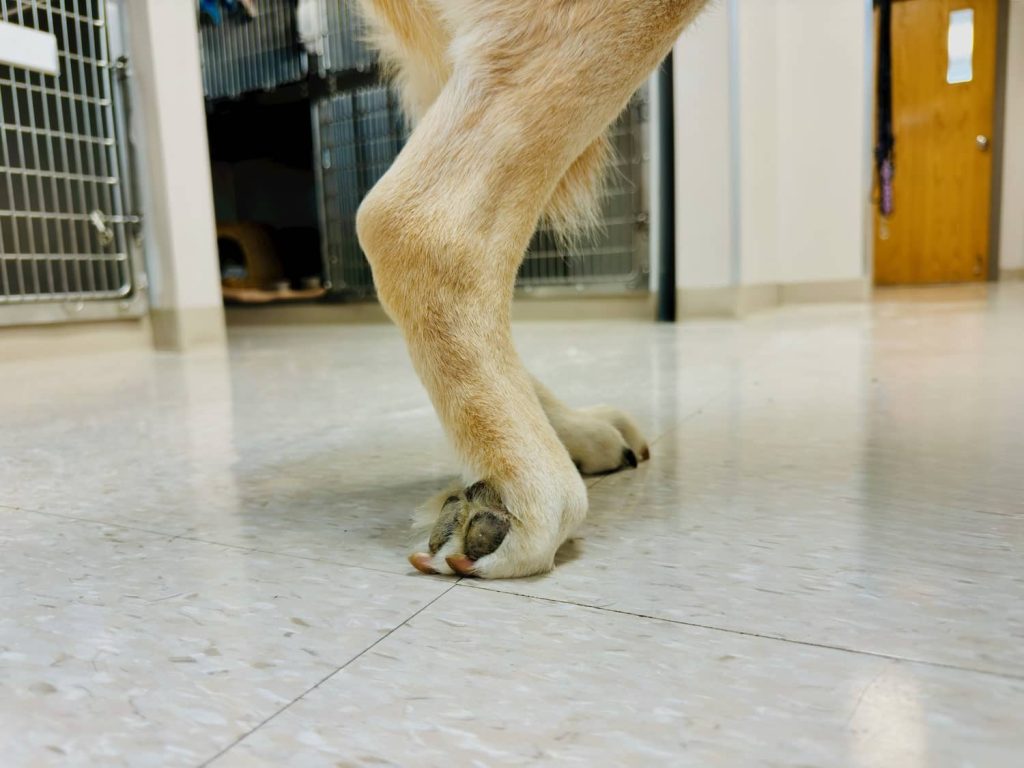
Axillary nerve
Damage to the _______ nerve effects:
Shoulder flexors
Compensation is possible, so signs of damage may be subtle
Individual; median or ulnar nerve
_______ damage to the _______ or _______ nerve effects:
Carpus & digit flexors
Compensation is possible, so signs of damage may be subtle
Median and ulnar nerve
Damage to the _______ and _______ nerve leads to:
Sinking of carpus; animal appears flat footed
Compensation is possible, so signs of damage may be subtle