Exam 1 FAMM
 Call Kai
 Learn
Learn Practice Test
 Spaced Repetition
 Match
Match Flashcards
 Knowt Play
1/24

Earn XP
Description and Tags
homeostasis, biochem of the cell, proteins and their modifications and trafficking, histology, membrane structure and function, cell adhesions, cytoskeleton, DNA replication, DNA damage and repair, transcription translation, inheritence, enzymes, metabolism. BE READY 07/30 for peer instruction
Name | Mastery | Learn | Test | Matching | Spaced | Call with Kai | Chat |
|---|
No analytics yet
Send a link to your students to track their progress
25 Terms
Who is Walter Cannon?
coined the term homeostasis
homeo-:
-stasis:
homeo-: sameness
-stasis: standing still
Who is Claude Bernard?
introduced the concept of milieu interiéur (internal environment)
He observed that the volume and composition of the fluid are maintained constant, independent of the changes in the environment in which the animal lives.
What did Claude Bernard define the internal environment?
ECF (extracellular fluid)
what is the normal physiological set point for venous oxygen in the extracellular fluid?
normal: 40 mmHg
normal range: 35-45 mmHg
what is the normal physiological set point for CO2 in the extracellular fluid?
normal: 45 mmHg
normal range: 35-45 mmHg
what is the normal physiological set point for Na2+ in the extracellular fluid?
142 mmol/L
range: 138-146 mmol/L
what is the normal physiological set point for K+ in the extracellular fluid?
4.2 mmol/L
3.8-5.0 mmol/L
what is the normal physiological set point for Ca2+ in the extracellular fluid?
1.2 mmol/L
range: 1.0-1.4 mmol/L
what is the normal physiological set point for HCO3- (bicarbonate ion) in the extracellular fluid?
24 mmol/L
range: 24-32 mmol/L
what is the normal physiological set point for C6H12O6 (glucose) in the extracellular fluid?
90 mg/dL
range: 75-95 mg/dL
what is the normal physiological set point for body temp?
98.4 F
range 98-98.8 F
what is the normal physiological set point for pH in extracellular fluid?
7.4
range: 7.3-7.5
what is the “gain” in terms of negative feedback mechanisms
measure of degree to which the control system maintains constant conditions
Correction = Uncompensated Value – Compensated Value Error = Set Point – Compensated Value
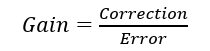
the more negative the gain value is in negative feedback mechanisms, the __________ the gain
higher
how many cells are in the human body?
35-45 trillion
what AA is a “helix breaker” due to its rigid ring structure
proline is the AA best known for this
__________ beta sheets are generally more stable due to more direct H-bonding
antiparallel sheets are more __________
2o of proteins are stabilized by _________ bonds
H-bonds stabilize this structure
tertiary structure (3o) is stabilized by
the hydrophobic effect
ionic bonds
Wan Der Waals forces
sometimes disulfide bonds
quaternary structure (4o) is stabilized by
non-polar side chains
H-bonds
occasional ionic bond or salt bridges