Physics Oat Formulas
 Call Kai
 Learn
Learn Practice Test
 Spaced Repetition
 Match
Match Flashcards
 Knowt Play
1/102

There's no tags or description
Looks like no tags are added yet.
Name | Mastery | Learn | Test | Matching | Spaced | Call with Kai | Chat |
|---|
No analytics yet
Send a link to your students to track their progress
103 Terms
Linear kinematics
Scalar quantities
Vector quantities
What are Vector quantities
Something with direction and magnitude
What are scalar quantities?
only have magnitude
Average Velocity

Average acceleration

Displacement (constant acceleration)

Velocity (time)

velocity (displacement)

Forces
Net force (newtons second law)

Weight

Normal Force (horizontal surface)

Normal Force (inclined Surface)

Friction Force

Gravitational
Gravitational Force (two bodies)

Gravitational Acceleration (one Body)

Rotational and Circular Motion
Linear displacement (arc length)

Linear Velocity (tangential)

Linear Acceleration (tangential)

Uniform Circular Speed (tangential)

Centripetal Acceleration

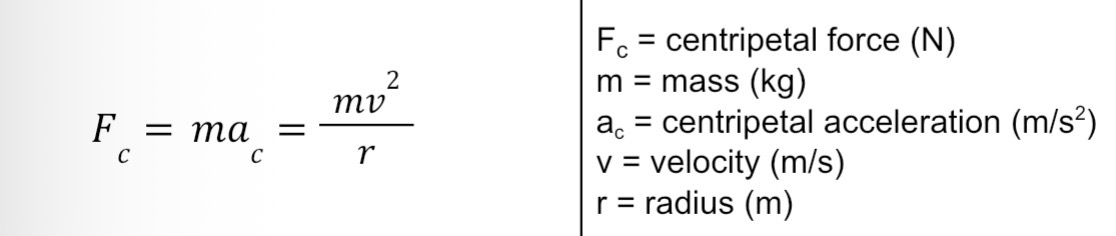
Centripetal Force
Torque

Energy and Momentum
Kinetic energy

Gravitational Potential Energy

Total Mechanical Energy

Work (constant force)

Work energy Theorem/Kinetic Energy

Power

Momentum

Impulse

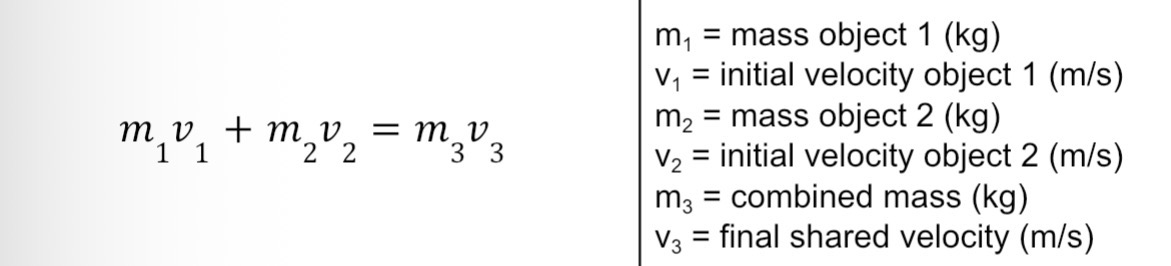
Inelastic Collision (perfectly inelastic)
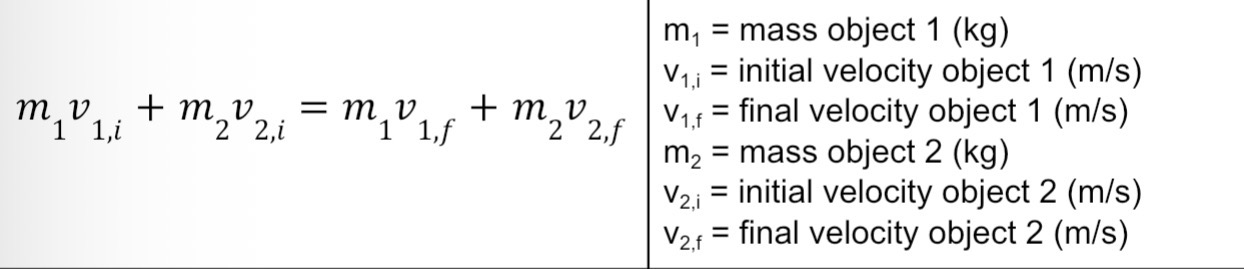
Elastic Collision (momentum conservation)
Photon energy

Center of Mass
For x and Y:

Simple Harmonic Motion (springs and pendulums)
Hooke’s Law (spring force)

Work done on spring

Elastic Potential Energy (spring)

Period (mass-spring)
Pi= 3.14

Period (pendulum)

Angular Frequency (general)

Angular Frequency (mass-spring)

Angular Frequency (pendulum)

Waves
Wave Velocity (speed)

Period Frequency Relation

Intensity (power per area)

Point source intensity

Sound Intensity level

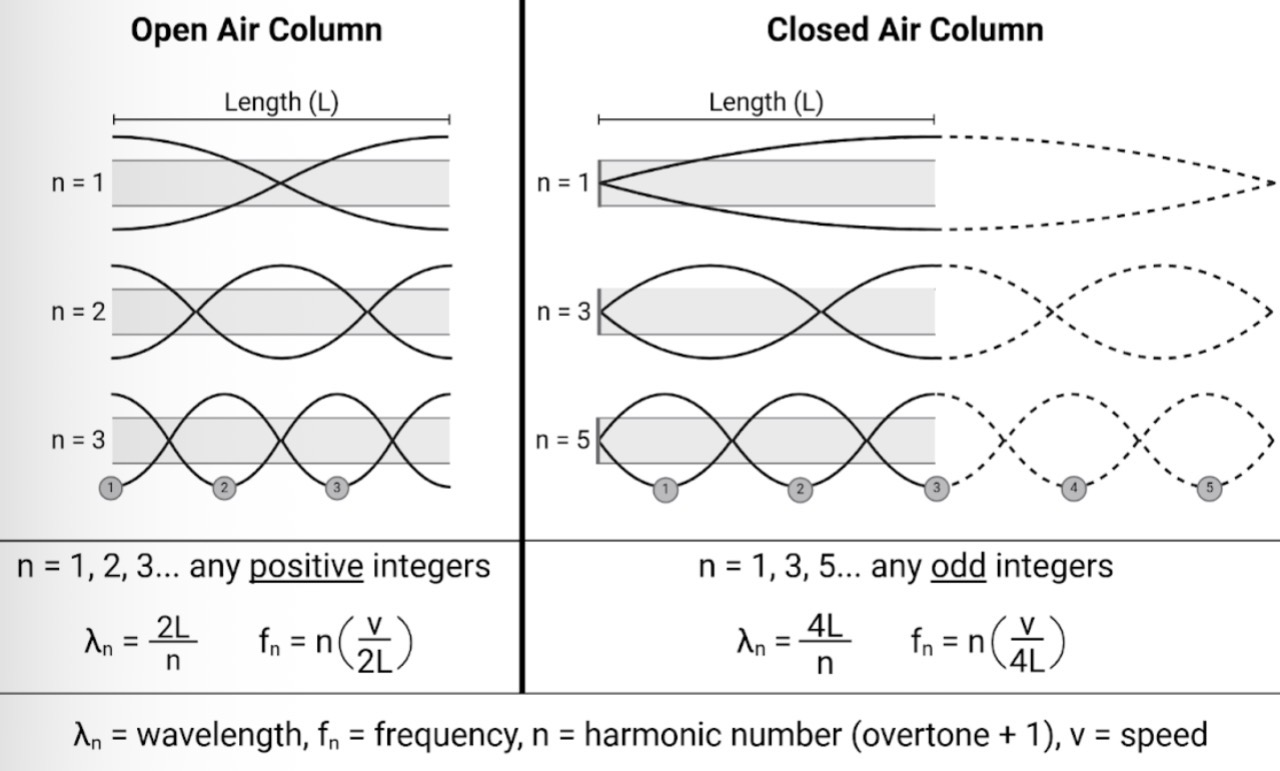
Standing wave harmonics conventions
Fluid Statics
Density

Buoyant Force (archimedes’ principle)

Pressure

Hydrostatic Pressure

Pascal’s Principle (hydraulics)

Floating Objects (fraction Submerged)

Optics
Index of refraction

Snell’s Law

Apparent Depth

Critical Angle

Thin Lens Equation

Optical Power

Magnification

Image height

Focal Length (spherical mirrors)

Thin lens mirrors sign conventions

Thin lens mirrors sign conventions
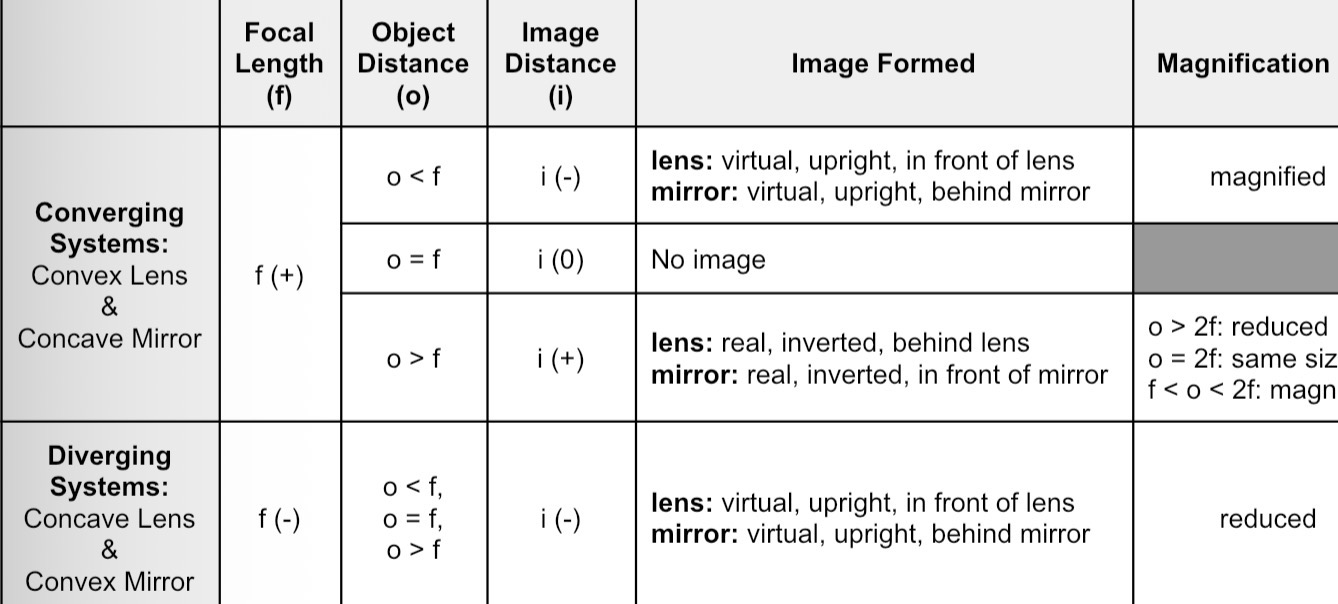
Converging systems (convex lens/ concave mirror)
Notes:
all of the objects in this diagram are real.
For mirror, real images are formed on the same side as the object
For lenses, real images are formed on the opposite side as the object
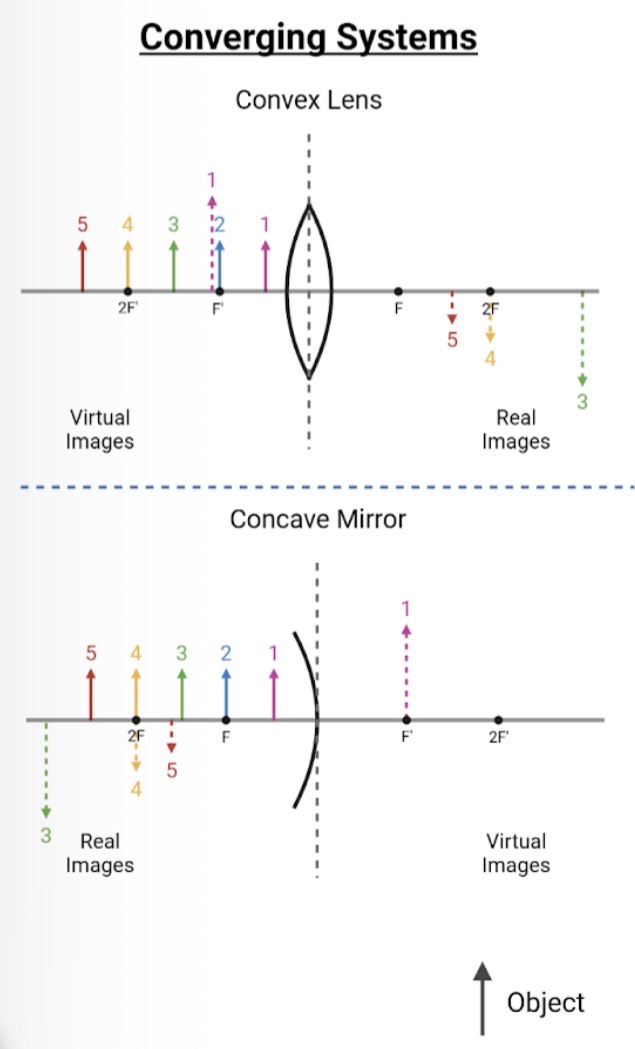
Diverging Systems (concave lens/ convex mirror)
Notes:
all of the objects in this diagram are real.
For mirror, real images are formed on the same side as the object
For lenses, real images are formed on the opposite side as the object
Thermodynamics
Change in Internal energy (first law)

Pressure-Volume Work

Heat Energy gained/lost

Linear Thermal Expansion

Ideal Gas Equation

DC circuits
Voltage (Ohm’s Law)

Electric Power

Current

Resistance of a Wire

Equivalent Resistance (series)

Equivalent Resistance (parallel)

Equivalent Capacitance (parallel)

Equivalent Capacitance (series)

Charge on a Capacitor

Energy in a Capacitor

Electrostatics
Coulomb’s Law

Electric Field

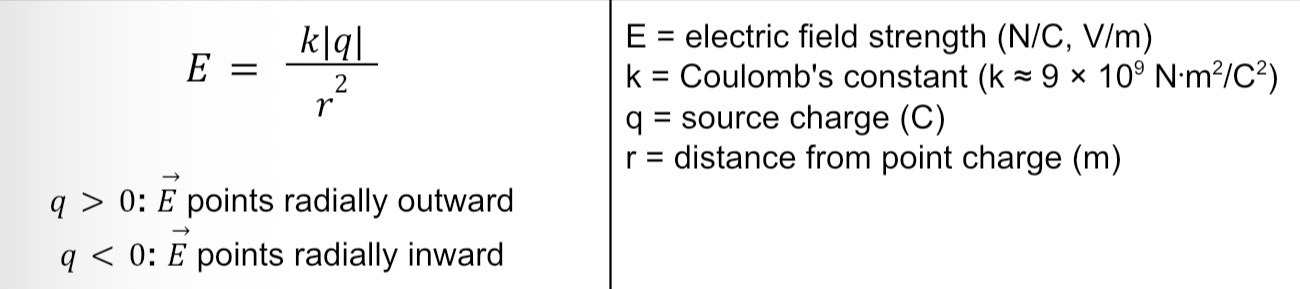
Electric Field (point charge)